Mobile Navigation

  • National
    • Policy
      • High Expectations
      • Quality Choices
      • Personalized Pathways
    • Research
    • Commentary
      • Gadfly Newsletter
      • Flypaper Blog
    • Events
    • Scholars Program
  • Ohio
    • Policy
      • Priorities
      • Media & Testimony
    • Research
    • Commentary
      • Ohio Education Gadfly Biweekly
      • Ohio Gadfly Daily
  • Charter Authorizing
    • Application
    • Sponsored Schools
    • Resources
  • About
    • Mission
    • Board
    • Staff
    • Career
Home
Home
Advancing Educational Excellence

Main Navigation

  • National
  • Ohio
  • Charter Authorizing
  • About

National Menu

  • Topics
    • Accountability & Testing
    • Advanced Education
    • Career & Technical Education
    • Charter Schools
    • Curriculum & Instruction
    • ESSA
    • Evidence-Based Learning
    • Facilities
    • Governance
    • Personalized Learning
    • Private School Choice
    • School Finance
    • Standards
    • Teachers & School Leaders
    • Think Again
  • Research
  • Commentary
    • Gadfly Newsletter
    • Flypaper Blog
    • Gadfly Podcast
  • Events
  • Scholars Program

The Education Gadfly Weekly

Sign Up to Receive Fordham Updates

We'll send you quality research, commentary, analysis, and news on the education issues you care about.
Thank you for signing up!
Please check your email to confirm the subscription.

The Education Gadfly Weekly: Reflecting on Fordham’s silver jubilee

Volume 21, Number 24
6.17.2021
6.17.2021

The Education Gadfly Weekly: Reflecting on Fordham’s silver jubilee

Volume 21, Number 24
view
High Expectations

Reflecting on Fordham’s silver jubilee

At Fordham, we’re not big on grand anniversary galas, the sort of fancy events where organizations toot their own horns and bask in the praise and accolades of longtime friends. We’re not that kind of boastful. But as we get ready to reopen our offices after the long pandemic misery, it’s worth noting that 2021 marks our twenty-fifth anniversary.

Chester E. Finn, Jr. 6.17.2021
NationalFlypaper

Reflecting on Fordham’s silver jubilee

Chester E. Finn, Jr.
6.17.2021
Flypaper

In Colorado, a hard-fought defensive victory for charter schools

Dale Chu
6.17.2021
Flypaper

The essential counternarrative to the 1619 project

Robert Pondiscio
6.17.2021
Flypaper

Using transcription analysis to replace traditional classroom observations

Amber M. Northern, Ph.D.
6.17.2021
Flypaper

Does public preschool benefit students from Kindergarten to college?

Jeff Murray
6.17.2021
Flypaper

The Education Gadfly Show #774: Research Deep Dive: The impact of urban charter schools

6.17.2021
Podcast

Cheers and Jeers: June 17, 2021

The Education Gadfly
6.17.2021
Flypaper

What we're reading this week: June 17, 2021

The Education Gadfly
6.17.2021
Flypaper
view

In Colorado, a hard-fought defensive victory for charter schools

Dale Chu 6.17.2021
Flypaper
view

The essential counternarrative to the 1619 project

Robert Pondiscio 6.17.2021
Flypaper
view

Using transcription analysis to replace traditional classroom observations

Amber M. Northern, Ph.D. 6.17.2021
Flypaper
view

Does public preschool benefit students from Kindergarten to college?

Jeff Murray 6.17.2021
Flypaper
view

The Education Gadfly Show #774: Research Deep Dive: The impact of urban charter schools

Michael J. Petrilli, David Griffith, Ph.D., Brian Gill 6.17.2021
Podcast
view

Cheers and Jeers: June 17, 2021

The Education Gadfly 6.17.2021
Flypaper
view

What we're reading this week: June 17, 2021

The Education Gadfly 6.17.2021
Flypaper
view

Reflecting on Fordham’s silver jubilee

Chester E. Finn, Jr.
6.17.2021
Flypaper

At Fordham, we’re not big on grand anniversary galas, the sort of fancy events where organizations toot their own horns and bask in the praise and accolades of longtime friends. We’re not that kind of boastful. But as we get ready to reopen our offices after the long pandemic misery, it’s worth noting that 2021 marks our twenty-fifth anniversary. Yup, a quarter century of the modern, education-centric Thomas B. Fordham Foundation.

With the help of a modest midcentury estate accumulated by Mr. Fordham (who passed away the year I was born) and bequeathed to the Foundation by his widow, Thelma Fordham Pruett, we were able in 1996 to reboot that entity as an education-reform organization with one foot planted in Washington and the other in the Buckeye State, which had been the focus of Mrs. Pruett’s philanthropy.

“We” wasn’t just me. Far-sighted trustees on the Dayton side included attorney Tom Holton, who’s still on the board, and longtime community college president David Ponitz. Founding trustees with a national perspective included Bruno Manno (now emeritus on the board but still an active advisor) and—yup—then-ardent ed reformer Diane Ravitch, with whom I had founded the Educational Excellence Network, the work of which we melded into the new Fordham venture. Gregg Vanourek signed on almost immediately to help lead that venture, and in short order, we were joined by the (very young) Mike Petrilli.

Keep the timing in mind. Bill Clinton was president. The Charlottesville summit was just a few years in the past. “Goals 2000” and the “Improving America’s Schools Act” were recently passed. The “new NAEP” had just recently begun offering state-level results to states that wanted them, and its young governing board (which I had recently served on) was still arguing with those that didn’t like its “achievement levels” (one reason was the bleak news that those new standards conveyed: on the 1996 assessment, just 24 percent of U.S. eighth graders were proficient or above in math). Two dozen states had passed charter laws, but only 110 charter schools were operational across the country.

At first, we functioned like any other small private foundation, with modest grants to other organizations doing useful work in the ed-reform space. Soon, though, we saw that more was needed and that we had to stimulate and commission people to engage in studies that needed to be done. Sometimes we had to do them ourselves. One line of inquiry was whether those novel academic standards that states were adopting in response to Charlottesville and the new federal laws were any good. So we launched what has become something of a Fordham brand, periodic reviews of state academic standards, the first of which—a critical look at the ELA standards in the twenty-eight states that had them at the time—was done by Sandra Stotsky. It appeared in 1997. Here’s how I introduced it:

The Thomas B. Fordham Foundation is pleased to sponsor this path-breaking appraisal of state English standards by Dr. Sandra Stotsky, the eminent authority on English-language education. We expect it to inform and illumine discussion of just what children should know and be able to do in this most central of subjects as they make their way through America's primary and secondary schools.

Unlike earlier (and often controversial) efforts to set "national standards" for education, the discussion about standards that matters most-and that this report focuses on-is the discussion taking place at the state level. Constitutional responsibility for providing education rests with the states, and it is the states that (in most, though not all, cases) have finally begun to accept the obligation to set academic standards and develop tests and other assessments keyed to those standards.

Back then, a couple of other organizations (including the AFT) were also reviewing state standards, but they’ve since quit. Because we continue to believe that states’ expectations for what their schools should teach and their students should learn is the starting point for just about everything else, we’ve stuck with this kind of analysis—and you can expect a blockbuster Fordham review of state standards for civics and U.S. history next week!

Of course, that’s not all we’ve done. Two hundred-plus studies. Close to a thousand weekly Gadflies and Ohio Gadflies. Multiple thousands of blog posts. Op-eds and articles and books beyond counting. A forceful presence in our hometown of Dayton, which is also base camp for our charter-authorizing work across Ohio. A remarkable team on the ground in Columbus, assisting (and sometimes prodding) state policymakers to do the right thing when it comes to academic standards, accountability, and school choice. And so much more, including dozens of superb colleagues over the years in all three of our outposts. It helps that we remain almost the only ed-reform organization in America with both a national focus and a solid on-the-ground presence in one state, much less the only one that’s both think tank, charter sponsor, and what my friend Lamar Alexander calls a “do-tank.”

Yes, I’m proud, you betcha, though I haven’t led this multifaceted effort for going on seven years (that Mike and I see the world through similar lenses about 90 percent of the time has been a wonderful bonus). Fordham has never lost sight of the two original signposts on its reform path: rigorous standards and results-based accountability on one side and quality school choices on the other, both intended to advance excellence while equalizing opportunity for children from every background to partake of, and succeed at, the best that American education has to offer. But we’re not blind, so along that path we’ve added other timely themes and specialties, ranging from gifted education to sensible SEL to quality CTE. We’ve been fearless, almost always, in speaking the truth as we see it no matter what powerful interest (or funder) we may upset. We’ve gored some ungrateful oxen. We’ve occasionally been light hearted. We’ve built bridges, where we could, across all manner of political and philosophical divides, believing—old-fashioned as it sounds in these polarized times—that it’s possible to team up on some things while doing battle over others yet remain on speaking terms throughout.

A quarter century on, don’t expect to be invited to a big fancy party. But—like it or not—don’t expect us to go away, either. The education-reform effort is generational and is scarcely begun. Fordham intends to see it through.


view

In Colorado, a hard-fought defensive victory for charter schools

Dale Chu
6.17.2021
Flypaper

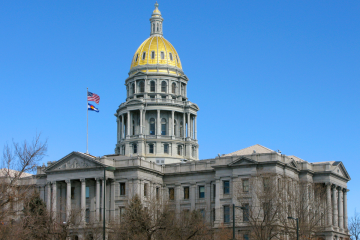
When history looks back upon the coronavirus period and its effect upon schools, one redeeming aspect may be the spotlight that’s been cast upon parental choice in all its forms. Poll after poll after poll after poll suggests that the amount of time it took for many public schools to open for in-person learning—especially in contrast to private schools—helped fuel the flurry of choice programs created by state legislatures over the past year. By the same token, it’s worth remembering that success isn’t only measured in new laws but also in the protection of existing ones. To wit, a furious attack on charter schools was just beaten back in Colorado.

Last month, the state’s house education committee shot down HB21-1295 on a 5–4 bipartisan vote, following some unprecedented political shenanigans that were part of a failed bid to dissuade charter supporters from even testifying at the bill’s hearing. The noxious proposal would have irreparably altered the process by which charter schools in the Centennial State could appeal the decisions of local school boards. Under current law, if a district rules against a charter school (i.e., on an initial petition or contract renewal), an appeal can be filed with the state board of education. This body is empowered to make a final ruling, using a fair and balanced standard that prioritizes the needs and interests of students above all else.

HB21-1295 would have flipped the orientation so that the appeals process starts with the presumption that the denial of a charter is in the best interest of students, unless demonstrated otherwise by the appellant. But the criteria for doing so as outlined in the bill were so laughably amorphous as to make it essentially impossible for the state board to exercise any discretion in the course of adjudication. In effect, the bill would have completely gutted the state’s charter law.

To be sure, nothing makes the eyes glaze over faster than the intricacies of the appellate process regarding charter schools—more so when the legalese is layered on thick. The bill’s cosponsors were surely counting on making their bill appear dry and tedious, but local advocates swiftly saw through the plot. To their credit, groups like the Colorado League of Charter Schools (I serve on the League’s board of directors) helped rally charter supporters, sending over 50,000 emails to legislators and sounding a call to action.

The defensive effort was further aided by Ready Colorado, a state-based conservative-leaning advocacy group that repurposed a website to illustrate the importance of a legitimate and fair charter appeals process. The site features a five-minute video that tells the compelling story of a Denver-area school that had its charter pulled by a local school board under specious pretenses, despite being one of the best schools in the state. The school understandably appealed, and the state board overruled the local district in a unanimous decision. This story wouldn’t have had a happy ending if HB21-1295 had been in effect.

With 261 charter schools serving over 131,000 students, the third-highest concentration in the country, it’s not difficult to understand how Colorado would be ripe for a groundswell of anticharter sentiment. But in this case, there’s an even more dismaying backstory. The wheels for HB21-1295 were greased last fall, when the state board ordered Denver Public Schools (DPS) to reconsider its capricious decision to delay the expansion of the district’s highest-rated middle school. Once a haven for school choice, the Mile High City is now openly hostile to it.

DPS had little recourse but to backpedal after it was called out by the state for having no real arguments against the school. But that retreat galled several board members, including one of the bill’s cosponsors, who had just been elected to the House of Representatives and currently serves on both bodies.

After four hours of emotional testimony, much of it from charter families, the bill’s rejection by Colorado lawmakers is evidence of the state’s strong advocacy community as well as a testament to the breadth and depth of support that charter schools continue to have among voters. At the same time, the razor-thin margin in committee illustrates that Colorado is by no means impervious to the headwinds facing charter schools nationwide. The political shift in Denver is a particularly stark reminder that the forces of resistance and repeal are relentless.

view

The essential counternarrative to the 1619 project

Robert Pondiscio
6.17.2021
Flypaper

Red, White, and Black is a collection of essays published under the aegis of 1776 Unites, the “radically pragmatic and unapologetically patriotic” initiative launched last year by the Woodson Center, a forty-year old Washington, D.C.–based nonprofit. The book’s aggressive subtitle, “Rescuing American History from Revisionists and Race Hustlers,” makes clear its uncompromising editorial stance. The authors did not set out to engage in a polite colloquy but to respond forcefully to today’s dominant narrative about race in America, one advanced most visibly by the New York Times’s 1619 Project, which famously argued that the nation’s “true founding” was marked by the arrival of first enslaved Africans 400 years ago and which sought to “reframe the country's history” by placing the consequences of slavery at the very center of our national narrative. The mission statement of 1776 Unites leads the collection and stands as a cri de coeur for the essays that follow, authored mostly by Black intellectuals, journalists, and entrepreneurs: “We acknowledge that racial discrimination exists—and work towards diminishing it. But we dissent from contemporary groupthink and rhetoric about race, class, and American history.” Indeed, they do. And how.

Readers seeking a point-by-point refutation of the 1619 Project are best directed elsewhere. The authors of Red, White, and Black concern themselves mostly with countering the metanarratives about the role of race in America that 1619 centers and supports. “In the end, what do America’s youth, especially those of color, need to equip themselves for success?” asks Dr. Lucas E. Morel, in the foreword to the collection. This is the essential question for K–12 educators, who are often tasked unfairly with shouldering the burden of answering it independent of other institutions or, when out over their skis, take it upon themselves to answer unilaterally, thereby turning teaching into activism.

Though Red, White and Black is not explicitly about education or primarily for teachers, Morel’s question looms large and provides a through line in response to present controversies about critical race theory and antiracism efforts in schools: What do we want our children, Black and White, to know and believe about their country? For Robert L. Woodson, a career community activist and MacArthur “genius grant” recipient who founded 1776 Unites and serves as the volume’s editor, the answer is clear and the stakes are high. “As long as the perpetrators of race grievance that are represented by the 1619 Project are permitted to go unchallenged, this country will continue its social, spiritual, and moral decline.” Writing in defense of the nation’s “true origins” and founding principles, he asserts that “while acknowledging that slavery and discrimination are part of our nation’s history, we believe that America should not be defined solely by this ‘birth defect’ and that Black Americans should not be portrayed as perpetual hopeless victims.”

The highlight of the volume is by Columbia University professor John McWhorter, a frequent commenter on race and culture whose essay would make an excellent paired reading in classrooms where selections from the 1619 Project are on the syllabus. “One takeaway from the Times’s rhetoric is that the American experiment offers nothing to celebrate, definitionally polluted by its dependence for so long on unpaid labor by Black people,” he writes. This view renders “callow and backward” any celebration of American independence, an argument “so simplistic and anti-intellectual that both rationality and morality require dismissing it.” For all its “elaborate terminology and moral passion vented in serious media organs and entertained by people with PhDs,” the 1619 view “demands that we abjure complexity,” McWhorter insists. “It is a call for dumbing ourselves down in the name of a moral crusade.”

Fordham board member Ian Rowe, the contributor who works most directly in K–12 education, sounds a similar call, calling out “what is so disturbing and dangerous” about the 1619 Project’s aspiration for children. It creates in the minds of students of all races “a vision of America that is imbued with a permanent malignancy that is hostile to the dreams of students of color.” This is simply wrong, writes Rowe, who for more than a decade ran Public Prep, a New York City–based charter school network whose students are predominantly children of color. America’s history will “forever be scarred by the horrific stories of chattel enslavement,” he observes. “But where are the empowering stories of progress?” Reprising a theme he has consistently championed, Rowe writes that successful members of the Black community “must preach what we have practiced in order to achieve our own levels of success,” specifically the power of individual choices that can shape personal outcomes “despite structural barriers associated with race, class, and poverty.”

Other highlights (again, the titles give a clear sense of the volume’s thrust) include “Slavery Does Not Define the Black American Experience,” by Wilfred Reilly; “A Dream as Old as the American Dream: Why Black Patriotism is More Important Than Victimization,” by journalist Clarence Page; and “Critical Race Theory’s Destructive Impact on America,” by Carol Swain.

The hostility that has greeted this emerging counternarrative to the determinism, even nihilism, of the current “dialogue” around race and privilege in American life and culture can scarcely be overstated, particularly in the hothouse of education debate. Chris Stewart, the CEO of Brightbeam, which publishes Education Post, savaged several of the “1776” essayists by name recently, tweeting that “these people exist solely to scold Black people on behalf of white people,” (specifically White conservatives) and functionally asserting that these formidable and accomplished men and women offer their opinions not in earnest but for pay. In light of the nearly incalculable pressure to conform to the present orthodoxy on “structural racism” and the high reputational price exacted from Black intellectuals who criticize it, the primary achievement of Red, White, and Black is its mere existence. In collectively charting their principled independent course, the authors collectively create a permission structure that allows the rest of us to follow where they lead. May we be as admirable, candid, and brave as they are.

Robert Pondiscio is a senior fellow at the American Enterprise Institute.

view

Using transcription analysis to replace traditional classroom observations

Amber M. Northern, Ph.D.
6.17.2021
Flypaper

Traditional classroom observations are time and labor intensive, as they are meant to capture adequately the many nuances of student-teacher interactions and thereby inform future practice. A recent working paper, termed a proof-of-concept study by its authors, explores how audio recordings and automated analyses might supplement (or even replace) traditional in-person observation conducted by a principal or outside evaluator. If successful, this innovation could increase the number of evaluations that are possible, reduce the time and effort involved, eliminate possible evaluator bias, and expand the scope of items reviewed.

The paper’s authors, Jing Liu and Julie Cohen, are alumni of Fordham’s Emerging Education Policy Scholars program and teach at the Universities of Maryland and Virginia, respectively. They utilize transcribed videos of fourth- and fifth-grade English language arts classrooms collected as part of the Measures of Effective Teaching (MET) project, to date the largest research project in the United States on K–12 teacher effectiveness. More than 2,500 fourth- through ninth-grade teachers in over 300 schools across six districts participated in the MET project over a two-year span (academic years 2009–2010 and 2010–2011). The MET project’s sample was composed mainly of high-poverty, urban schools. Liu and Cohen focused on the first thirty minutes of nearly 1,000 videos (four per teacher)—amounting to 30,000 minutes of ELA teaching—from the first year of MET. A professional transcription company did a word-for-word transcription with time stamps attached to the beginning and end of each speaker’s turn. It also labeled different students speaking, as much as the audio quality allowed. The analysts also have value-added scores from state achievement tests and the SAT-9 and observational data from three of the most popular observation instruments.

First, they generated a roster of teacher practices that could be automatically coded, often at a finer grain size than in-person observational data, such as allocation of time between teachers and students taking turns to speak, open-ended and non-open-ended questions, and use of personal pronouns like “I” or “you” to identify where the most attention is being placed at any given point in the lesson. Descriptively, they determine that teachers spent 85 percent of the observation time talking to their students, with classrooms varying considerably in the prevalence of back-and-forth conversation, although the average was 4.5 turns per minute. Next, they analyze the psychometric properties of these various practices and home in on three promising constructs: classroom management (time spent on noninstructional things, such as getting into groups, taking roll, and managing disruptions versus instruction); interactive instruction (open-ended questions and back-and-forth discussion); and teacher-centered instruction (in which teachers are basically lecturing to a silent student body). After applying district and grade fixed effects and controlling for student characteristics—and, in some models, the teachers’ observation scores—they find small but meaningful and consistent correlations between these transcribed factors and various related domains in classroom-observation data. Specifically, they find that audio coded as teacher-centered instruction is a consistent negative predictor of value-added scores, while interactive instruction predicts positive value-added scores (the classroom-management construct has negative correlations relative to value added, but they are not significant, possibly due to lack of power).

Lastly, the analysts did a back-of-the-envelope cost calculation that indicates the minimum cost savings is 54 percent from the transcription approach as compared to the traditional human-observer approach. Several obvious cost drivers—such as the upfront cost of installing audio and video recording equipment and the development of computer algorithms—are not included in the calculation. However, the pandemic pivot to large-scale remote teaching via video conference software likely means that many classrooms also contain the requisite infrastructure, unlike the specially designed rigs utilized by MET over a decade ago.

Liu and Cohen conclude that audio analysis of this type is not at a stage where it could completely replace in-person observations, especially as teachers need to trust and buy into it. That’s true, of course, but let’s not forget that AI voice technology is already out there with a “pedagogical fitbit” that analyzes classroom discourse patterns—in person or virtually—and sends the teacher feedback. What we need now is willingness to try new available technologies like these to improve teaching, not more reasons that we should stick to the status quo.

SOURCE: Jing Liu and Julie Cohen, “Measuring Teaching Practices at Scale: A Novel Application of Text-as-Data Methods,” Annenberg Institute (March 2021).

view

Does public preschool benefit students from Kindergarten to college?

Jeff Murray
6.17.2021
Flypaper

A trio of researchers from the University of Chicago, MIT, and UC Berkeley recently released a working paper that indicates a multitude of positive long-term effects—very long term, in fact—associated with attendance at public preschool. The researchers take advantage of the fact that since the late 1990s, Boston Public Schools (BPS) has operated a large preschool program that assigns available seats via a centralized lottery system to all four year olds who reside within the district. The study considers more than 4,000 randomized four-year-old applicants from admissions cohorts falling between 1997 and 2003 and compares students who were offered a seat in the program to those who were not. It is important to note that there is no determination that any of the students offered a seat actually accepted the offer, although it is highly likely that they did. The model in use here creates an estimate of effects. Though the report and accompanying publicity use “enrollment” and “attendance” interchangeably—as does this review—these are mathematical constructs, and the true amount of treatment received by any student is unknown. Ditto for the control group, many of whom likely sought out and perhaps participated in another preschool program when not offered a seat in the BPS program.

Emphasizing the very long-term nature of effects, the analysis leads with the finding that those offered seats in BPS preschool were 5.5 percentage points more likely than their nonoffered peers to attend a four-year college in the fall after their projected high school graduation. Preschool enrollment also led to a 5.4 percentage point increase in the probability of a student ever enrolling in any college. Estimates for college graduation are also positive though less precise, as fewer students had reached the typical age of that milestone by the time of the analysis.

Preschool enrollment was found to boost the likelihood of high school graduation by six percentage points. Preschool enrollment also caused a nine-percentage-point increase in SAT test taking and raised the probability of students scoring above the bottom quartile and in the top quartile of the SAT distribution. Oddly, however, there was no evidence of impacts on student achievement as measured by the Massachusetts Comprehensive Assessment System (MCAS).

In terms of nonacademic effects, preschool attendance significantly reduced the frequency of suspensions and the probability that students were incarcerated while in high school. Aggregating several measures into a summary index, the researchers found that preschool enrollment improves high school disciplinary outcomes by 0.17 standard deviations on average.

What to make of all this? One possible response is elation—these results seem to validate the value of public preschool. Another possible response is caution. This report appears to refute the phenomenon of fadeout of preschool benefits, but it has been observed so often in the early years of elementary school that some additional evidence backing up the long-term effects in this report must be called for. If fadeout is due to the educational environment into which tiny graduates matriculate, surely that environment will take precedence in setting long-term outcomes, too. After all, it’s a long way from circle time to commencement time.

SOURCE: Guthrie Gray-Lobe, Parag A. Pathak, and Christopher R. Walters, “The Long-Term Effects of Universal Preschool in Boston,” National Bureau of Economic Research (May 2021).

view

The Education Gadfly Show #774: Research Deep Dive: The impact of urban charter schools

6.17.2021
Podcast
 

On this week’s podcast, Brian Gill, senior fellow at Mathematica and director of the U.S. Department of Education’s Mid-Atlantic Regional Educational Laboratory, joins Mike Petrilli and David Griffith for the fourth installment of our Research Deep Dive series, this one focusing on the impact of urban charter schools on student outcomes—for those in both the charter and traditional public schools.

If you listen on Apple Podcasts, please leave us a rating and review - we'd love to hear what you think! The Education Gadfly Show is available on all major podcast platforms.

view

Cheers and Jeers: June 17, 2021

The Education Gadfly
6.17.2021
Flypaper

Cheers

  • High school graduate Timothy Harrison showed up to work because he and his family couldn’t find a way to his graduation ceremony. So his boss and coworkers at the Waffle House sprang into action. —Washington Post
  • “Testing isn’t complicated—it’s just hard.” —Shilpi Niyogi
  • A charter school in Madison is partnering with a local network of real estate and finance professionals to provide school families with $15,000 to help with the down payment on their first home. —Wisconsin State Journal

Jeers

  • Teacher unions in districts like New York City and Chicago are demanding that districts use federal relief funds to reduce class sizes and significantly increase school staffs before reopening. —The 74
  • A new RAND survey finds that teachers are more likely to experience depression symptoms than other adults. —EdWeek
  • A veteran teacher at a Washington, D.C., charter school explains how extended virtual schooling during the pandemic shortchanged her most vulnerable students. —New York Times
view

What we're reading this week: June 17, 2021

The Education Gadfly
6.17.2021
Flypaper
  • “Why ed-tech startups Clever and Nearpod are expected to sell for a combined $1 billion.” —EdWeek
  • A man from Angelus, Kansas, a dwindling town, ruffled feathers by turning a beloved old schoolhouse into a barn. —WSJ
  • David French argues that the critical race theory debate is setting up a collision between the conservative legal movement and the New Right. —The Dispatch
  • Black families that have felt underserved by traditional schools are increasingly turning to homeschooling postpandemic. —New Yorker
  • Catherine Lhamon, who headed the Obama Education Department’s Office for Civil Rights, may spark new feuds with her push to address racial disparities in school discipline outcomes by restoring policies Trump repealed. —The 74
  • “How American K-12 education has become a cultural contradiction.” —George Will
Fordham Logo

© 2026 The Thomas B. Fordham Institute
Privacy Policy
Usage Agreement

National

P.O. Box 110
Burke, VA 22009

202.223.5452

[email protected]

Ohio

P.O. Box 82291
Columbus, OH 43202

614.223.1580

[email protected]

Sponsorship

130 West Second Street, Suite 410
Dayton, Ohio 45402

937.227.3368

[email protected]