Mobile Navigation

  • National
    • Policy
      • High Expectations
      • Quality Choices
      • Personalized Pathways
    • Research
    • Commentary
      • Gadfly Newsletter
      • Flypaper Blog
    • Events
    • Scholars Program
  • Ohio
    • Policy
      • Priorities
      • Media & Testimony
    • Research
    • Commentary
      • Ohio Education Gadfly Biweekly
      • Ohio Gadfly Daily
  • Charter Authorizing
    • Application
    • Sponsored Schools
    • Resources
  • About
    • Mission
    • Board
    • Staff
    • Career
Home
Home
Advancing Educational Excellence

Main Navigation

  • National
  • Ohio
  • Charter Authorizing
  • About

National Menu

  • Topics
    • Accountability & Testing
    • Advanced Education
    • Career & Technical Education
    • Charter Schools
    • Curriculum & Instruction
    • ESSA
    • Evidence-Based Learning
    • Facilities
    • Governance
    • Personalized Learning
    • Private School Choice
    • School Finance
    • Standards
    • Teachers & School Leaders
    • Think Again
  • Research
  • Commentary
    • Gadfly Newsletter
    • Flypaper Blog
    • Gadfly Podcast
  • Events
  • Scholars Program

The Education Gadfly Weekly

Sign Up to Receive Fordham Updates

We'll send you quality research, commentary, analysis, and news on the education issues you care about.
Thank you for signing up!
Please check your email to confirm the subscription.

The Education Gadfly Weekly: How fundamental change happens in America

Volume 20, Number 24
6.17.2020
6.17.2020

The Education Gadfly Weekly: How fundamental change happens in America

Volume 20, Number 24
view
High Expectations

How fundamental change happens in America

America faces three urgent challenges right now: beating Covid-19, reforming law enforcement in the wake of the George Floyd's killing, and rebooting K-12 education. Each creates the opportunity for major, lasting change. Yet that won’t happen without successful models to view, sustained leadership with a modicum of centrism or bipartisanship, and—toughest of all—cultural shifts that demand and entrench those changes.

Chester E. Finn, Jr. 6.17.2020
NationalFlypaper

How fundamental change happens in America

Chester E. Finn, Jr.
6.17.2020
Flypaper

Four VP long shots and their views on ed reform

Dale Chu
6.17.2020
Flypaper

Let’s rebuild special education when schools reopen

Anne Delfosse | Miriam Kurtzig Freedman
6.17.2020
Flypaper

How police killings affect children’s academic outcomes

Tran Le
6.17.2020
Flypaper

The case for statewide diagnostic assessments in the fall

Trinady Maddock
6.17.2020
Flypaper

The Education Gadfly Show: Effecting real change in America

6.17.2020
Podcast
view

Four VP long shots and their views on ed reform

Dale Chu 6.17.2020
Flypaper
view

Let’s rebuild special education when schools reopen

Anne Delfosse, Miriam Kurtzig Freedman 6.17.2020
Flypaper
view

How police killings affect children’s academic outcomes

Tran Le 6.17.2020
Flypaper
view

The case for statewide diagnostic assessments in the fall

Trinady Maddock 6.17.2020
Flypaper
view

The Education Gadfly Show: Effecting real change in America

Chester E. Finn, Jr., Michael J. Petrilli, David Griffith, Ph.D., Amber M. Northern, Ph.D. 6.17.2020
Podcast
view

How fundamental change happens in America

Chester E. Finn, Jr.
6.17.2020
Flypaper

Much newsprint, airtime, and social media discourse in recent days have been consumed by the question of whether the awful George Floyd murder and its voluminous aftermath on the world’s streets will yield fundamental transformations of policing, of the justice system, of race relations, bias, inequality, and opportunity denied.

A week earlier, those same venues were paying lots of attention to whether the Covid-19 pandemic would yield a fundamental transformation of the American economy, of our public health system, perhaps of federalism itself. And, of course, whether and when a functional vaccine might be developed—and what nation will win that epic competition.

In the more specialized realm that I mostly inhabit, similar questions were (and still are) being asked about schooling. Will we find ourselves educating kids in fundamentally different ways, not only in September 2020, but also over the long run with, for example, much more learning outside the traditional school setting? Is a breakthrough coming, one that would finally separate American K–12 education from the “factory model” and long-summer-break calendar? Serious people in the field are talking and writing seriously about “reinventing” schooling in the United States. But what would that require? And what does it portend for teachers, institutional structures, budgets, technology, and much more?

The three challenges—law enforcement, pandemic, schooling—have several common elements, starting with the revelation of major shortcomings and system failures in how we have traditionally done things, followed by widening recognition that big-time changes are sorely needed, including extraordinary breakthroughs. Which realization is inevitably followed by the glum apprehension that the present systems are deeply entrenched, that change requires extraordinary leadership, that breakthroughs are few and far between, that powerful interests will work to keep things pretty much the way they have been for so long, and that American institutions and political arrangements may have lost the capacity to rise to big challenges in the big ways that the times require.

The phrase “Sputnik moment” has grown hackneyed—a development that I and many other would-be pundits have contributed to. So far as I can tell, in the three quarters of a century since World War II, we’ve really had just one such moment, triggered by that little beeping ball that the Soviets put into orbit back when I was thirteen. The Cold War was upon us and Americans suddenly feared that our big arch-enemy was surpassing us, not only with ground forces, conventional weapons, and nuclear armaments—but now even in space. So Congress passed some laws and schools and colleges made some changes and pretty soon JFK announced that America was headed to the moon. (In case you weren’t watching, we’re supposedly headed there again except now NASA’s goals include Mars.)

In the years since, we’ve had many other high-profile, change-creating events, some connected with civil rights, some with the economy, some caused by Mother Nature. And those have nearly always brought some response, an effort to solve the problem and keep it from happening again. These efforts have usually been constructive, if sometimes overwrought.

Some of the resulting changes have been widespread and lasting. Public schools are no longer segregated by law. Banks are no longer as free as they were to make bad loans. The dikes and levees around New Orleans are stronger. Cigarette smoking is widely suppressed. American kids aren’t getting polio.

Transformative or no? Depends on your perspective. Plenty of de facto segregation remains, and by some measures it’s worsening, as are innumerable other forms of prejudice, bias, and inequity. And there’s been backsliding, too. Banks have undone parts of Dodd-Frank. New Orleans may be more secure, but much of the nearby delta keeps flooding. Vaping is in vogue. And parental opposition to vaccination means some once-vanished childhood diseases are enjoying a bit of a comeback (not to mention the Covid-19 plague).

Meanwhile, other huge problems have barely been addressed. Crumbling infrastructure, for example. Climate change. Fatherless children. Kids not learning nearly enough. Unfixed high schools with flat achievement. Out-of-control college costs. The stalling escalator of social mobility. That list could easily get longer.

What distinguishes problems we tackle in a serious way from those we mostly just wring our hands and protest over? What distinguishes those we merely tackle from those we more-or-less solve? And what distinguishes those we “sorta solve” from those that transform society in lasting ways?

Mostly, it appears to me, the push for significant change can originate from either of two directions. In the end, however, both are needed. From the top must come sustained leadership combined with bipartisan, or at least “centrist,” consensus that we’re looking at a major problem overdue for solving, that we’re ready to make big changes to do that, that we have the fortitude to stare down some vested interests, and that we’ll stick with it no matter who wins the next election. From the bottom comes popular understanding and acceptance, even ardor, for such changes. Either may come first, but both will be required. 

Today in America, we’re seeing some pushes from each direction. The impulse for fairer law enforcement is clearly coming from below but has been attracting leaders, while the push to address climate change started with elites but has drawn considerable popular support. Doing something about health care in general and grappling with Covid-19 in particular derives its energy from both. None of those, however, has reached bipartisan or centrist consensus, nor can be we confident of long-lasting commitment.

In K–12 education, where I mostly reside, the pandemic-connected shutdown has brought much anxiety about schools reopening, and we’ve already seen myriad “plans” for how that should be done. But only among pundits and think-tankers am I yet seeing much appetite for large and lasting change in how education gets delivered.

So let me ask again: What would it take for that to come about—and for this opportunity not to go to waste? I believe three ingredients would be key. In order of increasing difficulty, they are: (1) successful examples, (2) sustained leadership with a modicum of centrism or bipartisanship, and (3) a culture shift on the part of parents—or at least policy changes that enable those who can and want to shift to do so. 

Since one of the biggest deterrents to successful education innovation is people’s inability to imagine something they can’t actually see in action, examples matter—and they’re beginning to show up in a handful of foresighted districts and charter networks that were already savvy about technology, adroitly led, and (for the most part) small enough to be nimble.

By autumn I trust there will be more worthy examples.

As for leadership from the top, in a one-party community or state, that may not require bipartisanship. Thus we’ve seen sustained education reform in places like Florida and—in its way—California. But in most of America, including bellwether Massachusetts, big education change has required a commitment on both sides of the aisle to keep a reform agenda moving forward even when the governor or legislative leaders change. That’s not impossible today. It’s just harder than ever to achieve.

Yet culture shift will be the biggest challenge, and it goes beyond habits and attitudes to include the basic rhythms of family life in America. Sputnik, let’s recall, held big implications (or so we thought) for the country’s welfare but didn’t much affect the John and Jane Doe family.

So long as the overwhelming majority of parents view brick-and-mortar schools as the essential place both to educate and to look after their children five days a week, and so long as many parents find it difficult or impossible to materially assist their kids with learning at home, we’ll find ourselves loath to shift to a different form of education, no matter how superior it could turn out to be. Which brings us back to successful demonstrations, to leadership, and if I may, to the principle of school choice. For if and when the virus threat is vanquished by a vaccine or cure, it may turn out that transformed education is craved and valued by some families but rejected by others. Enabling and accommodating that kind of structural transformation may turn out to be the best available path to the future.

view

Four VP long shots and their views on ed reform

Dale Chu
6.17.2020
Flypaper

Last month, I examined nine of the top candidates for Democratic VP nominee and their views on education. The upshot was that there wasn’t much to get enthused about. Most of the candidates’ on-the-record comments on education hewed closely to the teachers union talking points in calling for more spending and less accountability. The best thing that could be said was that some of them hadn’t said much at all on the issue.

However, in the weeks that followed, the wave of mass demonstrations touched off by the heinous killing of George Floyd in Minneapolis has elevated the prospects of several candidates once seen as long shots. Four women in particular—Keisha Lance Bottoms, Val Demings, Gina Raimondo, and Susan Rice—were not on the radar of the Washington Post analysis I used for my initial write up, but have since gained ground in the packed field according to both the New York Times and Politico.

The search is still somewhat fluid, but the vetting is well underway, and those close to the process confirm that the dynamics continue to change quickly. Jennifer Palmieri, who advised Hillary Clinton during her 2016 hunt for a running mate, said, “Somebody who does not make a lot of sense in June can make a great pick on August 1.” With her words in mind, let’s take a look at these four rising stars and their positions on education:

1. Keisha Lance Bottoms (GA): The mayor of Atlanta hit all the right notes in a widely lauded, unscripted speech she delivered in the wake of rioting and looting in her city. Simultaneously projecting strength, vulnerability, passion, and reason, Bottoms rose to the moment in a manner few leaders have. On education, however, her most consequential action in the public’s eye—fulfilling a campaign promise to hire a chief education officer—landed with an embarrassing thud.

About two years ago, Bottoms publicly announced the appointment of a thirty-year-old Teach For America and Boston Consulting Group alum to the newly created cabinet level post. Days later, the mayor inexplicably rescinded the offer, even though the new hire had reportedly moved back to Metro Atlanta to begin working for the city.

Although Bottoms offered no explanation for the sudden change of heart, conventional wisdom suggests the failure to launch was linked to fears from Atlanta Public Schools that the new role was a nose under the tent of eventual mayoral control. Bottoms vehemently denied the notion, saying, “I think that any elected official will tell you that school takeover is considered political suicide, so I can tell you now that I’m not interested in jumping off a bridge.” Since then, it appears the mayor has abandoned the effort, illustrating the primacy of politics over her convictions, at least when it comes to education reform.

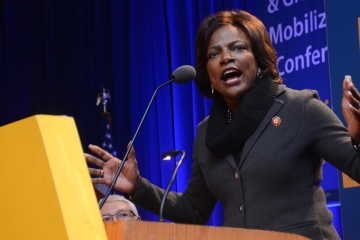
2. Rep. Val Demings (FL): The recent unrest and focus on police misconduct has raised the profile of the black congresswoman and former police chief. While Demings’s law enforcement bona fides could prove problematic on the campaign trail, her ability to speak commandingly on the subject could also be a significant asset at a time when school districts across the country have started cutting ties with police departments.

Demings’s record on education is informed in part by her experience leading the Orlando Police Department, where she assigned officers to fixing playgrounds and helping residents earn their high school equivalency degrees. She is against arming teachers—calling the idea “preposterous”—and believes that doing so in fact complicates law enforcement’s ability to respond to active shooters on campus. On policy, Demings is a proponent of universal pre-K and supported the teacher strikes for higher pay and more school funding.

3. Gov. Gina Raimondo (RI): A leader of the Democratic party’s centrist wing, the governor of the smallest state in the union recently earned the praise of conservative columnist George Will, who wrote that a Biden-Raimondo ticket would “restore adult supervision” in Washington. My colleague Erika Sanzi has written extensively about her home state’s chief executive (both the good and the not so good), most recently with regard to Raimondo’s leadership in response to the pandemic and making the best of on-the-fly distance learning in the Ocean State.

Now in her second term, Raimondo has stated that education is her “number one priority.” Although her push on early childhood and affordable higher education will be worth watching, it’s the state takeover of Providence’s public schools that will garner ongoing scrutiny. To her credit, Raimondo recently announced that students in Rhode Island will return to in-person schooling on August 31. Her admirably sensible and even-keeled approach is a marked contrast from the prevailing circumspection about school reopening this fall.

4. Susan Rice (DC): President Obama’s former national security adviser and the first black woman to serve as ambassador to the United Nations, Rice’s bid may be the longest of the bunch given her remarks on the Benghazi attack, which Republicans would assuredly attempt to use as a giant distraction should she be tapped. Moreover, she has never held elected office, though her extensive foreign policy experience is par excellence. Rice has been an outspoken critic of the current administration, and once flirted with moving to Maine to challenge Susan Collins for her U.S. Senate seat.

Equipped with a gold standard Washington resume, Rice’s credentials on education and domestic affairs are relatively thin. Rice’s late mother, however, was a vice president at the College Board and considered an education policy expert. Indeed, Lois Dickson Rice was known as the “mother of the Pell Grant” because of her work lobbying for its creation. She was also a guest scholar at the Brookings Institution, researching higher education policy. For her part, one could surmise from Rice’s elite education that some of her mother’s influence likely rubbed off.

—

Compared to the first nine candidates I reviewed, there’s more to get excited about with these four in the veepstakes. Yes, Bottoms doesn’t seem to be strong on education, but there’s reason to be bullish (or at least not bearish) on the other three. Demings is right that arming teachers is a red herring in the heated school safety debate. Raimondo brings a ton of heft and credibility, especially in light of her willingness to take on the messiness of school turnaround. And although Rice doesn’t have much of an education record to speak of, her personal experience being raised by an accomplished education policy wonk is more than can be said about others jockeying for the nod. To be sure, I remain highly skeptical about the education views of the VP field, but there’s still enough time between now and August to become guardedly optimistic.

view

Let’s rebuild special education when schools reopen

Anne Delfosse | Miriam Kurtzig Freedman
6.17.2020
Flypaper

This spring’s school closures have challenged us to look at many things differently and to be open-minded, creative, and brave about moving toward necessary change. As we consider reopening schools in the fall, let’s hold on to that mindset and ask what should special education become? Does the forty-five-year-old federal law (IDEA) need a thorough redo? We believe it does.

There is much to celebrate about all that public schools now provide for students with disabilities. We’ve certainly come a long way since 1975, when the law was enacted. Yet, especially as this crisis has revealed, special ed’s plethora of services, costs, and procedures have produced unintended consequences and missed opportunities.

At the start of the closures, Philip Howard’s USA Today discussion of cumbersome regulations included this: “Schools are a hornet’s nest of legal rules. Soon after New Jersey closed its schools...a parent of a special education student complained that it violated his rights.”

The parent was surely right. The closure also violated the “rights” of innumerable other students, with and without disabilities. Yet this parent was onto a key feature of our current quandary: While other students may have a theoretical “right” to an education, his child has a statutorily enforceable and uncapped entitlement! The crisis lays bare this difference.

Nationally, about 14 percent of today’s students—identified as disabled—are entitled by federal law to a “free appropriate public education” (FAPE). Nobody else is. Having an entitlement is a big deal because it ensures that a government program will provide eligible recipients (here, students with disabilities and their parents) with a specific set of services, rights, and other benefits—no matter the circumstances, school budget constraints, or what their peers get.

Now more than ever, this entitlement challenges schools. The national coronavirus crisis turned upside down the education of more than 50 million public school students, including 7 million with disabilities. Educators, students, and parents have struggled on a steep learning curve relative to distance learning, virtual classrooms, etc. 

How can schools provide a FAPE for some while trying to innovate for all students? How are they supposed to implement burdensome special-ed regulations, including timelines and meetings, always working under the fear of litigation, during this trying period? Even before the crisis, special ed teachers spent much time on meeting bureaucratic requirements, leaving a reported 27 percent of their time for actual instruction. Many chose to leave the profession. One can only wonder what the crisis has been doing to teachers.

When schools reopen, we can expect that most students will have regressed in academics and other skills. (If they don’t, why have schools?) Schools will face this challenging reality as they work to support all students to catch them up and help them learn anew. Despite this reality, however, only special education students will be able to assert legal rights and file due process claims against their schools for compensatory services to make up for any regression, to say nothing of complaints for missed timelines, services, and other requirements. Schools expect a barrage of such claims.

Really? Yes, under current law.

Notably, special education is the only entitlement program in our public schools—rights that are enforceable through due process hearings and in court. Since 1975, Congress has wisely chosen not to create new entitlement programs in the K–12 realm.

Who are these students? The law was written to provide access to public education for students with severe and profound needs. Today, however, estimates are that those children make up only 10 to 20 percent of the students enrolled in special ed. The vast majority (estimated at 80 to 90 percent) of today’s students with disabilities have mild or moderate needs. They are educated mostly in general education classrooms. Yet the law, rights, and regulatory requirements for these two very different groups are the same.

In 2001, writing in Rethinking Special Education for a New Century, Tyce Palmaffy posed a key question: “The question of why learning disabled children are more deserving of extra help than everyday low achievers is one that LD advocates have never quite answered.” Nor has it been answered nineteen years later.

It’s also time to ask: Do students with full access to public education still need “protections”? And what about the law’s opportunity costs? For example, how can America’s prosperity and leadership position continue when so many other students, including advanced students, are underserved? How can we get teachers to focus on instruction instead of compliance? How can schools better spend scarce resources?

Yet the special education beat goes on. Even during this crisis, school administrators and attorneys spend inordinate amounts of time and effort on how to provide for special education students and how to comply with legal mandates when other students get far less than they should. Parents of special education students spend effort, often with great anxiety, to “fight” for their child against their public school, which the current statutory arrangement reinforces. These dysfunctional responses cannot be what the good folks who wrote this law had in mind.

This civil rights law was designed to provide individually-planned access to public education for students with disabilities—not to create a semi-separate system serving one subset of students. Regarding compensatory services for students with mild or moderate needs, if their parents, advocates, and attorneys prevail in demands for special services while their classmates do not receive any, how is that fair, equitable, or wise? It is not—and it’s not what this law intended. If and when that happens, public support for special education will surely decline. Most people understand crisis, fairness, and its opposite. Be careful what you wish for.

When this crisis abates, our world will look very different. The crisis has shed a bright light on many failings of American education, including inequalities, one of which is the inequitable distribution of rights and entitlements to education.

What to do? For starters, we believe it’s time to divide the special education student body into two very different groups: the far larger group of students who have mild and moderate needs and are mostly educated in general education classrooms and the smaller group who have profound and severe needs. In so doing, we take guidance from the Supreme Court’s 2017 decision, Endrew F. v. Douglas County School District. The Court highlighted the reality of two different groups of students with disabilities—those who are pursuing general education goals and those, generally with severe or profound needs, whose education is individualized according to their circumstances. 

For the larger group, the entitlement has completed its mission of providing access to education and should end (or be capped or otherwise limited), especially as it has also become increasingly dysfunctional and has brought great opportunity costs. Instead, it is time to build appropriate systems for these students within one interconnecting mechanism referred to as “general education.” Students with mild or moderate needs should be served through quality, individualized regular education—as should all other students. Dispute-resolution avenues should be provided for all students.

Some may argue that, rather than extracting some students from an entitlement, all students should have one. We disagree. The last thing we need is more lawyers, lawsuits, regulations, and bureaucrats running our schools.

For the smaller group of students with more severe and complex needs, it’s time for a thoughtful taskforce to propose how to proceed. Should these students retain an entitlement, or is another approach to ensure services more appropriate? Should the law mandate that other social service agencies step up to serve students who often have complex and costly needs? Should their education remain a school district responsibility, or should the state, through other agencies, become a mandated partner?

In short, special education claims and rights that go beyond reasonableness and fairness, all exacerbated by this crisis, face us squarely. We can no longer ignore them. They present the opportunity to question the continuing need for the forty-five-year-old entitlement for millions of students with mild or moderate needs and to work to establish a better way forward for students with severe and profound needs.

When schools reopen, maybe, just maybe, we will finally confront the fact that it’s time to end or limit the entitlement for many students with disabilities and devise a system that is leaner, rational, equitable, and more effective for all students. It’s time to build anew.

view

How police killings affect children’s academic outcomes

Tran Le
6.17.2020
Flypaper

As national unrest builds along with the deaths of George Floyd, Breonna Taylor, and too many others at the hands of police officers, people worldwide are responding with marches, protests, critical reflection, and grief. Right now, the Black Lives Matter movement rages on. But what lies in the long-term for those in Minneapolis and other cities where police have murdered one of their own residents? A new working paper by Harvard professor Desmond Ang gives insight into the potential ramifications of recent police killings, particularly on the educational and psychological well-being of youth in those areas.

To be sure, it’s difficult to find causal evidence of the social impact of police use of force on local communities because police killings aren’t random and are more likely to occur in disadvantaged areas with high poverty and crime rates and other correlated characteristics. Ang’s contribution to the literature, then, is his comparison of students within the same neighborhoods but who live either very close to a killing (treatment group) or slightly further away (control group). This analysis allows him to identify a causal relationship through examination of two groups who come from similar backgrounds and were likely exposed to similar local conditions other than the killing itself.

Ang obtains his data from two sources, one containing home addresses and individual-level panel data for all high school students enrolled from 2002–16 in a large urban school district in the Southwest U.S., and the other containing incident-level information on officer-involved killings in the surrounding county. With over 700,000 addresses and 627 incidents over fifteen years, he calculates each student’s precise geographic proximity to police violence and uses a difference-in-differences statistical design to compare changes in students’ academic outcomes and emotional well-being (measured by self-reported feelings of safety and the number of students designated as “emotionally disturbed”) from those who lived within 0.5 miles of a killing to those from the same neighborhood who lived between 0.5 and 3.0 miles away from the killing. (It’s worth noting that three miles goes a long way in a city, but the overall results still hold as the control group shrinks from students living within one or two miles from an incident.)

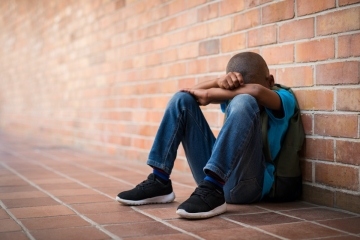
Ang finds that living closer to police killings leads to persistent drops in grade point averages, lower rates of high school completion and college enrollment, and increased incidence of emotional disturbance. For students within 0.5 miles of the incidents, GPAs significantly declined by 0.04 points in the semester of a shooting and between 0.07 and 0.08 points in the two subsequent semesters. These effects predict a roughly 1.7 percentage point decrease in graduation rate and 0.09 percentage point decrease in college enrollment among ninth and tenth graders. Nearby students are also twice as likely to report feeling unsafe outside of school the year after a killing, and are 15 percent more likely to be classified as emotionally disturbed in the following semesters.

Inserting race into the equation only corroborates what we’ve witnessed over and over. These harmful effects are driven entirely by Black and Hispanic students in response to police killings of Black and Hispanic individuals. That is, Ang saw no significant impact on White or Asian students and no effects for police killings of White or Asian suspects. This is consistent with large racial differences in concerns about police brutality, suggesting that the educational spillovers of police killings may derive in part from perceptions of discrimination and injustice.

The fight against institutional racism and police misconduct should be taking place not only in the streets, but also in our schools. This is a teaching moment about the United States’s longstanding sociopolitical history of racism and how it still permeates through every sector of society today. But this is also a critical period to support and validate our Black and Brown students. Police killings of underrepresented minorities evidently exacerbate the already-too-wide racial academic achievement gaps. We have to do whatever we can to keep them from falling further through the cracks.

SOURCE: Desmond Ang, “The effects of police violence on inner-city students,” Working Paper (2020).

view

The case for statewide diagnostic assessments in the fall

Trinady Maddock
6.17.2020
Flypaper

The start of a new school year is always filled with challenges. New teachers, new classes, and new expectations can be difficult for both teachers and students. But what if teachers and students haven’t been in school for six months or more? How can schools try and prepare to get back to a sense of normalcy after all of this? One solution, proposed by Nicholas Munyan-Penney and Charles Barone at Education Reform Now, could be to administer diagnostic assessments to determine students’ learning level at the beginning of the school year.

Diagnostic assessment occurs before instruction begins so that schools can assess students’ achievement levels. They help inform choices of lessons and materials, how best to group students to provide targeted learning, and decisions related to any Covid-19-related budget cuts or reduced school hours.

Munyan-Penney and Barone have three main recommendations. One, administer assessments statewide so there’s a consistent measure for all districts to evaluate student learning. The pandemic has ruined schools’ plans for regular end-of-year assessments, so this would be the next opportunity to reliably determine where students are at. A statewide diagnostic assessment could also be useful for policymakers and education researchers, who would be able to use the data it generates to answer difficult questions about the effectiveness of different district responses to the pandemic, how varying levels of internet access affected learning, and what can be done to better prepare ourselves for emergency situations in the future, as well as any closures in the fall. However, the likelihood of this happening remains uncertain. While many states have recommended diagnostic assessments in their reopening plans, these plans are only suggestions for districts, and no state thus far has indicated that it’ll require them.

The authors’ second recommendation is to use the assessment to inform decision-making around next year’s curricula and instruction. They write that most of the assessments in the report are able to provide immediate results and should be administered in the fall. However, waiting until fall would leave little to no time for school leaders and teachers to adjust their curricula to target gaps in student learning. Some states, such as Mississippi, have recommended administering assessments as early as July—perhaps a better timeline than waiting until school has already started.

And lastly, the authors recommend that these diagnostic tools shouldn’t be administered as high-stakes assessments. Especially in the midst of such a crisis, the purpose of these tests shouldn’t be identifying subpar teachers or school leaders.

Munyan-Penney and Barone’s idea to implement a new statewide diagnostic assessment diverges from recent trends in education. In February, for example, Georgia Governor Brian Kemp reduced the number of mandatory statewide tests. In March, U.S. Secretary of Education Betsy DeVos issued a waiver for this year’s mandatory testing. And a large swath of universities are dropping the requirement that applicants take the SAT or ACT. Most of these decisions are in response to the pandemic and may be temporary—but not all. The University of California notably announced last month that its move away from those entrance exams was permanent, and that it may not replace them.

Despite all of this political backlash, we shouldn’t be so quick to slash testing altogether. While standardized assessments are imperfect (and what isn’t?), they're nevertheless important tools for all those involved in education to measure levels of student learning and hold districts accountable for it. And that’s when schools are operating as usual. So especially now during such uncertain times—wherein all schools responded to distance learning in different ways, students had varying access to online learning materials, and when students and adults are experiencing heightened levels of stress and anxiety—we need to utilize consistent measures to gauge the damage caused by coronavirus and make plans to remedy it as efficiently as possible. And the type of diagnostic test for which Munyan-Penny and Barone advocates is just that: A measure. What the measure may expose is what we should be truly concerned about.

SOURCE: Nicholas Munyan-Penney and Charles Barone, “COVID-19 Response: Diagnostic Assessment,” Education Reform Now (May 2020).

view

The Education Gadfly Show: Effecting real change in America

6.17.2020
Podcast

On this week’s podcast, Checker Finn, Mike Petrilli, and David Griffith discuss what it takes for real change to happen in America. On the Research Minute, Amber Northern examines whether student outcomes improve when college faculty engage with students more often.

Amber's Research Minute

Scott E. Carrell and Michal Kurlaender, “My Professor Cares: Experimental Evidence on the Role of Faculty Engagement,” NBER Working Paper #27312 (June 2020).

The Education Gadfly Show is available on Google Podcasts, Libsyn, Spotify, iHeartRadio, Apple Podcasts, TuneIn, The Podcast App, PodBean, Podbay, Chartable, Castbox, and myTuner Radio.

Fordham Logo

© 2026 The Thomas B. Fordham Institute
Privacy Policy
Usage Agreement

National

P.O. Box 110
Burke, VA 22009

202.223.5452

[email protected]

Ohio

P.O. Box 82291
Columbus, OH 43202

614.223.1580

[email protected]

Sponsorship

130 West Second Street, Suite 410
Dayton, Ohio 45402

937.227.3368

[email protected]