Mobile Navigation

  • National
    • Policy
      • High Expectations
      • Quality Choices
      • Personalized Pathways
    • Research
    • Commentary
      • Gadfly Newsletter
      • Flypaper Blog
    • Events
    • Scholars Program
  • Ohio
    • Policy
      • Priorities
      • Media & Testimony
    • Research
    • Commentary
      • Ohio Education Gadfly Biweekly
      • Ohio Gadfly Daily
  • Charter Authorizing
    • Application
    • Sponsored Schools
    • Resources
  • About
    • Mission
    • Board
    • Staff
    • Career
Home
Home
Advancing Educational Excellence

Main Navigation

  • National
  • Ohio
  • Charter Authorizing
  • About

National Menu

  • Topics
    • Accountability & Testing
    • Advanced Education
    • Career & Technical Education
    • Charter Schools
    • Curriculum & Instruction
    • ESSA
    • Evidence-Based Learning
    • Facilities
    • Governance
    • Personalized Learning
    • Private School Choice
    • School Finance
    • Standards
    • Teachers & School Leaders
    • Think Again
  • Research
  • Commentary
    • Gadfly Newsletter
    • Flypaper Blog
    • Gadfly Podcast
  • Events
  • Scholars Program

The Education Gadfly Weekly

Sign Up to Receive Fordham Updates

We'll send you quality research, commentary, analysis, and news on the education issues you care about.
Thank you for signing up!
Please check your email to confirm the subscription.

The Education Gadfly Weekly: Betsy DeVos deserves our thanks for removing a major barrier to remote learning

Volume 20, Number 12
3.25.2020
3.25.2020

The Education Gadfly Weekly: Betsy DeVos deserves our thanks for removing a major barrier to remote learning

Volume 20, Number 12
view
High Expectations

School accountability in the time of virus

We can’t hold schools accountable for academic results over the next three months. Too much is out of their control. But there are steps that they—and their districts, networks and states—can and should take to ensure that kids learn and to encourage transparency. Once they deploy online assignments, for example, what about simple counts of how many kids actually complete them? What steps are schools and teachers taking to contact, nudge and help those who aren’t?

Chester E. Finn, Jr. 3.25.2020
NationalFlypaper

School accountability in the time of virus

Chester E. Finn, Jr.
3.25.2020
Flypaper

Betsy DeVos deserves our thanks for removing a major barrier to remote learning

Michael J. Petrilli
3.25.2020
Flypaper

Keep kids learning while school is out: Bring back “current events”

Robert Pondiscio
3.25.2020
Flypaper

Can schools avert the coronavirus cliff?

Dale Chu
3.25.2020
Flypaper

Do KIPP middle schools improve college enrollment and persistence?

Jessica Poiner
3.24.2020
Ohio Gadfly Daily

From the top down: A fifty-state look at school choice transportation policy

Jeff Murray
3.25.2020
Flypaper

The Education Gadfly Show: COVID-19 concerns: Special education and accountability

3.25.2020
Podcast
view

Betsy DeVos deserves our thanks for removing a major barrier to remote learning

Michael J. Petrilli 3.25.2020
Flypaper
view

Keep kids learning while school is out: Bring back “current events”

Robert Pondiscio 3.25.2020
Flypaper
view

Can schools avert the coronavirus cliff?

Dale Chu 3.25.2020
Flypaper
view
KIPP MS Mathematica SR image

Do KIPP middle schools improve college enrollment and persistence?

Jessica Poiner 3.24.2020
Ohio Gadfly Daily
view

From the top down: A fifty-state look at school choice transportation policy

Jeff Murray 3.25.2020
Flypaper
view

The Education Gadfly Show: COVID-19 concerns: Special education and accountability

Michael J. Petrilli, Chester E. Finn, Jr., David Griffith, Ph.D., Amber M. Northern, Ph.D. 3.25.2020
Podcast
view

School accountability in the time of virus

Chester E. Finn, Jr.
3.25.2020
Flypaper

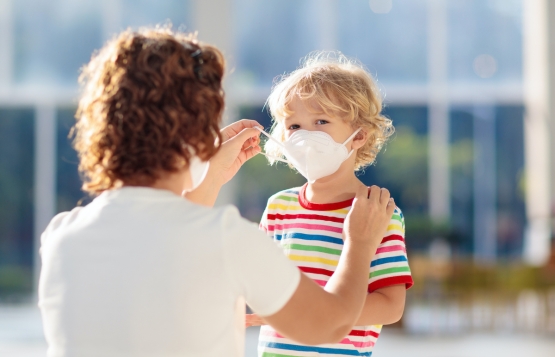
Let’s assume that nobody is going to end up taking state assessments or end-of-course exams this spring. One way or another, everyone will be waived from those federal obligations and their state-imposed counterparts, mainly at the high-school level. The College Board and ACT are striving to improvise, reschedule, and reformat their volitional tests, such as AP and SAT, and some—maybe a lot—of that will continue for purposes of college admissions and credit. But it’s unlikely that the states, districts, and schools that have been requiring participation in those tests will be able to do so. Nor will they be able to administer third-grade “reading guarantee” tests or the myriad other universal tests that have been playing a central role in results-based accountability for schools, districts, individual students, and sometimes for their teachers.

I agree with Jay Mathews—and, it seems, Diane Ravitch—that “the tests will be back,” presumably next year. They are, as Jay writes, “deeply woven” into the culture of American education, plus mandated by laws that aren’t likely to change. But we obviously can’t hold schools accountable for results over the next three months. Too much is out of their control. This leads to the question: What steps do we hope they—and their districts, networks and states—will take? And are there ways to encourage transparency, if not true accountability, for taking those steps?

Yes, it’s mostly about process, not outcomes, and that always makes me uncomfortable. But everything is uncomfortable now, and schools, districts, and charter networks can fairly be expected to grapple with the discomfort, not just endure it. They’re not off the hook just because it’s a plague year. Arguably, they’re more responsible than ever as the federal government eases regulations and offers waivers. Besides, there might be things we learn during this time of improvisation that could improve our overall approach to accountability when the tests return.

Once schools, districts, and networks manage to deploy online assignments—which so far is happening at radically different velocities around the country, what about simple counts of how many kids are actually completing them? What steps are schools and teachers taking to contact, encourage and assist those who aren’t? It’s easy to conjure revealing metrics that give clues, if not to how well kids are learning, at least to how hard schools are working to see that they try. While we’re at it, what about teacher participation in these efforts? As we know from ESSA-plan struggles, attendance and absenteeism by both students and teachers can be important clues to a school’s organizational health. In the virtual world, of course, a complicating factor is kids and adults who lack access to the requisite technology or don’t know how to operate it. But South Carolina is dispatching Wi-Fi enabled buses to function as internet “hotspots” in low-income neighborhoods, and districts could be shipping laptops or tablets and instructions to the homes of those without. That’s too hefty a price tag for many districts—but an excellent use for whatever federal stimulus dollars end up in the K–12 realm.

How about efforts by schools to schedule IEP conferences (virtual, phone, conference call, Zoom, etc.) with parents of special-needs pupils? How many such conferences occur in a month, how many IEPs get modified to deal with the changed circumstance—and how many such students begin to get the supplemental or remedial instruction that they may need? (And what about something analogous for ELL youngsters?)

How satisfied are students, parents, and teachers with what the district, network, or school is providing them by way of quality opportunities during this trying time? If “school-climate” surveys make sense when school is physically in session, why not their virtual equivalent now?

What about planning for tomorrow? What steps are schools taking to do better at all this in May than in April? What are their plans for summer learning? (Two sets of plans at this point, methinks, one for physical summer school, another for summer online, including both catch-up and move-ahead.) What about planning for how to resume regular school—God willing—in the fall? John Bailey predicts more closures next year, so two sets of plans are needed here, too. And the planner will need to factor in whatever adjustments are dictated by the present shutdown and whatever improvements can be made based on the experience that we’re all living through.

That’s not the end of it, either. Not every test is entirely out of the question, even now. The kinds that are routinely taken online, whether NWEA’s MAP tests or the Smarter-Balanced adaptive assessments, don’t have to be taken in a schoolroom. Particularly when they’re the sort of test, such as MAP usually is, that’s given several times a year and thus shows growth within the year, not only do practitioners get valuable formative feedback from the results but districts (or charter networks) can also use them to gauge the gains that are (or aren’t) being made by students in a particular school, grade level, or subgroup.

Places with a district-wide or network-wide curricula can also devise their own on-line formative and summative assessments if they haven’t already done so, keyed to their curricula. Obviously these, too, must be amenable to being taken at home. If newly devised, they won’t yield growth or effectiveness data for schools, but they’ll at least provide an end-of-year status report for schools and subgroups, against which to plan what needs to happen over the summer and next year.

Beyond online testing are many rich and revealing—and educationally beneficial—forms of student portfolios, projects, research papers, book reports, and other evidence of learning and accomplishment. In normal times, these are usually deployed—and evaluated—mainly by individual teachers. But if they’re submitted online, they could easily be evaluated by others, too: other teachers, math specialists, curriculum directors, and more. Start by asking simply whether such student work is being turned in? Is every school in the district or network tabulating receipt of such assignments by X percent of its students, then cross-tabbing by grade level and student group and if not why not and what’s being done about it? How about teachers evaluating each other’s students’ work and somebody monitoring and moderating for consistency of assignment difficulty and evaluative criteria?

It’s likely too late in the year, and school and district circumstances are too different, for states to mandate much (perhaps any) of this. But motivated district and network leaders, as well as individual school heads, could make a lot of it happen, and back-office staff could remotely tabulate and analyze the data.

Accountability this year will be different than any time in the past quarter century. But it isn’t dead. It’s simply engaged in social distancing.

view

Betsy DeVos deserves our thanks for removing a major barrier to remote learning

Michael J. Petrilli
3.25.2020
Flypaper

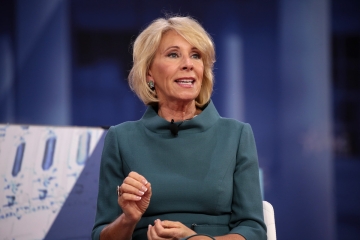
As a Never-Trumper who suggested to Secretary DeVos that she resign after the 2018 election, I haven’t exactly been this Administration’s biggest fan. But let me say without equivocation: She has risen to the occasion during the current coronavirus crisis, and for that she deserves praise.

Most critically, she and her team acted swiftly to clarify that federal civil rights and special education laws need not stand in the way of distance learning while schools are closed.

This was no small or easy thing. For decades now, politicians and policymakers across the ideological spectrum have been afraid to do anything to upset special education advocates. All for good reason, to be sure. Children with disabilities are often coping with heart-breaking illnesses and disorders, and in many cases don’t receive the services to which they are entitled. This has turned their parents into ferocious fighters on their behalf, and given them every reason to take a hard, uncompromising position when it comes to the rights of their kids.

Into this buzzsaw walked Secretary DeVos and her team, after the Office for Civil Rights’s original COVID-19 guidance left the impression that districts would be safer not providing any remote instruction at all once schools were closed, lest they invite trouble by not serving their students with disabilities well enough. Once alerted to this problem, the Administration acted with remarkable speed, releasing new guidance just days later imploring schools to move full speed ahead:

[The Office for Civil Rights] and [the Office for Special Education and Rehabilitative Services] must address a serious misunderstanding that has recently circulated within the educational community. As school districts nationwide take necessary steps to protect the health and safety of their students, many are moving to virtual or online education (distance instruction). Some educators, however, have been reluctant to provide any distance instruction because they believe that federal disability law presents insurmountable barriers to remote education. This is simply not true. We remind schools they should not opt to close or decline to provide distance instruction, at the expense of students, to address matters pertaining to services for students with disabilities. Rather, school systems must make local decisions that take into consideration the health, safety, and well-being of all their students and staff.

As Secretary DeVos said in a statement, “This is a time for creativity and an opportunity to pursue as much flexibility as possible so that learning continues. It is a time for all of us to pull together to do what's right for our nation's students.”

Bingo.

This does not—and should not—let public schools off the hook for serving students with disabilities—either during the crisis or afterward. The guidance makes it clear that schools should do the best they can to provide services remotely—and should also provide compensatory services as soon as possible to help kids catch up. It’s also a good idea for them to reach out to parents to set up (video-conferenced) Individualized Education Program meetings, if possible, to discuss the services that will be provided, especially in states where schools will be closed for the remainder of the school year.

And no one can blame parents of special-needs students for doubting that districts will in fact make good faith efforts in implementing the guidance, given that so many districts have failed to serve their children well in normal times. (When this is all over, all of us should put “reforming IDEA” on our to-do lists!)

But these are not normal times. The best we can do is to expect all schools to do the best that they can. And that means moving forward, right away, with distance learning for everyone.

Thank you, Madame Secretary!

view

Keep kids learning while school is out: Bring back “current events”

Robert Pondiscio
3.25.2020
Flypaper

I’m a disciple of E.D. Hirsch, Jr.’s prodigious work on reading and language proficiency, and an unabashed fan of his Core Knowledge curriculum (full disclosure: I was recently invited to join the board of the Core Knowledge Foundation). The big idea undergirding Hirsch’s work is that there is a body of “tacit, taken-for-granted knowledge needed for general reading and writing in a speech community.” This insight has led him and his disciples to argue indefatigably for a common curriculum in the elementary and middle school years.

But even the most knowledge-rich school curriculum cannot inventory or anticipate every conceivable item of mental furniture the literate person is expected to possess. A month ago, for example, if you used the terms “coronavirus,” “COVID-19,” or “social distancing,” you would have had to explain what they meant. Now, you can confidently assume everyone knows. That’s how language works among the fully literate members of a “speech community.”

Because the store of general knowledge we need for full language proficiency is fluid, not fixed, reading and watching the news should be a staple of the well-educated person’s knowledge and language diet. But a time when it’s never been more important to be well-informed and literate, children have never been less likely to pay close attention.

A Common Sense Media report found that only about half of children (48 percent) say following the news is important to them. This mirrors almost precisely findings from the most recent National Assessment of Educational Progress exam in civics, which registers by far the poorest performance of all tested subjects: 49 percent of eighth-graders reported discussing current events at least once a week in school. The most recent fourth-grade NAEP civics exam was administered in 2010; at that time, a mere 20 percent of ten-year-olds said they discussed current events in school “almost every day.”

If you’re north of forty, you probably remember “current events” as a classroom warhorse. Nearly every morning in my working-class Long Island elementary school, one student would have the job of reading, summarizing, and reporting to the class the day’s news: one international story, one national, one local, plus sports and weather. Not the most sophisticated pedagogical approach, perhaps, but it normalized the idea of paying attention to what’s going on in the world, even for kids. Remember the Weekly Reader? Your kids don’t. It ceased publication in 2012, not long after celebrating its one hundredth anniversary.

The mass media, pre-internet TV days of the 1960s and ’70s were probably the high-water mark for common culture and Hirschean “cultural literacy.” Most Americans got their news and entertainment from the same three TV networks. The vast majority of households subscribed to a newspaper. In my boyhood home, the New York Daily News was at the breakfast table every morning; Newsday arrived every afternoon. My parents gave me a subscription to Time for my birthday when I was in seventh grade and renewed it annually. Even though my mother and father were not particularly well educated, the signal I took from “current events” in school was reinforced at home: Being informed was just a basic part of everyday life.

With stressed and anxious parents now dragooned into service as ad hoc teachers, the juiciest bit of low-hanging educational fruit might be cultivating children’s interest in news and reviving current events. It’s not the K–8 staple it once was, but it’s a missing piece of the curriculum particularly well-suited to at-home learning in the time of coronavirus. And it’s a habit, once formed, that can continue as a significant value-add once life and school resume their normal shape, contributing to literacy and language proficiency, as well as cultivating a disposition of civic-mindedness. At a time when most of us are likely paying a little more attention to the news, it also fits in seamlessly with how we are already spending our time. Include your kids in it.

When the news is grim, even frightening, the tendency might be to shield children from it. I’m not a child psychologist, but that impulse has always seemed curious to those of us who grew up a half-century ago when we were not merely a divided nation, but a violent one. Airline hijackings and assassinations were commonplace; the FBI recorded over 2,500 domestic bombings in an eighteen-month period in the early ’70s. Nearly 60,000 American soldiers died in the Vietnam War, the first major conflict to come into America’s living room every night on the news. The idea that children should be shielded from the news might seem odder still to our parents who came of age during the Great Depression and World War II.

The American Academy of Pediatrics offers a significant amount of guidance on screen time and device usage, but nearly nothing on when children should begin engaging with news and current events. Common Sense Media suggests age seven to begin allowing children to watch the news.

There’s much to recommend gatekeeping as opposed to letting your child drink straight from the fire hose of social media and cable news. If you’re starting from scratch, the nightly network newscasts on ABC, CBS, and NBC, while not the cultural behemoths they once were, are still mostly serious and accessible. Most local papers carry wire service dispatches from the Associated Press and Reuters. There are news outlets created specifically for kids such as Newsela and Time for Kids that are excellent and enriching. But don’t rule out including kids in your established news media routines. As with reading, modeling is critical: children of avid readers are more likely to become avid readers themselves. Likewise, there’s much to recommend demonstrating to children the value you place on staying well-informed, and making discussions about the news a family habit.

As we continue to socially isolate and shelter in place, it might be the easiest and longest-lasting educational benefit we can offer our kids.

view

Can schools avert the coronavirus cliff?

Dale Chu
3.25.2020
Flypaper

Last week, schools across the nation shuttered their doors en masse, prompted by an unprecedented public health scare, the ramifications of which are yet to be fully realized. Leaning in, school districts pivoted to a de facto war footing, hastily organizing remote learning for millions of students. Every copier machine, Chromebook, and cable provider was called into service. Teachers, wittingly or not, are becoming online instructors on the fly as everyone adjusts to the brave new world of social distancing and virtual almost-everything.

For all the hype about rapid adoption of distance learning, and a host of anecdotes pointing to heroic effort and creative ingenuity in the near term, so far we’ve seen few signs of real imagination and foresight in terms of how all this is going to play out. Yes, it’s early days. Schools face weeks and months of this, as do families who will revolt if this crisis drags out into the summer, to say nothing of further school disruptions in the fall.

But let’s begin to face a fundamental reality: Few American youngsters are going to be well educated for an extended period of time. I’ve already heard happy talk about using virtual instruction to focus on SEL (all the more so now that spring testing has been torpedoed), and educators are being counseled to “release yourself from high expectations right now, because that’s the best way to help your students learn.” Suffice it to say that the “homework gap” engendered by the digital divide and the pernicious effects of “summer learning loss” will pale in comparison to COVID-19’s devastating effects on student learning.

This week, many districts here in Colorado are on an extended spring break, scrambling to stitch something together for their quarantined students when learning resumes. If we’re honest, what comes out the other end is not going to be very good. Simply training up the nation’s 3.6 million teachers on distance instruction is in its way more daunting than developing a coronavirus vaccine. Not much of it is going to get accomplished, certainly not at scale, during the next couple of months. 

Face it. The end of the school year is just eight or ten weeks away, and the coming school year, whether students return physically or not, is only five months from now. If we’re going to avert a big, steep learning cliff (and prevent my colleague Mike Petrilli from writing a seven-part series titled “NAEP 2021: The terrible impact of the coronavirus”), now is the time to act. As I see it, states should have two big things on their radar—and education leaders should have on their computer screens.

The first is a vision for remote learning in every school. Although few schools presently have great infrastructure or resources to deliver quality online programming effectively and efficiently to all their pupils, states might consider this as an opportunity to begin building. My friend and former Dallas ISD superintendent Mike Miles, now running a CMO that he founded, has been planning—well before the current crisis—to put his entire curriculum online. Paired with high-quality educator training, the aim is to be well suited to deliver instruction online at the drop of a hat. Imagine if all schools had something like this underway, for use in normal as well as difficult times. 

Yes, this requires money and other incentives. In many states, including Colorado, rigid seat-time requirements discourage districts from thinking outside the box. Look no further than Michigan, which recently announced that online learning would not count as school days. Nevertheless, many schools are expected to advance students to the next grade, regardless of months of missed coursework or whether the kids are actually ready.

In the meantime, Miles and his team are clear about the goal of their distance learning model: emerging from the immediate crisis ready to start a new school year with students who have made enough academic growth or proficiency to succeed at the next grade level. All of his students will be required to participate in daily online classes; those who do not risk being retained. The new promotion criteria have been provided to parents as a weekly checklist. Accountability is particularly important to ensuring a rigorous e-learning program.

The second big thing is summer school (assuming that health officials give the okay). The Brookings Institution’s Douglas Harris recently made a compelling case for the Congressional stimulus package to include funding for students who want—or, better, are required—to participate. Why summer school? Harris explains:

Studies of online learning suggest not only that students learn less in online environments, compared with in person, but that disadvantaged students learn the least. And that’s true even when online teachers have experience and training with online teaching. Under the current emergency, most teachers will not have any experience at all with this approach.

Now more than ever, a first-rate summer school is needed to bring some light to the end of the present education tunnel for our children. Summer school would also serve as a form of economic stimulus. Teachers could earn higher incomes at a time when their spouses and relatives have experienced pay cuts or layoffs. Assuming a third of the nation’s teachers continued to work, Harris estimates that six weeks of summer school would cost about $8.1 billion, a drop in the bucket in light of the enormous stimulus bill being negotiated. Certainly there will be contractual, logistical, and budgetary issues to overcome, but the past few weeks have been precedent shattering already.

To be fair, states are still in reactive mode, and many deserve credit for responding as quickly as they have been doing to information as it becomes available, all this in a country that was broadly unprepared. Yet the current course of action is not nearly enough—nowhere even close—to remedy the significant learning loss our students are facing. Even acknowledging the perils, fears, and fragility of the present moment, the COVID-19 outbreak has provided an illuminating and slightly harrowing look into how woefully unprepared and inflexible America’s education system really is.

view
KIPP MS Mathematica SR image

Do KIPP middle schools improve college enrollment and persistence?

Jessica Poiner
3.24.2020
Ohio Gadfly Daily

The Knowledge is Power Program, or KIPP, is the nation’s largest charter school network. It currently operates 240 schools that serve more than 100,000 students, the vast majority of whom are low-income students of color. The network is widely known for its sizable impact on student achievement, as demonstrated by standardized test scores, but there are less data on longer-term outcomes like college enrollment, persistence, and completion.

To remedy this lack of post-secondary data, a recent report examines two key questions: the impact of KIPP middle schools on students enrolling in four-year colleges, and the impact on students persisting in those colleges for two consecutive years after high school graduation. The report follows a sample of 1,177 students who applied to a fifth or sixth grade admissions lottery for the 2008–09 or 2009–10 school year in the hope of enrolling at one of thirteen oversubscribed KIPP middle schools located throughout the country. Data from a total of nineteen admissions lotteries were used, with each lottery representing some combination of school, cohort, and entry grade levels.

The report uses a variety of sources: college enrollment data from the National Student Clearinghouse, administrative data from the Integrated Postsecondary Education Data System, and student rosters provided by the KIPP Foundation. Baseline data on the sample came from a prior KIPP middle schools study that included lottery application records and demographic and socioeconomic information.

The authors used a random assignment design to ensure that treatment and control groups were similar on both observable and unobservable characteristics. They conducted two analyses. First, they used a primary impact estimate to compare students who received an admission offer via the lottery to students who didn’t. They note that this is a more conservative approach, since it includes students in the treatment group even if they declined their enrollment invitation. In an exploratory analysis, however, the authors focused on students who actually attended a KIPP school in order to more directly measure KIPP’s potential effects.

Now for the findings. First, KIPP middle schools had a positive and statistically significant impact on enrollment in four-year colleges. On average, students who received an admissions offer were 6.9 percentage points more likely to enroll in a four-year college than students who applied to a lottery but were not offered admission. When focusing on students who actually attended KIPP, the impact estimate nearly doubles to 12.9 percentage points. They note that an effect of this size represents a “meaningful change” in college enrollment rates given the national gap between white and black or Hispanic students. To wit, “The impact of attending a KIPP school (10 to 13 percentage points) would be almost large enough to erase the nationwide racial disparity in college enrollment rates,” write the authors.

The effects on college persistence are also encouraging, though not quite as clear as the enrollment findings. The primary impact estimates indicate that students who received KIPP admissions offers were 4.8 percentage points more likely to enroll in a four-year college after high school graduation and remain enrolled for two years, although that difference was not statistically significant. Digging deeper, the exploratory analysis found that roughly 33 percent of students who attended KIPP enrolled in a four-year college and persisted for two years, compared to around 24 percent of student who did not attend KIPP. However, this difference of 9 percentage points was not statistically significant.

Overall, the magnitude of KIPP’s impact on four-year college enrollment was larger than for college persistence. The authors explain that this difference could be due to multiple factors. For instance, the initial enrollment effect could be fading over time if treatment group students drop out at higher rates, enroll in college later, or transfer from two-year to four-year colleges at higher rates.

The students in this study have only had enough time to complete two years of college, so it’s still too early to know whether KIPP will lead to improvements in college graduation rates. But the authors note that the estimated impacts on persistence are worth considering in relation to potential future college graduation rates. “If a future study revealed that KIPP middle schools ultimately do have an effect of approximately 9 percentage points on college completion, that effect would be equal to more than a third of the degree-completion gap for black and Hispanic students,” they write.

If this does indeed turn out to be the case, KIPP deserves considerable praise for helping more students get to and through college. It’s also worth noting that KIPP has changed its model considerably since the late 2000s when the students in this sample were in middle school. These changes were made in part because the network reviewed its own data and found that many graduates were getting to college but weren’t making it through college. As a result, it’s possible that KIPP’s long-term impacts will get even bigger over time once researchers begin to study samples of students that attended KIPP after the network’s changes.

Source: Thomas Coen, Ira Nichols-Barrer, and Philip Gleason, “Long-Term Impacts of KIPP Middle Schools on College Enrollment and Early College Persistence,” Mathematica (September 2019).

view

From the top down: A fifty-state look at school choice transportation policy

Jeff Murray
3.25.2020
Flypaper

A plethora of research and a dollop of common sense tell us that the viability of school choice depends on families being able to access the choices available to them. One key to access is transportation. Yellow buses are so ubiquitous as to border on symbolic representation of education itself. But families opting out of their resident districts—for charter schools, private schools, or interdistrict choice—are often forced to forgo reliable yellow bus transportation. But not always. And it is this variability that a new report from EdChoice seeks to illuminate.

Authors Michael Q. McShane and Michael Shaw utilized a legal research platform and a detailed language search of the legal codes of all fifty states to discern how each one identifies, funds, and delineates responsibility for transporting charter, private, and open enrollment students. While they summarize the results as “tangled,” some commonalities and patterns emerged.

In general, transportation funding primarily comes from states as a per-pupil amount designated specifically for transportation, although many states allow districts to supplement those with local dollars if desired. All states impose regulations on districts pertaining to things like school bus safety, background checks of drivers, and emissions standards—although the level of detail varies greatly state to state. Some state departments of education offer route-planning resources to their districts, but most are just looking for data from their districts, up to and including maintenance and daily route mileage. In some urban and suburban areas, districts may also utilize existing public transportation options by either reimbursing families for fares or partnering with regional transportation agencies to provide eligible students with passes. What is most in evidence at the macro scale is that states provide the lion’s share of the funding while districts do the lion’s share of the work. The inevitable push and pull of this dynamic comes most strongly to the fore when considering those students who opt out of their resident district’s schools.

The research design used in-district transportation mandates as the baseline. This includes situations such as districts being allowed to deny transportation to resident students living within a small radius of their assigned buildings or to resident students at higher grade levels. The authors then looked to see whether students utilizing various forms of choice were given equal, close-to-equal, or unequal transportation access.

For those exercising interdistrict choice, or attending school outside of their geographically assigned school district, thirty states have an explicit provision for transportation. Six of these states mandate equal or close-to-equal transportation access compared to what is offered to students attending the district.

Although language against “compelled support” of religion and/or Blaine amendments appears in most state constitutions, twenty-nine states currently have provisions to supply transportation for private school students. There are caveats aplenty—such as transportation being available only for students with disabilities or students transferring out of low-performing schools—but seven states mandate transportation services and funding at equal or close-to-equal levels as those for resident students.

Charter schools, often the most contentious of school choice options, have transportation funding or services available in thirty-one states. Of those, seventeen mandate support for charter school student transportation at equal to or close-to-equal levels as those of resident district students.

Despite the majority of states offering transportation of some sort to school choice students, state level mandates can run up against the reality of funding, geography, and district whims. What districts determine as a feasible route could mean multiple buses, early starts, and long commutes for young students. No matter how much transportation equality states spell out, sometimes parents utilizing choice win; sometimes they lose.

McShane and Shaw provide four recommendations for improvements at the state level. First, states should appropriate funding for charter schools to transport their students to their schools, bypassing districts. Second, private school choice programs should allow pupil transportation as an allowable use of education savings account, tax-credit scholarship, or voucher dollars. Third, states should not artificially restrict pupil transportation methods such as public transit. And fourth, state policymakers should look to improve the quality of the current pupil transportation system.

The authors also provide one recommendation at the local level: Schools and districts should look to out-of-the-box solutions such as route optimizing software and shared services with other providers to improve their transportation systems and drive down costs. Perhaps if transportation were cheaper and more efficient, more students could more easily access it no matter where their destination.

SOURCE: Michael Q. McShane and Michael Shaw, “Transporting School Choice Students,” EdChoice (March 2020).

view

The Education Gadfly Show: COVID-19 concerns: Special education and accountability

3.25.2020
Podcast

On this week’s podcast, Mike Petrilli and Checker Finn discuss Betsy DeVos’s quick and laudable U-turn on distance learning and mull what “accountability” might look like over the next three months. On the Research Minute, Amber Northern examines the role work experience plays in helping those without bachelor’s degrees find jobs.

Amber's Research Minute

Peter Blair, Tomas Castagnino, Erica Groshen, Papia Debroy, Byron Auguste, Shad Ahmed, Fernando Garcia Diaz, and Cristian Bonavida, “Searching for Stars: Work Experience as a Job Market Signal for Workers Without Bachelor’s Degrees,” NBER Working Paper #26844 (March 2020).

The Education Gadfly Show is available on Google Play Music, Libsyn, Spotify, iHeartRadio, Apple Podcasts, TuneIn, The Podcast App, PodBean, Podbay, Chartable, Castbox, and myTuner Radio.

Fordham Logo

© 2026 The Thomas B. Fordham Institute
Privacy Policy
Usage Agreement

National

P.O. Box 110
Burke, VA 22009

202.223.5452

[email protected]

Ohio

P.O. Box 82291
Columbus, OH 43202

614.223.1580

[email protected]

Sponsorship

130 West Second Street, Suite 410
Dayton, Ohio 45402

937.227.3368

[email protected]