Commentary

Severe aggression in children may be linked to neuro-cognitive difficulties that require treatment. If educators can recognize the underlying factors and advocate for appropriate interventions, they can support these students and reduce classroom disruptions. —R. J. R. Blair and Daniel T.

Over the past decade, American schooling has abandoned its focus on safe, orderly schools and high academic expectations in favor of social and emotional learning and trauma-informed pedagogy, particularly in schools serving low-income students and children of color.

On this week’s Education Gadfly Show podcast, Checker Finn, Fordham’s p
As President-elect Trump and his team prepare for the first 100 days of office, they are setting their policy agenda and striving to make good on their campaign promises. In education, that will include decreasing the federal role (if not eliminating the U.S.
There has been a fierce and counterproductive backlash to “no excuses” charter schools, stemming from the idea that student discipline and orderly classrooms are culturally insensitive, particularly when imposed on students of color. This critique drove the rise of social justice education with its focus on reducing racial harm while functionally neglecting academic instruction and enshrining low expectations.

Perhaps you’ve been wondering why many recent articles, predictions, and speculations about Trump’s plans for the U.S. Department of Education focus on its abolition, while others predict that it will be forcefully deployed to reshape what schools teach. Consider the Washington Post’s excellent education reporter Laura Meckler, writing on November 12:
An increasing number of districts across America are rightly procuring so-called high-quality instructional materials (HQIM) for use in their schools.

Millions of American high school students annually participate in preparatory coursework intended to build and document their readiness for college, including Advanced Placement (AP), International Baccalaureate (IB), and dual enrollment.
California has a long history of attempting to reform Algebra I in the name of equity.


Nearly five years after the pandemic forced school closures across the country, many Ohio students continue to struggle with chronic absenteeism and academic gaps, despite efforts to address these issues at the state level.

New York City is awash in “gifted and talented” children, otherwise known as high-achieving public school students who would benefit from advanced education. In some neighborhoods, for example, over 50 percent of students test in the top 10th percentile nationwide.
On this week’s Education Gadfly Show podcast, Philip K.
Virginia’s new accountability system incentivizes schools to provide valuable middle-school math pathways, resulting in more opportunities for Virginia students, especially the most underprivileged.

Editor’s note: This was first published on the author’s Substack, Governing Right.
With the number of states requiring students to pass exams in order to earn a diploma now down to the single digits, this feels like the end of an era. What should we do now? Let’s start by getting the gang back together—a bipartisan group of governors and state education chiefs—to work on a rational set of high school graduation requirements reflecting the multiple pathways to upward mobility and post-secondary success.

Recently my daughter asked me to describe my job. I had to think for a minute. Statistical interpreter? Results translator? None worked. I needed an elevator pitch, one my quasi-curious teen would understand easily, without too much side eye.
Some days, when you’re rocking a seven-day-old infant to sleep at three in the morning, the only thing to do is pick away at instruction manuals in a bleary-eyed daze.

AEI’s foremost and very distinguished demographer, my long-ago colleague Nick Eberstadt, joined by several colleagues, has released a devastating analysis/critique of the much-cited OECD assertion that China’s K–12 education performance—based on PISA scores—

The amount of time students spend in school is a popular lever of change pulled by education policymakers of all types.


New findings challenge the assumption that obtaining a master’s degree will lead to higher financial returns down the line.

On this week’s Education Gadfly Show podcast, Colleen Hroncich, a policy analyst with the Cato
The Founding Fathers never envisioned that executive orders would be a major policymaking tool, circumventing legislative and executive deliberations, political stalemates, and partisanship. But recent history has deemed them essential levers if there is to be urgent action on the most important matters of the day.
Editor’s note: This was first published by CharterFolk.
At peak enrollment in Baton Rouge, Louisiana, our local school system educated over 70,000 children. Now, in essentially the same facilities, it serves just over 34,000 children. The district has been experiencing a steady decline in student enrollment since the early 2000s, losing around 2 percent of our student population each year on average.

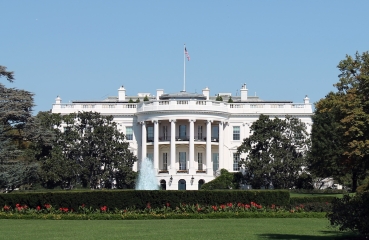
In announcing his nomination of former SBA director Linda McMahon as the next secretary of education, President Trump promised yet again to eliminate the U.S. Department of Education. An important question is whether abolishing the agency—and its programs, policies, and regulations—would actually make things better for America’s students.
Social media lit up Tuesday evening with the news that President-elect Trump has tapped professional wrestling magnate and former Small Business Administration (SBA) administrator Linda McMahon to lead the U.S. Department of Education.
Ah, David Brooks. Ordinarily, I’d start a piece in which I plan to (partially) disagree with him by stating that he’s a very smart guy—but what I’m going to push back at this time is his much-disseminated contention that America needs to rethink what “smart” means. Even though his own qualities would likely still qualify under his new formulation, I ought not take chances.