Commentary
What we're reading this week: July 8, 2021
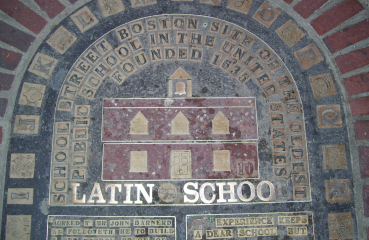
Education policy is a leading issue for Boston’s mayoral race, especially policies for exam schools and the method for selecting school board members.
Education policy is a leading issue for Boston’s mayoral race, especially policies for exam schools and the method for selecting school board members.
A new Heritage Foundation survey of more than 2,000 parents and teachers shows significant divides about teaching critical race theory. But there largely is consensus that civics content should focus on the duties of citizenship, not CRT.

I’ve taught U.S. history to high schoolers for almost twenty years, during which time I’ve worked in multiple states with students of varying personal and cultural backgrounds. Below are the five things that I think I’ve learned. 1) Our students need more exposure to U.S. history.

Fordham’s new report found that twenty states have “inadequate” civics and U.S. history standards that need a complete overhaul. An additional fifteen states were deemed to have “mediocre” standards that require substantial revisions. This fits the lackluster showing of U.S. students on the NAEP exams in these subjects, and suggests that some schools barely teach this content at all. Unfortunately, the obstacles in the way of improving this sad state run up and down the line.
For our constitutional democracy to survive, much rests on our ability to resolve “…differences even as we respect them,” which is The State of State Standards for Civics and History in 2021 report’s definition of the social purpose of civic education.
My 2009 copy of Why Don’t Students Like School by Dan Willingham is among the most dog-eared and annotated books I own. Along with E.D. Hirsch’s The Knowledge Deficit (2006) and Doug Lemov’s Teach Like a Champion (2010), I’m hard-pressed to think of another book in the last twenty years that had a greater impact on my teaching, thinking, or writing about education.

While women have largely erased, and in some areas even reversed, the historic gender gap in educational attainment, some career outcomes can still skew along gender lines.

Falling birth rates are forcing the closure of schools that served communities for generations, such as in Manchester, New Hampshire.
Is America a racist country? Or the greatest nation on earth? Or both or neither or some of each?
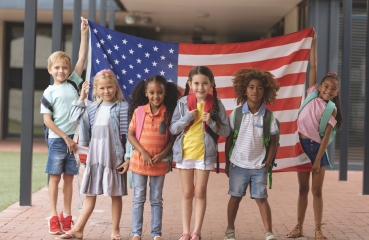
The Thomas B. Fordham Institute’s review of state standards for U.S. history and civics comes at a critical moment in American civic life.

A crisis like a pandemic can spark unpredictable changes in trends and behavior, like widespread mask wearing in the United States. But it also can accelerate changes that were already underway but otherwise would have taken root much more slowly.

Across America, states are constitutionally responsible for providing K–12 education, but in practice school districts are the primary structure by which education is delivered. The vast majority of such districts are run by locally elected school boards.

Education Secretary Miguel Cardona addressed the charter sector, encouraging leaders to diversify their staff and saying he opposes federal funding for for-profit charters.
Over the past several years, schools have begun to reckon with the level of trauma students are dealing with and the effect that trauma has on students’ lives and their ability to learn. An increased focus on trauma-informed models has given leaders the beginnings of a road map to helping affected students be successful.

I have such vivid memories of my first day of my first year of teaching. Kids filling into their desks—so many different personalities, moving pieces, things to keep track of. That first class seemed to both fly by and stretch on for eternity. At the end, I was wiped. I had no idea how I’d do this four more times that day and then 180 more times this year.

At Fordham, we’re not big on grand anniversary galas, the sort of fancy events where organizations toot their own horns and bask in the praise and accolades of longtime friends. We’re not that kind of boastful. But as we get ready to reopen our offices after the long pandemic misery, it’s worth noting that 2021 marks our twenty-fifth anniversary.

When history looks back upon the coronavirus period and its effect upon schools, one redeeming aspect may be the spotlight that’s been cast upon parental choice in all its forms.
Red, White, and Black is a collection of essays published under the aegis of 1776 Unites, the “radically pragmatic and unapologetically patriotic” initiative launched last year by the Woodson Center, a forty-year old Washington, D.C.–based nonprofit.
Traditional classroom observations are time and labor intensive, as they are meant to capture adequately the many nuances of student-teacher interactions and thereby inform future practice.

A trio of researchers from the University of Chicago, MIT, and UC Berkeley recently released a working paper that indicates a multitude of positive long-term effects—very long term, in fact—associated with attendance at public preschool.
“Why ed-tech startups Clever and Nearpod are expected to sell for a combined $1 billion.” —EdWeek A man from Angelus, Kansas, a dwindling town, ruffled feathers by turning a beloved old schoolhouse into a barn.
Exam schools are under increased scrutiny for their admission policies and how those affect diversity in the schools.
A defense of the Educating for American Democracy proposal —National Review New data reveal a 432-hour in-person learning gap produced by “the politics of pandemic schooling.” —
A few months ago I shared some reflections from Race to the Top and implications for this moment. As I am now supporting a number of state and district planning processes, the macro lessons hold true but I am struck by the degree of difficulty of the present task:

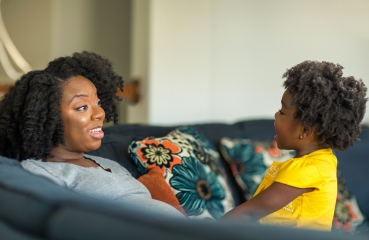
Sitting on a Boston city bus, I watched a mother with a young child. For the twenty-five-minute ride, they didn’t speak a word. No “Look at that little girl on the bicycle” or “We’re having pizza for dinner!” When you’re with a young child for that long, do you talk to her?
This year’s Wonkathon is over, and the results are in! 2021’s Wisest Wonk: