Mobile Navigation

  • National
    • Policy
      • High Expectations
      • Quality Choices
      • Personalized Pathways
    • Research
    • Commentary
      • Gadfly Newsletter
      • Flypaper Blog
    • Events
    • Scholars Program
  • Ohio
    • Policy
      • Priorities
      • Media & Testimony
    • Research
    • Commentary
      • Ohio Education Gadfly Biweekly
      • Ohio Gadfly Daily
  • Charter Authorizing
    • Application
    • Sponsored Schools
    • Resources
  • About
    • Mission
    • Board
    • Staff
    • Career
Home
Home
Advancing Educational Excellence

Main Navigation

  • National
  • Ohio
  • Charter Authorizing
  • About

National Menu

  • Topics
    • Accountability & Testing
    • Advanced Education
    • Career & Technical Education
    • Charter Schools
    • Curriculum & Instruction
    • ESSA
    • Evidence-Based Learning
    • Facilities
    • Governance
    • Personalized Learning
    • Private School Choice
    • School Finance
    • Standards
    • Teachers & School Leaders
    • Think Again
  • Research
  • Commentary
    • Gadfly Newsletter
    • Flypaper Blog
    • Gadfly Podcast
  • Events
  • Scholars Program

Reports

Displaying 61-90 of 258 results
Report
7.17.2018
Curriculum & Instruction, Standards

Reading and Writing Instruction in America's Schools

David Griffith, Ph.D.

Since 2010, when most states adopted the Common Core State Standards (CCSS), the Thomas B. Fordham Institute has been committed to monitoring their implementation.

Report
5.31.2018
Private School Choice, Teachers & School Leaders

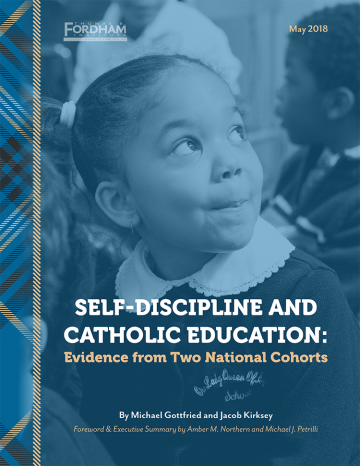
Self-Discipline and Catholic Schools: Evidence from Two National Cohorts

Regardless of where you stand on the debate currently raging over school discipline, one thing seems certain: Self-discipline is far better than the externally imposed kind.

Report
4.26.2018
Charter Schools, Governance

Charter School Deserts: High-Poverty Neighborhoods with Limited Educational Options

Andrew Saultz, Queenstar Mensa-Bonsu, Christopher Yaluma, James Hodges

2016–17 was one of the slowest-growth years for charter schools in recent memory. Nobody knows exactly why, but one hypothesis is saturation: With charters having achieved market share of over 20 percent in more than three dozen cities, perhaps school supply is starting to meet parental demand, making new charters less necessary and harder to launch.

Report
1.31.2018
Curriculum & Instruction, Advanced Education, Teachers & School Leaders

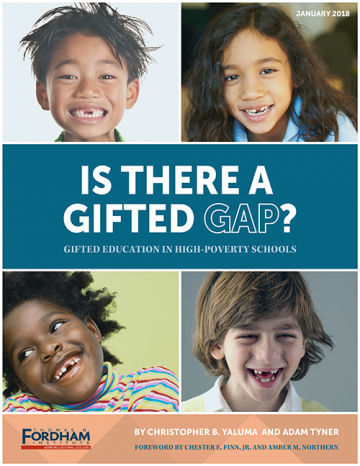
Is There a Gifted Gap? Gifted Education in High-Poverty Schools

Christopher Yaluma, Adam Tyner, Ph.D.

Schools have long failed to cultivate the innate talents of many of their young people, particularly high-ability girls and boys from disadvantaged and minority backgrounds. This failure harms the economy, widens income gaps, arrests upward mobility, and exacerbates civic decay and political division.

Report
12.5.2017
Governance

The Academic and Behavioral Consequences of Discipline Policy Reform

Matthew P. Steinberg, Johanna Lacoe

One important question about school discipline is whether it helps or harms those being disciplined. But a second, equally important question is whether a push to reduce the number of suspensions is harmful to the rule-abiding majority.

Report
11.14.2017
Accountability & Testing, ESSA, Governance

Rating the Ratings: An Analysis of the 51 ESSA Accountability Plans

Brandon L. Wright, Michael J. Petrilli

The Every Student Succeeds Act grants states more authority over their accountability systems than did No Child Left Behind, but have they seized the opportunity to develop school ratings that are clearer and fairer than those in the past?

Report
9.20.2017
Accountability & Testing, Charter Schools, Teachers & School Leaders

Teacher Absenteeism in Charter and Traditional Public Schools

David Griffith, Ph.D.

Research confirms what common sense dictates: Students learn less when their teachers aren’t there. According to multiple studies, a ten-day increase in teacher absence results in at least ten fewer days of learning for students.

Report
7.27.2017
Accountability & Testing, ESSA

Rating the Ratings: Analyzing the First 17 ESSA Accountability Plans

Brandon L. Wright, Michael J. Petrilli

The Every Student Succeeds Act (ESSA) grants states more authority over their school accountability systems than did No Child Left Behind (NCLB)—meaning that states now have a greater opportunity to design improved school ratings. Rating the Ratings: Analyzing the First 17 ESSA Accountability Plans examines whether states are making the most of the moment.

Report
6.27.2017
Charter Schools, Personalized Learning

What Teens Want From Their Schools: A National Survey of High School Student Engagement

John Geraci, Maureen Palmerini, Pat Cirillo, Victoria McDougald

Among high school students who consider dropping out, half cite lack of engagement with the school as a primary reason, and 42 percent report that they don’t see value in the schoolwork they are asked to do.

Report
4.18.2017
Charter Schools

Three Signs That a Proposed Charter School Is at Risk of Failing

Anna Nicotera, David A. Stuit

It’s well established that some charter schools do far better than others at educating their students. This variability has profound implications for the children who attend those schools. Yet painful experience shows that rebooting or closing a low-performing school is a drawn-out and excruciating process.

Report
3.30.2017
ESSA, Charter Schools, Governance

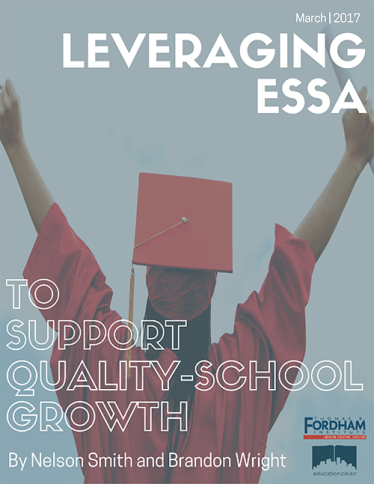
Leveraging ESSA to Support Quality-School Growth

Nelson Smith, Brandon L. Wright

Under the Every Student Succeeds Act, the federal School Improvement Grants program is gone, but the goal of school improvement remains. States must now use seven percent of their Title I allocation for these efforts, but are no longer constrained by a prescribed menu of intervention options.

Report
3.14.2017
Curriculum & Instruction, Standards

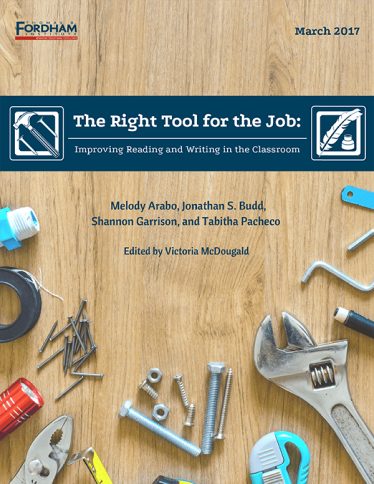
The Right Tool for the Job: Improving Reading and Writing in the Classroom

Melody Arabo, Jonathan S. Budd, Shannon Garrison, Tabitha Pacheco

Although it’s been almost seven years since many states took the important step of elevating their academic standards by adopting the Common Core, teachers and administrators across the country still bemoan the lack of reliable information about which instructional materials are high-quality and best aligned to the new standards.  

Report
1.26.2017
School Finance, Teachers & School Leaders

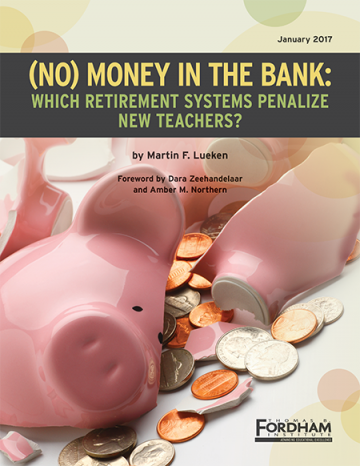
(No) Money in the Bank: Which Retirement Systems Penalize New Teachers?

A new teacher’s pension is supposed to be a perk. The truth is that for the majority of the nation’s new teachers, what they can anticipate in retirement benefits will be worth less than what they contributed to the system while they were in the classroom, even if they stay for decades.

Report
12.8.2016
Accountability & Testing, Governance, Teachers & School Leaders

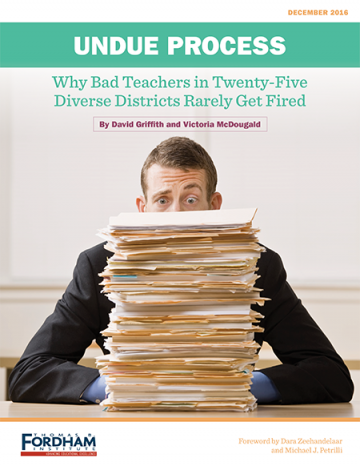
Undue Process: Why Bad Teachers in Twenty-Five Diverse Districts Rarely Get Fired

Victoria McDougald, David Griffith, Ph.D.

Countless studies have demonstrated that teacher quality is the most important school-based determinant of student learning, and that removing ineffective teachers from the classroom could greatly benefit students.

Report
11.15.2016
Accountability & Testing, ESSA, Advanced Education

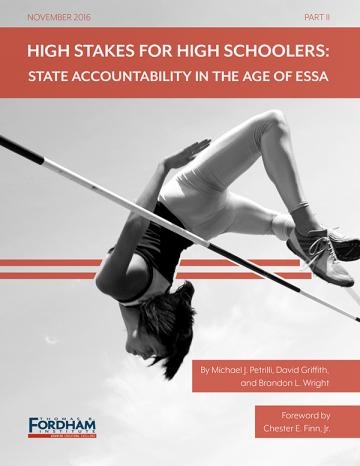
High Stakes for High Schoolers: State Accountability in the Age of ESSA (Part II)

Michael J. Petrilli, David Griffith, Ph.D., Brandon L. Wright

Eleven weeks ago, in High Stakes for High Achievers: State Accountability in the Age of ESSA, the Fordham Institute reported that current K–8 accountability systems in most states give teachers scant reason to attend to the learning of high-achieving youngsters.

Report
9.29.2016
Charter Schools, Governance

Charter School Boards in the Nation's Capital

Juliet Squire, Allison Crean Davis

Tens of thousands of individuals across the United States volunteer their time, energy, and expertise as members of charter school boards. Yet as the charter sector has grown, we’ve learned remarkably little about these individuals who make key operational decisions about their schools and have legal and moral responsibilities for the education of children in their communities.

Report
8.31.2016
Accountability & Testing, ESSA, Advanced Education

High Stakes for High Achievers: State Accountability in the Age of ESSA (Part I)

Michael J. Petrilli, David Griffith, Ph.D., Brandon L. Wright, Audrey Kim

No Child Left Behind meant well, but it had a pernicious flaw: It created strong incentives for schools to focus all their energy on helping low-performing students get over a modest “proficiency” bar. Meanwhile, it ignored the educational needs of high achievers, who were likely to pass state reading and math tests regardless of what happened in the classroom.

Report
8.2.2016
Charter Schools, Curriculum & Instruction, Personalized Learning

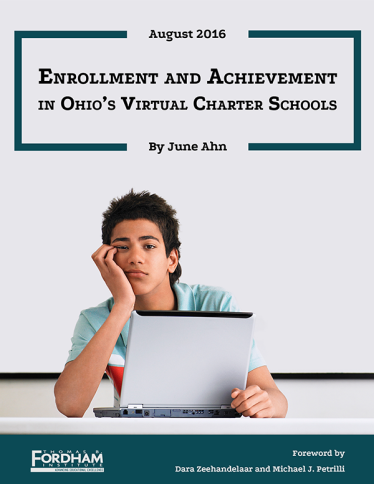
Enrollment and Achievement in Ohio's Virtual Charter Schools

June Ahn, Ph.D.

This Fordham study, conducted by learning technology researcher June Ahn from NYU, dives into one of the most promising—and contentious—issues in education today: virtual schools. What type of students choose them? Which online courses do students take? Do virtual schools lead to improved outcomes for kids?

Report
6.23.2016
Curriculum & Instruction, Standards, Teachers & School Leaders

Common Core Math in the K-8 Classroom: Results from a National Teacher Survey

Jennifer M. Bay-Williams, Ann Duffett, David Griffith, Ph.D.

In Common Core Math in the K-8 Classroom: Results from a National Teacher Survey, Jennifer Bay Williams, Ann Duffett, and David Griffith take a close look at how educators are implementing the Common Core math standards in classrooms across the nation.

Report
4.7.2016
Career & Technical Education

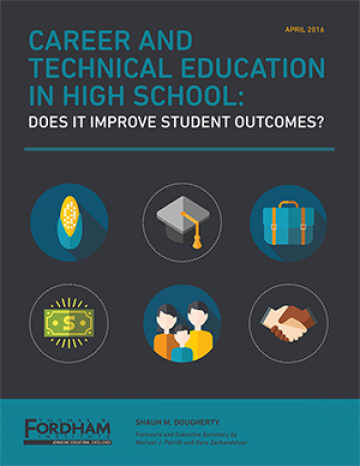
Career and Technical Education in High School: Does It Improve Student Outcomes?

Shaun M. Dougherty

Fordham’s latest study, by the University of Connecticut's Shaun M. Dougherty, uses data from Arkansas to explore whether students benefit from CTE coursework—and, more specifically, from focused sequences of CTE courses aligned to certain industries.

Report
2.11.2016
Accountability & Testing, Standards

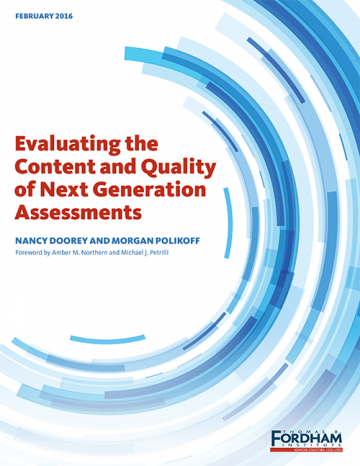
Evaluating the Content and Quality of Next Generation Assessments

Evaluating the Content and Quality of Next Generation Assessments examines previously unreleased items from three multi-state tests (ACT Aspire, PARCC, and Smarter Balanced) and one best-in-class state assessment, Massachusetts’ state exam (MCAS). The product of two years of work by the Thomas B.

Report
12.9.2015
Charter Schools, Governance, Private School Choice

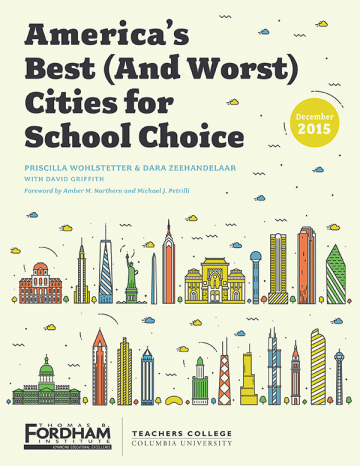
America's Best (and Worst) Cities for School Choice

Priscilla Wohlstetter, Ph.D., Dara Zeehandelaar Shaw, Ph.D., David Griffith, Ph.D.

More than twelve million American students exercise some form of school choice by going to a charter, magnet, or private school——instead of attending a traditional public school.

Report
11.4.2015
Charter Schools, Governance

Is Detente Possible? District-charter school relations in four cities

Daniela Doyle, Christen Holly, Bryan C. Hassel

Whether you think the end game of the current “mixed economy” of district and charter schools should be an all-charter system (as in New Orleans) or a dual model (as in Washington D.C.), for the foreseeable future most cities are likely to continue with a blend of these two sectors. So we wanted to know: Can they peacefully co-exist? Can they do better than that?

Report
8.26.2015
Governance

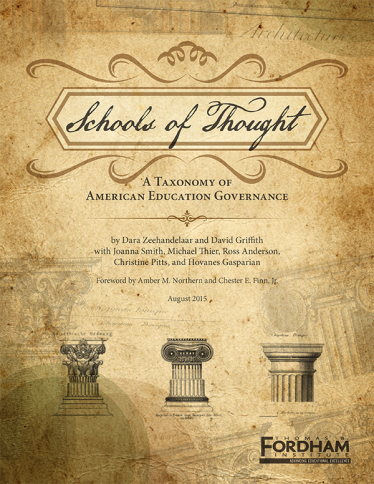
Schools of Thought: A Taxonomy of American Education Governance

Dara Zeehandelaar Shaw, Ph.D., David Griffith, Ph.D.

Questions of education governance are often considered moot by policymakers, who typically assume that the governance challenges plaguing their local schools are both universal and inevitable. Given the ubiquity of everything from local school boards to state superintendents, this seems to be a logical assumption.

Report
8.6.2015
School Finance, Governance

Who Should Be in Charge When School Districts Go into the Red?

Dara Zeehandelaar Shaw, Ph.D., Victoria McDougald

School districts across the land are contending with rising education costs and constrained revenues. Yet state policies for assisting school districts in financial trouble are uneven and complex. Interventions are often haphazard, occur arbitrarily, and routinely place politics over sound economics.

Report
12.1.2014
Governance

Education for Upward Mobility

At the Education for Upward Mobility conference, the Thomas B.

Report
11.25.2014
Teachers & School Leaders

Building a Lattice for School Leadership

Jonathan Supovitz

Over the past decade, the English government has revamped that country’s approach to school leadership. At the center of the reform is the sensible idea that school leadership needs to be a team endeavor. While not a new idea—there’s been for years plenty of discussion about “distributed leadership” on both sides of the pond—the Brits got busy actually making it happen as opposed to jawboning about it. Central to their leadership structure is the formalization of three levels of school leaders, each with distinct roles and responsibilities: headteachers who lead schools (equivalent to the principal’s role in the U.S.), senior leaders or deputy heads who assist the headteacher (similar to the vice principal role in American education but...

Report
10.29.2014
Governance

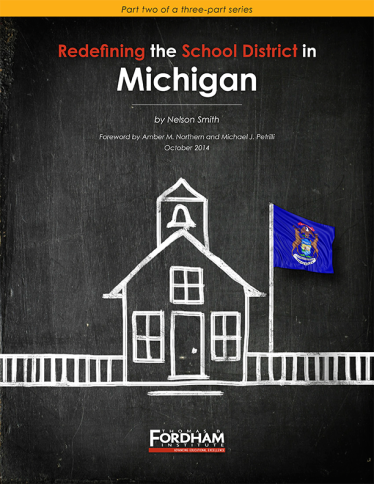
Redefining the School District in Michigan

Nelson Smith

What happens when policymakers create statewide school districts to turn around their worst-performing public schools?

Report
10.15.2014
School Finance

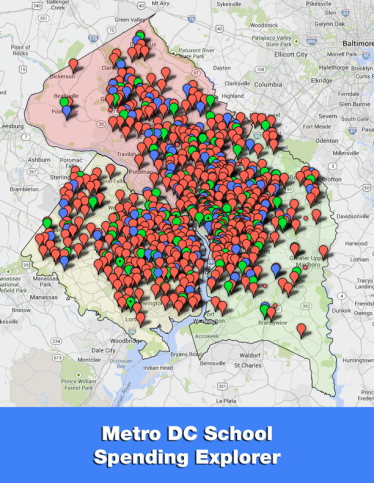
Metro D.C. School Spending Explorer

The Thomas B. Fordham Institute set out to answer a basic (yet complicated) question: how much does each school in the D.C. metro area spend on day-to-day operations for each student it enrolls? In the Metro D.C.

Report
8.12.2014
School Finance, Governance, Teachers & School Leaders

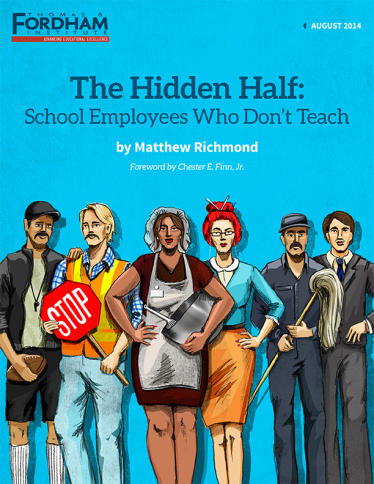
The Hidden Half: School Employees Who Don't Teach

Matt Richmond

The number of non-teaching staff in the United States (those employed by school systems but not serving as classroom teachers) has grown by 130 percent since 1970. Non-teachers—more than three million strong—now comprise half of the public school workforce. Their salaries and benefits absorb one-quarter of current education expenditures. 

Pagination

  • First page « First
  • Previous page ‹ Previous
  • Page 1
  • Page 2
  • Current page 3
  • Page 4
  • Page 5
  • Page 6
  • Page 7
  • Page 8
  • Page 9
  • Next page Next ›
  • Last page Last »

Type

  • Book (10)
  • Commentary (17478)
  • Event (51)
  • Podcast (380)
  • (-) Report (258)
  • Video (98)

Topics

  • Accountability & Testing (44)
  • Advanced Education (15)
  • Career & Technical Education (4)
  • Charter Schools (45)
  • Curriculum & Instruction (34)
  • ESSA (6)
  • Evidence-Based Learning (4)
  • Governance (78)
  • Personalized Learning (4)
  • Private School Choice (8)
  • School Finance (30)
  • Standards (49)
  • Teachers & School Leaders (37)

Date

  • 2026 (8)
  • 2025 (7)
  • 2024 (8)
  • 2023 (9)
  • 2022 (5)
  • 2021 (7)
  • 2020 (6)
  • 2019 (7)
  • 2018 (7)
  • 2017 (9)
  • 2016 (8)
  • 2015 (4)
  • 2014 (13)
  • 2013 (18)
  • 2012 (17)
  • 2011 (19)
  • 2010 (7)
  • 2009 (9)
  • 2008 (11)
  • 2007 (7)
  • 2006 (9)
  • 2005 (9)
  • 2004 (7)
  • 2003 (9)
  • 2002 (4)
  • 2001 (8)
  • 2000 (9)
  • 1999 (5)
  • 1998 (11)
  • 1997 (1)
Fordham Logo

© 2026 The Thomas B. Fordham Institute
Privacy Policy
Usage Agreement

National

P.O. Box 110
Burke, VA 22009

202.223.5452

[email protected]

Ohio

P.O. Box 82291
Columbus, OH 43202

614.223.1580

[email protected]

Sponsorship

130 West Second Street, Suite 410
Dayton, Ohio 45402

937.227.3368

[email protected]