Mobile Navigation

  • National
    • Policy
      • High Expectations
      • Quality Choices
      • Personalized Pathways
    • Research
    • Commentary
      • Gadfly Newsletter
      • Flypaper Blog
    • Events
    • Scholars Program
  • Ohio
    • Policy
      • Priorities
      • Media & Testimony
    • Research
    • Commentary
      • Ohio Education Gadfly Biweekly
      • Ohio Gadfly Daily
  • Charter Authorizing
    • Application
    • Sponsored Schools
    • Resources
  • About
    • Mission
    • Board
    • Staff
    • Career
Home
Home
Advancing Educational Excellence

Main Navigation

  • National
  • Ohio
  • Charter Authorizing
  • About

National Menu

  • Topics
    • Accountability & Testing
    • Advanced Education
    • Career & Technical Education
    • Charter Schools
    • Curriculum & Instruction
    • ESSA
    • Evidence-Based Learning
    • Facilities
    • Governance
    • Personalized Learning
    • Private School Choice
    • School Finance
    • Standards
    • Teachers & School Leaders
    • Think Again
  • Research
  • Commentary
    • Gadfly Newsletter
    • Flypaper Blog
    • Gadfly Podcast
  • Events
  • Scholars Program

Evidence-Based Learning

Displaying 601-630 of 837 results
Commentary
5.12.2022
Accountability & Testing, Evidence-Based Learning, Curriculum & Instruction, Governance, Teachers & School Leaders

Assessing the Nation’s Report Card: Challenges and choices for NAEP

Chester E. Finn, Jr.

NAEP is by far the country’s most important source of information on student achievement, achievement gaps and so much more, even though it’s invisible to most Americans. Yet NAEP is far from perfect—and could do so much more than it does. It’s time to wrestle with its challenges, shortcomings, and possible future scenarios.


Commentary
5.12.2022
Accountability & Testing, Evidence-Based Learning, Governance, Teachers & School Leaders

The Federal civil service adopted standardized testing in 1883. Are there lessons for education today?

Christian Eggers

One common refrain in debates around education is that standardized exams negatively impact applicants from disadvantaged backgrounds.

Commentary
5.11.2022
Evidence-Based Learning, Charter Schools, Curriculum & Instruction, Governance, Teachers & School Leaders

The case for charter schools is stronger than ever

The Education Gadfly

Just over thirty years ago, the first public charter school law was passed in Minnesota. One year later, City Academy Charter School opened its doors in St. Paul. The charter sector now boasts more than 7,700 schools serving over 3.4 million students nationwide.

Commentary
4.8.2022
Evidence-Based Learning, Curriculum & Instruction, Governance, Teachers & School Leaders

Course choice: The ideal post-pandemic policy solution

Michael Brickman

Editor’s note: This was first published by the American Enterprise Institute.

Commentary
4.7.2022
Evidence-Based Learning, Charter Schools, Curriculum & Instruction, Governance, Teachers & School Leaders

Biden goes all in on the teachers unions’ agenda

Dale Chu

With Democrats facing trouble in the midterm elections, the Biden administration has inexplicably decided to try to stave off disaster by doubling down on the teachers unions’ hoary anti-reform agenda. One example is its not-so-sneak attack on charter schools in the form of execrable regulations that could bring charter growth to a standstill. But it’s not the only one.

Commentary
4.7.2022
Accountability & Testing, Evidence-Based Learning, Charter Schools, Governance, Teachers & School Leaders

Denver doesn’t spell doom for portfolio-style reform

Paul T. Hill

Last week, Chester Finn used a recent vote of Denver’s anti-reform school board to make three points: first, that the “portfolio” reform there—based on school autonomy, family choice, and chartering out schools where kids aren’t learning—is finished; second, that Denver’s reversal predicts doom elsewhere for complex reform initiatives meant to transform the ways whole public systems operate; an

Commentary
4.7.2022
Evidence-Based Learning, Career & Technical Education, Curriculum & Instruction, Teachers & School Leaders

How a summer job may help improve school outcomes

Amber M. Northern, Ph.D.

The influence of out-of-school activities such as sports and clubs on school outcomes has been an enduring

Commentary
3.31.2022
Evidence-Based Learning, Curriculum & Instruction, Teachers & School Leaders

Evaluating how well ELA curricula deliver content knowledge

Nathaniel Grossman

What makes an effective English language arts curriculum? Is it the books and other readings that it includes? The skills that it imparts to students? Something else?

Commentary
3.24.2022
Evidence-Based Learning, Curriculum & Instruction, Governance, Teachers & School Leaders

Why we should follow the science—to school

Michael J. Petrilli

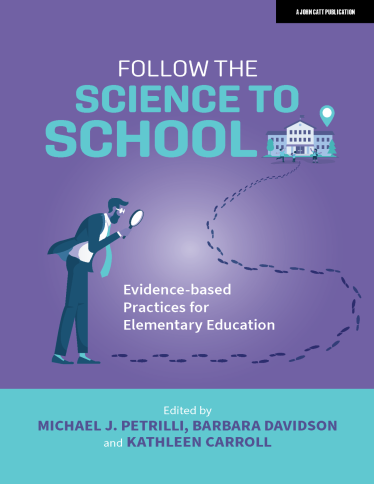
A new edited volume, “Follow the Science to School,” aims to identify what science tells us about evidence-based practices in elementary schools, and describes what they look like in the real world of classrooms. Following the science into its application in this way—and sharing how it works on the ground—enables us to suggest workable answers to key questions rather than challenging every teacher, school, or district, to figure out those answers on their own.

Commentary
3.24.2022
Evidence-Based Learning, Career & Technical Education

What hiring ads indicate about the skills that employers want in a college major

Amber M. Northern, Ph.D.

Not all college majors are created alike, but it turns out that employers want their new hires to exhibit many of same skills regardless of what they major in. A recent study examines online job ads as a proxy for what employers view as the skills inherent in various college majors.

Commentary
3.24.2022
Evidence-Based Learning

Impacts of a forced break before college enrollment

Jeff Murray

The typical timeline for college-bound high school seniors is to start a few months after graduation—the first available opportunity. But is that unbroken path into college the right move for everyone? New research suggests that academic breaks after high school have both short- and long-term impacts on postsecondary enrollment and labor market outcomes.

Book
3.21.2022
Evidence-Based Learning, Curriculum & Instruction

Follow the Science to School: Evidence-based Practices for Elementary Education

Michael J. Petrilli, Kathleen Carroll, Barbara Davidson

Follow the Science to School: Evidence-based Practices for Elementary Education is published by John Catt Educational Press and is available for purchase from the John Catt Bookshop and Amazon.

Commentary
3.18.2022
Accountability & Testing, Evidence-Based Learning, Curriculum & Instruction, Teachers & School Leaders

Should we be worried about rising inflation?

Seth Gershenson, Ph.D.

Inflation is up, and no, I’m not talking about gas prices. I’m talking about some troubling trends observed among the 2019 graduating class of high school students in the recently released 2019 NAEP High School Transcript Study.

Commentary
3.17.2022
Accountability & Testing, Evidence-Based Learning, Curriculum & Instruction, Governance, Advanced Education

San Francisco’s detracking experiment

Tom Loveless

Editor's note: This post was originally published on tomloveless.com.

Commentary
3.10.2022
Evidence-Based Learning, Curriculum & Instruction, Governance, Advanced Education, Teachers & School Leaders

Keep fighting for selective high schools

Brandon L. Wright

In cities across the country, selective high schools are facing increasing pressure to change their admissions policies to make their incoming student populations more socioeconomically and racially diverse. Closing these gaps is a laudable and important goal. But the most common strategies for accomplishing it are racially discriminatory, misguided, and ineffective.

Commentary
3.10.2022
Evidence-Based Learning, Career & Technical Education, Curriculum & Instruction, Governance

The casualties of “college for all”

Arthur Samuels

A couple of weeks ago, I shared some ideas about how schools and districts can move away from the well-intentioned but deeply flawed “college for all” mindset that has permeated the education reform world and has, in turn, harmed many of the disadvantaged students whom the approach is m

Commentary
3.10.2022
Evidence-Based Learning, Curriculum & Instruction, Governance, Teachers & School Leaders

About that Tennessee pre-K study

David Griffith, Ph.D.

It’s rare that a piece of social science makes you question the nature of your reality, but such was my reaction to the latest, much-discussed update on the performance of Tennessee’s pre-k program—or more specifically, on the fate of the 2,990 children from low-income families who applied to oversubscribed pre-K program sites across

Commentary
3.10.2022
Evidence-Based Learning, Governance

Academic and labor market outcomes for adults with some college credits but no degree

Jeff Murray

In a laudable quest to boost the number of adults with postsecondary credentials, a number of states—including Ohio—are focusing time and treasure on former students who have earned some college credits but

Commentary
3.3.2022
Evidence-Based Learning, Curriculum & Instruction, Teachers & School Leaders

Restorative circles are unethical and have no place in schools

Daniel Buck

In the past decade, the role of the teacher in schools has slowly shifted from pedagogue to therapist.

Commentary
3.3.2022
Evidence-Based Learning, Career & Technical Education, Curriculum & Instruction, Teachers & School Leaders

The upside of the downward trend in college enrollment

Michael J. Petrilli

The media have been full of

Commentary
3.3.2022
Evidence-Based Learning, Curriculum & Instruction, Teachers & School Leaders

Evidence suggests that teachers of color improve outcomes for students of all races

Amber M. Northern, Ph.D.

Efforts to match Black and Hispanic students with teachers of their same race or ethnicity have shown positive outcomes

Commentary
3.3.2022
Evidence-Based Learning

Is attending college a good investment?

Nathaniel Grossman

Is college worth it? How we answer that question depends on how we measure the impact of attending college. Ranking 4,500 Colleges by ROI (2022), a new project from the Center for Education and the Workforce at Georgetown University, provides us with a novel tool of measurement: return on investment, or ROI.

Commentary
2.24.2022
Evidence-Based Learning, Career & Technical Education, Charter Schools, Curriculum & Instruction, Governance, Teachers & School Leaders

A principal explains how to repair the harm of “college for all”

Arthur Samuels

As Michael Petrilli wrote in these pages a few weeks ago, the education reform movement has come to the realization that its belief in “college for all,” while well-intended, was misguided.

Commentary
2.24.2022
Evidence-Based Learning, Curriculum & Instruction, Teachers & School Leaders

“Doing science” boosts academic achievement

Jeff Murray

In 2017, a team of researchers from Finland and Michigan State University who were eager to improve science instruction for secondary students launched a field trial for Crafting Engaging Science Environments (CESE), a project-based curriculum they created and aligned with the Next Gener

Commentary
2.24.2022
Evidence-Based Learning, Curriculum & Instruction, Teachers & School Leaders

Online credit recovery and long-term earnings potential

Jeff Murray

The Covid slide has both expanded the need for students to take remedial classes and produced greater familiarity with remote learning. As a result, online credit recovery options have become more necessary and readily accessible at the same time.

Commentary
2.17.2022
Evidence-Based Learning, Curriculum & Instruction, Governance, Teachers & School Leaders

End school mask mandates

Daniel Buck

Thirteen states and D.C. still mandate face masks for students, as do myriad individual districts in places that defer to local leaders. In total, about half of American students have to wear a mask every day. But there’s little evidence that this mitigates the spread of Covid—a consideration that the Omicron variant has made less important anyway—and, more importantly, masking inflicts real educational and emotional harm on students.

Commentary
2.17.2022
Evidence-Based Learning, Curriculum & Instruction, Governance, Teachers & School Leaders

Incentivize individual agency to achieve upward mobility

Ian Rowe

Editor’s note: This testimony was given by Fordham Institute trustee Ian Rowe on January 20, 2022, to the U.S.

Commentary
2.17.2022
Evidence-Based Learning, Curriculum & Instruction, Teachers & School Leaders

Dual language education seems to be a promising route to academic progress

Amber M. Northern, Ph.D.

Dual language instruction (DL) is a version of bilingual education that renders instruction in two languages in the same classroom. It differs from the more common English-only classroom with pullout/separate services for students learning English as a second language (ESL). It also differs from language immersion in which students receive all instruction in their non-native language.

Commentary
2.10.2022
Evidence-Based Learning, Career & Technical Education, Curriculum & Instruction, Governance, Teachers & School Leaders

Of course there’s tracking in high schools. Get over it.

Michael J. Petrilli

Tracking in our high schools is simply a fact, and we would do well to stop pretending otherwise or believing that it could be any other way. At the very least, we should allow for diverging paths after tenth grade, and we need to completely rethink our approach for our lowest-performing kids.

Commentary
2.10.2022
Evidence-Based Learning, Curriculum & Instruction, Governance, Teachers & School Leaders

We’re teaching mediocrity in literature classrooms

Daniel Buck

Since the beginning of the common school movement in the 1800s, we have valued our institutions of public education for their unifying nature, and the creation of a literate populace is an essential element of that goal. But much modern-day English instruction accomplishes neither. These middle school and high school classrooms barely resemble what you or I remember from our school years.

Pagination

  • First page « First
  • Previous page ‹ Previous
  • Page 17
  • Page 18
  • Page 19
  • Page 20
  • Current page 21
  • Page 22
  • Page 23
  • Page 24
  • Page 25
  • Next page Next ›
  • Last page Last »

Type

  • Book (1)
  • Commentary (814)
  • Event (1)
  • Podcast (9)
  • Report (4)

Topics

  • Accountability & Testing (504)
  • Advanced Education (267)
  • Career & Technical Education (84)
  • Charter Schools (1117)
  • Curriculum & Instruction (1594)
  • ESSA (129)
  • (-) Evidence-Based Learning (837)
  • Facilities (25)
  • Governance (1416)
  • Personalized Learning (51)
  • Private School Choice (140)
  • School Finance (169)
  • Standards (190)
  • Teachers & School Leaders (1456)

Date

  • 2026 (89)
  • 2025 (124)
  • 2024 (161)
  • 2023 (129)
  • 2022 (138)
  • 2021 (111)
  • 2020 (37)
  • 2019 (47)
  • 2007 (1)
Fordham Logo

© 2026 The Thomas B. Fordham Institute
Privacy Policy
Usage Agreement

National

P.O. Box 110
Burke, VA 22009

202.223.5452

[email protected]

Ohio

P.O. Box 82291
Columbus, OH 43202

614.223.1580

[email protected]

Sponsorship

130 West Second Street, Suite 410
Dayton, Ohio 45402

937.227.3368

[email protected]