The factors influencing private school choice enrollment
As private school choice policies have proliferated and matured across the country, researchers have looked at the policy side of the process, as well as


Many pundits claim that the charter schools sector once had great potential for innovation, but because of dastardly authorizers and other red-tape-loving bureaucrats, charters instead became overly cautious, impeding innovation in a way that has hamstrung and limited the entire charter school movement. Is that true?
Education savings accounts in Texas. Open enrollment in Missouri. Each week seems to bring a new story and more education options for American students.
For more than twenty-five years, Florida has been ground zero for school choice expansion. Among the many options for families are charter schools, private schools, tax-credit programs, microschools, ESAs, vouchers for students with special needs, homeschooling, and more.
Will Democratic leaders opt their states into the new federal school choice provision, allowing families to accept scholarships that are funded by charitable donations from taxpayers nationwide? Or will they bow to the demands of the teachers unions and bar the schoolhouse door instead, creating a grand opportunity for GOP candidates running against them?
On Tuesday, the second week of state testing, I noticed an unfamiliar name on my roster. That was the day I met Darius. While it can be challenging to help transfer students get acclimated and caught up, it’s also a joy for me to get to know them. Some of my fondest memories come from students who arrived mid-year and found a good fit.
Both supporters and detractors of a landmark education provision in the newly passed One Big Beautiful Bill Act have framed it, primarily, as a new funding stream to help families pay for private school.
American education is experiencing an historic shift. After more than a century of consolidation and standardization, a wave of pluralism is sweeping the country.
American education policy is littered with hypotheticals. If we allocated even more money, we could improve outcomes. If we found the latest ed-tech gadget, we could unlock individualized learning within a one-size-fits-all system.
The nationwide push to create or expand private school access over the last few years—through vouchers, tax credits, or education savings accounts (ESAs)—has ignited parental curiosity in such choices. But has the supply side of the equation kept pace with that heightened demand (and opportunity)?
Texas Governor Greg Abbott recently signed into law a universal education savings account program, breaking through years of legislative resistance.
Are Dana Goldstein and I watching the same state of education politics? She claims in the pages of the New York Times that, presently, “neither party, nor even a single major political figure,” wants to claim the mantle of education reformer.
On Tuesday, April 29, I gave the keynote presentation at an event titled “New Pathways for Teachers in the Age of School Choice,” hosted by the American Enterprise Institute and the University of Austin.
Early in my tenure at the education policy organization I founded, we barely had any money. No money meant no lobbyist, which left me, a complete stranger to the legislative process, to figure out how to pass meaningful policy.
Over the past few months, a quiet but intense debate has broken out among education-reform Democrats over whether the party should embrace private school choice—particularly the ESAs spreading kudzu-like across the country.
The last two weeks of April featured a rare doubleheader at the Supreme Court, as the justices took up two cases dealing with the intersection of religious liberty and public education. The Court has a path that would respect the secular nature of public schooling while guaranteeing parents their right of free expression, and that is to declare that states must provide taxpayer support to religious schools.
Three emerging issues—each unfolding in a different branch of government—offer a telling snapshot of where federal education policy could be headed. They involve religious charter schools, tax-credit scholarships, and ESSA waivers. On their own, each represents a flashpoint. Taken together, they provide a rare glimpse into the full machinery of federal influence—and a timely reminder that education policymaking in Washington still matters.
Ezra Klein’s new book has sparked an important discussion about how the left can provide more housing and transportation. However, one area that particularly needs self-reflection is education. The left has often obstructed the creation of new and innovative schools.
The Trump administration’s K–12 education policy prescriptions typically focus on ways to provide financial support for private schools, including federal vouchers and tax-credit scholarships.
Education savings accounts (ESAs) are taxpayer-funded spending accounts with differing eligibility requirements and usage guidelines depending on the state. Between the 2021–22 and 2022–23 school years, participation in them nearly tripled nationally, rising to roughly 489,000 total students.
Opponents make lots of arguments against education savings accounts, tax-credit scholarship programs, and other forms of private school choice. But the complaint that schools aren’t required to test their students is generally false. We dig in and set the record straight
The Supreme Court agreed on Friday afternoon to hear a landmark religious charter schools case out of Oklahoma, and it’s a much bigger deal than you might imagine.
President-elect Donald Trump is about to return to Washington with a ragtag coalition, united in their rejection of the status quo. Yet this shared opposition has also led to a rash of infighting over a range of policy issues.
After more than a decade of trying to launch some form of education savings account/tax credit program for parent choice, it looks like Idaho’s legislature is likely to pass legislation this year to get it done.
The Founding Fathers never envisioned that executive orders would be a major policymaking tool, circumventing legislative and executive deliberations, political stalemates, and partisanship. But recent history has deemed them essential levers if there is to be urgent action on the most important matters of the day.
Yes, choice itself is a form of accountability, but “customer satisfaction” isn’t enough when tax dollars are in play—even for private-school choice programs. The public has a right to know that participating students are gaining essential skills. To that end, this post discusses four tiers of escalating accountability and where state policy should land, depending on the amount of taxpayer dollars provided to individual schools, among other considerations.
One of the most interesting and significant findings about charter schools in the last decade—outside of the fact that they tend to outperform traditional public schools (TPS)—is that growin
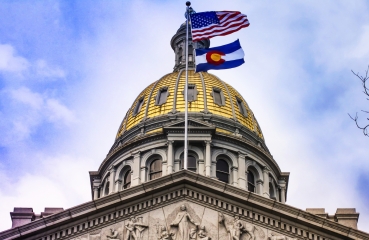
As the clock winds down towards Election Day, Colorado voters—myself included—face an important decision beyond the presidential contest: whether to amend the state constitution to enshrine a “right to school choice.” To be clear, the Centennial State has a long and proud record on the issue.
Of the school choice options available to many U.S. families today, few embody the spirit of “power to the parents” quite like education savings accounts (ESAs).
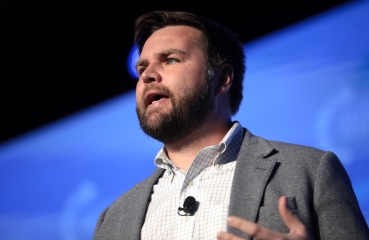
On Monday, Donald Trump chose Senator J.D. Vance as his running mate, signaling a doubling down on his MAGA brand. As far as education is concerned, this means tapping into broad parental discontent over educational and education-related issues, many of which were turbocharged by the pandemic.