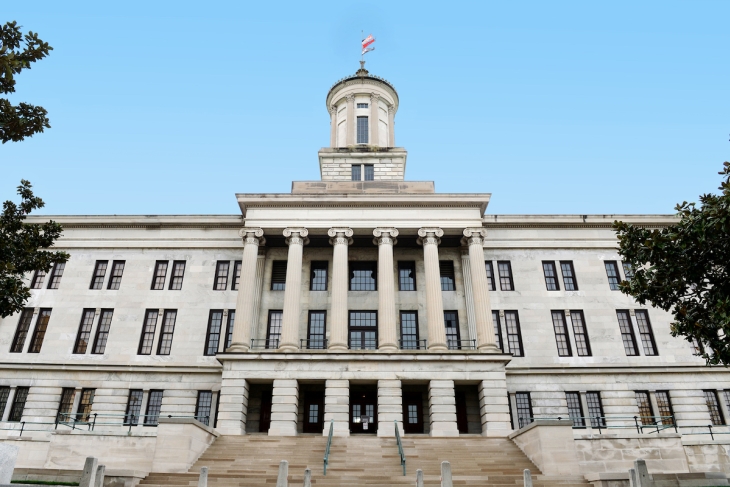
When Tennessee House Republicans expelled, albeit briefly, two young, Black Democratic lawmakers late last week, it raised a number of unsettling questions—not only about the contours of our politics, but also about the future of education reform. To wit, in Tennessee and in reform circles, there are those who believe that bipartisanship is for losers—and that Republicans can and make more progress without Democrats than with them. Practitioners of this brand of negative partisanship are likely to see such a strategy come back to bite them.
In Tennessee, it’s hard to see how House Republicans gained anything but applause from their rabid base. They didn’t win a policy debate, and they didn’t even succeed in removing the two Black lawmakers for long, as local officials thankfully reinstated both men after massive outcry from their base.
What they lost, though, was credibility in communities of color, whose citizens now have more reason to believe that Republicans stand for disenfranchisement and division. That’s particularly a shame in Tennessee, what with its longtime record of bipartisanship—in education and beyond—having built and sustained a reform coalition that has held together for the greater part of two decades across Democratic and Republican governors, along with three capable education commissioners.
But it’s not just Tennessee. Anywhere in the country, it’s a dangerous game for conservatives or libertarians—mostly White, mostly Republican—to push through policies like Education Savings Accounts without the support of the families—mostly Black and Brown, mostly Democratic—who have the most to gain or lose. To be sure, advocates such as Jay Greene are right that Democratic politicians can be fair-weather friends, given their loyalty to the unions. Maybe it’s possible to enact laws without Democratic votes (at least in red states). But if the reform movement loses Black and Brown Democratic voters, too, we’re toast. And antics like those in Tennessee don’t help.
While it’s true that Republicans are passing more ESA bills into law in red states, keeping Democrats on board—both elected officials and the voting public—should remain an ongoing aspiration and priority if we care not only about kids in red states, but also about kids in blue states, to say nothing of kids in blue cities in red states!
The importance of bipartisanship is also important if we’re concerned, which we should be, about installing good policies that live beyond any single administration or swing of the political pendulum. Today’s strain of “smash-and-grab” reform, which I’ve written about previously, is detrimental to any serious discussion about improving schools:
One has to hope that more pragmatic figures within today’s GOP can eventually steer the party away from its angry and resentful fringes and towards an education agenda that offers something for conservatives, progressives, moderates, and others to unite around. While this should certainly include school choice, a serious discussion must also extend to raising standards and improving teacher salaries...
Based on assessment data, millions of children are now behind, many perhaps irretrievably. Almost a quarter-million children across twenty-one states are missing entirely from schools. Teen mental health has reached crisis levels. It remains to be seen how effectively federal relief dollars have been deployed to address these pandemic-induced gaps, though there’s no shortage of expenditures to scrutinize, based on early reports. With the reform movement, as it were, already despairingly balkanized, we need policies that bring more people together to help tackle these pressing issues. Which is to say, education reform shouldn’t be reduced to throwing culture war grenades.
The alternative is to invite the scorn of Americans far and wide, as GOP lawmakers in the Volunteer State just managed to do. Instead of channeling their energy and effort into responsible solutions, Tennessee House Republicans looked inward and thought they could use nothing but raw power to divorce themselves of their opposition and muscle their way through to their desired ends. The ploy backfired, and in the process, those on the right found a way to undermine much, if not all, of their credibility when it comes to defending kids. Reformers of all stripes might do well to consider the perils of this ugly example.