Algebra now, STEM later: Middle-school math acceleration and college outcomes
If there is one intervention in advanced education that has been studied extensively, it is acceleration—that is, allowin
Mike Petrilli is back for another solo episode, and he isn’t done talking politi
By now, everyone who deals with education policy has heard of the “Southern Surge”: the group of Southern states bucking the national trend of declining reading achievement.
Grade inflation has run rampant since the pandemic, but people are finally starting to notice.
Dear newly elected and returning state policymakers, Congratulations on your victory. When you walk into a building, you don’t worry that the floor will collapse or the walls will catch fire. We take that safety for granted.
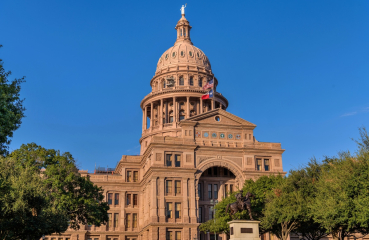
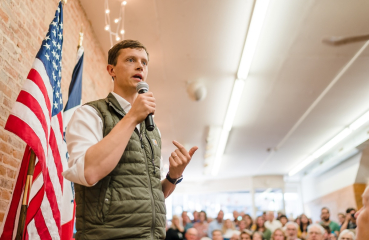
Last week, Texas Democrats achieved with Senator-elect James Talarico and Governor-elect Gina Hinojosa what seemed impossible not long ago. Now it’s time to lead, and both can look to fellow Texans for a policy roadmap toward better opportunities for their state’s children. If they get it right, they could also lead the way for the nation.
I expected to feel worse about Gina Hinojosa becoming governor of Texas.
For many Americans, the path from education to work is not a straightforward one.
Trump admitted last year that he “hates” his opponents. You may have missed the speech, but you haven’t missed the hatred. It spills over every container. He sticks his adversaries in the eye, calling them “the enemy within” and so on—vermin, traitors, scum. He unleashes “his” DOJ against them.
In states and districts throughout the country, “Grow Your Own” (GYO) teacher programs have become a popular strategy for strengthening and diversifying the teacher pipeline.
In a recent Fordham Institute survey, 76 percent of high school students and recent graduates reported at least one form of daily unsanctioned tech use during the school day. Half reported daily social media use, while 49 percent reported messaging friends during school hours.
Tuesday night’s repudiation of President Trump’s illiberalism is good for the country—but may also turn out to be bad for education reform. Nowhere is that truer than in the (newly blue) Lone Star State.
Whatever happens in today’s elections, we can be certain that advocates will try to spin the results to demonstrate that their preferred policies were big winners, or at least not major losers. Unless your issues are “affordability,” “corruption,” or “Donald Trump,” that’s likely going to be a stretch.
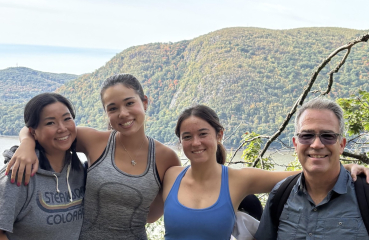
“Girls, I want to set your expectations now that we are moving to New York City. The caliber of kids in your class is going to be much higher, your homework and tests are going to be more challenging, and you can’t expect to be one of the best students anymore. And the truth is, I’m really excited about that for you.”
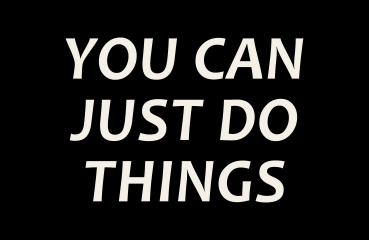
“You can just do things” is one of those memes floating around the internet, and it fits well with the current enthusiasm for muscular state action around curriculum and instruction. States like Mississippi followed this mantra years ago to great effect, and other southern states are embracing it, too. So why isn’t it spreading far and wide (and north, east, and west)?
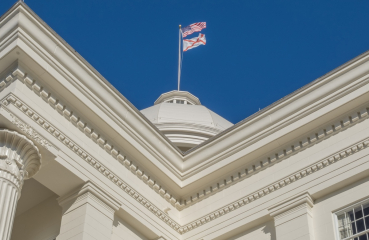
No two states are exactly alike when it comes to K–12 education. Yet, to make progress, state leaders have little choice but to learn from one another’s experiences. Hence our continued interest in the “Southern Surge,” a modest bright spot in an otherwise grim K–12 education landscape, and our decision to report on recent developments in Alabama.
Nikole Hannah-Jones set the education world on fire with her essay last month reflecting on the school choices she made for her daughter.
The newest test data from NWEA MAP show several unmistakably positive signs of academic recovery from post-Covid lows. But they must be understood in context—between subjects, across grade levels, and among different groups of students—because not all the signs are good and much work remains to be done before pandemic education disruptions are fully remediated.
Of the thirty-six governors’ races on tap, three will be particularly consequential: Texas, Ohio, and Oregon. Each state has a long history of gubernatorial dominance by one party. The elections could send their education systems in sharply different directions.
I support school choice. I ended my career as a teacher and administrator working in private choice and charter schools. School choice will almost certainly yield net benefits to American education.
It’s another Mike Petrilli solo episode of The Education Gadfly Show, and this week he’s t
Whatever you think of AI’s potential upsides, the most urgent questions around artificial intelligence in education have to do with minimizing harm. But the most important questions have to do with the future of work.
Public charter schools are one of the most enduring—and successful—educational innovations over the past three decades.
Schools cannot fix themselves unless society fixes segregation first.
Free community college programs are often promoted as a way to expand access to higher education and to reduce student debt for those who attend.
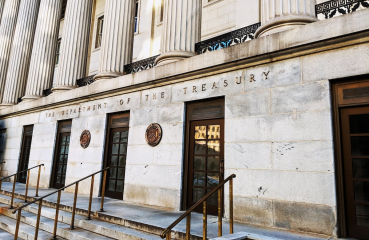
Over the summer, Edunomics Lab predicted that, once up and at scale, the federal tax credit scholarship (FSTC) could generate some $1,000 per public school student. However, now that Treasury has released its long-awaited draft regulations, we’re downgrading that prediction. It all comes down to an onerous requirement that public school participants prove they are not super rich.
On Monday, World Teachers’ Day, friends and relatives of the late Rod Paige released the trailer for a forthcoming film about his remarkable life and career. Titled Paragraphs of a Paige, the appetite-whetting trailer can be viewed here.
If you’ve paid even general attention to Texas education news over the past few years, you’ve likely heard some version of the phrase “local school districts being taken over by the state.” Maybe it registered as a Houston story, since that made statewide headlines.
If you want to be a faster runner, research says you should run more often and farther. I used this “run more” strategy over the past year and, I kid you not, my performance has improved quite drastically. Sometimes plain ol’ common sense is the answer to life’s many problems.
“What we’re going to do for our kids’ education” might be the single most common discussion I have had in my social life as a parent. Like many parents in NYC and across the country, I was captivated by Nikole Hannah-Jones’s essay in the New York Times. Parents are constantly asking themselves, “Have I done right by my kid” when it comes to education.