I expected this to feel better.
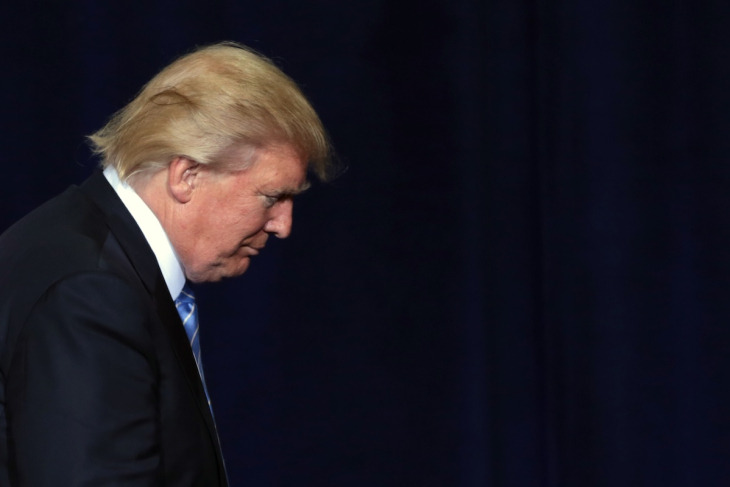
I’ve been a Never Trumper for over a decade, and Tuesday’s overwhelming repudiation of Trump, Trumpism, and MAGA is what I’ve been craving all these years. Yet now that it finally happened, I find myself with a pit in my stomach.
To be sure, I’m happy that our country pushed back strong against Trump’s illiberalism, cronyism, and egocentric disregard for the concerns of everyday Americans. And I certainly don’t feel sorry for all those Republicans who tried to go along and get along all these years, accepting a hostile takeover of their party (and to some degree their country) so that they could stay in power. Good riddance.
But I worry, as many others do, that we are in for a rocky period. It’s a good sign that Trump is accepting the election results, but I am skeptical that he and the people around him are going to respond to this shellacking by looking for common ground with their political opponents and moderating their positions on issues like immigration or the war in Iran. I buy the argument that a lame-duck Donald Trump could be quite dangerous.
Nor am I thrilled about an ascendant hard-left progressive wing in the Democratic Party—one that has its own problems with illiberalism, especially in the form of antisemitism.
But I’m also deeply concerned about the next few years of education reform. It is simply a truism that the teachers unions remain a powerful force within the Democratic Party and are opposed to many of the promising reforms available to governors and lawmakers who want to improve their schools. That certainly includes high-quality charter schools, but also accountability, merit pay, and much else. Trifectas in states like Arizona, and blue supermajorities in states like Colorado, are going to be challenging to say the least. And expect some major budget fights in Washington over reform priorities like the federal Charter Schools Program.
And then there’s Texas. Elections have consequences, and it is quite clear that one consequence of Gina Hinojosa beating Greg Abbott in Texas is that education commissioner Mike Morath will soon be packing his bags. (Hinojosa said so in her victory speech.) That’s an enormous loss for the children of Texas and for all of us in education reform. While you may not know it based on the reporting from much of the national press, which has been obsessing over the culture war stuff in the Lone Star State, Morath has been working diligently (and frankly technocratically) for ten years now to put in place policies that are the very definition of student-centered.
My favorite example is the Texas Teacher Incentive Allotment, a merit pay program that is dramatically boosting salaries for great teachers in the state’s neediest schools, and one that should be a model nationwide. But also Morath’s appointment of Mike Miles in Houston and decisions to intervene in other low-performing districts around the state. Plus his recent introduction of the “Bluebonnet” curriculum, which has arguably the best reading list in the country—and even expects students to read complete novels!
As I told the Texas Tribune this summer, Morath is cut from a different cloth from most state superintendents—in a very good way. Though I acknowledge that, for all his great work, he hasn’t been able to claim a major victory in terms of boosting Texas’s scores on the National Assessment of Educational Progress. Perhaps that will come a few months from now when the feds release the 2026 scores.
Here’s hoping that the incoming governor is wise enough to appoint a replacement who will continue much of Morath’s efforts, much of which sits quite comfortably within the 40-yard lines of the political and ideological spectrum.
Big battles ahead
And then there is school choice. I wrote on Tuesday that we should be skeptical of claims that a candidate’s opposition to “school vouchers”—or really his or her stand on any issue—was a decisive factor in any given contest. Overwhelmingly Democrats nationwide won because of the “blue-nami,” and that was because of Trump (and high gas prices, etc., etc.).
Still, I acknowledged that, if gubernatorial candidates significantly outperformed the national environment, and made their opposition to school choice a centerpiece of their campaigns, it would be reasonable to say the issue played a real role. And Hinojosa, along with Rob Sand in Iowa, met that high threshold. Nationally, it appears that Democrats outpaced Republicans by about 13 points on Tuesday, which would equate to a 14-point shift from 2024. Hinojosa’s 7-point margin of victory equates to a 21-point shift from 2024 (when the state went +14 for Trump); Sand’s winning margin of 11 points equates to a whopping 27-point shift. Those are big numbers! (Compare that to Amy Acton, whose 8-point win in Ohio equates to a 19-point shift—still impressive, but not quite as dramatic, and certainly explainable by Vivek Ramaswamy’s disastrous campaign.)
So get ready for some big fights over Education Savings Account initiatives in Texas and Iowa, and surely also in Arizona, where the Democrats will not only have a trifecta but probably the state superintendent’s office as well.
Personally, I wouldn’t mind if Democrats in those states team up with moderate Republicans to tweak their school choice programs to be more targeted towards poor and working-class families and more accountable to the public, especially in the form of transparency around student achievement results.
But I also understand that it’s hard to predict how these sorts of fights will play out, and there’s a risk of throwing the baby out with the bathwater. It would be a huge loss if Democrats end up kicking low-income kids out of private schools that are serving them well and that their families continue to prefer.
—
I don’t know about you, but I feel better now that I got all that off my chest. Maybe I’ll even try to enjoy this moment of (small-l) liberal victory, at least for a few days. But buckle up because it’s gonna be a wild ride in the days ahead.