
By now, everyone who deals with education policy has heard of the “Southern Surge”: the group of Southern states bucking the national trend of declining reading achievement. One of the main players is my home state of Alabama, one of just two states in the country to improve its fourth-grade NAEP reading scores between 2019 and 2024.
A new report from the Thomas B. Fordham Institute, Studying the Southern Surge: How Alabama Beat the Odds in Reading, takes heed of this accomplishment, examining Alabama’s literacy progress and the conditions that helped make it possible. Its conclusions reinforce an important lesson for states working to improve reading outcomes: Adopting strong literacy policy is essential, but what happens after legislation passes matters just as much.
The Fordham report does a great job of capturing the high points of the effort to pass the Alabama Literacy Act and the results of its implementation. Behind those milestones are years of advocacy, unexpected connections, hard conversations, and determined people who believed Alabama could do so much better for its students.
While the report rightfully attributes much of the credit for Alabama’s recent success to the Alabama Literacy Act (ALA) and its implementation, I saw firsthand that our success story is just as much about what happened behind the scenes, both before and after the Literacy Act’s passage.
Before the Act
Back in 2015, Alabama’s state school board took an important step by adopting the Dyslexia Amendments to the Alabama Administrative Code. Alabama, like most states, had not previously formally recognized dyslexia or adequately addressed the needs of students with characteristics of dyslexia. These amendments established requirements for dyslexia screening, teacher professional development, parent notification, and early intervention by a trained interventionist. They also created the Alabama Dyslexia Advisory Council, bringing together dyslexia advocates, therapists, and parents who continued to push for implementation of the Amendments. These amendments laid the groundwork for what would eventually become the ALA.
By 2017, those of us on the Strategic Reading Committee were looking closely at Mississippi’s reading results and the early signs of what would become known as the “Mississippi Miracle” or, more aptly, the “Mississippi Marathon.” Within just four years of the passage of the 2013 Literacy-Based Promotion Act, Mississippi’s fourth-grade reading scores had improved over half a grade level, or six points, on the Nation’s Report Card. We wanted to know what Mississippi was doing differently.
In 2018, I reached out to Dr. Kymyona Burk, then Mississippi’s state literacy director. The subsequent email exchange would help change the trajectory of literacy work in Alabama. I put her in touch with Nick Moore from Alabama Governor Kay Ivey’s Office of Education, and together we planned a trip to meet with Mississippi’s Department of Education.
That trip lit a fire in us. We saw firsthand what it looked like when the pieces all worked together. There was alignment across their state department. Mississippi was paving the path, and its leaders were willing to share their road map. They were getting results and made us believe it was possible. We came home determined to develop a comprehensive literacy policy that could produce the same sustained improvements as Mississippi’s comprehensive early literacy policy approach.
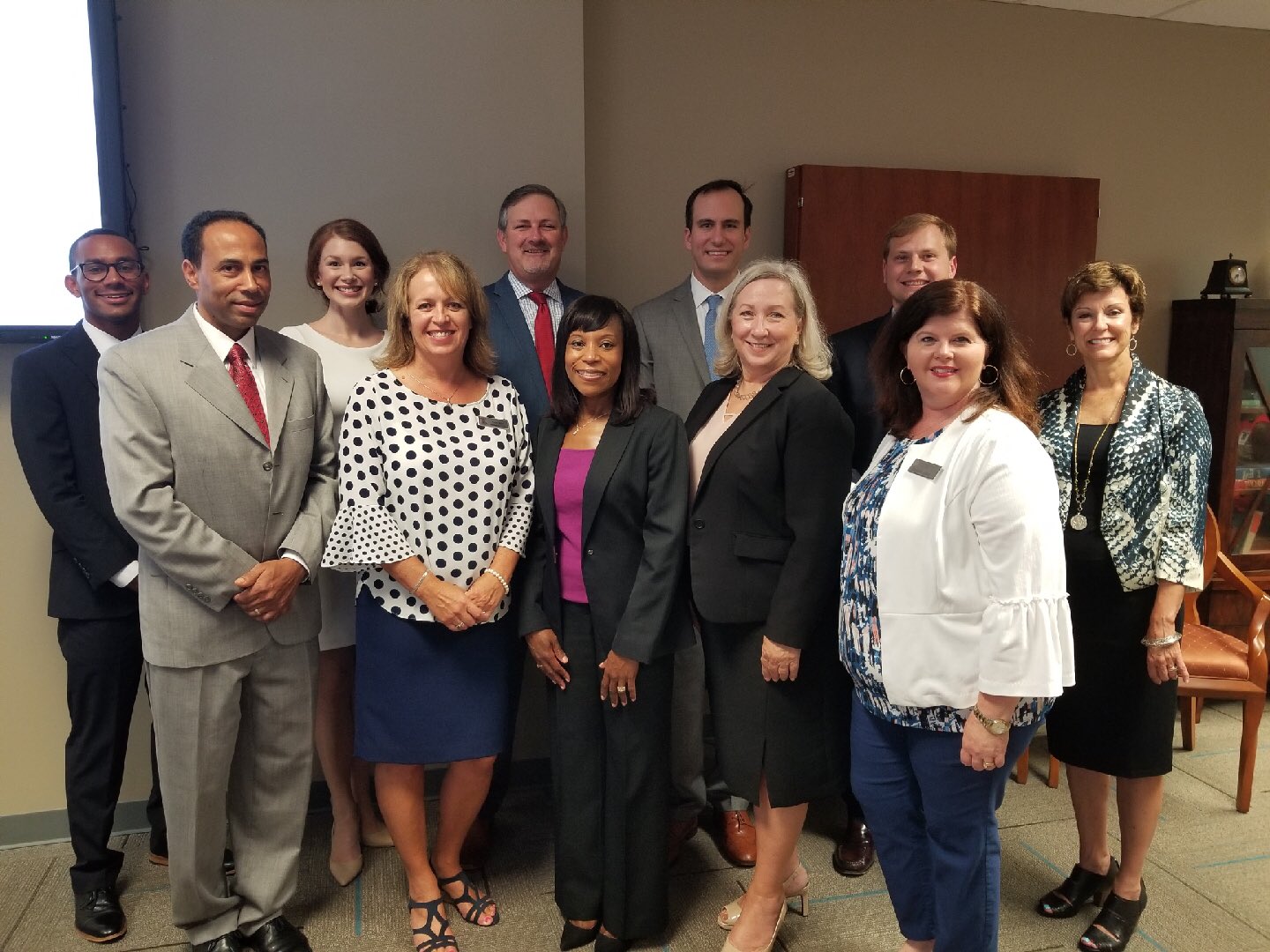
Members of Governor Ivey’s Executive Leadership Team for Grade Level Reading and other Alabama state department staff pose for a picture during the meeting with the Mississippi State Department.
Later that year, I began working with Moore, Alabama State Representative Terri Collins, and ExcelinEd’s Cari Miller on the first draft of what would become the Alabama Literacy Act. To ensure alignment with newly adopted expectations of the Dyslexia Amendments, we included in the ALA several of those components, such as screening, early intervention, and professional learning, as well as recommendations from the Strategic Reading Committee.
The Literacy Act faced skepticism and resistance in its early days. For example, we kept hearing that Alabama was already doing much of what we’d proposed. One major challenge was helping people see how the pieces could work better as a more comprehensive, coherent system. The ALA connected science of reading professional learning, literacy coaching, aligned educator preparation, early identification of struggling readers, and intensive intervention with sustained state investment.
That sounds like a lot, but the law’s goal is simple: Ensure all students receive strong, high-quality instruction from the beginning so fewer students require intensive intervention. At its core, the ALA is a prevention-first model.
Still, another set of concerns remained around the law’s third-grade retention provision. We designed the law so that retention would be a last resort, used only when preventative supports had not yet gotten a student where he or she needed to be to meet the reading demands of later grades. Retention provides another year of intensive support, giving the student an opportunity to catch up with peers.
To address those concerns, we focused our conversations on prevention first and what was needed to support struggling readers. In one presentation, I conducted a dyslexia simulation, asking legislators to read an Old English version of “Little Red Riding Hood.” Their difficulty decoding the text proved helpful in shifting the conversation from the retention provision to experiencing what it feels like to be a struggling reader in a classroom.
We also brought the discussion back to a simple question: “Do we want all students to read?” It was difficult for anyone to answer no. This allowed us to focus the conversation on what adults could change to make it possible.
Alabama’s students needed more, and we knew it. Parents, members of the Alabama Dyslexia Advisory Council, Alabama Scottish Rite supporters, and many others called, emailed, and advocated for the bill. One state board member called us “relentless.” We had to be. Kids’ lives and the future of our state depended on getting this right.
After the Act
When the Alabama Literacy Act passed in May 2019, we celebrated. But we knew the work was far from over. Passage is only the starting line for implementation. And implementation is where policy succeeds or fails. Two things became especially important: the guidance of the Alabama Literacy Task Force and a renewed commitment to reinvesting in the Alabama Reading Initiative.
Created by the Literacy Act, the Alabama Literacy Task Force (LTF) brought together a carefully selected group of educators, specialists, and experts who met high-level criteria. They were charged with making recommendations related to curricula, assessments, and other components needed for implementation. I would later have the privilege of chairing that task force from 2021 to 2023, serving alongside Dr. Kymyona Burk for part of that time.
The law clearly outlined the LTF’s responsibilities, and we worked under the guidance of Alabama’s Department of Education using established policies and procedures for vetting and recommending resources and materials. It was intense and rigorous work, but essential to building a coherent literacy system in Alabama. We knew every recommendation could impact what happened in classrooms and the experiences of students across the state.
Alabama also needed to reinvest in its coaching infrastructure. From the late 1990s to the early 2000s, full-time reading coaches had been central to the Alabama Reading Initiative (ARI), but funding and supports had declined over time. It was time to restore ARI’s leadership and give teachers the support they needed to strengthen instruction.
As Fordham’s report notes, two concurrent developments brought new life to coaching in Alabama. First, the Literacy Act defined coaching roles and ensured that support was targeted where it was most needed. Second, ARI funding increased dramatically, from $40.7 million in 2018 to nearly $152 million for the 2026–27 school year. With these dollars, ARI was able to create a more robust coaching structure: Now, regional literacy specialists support the reading specialists already in the schools, and regional literacy leadership specialists support principals and district leaders.
And today, seven years after the Literacy Act’s passage, we are starting to see how both this comprehensive law and the structures built around it for implementation are leading to better outcomes for students. For the first time since 2011, Alabama is roughly on par with the national average for fourth graders achieving at or above proficiency.
What matters most
Looking back, Alabama’s progress can appear much more straightforward than it felt while we were living it. But no single person put Alabama on the map for literacy. It took legislators willing to act and fund the work, state leaders willing to make changes, educators willing to learn new approaches, parents willing to advocate, and organizations willing to stay engaged for the long haul.
ExcelinEd is proud to be one of those partners, from helping shape the original policy and supporting its passage to continuing to champion strong implementation. It is one of the reasons why I joined the team.
Alabama’s story reminds us that strong policy matters. But policy alone does not change outcomes. Policy creates the framework. People make it real.
And for those of us who were there from the beginning, Alabama’s progress is a reminder of why we kept pushing, even when we were told it couldn’t be done.
#UntilTheyAllCanRead