Mobile Navigation

  • National
    • Policy
      • High Expectations
      • Quality Choices
      • Personalized Pathways
    • Research
    • Commentary
      • Gadfly Newsletter
      • Flypaper Blog
    • Events
    • Scholars Program
  • Ohio
    • Policy
      • Priorities
      • Media & Testimony
    • Research
    • Commentary
      • Ohio Education Gadfly Biweekly
      • Ohio Gadfly Daily
  • Charter Authorizing
    • Application
    • Sponsored Schools
    • Resources
  • About
    • Mission
    • Board
    • Staff
    • Career
Home
Home
Advancing Educational Excellence

Main Navigation

  • National
  • Ohio
  • Charter Authorizing
  • About

National Menu

  • Topics
    • Accountability & Testing
    • Advanced Education
    • Career & Technical Education
    • Charter Schools
    • Curriculum & Instruction
    • ESSA
    • Evidence-Based Learning
    • Facilities
    • Governance
    • Personalized Learning
    • Private School Choice
    • School Finance
    • Standards
    • Teachers & School Leaders
    • Think Again
  • Research
  • Commentary
    • Gadfly Newsletter
    • Flypaper Blog
    • Gadfly Podcast
  • Events
  • Scholars Program

Accountability & Testing

Displaying 331-360 of 503 results
Commentary
11.26.2019
Accountability & Testing, Charter Schools, Governance, Private School Choice

Even more social engineering in New York schools

Chester E. Finn, Jr.

When the New York City Council moved the other day to require every one of the city’s thirty-two community school districts to develop a school desegregation plan, it was yet one more example of municipal social engineering that prizes diversity over quality and mandatory over voluntary. If families with means don’t like their new school assignments, they’ll simply exit to charters, private schools or the suburbs, meaning that the city’s social engineers will mainly work their will on those with the least.


Commentary
11.26.2019
Accountability & Testing, Governance

Montgomery County, Maryland, talks a good game on “equity.” Now it has a chance to walk it, too.

Michael J. Petrilli

There’s been a lot of talk about racial equity in Montgomery County as of late.

Commentary
11.26.2019
Accountability & Testing, Curriculum & Instruction, Governance, Teachers & School Leaders

Time to press “pause” on credit recovery

Adam Tyner, Ph.D.

“It’s like some bullsh-t way to get kids to pass.” That’s the cynical description of high school “credit recovery” programs an eleventh grader gave to the New York Post last year. But cynicism appears to be in order.

Commentary
11.15.2019
Accountability & Testing

The high school testing recession that may be reducing academic rigor

Adam Tyner, Ph.D.

Last month, the Mississippi State Board of Education began a public comment period on a new proposal to eliminate the state requirement that students pass a U.S.

Commentary
11.15.2019
Accountability & Testing

Can you have accountability without consequences?

Tom Coyne

When I read the article in The 74 by the Colorado Education Initiative’s Rebecca Holmes introducing a one-day conference that would bring together educators, families, and students to discuss what school quality is and

Commentary
11.13.2019
Accountability & Testing, Evidence-Based Learning, Curriculum & Instruction, Teachers & School Leaders

How magnet programs can promote diversity and turn around failing schools

Pedro Enamorado

What can be done to rescue failing schools?

Commentary
11.13.2019
Accountability & Testing, Evidence-Based Learning

The underwhelming effects of stereotype threat on standardized tests

Adam Tyner, Ph.D.

Stereotype threat is when people inadvertently conform to negative stereotypes about a group they are in, for example their race or gender. A recent meta-analysis on the effects of stereotype threat has important implications for equity in the education system, the validity of standardized tests, and for teacher preparation.

Commentary
11.13.2019
Accountability & Testing, Governance

The states that are swimming against the NAEP tides

Michael J. Petrilli

The bad news from the latest Nation’s Report Card has us analysts wearing out our thesauruses. The good news is that a handful of states managed to make gains or stand pat on the assessment as their peers went backwards. Most noteworthy are D.C. and Mississippi, the only two locales where low achievers made gains. But several other states deserve credit for maintaining their scores in the face of adversity.

Commentary
11.11.2019
Accountability & Testing, Evidence-Based Learning, Charter Schools, Curriculum & Instruction, Teachers & School Leaders

2019 WONKATHON RUNNER-UP: Teachers and curricula aren’t enough for below-grade-level students. They also require scalable strategies tailored to their needs.

Jessica Varevice

Editor’s note: This was the second-place submission, out of nineteen, to Fordham’s 2019 Wonkathon, in which we asked participants to answer the question: “What’s the best way to help students who are several grade levels behind?”

Commentary
11.11.2019
Accountability & Testing, Evidence-Based Learning, Curriculum & Instruction, Teachers & School Leaders

Fostering teacher quality and expertise is the best way to help students who are several grade levels behind

Candice McQueen

Research and our personal experience tell us that the single most important factor affecting student achievement is the quality of the teacher in the classroom. No technology, tool, or other seemingly magic program can help students who are several grade levels behind get back on track and ultimately thrive.

Commentary
11.8.2019
Accountability & Testing, School Finance, Governance

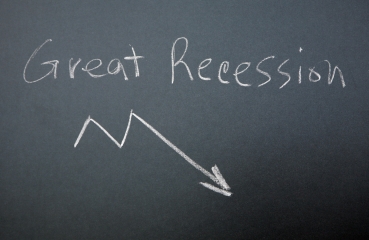
NAEP 2019: The terrible impact of the Great Recession

Michael J. Petrilli

In previous posts and in comments to the media, I’ve been making the case that the lingering effects of the Great Recession might partially explain the disappointing student achievement trends we’ve seen as of late, both on the Nation’s Report Card and on state assessments.

Commentary
11.8.2019
Accountability & Testing, Evidence-Based Learning, Curriculum & Instruction, Governance, Teachers & School Leaders

To ensure success for all students, state assessment makers must be learners, too

In the last two decades, since states began implementing standardized testing under No Child Left Behind, there has been much debate about the value of those assessments. In Louisiana, where I serve as an Assistant Superintendent, we know measurement of student learning is critical, and tests hold the power to define the academic bar for all students.

Commentary
11.6.2019
Accountability & Testing, Advanced Education, Teachers & School Leaders

High achievers are doing better on NAEP, and that’s good news. Period.

Brandon L. Wright

Most everyone has read by now about the dismal scores on our Nation’s Report Card, which again measured how fourth and eighth graders did in math and reading. Aside from fourth grade math, marks on the 2019 National Assessment of Education Progress were generally flat or down, especially for our lowest-performing children. One prominent official remarked that “the bottom fell out.” But the results among high achievers offer a bright spot that has been mostly overlooked and undercelebrated.

Podcast
11.6.2019
Accountability & Testing, Evidence-Based Learning, Standards

The Education Gadfly Show: NAEP 2019: It (was) the economy, stupid

On this week’s podcast, Marty West, a Harvard professor of education, joins Mike Petrilli and David Griffith to talk about last week’s NAEP results and their relationship to the Great Recession. On the Research Minute, Amber Northern examines how graduation requirements affect arrest rates.

Event
11.5.2019
Accountability & Testing, Curriculum & Instruction, Advanced Education, Standards

Is Advanced Placement Good for Everyone? A Discussion with Partisans and Doubters

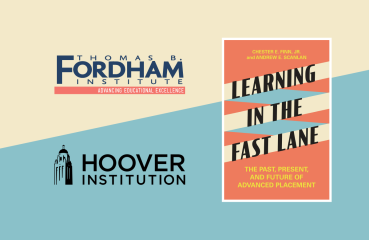
Learning in the Fast Lane: The Past, Present, and Future of Advanced Placement (Princeton, 2019), the new book by Chester Finn and Andrew Scanlan, tells the story of the Advanced Placement (AP) program, widely regarded as the gold standard for academic rigor in American high schools.

Commentary
11.5.2019
Accountability & Testing, Curriculum & Instruction, Teachers & School Leaders

To help students who are behind, find out if their assignments match their goals

Dan Weisberg

A typical sixth-grade teacher we work with serves a wide range of students. She likely has some who read above grade level, some who are a little behind, a student who doesn’t speak English but has excellent reading and writing skills in another language, and several students—some of whom have diagnosed learning disabilities—who are reading at an early elementary level.

Commentary
11.5.2019
Accountability & Testing, Evidence-Based Learning, Charter Schools, Curriculum & Instruction, Teachers & School Leaders

Rigor or personalized learning? Just ask Dr. Seuss.

Jessica Shopoff

What’s the best way to help students who are several grade levels behind?

Commentary
11.1.2019
Accountability & Testing, Evidence-Based Learning, Governance, Teachers & School Leaders

On our Nation’s Report Card, strong leadership gets an “A”

Mike Magee

This week, the federal government released the results of the National Assessment of Educational Progress (NAEP)—known colloquially as “the Nation’s Report Card.” As always, the results are the subject of intense scrutiny, and are fodder for arguments on both sides of the political aisle and all sides of education debates.

Commentary
10.31.2019
Accountability & Testing, Evidence-Based Learning, Curriculum & Instruction, Governance, Teachers & School Leaders

2019 WONKATHON WINNER: Beyond the binary: We can foster equity in both opportunity and outcomes

Abby Javurek

Editor’s note: This was the first-place submission, out of nineteen, to Fordham’s 2019 Wonkathon, in which we asked participants to answer the question: “What’s the best way to help students who are several grade levels behind?”

Commentary
10.30.2019
Accountability & Testing, Curriculum & Instruction, Standards

On NAEP, bright spots amidst the gloom

Michael J. Petrilli

This year’s NAEP results are bleak. But they were foreseeable, with the Great Recession's effects still impeding progress. Demography need not be destiny though: A few jurisdictions bucked the overall trends and showed improvement. D.C. deserves much of the praise, given its ability to demonstrate sustained and significant progress over time, and its decade-plus commitment to fundamental reform. As does Mississippi, which has been on an upward trajectory for the last decade, especially in reading. Despite the dismal results, there’s hope if we can follow the lead of these notable locales.

Commentary
10.30.2019
Accountability & Testing, Curriculum & Instruction, Teachers & School Leaders

The zombie pedagogical debate

Dale Chu

With Wonkathon season kicking into high gear, asking participants what’s the best way to help students who are several grade levels behind, it occurred to me that this year’s question, as fundamental and challenging as it may be, is a withering indictment o

Commentary
10.30.2019
Accountability & Testing, Curriculum & Instruction

Innovation, grade-level standards, and what schools can learn from Teach to One: Math

Pedro Enamorado

Only 30 to 40 percent of high school students graduate college- or career-ready. And one of the main reasons may be traditional public schools’ focus on grade-level proficiency.

Podcast
10.23.2019
Accountability & Testing, Curriculum & Instruction, Standards

The Education Gadfly Show: Early warning: Kindergarten readiness skills are trending downward

On this week’s podcast, Megan Kuhfeld, a research scientist at NWEA, joins Mike Petrilli to discuss her recent, sobering findings about the reading and math skills of children entering kindergarten. On the Research Minute, Adam Tyner examines how “stereotype threat” affects the results of cognitive ability tests.

Commentary
10.18.2019
Accountability & Testing, Curriculum & Instruction, Teachers & School Leaders

NewSchools isn't overselling SEL: A response to Checker Finn

Stacey Childress

Our team at NewSchools recently released a report titled, Using Expanded Measures of Student Success for School Improvement. In it, we share some on-the-ground lessons from innovative public schools in our portfolio.

Commentary
10.18.2019
Accountability & Testing

Standardized tests remain the best way to fairly and equitably assess students

Jonathan Wai, Don Zhang

Educational testing is under attack.

Commentary
10.16.2019
Accountability & Testing, Evidence-Based Learning

Texas’s shale boom boosted local tax bases. Here’s how it affected schools.

Amber M. Northern, Ph.D.

New and fascinating research uses a creative study design and a unique data set to address whether a thriving local economy leads to better student outcomes. Specifically, it examines how the Texas boom in shale oil and gas drilling, which brought with it large and localized effects on wages and the tax base, impacted district schools.

Policy Brief
10.15.2019
Accountability & Testing

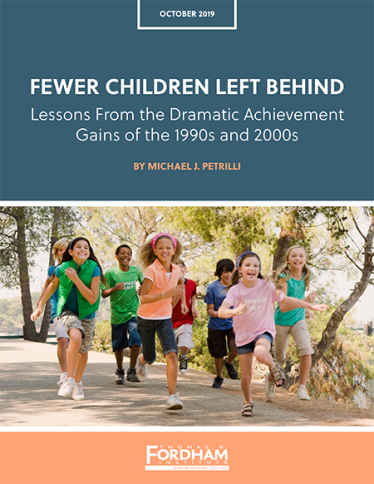
Fewer Children Left Behind: Lessons From the Dramatic Achievement Gains of the 1990s and 2000s

Michael J. Petrilli

In this new monograph, Fewer Children Left Behind, Michael J. Petrilli, the president of the Thomas B. Fordham Institute, examines whether America’s schools have improved over the past quarter-century of reform.

Commentary
10.11.2019
Accountability & Testing, Curriculum & Instruction, Teachers & School Leaders

Everything we know about teacher effectiveness

Andrew Scanlan

On Wednesday, we sat down with Dan Goldhaber, director of the National Center for Analysis of Longitudinal Data in Education Research (CALDER), on our Education Gadfly Show podcast for thirty minutes of engaging discussion.

Commentary
10.10.2019
Accountability & Testing, Charter Schools, Curriculum & Instruction, Teachers & School Leaders

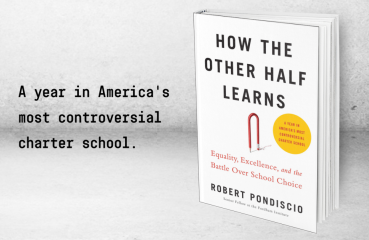
Chad Aldeman: A review of Robert Pondiscio’s “How the Other Half Learns”

Chad Aldeman

Robert Pondiscio won’t like my review of his new book, How the Other Half Learns.

Commentary
10.9.2019
Accountability & Testing, Curriculum & Instruction, Advanced Education, Teachers & School Leaders

AP: Great for gifted high schoolers

Chester E. Finn, Jr., Andrew Scanlan

When considering the available options for gifted high-school kids, the Advanced Placement (AP) program may not be the first thing that comes to mind. That’s too bad because AP might be America’s most effective large-scale “gifted and talented” program at the high school level.

Pagination

  • First page « First
  • Previous page ‹ Previous
  • Page 8
  • Page 9
  • Page 10
  • Page 11
  • Current page 12
  • Page 13
  • Page 14
  • Page 15
  • Page 16
  • Next page Next ›
  • Last page Last »

Type

  • Book (1)
  • Commentary (397)
  • Event (6)
  • Podcast (45)
  • Report (44)

Topics

  • (-) Accountability & Testing (503)
  • Advanced Education (265)
  • Career & Technical Education (84)
  • Charter Schools (1115)
  • Curriculum & Instruction (1588)
  • ESSA (129)
  • Evidence-Based Learning (833)
  • Facilities (25)
  • Governance (1407)
  • Personalized Learning (51)
  • Private School Choice (138)
  • School Finance (166)
  • Standards (190)
  • Teachers & School Leaders (1448)

Date

  • 2026 (35)
  • 2025 (47)
  • 2024 (44)
  • 2023 (47)
  • 2022 (54)
  • 2021 (47)
  • 2020 (50)
  • 2019 (65)
  • 2018 (18)
  • 2017 (17)
  • 2016 (7)
  • 2015 (19)
  • 2014 (26)
  • 2013 (1)
  • 2012 (2)
  • 2011 (3)
  • 2010 (2)
  • 2009 (3)
  • 2008 (2)
  • 2007 (2)
  • 2006 (3)
  • 2005 (2)
  • 2004 (1)
  • 2003 (2)
  • 2002 (1)
  • 2000 (1)
  • 1998 (2)
Fordham Logo

© 2026 The Thomas B. Fordham Institute
Privacy Policy
Usage Agreement

National

P.O. Box 110
Burke, VA 22009

202.223.5452

[email protected]

Ohio

P.O. Box 82291
Columbus, OH 43202

614.223.1580

[email protected]

Sponsorship

130 West Second Street, Suite 410
Dayton, Ohio 45402

937.227.3368

[email protected]