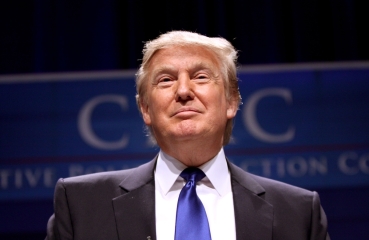
Will Donald Trump be remembered as an education president?
Last month, Education Secretary Linda McMahon expressed hope that Donald Trump will be remembered as an “education president,” arguing that “sending education back to the states” warrants


Much commentary has been offered on the literacy crisis plaguing the country. Massachusetts, often recognized as a leader in student achievement, has experienced the same challenge. Signs of the problem were clear in advance of the pandemic with NAEP fourth-grade reading proficiency rates falling from 50 percent to 45 percent between 2011 and 2019.
Reading skills in the early grades can predict future academic success, and too many children begin formal schooling already behind. By fourth grade, only 33 percent of U.S.
Mike McShane, Director of National Research for EdChoic
Given our moniker as “The Education Gadfly,” we at the Thomas B. Fordham Institute are not accustomed to lavishing praise on education leaders. That’s OK, considering how rarely they deserve it. But when someone in a position of authority demonstrates leadership, courage, and common sense, it’s important for us gadflies (and reformers) to say so.
The post-Katrina “college for all” mindset raised college enrollment rates among New Orleans charter school students, but many dropped out before graduating.
Cheers The Institute for Education Sciences must fundamentally transform its approach to education R&D. —Mark Schneider, American Enterprise Institute Jeers
Nearly twenty years ago, Hurricane Katrina devastated New Orleans. Among other sweeping institutional changes, the unprecedented school reforms enacted in the immediate aftermath have left long-lasting effects on the city’s K–12 public education system. But are New Orleans schools still operating in the way that reformers intended?
My son came home from football practice the other night and showed me the “key performance indicators” from his position coach. This season, a missed tackle results in a “fine” of twenty burpees; a dropped interception is followed by twenty push-ups; and a missed assignment will be punished with fifty squat jumps.
Teacher salary freezes haven’t gotten much attention in either the mainstream media or in education research. Rigorous studies explore the effects of teacher performance pay, teacher benefits, and much else, but Coffey couldn’t find a single study of pay freezes. Are they pushing teachers out of the profession?
With eighteen words tucked into a 37-page education bill, the Indiana state legislature took a major step towards easing the lives of educational entrepreneurs. Those words? “A public school, charter school, or nonpublic school shall be considered a permitted use in all zoning districts.”
Editor’s note: This was first published by The 74.
As private school choice policies have proliferated and matured across the country, researchers have looked at the policy side of the process, as well as
ERS president and managing partner Jonatha
A journalist’s deep and nuanced look at microschooling and Arizona’s ESA program, where he concludes that “public education does not have to die when we admit that one size does not fit all.” —Chandler Fritz, Harper's Magazine Navigating enrollmen
It’s back-to-school season, with an estimated 47.2 million K–12 public school students and 3.2 million teachers returning to their classrooms.
Michael Petrilli recently made a sensible case for charter school regulation—not for its own sake, but because charter authorizers should concern themselves with how our public schools are being run.
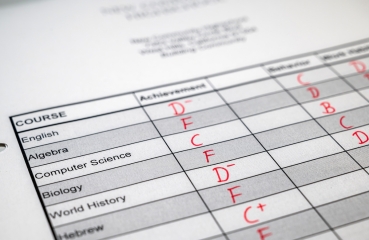
Teachers hate it when the powers that be take a sledgehammer to their few sources of leverage over student motivation and effort. Nor do they like giving students grades they don’t deserve. How did we get here?
When still a teacher, I considered my building principal a consequence vending machine. When all else failed, press H5 for an in-school suspension. Having been on both sides now, I realize that the role of the administrator in maintaining school order is far more consequential.
Classical education has become one of the brightest spots in the K–12 landscape. Once a niche movement, it now encompasses more than 1,500 public, private, and charter schools serving nearly 700,000 students.
Student participation in career and technical education (CTE) has grown significantly in recent years, backed by bipartisan support and
On this week’s solo episode, Mike shares his though
Policies like "no zeros," eliminating late penalties, and allowing unlimited retakes aim to make grading fairer for disadvantaged students. Critics argue the changes inflate grades, erode accountability, and harm learning—and many teachers agree.
First a bit of history: Before he got canceled during the #Me-Too Movement, Garrison Keillor headlined a very popular public radio variety show called “A Prairie Home Companion.” Most weeks, he regaled listeners with stories from the fictional Lake Wobegon, Minnesota; I remember lis
The Chinese high school leaving exam’s English section is more challenging—in a foreign language—than SAT reading passages. —Yascha Mounk, Substack “A century ago, men stepped up to build spaces for boys and were cheered on for doing so.
Many pundits claim that the charter schools sector once had great potential for innovation, but because of dastardly authorizers and other red-tape-loving bureaucrats, charters instead became overly cautious, impeding innovation in a way that has hamstrung and limited the entire charter school movement. Is that true?
One could argue that the University of Virginia cognitive psychologist Daniel Willingham is one of the most influential Americans of the 21st century. Willingham has observed that we have learned more about how people learn in the last 25 years than in the previous 2,500 combined.
States can play a powerful role in improving student learning by improving instruction. I know this from my experience working at a state agency and from observing how the districts and schools that partner with my organization, Instruction Partners, orient to the expectations and initiatives of their state agencies.