Mobile Navigation

  • National
    • Policy
      • High Expectations
      • Quality Choices
      • Personalized Pathways
    • Research
    • Commentary
      • Gadfly Newsletter
      • Flypaper Blog
    • Events
    • Scholars Program
  • Ohio
    • Policy
      • Priorities
      • Media & Testimony
    • Research
    • Commentary
      • Ohio Education Gadfly Biweekly
      • Ohio Gadfly Daily
  • Charter Authorizing
    • Application
    • Sponsored Schools
    • Resources
  • About
    • Mission
    • Board
    • Staff
    • Career
Home
Home
Advancing Educational Excellence

Main Navigation

  • National
  • Ohio
  • Charter Authorizing
  • About

National Menu

  • Topics
    • Accountability & Testing
    • Advanced Education
    • Career & Technical Education
    • Charter Schools
    • Curriculum & Instruction
    • ESSA
    • Evidence-Based Learning
    • Facilities
    • Governance
    • Personalized Learning
    • Private School Choice
    • School Finance
    • Standards
    • Teachers & School Leaders
    • Think Again
  • Research
  • Commentary
    • Gadfly Newsletter
    • Flypaper Blog
    • Gadfly Podcast
  • Events
  • Scholars Program

Topics

Displaying 211-240 of 444 results
Commentary
6.17.2020
Governance, Personalized Learning, Teachers & School Leaders

Let’s rebuild special education when schools reopen

Anne Delfosse, Miriam Kurtzig Freedman

This spring’s school closures have challenged us to look at many things differently and to be open-minded, creative, and brave about moving toward necessary change. As we consider reopening schools in the fall, let’s hold on to that mindset and ask what should special education become? Does the forty-five-year-old federal law (IDEA) need a thorough redo? We believe it does.

Commentary
6.17.2020
Evidence-Based Learning, Governance

How police killings affect children’s academic outcomes

Tran Le

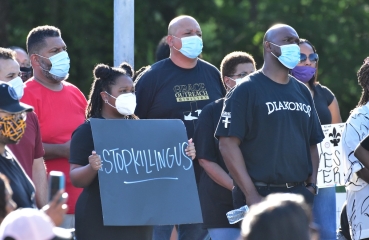
As national unrest builds along with the deaths of George Floyd, Breonna Taylor, and too many others at the hands of police officers, people worldwide are responding with marches, protests, critical reflection, and grief. Right now, the Black Lives Matter movement rages on.

Commentary
6.17.2020
Accountability & Testing, Evidence-Based Learning, Governance, Teachers & School Leaders

The case for statewide diagnostic assessments in the fall

Trinady Maddock

The start of a new school year is always filled with challenges. New teachers, new classes, and new expectations can be difficult for both teachers and students. But what if teachers and students haven’t been in school for six months or more? How can schools try and prepare to get back to a sense of normalcy after all of this?

Commentary
6.16.2020
Governance

I teach civics. And I’m not voting.

Robert Pondiscio

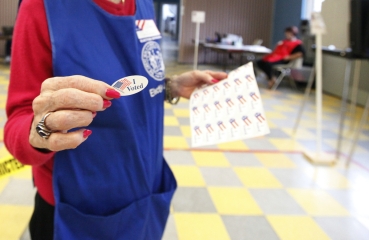
A few years ago, a close friend and colleague made a surprising confession. Even though we worked at a charter school network devoted to civic education, she admitted to me that she’d never voted and wasn’t even registered. She felt guilty and hypocritical. How could she promote the virtue of voting to children starting in kindergarten but not vote herself?

Commentary
6.16.2020

A call on Congress to invest more in education R&D

Neil Campbell, Abby Quirk

Today the Thomas B. Fordham institute and the Center for American Progress published Moonshot For Education: A Federal Policy Proposal to Spur Effective Research and Development for K-12 Education.

Policy Brief
6.16.2020
Evidence-Based Learning, Governance

Moonshot for Education: A Federal Policy Proposal to Spur Effective Research and Development for K-12 Education

Thomas B. Fordham Institute

In dozens of fields, federally-supported research and development translates into new ideas, technologies, and actions. Why not in education, particularly as the Covid-19 crisis makes it abundantly clear that our educational systems are severely lacking innovative technologies that could have improved the resiliency and flexibility of our classrooms and facilitated a nationwide shift to remote instruction?

Commentary
6.15.2020
Governance, Teachers & School Leaders

Why an earnings premium matters for students and policymakers

Michael Itzkowitz

Earlier this month, John Winters, associate professor from Iowa State University, released a study, What You Make Depends on Where You Live: College Earnings Across States and Metropolitan Areas, which examined the economic premium of earning different college credentials across all fif

Commentary
6.15.2020
Curriculum & Instruction

Classical education is growing. Here's how to keep it that way.

Clare Basil

The Institute for Classical Education, a recently established research center based in Arizona, announced its ambitious mission of bringing classical education to an additional 50,000 students by 2025.

Commentary
6.12.2020
Career & Technical Education, Curriculum & Instruction, Governance, Advanced Education, Teachers & School Leaders

Why not eliminate at least one year of high school entirely?

Kalman R. Hettleman

Michael J. Petrilli’s recent article “Half-Time High School may be just what students need” is compelling. Yet proposals to cut school time in half in grades nine through twelve may be only half right.

Commentary
6.11.2020
Career & Technical Education, Governance, Teachers & School Leaders

Want to make your college degree count? Here’s where to live.

Tyler Ransom

Most people agree that a college education is a worthwhile investment for a young person. For example, across the U.S., bachelor’s degree holders earn on average 55 percent higher salaries than those with no education beyond high school. However, it is less well understood that there are stark geographical differences in how much return one gets on their educational investment.

Commentary
6.10.2020
Governance, Standards

Florida’s new math and English standards aren’t ready for prime time

Amber M. Northern, Ph.D., Michael J. Petrilli

When policymakers contend that their standards deserve to be replicated, especially when those policymakers lead big, highly regarded states like Florida, we at Fordham think their claims merit a closer look. So we gathered a team of expert reviewers to review the state's new standards, and published a new report based on their results. The verdict: Other states should indeed look for models to emulate, but they won’t find them in Florida.

Commentary
6.10.2020
Governance, Teachers & School Leaders

If a spike in Covid-19 cases does not follow the mass demonstrations, it should change the calculus for reopening schools

Dale Chu

In a few weeks, the planning underway for the start of the coming school year could take an interesting and unexpected turn.

Commentary
6.10.2020
Curriculum & Instruction, Teachers & School Leaders

In the era of Covid-19, put learning first—and other lessons

Kerri Briggs, Trent Kaufman, Mavis Snelson

As quickly as the NBA put its season on hold and the summer Olympics rescheduled, schools across America switched to “school from home.” It happened almost overnight. Regardless of teacher training, parent comfort, or students’ technology access—remote learning was the new reality.

Podcast
6.10.2020
Accountability & Testing, Curriculum & Instruction

The Education Gadfly Show: School districts failed the remote learning test

On this week’s podcast, Robin Lake, director of the Center on Reinventing Public Education, talks with Mike Petrilli and David Griffith about how well school districts handled remote learning this spring. On the Research Minute, Olivia Piontek joins Mike and David to examine how data on how academic growth affects parents’ perception of school quality.

Report
6.9.2020
Standards

The State of the Sunshine State's Standards: The Florida B.E.S.T. Edition

Solomon Friedberg, Tim Shanahan, Francis Fennell, Douglas Fisher, Roger Howe

A decade ago, states across the nation adopted the Common Core State Standards (CCSS) in an effort to raise the academic bar for their students. This has provoked countless political battles since then—including an especially intense one in Florida.

Commentary
6.9.2020
Curriculum & Instruction

18 virtual summer camps to keep your kids learning—and busy

Tran Le

With the school year ending and the start of summer, the usual fanfare to kick off freedom and fun has been muffled by Covid-19—not only for children but also for parents.

Commentary
6.8.2020
Curriculum & Instruction, Teachers & School Leaders

Teaching and learning from home must continue to be an option for educators and families. Here’s how states can help.

Michael J. Petrilli

All over the country, states, districts and task forces of every sort are wrestling with the question of how to safely reopen schools. This scenario planning is daunting, as schools must navigate a minefield of health, safety, legal, and instructional issues, and do so blindfolded by ever-changing and imperfect understanding of the virus itself.

Commentary
6.5.2020
Evidence-Based Learning, Curriculum & Instruction, Teachers & School Leaders

What is the value of a bachelor’s degree? The answer depends on where you live and what you do.

Jeff Strohl

The idea that all postsecondary education on average is good is misleading. The truth is, there’s significant variation in which academic degrees bring workers the most value, and why they do.

Commentary
6.5.2020
Teachers & School Leaders

Teachers, consider superintendency. You could transform even more student lives.

Tran Le

As protests against racism and police brutality erupt across the nation—during a worldwide pandemic, no less—Americans are coming to face the harsh reality that life as they previously knew it is no more. Until there’s a vaccine, the “normal” that was pre-Covid-19 can never be again, and the “normal” that was pre-George Floyd must never be again.

Commentary
6.4.2020

Where justice, education, and faith intersect

Stephanie Saroki de Garcia

My heart has been grieving this week. The murder of George Floyd—and Breonna Taylor and Ahmaud Arbery and more—was evil. I lament their horrific killings. May Jesus keep and hold each of them and their loved ones during this time of great suffering.

Commentary
6.3.2020
Curriculum & Instruction, Governance, Teachers & School Leaders

With his remarks on the murder of George Floyd, Joe Biden showed us how to teach empathy and American history

Michael J. Petrilli

America’s schools could learn a lot about how to handle two hot-button issues from Joe Biden’s comments in response to George Floyd’s horrific murder: how to model and cultivate empathy for our fellow citizens, and how to teach an inclusive version of history. He carved a middle path between right and left that is anything but the mushy middle.

Commentary
6.3.2020
Governance, Teachers & School Leaders

Scrapping admissions tests won’t cure what ails education

Chester E. Finn, Jr.

On May 21, driven by exquisitely progressive intentions, the regents of the University of California made the worst policy decision in the recent history of American higher education: to eliminate SAT and ACT admissions testing for in-state applicants to all nine of their undergraduate campuses, which comprise one of the country’s biggest and historically most prestigious state systems.

Commentary
6.3.2020
Evidence-Based Learning, Governance, Teachers & School Leaders

The failure of virus experts and their models—and what it means for K–12

Mike Goldstein

1. Problems with models Nobel Physicist Richard Feynman wrote about models: [Physicists have] learned to realize that whether they like a theory or they don’t like a theory is not the essential question.

Commentary
6.3.2020
Charter Schools, Curriculum & Instruction, Teachers & School Leaders

The different ways charter and district schools are doing distance learning

The pandemic forced schools across the country to close and institute some form of remote learning, but their methods varied widely. To see just how much, analysts at the American Enterprise Institute and the Center on Reinventing Public Education have been examining how different public school districts and charter school networks have responded.

Podcast
6.3.2020
School Finance, Private School Choice

The Education Gadfly Show: The crisis’s outsized impacts on Catholic schools

On this week’s podcast, Michael McShane, the director of national research at EdChoice, joins Mike Petrilli to discuss how Catholic

Commentary
6.1.2020
Teachers & School Leaders

Keeping students on track for college and beyond during coronavirus

Stefanie Sanford

Even in the best of times, the path from high school to college is fraught. And these are not the best of times. COVID-19 disruptions have turned the light haze of college transition into a blinding fog.

Commentary
5.28.2020
Curriculum & Instruction, Teachers & School Leaders

What AP teachers taught us about learning continuity during coronavirus

Stefanie Sanford

The sudden shift to remote learning this spring demanded that schools innovate and adapt with incredible speed. The entire education world is trying to serve millions of suddenly home-bound students, and there’s simply no precedent for a challenge on that scale.

Commentary
5.27.2020
Curriculum & Instruction, Teachers & School Leaders

Half-Time High School may be just what students need

Michael J. Petrilli

The shutdown of America’s high schools has deprived millions of students of rites we previously took for granted. Coursework can be transferred online to some degree, but no virtual environment can replace football games, choir concerts, musicals, and so much more that’s part of the American high school experience.

Commentary
5.27.2020
Governance

Could “school choice moms” tip this fall’s presidential race?

Dale Chu

According to an opinion piece published in The Wall Street Journal, the election of Florida’s Republican governor Ron DeSantis in 2018 can be credited to African American women who voted to protect tax-credit scholarships and

Commentary
5.27.2020
Curriculum & Instruction, Teachers & School Leaders

Growth trends in social and emotional learning

Amber M. Northern, Ph.D.

In early 2019, the Aspen Institute released the findings of the National Commission on Social, Emotional, and Academic Development. The report concluded that non-academic factors—such as managing emotions, goal setting, empathy, interpersonal relationships, self-regulation, and more—were vital ingredients to boosting academic achievement for all students.

Pagination

  • First page « First
  • Previous page ‹ Previous
  • Page 4
  • Page 5
  • Page 6
  • Page 7
  • Current page 8
  • Page 9
  • Page 10
  • Page 11
  • Page 12
  • Next page Next ›
  • Last page Last »

Type

  • Book (2)
  • Commentary (382)
  • Event (4)
  • Podcast (48)
  • Report (6)

Topics

  • Accountability & Testing (50)
  • Advanced Education (15)
  • Career & Technical Education (6)
  • Charter Schools (39)
  • Curriculum & Instruction (170)
  • Evidence-Based Learning (37)
  • Facilities (9)
  • Governance (156)
  • Personalized Learning (13)
  • Private School Choice (10)
  • School Finance (23)
  • Standards (4)
  • Teachers & School Leaders (203)

Date

  • (-) 2020 (0)
  • September 2020 (56)
  • October 2020 (56)
  • November 2020 (58)
  • May 2020 (66)
  • March 2020 (67)
  • June 2020 (73)
  • July 2020 (66)
  • January 2020 (62)
  • February 2020 (58)
  • December 2020 (52)
  • August 2020 (61)
  • April 2020 (90)
Fordham Logo

© 2026 The Thomas B. Fordham Institute
Privacy Policy
Usage Agreement

National

P.O. Box 110
Burke, VA 22009

202.223.5452

[email protected]

Ohio

P.O. Box 82291
Columbus, OH 43202

614.223.1580

[email protected]

Sponsorship

130 West Second Street, Suite 410
Dayton, Ohio 45402

937.227.3368

[email protected]