Mobile Navigation

  • National
    • Policy
      • High Expectations
      • Quality Choices
      • Personalized Pathways
    • Research
    • Commentary
      • Gadfly Newsletter
      • Flypaper Blog
    • Events
    • Scholars Program
  • Ohio
    • Policy
      • Priorities
      • Media & Testimony
    • Research
    • Commentary
      • Ohio Education Gadfly Biweekly
      • Ohio Gadfly Daily
  • Charter Authorizing
    • Application
    • Sponsored Schools
    • Resources
  • About
    • Mission
    • Board
    • Staff
    • Career
Home
Home
Advancing Educational Excellence

Main Navigation

  • National
  • Ohio
  • Charter Authorizing
  • About

National Menu

  • Topics
    • Accountability & Testing
    • Advanced Education
    • Career & Technical Education
    • Charter Schools
    • Curriculum & Instruction
    • ESSA
    • Evidence-Based Learning
    • Facilities
    • Governance
    • Personalized Learning
    • Private School Choice
    • School Finance
    • Standards
    • Teachers & School Leaders
    • Think Again
  • Research
  • Commentary
    • Gadfly Newsletter
    • Flypaper Blog
    • Gadfly Podcast
  • Events
  • Scholars Program

The Education Gadfly Weekly

Sign Up to Receive Fordham Updates

We'll send you quality research, commentary, analysis, and news on the education issues you care about.
Thank you for signing up!
Please check your email to confirm the subscription.

The Education Gadfly Weekly: Teacher mental health days demonstrate districts’ priorities

Volume 21, Number 46
11.18.2021
11.18.2021

The Education Gadfly Weekly: Teacher mental health days demonstrate districts’ priorities

Volume 21, Number 46
view
High Expectations

Teacher mental health days demonstrate districts’ priorities—and it’s not the students

America’s children are way behind because of the pandemic. And knowing this, parents and guardians have been justifiably expecting schools to rise to the occasion this fall. Instead, districts across the country have been shuttering this month following a wave of unexpected staff shortages. This is unequivocally a bad thing, but one that may have a silver lining: It helps increase momentum for school choice.

Dale Chu 11.18.2021
NationalFlypaper

Teacher mental health days demonstrate districts’ priorities—and it’s not the students

Dale Chu
11.18.2021
Flypaper

What is virtue and why does it matter?

Jennifer Frey
11.18.2021
Flypaper

In almost every state, funding gaps between rich and poor schools have been closed

Adam Tyner, Ph.D.
11.18.2021
Flypaper

A descriptive look at high school students earning college credit in Rhode Island

Jeff Murray
11.15.2021
Ohio Gadfly Daily

Education Gadfly Show #796: What Glenn Youngkin’s election says about education politics today

11.16.2021
Podcast

Cheers and Jeers: November 18, 2021

The Education Gadfly
11.18.2021
Flypaper

What we're reading this week: November 18, 2021

The Education Gadfly
11.18.2021
Flypaper
view

What is virtue and why does it matter?

Jennifer Frey 11.18.2021
Flypaper
view

In almost every state, funding gaps between rich and poor schools have been closed

Adam Tyner, Ph.D. 11.18.2021
Flypaper
view
Dual enrollment in Rhode Island SR image

A descriptive look at high school students earning college credit in Rhode Island

Jeff Murray 11.15.2021
Ohio Gadfly Daily
view

Education Gadfly Show #796: What Glenn Youngkin’s election says about education politics today

Michael J. Petrilli, Andrew J. Rotherham, David Griffith, Ph.D., Adam Tyner, Ph.D. 11.16.2021
Podcast
view

Cheers and Jeers: November 18, 2021

The Education Gadfly 11.18.2021
Flypaper
view

What we're reading this week: November 18, 2021

The Education Gadfly 11.18.2021
Flypaper
view

Teacher mental health days demonstrate districts’ priorities—and it’s not the students

Dale Chu
11.18.2021
Flypaper

School districts across the country have been shuttering this month following a wave of unexpected staff shortages, in what some are calling “No School November.” In Chicago, a lack of substitute teachers led to the abrupt cancelation of classes last Friday under the thinly veiled pretense of getting more students vaccinated. Students in Seattle also had a surprise four-day weekend when the district realized it couldn’t cover the more than 600 personal day requests filed by teachers there. Here in Denver, schools will be closed tomorrow to ostensibly fight teacher burnout, effectively making Thanksgiving a ten-day holiday, to say nothing of an additional two weeks off in December.

The list of cancelations goes on. Burbio has identified sixty-five school districts that have closed schools this fall to provide mental health breaks for teachers, affecting 2,535 schools. At this pace, kids could lose more days of school to staff fatigue than to Covid-related closures. The hours of instruction being forfeited in the process comes at a time when students can ill afford to miss any more school—an urgency that’s particularly acute for those with disabilities. Indeed, parents in San Diego balked at the idea of a mental health day off, arguing that if anyone should be exhausted, it’s parents after being forced to become proxy educators for a year and a half. But what’s unfolding before the disbelieving eyes of families who depend upon a district’s published school schedule should serve as a sobering reminder of the rigidity of an education system that continues to buckle and fold under pressure.

By almost every measure, America’s children are way behind. And knowing this, parents and guardians have been justifiably expecting schools to rise to the occasion—even more so after Uncle Sam’s $190 billion infusion of federal relief funding. There are some shining examples of strong leadership ensuring that schoolhouse doors remained open, but they are too few and far between.

When asked who’s to blame, the head of the nation’s largest membership organization for school superintendents essentially shrugged his shoulders, chalking things up to a lack of subs, explaining that teachers have the right to use paid time off and that there’s little district leaders can do. He’s only partially right. Part of the problem is indeed the generous leave policies enshrined in state laws and local collective bargaining agreements. But leaders’ sense of learned helplessness has also been a feature of how districts have generally sleepwalked throughout the pandemic.

As Fordham found from a 2017 report on teacher absenteeism, the data on teacher absences in traditional public schools have long raised the question of whether the number of days off afforded to teachers makes sense given school breaks. The pandemic has only intensified this concern, now that schools must grapple with extreme learning loss caused, in part, by so many days out of school over the last year and half. Many of these closures and missed days were, of course, prudent, but a significant portion was only the product of overly aggressive quarantine policies that forced teachers and students to unnecessarily stay out of classrooms. These same unsophisticated policies—as well as other ones, like blindly adhering to concurrent time for teachers—are exacerbating the substitute teacher shortage.

Fortunately, this string of district failures may ultimately be a good thing for parents. Public school leaders’ abdication of responsibility is happening on the eve of new legislative sessions in January, and with the 2022 midterms soon to follow thereafter. Which is to say, if the roiling discontent over schools hasn’t been severe enough following the fights over mask mandates and other culture war conflicts, the artificial extension of weekends and school holidays for the purposes of “self-care” should close the case on the need for greater flexibility and options beyond what the traditional public school system has to offer.

This helps explain why momentum for school choice has accelerated this year, with eighteen states enacting seven new educational choice programs and expanding twenty-one existing ones. Impressive numbers to be sure, but 2023 could eclipse them if the flat-footedness of schools and systems continues to extend beyond just urban centers. As my friend Derrell Bradford recently said in describing the dramatic electoral swings in Virginia and New Jersey:

The dysfunction that is normally visited on low-income families of color who don’t have a lot of options showed up in the tony ‘burbs of well-off white folks who thought they had great schools built into their mortgages.

No one can know for certain how the election results from earlier this month carry into next year, but anger and outrage normally tend to dissipate barring unforeseen circumstances. If districts continue to cancel in-person classes on short notice throughout the year—watch the dates that bookend Christmas and spring break in particular—the education establishment could be in for a rude awakening come 2023 and beyond.

Incredibly, on the same day last week that classes were called off, U.S. Secretary of Education Miguel Cardona unironically tweeted a photo showing that 99.2 percent of schools are “open full-time in person”—apparently thinking this was a flex of sorts. Sadly, there is nothing to be proud of when parents and guardians are caught off guard and left scrambling for childcare. Education officials risk further incurring their wrath.

view

What is virtue and why does it matter?

Jennifer Frey
11.18.2021
Flypaper

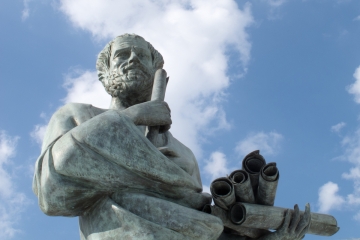
Contemporary education has become too technocratic and divorced from virtue. This is a disservice to students because it robs them of what a classical education provides: the tools students need to succeed, not just academically and professionally, but in the deep and abiding sense of being able to flourish as free and good human beings. It is therefore important that we put virtue back into the heart of education. To do that, however, we must be clear about what virtue is and why it matters.

The concept of virtue is most commonly traced back to classical Greek and Roman society, but is important to note that ancient Buddhist, Chinese, Hindu, Jewish, and Islamic traditions also placed virtue at the center of their account of the good life and society, and thus understood a proper education to focused on its cultivation. Though I typically refer to virtue in its more familiar European or Western context, we must remember that the concept is far more universally applicable.

When Plato and Aristotle discuss virtue, the Greek term they use is arete, which is best translated as “excellence.” Virtue, in its broadest sense, is an excellent quality of a thing that allows it to perform its function well. The virtue of a knife, for instance, is its excellent quality of sharpness because this is what allows a knife to cut well (dullness, by contrast, is a bad quality of a knife).

Obviously human beings are far more complex than knives, and yet we still have a characteristic function, which is to know and understand reality and to decide how best to organize our lives in light of this understanding. Human virtues, then, are stable dispositions of thought, action, and feeling that enable us to do this well. When we discuss virtues, we are either talking about good habits of mind that allow us to think, judge, reflect, and deliberate well, or good habits of desire that allow us to want and take our pleasure in what is truly good for us and for society.

Virtues are habits, or stable character traits. An honest man is one who tells the truth reliably, not just every now and again. And that means that he: (1) knows the value and importance of honesty; (2) tells the truth easily in a wide range of circumstances and finds it difficult to lie; and (3) is pleased by being honest and pained by the thought of being dishonest.

Virtues, as habits, are similar to but distinct from skills. Like skills, the cultivation of virtue requires training, discipline, and the acquisition of knowledge. Think of a bricklayer. He has a habit of knowledge. Put in a variety of novel circumstances, he will know how to use the relevant materials of his trade to execute his craft well. How does one acquire such a habit of knowledge? Not simply by reading a book or listening to a lecture or memorizing rules, but by practice. A master craftsman must learn his craft from another master. He must be trained over time to develop the habits of his craft under someone who already possesses them. No one is born knowing how to lay bricks—in fact, the task is quite difficult and mastery takes a long time.

Something similar is true with virtue. Unfortunately, we are not born just, honest, wise, or courageous, nor will we naturally develop these traits as we will naturally learn to walk or jump. Virtues must also be acquired, and it is the task of a proper education over time to acquire them, and children need virtuous examples to imitate. While virtue always involves knowledge first and foremost, it also involves the deliberate shaping of our faculties of perception, imagination, feeling, and desire. Virtue is a transformation of the whole person, and unlike skill, it is not ordered to the production of some specific work, but to human flourishing quite generally. Virtue, therefore, cannot be reduced to skill. To see why not, consider that an excellent grammarian can exercise her skill by displaying bad grammar in a malformed sentence and explaining what is wrong with it. But a just person cannot exercise her justice by stealing, cheating, or committing murder. Virtue is obviously a deeper, more personal transformation.

The Greeks understood that to have a flourishing society they needed to create good citizens, citizens who not only display civic virtues, such as civility, friendliness, and justice, but personal virtues, like courage, wisdom, and self-control. A proper education, which had the cultivation of virtue at its core, was ultimately a political imperative. The Greek conception of paideia was the process by which one formed an ideal type of person, someone who would embody Greek values and be equipped to realize and reproduce them in society. There is no possible discussion of education as the mere transmission of information or useful skills for the sake of work. A proper education is concerned with making young people into noble and free persons—with developing and shaping their potential so that they can flourish, both as individuals, and more crucially, as citizens in a flourishing society. The Greeks recognized that we do not flourish apart and alone, but together in common associations.

There are obstacles to the reintegration of knowledge and virtue, but it is first crucial to see what is at stake as we think creatively about how to move forward. A democracy is only as good as its citizens, and we need citizens who are not simply knowledgeable and skilled, but who have the civic and individual virtues that are necessary for society to flourish, who are honest, just, generous, civil, resourceful, self-controlled, and wise. The cultivation of these character traits should be at the heart of education.


view

In almost every state, funding gaps between rich and poor schools have been closed

Adam Tyner, Ph.D.
11.18.2021
Flypaper

The conventional wisdom is that American students from poor families are mostly stuck in sorely underfunded public schools while more affluent families have access to well-resourced ones. For decades, this was largely true. “White flight” from cities to suburbs and secession of wealthy neighborhoods from their local school districts perpetuated socioeconomic and racial segregation, while extensive reliance on property taxes to fund schools guaranteed that schools’ resources would, to some extent, mirror the resources of the people in the district.

Thankfully, new research shows that times have changed. In the past half-century, lawmakers and judges, prompted by voters, civil rights activists, and litigants, have pushed for more equitable funding for schools. From 1971 to 2010, for example, state supreme courts forced school finance reforms in twenty-eight states, and these reforms generally led to more spending for the schools serving the lowest-income students. Federal funding dedicated to schools with students facing poverty has also increased over time.

Using newly available school-level spending data that includes funding from all sources in the 2017–18 school year, a new study by a group of education researchers at the University of Delaware and the University of Pennsylvania shows that these changes have finally eliminated the longstanding resource gaps faced by students from low-income families.

In fact, it’s much more common for schools with poorer students to spend more than other schools in the same state, according to these school-level spending and census-based poverty data. Only in Illinois was spending in schools serving poorer students markedly lower than in the wealthier ones, and that state passed school funding reforms in 2017 that are likely closing its gaps, as well. In New Hampshire, Rhode Island, Vermont, and Connecticut, funding for schools serving more low-income students was very slightly lower, but in the rest of the states, school funding is either equal or even higher for the schools serving more low-income students.

Overall, when comparing schools within the same state, those schools serving more students in poverty outspent other schools by $529 per student per year. Higher per-pupil expenditures also occurred in schools serving more Black students, and expenditure for schools serving White and Hispanic students was about the same.

If this new school-level research is accurate—and indeed it jibes with another recent district-level study by the left-leaning Urban Institute—it means that the era of allocating paltry sums to schools serving our most vulnerable students is fortunately over. Dollars allocated for Covid-19 relief, while temporary, also flow disproportionately to schools serving low-income students, meaning that current spending is even more progressive.

Yet many advocates and experts have not borne witness to the effects of school funding reforms. In 2013, for example, Stanford University professor Linda Darling-Hammond wrote that, “In most states, there is at least a three-to-one ratio between per-pupil spending in the richest and poorest districts.” And an influential 2019 report declared that students in “non-White” districts—those where non-White students were at least 75 percent of the population—were collectively underfunded to the tune of $23 billion a year. It’s now clear that such claims are either wildly out of date or based on cutting the data in weird, misleading ways.

Our schools continue to face numerous challenges—especially during this devastating pandemic—but there is strong evidence that the additional dollars that have helped equalize school funding have made a real difference to students from low-income families. Multiple studies show that the finance reforms responsible for these funding increases have boosted student learning. This could help explain why our lowest-achieving students may be performing better academically than in decades past.

It remains true that students from disadvantaged backgrounds need even more resources—properly targeted on high-yield interventions and supports—to reach their full potential. But before we shift the school funding goalposts, we should take a moment to appreciate those who pushed our education system as far as it’s come in equalizing resources. Over the course of decades, state legislatures passed funding reforms, families petitioned the courts, and advocates fought for more fairly funded schools, even as many analysts and reformers tended to scoff at the idea that funding even mattered. Those who fought to make funding more equal deserve some recognition for this striking progress, however belated.

And for the handful of states that still aren’t ensuring that students from more impoverished communities get decently-funded schools—looking at you, New Hampshire—the fight continues: Poor kids deserve equitably funded schools.

Editor’s note: A version of this article was first published by the New York Daily News.

view
Dual enrollment in Rhode Island SR image

A descriptive look at high school students earning college credit in Rhode Island

Jeff Murray
11.15.2021
Ohio Gadfly Daily

The term “dual enrollment” is often used to refer to young people earning college credits while simultaneously completing their high school coursework. But a recent report from the Institute of Education Sciences (IES) provides an important reminder that there are several versions of dual enrollment. It also provides evidence that they aren’t equals in terms of access, participation, or outcomes.

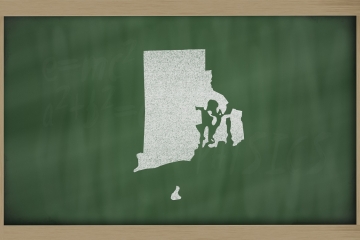
The analysis looks at data from Rhode Island, which passed legislation to boost access to early college credit in 2013. By 2015, all eligible Rhode Island high school students were given access to college-level coursework free of charge, and dedicated state funding was provided for the purpose. Dual enrollment refers specifically to students taking courses taught by college professors either on campus or virtually. Those courses are primarily provided by the state’s two-year public college. Concurrent enrollment, by contrast, refers to students taking college-level courses taught by high school teachers and held in those buildings. The teachers are trained and certified by—and the credits earned through—Rhode Island’s two public four-year colleges. Additionally, high school students in the state can earn college credit by passing Advanced Placement (AP) tests.

The research focused on 8,726 students who were first-time ninth graders in the 2013–14 school year and enrolled in traditional district schools, alternative schools, charters, and vocational schools. A total of 41 percent of the cohort participated in one or more of the three early college credit programs by grade twelve. The largest proportion (27 percent) took AP tests, while a similar proportion (26 percent) participated in concurrent enrollment. Dual enrollment was a much less common option, being used by just 4 percent of students. Approximately 15 percent participated in more than one early college credit program during high school. Compared with the cohort overall, a lower proportion of participants in early college credit programs were non-White, male, or economically disadvantaged. Interestingly, despite dual enrollment reaching fewer students, its participants were more diverse—including a higher proportion who were non-White or economically disadvantaged—than participants in the other two programs. Students participating in AP and concurrent enrollment registered higher eighth grade achievement levels than did their dual enrollment peers.

Proximity to Rhode Island’s public two-year college campus drove dual enrollment utilization, with 32 percent of dual enrollment students concentrated in just two urban high schools in Providence despite the fact that this option was theoretically open to all via remote access. Concurrent enrollment was available in a majority of schools statewide, but 13 percent did not offer the option and 19 percent enrolled fewer than ten students. The majority of concurrent enrollment students attended suburban schools, while AP test-takers were distributed among urban, suburban, and rural schools in a pattern similar to the cohort overall.

To study the impacts of these programs, the researchers compared early college credit program participants to similar non-participating students, matched based on grade eight characteristics such demographics and state test scores in math. Participation in any of the early college credit programs had a large, positive effect on the probability of students graduating from high school, enrolling in college within a year of graduation, and avoiding developmental education courses during the first year of college. Those positive effects were similar for both economically disadvantaged and non-economically disadvantaged students. Advanced Placement test-taking was associated with a significantly larger increase in college enrollment than dual and concurrent enrollment, but otherwise the effects of all three programs were roughly the same.

The researchers offer a few cautions to keep in mind. Rhode Island is not readily comparable to larger states, and participation patterns and access to early college programs may be different in other places. The research is also non-experimental and is unable to account for unobserved differences between students (e.g., differing levels of motivation) that might bias the effects shown in the study.

However, descriptive data differentiating the three early college credit programs should be taken seriously by anyone interested in building or expanding access to such programs. In states and areas where college campuses are numerous, expansion of dual enrollment might encourage a more diverse early college credit program. States with small and centralized college networks could work with districts to train and certify a larger corps of secondary teachers to make concurrent enrollment more available in distant high schools. And every school could take another look at virtual college classes, in light of pandemic improvements in higher education offerings and expanded Wi-Fi and device access among previously unconnected students. Whatever its structure, policymakers need to continue giving students opportunities to get an inside track on higher education.

SOURCE: Katherine A. Shields, Jessica Bailey, Makoto Hanita, and Xinxin Zhang, “The Effects of Accelerated College Credit Programs on Educational Attainment in Rhode Island,” U.S. Department of Education Institute of Education Sciences (June 2021).

view

Education Gadfly Show #796: What Glenn Youngkin’s election says about education politics today

11.16.2021
Podcast
 

On this week’s show, Andrew Rotherham, cofounder and partner at Bellwether Education partners, joins Mike Petrilli and David Griffith to discuss Glenn Youngkin’s election and what it means for education politics. He shared his thoughts about this on an interview for The 74, where he described the problem with Democrats ignoring parental concerns, in Virginia and nationally, about gifted education, Covid protocols, and how race is discussed in schools. But he also cautioned that Republicans shouldn’t misread the situation and overreach. After this discussion, on the Research Minute, Adam Tyner examines a study looking at the effectiveness of credit recovery courses.

In addition to listening on our website, you can find this and every episode on Spotify, Apple Podcasts, and all other major platforms. You can also click here to share it with friends.

Recommended content:

  • Follow Andy on Twitter at @arotherham.
  • Andy’s points summarized: “Q&A: Education Commentator Andrew Rotherham on the Virginia Governor’s Race and the K–12 Peril Facing Democrats.”
  • For more on recent trends in education politics, see Mike’s “Now it’s the GOP’s turn to mess up the critical race theory issue” and Checker Finn’s “A parents’ education bill of rights is a fine thing—within limits.”
  • The study that Adam reviewed on the Research Minute: Samantha Viano, “A Choice between Second Chances: An Analysis of How Students Address Course Failure,” American Journal of Education (November 2021). 

Feedback welcome!

Have ideas or feedback on our podcast? Send them to our podcast producer Pedro Enamorado at [email protected]

view

Cheers and Jeers: November 18, 2021

The Education Gadfly
11.18.2021
Flypaper

Cheers

  • North Carolina has passed a law to retrain all of its elementary teachers in the science of reading. —Hechinger Report
  • Colorado is ordering many districts to toss out low-quality reading curricula. —Chalkbeat Colorado 
  • Florida’s “Schools of Hope” policy is bringing three IDEA campuses to Hillsborough County. —Tampa Bay Times

Jeers

  • First graders who did kindergarten remotely or skipped it altogether are now dramatically behind in literacy compared to their peers who attended in person. —Hechinger Report 
  • Los Angeles Unified’s bizarre school board governance structure contributes to leadership turnover. —EdSource 
view

What we're reading this week: November 18, 2021

The Education Gadfly
11.18.2021
Flypaper
  • Education reporting needs to cast off the scarcity mindset and misleading headlines about school finance. —Chad Aldeman
  • Religious groups are lobbying to change Biden’s childcare bill, as it might disqualify faith-based care providers from accessing funds. —New York Times
  • “Restorative justice cannot combat the tide of school violence.” —Naomi Schaefer Riley
  • A poll finds that the Republicans are gaining enough ground with the public on education to nullify the Democrats’ traditional advantage on the issue. —Washington Post
Fordham Logo

© 2026 The Thomas B. Fordham Institute
Privacy Policy
Usage Agreement

National

P.O. Box 110
Burke, VA 22009

202.223.5452

[email protected]

Ohio

P.O. Box 82291
Columbus, OH 43202

614.223.1580

[email protected]

Sponsorship

130 West Second Street, Suite 410
Dayton, Ohio 45402

937.227.3368

[email protected]