Mobile Navigation

  • National
    • Policy
      • High Expectations
      • Quality Choices
      • Personalized Pathways
    • Research
    • Commentary
      • Gadfly Newsletter
      • Flypaper Blog
    • Events
    • Scholars Program
  • Ohio
    • Policy
      • Priorities
      • Media & Testimony
    • Research
    • Commentary
      • Ohio Education Gadfly Biweekly
      • Ohio Gadfly Daily
  • Charter Authorizing
    • Application
    • Sponsored Schools
    • Resources
  • About
    • Mission
    • Board
    • Staff
    • Career
Home
Home
Advancing Educational Excellence

Main Navigation

  • National
  • Ohio
  • Charter Authorizing
  • About

National Menu

  • Topics
    • Accountability & Testing
    • Advanced Education
    • Career & Technical Education
    • Charter Schools
    • Curriculum & Instruction
    • ESSA
    • Evidence-Based Learning
    • Facilities
    • Governance
    • Personalized Learning
    • Private School Choice
    • School Finance
    • Standards
    • Teachers & School Leaders
    • Think Again
  • Research
  • Commentary
    • Gadfly Newsletter
    • Flypaper Blog
    • Gadfly Podcast
  • Events
  • Scholars Program

The Education Gadfly Weekly

Sign Up to Receive Fordham Updates

We'll send you quality research, commentary, analysis, and news on the education issues you care about.
Thank you for signing up!
Please check your email to confirm the subscription.

The Education Gadfly Weekly: Spelling bees and Tiger Woods

Volume 19, Number 22
5.29.2019
5.29.2019

The Education Gadfly Weekly: Spelling bees and Tiger Woods

Volume 19, Number 22
view

Spelling bees and Tiger Woods

A pair of weekend essays heralding two new books point in very different directions regarding childhood, adolescence, and education—and portend tough choices for parents and educators. One is an anthropologist’s look at the spelling bee phenomenon as it has evolved in recent years. The other is a well-documented argument against the kind of youthful single-mindedness displayed by those spelling-bee fanatics (and their fanatical parents). It’s a quandary that inevitably connects to the larger policy issue of liberal education versus professionalism in college—and to the classic array of academic subjects versus CTE during high school.

Chester E. Finn, Jr. 5.29.2019
NationalFlypaper

Spelling bees and Tiger Woods

Chester E. Finn, Jr.
5.29.2019
Flypaper

Schools aren’t democracies, but they shouldn’t be autocracies either

Dale Chu
5.29.2019
Flypaper

The pragmatism of personalized pacing

Brandon L. Wright
5.29.2019
The High Flyer

The negative effects of “crime-prone” peers

Adam Tyner, Ph.D.
5.29.2019
Flypaper

The Education Gadfly Show: Rural schools and the urban bleed

5.29.2019
Podcast
view

Schools aren’t democracies, but they shouldn’t be autocracies either

Dale Chu 5.29.2019
Flypaper
view

The pragmatism of personalized pacing

Brandon L. Wright 5.29.2019
The High Flyer
view

The negative effects of “crime-prone” peers

Adam Tyner, Ph.D. 5.29.2019
Flypaper
view

The Education Gadfly Show: Rural schools and the urban bleed

Michael J. Petrilli, David Griffith, Ph.D., Amber M. Northern, Ph.D., Arielle Dreher 5.29.2019
Podcast
view

Spelling bees and Tiger Woods

Chester E. Finn, Jr.
5.29.2019
Flypaper

A pair of weekend essays heralding two new books point in such different directions regarding childhood, adolescence, and education in today’s America that it feels important to flag the issue—and the tough choices it portends for parents and educators.

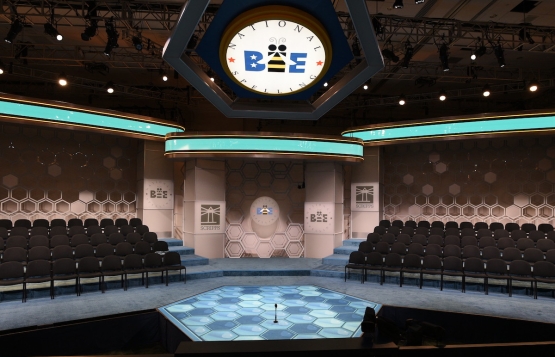
Shalini Shankar’s new book, Beeline: What Spelling Bees Reveal about Generation Z’s Path to Success, is an anthropologist’s look at the spelling-bee phenomenon as it has evolved in recent years. The focus of her article is the Scripps National Spelling Bee’s new practice of allowing parents to buy their progeny’s way into the prestigious competition, meaning that kids who don’t win at the regional level can still have a shot at the national championship—provided someone can fork over $1,500 plus travel costs and such.

This “pay to play” option—especially coming around the same time as the “Varsity Blues” scandal—strikes me as cynical, greedy, an unfortunate blow to what’s long been truly meritocratic, and a backward move in the mobility game. But the burden of her article—and, I assume, of at least part of her book—is somewhat different. It’s how kids—middle schoolers, for Pete’s sake—now refer to a “spelling career,” “how human capital development is permeating childhood,” and how “Now there is no minimum age to display talent and skill.” One pictures parents pressuring toddlers to spell four-syllable words so as to build their résumés, as well as eleven-year-olds driven—whether by parents or selves or peers—to stay up until the wee hours memorizing long lists of arcane spelling words.

Full stop. The other new (forthcoming) book, this one titled Range: Why Generalists Triumph in a Specialized World, is a well-documented argument against the kind of youthful single-mindedness displayed by those spelling-bee fanatics (and their fanatical parents). In his weekend article, “You Don’t Want a Child Prodigy,” author David Epstein contends that premature specialization isn’t the surest route to success and happiness. Better, in his phrasing, to be Roger Federer (who played many sports as a child) than Tiger Woods, who reportedly grasped a putter for the first time at seven months, and whose “tale spawned an early-specialization industry.”

“While Tiger’s story is much better known,” Epstein writes, “when sports scientists study top athletes, they find that the Roger pattern is the standard. Athletes who go on to become elite usually have a ‘sampling period.’ They try a variety of sports, gain a breadth of general skills, learn about their own abilities and proclivities, and delay specializing until later than their peers who plateau at lower levels.”

The same, he says, is true of top musicians and superstars in other fields, including scientists. Although the early specializers tend to earn more at first, those who settle later on their path fare better in the long run. “In sowing their wild intellectual oats, they got a better idea of what they could do and what they wanted to do. The early specializers, meanwhile, more often quit their career tracks.”

Epstein—parent of an infant—says it’s fine “If of his own accord our son chooses to specialize early.” (Mozart reportedly sought his father’s help with music because he wanted that from an early age, not because the parents pushed.) But he’s not about to force-feed his kid into becoming expert at something before reaching puberty.

It made me wonder what those youthful spelling aces do when they’re twenty-five or thirty-five. Do they look back wistfully at the triumphs that came (along with acne) when they memorized all those words in seventh grade? Would they fare better long-term if they had distributed their youthful ardor across literature, science, history, languages, and the arts? Perhaps more importantly, would their parents—many of them immigrants, keen for their daughters and sons to climb the greasy pole in America—be better advised to encourage a broad, liberal education, perhaps leavened with an array of extracurricular pursuits?

One inevitably connects this quandary to the larger policy issue of liberal education versus professionalism in college—and to the classic array of academic subjects versus career and technical education during high school. I recall, too, the earnest pleas by CTE educators (and some employers) for “career exploration” to begin in middle school. Fine, say I, if it’s exploration. Not so much if it includes pressure to pick a career path by age fourteen.

That’s also what complicates policy debates such as we had in Maryland’s Kirwan Commission. We wound up recommending that as many kids as possible should reach the “college and career ready” stage (at least in English language arts and math) by the end of tenth grade, with several well-formulated “pathways” to choose among thereafter, one pointed toward university, one to industry credentials, one to an associate degree and beyond. I believe—and believed—that this approach makes sense for multiple reasons, provided pre-K–10 is capable of adequately preparing youngsters for such pathways. But a number of veteran educators and others wanted to keep open a “generalist” option for those unready or unwilling to choose, and we wound up doing so.

Having said that, age sixteen and grade ten are very different stages of one’s development than the tykes who, according to Professor Shankar, “start to develop spelling careers” by the time they’re six, mindful—at least their parents are—that they’ll “age out” of eligibility for the competitions by fourteen. (The Scripps folks aren’t exactly blameless here. Adding pay-to-play and ending kids’ eligibility around eighth grade suggest that the best interests of children aren’t their highest priority!)

Yes, at some point young people ought to make decisions about what they will be when they “grow up.” I don’t have much patience for thirty-year-olds who are still grazing, trying one thing and then another, still trying to figure it all out. And yes, there’s much to be said for kids, even fairly young ones, having purpose in their lives, goals to strive for, and things they’re passionate about. But there’s also need for balance, for prospecting, for sampling, and for gaining the skills associated with citizenship and culture, not just one single-minded specialty, the value of which may wear off as one gets older.

view

Schools aren’t democracies, but they shouldn’t be autocracies either

Dale Chu
5.29.2019
Flypaper

Earlier this month, Stephen Sawchuk wrote a thought-provoking article in Education Week—part of a project called “Citizen Z,” which aims to examine the current state of civics education—highlighting a skirmish at Victory Preparatory Academy (VPA), a high-performing charter school here in Colorado. To protest the lack of extracurriculars and other elements of a traditional high school experience, VPA’s students sat down and refused to recite the school’s pledge. This led to an unusually forceful response by administrators: They reportedly suspended every student at the school, even those that did not participate in the protest. This was followed by a federal lawsuit filed by four parents and a former student alleging free speech and due process violations.

Although student demonstrations have a long history, schools continue to struggle with how to address them, in large part because the courts have not been clear on what the rules are. From students’ rights and voice to school safety and discipline, striking the right balance is often highly contextual, and decision points are seldom black or white. The VPA case is highly unusual, but it raises the larger question of what’s acceptable when it comes to schools and their enforcement of local policies.

As a onetime school principal, my primary goal was for every single young person in my school to be able to excel academically. Toward that end, we were unapologetic about the school culture that had to be cultivated and maintained. Codified in school handbooks, it put a premium on safety, order, and consistency. My students enjoyed many privileges, but voting on or protesting administrative decisions wasn’t one of them. I wouldn’t recommend this model for every school, but it was the right one for our purposes, and was part of the reason that our parents and families specifically sought out our school. As Dylan Wiliam likes to say, “Everything works somewhere; nothing works everywhere.”

From a policy perspective, I believe we must respect every school’s ability to maintain safety and order, especially in schools that families opt into. As another example, albeit one that’s not about protests causing disruption, but disruption at large, the Commonwealth of Massachusetts recently called out Roxbury Prep, a school co-founded by former U.S. Secretary of Education John King, for its high suspension rates. The irony of this episode wasn’t lost on my colleague Checker Finn, who wrote: “Regulators and do-good organizations that care about closing achievement gaps and expanding opportunities for needy kids ought not punish schools that do those things just because they maintain the very standards, both academic and behavioral, that make it possible to do those things!”

Which brings me back to VPA. The rap against the award-winning school is that it went too far in response to its student protesters. But if there was overreach, it was in extending the consequences to the innocent. Based on the lawsuit, there were students who honored VPA’s high expectations and were penalized anyways. Was this particular episode an object lesson in poor civics pedagogy? Or was the school simply protecting their own interest in ensuring an orderly environment? Herein lies the tension raised by Sawchuk that schools should both teach civics and model it. Given the abysmal outcomes of the district within which VPA is located—the first district ever taken over by the state of Colorado—the school might argue that critics should spend less time scrutinizing the practices that have allowed them to outperform their neighbors.

But this is where additional context is required. While VPA may share DNA (e.g., rigorous academics, school uniforms, and strict codes of conduct) with charters like Roxbury Prep and the school I founded, DNA alone isn’t determinative of a school’s success. VPA has a long history in its community, and during that time a pattern of questionable practices have emerged. Retired teacher and blogger Peter Greene wrote an informative piece on this topic last fall, tracking several cringe-worthy incidents, including one in which a parent alleges she was bullied by the school’s principal. For his part, the principal responded by saying VPA does not tolerate bullying, and that he believes the parent was trying to intimidate his staff.

Another controversy has since arisen, this one involving the cancellation of VPA’s graduation ceremonies. According to the school, it was prompted by security concerns—never to be taken lightly, given the tragic events in the region—related to incidents throughout the year. Some parents, however, interpret the cancellation as retribution for the federal lawsuit. We may never know definitively, but the optics, taken in sum, leave much to be desired.

To which one can only say that, though schools shouldn’t necessarily be run as direct democracies, what we’ve seen from VPA is nonetheless cause for concern. Sawchuk properly raises two questions: (1) Did VPA’s actions pass legal muster? And (2) did the school act in good faith in response to civic protest? But in light of the school’s turbid record outside of academics, there’s an additional question of whether its actions were ethically sound. It’s also fair to ask whether VPA’s reputation may create problems for Colorado’s charter sector writ large. These are thorny questions on top of the one that asks whether schools must model good civics practices, not just teach civics.

I remain conflicted on where to draw the line between schools’ interests and students’ rights. On the one hand, schools and civic development go hand in hand, and students do maintain some constitutional rights. On the other, current efforts strike me as over-caffeinated on activism and too blasé about what it takes to form a more perfect union. VPA might be an outlier, given its extremity, but the tensions on display are hardly unusual—and they illustrate the difficult road ahead if we are to cultivate in our children a sense of connection to the nation and its civic ideals.

view

The pragmatism of personalized pacing

Brandon L. Wright
5.29.2019
The High Flyer

The variance across students’ current abilities and interests is an age-old challenge for educators, and one that’s resulted in a long list of proposed solutions. These include, among others, gifted programs, Montessori education, charter schools, and a range of initiatives that intend some version of custom-tailored learning. Today, “personalized learning” is the object of much attention, energy, and philanthropy.

Yet there’s a fundamental tension between individualization and standards, one might say between the cognitive pluribus and the unum.

Of course we want kids to move at their own pace, and to some degree to follow their own interests. We are fine, for example, when they following those interests in graduate school, but less so in kindergarten. In between, like the U.S. Constitution’s unum and pluribus, there needs to be a balance. Even in college there's an argument for some sort of “core curriculum.”

We also worry, not unreasonably, that too much "personalization" will become a rationale for getting some kids to a high standard like “college ready,” while others, especially poor and minority children, are held to much lower standards—or none at all. This leads to legitimate concerns about tracking. It’s also hard to figure out how to address kids who are way below grade level. Do you focus on remediation? Teach them grade level standards in the hope that it will help them catch up faster? Place them with higher-achieving peers, which tends to benefit lower performers but may slow the progress of more advanced classmates?

Enter what we at Fordham call “personalized pacing”—a truly pragmatic reform, and one that has the potential to significantly improve the outcomes of bright, low-income students.

Whereas personalized learning, according to the Bill & Melinda Gates Foundation, “seeks to accelerate student learning by tailoring the instructional environment…to address the individual needs, skills and interests of each student” (emphasis added), personalized pacing focuses mostly on the “accelerate” part and largely excludes the interests portion. It affirms the curriculum unum while allowing students to deviate from grade-level learning. It often employs digital tools.

Its use among kids struggling to meet standards is a bit controversial, and more research should be done before we settle the debate on the best application for those children. But the platforms, which include free options like Khan Academy, are a no-brainer for students performing above standards. They can do great things, like enable a smart black fifth-grader languishing in a class that does nothing to maximize his potential to be challenged for the very first time, and help a low-income sixth-grader attending a small rural school to finally access the math content she’s long wanted and deserved.

An old version of this is grade acceleration, wherein high achievers get promoted into classrooms with older students. This has a long track record of improving outcomes, and is still worthy of support. But digital tools make it possible to get the same enhanced academic benefit while maintaining the social advantages of staying with same-age peers. And it helps out the in-betweeners—children whose ability exceeds their current grade levels but who might struggle with a full-grade jump.

Personalized pacing can also make a big difference in the third of schools that lack gifted programs, as well as those whose offerings are nominal, low quality, lacking in racial and socioeconomic diversity, or all of the above. Efforts to introduce, expand, or improve such programs are often beset by charges of discrimination, unfairness, and tracking. Such criticisms would be harder to level against free or low-cost personalized pacing platforms that can exist in all classrooms. And they can help demonstrate the importance and potential of high-quality gifted programs, thereby lessening community resistance to their adoption—which should still be the goal.

To be sure, we must remain mindful of the risk of techno-utopianism. Doe-eyed optimism about the latest and greatest hardware and software can, for example, cause leaders to overpromise on their potential and underestimate their risks. We must continue to protect privacy and guard against incentive structures that encourage profit or expansion over better student outcomes. And never should we think that technology can replace the dedicated adults at the heart of education, such as teachers, principals, and parents. The objective must always be to enhance their value and effort, not render it obsolete.

But if we deploy personalized pacing responsibly, especially for the disadvantaged students who would most benefit, its potential is immense. The key is to think of it as a flexible tool, not a panacea. To deal with it sensibly and realistically. To be, that is, pragmatic.

view

The negative effects of “crime-prone” peers

Adam Tyner, Ph.D.
5.29.2019
Flypaper

A recent study uses data from Charlotte-Mecklenberg Schools in North Carolina along with juvenile and adult arrest data to try to isolate the effect of peers on a range of outcomes, including long-term ones.

The researchers, Stephen Billings at the University of Colorado and Mark Hoekstra at Texas A&M, identify elementary school students whose parents were arrested and categorizes these students as “crime-prone” since it is well-established in the crime literature, as well as their data, that children of parents who are criminals are more likely to commit crimes and misbehave. The researchers attempt to correct for potential selection effects and other potential threats to the validity of their study by, for example, examining differences across cohorts of students studying in the same school, where some cohorts idiosyncratically have more students whose parents committed crimes, i.e., crime-prone peers, than others.

The study finds that there are a range of negative effects on students who have crime-prone peers in their elementary schools, and that the negative effects of having such schoolmates is greater than the effects of having neighbors who are crime-prone. This is particularly important for those of us who are concerned with what is going on in schools. Indeed, neighborhood peers have either smaller effects or no effects on the outcomes of other students, so it is school peers that appear to really matter.

Most of the impacts they report are for a change of 5 percentage points in crime-prone peers. To put that in perspective, just 8 percent of the average student’s peers were classified as crime-prone. This means that a 5-percentage-point increase represents a more than 60 percent increase in crime-prone peers, which is greater than one standard deviation.

For students in sixth through eighth grade, a relatively large 5-percentage-point increase in crime-prone peers has a small negative impact of 1.6 percent of a standard deviation on test scores, as well as a very slight impact on retention. It also leads to a 9.2 percent increase in school crimes by other students (not including the crime-prone students themselves, who were excluded from the outcomes).

When the researchers investigate potential impacts of crime-prone peers on long-term outcomes, they focus on arrests of those between the ages of nineteen and twenty-one. These young people have an estimated 2.6-percentage-point higher arrest rate when they have a 5-percentage-point increase in their crime-prone peers. Again, it is school peers, not neighborhood peers, that are driving the results.

These results may be largely intuitive, at least for those who believe that school culture is often driven at least as much by the students as by the teachers and administrators. And the findings are further evidence that removing bad-acting peers via things like suspensions and placement in alternative settings may be a necessary part of effective school discipline strategies and in their peers long-term interests.

SOURCE: Stephen B. Billings and Mark Hoekstra, “Schools, Neighborhoods, and the Long-Run Effect of Crime-Prone Peers,” The National Bureau of Economic Research (April 2019).

view

The Education Gadfly Show: Rural schools and the urban bleed

5.29.2019
Podcast
 

On this week’s podcast, journalist Arielle Dreher joins Mike Petrilli and David Griffith to discuss the struggles of rural areas to hold on to their brightest residents. On the Research Minute, Amber Northern examines how different post-secondary pathways affect the ability of disadvantaged students to attain credentials with labor market value.

Amber’s Research Minute

Harry Holzer and Zeyu Xu, “Community College Pathways for Disadvantaged Students,” Calder (May 2019).

Fordham Logo

© 2026 The Thomas B. Fordham Institute
Privacy Policy
Usage Agreement

National

P.O. Box 110
Burke, VA 22009

202.223.5452

[email protected]

Ohio

P.O. Box 82291
Columbus, OH 43202

614.223.1580

[email protected]

Sponsorship

130 West Second Street, Suite 410
Dayton, Ohio 45402

937.227.3368

[email protected]