Mobile Navigation

  • National
    • Policy
      • High Expectations
      • Quality Choices
      • Personalized Pathways
    • Research
    • Commentary
      • Gadfly Newsletter
      • Flypaper Blog
    • Events
    • Scholars Program
  • Ohio
    • Policy
      • Priorities
      • Media & Testimony
    • Research
    • Commentary
      • Ohio Education Gadfly Biweekly
      • Ohio Gadfly Daily
  • Charter Authorizing
    • Application
    • Sponsored Schools
    • Resources
  • About
    • Mission
    • Board
    • Staff
    • Career
Home
Home
Advancing Educational Excellence

Main Navigation

  • National
  • Ohio
  • Charter Authorizing
  • About

National Menu

  • Topics
    • Accountability & Testing
    • Advanced Education
    • Career & Technical Education
    • Charter Schools
    • Curriculum & Instruction
    • ESSA
    • Evidence-Based Learning
    • Facilities
    • Governance
    • Personalized Learning
    • Private School Choice
    • School Finance
    • Standards
    • Teachers & School Leaders
    • Think Again
  • Research
  • Commentary
    • Gadfly Newsletter
    • Flypaper Blog
    • Gadfly Podcast
  • Events
  • Scholars Program

The Education Gadfly Weekly

Sign Up to Receive Fordham Updates

We'll send you quality research, commentary, analysis, and news on the education issues you care about.
Thank you for signing up!
Please check your email to confirm the subscription.

The Education Gadfly Weekly: School choice upholds America’s founding ideals

Volume 21, Number 33
8.19.2021
8.19.2021

The Education Gadfly Weekly: School choice upholds America’s founding ideals

Volume 21, Number 33
view
Quality Choices

School choice upholds America’s founding ideals

There is a heated debate going on among school choice advocates, in which the essential question is whether school choice is sufficient to reform American education. The civil disagreement belies a tension within the conservative movement writ large between the libertarians and the institutionalists. But it needn’t be a stalemate. A means to palliate the competing undercurrents can be found in our nation’s very founding.

Daniel Buck 8.19.2021
NationalFlypaper

School choice upholds America’s founding ideals

Daniel Buck
8.19.2021
Flypaper

The future of local school politics: Division or détente?

Paul T. Hill
8.19.2021
Flypaper

Science class is a great place for social and emotional learning

Jeremy Smith
8.19.2021
Flypaper

Does the medium matter? Academic outcomes for print versus digital reading.

Amber M. Northern, Ph.D.
8.19.2021
Flypaper

A thoughtful but dated criticism of “no excuses” charter schools

Robert Pondiscio
8.19.2021
Flypaper

The Education Gadfly Show #783: One teacher’s call for choice and content-rich curricula

8.19.2021
Podcast

Cheers and Jeers: August 19, 2021

The Education Gadfly
8.19.2021
Flypaper

What we're reading this week: August 19, 2021

The Education Gadfly
8.19.2021
Flypaper
view

The future of local school politics: Division or détente?

Paul T. Hill 8.19.2021
Flypaper
view

Science class is a great place for social and emotional learning

Jeremy Smith 8.19.2021
Flypaper
view

Does the medium matter? Academic outcomes for print versus digital reading.

Amber M. Northern, Ph.D. 8.19.2021
Flypaper
view

A thoughtful but dated criticism of “no excuses” charter schools

Robert Pondiscio 8.19.2021
Flypaper
view
high school teacher inspecting class

The Education Gadfly Show #783: One teacher’s call for choice and content-rich curricula

Amber M. Northern, Ph.D., Brandon L. Wright, Daniel Buck, Adam Tyner, Ph.D. 8.19.2021
Podcast
view

Cheers and Jeers: August 19, 2021

The Education Gadfly 8.19.2021
Flypaper
view

What we're reading this week: August 19, 2021

The Education Gadfly 8.19.2021
Flypaper
view

School choice upholds America’s founding ideals

Daniel Buck
8.19.2021
Flypaper

There is a heated debate going on among school choice advocates. Neal McCluskey at Cato called choice “the key to peace in education.” Conversely, Robert Pondiscio, a senior fellow at AEI and Fordham, suggested that an argument centered on “conflict avoidance” is ineffective. Others have weighed in since then in blogs and online. The essential question: Is school choice sufficient to reform American education?

Their civil disagreement belies a tension within the conservative movement writ large. Speaking in generalities, there are two wings—the libertarians and the institutionalists—of which the modern Republican Party has made tenuous allies. These same strains run through the education reform movement, and they explain the current kerfuffle over school choice.

On one side, we have the libertarians, disciples of Milton Friedman and Friedrich Hayek who tout the capacity of a market-based system and individual liberty to organize society. When we all have the freedom to live and choose, prosperity—or in this case educational attainment—abounds. Myriad sects can all craft curricula and instruction to reflect their values, be they critical race theory advocates or critics, direct instruction defenders or project-based learning pedagogues, religious or secular. No group must exist at the expense of the other. Understood so, school choice is the “only policy” that can incentivize any meaningful reform in schools.

On the other side are the institutionalists, the disciples of Edmund Burke. Burke watched as the French Revolution ravaged the country, with revolutionaries destroying systems and institutions that were built and refined through the ages. These institutions had acted as stabilizing and unifying forces in France, and their deconstruction led not to utopian freedom but oppressive conflict. Not a total enemy to liberty, Burke was only wary of what would come of it, holding in equal esteem the wisdom built into tradition and existing institutions. In regards to our school systems, we have a shared interest in a universal “quality of education” and our “civic mission” beyond mere choice.

These two strains of thought—libertarianism and institutionalism—can more often than not co-exist and even complement each other. The institution of the church is better off without state interference, for example. But when the institution in question is a public one, these two pillars of American conservatism conflict.

Our public school system is one of America’s most influential institutions. It is the means by which we secure a generally educated populace. It is the place where students from diverse families and worldviews come together with a common purpose. It is the mechanism through which we instill a common civic culture and inculcate an American story. And the implementation of universal vouchers—a libertarian ideal—threatens to nuke what is often the most unifying institution in many localities—an institutionalist ideal.

This conflict between the two wings of the reform movement needn’t be a stalemate, though. They are not oil and water that can never mix, but are more akin to a chemical reaction that produces a new substance. There is wisdom and insight that come from their debate.

A means to palliate these competing undercurrents can be found in our nation’s founding. In Federalist 10, James Madison acknowledges that in any free society, factions are inevitable. Unless a government completely constricts individual liberty, different beliefs and thereby conflicting interests will arise, which in turn leads to conflict. Considering their inevitability, Madison suggests a system that allows for but manages factions. We cannot alter the cause of factions and so must manage their effects. To do so, the founders created a representative government with various checks and balances that allow for conflicting parties but foster productive engagement in place of one party dominating the other.

School choice can be understood as a continuation of our founding ideals, a mechanism by which we allow for competing factions within the same system. With it, we foster the coexistence of differing institutions, and we defend the American system as a pluralistic structure. Both Burke and Hayek smile.

Choice works towards the unifying goal of institutionalism. In the collection of essays School Choice Myths, McCluskey writes that this occurs through “different groups having to work together to achieve something mutually beneficial.” When all parties in the school agree on first principles, they can work together to build the institution instead of fighting it out in school board meetings. Speaking metaphorically, all stakeholders face the same direction instead of facing off. In the same book, Professor Patrick Wolf reviewed thirty-six studies, and the majority found that “school choice had positive effects on civic values or behaviors.”

Even so, school choice is not a panacea. When a small town only has one central school—whose football games and musical concerts are central cultural community events—and the nearest alternative is an hour’s drive away, school choice is a less appealing solution to parental dissatisfaction or instructional mediocrity. Not to mention the fact that even with school choice legislation up for debate in thirty-three states, it will likely be decades before we have a truly pluralistic system. Finally, unless we entirely privatize the system and remove all public funding, taxpayers have a right to pressure what happens inside of school walls.

The hand-waving over critical race theory provides a useful example of this ongoing tension at play. While I spurn the mandates against critical race theory, that any state legislature should eschew drawing lines around acceptable curricular topics is silly. Try preaching creationism, Satanism, or Wahhabi Islam from the lectern and see how the public responds. We cannot so focus on the failures of federal policy or fear bureaucratic imposition as to then fail to use the delegated powers of state governments to, well, govern schools.

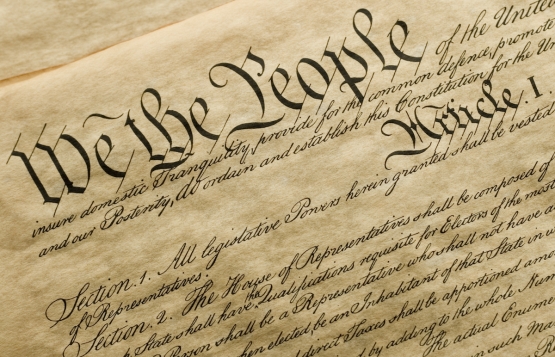
The reality is that there are positive policies with a track record of success that can exist alongside a pluralistic structure, and that can ensure the institution thrives even while allowing for broad parental choice. Senator Mike Gallagher provides the compelling example of Mississippi, which rose from the bottom to near the top of NAEP literacy scores. The state encouraged the training in and use of phonics within elementary classrooms through policy. More broadly, alongside choice, we could still set basic standards, ensure minimum quality with test scores, establish a barebones state-level curriculum, ban certain pernicious ideologies, and the like. I wouldn’t mind an art school skipping advanced calculus, but I’d spurn any curriculum that fails to achieve basic literacy, for example. And I’d like all U.S. students to read the Constitution regardless of their school choices. We must positively govern schools beyond mere libertinism.

No conservative that I can think of opposes school choice. Rather it’s a matter of “what else?”—if there even is a “what else.” Returning to Burke, who himself tried to make amends between liberty and tradition, can perhaps bring this analysis to a close. He wrote that, “To give freedom is still more easy...it only requires to let go the rein. But to form a free government...requires much thought, deep reflection, a sagacious, powerful, and combining mind.” In other words, school choice is necessary but not sufficient. Perhaps it is time that we stop arguing about the merits of school choice and begin to discuss how we will best build our pluralistic institutions.

view

The future of local school politics: Division or détente?

Paul T. Hill
8.19.2021
Flypaper

Divisions about mask and vaccine mandates, in-person versus remote learning, student discipline, and racism and anti-racism in the curriculum will make it difficult for schools to serve anyone well this year. In some localities, district and school leaders face a multi-dimensional Catch-22, as any move they make is sure to outrage some group of parents, teachers, advocates, or party politicians. This is already evident in districts where conflicts have led to firing of superintendents and cancellation of school board meetings. 

Local control and citizen involvement are nice generalities, but they are compatible with effective schools only if demands and value differences are modest. Schools require a degree of tacit acceptance of their goals, curricula, and methods. They can adapt on the margins, but they can’t handle pressures both to teach and avoid a particular subject or both to require and prevent a particular behavior (e.g., mask wearing). Educators have to teach something in particular and maintain a distraction-free environment for kids. Schools can’t survive if contending groups resort to violence or if large numbers pull kids out suddenly.  

Early in the history of U.S. public education, it was clear that schools could not bridge differences of religion. So public schools were, at least in theory, designed to avoid religious teaching, while families who wanted faith-based schooling were free to create (and pay for) their own. Until lately, no other issue was as lastingly divisive as religion. De jure racial segregation came close, and some communities dominated by segregationists held out for a while. But determined efforts by presidents and consistent messages from the Supreme Court helped set new norms.

Will the current divisions be short lived or will they, like religion, lead to a permanent split?

Only time will tell. The fact that current conflicts in many localities reflect national partisan agendas and deep-seated value conflicts is worrisome. So is the possibility of grassroots parent conflicts or taunting and bullying among students over mask wearing, politically correct language, or other hot-button issues.

Public schools in conflict-ridden areas can work this year if contenders can calm down and come to some sort of détente. Alternatively, groups can split off like the Catholics did in the late nineteenth century.

Détente requires that senior political and cultural figures desist from throwing gasoline on fires. It also means that communities need to restore something they once had—i.e., an arrangement whereby schools are both responsive to politics and insulated from them. Educators need to be free from the need to satisfy interest groups in the short run. Politics should affect their actions only gradually and with significant time lags. 

By this argument, public education should be treated more like the judiciary, the Federal Reserve, the Federal Aviation Administration, or even the armed services. These entities operate without fine-grained political oversight, in part out of deference to expertise, but they remain democratically overseen institutions because elections and deep shifts in public sentiment ultimately affect them.

This is possible, but only if school boards operate as trustees rather than as micromanagers. We have suggested some possibilities here and here. These proposals limit elected officials’ ability to meddle in schools and issue ideological mandates, but preserve citizens’ ability to vote for the people who make consequential decisions on what mix of schools a community needs.

Temporary arrangements, such as Atlanta’s creation of learning pods for committed anti-masking families, could work as temporary expedients. But lasting division into separate school systems based on political preferences would be unstable, expensive, and dangerous. Unstable because new divisions might disrupt schools designed to cater to one side or the other of today’s issues—much as debates over mask requirements and teaching about race are now dividing religious schools. Expensive because militant parents today wouldn’t accept paying for their own schools like the Catholics once did. Schools and facilities would have to be created at a scale much greater than, say, today’s charters. And dangerous because the schools could hard-wire social and political divisions.

Partisan conflict, opposing parent militancies, and ideological absolutism stress our political system, but it might survive. These same forces will destroy public education in the most afflicted localities unless the contending sides recognize their common interest in educating children to be self-supporting and productive adults.

Governors, state education agency heads, and local superintendents might be the cool heads who bring things back together. But they will need to recognize the continued dangers of political and cultural polarization and find structural ways to insulate schools from them.

Editor’s note: This was first published by the Center on Reinventing Public Education.

view

Science class is a great place for social and emotional learning

Jeremy Smith
8.19.2021
Flypaper

We don’t usually picture science class when we think of social and emotional learning (SEL) or whatever we decide to call it, perhaps because scientists and engineers, unlike artists and writers, are often depicted as socially awkward or emotionally cold in popular media. But as a former physics teacher, I know that science classrooms are one of the best places for students to develop the social and emotional skills their parents care about most.

Take problem-solving, which was a large component of my physics classes. To solve problems effectively—whether they are traditional “paper” problems, real-world data-gathering exercises that required the use of lab equipment, or design challenges such as the infamous egg drop—students must develop a variety of analytic and technical skills, but emotional skills play a key role, too. Those skills include handling challenges and setbacks in a positive way, believing in one’s ability to master skills and content, and setting goals and then working toward them.

The cyclical method of trial and revision common to scientific inquiry requires students master certain emotional skills. In my classroom, students practiced slowing down in order to develop problem-solving strategies, reflecting on results in the context of broader knowledge, and revising their thinking when necessary. For the aforementioned egg drop, a student might develop her design around ideas about momentum and energy, test her design through several trials, and revise her design based on the test results.

Thus, to succeed in my class, students had to learn how to approach solving problems in a positive way, while keeping their long-term goals for the course and their learning in mind. They had to learn how to be comfortable not knowing, with the frustration of getting stuck, with making mistakes and trying again, and with the struggle that comes with mastering difficult concepts. The problems my students were solving didn’t care how they felt, but their ability to manage their emotions affected their ability to solve problems.

Like students in science classes across the U.S., my students also spent much of their time working collaboratively. Science teachers have good reasons for this. First, collaborative problem solving integrates academic, social, and emotional learning seamlessly. Second, scientists, engineers, and related professionals actually do work collaboratively, so it’s important that students practice doing so. Finally, students learn science better when they must explain their thinking to each other and work through conflicting ideas. In practice, students’ ability to do this well has immediate stakes in science classes, since groups that allow poorly considered thinking to stand rarely succeed at their problem-solving tasks.

The ability to navigate social situations is another important component of collaborative work, and it’s one that many students need help with. Every science teacher has encountered the student who takes over whatever group he or she is put in, the secretly competent student who is reluctant to share their ideas with group members, and the too-friendly group that struggles to stay on task.

Students do not develop the social and emotional skills needed for problem-solving and collaborative work automatically. As a teacher, I increasingly integrated these skills into lesson, unit, and individual mentorship plans as I gained more experience. This included explicit instruction and planned interventions on how to approach and frame difficult problems, process feedback on mistakes, accurately self-assess one’s thinking and abilities, balance participation between members of a group, and work through intra-group conflict. Much of what I put into practice was based on the research and recommendations from the physics education research community and groups such as Physport.

So why don’t we think about science more when we think about SEL? Perhaps it’s the nature of the subject, which tends to conjure images of emotionless protons and electrons. Or perhaps the issue is with the term itself. As Fordham’s report reveals, “social and emotional learning” may be too jargony for many parents, and unlike “character” and “noncognitive skills” (both of which have their own definitional and issues and problematic connotations), it sounds like the sort of thing you develop in conversations with school counselors and psychologists, and that—however vital to student success—seems pretty far removed from science class.

That’s unfortunate because an actual science class, which is full of people, is one of the best places for students to learn the social and emotional skills that parents are most interested in, despite—or perhaps because—all those molecules and atoms and quarks not caring what you think or how you feel. It’s also a great way to teach these skills indirectly, which Fordham’s report also found parents prefer and is less politically polarizing. School leaders—and science teachers—take heed.

view

Does the medium matter? Academic outcomes for print versus digital reading.

Amber M. Northern, Ph.D.
8.19.2021
Flypaper

Reading on a computer screen became a must for millions of youngsters at the onset of pandemic-induced school closures when they lost access to classrooms and library books in school buildings. So quite timely is this recent meta-analysis that examines academic outcomes for children who read digitally versus via print media. Conducted by three researchers from Norway, it attempts to reconcile inconsistent findings on this question over the years. Yet that proved to be a tall order.

The analysts dive into thirty-nine studies from eight countries that met their selection criteria—the most important of which is that the studies have to be experimental or quasi-experimental; have to compare reading the same narrative in digital and print format for emerging readers between 1 and 8 years old; and have to provide effect sizes or sufficient information for them to be calculated. They are interested in whether digital books have the same effect as paper books on children’s comprehension and vocabulary if the only difference is the reading medium, how a dictionary impacts outcomes, how providing adult support during a book reading session influences the findings, and how the design of digital books might explain their effects, particularly through certain types of storytelling enhancements built into the reading platform. These include typical voice-alouds, but also enhancements that focus a child’s attention on the storyline—such as synchronizing visualizations or actions with the narration—such that the child is given visual and verbal clues.

The five main findings reveal that the simple question at the heart of the investigation, paper or digital, is not so simple after all. When comparing digital and paper books that only differed by digitization or lack thereof, paper books outperformed, as the use of digital books showed lower comprehension. But if digital books had story-content enhancements, they were more effective than paper books. The setting also mattered, though. In studies that took place in a school setting, paper books outperformed digital books. But studies that took place at home or in a lab showed no difference. In those studies that included low-income families, paper outperformed digital. In samples that included mainly middle- and high-income families, digital and paper had the same impact. Because the support of adults may have interacted with the medium in similar ways, the researchers tested the effects of enhancements controlling for that support and found that so-called dialogic reading activities were more effective during print-book reading than were the enhancements in digital books read independently. If digital books only had a dictionary and no story-content enhancement, there was no difference between digital and paper in terms of comprehension, although the dictionaries did boost vocabulary learning. Finally, genre also mattered. The outcomes were more positive for digital with nonfiction books, while the twelve studies with only fiction texts did not reveal differences between paper and digital.

What does all this mean? The researchers say that “screen inferiority” can be overcome by optimizing the design of digital books so that electronic enhancements specifically target story content—by, for example, prompting children’s background knowledge, providing additional context for events, or synchronizing visuals with the narration. They note that certain outcomes for digital reading, such as vocabulary growth, are more positive in newer studies, perhaps indicating that the quality of digital reading materials has improved over time. Dictionaries, an old-fashioned staple for emerging readers, don’t appear to help with comprehension in either format, perhaps because a focus on word meaning distracts young children’s attention from the story content. The researchers also suggest that low-income children may struggle with digital reading if they are more used to interacting with game-like activities on screens, although that is merely speculation.

These findings are quite germane to the latest updates to the NAEP Reading Framework, about which Fordham’s President Emeritus Checker Finn has recently written. He expressed concern that the “universal design elements” in the new NAEP reading framework—”intended to mirror typical (non-testing) reading situations to improve the validity of the assessment”—might actually backfire and instead conceal reading deficiencies. In helping to provide “orientation, guidance, and motivation” for students, the universal design elements sound quite similar to the “story content enhancements” and the “adult supports” in this study. But the question remains: How much help is too much when we’re assessing how well kids can read?

SOURCE: May Irene Furenes, Natalia Kucirkova, and Adriana G. Bus, “A Comparison of Children’s Reading on Paper Versus Screen: A Meta-Analysis,” Review of Educational Research (March 2021).

view

A thoughtful but dated criticism of “no excuses” charter schools

Robert Pondiscio
8.19.2021
Flypaper

In the early days of KIPP, or the Knowledge Is Power Program, and other networks of urban charter schools that drafted in its considerable wake, the highly prescriptive form of classroom management and teaching these schools pioneered was a subject of intense fascination and considerable optimism. A 2006 New York Times Magazine article by Paul Tough titled “What It Takes to Make a Student” described the belief of KIPP founders David Levin and Mike Feinberg that middle-class kids learn certain methods for taking in information early on and employ them instinctively. KIPP students, by contrast, needed to be taught those methods explicitly. The network’s model included the technique known as “Slant,” an acronym that reminds students to sit up, listen, ask questions, nod, and track the speaker.

“To anyone raised in the principles of progressive education, the uniformity and discipline in KIPP classrooms can be off-putting,” Tough reported. “But the kids I spoke to said they use the Slant method not because they fear they will be punished otherwise but because it works: it helps them to learn.”

Fifteen years on, Vanderbilt University professor Joanne W. Golann’s new book, Scripting the Moves, revisits this highly prescriptive brand of teaching and finds it mostly wanting. The book takes its title and frame from Suzette Dyer, a school principal who observed that success needs to be “scripted” for students and even for teachers. “You’ve got to script the moves for students. You have to narrate the experience so students understand exactly what the outcomes are,” Dyer said in an interview for Restoring Opportunity by Greg Duncan and Richard Murnane.

The author writes that she was initially “not taken aback” by lessons at “Dream Academy” (her pseudonym for the high-performing middle school in a medium-sized northeastern city where she made her observations) that “literally spelled out what students needed to do to conform to school expectations for showing attention.” But the more time she spent at the school, the more she questioned the efficacy of these rigid behavioral scripts. The prescriptiveness, she writes, “left little room for them to develop what I call tools of interaction, or the attitudes, skills, and style that allow certain groups to effectively navigate complex institutions and shifting expectations.” Golann’s object is cultural capital. Middle-class students use it in schools and workplace as “a flexible tool, not a straightjacket,” she notes. “Scripting,” then, is a self-limiting factor, a kind of paint-by-numbers version of “what it takes” to succeed in school and beyond.

Working-class parents “already emphasize to their children ‘no excuses’ problem solving—to work hard and not bother others with requests for accommodations.” Middle-class parents, by contrast, encourage their children “to negotiate with their teachers and bend rules to their benefit.” If the school wanted to teach middle-class expectations to its students, Golann writes, “it should have taught them how to effectively make excuses.” Likewise, the rigid scripting Golann witnessed at Dream Academy allowed for little flexibility, leading teachers to “gloss over legitimate excuses, hiding the structural issues that shape students’ behaviors and actions.” This is a valid observation, if an ungenerous interpretation of a school model whose purpose, right or wrong, was never intended to cultivate unthinking compliance among students, but resiliency and determination.

In general, Golann’s observations are thoughtful, scholarly, and, in contrast to many who have sought merely to discredit the no-excuses model, mostly empathetic. There is a problem, however, and it’s a significant one: Her analysis rests largely on eighteen months of fieldwork dating back to September 2012. That’s a long time ago, and an eternity in urban charter schools. She notes that no-excuses charter networks “have begun to reflect on the implications of their rigid behavioral scripts,” but this understates the considerable degree to which charter schools have dialed back their discipline practices and the prescriptiveness of their pedagogies, an iterative process that began a decade ago with KIPP’s disappointment over its graduates’ college-completion rates. This process accelerated more recently with concerns in American education at large about the disproportionate rates at which nonwhite children have been subject to school discipline and suspensions. The long lag time between Golann’s fieldwork and the arrival of the book (some portions were previously published in academic journals in 2015) means Scripting the Moves can read at times like a time-capsule glimpse into a category of schools that long ago recognized and responded to many of the author’s most important critiques.

Indeed, some of the data she presents remind us why “no excuses” came under such intense scrutiny after years of replication and fawning media coverage. Over the course of a single school year, “Dream Academy” teachers meted out an eye-popping 15,423 infractions to the school’s 250 students, an average of more than sixty per student. Only six students managed not to incur a single infraction; one fifth-grade boy drew 295. Numbers such as these caused critics, not unreasonably, to decry the inflexible behavioral demands of “no excuses” schools. On the other hand, Golann notes the school had very few major infractions, such as fighting, graffiti, and bullying, illustrating precisely the “sweating the small stuff” mindset that early no-excuses schools fetishized, taking their lead from the era’s “broken windows” policing model.

Many of the practices Golann describes are best left to molder on the classroom-management compost pile. At the start of the school year, students sit on the floor until they “earn” their seats. Minor behavioral infractions lead to students being “benched,” a tactic borrowed from KIPP’s practice of “porching” (“If you can’t keep up with the big dogs, stay on the porch”). Benched students must wear their shirts inside out like a middle-school scarlet letter and are forbidden from interacting with peers. These kinds of wince-worthy punishments go a long way toward explaining how the model went from halo effect to heel turn in the minds of so many observers, including Golann.

“If ‘no excuses’ is supposed to be about the school making no excuses for student failure, it ends up being about the school accepting no excuses for deviating from the school’s rigid behavioral script,” Golann writes.

She’s not wrong about the excesses of rigid school cultures and behavioristic teaching, but her critique is at times overly broad. My own book based on a year of observations at New York City’s Success Academy noted that a lesson could be rich and invigorating in the hands of a talented teacher but excruciating under another teacher who seemed not to grasp the “why” behind behavior management, viewing it as an end in itself rather that the starting line for deep learning and inquiry. Similarly, while intellectual fashions have largely turned against no excuses, there is a danger in memory-holing the conditions that made the model’s practices appealing and effective, particularly to parents who prized the physical safety offered by tightly run schools that stood in stark contrast to chaotic neighborhood schools with low graduation rates and few opportunities for college acceptance or success.

Golann clearly means for us to see “scripting” as a problem and even a failure. But strong and successful institutions—from families and churches to the U.S. Marines—have long played an essential role in shaping character by “scripting the moves.” The challenging question implied in Golann’s book is whether the problem is the act of scripting or the particular script. “In many ways, no-excuses schools create an alternative universe for students...one that promises upward mobility if students will only follow the school’s scripts for success. Students are asked to ‘overcome’ their backgrounds and assimilate into dominant culture,” she writes. “But it is not easy—and perhaps not prudent—to insulate students from their home worlds. It risks not recognizing the ways in which students are affected by out of school factors and can potentially be detrimental to students’ sense of identity and feelings of connectedness.”

Golann’s critique is on point and resonant with the present moment. Still, one wonders where parents’ desires for their children fit into the calculus. For some, an “alternative universe” is a problem. For others, it’s the point.

Editor’s note: This was first published by Education Next.

view
high school teacher inspecting class

The Education Gadfly Show #783: One teacher’s call for choice and content-rich curricula

8.19.2021
Podcast
 

On this week’s podcast, Daniel Buck, a teacher and Fordham’s newest senior visiting fellow, joins Amber Northern and Brandon Wright to discuss the importance of a strong curriculum, the inherent value in school choice, why he teaches, and more. On the Research Minute, Adam Tyner examines the connection between college applicants’ essay topics and their household incomes and SAT scores.

Amber's Research Minute

AJ Alvero et al., “Essay Content is Strongly Related to Household Income and SAT Scores: Evidence from 60,000 Undergraduate Applications,” Center for Education Policy Analysis (April 2021).

If you listen on Apple Podcasts, please leave us a rating and review - we'd love to hear what you think! The Education Gadfly Show is available on all major podcast platforms.

view

Cheers and Jeers: August 19, 2021

The Education Gadfly
8.19.2021
Flypaper

Cheers

  • Amanda Ripley discusses ways education leaders can handle controversies over masks, vaccines, and anti-racism. —Education Week
  • KIPP’s Susan Schaeffler was first recruited to pioneer the network’s schools in Atlanta. But with a lot of courage, she chose D.C. and got great results. —Jay Mathews

Jeers

  • Student debt and slow income growth in recent years is undoing the progress that Black college graduates had made towards closing the wealth gap. —WSJ
  • “Is it time to get rid of homework?” Despite misguided “experts” claiming it hurts students, the research suggests that teachers should adjust its content and quantity to maximize students’ benefit. —USA Today
view

What we're reading this week: August 19, 2021

The Education Gadfly
8.19.2021
Flypaper
  • Advances in neurotechnology hold promise for improving memory and enhancing learning. —WSJ
  • “Colorado’s kindergarten math: How a pandemic plus lower birth rates are changing school for young learners.” —Chalkbeat Colorado
  • Quarantines could set back students in their learning, especially in districts that have removed virtual options. —Chalkbeat
Fordham Logo

© 2026 The Thomas B. Fordham Institute
Privacy Policy
Usage Agreement

National

P.O. Box 110
Burke, VA 22009

202.223.5452

[email protected]

Ohio

P.O. Box 82291
Columbus, OH 43202

614.223.1580

[email protected]

Sponsorship

130 West Second Street, Suite 410
Dayton, Ohio 45402

937.227.3368

[email protected]