Mobile Navigation

  • National
    • Policy
      • High Expectations
      • Quality Choices
      • Personalized Pathways
    • Research
    • Commentary
      • Gadfly Newsletter
      • Flypaper Blog
    • Events
    • Scholars Program
  • Ohio
    • Policy
      • Priorities
      • Media & Testimony
    • Research
    • Commentary
      • Ohio Education Gadfly Biweekly
      • Ohio Gadfly Daily
  • Charter Authorizing
    • Application
    • Sponsored Schools
    • Resources
  • About
    • Mission
    • Board
    • Staff
    • Career
Home
Home
Advancing Educational Excellence

Main Navigation

  • National
  • Ohio
  • Charter Authorizing
  • About

National Menu

  • Topics
    • Accountability & Testing
    • Advanced Education
    • Career & Technical Education
    • Charter Schools
    • Curriculum & Instruction
    • ESSA
    • Evidence-Based Learning
    • Facilities
    • Governance
    • Personalized Learning
    • Private School Choice
    • School Finance
    • Standards
    • Teachers & School Leaders
    • Think Again
  • Research
  • Commentary
    • Gadfly Newsletter
    • Flypaper Blog
    • Gadfly Podcast
  • Events
  • Scholars Program

The Education Gadfly Weekly

Sign Up to Receive Fordham Updates

We'll send you quality research, commentary, analysis, and news on the education issues you care about.
Thank you for signing up!
Please check your email to confirm the subscription.

The Education Gadfly Weekly: Republicans are peddling speech codes when they should focus on school choice

Volume 22, Number 18
5.5.2022
5.5.2022

The Education Gadfly Weekly: Republicans are peddling speech codes when they should focus on school choice

Volume 22, Number 18
view

Republicans are peddling speech codes when they should focus on school choice

From coast to coast, speech codes, library book extrications, and other forms of censorship are animating Republicans around gender policy, critical race theory, SEL, and a laundry list of related grievances. Yet missing from all this energy and attention to schools is a concerted focus on durable systemic change. In the case of Republicans, they’re squandering the chance to put parental choice on steroids.

Dale Chu 5.5.2022
NationalFlypaper

Republicans are peddling speech codes when they should focus on school choice

Dale Chu
5.5.2022
Flypaper

Using ESSER funds for retention bonuses makes sense if targeted strategically

Dan Goldhaber
5.5.2022
Flypaper

No, social and emotional learning is not a “Trojan horse” for CRT

Robert Pondiscio
5.5.2022
Flypaper

Shortages, hiring, and retiring: School leaders answer survey questions on pandemic-era staffing

Amber M. Northern, Ph.D.
5.5.2022
Flypaper

Can investing in elementary schools prevent crime?

Christian Eggers
5.2.2022
Flypaper

Education Gadfly Show #818: Kate Walsh on the state of teacher quality in America

5.4.2022
Resource

Cheers and Jeers: May 5, 2022

The Education Gadfly
5.5.2022
Blog

What we're reading this week: May 5, 2022

The Education Gadfly
5.5.2022
Flypaper
view

Using ESSER funds for retention bonuses makes sense if targeted strategically

Dan Goldhaber 5.5.2022
Flypaper
view

No, social and emotional learning is not a “Trojan horse” for CRT

Robert Pondiscio 5.5.2022
Flypaper
view

Shortages, hiring, and retiring: School leaders answer survey questions on pandemic-era staffing

Amber M. Northern, Ph.D. 5.5.2022
Flypaper
view
Christian Eggers SR 5-4-22 image

Can investing in elementary schools prevent crime?

Christian Eggers 5.2.2022
Flypaper
view

Education Gadfly Show #818: Kate Walsh on the state of teacher quality in America

Michael J. Petrilli, Kate Walsh, Amber M. Northern, Ph.D. 5.4.2022
Resource
view

Cheers and Jeers: May 5, 2022

The Education Gadfly 5.5.2022
Blog
view

What we're reading this week: May 5, 2022

The Education Gadfly 5.5.2022
Flypaper
view

Republicans are peddling speech codes when they should focus on school choice

Dale Chu
5.5.2022
Flypaper

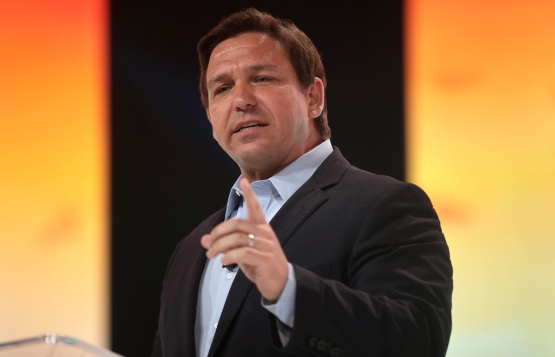
The recent revocation of Disney World’s special tax-and-governance status by Florida GOP legislators is the latest development in the ongoing culture war roiling American education. In March, governor Ron DeSantis signed what has been tendentiously called the “Don’t Say Gay” law by detractors, which prohibits classroom instruction and discussion about sexual orientation and gender identity with children in grades three or younger or—for older students—in a manner that is not “age appropriate or developmentally appropriate.” A frenzy of copycat efforts followed in at least a dozen states.

When Disney—urged by its employees—publicly denounced the education legislation, lawmakers (and DeSantis) went wild, stripping the company of its special dispensation, while handing the governor a fast win on the national stage in anticipation of a potential presidential bid in 2024.

From coast to coast, speech codes, library book extrications, and other forms of censorship are animating Republicans around gender policy, critical race theory, SEL, and a laundry list of related grievances. This comes as public confidence in Democrats with regard to education has significantly eroded, creating a grand political opening for Republicans in the education realm. Add widespread parental discontent over school closures and masking policies, and GOP leaders and candidates are salivating in anticipation of November. Yet missing from all this energy and attention to schools is a concerted focus on durable systemic change. In the case of Republicans, they’re squandering the chance to put parental choice on steroids.

Following last year’s several breakthroughs on the choice front and the acceleration of enrollment losses, Republicans would be better served if they were disciplined about creating and expanding educational options. There’s skyrocketing demand. We know that the marketplace isn’t enough to improve school quality writ large, but a focus on choice is perhaps the best we can do in an environment where standards and assessments are in low regard. At the very least, a laser-like focus on choice would be a productive undertaking while we try to help the results-based accountability engine regain some horsepower. For example, it would be a good idea for state lawmakers to appropriate state funds for charter school startup costs in case the Biden administration succeeds in gutting the federal Charter School Program.

Instead, Republicans seem bent on fighting culture wars, even when they’re at least partly imaginary. In retaliating against Disney, for example, Florida lawmakers made a fuss about protecting K–3 children. But what the law was aimed at wasn’t even being taught in K–3. As observed by attorney-turned-pundit David French, the GOP’s prevailing modus operandi is to create (and pretend to solve) problems that aren’t there:

Again and again, what you see in laws [like "Don’t Say Gay"]...is that in a lot of these jurisdictions [Republicans are] rallying to stop something that isn’t happening. It might be happening in [blue areas like] New Jersey...or in San Francisco...or in a hyper-woke private school.... It absolutely does happen in districts here and there.... But a lot of these red jurisdictions where people are really moving decisively, they are “winning” by banning stuff that doesn’t exist.

When I was a state education official, I often consulted with legislators regarding ideas for new bills. It wasn’t unusual to hear something along the lines of, “One of my constituents is upset because her son’s school [pick your complaint]. That’s why I’m authoring a bill that [pick your solution]” (one that stands out in my memory was a student struggling to read the Declaration of Independence because it was written in cursive). In other words, a problem encountered by less than a handful of people gradually morphs into a statewide solution. The national maelstrom around a single education bill in Florida was ignited two years ago by one school and one teenager in Tallahassee.

If local control is good for anything, it’s allowing local communities to arrive at their own decisions about culturally sensitive topics. To use the term descriptively not pejoratively, woke cities and college towns can go full woke; unwoke hamlets and rural regions can stay conservative. Indeed, that approach still works where it’s allowed to. A recent NPR poll found education’s high-profile culture wars to be just “background noise” to most parents, perhaps because their own school boards are handling them satisfactorily in the eyes of their communities.

To some extent, the GOP’s embrace of government control over speech and morality has been triggered by videos on social media of teachers saying things far outside the boundaries of what the overwhelming majority of Americans would deem acceptable. As Andy Rotherham correctly notes, “There are more than three million public school teachers in the United States. That’s a large number, so even if an incredibly small fraction say stupid stuff for whatever reason on social media, that’s still plenty of content for a Twitter feed”—or, for that matter, provocation for an education bill.

It wasn’t enough for Florida lawmakers to pass a constitutionally questionable piece of legislation into law or to gloat in the wake of Disney’s failed effort to stop them. They wanted a pound of Mouse flesh, too. Republicans apparently see the embrace of censorship in schools as a ticket back to power in Washington. They might be right, yet this cynically provocative approach not only stokes fear and sows discord—it also serves as a huge distraction from the primacy of providing more and better educational alternatives and helping America’s students get back on track.

view

Using ESSER funds for retention bonuses makes sense if targeted strategically

Dan Goldhaber
5.5.2022
Flypaper

The money is pouring in, but so are the education challenges. The Covid-19 pandemic has dramatically affected student achievement, particularly for poorer students and students of color. The impact of the pandemic on student achievement resembles the changes in achievement associated with the students impacted by hurricanes Katrina and Rita in Louisiana. Fortunately, the American Rescue Plan’s Elementary and Secondary School Emergency Relief (ESSER) funds are providing public schools with nearly $200 billion—an unprecedented infusion of federal funds—to help ameliorate the impacts of the pandemic.

How should states and school districts invest this money? There’s no simple answer, but we do know this: Decades of research make it abundantly clear that having a great teacher and a stable teaching staff can make a huge difference for student learning. Hence, it makes sense to deploy some portion of ESSER funds to try to retain high-quality teachers with the help of financial incentives, such as retention bonuses.

These kinds of incentives, even somewhat modest ones, can work—see, for instance, here, here, and here—though it’s essential to emphasize that program design and communication clearly impact how well they work.

You knew there was a “but” coming, right? The “but” is that there are smart and not-so-smart ways to spend ESSER funds to retain teachers, and some states and districts are investing ESSER dollars in what appear to be not-so-smart ways. The fundamental issue is targeting.

Some districts are using ESSER funds to pay what are essentially “thank-you” bonuses to teachers for their service—i.e., payments that are not linked to future retention. This approach recognizes the real hardships and pressures that teachers have faced during the pandemic. Yes, they might also impact retention, but most economists would suggest that people are forward looking, which means that the effects of an incentive for future retention would have a bigger impact on that retention than a bonus paid out for past retention. Put another way, the bonuses ought to target future, rather than past, behavior.

Many states and districts are using ESSER funds to raise salaries across the board or pay retention bonuses to all teachers. But spreading funding a mile wide and an inch deep isn’t strategic or smart. That’s because the problems that districts face when it comes to teacher shortages and attrition aren’t uniform.

When it comes to hiring and retention, for example, not all subject areas are created equal. Nationwide, districts have long struggled to hire and retain teachers in some subjects (e.g., STEM and special-education teachers) more than in others (e.g., elementary school teachers). New evidence suggests that these patterns persisted through the pandemic, with vacancies in special-education, STEM, and English-language-learner positions far out pacing vacancies in regular elementary education.

Hiring and attrition patterns also look different from school to school. In general, teacher attrition is higher in schools that serve students from low-income households and students of color than in more advantaged schools. And even though overall teacher attrition seems to have increased during the pandemic, the extent of that increase is less than the long-standing gaps between the teacher-attrition rates at high- and low-poverty schools.

And let’s think about a teacher’s career. It is well-known that teacher turnover at the beginning of a teaching career (the first three to five years) is far greater than it is midcareer. Early-career turnover often exceeds 10 percent per year, but it drops well below 5 percent in the middle of a teacher’s career (see Figure 1 from a 2007 article by Douglas Harris and Scott Adams), when pension incentives play a powerful role in encouraging teachers to remain in the profession. Doesn’t it make sense to target attrition at points in a teacher’s career where there is the greatest likelihood of unwanted turnover?

Let’s take a back-of-the-envelope look at the implications of targeting. Chicago Public Schools, with about 22,000 teachers, included about $1 billion in ESSER funds in its FY2022 budget. If Chicago decided to spend 5 percent of those funds on across-the-board, one-time bonuses, this would come to $50 million and work out to $2,300 per teacher. No doubt, this would make some difference. But it would also pay out bonuses to a lot of teachers who are unlikely to leave. Imagine, instead, that the district employed a more targeted approach—say, they provided half the amount, $25 million, in bonuses just to special-education teachers, a field where staffing challenges are particularly acute. Because only about 10 percent of teachers are special-education teachers, this strategy would allow Chicago to offer over $10,000 to each of them. That’s an eye-opening figure that also would send a strong signal to prospective special-education teachers that there’s a real need in this area.

Note that I focused on bonuses rather than permanent salary increases. The reason is that the permanent kind bring with them the additional problem of a funding cliff once federal ESSER resources run dry. Raising salaries may be a desirable use of available funds, but districts will need to figure out how to pay for them over the longer term.

Finally, though I’m aware that this may be a lost cause, it would be good to think about teacher quality in considering retention incentives. Teacher attrition has different implications for students depending on the performance of the teachers who stay and those who leave. Teacher turnover is generally bad for students. But if an ineffective teacher leaves and is replaced by a more effective one, the results can lead to improvements in student achievement.

How widespread are untargeted retention incentive practices? There is no clear answer at this point, given lags in reporting about ESSER spending. But there are enough anecdotes out there to know that such incentives could be far more nuanced and far more effective. Efforts that are not targeted to the areas of acute need in the labor market are likely to be far less effective at addressing real (and longstanding) problems in the teacher labor market.

So spend wisely. Think carefully before spending. And spend in ways that will make the greatest difference for the kids in greatest need of experienced and effective teachers.

view

No, social and emotional learning is not a “Trojan horse” for CRT

Robert Pondiscio
5.5.2022
Flypaper

Last week came news that more than 40 percent of math textbooks submitted for review in Florida were deemed incompatible with state standards or contained “prohibited topics” including references to critical race theory (CRT) or the “unsolicited addition of social emotional learning (SEL) in mathematics.” Nearly three-quarters of elementary school submissions failed to make the grade.

Florida is within its rights to approve or reject materials on any grounds it wishes. There’s no issue with that.

No less notably, the move also elevated Chris Rufo above his reputation as a mere culture-warrior. He is now, as the New York Times tells us in its coverage of Florida’s decision, a full-fledged “agitator of intolerance,” who “probably more than any other person made critical race theory a rallying cry on the right.”

A separate Times article drew attention to a genuine point of excess: Rufo “has sought to tie social-emotional learning to the broader debate over the teaching of race, gender and sexuality in classrooms.” The paper quoted Rufo from an interview conducted in March, saying that while social-emotional learning sounds “positive and uncontroversial” in theory, “in practice, SEL serves as a delivery mechanism for radical pedagogies such as critical race theory and gender deconstructionism.”

“The intention of SEL,” Rufo continues “is to soften children at an emotional level, reinterpret their normative behavior as an expression of ‘repression,’ ‘whiteness,’ or ‘internalized racism,’ and then rewire their behavior according to the dictates of left-wing ideology.”

Let me state my case at the outset: It’s a mistake to portray SEL as critical race theory in disguise or a Trojan horse to slip CRT, gender ideology, or Marxist ideas into a curriculum. There is more than enough room to criticize SEL on the terms offered by its proponents without concocting ulterior motives.

I don’t count myself among critics of Rufo’s work. He has played an important role in reasserting public authority over an education establishment that has too long pursued its own purposes, an education establishment that is heedless and sometimes even hostile to the views of parents and other stakeholders. To the degree that Rufo’s activism has forced states, schools, and districts to contend with pushback to “social justice” initiatives, he’s done good and necessary work.

That said, his SEL critiques are overheated. SEL is arguably unethical and risky even without the conspiratorial accusations, and these more reserved but accurate critiques are sufficient to halt its spread.

As I noted in a paper last fall for the American Enterprise Institute, whether SEL can have a beneficial effect on academic outcomes as proponents insist is an interesting question but a secondary one. The more important issue is whether monitoring, evaluating, and seeking to shape a child’s attitudes, values, and beliefs is the appropriate business of a school. Few parents want teachers to be indifferent to their child’s overall well-being. But at what point does a reasonable, healthy concern for a student’s emotional health become too personal, too intrusive, and too sensitive to be a legitimate function of public school and thus the state?

Even more obviously and of greater concern to teachers is the problem of expanded responsibilities. SEL asks teachers to play a quasi-therapeutic role in students’ lives with insufficient training and thus poses risks to student mental health. As I noted in my report, as damaging to children as it might be for a teacher to perform poorly at teaching reading, math, or history, the effects of being a poor mental health professional can be even direr.

Building arguments against SEL on grounds of “reinterpret[ing] normative behavior” also misreads the moment. We should expect increased demands for a public response to a rise in mental health problems among students. It seems beside the point to invoke fears of woke indoctrination to parents whose children are in crisis. The issue is not whether a child needs help but what form and who best to provide it.

Finally, the overlay of social and emotional learning is also inevitably a permission structure to downgrade the academic mission of schools. “Of course, low levels of reading and math achievement are a concern,” we are tacitly encouraging empathetic teachers to think, “but I must first attend to the emotional well-being of our traumatized students.” Or worse, “How can I expect this child to focus on academics after the trauma he’s experienced!”

This suite of concerns—the proper sphere of teachers versus parents, the limits of state monitoring and coercion, mission creep, and diffusion of its public purpose—are sensible enough grounds to question making SEL a central feature of public education. The claims that SEL masks a secret agenda to indoctrinate children, a workaround to inject “banned” content into classrooms, or other conspiratorial theories are distracting and unhelpful to the larger issue at hand.

There is no evidence that SEL is a cleverly-disguised Trojan horse for CRT and other ideological imperatives, even if both creep into SEL. Rather it is indicative of the impressionistic flavor of classroom practice in which there is no common vocabulary or the kinds of generally accepted practices that one finds in other professions from medicine to accounting. There is not even a common understanding of what is a “standard” versus a “curriculum,” for example.

A standard feature of the education landscape are the hundreds—even thousands—of consultants, assessment providers, and curriculum developers acting as camp followers, soaking up the dollars attached to the fads and groupthink. At present, that means adding “equity” to every PowerPoint and sales pitch. Proponents of SEL might be snake-oil hucksters and their customers sold dubious practices, but they’re not architects of an occult plot.

The mistake is in assuming that those ideas and agendas are universally held, advanced by every participant in public education, or done so unknowingly because teachers were duped or indoctrinated in ed school. Outsiders assume far more top-down control of curriculum and classroom content than actually exists. Attempts to paint SEL as a single agenda or to see the hand of a single puppet-master (whether it’s CASEL, the “shadowy” Fetzer Institute, Gloria Ladson-Billings, or another) directing the thoughts and practices of 3.7 million teachers belies the realities of classroom life, where the average teacher enjoys a level of autonomy that would surprise outsiders. The culture of “shut your door and teach it how you want” is alive and well in American education.

None of this, to be clear and emphatic, is a defense of SEL. The expansion of teaching into quasi-therapeutic practices, privacy concerns and intrusion of the state deeper into the lives of children and families, and a further erosion of schools’ academic missions—moving instead towards a conception of them even tacitly as social services agencies—are legitimate causes for serious concern. This case against SEL is not strengthened, however, by connecting dots that aren’t there, a habit that is unpersuasive at best, and conspiratorial and counterproductive at worst.

Editor’s note: This article first appeared in Chalkboard Review.

view

Shortages, hiring, and retiring: School leaders answer survey questions on pandemic-era staffing

Amber M. Northern, Ph.D.
5.5.2022
Flypaper

With schools and districts across the nation said to be reeling from staffing shortages, calls for action are loud and insistent. As always, hard data lags the outcry, but recent survey findings from the American School District Panel and RAND shed some reasonably timely light on staffing issues and efforts to address them in the midst of an ongoing pandemic.

Fielded in November and December 2021, the survey is based on responses from school leaders from across the country. Analysts randomly sampled traditional public school leaders and also invited heads of charter management organizations to join their district-level panel of respondents. Of the 987 total that enrolled, 359 (twenty-six of them from CMOs) participated in this survey. Responses were then weighted to make them nationally representative.

The key statistically-significant findings are as follows: 68 percent of district leaders say the pandemic has caused a shortage of teachers, and 95 percent say it has caused shortages of substitute teachers. More CMOs, urban districts, and high-poverty districts reported the existence of pandemic-induced shortages than did their traditional district, non-urban, and low-poverty counterparts.

Respondents were asked about eleven different teaching positions and fourteen non-teaching positions. The single greatest shortage was for substitutes, with 77 percent reporting a considerable shortage as of fall 2021. The next largest shortages reported were for high school teachers, special education teachers, and math teachers—the latter two being categories that have long been hard to fill. Among non-teaching staff, shortages of bus drivers topped the list, with 74 percent of leaders saying this area faced a moderate or considerable shortage, followed by paraprofessionals (cited by 60 percent), and cafeteria workers (53 percent). The researchers plausibly hypothesize that these shortages were caused by a confluence of increased rates of sickness, burnout, lack of child care, and hesitation to work in higher-risk settings during the pandemic. Two categories hardly ever reported as having shortages were central office staff and school secretaries. Not surprisingly, high-poverty districts reported more shortages than low-poverty districts.

Next, respondents were asked if they had expanded their hires in 2021–22 above pre-pandemic levels and the figures were high overall. For instance, 88 percent said they had expanded by hiring one or more non-classroom positions, such as school counselors and social workers. Thirty-seven percent said they expanded the number of teachers; 46 percent said the same about paraprofessionals or aides. Tutors, school nurses, and substitutes again rounded out the type of staff positions expanded. Worryingly, leaders say that most of these new hires were bought on as district-employed staff (meaning put on payroll) rather than on a contract basis. Only in the category of heating, ventilation, and air conditioning (HVAC) did contractors account for more than half of the additional personnel.

The survey did not ask whether federal Covid-relief funding was being used to support these increases in district salary and benefits expenditures, but that’s the (understandable) assumption. Clearly, school districts and charter CMOs are unaccustomed to being given millions of extra dollars with minimal guardrails for use of the windfall—and then told to spend it quickly. So some of this was inevitable. And while it’s better for schools to have spent this one-time funding on direct student-service categories (as opposed to weight rooms, stage curtains, synthetic turf football fields, etc.), or on retention bonuses for outstanding teachers (see, for example, Dan Goldhaber’s recent commentary for Fordham), expanded staff rosters are far harder to downsize later than are term-limited contracts. As a result, districts and charter networks are likely to face a fiscal cliff after the federal Covid-19 aid expires and budgets return to “normal.” What’s more, we know that school leaders often handle difficult decisions to cut funding with the same ill-advised approach they use to expand it.

Cue the very deep sigh.

SOURCE: Heather L. Schwartz and Melissa Kay Diliberti, “Flux in the Educator Labor Market: Acute Staff Shortages and Projected Superintendent Departures,” RAND Corporation (2022).

view
Christian Eggers SR 5-4-22 image

Can investing in elementary schools prevent crime?

Christian Eggers
5.2.2022
Flypaper

The nationwide surge in violent crime, which preceded the pandemic but accelerated in 2020, has prompted a range of policy responses, from expanding and refunding police forces to calls for more preventive community, youth, and drug interventions. A new analysis led by Duke University economics professor E. Jason Baron, along with Joshua Hyman and Brittany Vasquez, explores another strategy: What if, to prevent crime, we invest in elementary schools?

The economists developed their study from Michigan data starting in the 1990s, grounding two natural experiments in plausibly exogenous variations in elementary school funding. The first stems from the passage of Proposal A in 1994, a statewide school-finance reform that narrowed gaps in per-pupil funding, bringing the bottom three quarters of districts up to the same level of funding as districts in the seventy-fifth percentile by 2003. This reform effectively created two groups of districts: the “treated,” which for the most part were originally poor and largely rural, and the “control” districts, which were richer at the start and remained so throughout the equalization effort. The researchers conducted a difference-in-differences regression to identify the relationship between school operating expenses (mainly teacher and administrator salaries) and student criminal records between 2012 and 2020.

The second natural experiment derives from an analysis of Michigan school capital bond elections, pointing additional dollars toward new construction and renovation projects. The researchers focus on close outcomes (e.g., 51 percent to 49 percent) across hundreds of districts between 1996 and 2004. They demonstrate these districts to be statistically equivalent in demographic and economic terms and then compare the winning districts—those that narrowly voted to improve their infrastructure—to the losing districts.

In terms of operating expenditures, Baron and team found that elementary students exposed to 10 percent higher operating funds have a 2 percent lower chance of being arrested by the age of thirty for a federally tracked “index” crime—a 15 percent decline versus the background rate of arrests. They focus on elementary schools because their data set followed ten Kindergarten cohorts between 1995 and 2004, including nearly 1.2 million individual students. In terms of capital expenditures, they found that successful capital bond elections were associated with a $2,257 increase in capital spending the first year after an election and a $943 increase the subsequent three years. They also found that elementary-student cohorts in narrowly winning districts saw a 2.7 percent lower arrest rate in adulthood than their peers in narrowly losing districts, a 20.1 percent relative decline.

Discussing the possible mechanisms for how elementary school spending in the 1990s might influence crime in the mid-2010s, the researchers dive into attendance data, exam scores, and educational outcomes such as high school graduation and college-enrollment rates, finding that increasing operating funds is associated with mild to moderate improvements in all these intermediate outcomes. As for improving school facilities, the analysis suggests that better buildings may lead to higher student and family morale, less absenteeism, and the reduction of “criminal capital” by young students during a critical period of social-emotional development.

In terms of dollar-for-dollar efficiency, the researchers found that increasing capital investment was around two-thirds as powerfully associated with reducing crime as increasing operating expenditures. Specifically, the economic elasticity (percent versus percent change) of adult arrests with respect to capital spending was approximately −1, while that figure with respect to operating spending was −1.5. Comparing crime-prevention strategies, elementary school investment cost about $20 per crime averted, while expanding police forces ranged from $18 to $31 per crime prevented. Thus, they tentatively concluded that elementary school investment is competitive with police spending and on par with other academic interventions such as the Perry Preschool Project, while of course acknowledging that educational spending sees delayed outcomes over decades, compared to the relatively immediate results of expanding police forces.

No doubt we can expect other economists to push back on these almost-too-good-to-be-true findings. But assuming they check out, this research raises an interesting range of questions at the intersection of education and crime policy. Baron and his team reflect that, whereas the remarkable 1990s decline in crime rates is usually attributed to “tough on crime” policing and demographic shifts, there may be an underexplored link between school-finance reforms in the 1970s–80s and falling crime in the 90s—which complements other research on the benefits of school spending.

Unaddressed is whether the sharp decline in school spending in the wake of the 2008 Great Recession could be partly to blame for today’s violent crime spike. There’s already reason to suspect that going over the “fiscal cliff” back in the early 2010s led to decreased student achievement many years later; perhaps it’s influencing other life-and-death outcomes, as well. With another fiscal cliff looming, policy makers would be wise to make better decisions this time around.

SOURCE: Jason E. Barron, Joshua Hyman, and Brittany Vasquez, “Public School Funding, School Quality, and Adult Crime,” NBER working paper (March 2022).

view

Education Gadfly Show #818: Kate Walsh on the state of teacher quality in America

5.4.2022
Resource
 

On this week’s Education Gadfly Show podcast, Kate Walsh, who just finished a twenty-year run leading the National Council on Teacher Quality (NCTQ), joins Mike Petrilli to discuss America’s progress (and the lack thereof) on the teacher effectiveness front over the past two decades. Then, on the Research Minute, Amber Northern reviews a study finding that an AI-capable chatbot improved student college course performance, especially for first-generation students.

Recommended content:

  • Kate’s reflections on her time at NCTQ: “In gratitude - A final message from Kate Walsh.”
  • The study that Amber reviewed on the Research Minute: Katharine Meyer et al., “Let’s Chat: Chatbot Nudging for Improved Course Performance” Retrieved from Annenberg Institute at Brown University (April 2022).

Feedback welcome!

Have ideas or feedback on our podcast? Send them to our podcast producer Pedro Enamorado at [email protected].

view

Cheers and Jeers: May 5, 2022

The Education Gadfly
5.5.2022
Blog

Cheers

  • The Tennessee legislature signed off on the governor’s plan to update the state’s decades-old education funding formula and prioritize higher-needs students. —Chalkbeat Tennessee
  • “The Education Department’s ‘fix’ for charter schools is misguided.” —Gov. Jared Polis (CO)
  • Manny Diaz Jr., longtime advocate of charters and school choice, was confirmed as Florida’s next education commissioner. —Miami Herald
  • “Ohio’s children are not learning to read. Adults must move beyond division to help.” —Columbus Dispatch

Jeers

  • With misbehavior increasing, poor discipline policies are signaling to students that “their behavior has no consequences” and driving teachers away. —Joanne Jacobs
view

What we're reading this week: May 5, 2022

The Education Gadfly
5.5.2022
Flypaper
  • The National Council of Teachers of English is making a big mistake in embracing media literacy when students still need more time on reading and writing. —Jay Mathews
  • “On race and schools, here’s what Americans agree and disagree on.” —Chalkbeat
  • This is how Uplift Education in Dallas designed effective high-impact tutoring. —TNTP
  • “In Cajon Valley Union School District, career thinking, exploration and respect for all jobs begins in kindergarten.” —Hechinger Report
  • Black and Latino students feel alone in advanced classes with few other students of color. —Hechinger Report
  • “Locally elected school boards are failing.” —Education Next
Fordham Logo

© 2026 The Thomas B. Fordham Institute
Privacy Policy
Usage Agreement

National

P.O. Box 110
Burke, VA 22009

202.223.5452

[email protected]

Ohio

P.O. Box 82291
Columbus, OH 43202

614.223.1580

[email protected]

Sponsorship

130 West Second Street, Suite 410
Dayton, Ohio 45402

937.227.3368

[email protected]