Mobile Navigation

  • National
    • Policy
      • High Expectations
      • Quality Choices
      • Personalized Pathways
    • Research
    • Commentary
      • Gadfly Newsletter
      • Flypaper Blog
    • Events
    • Scholars Program
  • Ohio
    • Policy
      • Priorities
      • Media & Testimony
    • Research
    • Commentary
      • Ohio Education Gadfly Biweekly
      • Ohio Gadfly Daily
  • Charter Authorizing
    • Application
    • Sponsored Schools
    • Resources
  • About
    • Mission
    • Board
    • Staff
    • Career
Home
Home
Advancing Educational Excellence

Main Navigation

  • National
  • Ohio
  • Charter Authorizing
  • About

National Menu

  • Topics
    • Accountability & Testing
    • Advanced Education
    • Career & Technical Education
    • Charter Schools
    • Curriculum & Instruction
    • ESSA
    • Evidence-Based Learning
    • Facilities
    • Governance
    • Personalized Learning
    • Private School Choice
    • School Finance
    • Standards
    • Teachers & School Leaders
    • Think Again
  • Research
  • Commentary
    • Gadfly Newsletter
    • Flypaper Blog
    • Gadfly Podcast
  • Events
  • Scholars Program

The Education Gadfly Weekly

Sign Up to Receive Fordham Updates

We'll send you quality research, commentary, analysis, and news on the education issues you care about.
Thank you for signing up!
Please check your email to confirm the subscription.

The Education Gadfly Weekly: The mass exodus of teachers isn’t what you think it is. It’s far worse.

Volume 22, Number 24
6.16.2022
6.16.2022

The Education Gadfly Weekly: The mass exodus of teachers isn’t what you think it is. It’s far worse.

Volume 22, Number 24
view
High Expectations

The mass exodus of teachers isn’t what you think it is. It’s far worse.

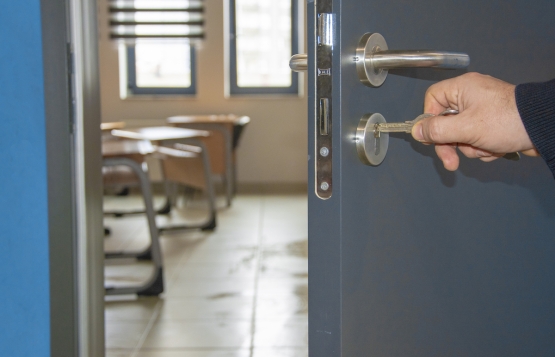
Districts across the land are witnessing a mass exit of teachers from classrooms, the likes of which has never been seen. It’s going to get worse, says Adams. And it isn’t about low salaries, paltry pensions, or lack of financial support. Teachers are leaving in droves because so many of our children are utterly broken, student behavior is abhorrent, and accountability is out of vogue in our schools.

Jeremy Adams 6.16.2022
NationalFlypaper

The mass exodus of teachers isn’t what you think it is. It’s far worse.

Jeremy Adams
6.16.2022
Flypaper

A “no zeroes” grading policy is the worst of all worlds

Daniel Buck
6.16.2022
Flypaper

Encouraging progress on “high quality instructional materials”

Robert Pondiscio
6.16.2022
Flypaper

Bus commutes and their academic impacts in New York City

Jeff Murray
6.16.2022
Flypaper

Education Gadfly Show #824: Dana Suskind on supporting low-income parents in their children’s early years

6.15.2022
Resource

Cheers and Jeers: June 16, 2022

The Education Gadfly
6.16.2022
Flypaper

What we're reading this week: June 16, 2022

The Education Gadfly
6.16.2022
Flypaper
view

A “no zeroes” grading policy is the worst of all worlds

Daniel Buck 6.16.2022
Flypaper
view

Encouraging progress on “high quality instructional materials”

Robert Pondiscio 6.16.2022
Flypaper
view

Bus commutes and their academic impacts in New York City

Jeff Murray 6.16.2022
Flypaper
view

Education Gadfly Show #824: Dana Suskind on supporting low-income parents in their children’s early years

Michael J. Petrilli, Amber M. Northern, Ph.D., Dana Suskind, MD 6.15.2022
Resource
view

Cheers and Jeers: June 16, 2022

The Education Gadfly 6.16.2022
Flypaper
view

What we're reading this week: June 16, 2022

The Education Gadfly 6.16.2022
Flypaper
view

The mass exodus of teachers isn’t what you think it is. It’s far worse.

Jeremy Adams
6.16.2022
Flypaper

Finally!

It’s over!

Let me grab my thesaurus and look up as many synonyms for “hurrah” and “hooray” as possible.

Students, teachers, and anyone else marooned somewhere in the educational cosmos for the past nine months have reason to celebrate. We used to denominate the school calendar by quarters, semesters, or years. Now, we think in terms of Covid waves.

The beginning of Fall Semester? Oh, you must mean the Delta wave.

The beginning of the Spring Semester? Oh, you must be referring to the Omicron wave.

The end of the school year? Oh, you must be referring to the current wave of subvariants that now provoke less worry since most of us have finally accepted we are all eventually getting Covid, it’s going to be around forever, and we have habituated ourselves to its permanence.

Yes, for teachers and students alike, this was the most grueling year we have ever experienced—we endured hackneyed masking rules, inconsistent distancing requirements, byzantine quarantine edicts, and starts and stops without end. Now that those issues are hopefully behind us, the national conversation must pivot to the fallout from the past two years.

Someday, far into the future, researchers and academics will write a definitive history of how Covid-19 altered the trajectory of American education. They will probably note that morale was already low, that teachers were already overwhelmed by the pernicious habit of viewing schools as the backstop for every familial failure, social pathology, and cultural vulgarity afflicting young people. Before Covid-19 intruded on our lives, American teachers were already overwhelmed by the never-ending demands being placed upon them.

The world’s largest teacher survey in 2019 revealed that 65 percent of educators were showing signs of burnout and 85 percent revealed their work level was “unsustainable.” One of the most longstanding polls gauging the public’s view of schools and education noted in 2018 that for the first time in the history of the poll, a majority of Americans, 54 percent, wouldn’t want their own children to become teachers. Sadly, these deplorable figures from just a few years ago don’t hold a candle to the current deflating numbers. A NEA survey from February revealed a whopping 55 percent of educators plan to leave the profession earlier than expected. Educational service sector resignations have surged 148 percent.

When these numbers were released, some voiced skepticism, expressing the view that teachers were bluffing, blowing off steam to pollsters, and a mass exodus of American educators wasn’t imminent.

They were wrong.

Districts all over the country are witnessing a mass exit from classrooms the likes of which has never been seen. EdSource, an online publication which focuses on issues related to California education, quotes Lindsay Mendoza, the president of the Cutler-Orosi Unified Teachers Association, as saying: “I can’t speak for others, but even in our worst years prior to COVID, we did not see the mass exiting that we do now.”

The Wall Street Journal is documenting that former teachers find themselves as hot commodities in the labor market.

Kansas is considering letting people with only a high school diploma serve as substitute teachers.

But here is what most Americans will probably miss because it is colossally unquantifiable: teachers are leaving because the kids are different. Some of these changes in our children are just simply strange, but even more of them are deeply disturbing.

What am I referring to?

In my experience, there are more fights on campus. Student behavior is out of control—vulgarity without end coupled with mind-numbing disrespect towards teachers; TikTok challenges encouraging students to steal from “or slap” a teacher; students standing up and arbitrarily leaving the classroom. Students who freely admit they only wear masks in the classes where they want to hide and be left alone by the teacher.

Sometimes the changes are more subtle yet equally stultifying. Students who don’t think they should have to turn in homework. Students who expect extensions without end. Students who think every test should always be an open-book test. Rising rates of illiteracy. And worst of all, a mental health crisis that is finally—finally!—getting the attention of everyone on both sides of the political spectrum. Conservatives have long warned that a generation disconnected from family, faith, friendship, and authentic learning will result in generational ennui characterized by depression, loneliness, and even self-harm. Last month, The New York Times documented the stunning reality that every day, hundreds of suicidal teen girls spend the night in ER rooms across the country.

Ennui, it seems, has arrived en masse.

And we have asked our teachers to respond with superhuman laxity. It is a typical sign of the times that our response to any difficulty is to soften expectations and equate our ease with compassion. This is perhaps the most popular and damning educational notion of our era: decoupling consequences from poor behavior and somehow expecting a positive outcome. G.K. Chesterton wrote of “the clean and well-lit prison of one idea.” Laxity is our “one idea” and has become a contagion.

Last week, a study found that grade inflation accelerated after 2016 and then again during the pandemic. Remarkably, students who are only in the 25th percentile of ACT performance are still receiving better than a 3.0. An article from the Fordham Institute sardonically quipped, “Will every high schooler soon have a 4.0?” In my home state of California, Assembly Bill 104 allowed “Any student who was enrolled in eleventh or twelfth grade during the 2020–21 school year and who is not on track to graduate in four years is exempt from local district graduation requirements that are beyond the state- minimum graduation credits.”

A lot has been written about learning loss. Yes, the students missed out on a year and a half of real lessons, which deprives them of curricular content and cerebral skill sets they otherwise would have acquired. But the real story of our time will be the erosion of learning capacity itself. Students have forgotten how to learn. And adults, instead of reminding them through traditional pedagogy, timeless learning principles, and nourishing expectations, have decided it is too much to ask.

You can’t learn when you are staring at your phone during class listening to God knows what with your earbuds cemented into your ears. A teacher standing in front of a room teaching the curriculum of the class might not be chic instruction or avant-garde pedagogy, but it is undoubtedly more substantive than non-stop group work or working off of a tablet all day. In his book Setting the Bar, educator Shane Trotter frames the issue perfectly: “A guiding dogma of the modern development paradigm is that any standard of personal conduct is insensitive to those who do not achieve it.”

Of course, much of the past few years has been out of our control. Teachers and students have been subjected to the capricious whims of what the Romans called Fortuna and the Greeks labeled Tyche. But going forward we must accept that there are no easy answers, no trendy panaceas, and certainly no technological hacks for the changes imperiling our educational future. The sooner we accept this, the sooner we can get serious.

Editor’s note: This was first published by the Daily Wire.

view

A “no zeroes” grading policy is the worst of all worlds

Daniel Buck
6.16.2022
Flypaper

More and more schools across the U.S. have adopted a new grading fad: Teachers cannot assign a grade lower than 50 percent. If a student doesn’t turn in an assignment? 50 percent. Do they miss every problem on a vocabulary quiz? 50 percent. Even some KIPP schools—an influential charter system that sets cross-country trends—have adopted the practice.

It’s meant to encourage kids, of course, and not completely torpedo their GPAs. It’s part of being nice and progressive, considerate of students’ feelings and respectful of their egos. As prominent education writer Doug Reeves wrote in “The Case Against the Zero” in The Kappan in 2004, assigning a zero is disproportionate punishment. Each letter ordinarily amounts to about 10 percent—90’s are A’s, 80’s are B’s, 70’s are C’s, and so on—so the sixty-point spread between a D and 0 is excessively punitive. “Just two or three zeros are sufficient to cause failure for an entire semester,” adds Reeves.

I don’t dispute Reeves’s math, but I do disagree with his underlying assumptions. Proportionality is no clear determinant of fairness or justness. I want a surgeon to know far more than 60 percent of their craft, but a Major League Baseball player who gets a hit 60 percent of the time would set the all-time record. One historical review of grading practices draws attention to an old system that allocated grades on a different sort of curve: “excellent (3 percent of students), superior (22 percent), medium (50 percent), inferior (22 percent), and failure (3 percent).” Cut-off points are at times arbitrary, yes, but not necessarily unfair.

In our modern iteration, that 60 percent represents more than a proportionate designation of points. The grades D represents the barest minimum of what a school or teacher considers acceptable by way of student learning. Below that is completely unacceptable, deserving of no credit, no points, no reward. Understood so, the current system tilts toward mastery, even excellence, thereby incentivizing students to more than mere completion.

What’s more, eliminating the zero invites all sorts of problems. If a student anticipates failing a test, project, or essay, how many will simply avoid any attempt, knowing that only a 50 percent awaits? Whereas a 0 percent weighs heavily on someone’s final grade, and so incentivizes students to make corrections or seek out additional help, how many students will instead just accept a mediocre final grade? What are the knock-on effects of ever-worsening grade inflation? What implicit message does it communicate to students when no effort receives half points?

That being said, the place of proportionality in a grading system is a far less interesting discussion than if our current system is broken, and if so, with what we might replace it.

There’s a famous thought experiment called “Chesterton’s Fence” that can help frame this discussion. In short, we shouldn’t remove a fence—an institution, a practice, a tradition—unless we know why it was first erected and have a clear plan to replace it. Our ignorance of its purpose does not mean it serves none.

In this case, our current grading system isn’t terrible. It provides at least some extrinsic motivation. It incentivizes excellence over mere completion. And as all the SAT critics love to point out, a student’s GPA has proven to be an almost chillingly accurate predictor of future college and life success, meaning a letter grade succinctly condenses countless factors—from general intelligence to content mastery to conscientiousness—down to a simple, useful data point. Monkeying around might make it less so.

It’s also an efficient system. Limited teacher time is a real concern. It is fine to urge that we move to a personalized-learning, competency-based model in which we sequence every piece of knowledge and skill, assess where students are, and assign points and plan instruction accordingly. But when I have 150 students and little if any prep, a quick assignment of points on a 100-point scale allows me more time for feedback, parent communication, or thoughtful sequencing of lessons.

But let’s assume for the sake of argument that the fence is broken, useless, and in need of replacement. There are countless interesting innovations floating around the education space that are superior to an across-the-board, no-zero grading policy.

Comparative grading normalizes grading on a bell curve. It finds justification in the psyche of graders. Humans are bad at absolute judgements, like how much something weighs, but are very good at comparative judgements, like which object is heavier. Other recommendations include additive grading—wherein students begin with a zero and work towards a 100 as they complete assignments—and standards-based grading—where students receive scores on specific skills and knowledge criteria, rather than points for effort or good behavior.

Each of these alternatives carries their own tradeoffs, and the evidence for each of these proposed reforms is on shaky ground so far. Regarding standards-based grading, the historical review acknowledges that “literature on SBG implementation recommendations is extensive, but empirical studies are few.” The case for no-zero grading policies is even shakier, however: The only study I was able to find admitted that “public opposition and limited evidence of effectiveness has led multiple schools to abandon no-zero grading policies.”

Even so, each of these alternatives consists of a substantive replacement to the traditional A-to-F model. Simply requiring all teachers give at lowest a 50 percent is the worst of both worlds.

Understood so, a better analogy might not be a fence but a bridge. Consider instead an old stone-arch bridge crossing a gorge. It’s more functional than people give it credit, and perhaps it’s time for an update—but perhaps not. Yes, it could be replaced by a modern suspension or cantilever bridge. There are plenty of alternatives. So, too, in evaluating student work we find several options: additive, comparative, standards-based, or even a re-proportioned scale implemented with forethought. However, this latest fad, just cutting off the grading scale at 50 percent, is akin to demolishing half the old bridge and calling it fixed.

view

Encouraging progress on “high quality instructional materials”

Robert Pondiscio
6.16.2022
Flypaper

As a long-time (and often lonely) curriculum enthusiast, I’ve followed the work of the High-Quality Instructional Materials and Professional Development (IMPD) Network for several years. This multi-state coalition shares strategies and practices aimed at driving the adoption by local districts and schools of top shelf, standards-aligned curricula. The best-known example of such an approach is Louisiana, which several years ago began evaluating and rating curricula, incentivizing adoption of the most highly regarded programs by providing districts with aligned professional development, teacher training, and other inducements. Intrigued by the promising concept, a dozen other states signed on to follow Louisiana’s lead and explore this approach.

Now there’s emerging evidence those efforts are bearing fruit. A new report from the RAND Corporation indicates that participation in the IMPD Network, which was organized by the Council of Chief State School Officers (CCSSO), is “closely related to higher rates of adoption and use of standards-aligned materials.” Of interest to policymakers, the study suggests that “state networks have great potential for shifting teaching and learning at scale and that such networks can make those shifts through a variety of policy strategies.” That’s good news.

Strangers to the habits and folkways of American K–12 education often find the relationships among schools, teachers, and curricula peculiar and puzzling. The absence of state control of curriculum can also surprise those who’ve never taught (and sometimes even to education policymakers). Doesn’t curriculum “adoption” guarantee its “use”? Teachers don’t have to follow the curriculum? They’re allowed to decide on their own what they want to teach? I thought everyone in a school must teach from the same curriculum!

Isn’t it pretty to think so? Curriculum “adoption” is akin to a magazine subscription you get for Christmas that turns into a stack of unread issues on the coffee table. If you occasionally crack one open and idly thumb it, you can be said to “use” your subscription. But unless you race to the mailbox and devour each issue cover to cover, you’re not at the “buy-in” level. And getting teachers skillfully and enthusiastically to buy in and implement high quality instructional materials, or HQIM, is the goal. That’s how students may benefit from rich, rigorous, and coherent curricula.

Strategies to drive adoption, use, and enthusiastic implementation vary from state to state across the IMPD network. Tennessee, for example, requires districts to adopt HQIM, but other IMPD states like Delaware, Louisiana, and Nebraska are getting high adoption and use without mandates. One major takeaway, per RAND, is that “much consensus-building, long-term work is necessary to encourage a high rate of usage of standards-aligned materials.”

The report doesn’t say so explicitly, but changes in classroom practice and professional habits are key. At present, teachers tend to have broad latitude to create or choose their own lessons, or to modify and supplement provided materials, either to enhance student engagement or because teachers believe district-provided curricula to be wanting. But there’s good evidence to suggest that, when teachers go hunting on their own for lessons, the materials they choose are often substandard. Recall Fordham’s own study of lesson planning resources on websites such as Teachers Pay Teachers and Share My Lesson. It found weak alignment to standards and rated most of the materials as “mediocre” or “probably not worth using.”

Still, curriculum doesn’t teach itself. As such, there’s a rich vein of policy ore to be mined in, if not imposing HQIM, then at least creating the conditions that prompt its enthusiastic use. Joanne Weiss, who has co-led the IMPD work as a consultant to CCSSO, agrees that “skillful use” of quality materials at scale is the network’s endgame. She breaks the process down in two parts, saying, “First, if high-quality materials are purchased; and second, if those materials are used intensively. That is, skillful use develops over time and can be accelerated by strong, curriculum-connected professional learning.”

States clearly have a valuable role to play in evaluating curricula and creating the conditions for districts to “make the right choice the easy choice,” as one Louisiana education official put it a few years ago. Local control tends to make states reluctant to bigfoot school districts even though most have unquestioned authority to dictate curriculum. (Honestly, how many ways are there to teach adding and subtracting unlike fractions?) And historically, curriculum and implementation have generally been accorded secondary status at best in the education improvement toolkit.

The RAND report suggests that mindset may be starting to change, at least in a handful of states. Teachers in IMPD jurisdictions are “significantly more likely to report increased usage of standards-aligned materials, the presence of principal support for use of curriculum materials, and the presence of professional learning supports” for their use. This report offers encouraging evidence to suggest that persistent, patient states can, through various incentives (and the occasional cudgel), drive worthy changes in classroom practice.

view

Bus commutes and their academic impacts in New York City

Jeff Murray
6.16.2022
Flypaper

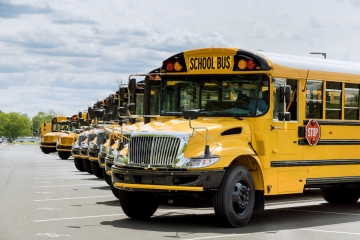
Providing transportation for students to and from school is a basic requirement of most public school districts in America. During the 2018–19 school year, nearly 60 percent of all K–12 students nationwide, public and private, were transported by those ubiquitous yellow buses. In some states—such as Delaware, Mississippi, and Alaska—those numbers were nearer 100 percent. A research team led by Temple University’s Sarah Cordes wanted to both quantify bus commutes for students and to see if there was any connection between transportation, absenteeism, and achievement.

This is a new area of research, and while not representative of other cities, New York City’s transportation data was detailed and easily accessible. So Cordes and her team started there, looking at data from New York City from 2011 to 2017, examining the commuting patterns of more than 120,000 bus riders in grades three through six. They include travel to school in the morning only and exclude bus routes specifically for students with special needs and those that serve multiple schools nonsequentially (i.e., students from School B are picked up before students from School A are dropped off). The final sample comprises more than 90 percent of all morning bus routes and, despite the robust public transit system in the city, includes 89.4 percent of all students in grades three through six attending district and charter schools over the period.

The average bus ride is relatively short—approximately twenty-one minutes from pickup to drop off—with 75.8 percent of students having rides shorter than thirty minutes and more than 90 percent having rides shorter than forty-five minutes. None of these figures includes the non-bus portion of a morning commute—walking to a stop, waiting for the bus, loading/unloading, and waiting for school to start (for those kiddos who arrive early). Including these factors, the average commute balloons to more than fifty minutes.

There is, as one might suspect, a disparity in ride duration for students opting for intradistrict school choice or charter schools. And it is a big one. Students attending their zoned district school ride a bus for an average of just under thirteen minutes each morning, while students attending a district school of choice ride for more than twenty-four minutes and students attending a charter school ride for nearly twenty-six minutes on average. And accounting for total commute, the gap in travel time between zoned school and choice school attendees is enormous—thirty-eight minutes to nearly sixty minutes, respectively.

Interestingly, the average student in NYC lives 2.13 miles from her school and would likely be able to walk or bike there in a far shorter amount of time than commuting by bus, if such options were feasible—which they often are not, due to safety concerns, family commitments, and a lack of easily-traversable routes.

But is a long bus ride problematic for kids? To answer that question, Cordes and her team focus in on a subset of 489 students in 2017 (3.1 percent of the total sample for the year) who experienced a bus ride of more than one hour. More than 95 percent of those long riders were utilizing school choice to attend a building that was not their zoned school. More than 47 pecent were Black, and just less than 11 percent were white.

Initial analysis shows that students with very long bus rides outperform those with short bus rides on math and reading exams by between 0.02 and 0.11 standard deviations. But the analysts suspected that choice students would likely be more motivated than their zoned school peers (accepting the long ride as a tradeoff for a better-fitting school) and/or were attending magnet schools as part of the district’s gifted and talented program. When such positive selection factors are controlled for, test score impacts disappear and slight negative attendance impacts appear. Students with bus rides over one hour long had 0.3 percentage point lower attendance rates and 1.9 percentage point higher chronic absenteeism rates than their peers. These effects are concentrated among choice students rather than the handful of zoned school students who happen to have a very long commute. Thus, the tradeoff to take advantange of choice becomes more negative than is immediately obvious.

In New York City, district-provided school transportation appears to work pretty well for most students who use it, with long bus rides and negative effects being small and concentrated. While New York is not representative of other places in a number of respects, choice students having longer and more difficult commutes than traditional district students is a common situation. If we are interested in shortening all bus commutes to the absolute minimum and in reducing the inequity between choice and district students in this regard, even NYC’s atypical data show that some modern updates to the quaint old district-controlled yellow bus might be in order.

SOURCE: Sarah A. Cordes, Christopher Rick, and Amy Ellen Schwartz, “Do Long Bus Rides Drive Down Academic Outcomes?” Educational Evaluation and Policy Analysis (May 2022).

view

Education Gadfly Show #824: Dana Suskind on supporting low-income parents in their children’s early years

6.15.2022
Resource
 

On this week’s Education Gadfly Show podcast, Dr. Dana Suskind, a pediatric surgeon and founder of the TMW Center for Early Learning + Public Health at the University of Chicago, discusses how social supports for low-income and working-class parents equalize opportunities for their young children later in life. Then, on the Research Minute, Amber Northern reviews two studies on whether there’s bias in ability grouping within kindergarten classrooms.

Recommended content:

  • Dr. Suskind’s new book, Parent Nation: Unlocking Every Child’s Potential, Fulfilling Society’s Promise.
  • The studies that Amber reviewed on the Research Minute: Paul T. von Hippel and Ana P. Cañedo, “Is Kindergarten Ability Group Placement Biased? New Data, New Methods, New Answers,” American Educational Research Journal (2021); Ana P. Cañedo and Paul T. von Hippel, “Bias in Kindergarten ability group placement: Does parental lobbying make it worse? Do formal assessments make it better?” retrieved from Annenberg Institute at Brown University (May 2022).

Feedback welcome!

Have ideas or feedback on our podcast? Send them to our podcast producer Pedro Enamorado at [email protected].

view

Cheers and Jeers: June 16, 2022

The Education Gadfly
6.16.2022
Flypaper

Cheers

  • Empowering parents includes taking away districts’ power to block charter schools. —Jay Mathews
  • Philadelphia’s Talent Pipeline Project is helping more teens get apprenticeships and jobs right out of high school. —Chalkbeat
  • “Bipartisan group of mayors demand Ed Dept spike change to charter school program.” —The 74

Jeers

  • Russia’s security chief is now revamping history textbooks to promote anti-Ukrainian sentiment. —Washington Post
  • “Alabama to vote on lower Praxis score for teacher certification requirement.” —AL.com
view

What we're reading this week: June 16, 2022

The Education Gadfly
6.16.2022
Flypaper
  • “Pandemic babies are behind after years of stress, isolation affected brain development.”—USA Today
  • NewGlobe, led by a Nobel laureate, rolled out some of the most effective educational programs in the developing world. Why has it struggled to get buy in? —New York Times
  • “One country, two histories: What does it mean to be an American?” —Christian Science Monitor
  • Thousands of California teachers left midyear, overwhelmed by misbehavior. —Ed Source
  • Distrusting the federal government has been common among both parties. The more recent shift is distrust towards state governments and civil servants. —Kristen Soltis Anderson
Fordham Logo

© 2026 The Thomas B. Fordham Institute
Privacy Policy
Usage Agreement

National

P.O. Box 110
Burke, VA 22009

202.223.5452

[email protected]

Ohio

P.O. Box 82291
Columbus, OH 43202

614.223.1580

[email protected]

Sponsorship

130 West Second Street, Suite 410
Dayton, Ohio 45402

937.227.3368

[email protected]