Mobile Navigation

  • National
    • Policy
      • High Expectations
      • Quality Choices
      • Personalized Pathways
    • Research
    • Commentary
      • Gadfly Newsletter
      • Flypaper Blog
    • Events
    • Scholars Program
  • Ohio
    • Policy
      • Priorities
      • Media & Testimony
    • Research
    • Commentary
      • Ohio Education Gadfly Biweekly
      • Ohio Gadfly Daily
  • Charter Authorizing
    • Application
    • Sponsored Schools
    • Resources
  • About
    • Mission
    • Board
    • Staff
    • Career
Home
Home
Advancing Educational Excellence

Main Navigation

  • National
  • Ohio
  • Charter Authorizing
  • About

National Menu

  • Topics
    • Accountability & Testing
    • Advanced Education
    • Career & Technical Education
    • Charter Schools
    • Curriculum & Instruction
    • ESSA
    • Evidence-Based Learning
    • Facilities
    • Governance
    • Personalized Learning
    • Private School Choice
    • School Finance
    • Standards
    • Teachers & School Leaders
    • Think Again
  • Research
  • Commentary
    • Gadfly Newsletter
    • Flypaper Blog
    • Gadfly Podcast
  • Events
  • Scholars Program

The Education Gadfly Weekly

Sign Up to Receive Fordham Updates

We'll send you quality research, commentary, analysis, and news on the education issues you care about.
Thank you for signing up!
Please check your email to confirm the subscription.

The Education Gadfly Weekly: If education advocacy were more like pharmaceutical ads

Volume 19, Number 19
5.8.2019
5.8.2019

The Education Gadfly Weekly: If education advocacy were more like pharmaceutical ads

Volume 19, Number 19
view

If education advocacy were more like pharmaceutical ads

Things might look very different in education—we might even manage to sustain promising practices and reform initiatives long enough for them to bear fruit—if advocates for various programs and policies were required to temper their pitches with warning labels, akin to pharmaceutical ads. Make your case. Sell yourself as hard as you want to the consumer—but then comes the legally required disclaimers and warnings about potentially harmful side effects. This piece offers some examples to get us started.

Robert Pondiscio 5.8.2019
NationalFlypaper

If education advocacy were more like pharmaceutical ads

Robert Pondiscio
5.8.2019
Flypaper

New American Schools: A short, opinionated history, part I

Chester E. Finn, Jr.
5.8.2019
Flypaper

Wisconsin Governor Tony Evers tries to roll back the clock on ed reform

5.8.2019
Flypaper

The state of crime and safety in our schools

David Griffith, Ph.D.
5.8.2019
Flypaper

The Education Gadfly Show: Should U.S. schools mandate foreign language instruction?

5.8.2019
Podcast
view

New American Schools: A short, opinionated history, part I

Chester E. Finn, Jr. 5.8.2019
Flypaper
view

Wisconsin Governor Tony Evers tries to roll back the clock on ed reform

Will Flanders, CJ Szafir 5.8.2019
Flypaper
view

The state of crime and safety in our schools

David Griffith, Ph.D. 5.8.2019
Flypaper
view

The Education Gadfly Show: Should U.S. schools mandate foreign language instruction?

Michael J. Petrilli, David Griffith, Ph.D., Amber M. Northern, Ph.D., William Egginton 5.8.2019
Podcast
view

If education advocacy were more like pharmaceutical ads

Robert Pondiscio
5.8.2019
Flypaper

In recent months, I’ve found myself cast as the designated skeptic in print and on panels dealing with topics from civic education to personalized learning to social and emotional learning. I’ve become a congenital contrarian, and a bit of a broken record, forever repeating, “Well, it’s a bit more complicated than that,” in response to advocates arguing for various reform strategies and tactics.

Don’t mistake me. Like most folks, I have preferred flavors of schooling and favorite reform levers that I’ll argue for, sometimes strenuously. But the list of practices and strategies that I’d make mandatory, were I czar, is extremely limited. (In fact, I can’t think of any beyond scientifically-sound reading instruction including a content-rich core curriculum.) Part of that reluctance is the inevitably mediocre results when practices and policies are imposed from above as opposed to embraced with on-the-ground enthusiasm and implemented with fidelity. But the greater part is our tendency to downplay, disregard, or outright deny that virtually everything we do in schools requires trade-offs and has potential side effects, some of which may be less than pleasing.

As Dylan Wiliam has long noted, “Everything works somewhere. Nothing works everywhere.” The right question, he says, is not so much “What works?” but “Under what conditions will this work?” To that sage observation I’d suggest adding a second question: What are the side effects? Things might look very different—we might even manage to sustain promising practices and reform initiatives long enough for them to bear fruit—if advocates were required to temper their pitches with warning labels, akin to pharmaceutical ads and those tiny-font fold-outs that come with your meds. Make your case. Sell yourself as hard as you want to the consumer—but then comes the legally required disclaimers and warnings about potentially harmful side effects. Here are some proposed TV ads for few recent much-touted reform pitches, with my joy-killing sketch of some possible—perhaps likely—side effects:

“Social and Emotional Learning,” 0:30

[Warm female voice over images of smiling students speaking one-on-one with teachers who are nodding empathetically]: “Too many children feel invisible in school. There’s no adult they trust, nobody who really understands them. This prevents them from setting and achieving their goals, managing their emotions, and showing empathy for others. Fortunately, now there’s SEL.”

“Side effects may include reduced academic expectations and lower standards for student behavior. Excessive use of social and emotional learning, otherwise known as SEL, can lead to suspension of moral judgment among teachers, with a possibility of stunted character development in students. Imprecise definitions of SEL may cause chafing and irritation. Teachers have reported feeling unprepared to effectively implement SEL. Interest in SEL has been associated with vendors selling expensive and ineffective curriculum to career-minded district superintendents resulting in acute incidents of fad-driven opportunism. Ask your school district about SEL.”

“Americans for School Choice,” 0:60

[Music open over a street scene of identical suburban houses with female voice singing “Little boxes on a hillside, little boxes made of ticky tacky.” Authoritative male voiceover begins.] “No one tells you where to live, work, or worship, what car to drive, or what clothes to wear. So why do we let someone else make the most important decision we will ever make: how to raise and educate our children. In most other countries, parents pick schools that teach their children in accordance with their values and beliefs. But in America, we just send our kids to the local neighborhood school, whether it’s good or bad, leaving schools with no incentive to do right by our kids. But it doesn’t have to be that way thanks to School Choice.”

“Side effects may include lower test scores, reduced public school funding, lower salaries, gentrification, teacher strikes and erosion of the civic mission of the 'common school.' Some concentration of poverty and dysfunction may occur in schools abandoned by families with choice. Incidents of profiteering have also been reported. Parental satisfaction is no guarantee of school quality. Past test scores may not be indicative of future results.”

“No Excuses Charter Schools,” 0:30

[Camera zooms from a hardscrabble city street into a bright, cheerful classroom with African American children in school uniforms raising their hands in response to a teacher’s question.] “For years, inner city schools have been failure factories, where children learn almost nothing except that education isn’t for them. But now there’s hope. No Excuses schools are well-run, safe, and orderly, putting thousands of children on the path for success in college and in life.”

“Side-effects may include curriculum narrowing, excessive test-prep, difficulties for children who can’t sit still, parents upset about strict dress codes, burdensome homework, ‘skill-and-drill’ instruction. Higher rates of student discipline including suspension have also been reported in schools using the No Excuses model. Teachers report feeling stressed by performance pressures, resulting in burnout and elevated levels of staff turnover. Ask your charter management organization if ‘No Excuses’ schooling is right for your child.”

“Progressive Educators for Project-Based Learning,” 0:60

[Opens with shots of diverse and casually-dressed students in groups of threes and fours having animated discussions over scale models in classrooms and outdoors holding notepads and scientific instruments, with teachers in the background smiling indulgently.] “School is boring. Hours of listening to teachers drone on. Bad textbooks and endless lab reports. It’s enough to make even diligent students lose their minds. Introducing Project-Based Learning, which sparks children’s imagination and natural curiosity. PBL is the cure for the common school.”

“Side effects may include unstructured classrooms, leading to undisciplined and self-indulgent students who struggle in more structured academic environments. Lower test scores may follow. Teachers who use PBL often report feeling unable to effectively plan for instruction. Helicopter parenting and parental over-engagement have also been reported. For projects lasting more than four months, consult your child’s teacher.”

“Restorative Justice,” 0:60

[Cold-open to the sound of a prison cell slamming shut. Sober and concerned male voiceover.] “America has a problem. Black and brown children are far more likely to be suspended from school than white children. Harsh ‘zero-tolerance’ discipline practices criminalize children from an early age, channeling them into the ‘school-to-prison’ pipeline. But now there’s a cure. When schools adopt Restorative Justice, children learn to solve their problems and avoid conflicts under the watchful eye of caring, understanding, and well-trained educators sensitive to the challenges children face.”

“Imposing restorative-justice practices on teachers who do not willingly embrace them has been known to cause lower suspension rates without addressing underlying problems, including recurrent classroom disruptions, leading students to feel less safe. Side effects may include juking the stats, lower test scores, chaotic classrooms, and cognitive dissonance when parents who support restorative justice have a child who is assaulted or bullied. Families who raise their children in strict homes with consequences for bad behavior have reported elevated blood pressure when restorative practices are adopted, leading to higher levels of homeschooling.”

***

The lengthy disclaimers and legalese in advertising have become the stuff of Saturday Night Live parodies and a bit of a cliché. But they serve a purpose, at least in principle: They assist consumers to make informed choices and put us on guard for warning signs. A little of that would go a long way toward helping to make education reform more widely accepted and practice enhancements stickier. It’s a bromide, but it’s true: Nearly every problem in schools was the solution to a previous problem. If we were more clear-eyed and honest in pitching and adopting policies and proposals—and more candid about side effects—we might be more apt to stick with them, anticipate complications, and adjust more thoughtfully when they surface.


view

New American Schools: A short, opinionated history, part I

Chester E. Finn, Jr.
5.8.2019
Flypaper

This essay is part of the The Moonshot for Kids project, a joint initiative of the Fordham Institute and the Center for American Progress. It will run in three parts, with the second and third appearing in the next two issues of the Education Gadfly Weekly.

Educators and ed reformers have long been tantalized by the dream of “reinventing” the school. “If only we could break away from this industrial-style arrangement,” goes the usual refrain, “with its boxy classrooms, batch-processed students, and rigid bell schedule, and create totally different schools that are better suited to modern times and to children’s needs.”

History shows that schools have actually changed from time to time, albeit in ways more incremental than revolutionary, as American education has evolved from the one-room schoolhouses of the frontier to include the “comprehensive” high schools envisioned by James B. Conant and others in the 1950s. Since then, we’ve seen numerous efforts to take down walls and open up spaces, to experiment with different schedules and calendars, to install at least a modicum of modern technology, to bring sundry social services under the school roof, and more. Yet across the land today, it’s still generally true that one’s children and grandchildren are being educated in schools, both public and private, that resemble far more than they differ from the schools of one’s parents and grandparents. Thus, the oft-stated quip that if Rip Van Winkle awoke today from a century-long snooze, the only institutions that he’d recognize would be schools and churches. If only we could truly reinvent rather than tinker!

A second powerful impulse animating education reformers in recent decades has been the desire to design a “coherent” model of schooling that would meld the best evidence of practices that work and thereby put research into practice in holistic rather than piecemeal fashion. The piecemeal approach typically identifies something that seems to work—a curriculum, a pedagogy, a management technique, a program—and then gets a state or district to require its schools to implement that marvelous thing. Yet a nonstop parade of piecemeal reforms tends to make teachers and principals cynical and resistant—Rick Hess writes of “Spinning Wheels”—and pulls educators and administrators in too many directions at once, answerable to too many bosses, dependent on too many “categorical” funding streams, accountable for too many different things that may even conflict with one another, giving rise to “Christmas tree” schools. Far better to start anew, amass the best evidence, and create a coherent whole school model. (The parallel impulse at the macro level yielded the quest for “systemic school reform.”)

Reformers have also long been driven by the need to find promising ways to “turn around” failing schools, a need that intensified after enactment of No Child Left Behind in 2002. Along with that law’s mandatory standards and testing came accountability requirements whereby schools that chronically failed to produce adequate achievement in some or all of their pupils got labeled as “in need of improvement.” Such a label triggered a volley of plans and interventions, “corrective actions,” and, ultimately, “restructuring.”

Labeling aside, the federal requirements—now loosened but not eliminated in the Every Student Succeeds Act—added to the desire, and sometimes the obligation, of education leaders, reformers, and elected officials to deal forcefully with chronically weak and perhaps totally dysfunctional schools. Either shut it outright—always hugely controversial and politically risky—or completely overhaul it.

This, however, has proven extremely difficult to accomplish.

Though much of the turn-around ardor came later, the appetites for school reinvention and holistic reform came together in the early 1990s in a major R & D (mostly D) initiative known as “New American Schools,” which also tapped into the country’s affection for “public-private ventures.” Such fusions of effort and resources are a familiar strategy for developing and propagating promising innovations, products, and models.

There’s much blurring in the public-private realm, and New American Schools was one of the larger, more interesting—and arguably blurrier—examples. As an idea, it was unveiled in April, 1991, when President George H.W. Bush and Education Secretary (now Senator) Lamar Alexander set forth their “America 2000” strategy to jump-start education reform in the United States in general and, in particular, propel the country toward meeting the lofty national education goals that the president and governors had recently set “for the year 2000.”

Bush and Alexander were aiming high. The president spoke of America 2000 as winning a “battle for our future.” Alexander termed it a “crusade.” And it had multiple dimensions, including some that would prove contentious both then and on Bill Clinton’s watch (and even today), such as national academic standards and exams (though the GOP team hastened to note that these would be optional for states.) Its centerpiece, however—that was Bush’s word for it—was nothing less than to “break the mold. Build for the next century. Reinvent—literally start from scratch and reinvent the American school.” Then send the new models all around the country, so people could see them in action and want more of them for themselves—and also deploy them as part of needed school turnarounds. How much better, after all, to set about to overhaul a troubled school when you have in hand a glittering and proven model of how the rebooted school should look and function.

Talk about an education moonshot!

The vehicle was not to be a rocket ship, however, but a new nonprofit entity named the New American Schools Development Corporation—known as NASDC, commonly referred to simply as New American Schools, sometimes NAS. Initially chaired by ALCOA CEO (later Treasury Secretary) Paul O’Neill, its board included many of the leading lights of American business, and its private fund-raising, after a harder-than-expected start, ultimately brought in some $130 million of the hoped-for $150 million development fund. (Publisher Walter Annenberg helped greatly with a fifty-million-dollar gift in 1994.)

NASDC’s original “theory of action” was to contract with “three to seven R & D teams,” which would then assist communities across the land to create break-the-mold schools, at least one (Alexander intended) in every Congressional district. The hope, obviously, was that these schools would be so exciting and successful that communities would want—and then create—many of them on their own, using their own resources augmented by federal dollars that would flow from the inspiration and appetite that the thrilling new designs would generate.

As historian Jeffrey Mirel wrote in 2002 in what amounted to a slightly premature obituary for the decade-long venture:

The idea was to apply a research-and-development model to a sector that too often fell for romantic—and untested—notions of how schools and learning should be structured. NASDC’s early leaders were determined to apply a no-nonsense business approach to their efforts, to create an organization that was as lean and agile as the corporations they led. New American Schools would be less bureaucratic and more aggressive in responding to new ideas than the typical government agency or major foundation. Moreover, NASDC would be a sort of venture capitalist for education, constantly evaluating its investments and continuing to fund only those designs that proved their effectiveness.

The conception was magnificent, but of course reality would prove something less than that.

Stay tuned for parts II and III.

view

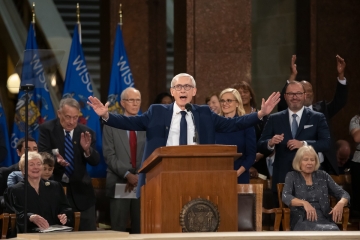
Wisconsin Governor Tony Evers tries to roll back the clock on ed reform

5.8.2019
Flypaper

In January of this year, we made predictions for Fordham about the future of education reform in Wisconsin under newly elected Democratic Governor Tony Evers. As the former State Superintendent of Public Instruction with a lengthy background of being hostile to school choice, we had a very negative outlook and advised education reformers to “prepare for the worst and hope for the best.”

Five months later, we’re trending towards the worst.

Along with our Wisconsin Institute for Law & Liberty colleague Libby Sobic, we recently authored a policy brief titled “A Deep Dive into Governor Evers’ K-12 Budget Proposal.” We conclude that it’s an all-out assault on school choice, touching nearly every facet, from students to schools to teachers.

Next Thursday, the legislature’s all-powerful Joint Finance Committee will be voting on portions of Evers’s budget, and have already vowed to strip away the most damaging provisions, including its enrollment freeze for the state’s voucher programs. But it’s still worth examining the direct and indirect ways the governor wants to drastically reform, or even eliminate, not only these private school choice initiative, but perhaps public school choice, too. His proposals, if successful, would turn back the clock to a time when options only existed for the wealthiest families.

As for vouchers, the aforementioned enrollment freeze would apply to the Milwaukee Parental Choice Program, Racine Parental Choice Program, and Wisconsin Parental Choice Program. With over 40,000 students using these to attend a private school, doing so would prevent additional kids from participating in future years. There is evidence that demand currently exceeds supply. In Milwaukee, a number of high-performing schools have waiting lists for participation. In the rest of the state, the number of participating schools has more than doubled since the 2016–17 school year, and five school districts hit their participation cap. Participants score higher on state-mandated tests than their peers in Milwaukee Public Schools, are more likely to graduate from high school and attend college, and are less likely to commit felonies and misdemeanors. These benefits are so substantial, in fact, that we estimate that the governor’s proposed voucher reduction would cause a $110 million loss in economic activity based on enrollment growth that would otherwise be projected for the programs.

Another causality of Evers’s war on vouchers would be the Special Needs Scholarship Program, a voucher initiative for students with disabilities that’s grown quickly from 215 students to 662 students in two years. An audit by the non-partisan Legislative Audit Bureau last year concluded that parents of students in the program had a 58 percent higher satisfaction rate than moms and dads of similar children who attend public schools.

The governor would also stunt the creation of new private schools participating in these programs. He has proposed that new entrants should be fully accredited prior to participation, even though current law requires only pre-accreditation prior to joining, after which they can complete the process while teaching students. This makes sense because the complete procedure can take up to three years and be very expensive. This is therefore a rather mischievous way to slow down private school choice, especially considering public schools have no accreditation requirement and Evers isn’t proposing any.

Even those families who pay for private education out of their own pocket are under attack. The governor wants to repeal the private-school-tuition state tax deduction. Opponents try to frame this as a giveaway to the rich, but according to the State Department of Revenue, a third of families that use the deduction earn less than $78,000 per year.

Yet perhaps most insidious are his lesser-reported plans for other avenues of school choice. He would freeze enrollment in the state’s independent charter schools, a high-performing sector that is primarily used by Milwaukee’s low-income minority students. And worse, he’d decouple funding for Wisconsin’s open enrollment program from a number of categorical aids that would see a substantial increase under his budget. Open enrollment—wherein parents can send their children to any public school of their choice in a given geographic area—is the state’s largest choice program, in use by more than 60,000 students. By 2021, Wisconsin's Legislative Fiscal Bureau estimates that this proposal would cost schools nearly $800 per student in state aid, a substantial enough sum that could hamper future participation from other districts.

Republican legislative leadership has blessedly pledged to strip out most of Evers’s proposals—of which this substantial list is somehow but a sampling (a complete analysis can be found in our aforementioned policy brief). But this won’t necessarily forestall his future efforts to limit choice and, in doing so, harm the Wisconsin’s most disadvantaged children.

Governor Evers’s vision for education appears to be one stuck in the past—perhaps in the relatively homogenous Plymouth, Wisconsin, of the 1950s, where he grew up and was educated in its one-size-fits-all educational model. But Wisconsin looks different today, and that anachronistic approach no longer makes sense. Its lack of competition has bred complacency, and that’s led to decades of stagnant academic growth and one of the largest racial achievement gaps in the country.

As states like Tennessee and Florida push forward new broad-based education reform initiatives that deepen, strengthen, and broaden school choice, Wisconsin can ill afford to move in the opposite direction. Yet that is what Governor Tony Evers proposes to do. So for the rest of his term, we education reformers will have to play defense. Let’s hope that, like our beloved Milwaukee Bucks, we’re up for it.

view

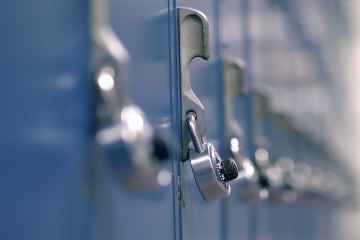
The state of crime and safety in our schools

David Griffith, Ph.D.
5.8.2019
Flypaper

In the wake of yet another tragedy, the most recent IES report on school crime and safety is a reminder that it gets better, statistically speaking.

Among the highlights:

“Between 2001 and 2017, the overall percentage of students ages 12–18 who reported being victimized at school during the previous 6 months decreased (from 6 to 2 percent). During this period, the percentage of students who reported being victimized at school decreased for both male (from 6 to 3 percent) and female (from 5 to 2 percent) students, as well as for White (from 6 to 2 percent), Black (from 6 to 3 percent), and Hispanic (from 5 to 2 percent) students.”

“Between 2001 and 2017, the percentage of students ages 12–18 who reported that gangs were present at their school during the school year decreased overall (from 20 to 9 percent), as well as for students from urban areas (from 29 to 11 percent), suburban areas (from 18 to 8 percent), and rural areas (from 13 to 7 percent).”

“The percentage of students in grades 9–12 who reported having been in a physical fight anywhere in the previous 12 months decreased between 2001 and 2017 (from 33 to 24 percent), as did the percentage of students in these grades who reported having been in a physical fight on school property (from 13 to 9 percent).”

“Between 2001 and 2017, the percentage of students ages 12–18 who reported being afraid of attack or harm at school during the school year decreased from 6 percent to 4 percent.”

All good news, which is only slightly dampened by the low-lights:

“During the 2015–16 school year, 43 percent of public school teachers agreed or strongly agreed that student misbehavior interfered with their teaching, and 38 percent agreed or strongly agreed that student tardiness and class cutting interfered with their teaching.”

Tardiness has been increasing inexorably since Ferris Bueller’s Day Off was released on VHS. However, the increase in distracting misbehavior started in 2007–08. And then there’s this:

“The percentage of public school teachers reporting that they had been physically attacked by a student from their school in 2015–16 (6 percent) was higher than in all previous survey years (around 4 percent in each survey year) except in 2011–12, when the percentage was not measurably different from that in 2015–16.”

Anyway, as I was saying, it gets better, assuming you’re not a teacher—or god forbid, a statistic.

SOURCE: “Indicators of School Crime and Safety,” Institute of Education Sciences, National Center for Education Statistics, U.S. Department of Education (2019).

view

The Education Gadfly Show: Should U.S. schools mandate foreign language instruction?

5.8.2019
Podcast
 

On this week’s podcast, William Egginton, a professor of the humanities at Johns Hopkins University, joins Mike Petrilli and David Griffith to make the case for foreign language instruction in America’s schools. On the Research Minute, Amber Northern examines a new analysis of Career and Technical Education course-taking by AEI’s Nat Malkus.

Amber’s Research Minute

Nat Malkus, “The Evolution of Career and Technical Education 1982–2013,” American Enterprise Institute (May 2019).

Fordham Logo

© 2026 The Thomas B. Fordham Institute
Privacy Policy
Usage Agreement

National

P.O. Box 110
Burke, VA 22009

202.223.5452

[email protected]

Ohio

P.O. Box 82291
Columbus, OH 43202

614.223.1580

[email protected]

Sponsorship

130 West Second Street, Suite 410
Dayton, Ohio 45402

937.227.3368

[email protected]