Mobile Navigation

  • National
    • Policy
      • High Expectations
      • Quality Choices
      • Personalized Pathways
    • Research
    • Commentary
      • Gadfly Newsletter
      • Flypaper Blog
    • Events
    • Scholars Program
  • Ohio
    • Policy
      • Priorities
      • Media & Testimony
    • Research
    • Commentary
      • Ohio Education Gadfly Biweekly
      • Ohio Gadfly Daily
  • Charter Authorizing
    • Application
    • Sponsored Schools
    • Resources
  • About
    • Mission
    • Board
    • Staff
    • Career
Home
Home
Advancing Educational Excellence

Main Navigation

  • National
  • Ohio
  • Charter Authorizing
  • About

National Menu

  • Topics
    • Accountability & Testing
    • Advanced Education
    • Career & Technical Education
    • Charter Schools
    • Curriculum & Instruction
    • ESSA
    • Evidence-Based Learning
    • Facilities
    • Governance
    • Personalized Learning
    • Private School Choice
    • School Finance
    • Standards
    • Teachers & School Leaders
    • Think Again
  • Research
  • Commentary
    • Gadfly Newsletter
    • Flypaper Blog
    • Gadfly Podcast
  • Events
  • Scholars Program

The Education Gadfly Weekly

Sign Up to Receive Fordham Updates

We'll send you quality research, commentary, analysis, and news on the education issues you care about.
Thank you for signing up!
Please check your email to confirm the subscription.

The Education Gadfly Weekly: Better civics education won’t happen anytime soon

Volume 21, Number 26
7.1.2021
7.1.2021

The Education Gadfly Weekly: Better civics education won’t happen anytime soon

Volume 21, Number 26
view
High Expectations

We need better civics education, but it won’t happen anytime soon

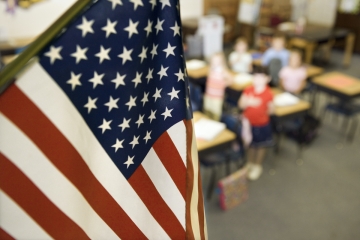
Fordham’s new report found that twenty states have “inadequate” civics and U.S. history standards that need a complete overhaul. An additional fifteen states were deemed to have “mediocre” standards that require substantial revisions. This fits the lackluster showing of U.S. students on the NAEP exams in these subjects, and suggests that some schools barely teach this content at all. Unfortunately, the obstacles in the way of improving this sad state run up and down the line.

Dale Chu 7.1.2021
NationalFlypaper

We need better civics education, but it won’t happen anytime soon

Dale Chu
7.1.2021
Flypaper

How to strengthen U.S. history and civics standards

Louise Dubé
7.1.2021
Flypaper

Dan Willingham’s "Why Don’t Students Like School" stands the test of time. That was the point.

Robert Pondiscio
7.1.2021
Flypaper

How gender gaps in math and literacy change as students age

Amber M. Northern, Ph.D.
7.1.2021
Flypaper

A closer look at stackable credential pipelines in Ohio

Jessica Poiner
6.28.2021
Ohio Gadfly Daily

The Education Gadfly Show #776: Can curriculum reform succeed where the rest of standards-based reform failed?

7.1.2021
Podcast

Cheers and Jeers: July 1, 2021

The Education Gadfly
7.1.2021
Flypaper

What we're reading this week: July 1, 2021

7.1.2021
Flypaper
view

How to strengthen U.S. history and civics standards

Louise Dubé 7.1.2021
Flypaper
view

Dan Willingham’s "Why Don’t Students Like School" stands the test of time. That was the point.

Robert Pondiscio 7.1.2021
Flypaper
view

How gender gaps in math and literacy change as students age

Amber M. Northern, Ph.D. 7.1.2021
Flypaper
view
Stackable credentials in Ohio SR image

A closer look at stackable credential pipelines in Ohio

Jessica Poiner 6.28.2021
Ohio Gadfly Daily
view
Getty Images/Evgeny Ostroushko

The Education Gadfly Show #776: Can curriculum reform succeed where the rest of standards-based reform failed?

Michael J. Petrilli, Morgan Polikoff, David Griffith, Ph.D., Amber M. Northern, Ph.D. 7.1.2021
Podcast
view

Cheers and Jeers: July 1, 2021

The Education Gadfly 7.1.2021
Flypaper
view

What we're reading this week: July 1, 2021

7.1.2021
Flypaper
view

We need better civics education, but it won’t happen anytime soon

Dale Chu
7.1.2021
Flypaper

Last week, Fordham released a blockbuster review of all fifty states’ and D.C.’s standards for civics and U.S. history. Coming nearly six months after the disgrace of January 6 and on the eve of our nation’s Fourth of July celebration, the organization’s fifth review of U.S. history standards and (surprisingly) first analysis of civics standards is a much-needed addition to the present-day energy and effort admirably being devoted to bolstering the parlous state of that education—and of American civil society writ large.

The report’s authors found that twenty states have “inadequate” standards that need a complete overhaul. An additional fifteen states were deemed to have “mediocre” standards that require substantial revisions. As my esteemed colleagues Checker Finn and David Griffith noted in the report’s foreword, these results “might be compared to a cloudy sky in which we can still glimpse a handful of stars.” Less charitably put, they could also be seen as a cracked windshield covered in mud. Case in point: The lackluster showing of U.S. students on both the NAEP’s U.S. history and civics exams suggests that some schools barely teach the subjects at all.

This omission would be consistent with my experience as a former elementary teacher and principal, where my unapologetic focus was on boosting reading achievement in a district that was notorious for failing large swaths of students in this critical subject. With the benefit of hindsight, I recognize now that I should have done more to heed the advice offered in the report of bringing that same ambition to the teaching of civics and U.S. history, if only for the powerful effect of elementary social studies upon reading comprehension. It’s in the wake of current events that I’ve come to truly appreciate the importance of starting early in helping our students internalize what it means to be an American.

The inattention to teaching civics and history at my school, Elm City College Prep, should also be considered in the context of being recognized at the time, now nearly two decades ago, as one of the best in the state. In fact, Elm City is still highly rated. Again, my colleague Finn:

We may be asking too much of schools. Just about every time there’s a big problem on the minds of adults…we turn to the schools to tackle it and sometimes singlehandedly to solve it. This never works. Schools, when they’re effective, are pretty good at teaching the three R’s, making young people literate and numerate, even giving them a decent grounding in science and (rarely) the humanities and arts.

Indeed, like Robert Pondiscio, I tend to subscribe to the unpopular notion that we should be asking schools to do less, not more. There’s a good case to be made that the first, second, and third priority of schools, especially elementary schools, should be to ensure that every student is up to snuff when it comes to reading, doubly so as we slowly emerge from the generational crisis of Covid-19. Of course, reading and history aren’t mutually exclusive, but ask any educator and they’ll tell you that it’s a slippery slope from having manageable priorities to being overwhelmed by initiative overload.

What’s more, the obstacles in the way of improving the sad state of civics and history run up and down the line. As the authors soberingly point out, four states—Alaska, Illinois, Rhode Island, and Vermont—don’t even have U.S. history standards, and in at least half a dozen other jurisdictions, those standards are “barely detectable.” To the extent they do exist, standards in civics and history are overbroad, overly rigid, and of little use to teachers in the way of clear guidance. Even in the handful of states that were rated as exemplars, these standards are too often operationalized in a way that’s either boring or superficial. To wit, Google’s former chief education evangelist Jaime Casap once quipped, “George Washington never told a lie and he chopped down a cherry tree: That’s what I remember [from U.S. history].”

So where does this leave the prospect for schools and districts giving American students a better grounding in the essential knowledge, skills, and dispositions required for informed citizenship? As far off the radar as civics and history were during the days of NCLB, the two feel even further out of reach in today’s hothouse of negative partisanship. Sure, individual schools, districts, and maybe even a state or two might make a little progress, but by and large I would expect the teaching of these two important disciplines to remain largely mired in the muck.

But fixing these standards would be a good start, indeed a prerequisite to improving how civics and history are taught if states ever become serious about teaching them. Fordham has performed a valuable service by providing a durable roadmap worth following. Encouragingly, several states have signaled some interest in using the report as they begin the process of recrafting their social studies standards. Still, getting all of this right will be incredibly difficult. The four states and D.C. that received high marks show that it’s possible, but they are exceptions that prove the rule. Most states will continue to avoid the tough debates required, preferring to take the path of least resistance—promulgating standards that are so vague as to be meaningless.

view

How to strengthen U.S. history and civics standards

Louise Dubé
7.1.2021
Flypaper

For our constitutional democracy to survive, much rests on our ability to resolve “…differences even as we respect them,” which is The State of State Standards for Civics and History in 2021 report’s definition of the social purpose of civic education.

State standards range from a “skills” orientation, where academic content makes a scant appearance, to content-heavy standards with embedded skills. A good educator will deliver deep learning using any set of standards, and many believe that standards are irrelevant as a result. Yet standards play a particularly critical role in history and civics precisely because these subjects aren’t tested at the same rate as other disciplines. In the absence of such tests, standards are the only roadmap that educators share. They ensure that education stakeholders have a shared understanding of a coherent learning progression that has the potential for young people to graduate equipped to be engaged in civic life.

As the foreword notes, I was a principal investigator of the Educating for American Democracy (“EAD”) initiative. Our roadmap provides guidance to educators, as well as local and state administrators, about how to achieve excellence in K–12 U.S. history and civics. The report recommends approaches also found in the EAD roadmap, such as the benefits of braiding instruction in history and civics together. The report criteria have a bias toward content rigor and depth, which is particularly important in disciplines that have shied away from potential controversy. To support the social purpose of civic education, states should lean into the design challenges inherent to our nation. It is impossible to imagine a quality instructional program in STEM without molecular composition, so why would civics and U.S. history be content with a requirement to “present adaptations of arguments and explanations that feature evocative ideas and perspectives on issues and topics to reach a range of audiences and venues outside the classroom ….” While adapting arguments using evocative ideas might be useful, this standard needs to be anchored to rigorous content to serve as an effective learning goal.

The report makes a significant contribution to the field precisely because of the specificity with which the authors illustrate what constitutes rigorous standards. The detailed explanations and illustrations will prove helpful to state administrators as they evolve their standards.

Among other highlights, I welcome the report’s focus on the importance of elementary preparation for higher level work, which has been overlooked for too long.

I was also glad to see the report attend to race and diversity. These hotly contested issues require transparency and focus precisely because they represent the legacy of the country’s history. However, the debate about how to teach about racism goes well beyond slavery. In part, it is about what stories are told and which ones are not and whether our country has one story or many. The stories we tell should reflect the students we teach and be selected to help students understand today’s world. The report isn’t sufficiently explicit regarding these issues, and the evaluation criteria would have benefitted from the inclusion of specific criteria about whether racism, equity, inclusion, and diversity issues are adequately covered in state standards.

I would have also welcomed more emphasis on digital informational literacy, precisely because our polity is struggling with the scale and noise of digital (mis)information. This is a recent development that would have warranted attention in the review criteria.

Setting standards reflects choices about what to teach given the time constraints in K–12.

Today, the complexity of our constitutional democracy requires that students know more, not less, but the time available for instruction has not been extended. Therefore administrators are asked to make choices that are even more difficult than those they made in the past. While it would be easier for administrators to add to already long lists of standards, that will only place the burden to choose on individual educators and provide no clear path to meet states’ instructional goals.

Given the tough choices that will need to be made, I urge state administrators to place greater emphasis on conceptual understanding or meaning making in a world that needs historical perspective to untangle. Learning expectations should extend beyond learning about individual historical events or facts, and link to larger themes in U.S. history and civics, as in, “Describe the efforts that have been made over time to build a ‘more perfect union,’ and explain how the perspectives on this question differ depending on whether people have or have not had access to political rights.” EAD has proposed seven themes and sets of questions that encompass this body of knowledge for K–12 U.S. history and civics. The difficult task for state administrators will be to set out what students should understand to graduate prepared for civic life—and no more. The EAD roadmap will prove a helpful guide in that process.

As state administrators update and upgrade social studies standards, it might help to assess the traditional approach to improving literacy over the past several decades, which has relegated discipline knowledge (and importantly, learner interests) to the background. Without the learner engaged in the act of learning, nothing is gained. Putting history and civics, as well as STEM, at the core of the school experience, should be viewed as an important—and more effective—approach to literacy.

I welcome the report and the guidance it provides state administrators and other stakeholders. It is exhaustive and well researched, and will prove to be a useful guide to strengthen U.S. history and civics standards, and a guide as to how to do so.

view

Dan Willingham’s "Why Don’t Students Like School" stands the test of time. That was the point.

Robert Pondiscio
7.1.2021
Flypaper

My 2009 copy of Why Don’t Students Like School by Dan Willingham is among the most dog-eared and annotated books I own. Along with E.D. Hirsch’s The Knowledge Deficit (2006) and Doug Lemov’s Teach Like a Champion (2010), I’m hard-pressed to think of another book in the last twenty years that had a greater impact on my teaching, thinking, or writing about education. I’m clearly not alone: Dan’s book has been translated into thirteen languages.

A second-edition has just been published. There’s plenty of new and refreshed material, but the strength of the book—its proof point, actually—is how much has not changed from its first printing. Willingham set out to put between two covers a set of enduring principles from cognitive science (“People are naturally curious, but they are not naturally good thinkers”; “factual knowledge precedes skill”; “proficiency requires practice,” et al.) that can reliably inform and shape classroom practice—a rich vein of ore that Willingham began to mine in his “Ask the Cognitive Scientist” columns for The American Educator starting nearly twenty years ago. His many admirers will appreciate the opportunity to refresh their familiarity with the book. But the primary beneficiaries may be younger teachers who might be encountering it for the first time.

I recently talked to Dan about his masterful and accessible book, its origin and impact, the importance of explaining the findings of cognitive science to teachers, and the decision to bring out a second edition. Here’s our conversation, edited for concision:

Since Why Students Don’t Like School describes nine enduring principles from cognitive science, why do we need a new version?

That was one thing that went through my mind when I started the second edition. I explicitly said I picked these principles because I think they’re so well established. I said in so many words, “I don’t expect to be writing another edition of this book in five years.” I don’t have to eat crow on any of those points, but there are two major features of the book that are pretty new. One is that the scientific literature on intelligence has been updated. We used to think intelligence was mostly a matter of genes. People used to think intelligence was maybe 70 percent genes and 30 percent environment. By 2009, our understanding had flipped that completely. Since then, new, more powerful techniques for analyzing genetic data have been developed, and this new work indicates that, if anything [the evidence suggests] it’s now like 80 percent environment, 20 percent genes.

I also added a chapter on technology, discussion questions, and a glossary. Everything’s kind of updated. The other reason that people might want the second edition is to have some assurance. So this joker wrote this book in 2009? How do I know that he still thinks this is right?

When you first conceived of the book what was your goal? Are you closer to saying “Mission accomplished” in 2021?

You will appreciate the story of the genesis of this book. It grew out of a conversation with E.D. Hirsch, Jr., who has something of a love affair with cognitive psychology. One time he and I were having lunch and he was sort of rhapsodizing about how important cognitive psychology was. And I said, “Don, I think you’re going too far. The truth is most of what’s important in education we don’t know that much about. I can write for you on half a page of paper a set of principles that I’m confident of.” He said, “Well, I’d like to see that half a piece of paper.” And this is why the book ended up being nine principles that I think are both useful to teachers and have enough supporting data that cognitive psychologists are pretty sure that they’re true for all kinds of different kids, learning all kinds of different subject matter in all kinds of different contexts.

Speaking of Hirsch and “mission accomplished,” it feels as if there’s much greater acceptance of the idea that thinking skills depend on factual knowledge, which was one of your principles, than ten or fiteen years ago when so many people were speaking confidently about how content mattered less than teaching “twenty-first-century skills” like problem solving, critical thinking, and collaboration. Is that just confirmation bias on my part, or has there really been a discernible shift in education thinking and practice?

I’ve never published it, but I actually collected some data on teachers’ views of knowledge. What I found was that, if you just ask teachers, on a scale of one to ten, how important is it for kids to know things, the median is pretty high. Most teachers think it’s important that kids know things. But I do think that was held to be kind of separate from thinking skills. I would love to see data on the point you just raised—the extent to which teachers today understand the relationship between knowledge and the kinds of things that all of us most want students to be able to do. So your perception is mine too, but like you, I’m extremely suspicious that I’m subject to confirmation bias. We really have very little idea of what teachers are actually doing.

I still hear too many people in our field promoting the idea of teaching kids to “think like a scientist,” or “think like a historian” rather than teaching them what the historian or scientist knows so they can develop those skills. Does that drive you nuts?

If things drove me nuts, I’d probably be back in my lab doing what I started my career doing. I’m quite serious. When I first told my dad I’m shutting down my lab and I’m just going to write about education for a while, he said something to the effect of, “Well, we’ll see how much stamina you have for that.” My dad was a psychometrician. He worked in various posts for the College Board and Educational Testing Service. He was very much like the guy in the lab who never talked to the public, and he really liked it that way. He just thought that it was an absolutely dreadful thing to have to try and convince people who didn’t necessarily see the world the way that you do that you’ve got an interesting way of viewing the world and that they should talk to you. So none of it really drives me crazy.

To my mind, one counter-intuitive big idea that undergirds your entire book is that the human mind is not designed for thinking, but to avoid thinking. Honestly, I would have thought that teachers might get a bit prickly about that. Can you briefly explain what you mean?

When you explain it, it’s pretty intuitive. Basically, memory is extremely reliable. You think that your memory isn’t very good, but that’s because you call on it so many hundreds of times a day. And when it doesn’t perform as you think it ought to, it’s frustrating. The way cognitive psychologists define a “problem” is simply that you have a goal and you haven’t currently accomplished the goal. So things like, “I wish I were outside, but I’m currently inside,” or “I wish I had a pizza. I don’t have a pizza” are classified as problems. They don’t seem like problems to you because you just consult memory about what to do. If I want to be outside, I should walk out the door. If I want a pizza, I call the pizza place. So the idea is that the more of those simple solutions you have in memory, the better off you are because those are very useful and effective. Problem-solving is time consuming and it’s exhausting, it’s really effortful to do. So you want to have as many of these simple solutions to routine problems as you can, so that you’ve got the mental energy and the mental space to work on things that are really novel and really important to you.

What about teaching kids to be creative thinkers?

There’s a very clear trade-off between creativity and the sort of problem/solution that I’m talking about. If your solution to, “I wish I had a pizza” is always “Call the pizza place” you may never think, “I could try making pizza at home.” You’re always jumping to your established solution. But most of the advice about creativity is not very good. They say, “think outside the box.” I could try using a lettuce leaf instead of a coffee filter when I make coffee in the morning. That’s creative. I’m thinking outside the box. But it’s probably not a very good idea. There’s this enormous advantage to making coffee the way I always make coffee, that’s always worked pretty well in the past. Investing time and effort and hoping for a better outcome, it’s not obvious that it’s going to be worth it. So the trick with creativity is knowing when it’s worth it to question the way others have always done things.

You’ve got a new chapter on ed tech in the second edition. Can you give us the most important take-away?

When I first started in education research about twetny years ago, the prevailing sentiment seemed to be “this is going to change everything.” First Smartboards would change everything, then ChromeBooks would, then OpenSource Software, and so on. I know there were more thoughtful people out there, but a lot of what I heard boiled down to “the potential advantages of personalized instruction that digital technologies offer are so powerful, there’s pretty much no way to implement them incorrectly.” That’s not what people said explicitly, you understand, but all anyone talked about was the potential advantages, like just-in-time quizzing and instruction, integration of video and audio with text; they talked about not as potential advantages, but as things that would happen. It’s not crazy. It could have been true that these advantages were just overwhelming, and that the particulars of how you implemented them just wouldn’t matter much, sort of like early railroads may have been terribly inefficient, but they were still a huge advantage over roads and wagons. What we’ve learned in the last twenty years is that you can implement tech solutions that are lousy. That doesn’t sound like much of a huge advance in knowledge, but we had to figure that out. So now we have the much, much tougher research question in front of us: When does it work? What are the must-have features that allow us to realize the potential of these tools?


view

How gender gaps in math and literacy change as students age

Amber M. Northern, Ph.D.
7.1.2021
Flypaper

While women have largely erased, and in some areas even reversed, the historic gender gap in educational attainment, some career outcomes can still skew along gender lines. Women are overrepresented in the arts and the humanities, and men are overrepresented in science, technology, engineering, and mathematics (STEM) fields. Research indicates that gaps in numeracy and literacy also skew along gender lines, with boys tending to outperform girls in numeracy and girls tending to outperform boys in literacy. Yet we know very little about how these gaps develop and change as children grow up. A new international study in the Economics of Education Review aims to chart the evolution of those gaps between childhood and young adulthood.

In the absence of cross-country comparable longitudinal data, the analysts—a trio from the U.K., Spain, and France—combine information from existing cross-sectional large scale assessments that contain representative samples of the same birth cohort at different points in time in up to eleven countries. Thus they are able to track the evolution of gender gaps for a single cohort of students that participated in different waves of different assessments from ages ten to twenty-seven. Specifically, they focus on individuals born in 1984 and 1985 who were roughly ten years old when they took the TIMSS assessment (a test of numeracy) and PIRLS (a test of literacy), fifteen years old when they took the PISA (which tests both literacy and numeracy), and twenty-seven years old when they took the PIAAC assessment in 2011–12 (also covering both domains).

For the TIMSS, PIRLS, and PISA test administrations, schools are sampled first, then students in the schools. By contrast, PIAAC samples households first and then individuals in them. Analysts standardized all scores by subtracting from individual scores the overall mean score and dividing by the overall standard deviation. They decided not to use models with numerous controls because they were primarily interested in whether the performance of boys and girls differs rather than whether it differs based on a range of other dimensions. Plus, the primary question is how these gaps evolve over time, and there are very few background variables measured consistently and comparably enough for comparison across the various tests.

The key finding is that, in the large majority of countries, the gender gap in numeracy in favor of boys tends to be linear, widening as students age, with the gap particularly pronounced after leaving compulsory schooling and entering post-secondary education or the labor market. By contrast, the gender gap in literacy is highest during the teenage years and lowest among young adults. Specifically, numeracy gender gaps are small at age nine/ten, with an advantage for boys around 3 percent of a standard deviation, but they grow larger by age fifteen/sixteen, reaching 9 percent of a standard deviation, and are largest at age twenty-seven at around one-third of a standard deviation. In the case of literacy, girls have a large advantage at age nine/ten (around 22 percent of a standard deviation), which grows larger by age fifteen/sixteen (28 percent of a standard deviation). However, at age twenty-six/twenty-seven, the advantage shrinks to essentially zero, as young men surprisingly then have a non-statistically significant advantage of 13 percent of a standard deviation. Multiple robustness checks confirm the validity of their results in various ways. Most of these findings also hold true in the United States, although numeracy gaps in favor of boys are even larger.

The authors dig into potential mechanisms that may explain their results. First, they look at various gender equality measures with the idea that more gender-equal countries would see gaps evolve in a way more favorable to women. But that hypothesis is not borne out in the data. They also hypothesize that the increase in the numeracy gap from age fifteen to twenty-seven could be related to choices concerning post-secondary education—and are able to show that controlling for STEM-related careers does indeed reduce the size of the gap by half. As for literacy, reading and writing skills do not differ relative to whether a student pursues a STEM career. One potential reason? Literacy skills are more universal, so perhaps men are able to develop them on the job and catch up with women.

The study resurfaces a deeply entrenched issue in education: How can we increase the math competency of girls in the elementary years so that we prevent gaps from opening in the first place? Because once opened, they are increasingly hard to close later in life (as is the case with so many other gaps). It is good news that adult males tend to catch up on the literacy front. Likewise that coordinated efforts to develop accessible career pathways for women in the sciences (and more specifically, coding) have taken off in the last decade. But there is so much more to be done.

Francesca Borgonovi, Alvaro Choi, and Marco Paccagnella, “The evolution of gender gaps in numeracy and literacy between childhood and young adulthood,” Economics of Education Review (June 2021).

view
Stackable credentials in Ohio SR image

A closer look at stackable credential pipelines in Ohio

Jessica Poiner
6.28.2021
Ohio Gadfly Daily

The U.S. Department of Labor defines stackable credentials as a “sequence of credentials that can be accumulated over time.” Research indicates that they can lead to higher-paying jobs for students and improve talent pipelines for employers. Over the last few years, Ohio has become a national leader in developing stackable credential pipelines. But what kinds of programs are available, and do they actually lead to improved life outcomes?

A new report from the RAND Corporation and the Ohio Department of Higher Education (ODHE) seeks to answer these questions by examining the development of stackable programs by Ohio institutions and determining whether individuals who earned and stacked credentials received increases in their yearly earnings as a result. The report examines vertical stacking, when students start with an initial certificate and then stack credentials upward toward the degree level, as well as horizontal stacking, which occurs when students stack either credit or non-credit credentials at the same level. It focuses exclusively on the fields of health care, manufacturing and engineering technology (MET), and information and technology (IT) because they account for more than half of the certificates awarded in Ohio. And it considers three types of credentials:

1. Degrees, which can be earned in two or four years and cover general or field-specific coursework.

2. Certificates, which can be earned in two years or less and cover coursework focused on preparing a student for a specific job. Here, too, there are three types:

a. Clock-hour certificates, which offer no credit toward a degree and are awarded by an Ohio Technical Center (OTC), a community college, or a university.

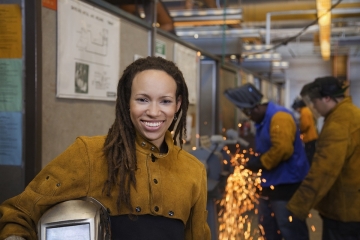
b. Short-term credit-bearing certificates, which require less than one year of full-time enrollment and are awarded by community colleges and universities. Examples include certifications in welding or becoming an emergency medical technician.

c. Long-term credit-bearing certificates, which require one or more years of full-time enrollment and are awarded by community colleges and universities. Examples include certifications in massage therapy, or heating, ventilation, and air conditioning.

3. Certifications or licenses, which are awarded by industry-recognized groups to certify that students have specific knowledge and skills.

The researchers start by taking a close look at the programs offered by Ohio’s public institutions. First, they focused on the 2004–05 and 2018–19 academic years to identify changes over time. After examining administrative records provided by ODHE—a dataset that included 1.3 million credentials awarded over the course of fifteen years—they found that there was rapid growth in the number of certificate-level program offerings in all three fields.

Next, they sought to determine whether these programs were designed to encourage credential stacking. They identified seven key features of a stackable credential program, such as linking them to industry-recognized credentials and embedding certificates into a degree program. ODHE provided data again, this time from the state’s certificate program approval process, which relies on self-reported data. Overall, the percentage of new certificate programs that reported stackable features increased between 2014 and 2019.

But did this increase in programs with stackable features benefit Ohio students? To find out, the researchers used several statewide data sources—enrollment and completion records from OTCs, public community colleges, and universities, as well as unemployment records—to identify individuals who earned an initial certificate from an Ohio postsecondary institution between 2004–05 and 2012–13. After controlling for economic trends, college enrollment status, age, and other characteristics, they found that, on average, Ohioans who earned a postsecondary certificate saw a 16 percent increase in their annual earnings. Those who stacked multiple credentials, meanwhile, saw a 37 percent increase in earnings, which is equivalent to approximately $9,000 annually. But it wasn’t just stacking that gave students a boost—the type of stacking also mattered. Individuals who started with long-term certificates, stacked credentials vertically, and earned their credentials in the health care field saw the largest increase in earnings.

Results also varied depending on demographics. For instance, after obtaining an initial certificate, Hispanic students benefited from significantly larger earnings gains than White and Black students. When it came to stacking, however, Hispanic students had overall returns that were similar to White students. Overall earnings gains from stacking were much higher for younger students—those who completed initial certificates before the age of twenty-five—than for their older peers. And women saw higher earnings gains than men after obtaining an initial certificate and after stacking. Women who stacked credentials saw a 47 percent overall increase in earnings compared to a 22 percent increase for men. This difference, however, could be explained by the fact that women were overrepresented in the health care field, where returns for credentials are higher.

The report’s authors are careful to note that more data and research are needed to truly understand credential stacking in Ohio. But the results of this study should be welcome news to institutions who have invested heavily in stacked credential pipelines, as well as to individuals who are looking for a way to boost their earnings.

Source: Lindsay Daugherty and Drew M. Anderson, “Stackable Credential Pipelines in Ohio: Evidence on Programs and Earnings Outcomes,” RAND Corporation (June 2021).

view
Getty Images/Evgeny Ostroushko

The Education Gadfly Show #776: Can curriculum reform succeed where the rest of standards-based reform failed?

7.1.2021
Podcast
 

On this week’s podcast, Morgan Polikoff, Associate Professor of Education at USC, joins Mike Petrilli and David Griffith to discuss his new book, Beyond Standards: The Fragmentation of Education Governance and the Promise of Curriculum Reform. On the Research Minute, Amber Northern examines how the spread of universal free meals affects students’ perceptions of safety.

Amber's Research Minute

Emily Gutierrez, "The Effect of Universal Free Meals on Student Perceptions of School Climate: Evidence from New York City," retrieved from Annenberg Institute at Brown University (June 2021).

If you listen on Apple Podcasts, please leave us a rating and review - we'd love to hear what you think! The Education Gadfly Show is available on all major podcast platforms.

view

Cheers and Jeers: July 1, 2021

The Education Gadfly
7.1.2021
Flypaper

Cheers

  • Five projects meant to close the civic gap between Americans and encourage people with differing views to engage in thoughtful dialog. —The Bulwark
  • “Attacking ‘merit’ in the name of ‘equity’ is a prescription for mediocrity.” —George F. Will
  • Florida education commissioner Richard Corcoran “threatens Hillsborough School Board over charter school denials.” —Tampa Bay Times
  • Charter school networks are continuing to support graduates on their college campuses. —Education Next
  • “More gifted and talented classes would help school diversity in New York City, not harm it.” —The 74
  • Traditional partisan divides don’t capture the nuance in Black and Hispanic Americans’ opinions on education and other policies. That means we need more emphasis on viewpoint diversity and dialog to better understand each other. —Eduwonk

Jeers

  • The Des Moines Register finds opposition to Iowa’s new charter law by implying, through its survey question, that the schools will lack oversight. —Des Moines Register
  • The drop in Texas students’ standardized test scores during the pandemic was “more significant in districts that had most of their instruction online.” —Texas Tribune
  • Massachusetts is lowering the bar for vocational schools by letting them drop traditional academic requirements and form their own admissions criteria. —Boston Globe
  • Latin America has suffered the longest school shutdowns of any region since the pandemic began. It now faces a dropout crisis consisting of over a million primary and secondary students. —New York Times
view

What we're reading this week: July 1, 2021

7.1.2021
Flypaper
  • Falling birth rates are forcing the closure of schools that served communities for generations, such as in Manchester, New Hampshire. And in districts like Grosse Pointe, Michigan, closures are provoking conversations about race and school choice.
  • The pandemic took a heavy toll on high school students in Chicago’s low-income communities and on students of color, as attendance fell and the number of F’s spiked. —WBEZ
  • The U.S. Supreme Court limited a school’s ability to regulate off-campus speech, but didn’t create a firm rule for future cases. —Education Next
  • The school choice movement began in earnest in the early 90’s, but 2021 has been its best year ever. —Pew Trusts
  • “13 important points in the campus & K-12 ‘critical race theory’ debate.” —FIRE
  • There may be “potential forms of synthesis” in the debates between progressives and conservatives over teaching U.S. history and discussing racism and slavery. —Ross Douthat
  • “The Left’s war on gifted kids.” —The Atlantic
  • A look at former LA Unified Superintendent Austin Beutner’s leadership during the districts’ recent crises. —EdSource
Fordham Logo

© 2026 The Thomas B. Fordham Institute
Privacy Policy
Usage Agreement

National

P.O. Box 110
Burke, VA 22009

202.223.5452

[email protected]

Ohio

P.O. Box 82291
Columbus, OH 43202

614.223.1580

[email protected]

Sponsorship

130 West Second Street, Suite 410
Dayton, Ohio 45402

937.227.3368

[email protected]