It’s understandable. The education world is awash in articles trying to figure out what artificial intelligence is going to mean for schools and students. But before we get too focused on the latest technological breakthrough, let’s not pretend that we have figured out how to cope with the previous one. Over the last decade, smartphones have become commonplace. Today, 95 percent of American teenagers have a supercomputer in their pocket.
Jonathan Haidt, Jean Twenge, and others have brought necessary attention to the likelihood that smartphones and social media are partly to blame for the teenage mental health epidemic gripping our nation. It’s not a watertight case, because it’s nearly impossible to prove a causal relationship with a phenomenon as ubiquitous as this one.
What scholars can say is that the sudden rise in teenage anxiety and depression, suicidal ideation, and suicide all happened at the same time that teenagers’ adoption of smartphones passed the 50 percent mark—around 2012 or 2013. They can also show that the children most likely to engage in heavy use of smartphones and social media—girls, especially liberal girls—also experienced the greatest increase in mental health challenges. And they can point to other countries that show similar patterns.
My purpose here is not to evaluate this evidence, though I generally agree with Haidt that we should adopt the precautionary principle and assume that phones and social media are likely doing real damage to our kids. Then we should act accordingly.
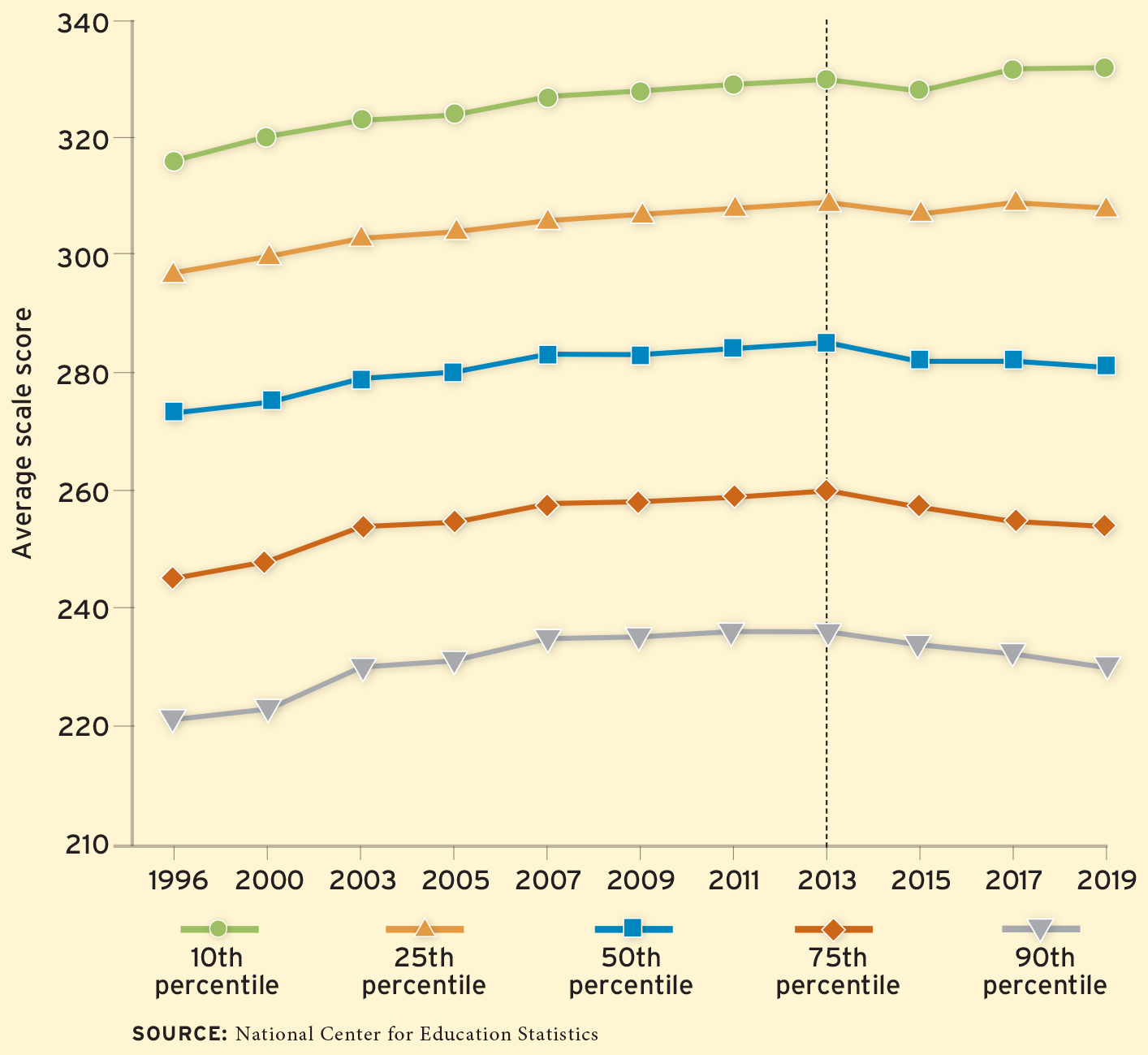
My immediate question, however, is whether phones and social media might also be behind the plateauing and decline of student achievement that we’ve seen in America, also starting around 2013, long before pandemic-era shutdowns sent test scores over a cliff.
I don’t believe this was the only cause of our achievement woes in the 2010s. As I’ve argued before, I believe the Great Recession was also to blame, both because of its impact on families’ home circumstances, and because of the sudden and significant budget cuts that followed in 2013 and 2014, especially in high-poverty schools. Kirabo Jackson has been particularly persuasive that these spending cuts had a measurable negative impact on achievement. Another potential factor was a shift away from school accountability; in 2012 the Obama administration softened the consequences for low test scores targeted by the No Child Left Behind Act. Then in 2015, and Congress replaced it with the Every Student Succeeds Act.
But I do think we need to take the smartphone hypothesis seriously. Especially because, unlike the Great Recession or the pandemic, these trends are not receding in the rearview mirror. Indeed, adolescent phone use continues to rise. If it is one reason that students aren’t learning as much as they did in the pre-smartphone era, that’s a problem we need to grapple with.
Figure 1. Share of U.S. teens age 12–17 with smartphones, 2011–22
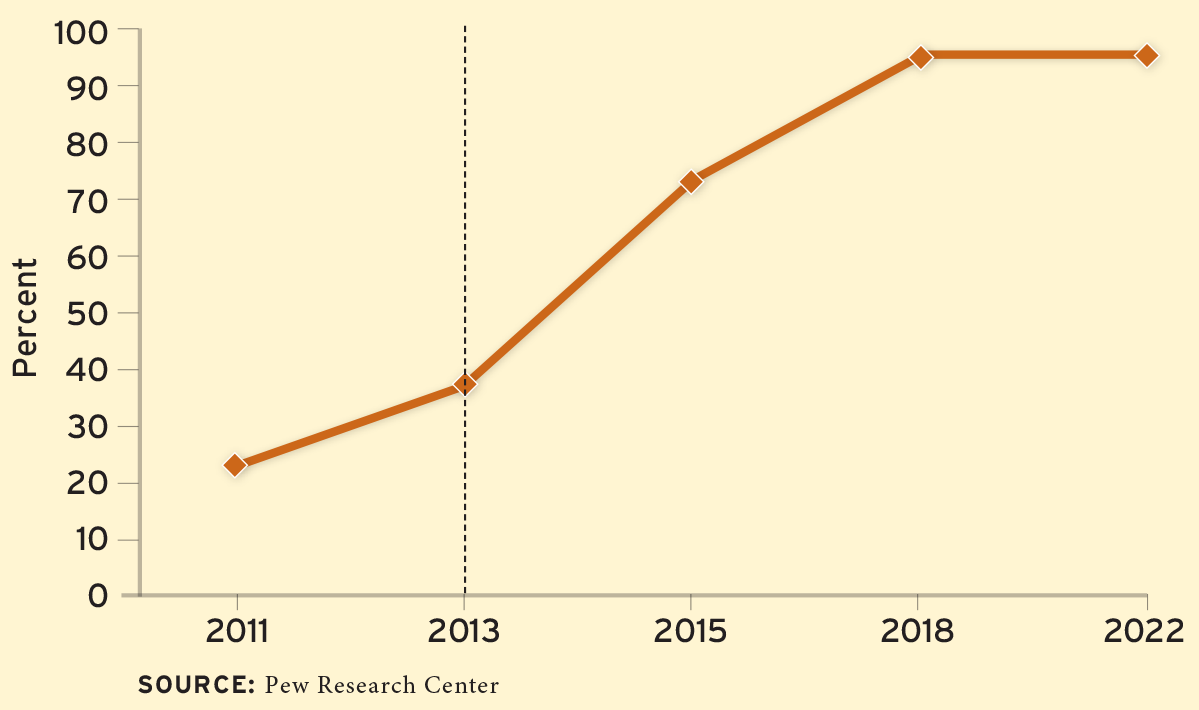
So what’s the evidence? First and foremost, as mentioned above, the timing lines up (see Figures 1 and 2). We see smartphone ownership really taking off among adolescents in middle and high school around 2013. That’s also when median achievement on the eighth-grade math test in the National Assessment on Educational Progress (NAEP) peaked. It’s fallen modestly ever since. For our lowest-performing students—those at the 10th and 25th percentiles—the declines were more dramatic.
Figure 2. Eight-grade math NAEP scores, 1996–2019
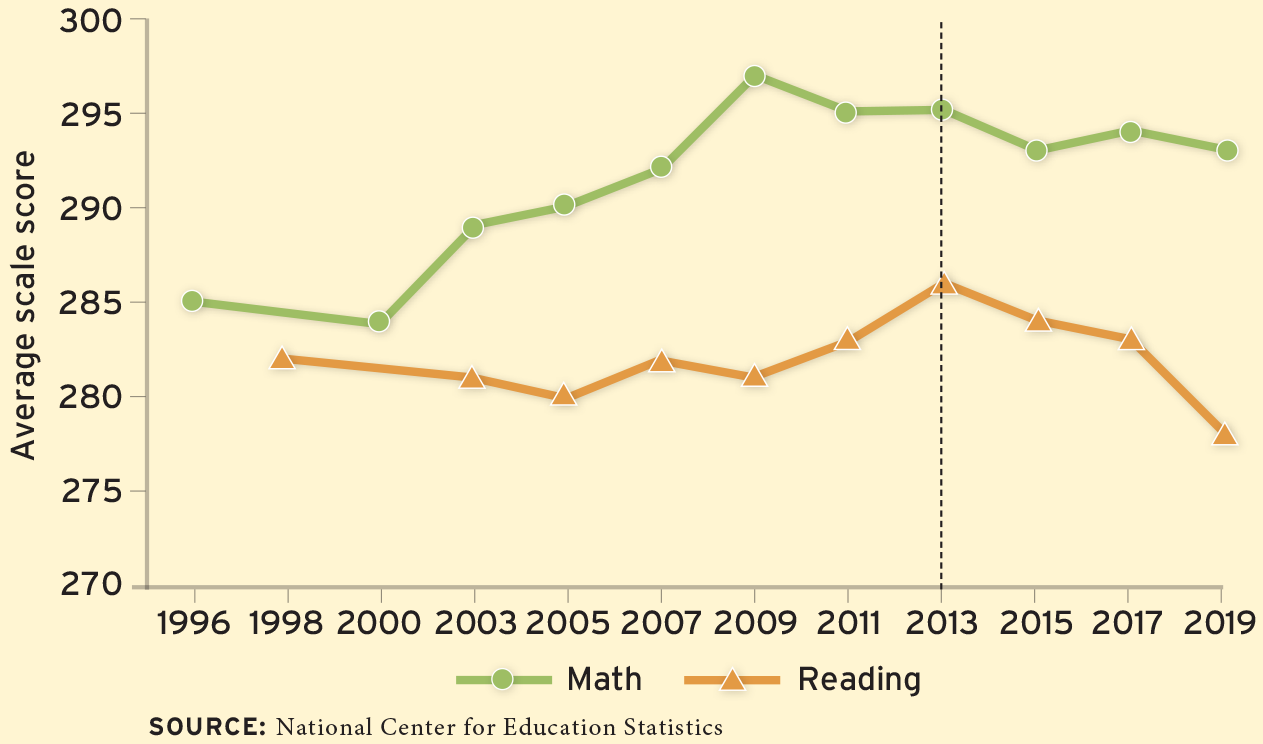
Another piece of evidence comes from Catholic schools, which serve as a plausible control group for the smartphone hypothesis (see Figure 3). Catholic-school students also take NAEP math and reading tests. But they are not directly impacted by changes in education policy such as the shifts in federal school-accountability rules or cuts in public-school spending. So if Catholic schoolkids also saw achievement declines around 2013, which in fact happened, especially in reading, that could be an indication that something outside education policy is to blame.
Figure 3. NAEP reading and math performance, 1996–2019
But there is also some conflicting evidence. The drops in achievement in the 2010s tended to be for our lowest-achieving students, who are disproportionately poor, Black, Hispanic, and male. And yet, as we know from the studies that Haidt and others point to, phone and social media use was most concentrated among middle-class girls (at least initially). So that doesn’t match up.
Before I conclude with the obligatory call for more research, it’s worth pondering what mechanisms could link smartphone and social media use to lower student achievement. Most obvious are problems around attention, as students’ brains adapt to the rush from “likes,” YouTube videos, TikToks, and other platforms, and then struggle to listen to (much less read) slower-moving and less-vivid presentations, such as the ones they are likely to encounter in class and homework. (Our poor teachers!) Or it could be phones’ impact on mental health; it’s hard to learn when you’re anxious or depressed.
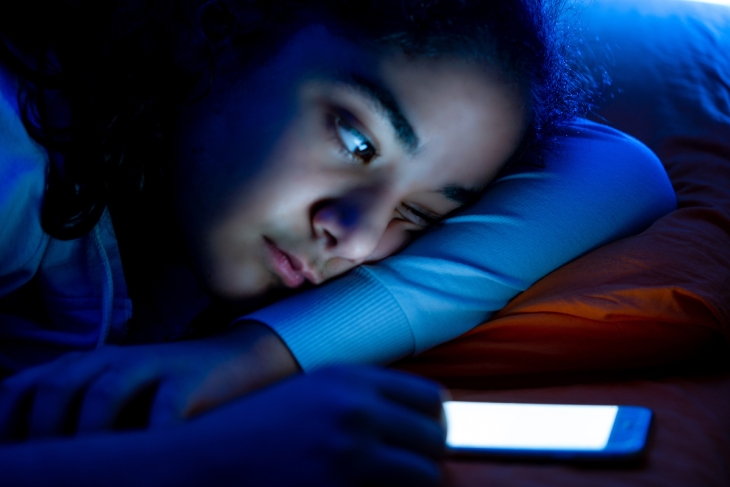
There’s also the issue of sleep (see Figure 4). This is cited in the mental health literature, too, as we know that kids sleep less today than before phones and social media entered the scene, and we also know that there’s a relationship between less sleep and poor mental health.
Figure 4. Adolescents sleeping less than eight hours per night
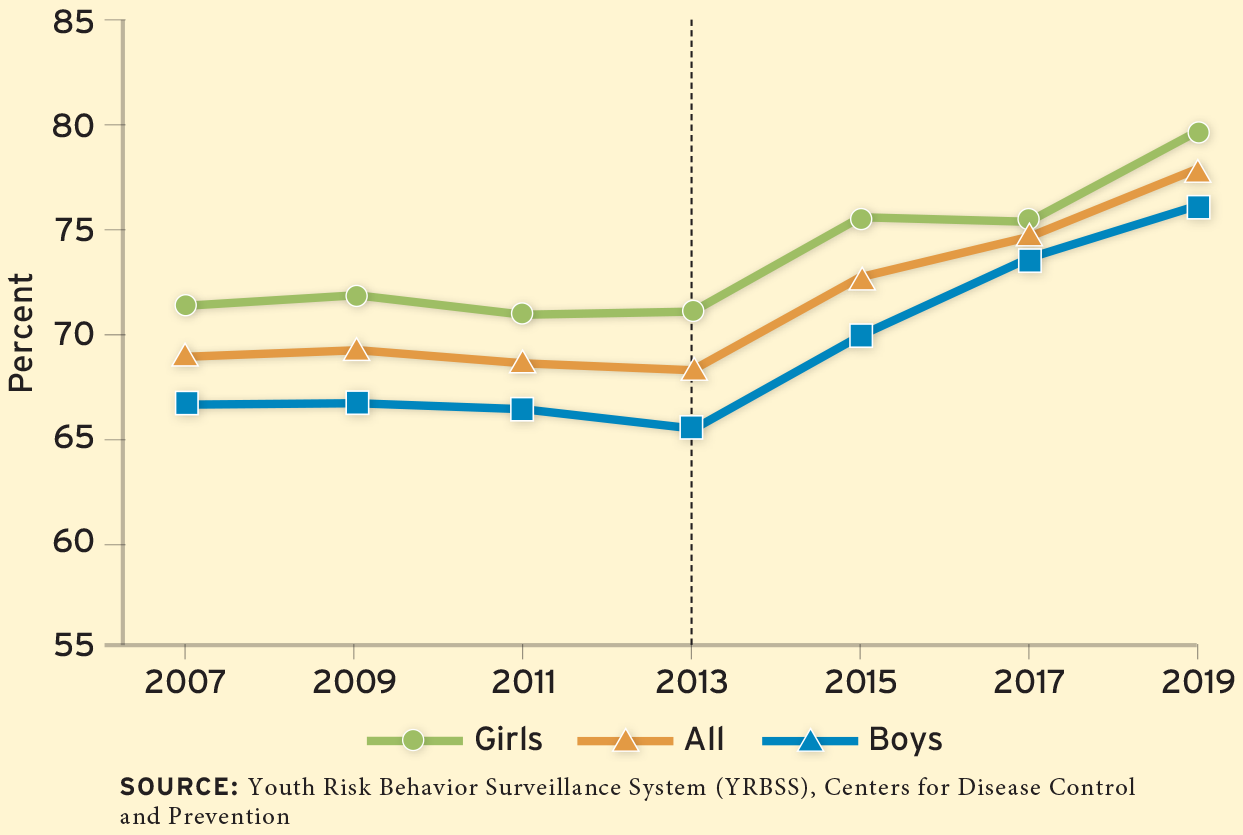
But so too is there a relationship between less sleep and less student learning. After all, sleep is when the brain works much of its magic, forming connections and cementing ideas in long-term memory. Plus, it’s hard to learn when you’re tired, and it’s really hard to learn when you stay home from school because you have been up much of the night. So there is an angle here that also connects with our chronic absenteeism crisis.
What to make of all of this? If we return to the precautionary principle, the least we can do is try to encourage parents to curb their tweens’ and teens’ phone and social media use. Educators can do their part by setting and enforcing classroom rules that phones be turned off or at least stowed away, unless there’s a compelling instructional reason to use them—though that is admittedly an uphill battle. Abolition is likely impossible, though some legislative proposals to make it harder for kids to access social media apps until they are sixteen might help. But schools could certainly encourage parents to limit screen time to a reasonable number of hours per day, be much tougher about earlier bedtimes, and require kids to dock their phones outside their bedroom during sleeping hours. There’s a strong foundation of research to back up any effort to protect and promote students’ sleep, which may help ease some uncomfortable conversations.
Indeed, more sleep might be the killer app that could make a huge difference—both for students’ academic achievement and mental health. It’s a good reminder that as we contemplate the future impact of AI on schools and society, what likely matters most aren’t the machines we use but the attention we give to our children’s timeless human needs.
Editor's note: This was first published by Education Next, which also created the figures that are reproduced here.