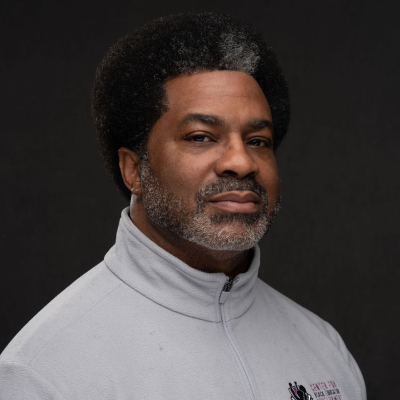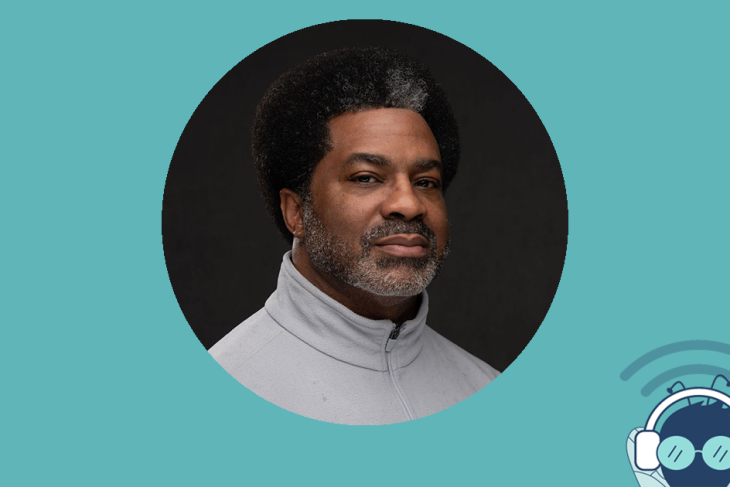
Sharif El-Mekki, founder and CEO of the Center for Black Educator Development (CBED), joins Mike Petrilli and David Griffith to discuss teacher diversity and the challenges of building a stronger teacher pipeline. Why are so few Black and Latino men entering the profession? How can early exposure to teaching, apprenticeships, and Grow Your Own teacher programs help? And can teacher preparation programs better prepare aspiring educators for licensure exams?
Then, on the Research Minute, Amber Northern examines a study finding that charter school openings can reduce nearby Catholic school enrollment and increase the likelihood of closure, particularly among K–8 schools.
Recommended content:
- Male Teachers Say Mentors Got Them There. For Black Men, the Need’s Even Greater — Sharif El-Mekki & Jeanie Lee, The74
- Can left and right find middle ground on teacher diversity? — Michael J. Petrilli, SCHOOLED
- In defense of teacher diversity — Michael J. Petrilli, SCHOOLED
- Center for Black Educator Development — Center for Black Educator Development
- Charter School Expansion, Catholic School Enrollment, & the Implications for School Choice — Shaun M. Dougherty, Andrew Miller, and Yerin Yoon, Education Finance and Policy (2026)
Feedback Welcome: Have ideas for improving our show? We would love to hear them. Send them to [email protected]
Transcript
This transcript was generated with the assistance of AI and lightly edited for clarity and readability.
Introduction
Mike Petrilli [00:00]
Welcome to The Education Gadfly Show.
I'm your host, Mike Petrilli of the Thomas B. Fordham Institute.
This week, we're joined by Sharif El-Mekki, founder and CEO of the Center for Black Educator Development, to discuss building a more diverse teaching workforce.
What's keeping more Black and Latino men, in particular, from entering the profession?
And can we recruit more teachers from underrepresented backgrounds without lowering cut scores on teacher licensure exams?
Then on the Research Minute, Amber Northern reports on a study of how nearby charter schools impact Catholic school enrollment.
All that and more this week on The Education Gadfly Show.
Mike Petrilli [00:51]
Hello, this is your host, Mike Petrilli of the Thomas B. Fordham Institute, here at The Education Gadfly Show and online at FordhamInstitute.org.
Now, please welcome today's special guest, Sharif El-Mekki.
Sharif, welcome to the show.
Sharif El-Mekki
Thanks for having me.
Great to see you again.
Mike Petrilli
Yeah, it's great to have you here.
Sharif is the founder and CEO of the Center for Black Educator Development.
I got to know Sharif really well a few years ago when we did this Building Bridges project together.
Sharif is from Philadelphia.
We've already talked a little bit about football, as is appropriate.
We did mention that the Washington Commanders did beat the Philadelphia Eagles, but only because you're missing your star quarterback.
Sharif El-Mekki
That's the only way. Only way possible for them to do that.
Mike Petrilli
Exactly.
Well, also joining us, my co-host who likes the other football, David Griffith.
David Griffith
Hey, Mike.
Always a pleasure.
Don't know what you guys are talking about, but it sounds like fun.
Mike Petrilli
Yes, exactly.
Exactly. We're fans of soccer too, but it's all good.
David Griffith
Yes.
Mike Petrilli
Well, Sharif, I'm really glad that you came on the show.
We've been wanting to have you on for a while.
We are going to talk about an issue that I know is dear to your heart.
It's really the mission of your organization. It's something that I've been talking about on the show and writing about some this year as well.
That is teacher diversity.
Let's do it on Ed Reform Update.
Ed Reform Update: Building a more diverse teaching workforce
Mike Petrilli [02:22]
All right, so Sharif, I have been trying to make the case, especially to our friends on the right, that this is something they should care about and that there are ways to embrace teacher diversity that can be race neutral.
I mean, as you know, a lot of people on the right are very concerned about anything that explicitly has a racial component to it.
There's some people arguing that anything with that kind of explicitly racial component would be unconstitutional.
We don't need to get into any of that kind of stuff here.
But I've been trying to say, look, even if that's your argument, still surely we can agree that when we're talking about schools and we're talking about the experience that kids are having, it's important for them to get to have at least some teachers who have a shared life experience as they have.
So, you know, if you're teaching in a rural school, hey, that rural school should at least have some teachers who themselves grew up in a rural community, ideally that rural community, right?
If it's a Title I school, hey, having some teachers who went to Title I schools as kids would be great.
Serve a lot of kids getting free lunch? Having at least some teachers who themselves were free-lunch kids back in the day might be useful.
I don't know if I've had any success, though, convincing people about this.
So let's just start here.
You obviously work on this issue closely.
Tell us a little bit about what you do at the center.
And then also, when you try to make the case to folks, how do you pitch it?
What is your basic elevator pitch for why this is something we should care about and why it's important?
Sharif El-Mekki [03:56]
No, absolutely. And thank you.
And I think you're spot-on as far as introducing folks into the profession.
And particularly when they have some type of shared experience, understanding, deep empathy because of their lived experience, you know, with said students.
And so at the center, you know, I was a teacher and a principal for 26 years.
My principalship was 16 years in two turnaround schools here in Philadelphia.
The first one was with Edison Learning.
The second one was with Mastery Charter Schools.
And so that was my introduction to the principalship and my development over those, you know, a decade and a half.
And as we've been going, I did a fellowship at the U.S. Department of Ed and really started seeing nationally this was a challenge.
And I think it's twofold.
One is there is a teacher shortage in certain areas, particularly certain subjects, certain areas.
We see that there's a gap as far as people coming in, almost a decimation in some areas as far as people getting their teacher certification.
And then when you add diversity to it, what that means is that there are less and less people being invited into the profession.
And if we're saying, and listen, my generation, we're about to retire.
So if we already had a teacher shortage in some areas and Gen X folks are like, hey, this is year 34. I mean, this is year 35. I'm starting to lay out.
And we know that the inflow has also shrunk over the years.
Then we should at least start just having an analytical look of who hasn't been invited in the past.
Who may have had such negative experiences as students that they can't even imagine returning to teach?
And so to me, that's a group of students that have often been overlooked as far as the teaching profession.
We see the lack of diversity in teacher colleges.
And particularly when you're talking about, like, even men, you know, young Black and Latino men, it's even less.
Men, period.
You know, and so, you know, you have work of, like, the American Institute for Boys and Men who are also looking at this issue.
And what does it mean to have almost half of the population of students where these young men and young ladies never see a man in the building, never see a teacher?
Again, just being able to connect and share said experiences.
So fast-forward to, like, my work when these were things that, as a principal, listening to student voices is what led me to launch this organization.
We had a nitty-gritty of it.
We had an internship component, a graduation requirement in our school for 10th graders.
And so students were going to energy companies, law firms, the Philadelphia Zoo, newspaper, right?
Like, they had to do an internship.
They had to compete for an internship because we believed in the college and career.
They weren't, like, these two different things.
They were, like, conjoined.
Postsecondary means that you're going to have experiences.
But what we realized is students called us out on it.
If they were interested in education, we didn't have anything for them.
Mike Petrilli
Oh, interesting.
Sharif El-Mekki
Yep.
All the other careers, we had something for these students.
For education, we were basically like, oh, well, you know what?
Students would get out early on Wednesdays and go to their internship.
And for our students who were in education, we're like, well, do we send them to another school?
Well, go talk to your teacher.
And students would come back to me and say, listen, I want to be an educator.
And they didn't have the language, but what they said was, I'm being asked to help with bulletin boards or grade papers.
And mind you, I was at a highly successful school where we had some of the best teachers in the state, and I would say even in the country, in our building.
And it was still a struggle where they were trying to plan for the next week and help a student and giving them busy work.
And so we said, you know what, they actually need the actual kind of voc-ed introduction to teaching from a perspective where they can actually understand what's behind the scenes, not as a student, but as a potential career.
And that's what led us to this work.
Mike Petrilli
Like teacher apprenticeships and the sort of Grow Your Own programs.
Sharif El-Mekki
Exactly.
Mike Petrilli
Gotcha.
Sharif El-Mekki
Exactly.
And what we found is that they're not often in education.
Title I schools, diverse communities, Black and brown neighborhoods, they're typically not in those schools.
And so we said, you know what, we should make sure that they're in there.
We have a friend, Chris Emdin, who talks about, like, and we have to be very deliberate about it because, for some students, even thinking about returning to a classroom is like inviting them back to the scene of a crime, a crime committed against themselves.
Because some of them, we know absolutely, the data shows that some of them have horrific experiences in our schools across the country.
They may also be some of the best future teachers because of this struggle that they had.
I had a group of young men who said, you know what, we're going to become the teachers we wish we had and knew we needed.
Mike Petrilli
I love that.
And you wrote recently about this, I guess in the context of men, I think it was, that because we don't do a good job starting young, either in high school or even in college, when people are deciding what profession to go into, what to major in, the challenge of then getting men into the profession is one about getting mid-career people to switch careers, which is, of course, a much bigger challenge.
Sharif El-Mekki
That's a tougher challenge.
Mike Petrilli
Now, maybe it'll become easier if a bunch of college-educated people get laid off because of AI and they're suddenly saying, wow, what am I going to do with this college degree?
Maybe people will look at teaching.
But still, it makes sense to start the pipeline.
Sharif El-Mekki
And Mike, to your point, teaching is so important.
And yes, we welcome folks who have, you know, these late epiphanies or because of economic circumstances.
It is such a critical role for the future of this country.
Why wait on that as the default?
Like, oh, when the economy, you know, has a downturn, then people will start looking for them.
Like, no.
Why not inspire and invite them on the front end and ensure they're well prepared so we have better student outcomes on the back end?
Mike Petrilli
Right, right.
You know, Sharif, one place where this gets real is the debate around teacher licensure exams.
And that's because we know that these exams, they can have a disparate impact on teachers of color, potential teachers of color, that it is more likely that Black and Latino teachers are more likely, in general, to fail those exams.
And so some people say, well, you know, for the sake of diversity, what we want to do then is to lower the cut scores, make those tests easier to pass.
And I think that rubs a lot of people the wrong way, myself included, right, to the degree that those tests are predictive.
It's really hard to predict who's going to be a good teacher, but there's some predictive value, it seems, in some of these licensure exams.
We did a review of a study just a few weeks ago, I think Amber did, on exams that have to do with reading, Science of Reading knowledge.
And guess what?
Teachers that are stronger on the Science of Reading knowledge turn out to be better teachers in the classroom.
So how do you think about that challenge?
And to people who say, hey, this feels like, you know, there's this tradeoff, that you're saying we have to lower the bar in order to get more teachers of color into the classroom?
Sharif El-Mekki [11:37]
Yeah, you know, I mean, I would say in many ways, the way I talk about it, we actually have to raise the bar.
You know, people who are leading classrooms, that we understand, like, how critical this work is, the bar is actually higher.
What I think complicates it is I've seen many people, and research shows, that there are a lot of folks who can pass the test and can't lead a classroom.
They can't lead human beings.
You know, they can't convey complex issues and break them down for a seven-year-old or a 17-year-old to deeply understand, master the content, and be able to demonstrate their proficiency independently.
And so we know that it's not a clean line between that.
And at the same time, I have six children.
I want all of their teachers to not be two lines ahead of my kids as they're teaching.
I want them to not only, I want them to understand math, for example, deep enough where they understand where the gaps are.
They're able to do error analysis and say, here's where these students are maybe getting tripped up, and I know how to mitigate for that.
I understand the curriculum deep enough where, hey, I can move on from this because this spirals through the curriculum and it's going to be...
Or, you know what, this is a lever that we need to pause and make sure they go deep enough and understand because it is a critical building block.
Right?
So that depth of knowledge, that rigorous intellectual work necessary to be an effective teacher is paramount.
But I don't necessarily believe that the test is the only way to address this.
You know, I would say, like, we should look at the history of the test and, like, when it sprouted, when it was sprouted.
And then also, like, what does it mean?
And are there states that have better ways to measure?
But I also think a part of it is sometimes often in a conversation that's either test or no test.
And I would say, yes, we need some kind of measuring rules, but I would also, like, really push hard for the certification programs.
Like, what are they doing?
Like, how does someone have four years, at least, in a teacher college, graduate with debt, and unprepared to pass a licensure exam?
And my pushback has been on some professors.
I've had professors, this is about a decade ago when I was at the Department of Ed, speaking to some professors, and I'm asking them, why is there an issue with so many of your graduates?
They have a degree from your institution, but they're struggling on the test.
Have you linked your coursework and your syllabi to the state licensure examination?
They said no.
I'm like, why not?
We're telling teachers to backwards design.
I would think that would be the best marketing tool in the world to say, yep, we're a teacher college, and 99 percent of our graduates pass the licensure exam.
To me, that is like, I just can't even fathom why that wouldn't be part of the entire programming.
They said, well, we're teaching what I think they should know.
You think they should know it, but it doesn't correlate with their state exam, their career.
They're like, yeah, this is important.
So to me, sadly, there are a lot of people who are unserious about teachers passing the certification process.
And I also would say that as part of our high school program, we're looking at how do we have high school students take at least part one of the Praxis, which in many states they can do that because they're closer to when those coursework may have happened.
They may have just taken Algebra II.
So let's have them take the Praxis earlier.
And so that we at least understand, I meet so many college students who are taking their Praxis at the end of their college career when they may not have even taken some of those coursework.
And I would also challenge the states to look at what do you actually need to know in order to be an effective teacher?
Because I do think some of it is not necessary.
And what is the preparation?
And for us, the preparation for teachers, for us, it happens long before the graduating senior in college about to graduate.
Way before.
We're working with high school students and introducing them to it, the theories, the ideas, and even the practice.
The apprenticeship practice to help a student with their literacy, we start that far earlier than a 22-year-old about to graduate.
Mike Petrilli
Yeah.
David, why don't you get in here?
What's on your mind?
David Griffith [16:08]
Well, I guess I'm inclined to ask a question, Mike, which is I just want to hear from Sharif.
What do you think the single biggest barrier is to getting, let's just say, more men of color in the classroom?
Are there costs that we're not seeing?
Is it they just don't want to, like you alluded to at the start?
Is it the tests?
Where do you feel like we are losing them?
Sharif El-Mekki [16:37]
Yeah, so it's not a single one, but I can give you a group of things, right?
So a little scattershot here, but all connected.
I think a big part of it is, let's start with one, you know, and I think this is for any student, but where we're trying to attract and engage and educate is expectations.
I do think there are low expectations for, you know, young Black men.
They experience it, whether it's in their schools or in the profession.
And what I mean by that is, when we started the fellowship years ago, and these were all young Black men, highly successful, relatively good-looking, had, you know, found success in their schools.
We realized that all 17, and we were from all around the country but were all working in Philadelphia, not a single one of us had been invited into the profession until after we had graduated from college.
And we asked our colleagues, most of them were white women, you know, teachers, part of our administration.
The average response for when someone tapped them on the shoulder and said, hey, you would be a great teacher, consider teaching, it was third grade.
So third grade for one group, post-bachelor degree for another group.
And as we speak to people around the country, that's been consistent, which is crazy to me.
But I feel like part of it is, like, people don't see them as the future teachers and leading classrooms.
And it's been so much of just this assumption that, oh, it's a women's profession.
And it hasn't always been the case, but there is something about society where it tells people, like, no, you're not a nurturer of youth.
You're not a, you don't pour into humanity in the same type of way.
And I feel like, you know, listen, we should open it up for everyone to say, like, hey, if you want to pour into the next generation, lead classrooms, be a leader.
Basically what a teacher is, is a leader.
You are leading other human beings, edifying them in content and knowledge that is necessary for this country to flourish.
That's not just a women's job.
That's all of our job.
That is all of our responsibility because it affects our collective future.
I think the other piece is, it's harder, as Marian Wright Edelman used to say, it's harder to be what you can't, what you don't see.
If I never see a man leading a classroom, and if I do see him, he's a phys ed teacher or the custodian, maybe a principal, you know, then it might be harder for me to see because daily, 180 days times, you know, 13 years, I'm not seeing them.
And so it might be harder for me to even envision myself as leading the classroom.
And if I have an inkling towards it, like, why would I?
And I may be discouraged because people say, that's for you?
When have you seen a Black man teaching?
And then I would say the third part, which I think is extremely important, is what are their experiences in school?
How have they experienced school in those 13 years?
And I think, to me, as a teacher and a principal, that was the most important part of it.
Like, not only are they finding success, are they feeling smarter at the end of the class?
Do they feel seen, heard, and valued?
Those are parts that make it an inviting area or a place that I'm just trying to get through this.
Mike Petrilli
Yeah, and I love that, Sharif, that last part about how do we, I wonder, for example, about, like, tapping men and/or Black men on the shoulder and say, hey, you would be a great teacher.
And that may be some of the charter schools, for example, that, you know, you came out of the charter sector, that are highly successful, that are effective, that are helping young Black and brown kids feel good about themselves as students, that maybe they have a particular responsibility.
Right?
Or we could encourage them to play that role because their young people are having better experiences in those schools.
They're getting to experience and see, again, for the high-quality ones.
Of course, we know there's plenty of low-quality charter schools.
But for the good schools out there, that's super powerful.
I hadn't thought about that before.
Sharif El-Mekki
Yeah.
Interesting enough, and as you said, the high-quality ones, I was proud that Mastery Charter, actually, they tracked that.
You know, they were looking to see, okay, how, you know, do we have diversity?
Do we have men diversity?
You know, do we have Black and Latino men diversity when we know that, you know, 90 percent of our students are, you know, Black and Latino and some Asian students?
Are we even thinking about that?
You know, there's so many districts that it's not even on their radar.
And it's not, it's also, we did surveys with our students.
And so we had the Insight Survey that TNTP used to design and kind of gear it towards what we wanted to know about.
And so we were constantly asking about our students' experiences, their experiences in classrooms, as well as in the school, and our staff.
And so all of that, I think, is a combined effort.
Just about every district in this country says something about, oh, we want to ensure our students are prepared for a global economy, a global world.
And they had no experience practicing working with, you know, diversity.
None whatsoever.
You know, and we also have people like, oh yeah, come in this profession, as you painted earlier.
And they have no connection, no understanding, no, you know, deep insight and proximity to the places that they're serving in.
It doesn't work.
We see the results of dissatisfaction.
We see dropout rates.
We see the disengagement.
And we can't say, oh yeah, students are being more disengaged, and not think about, okay, well, who's leading their classrooms and schools?
Mike Petrilli
Yeah, no, and I see what you're saying, though.
It's not like every single teacher, right, has to have grown up in the community.
I mean, The New York Times did a profile of James Talarico's time in Teach For America the other day.
You know, Jimmy Talarico.
Sharif El-Mekki
I gotta check it out.
Mike Petrilli
It's good.
I mean, and it sounds like he did okay.
You know, it was funny.
One of his peers, you know, his fellow teachers, she saw him come in, you know, TFA, white, liberal, idealistic.
She's like, oh, those kids are going to eat him alive.
And it sounds like by the end he had earned her respect, that she, you know, he did a pretty good job, right?
So, I mean, there are people out there who can do it even if they grew up, say, you know, privileged and, you know, from a different community, then they have that empathy gene or whatever and they put in the work and they can be...
But you don't want a whole school full of James Talaricos, you know, teaching a school that's, you know, with all brown or Black children.
Right?
I mean, so that's the balance.
There's, you want to have, you know, when we talk about teacher diversity today, what we're really talking about is making sure that there are some Black and Hispanic and male teachers because it is still the case that white women dominate the profession still overwhelmingly.
Sharif El-Mekki
Yeah, vastly, between 70, 80 percent over the past, what, 50 years, you know.
That's significant, especially as we have more and more diverse students.
And I love that you brought up also the economic diversity.
We also have to recognize, like, you know, one of the biggest gaps in that, you know, we see in some communities is the socioeconomic range of the people leading classrooms and schools and districts and the students that they serve.
Yeah, yeah, yeah.
Right?
Like, and so even that, like, having that understanding.
So we're not just like, oh yeah, well, this is, you know, because when you don't have that, when you don't have proximity, you start seeing expectations lower.
You start seeing, like, oh well, that community, they don't care about teaching and learning.
Oh, that student, they don't understand or they don't want to do...
That's actually low expectations for yourself because, like, well, what can I accomplish?
Right?
And so even the diversity, you know, some of my, the pattern that I've heard over the years of white teachers, white women, was saying, like, you know what?
A lot of professional development that I have received over the years and what I graduated from, it sucked.
It stunk.
Some of my best professional development was being in proximity to diverse educators.
Like, we wouldn't even have a KIPP if it wasn't Harriet Ball.
Mike Petrilli
That's right.
That's right.
That's right.
All right, Sharif, we will have to leave it there.
Such a great conversation.
Really appreciate it.
Sharif El-Mekki, again, founder and CEO of the Center for Black Educator Development.
Really appreciate you joining us.
Sharif El-Mekki
No, thanks for having me.
Thanks for always being open for engaging in the complexities and tapestry of education.
Appreciate you, Mike.
Mike Petrilli
All right.
Thanks. Likewise, Sharif.
All right.
Now it's time for everyone's favorite, Amber's Research Minute.
Research Minute: Do charter schools reduce Catholic school enrollment?
Mike Petrilli [25:37]
Amber, welcome back to the show.
Amber Northern
Thank you, Mike.
Mike Petrilli
So it's a little awkward this week because we are recording this on Monday.
The election is on Tuesday.
This will come out on Wednesday.
So, yes, no real election coverage other than...
Amber Northern
I know.
Mike Petrilli
I do feel like I've been working on a piece, I've got to finish it quickly here, about sort of preregistering my views on how to tell if education was an issue in any of the races, right?
Or maybe school choice, right?
As you always know, advocates on either side will want to make hay out of the results and say, see, if these politicians would just adopt my preferred policy, they would be more likely to get elected.
David Griffith
Mike, I do not think there is a political professional in America who genuinely believes that anything about this, this is not about education.
Mike Petrilli
Come on now.
You're really going to be digging.
I agree.
No, and I think that's super important to say.
Of course, this election is not about education, though it will have big implications for education, especially at the state level.
But, for example, you know, if Gina Hinojosa does actually win the governor's mansion in Texas, which would be amazing, you know, if she outperforms whatever the blue wave is, you know, then it's fair to say, okay, maybe on the margins, what made a difference?
And in her case, for example, she did run very much on education.
She was a school board member.
She's talked a lot about support for public education.
Maybe there's an argument there.
Right?
Versus some of these other races where, look, it's just basically if there's a blue wave, it's going to get a bunch of these Democrats across the winning line.
And we all know it's about Trump. It's about affordability, et cetera, et cetera.
But, you know, look, I think it's worth asking and saying in advance what's the right way to think this through, right?
About did, for example, the support for universal school choice hurt Republicans anywhere?
Did it help them anywhere because of new voters?
I think that's, you know, it's going to be one of those things that people are going to try to spin.
So let's get ahead of it.
Amber Northern
You get spinning, Mike. You're good.
Mike Petrilli
It's the pre-spin.
Amber Northern
Pre-spin.
The pre-spin.
Mike Petrilli
And I would say my own view is, as people know, I've been talking about forever, you know, I don't love the universal choice, but if you're going to have universal, I love what happens in Ohio where there's a sliding scale and the wealthiest parents only get a small little baby voucher.
That said, I don't know that that helps politically because it's so wonky and technocratic.
I don't know if anybody even knows, like, understands how that works.
So, you know, the fact that they only get a small voucher, the point is still the opponents can say, oh, these rich people are getting subsidies, free money from the government.
Right?
Amber Northern
Yes.
Mike Petrilli
I don't know.
Maybe it doesn't matter one way or the other.
It's a nuanced argument.
Amber Northern
Yes.
Mike Petrilli
Which is not what our elections tend to be about.
David Griffith
That was an absolutely terrible tweet, Mike.
Mike Petrilli
Oh, like, you know, you're not even on Twitter.
David Griffith
Correct.
Amber Northern
Nor am I.
David Griffith
All right.
I'm holding myself to a different standard, Mike.
Mike Petrilli
I hear you.
Well, speaking of that, we hold ourselves to very high standards when it comes to the Research Minute.
Amber Northern
We do.
Except our producer reminded me that I covered this similar study over two years ago.
I'm like, well, if I don't remember, I don't think Mike and David are going to remember.
Anyway, this is the final version of a working paper I covered, I think, in September 2024.
That gives you an idea of how long it takes, like, these peer-reviewed journals to, you know, get turned from working paper to final version.
But I digress.
Education Finance and Policy asks whether public charter schools have played a role in the decline of Catholic school enrollment.
I think we have an idea of the answer here.
But Shaun Dougherty, our longtime Fordham friend, and colleagues deliver the first national evidence on this.
We've got prior studies in state-specific contexts, such as Michigan.
They've shown mixed results.
But this time, Shaun and friends use the National Longitudinal School Database, NLSD, covers 1998 through 2020.
And they have school-level data for both public and private schools in the U.S.
And this database compiles Catholic school data from the Private School Survey.
All this is NCES data.
They split the sample into K-8 and high school, in part so that the control schools have at least one overlapping grade.
The final sample has, I think, over 8,000 Catholic K-8 schools, about 1,700 Catholic high schools.
So just a little backdrop first.
I think most of our listeners know that Catholic school enrollment has been falling over 30 percent, actually, over the past 20 years.
And it had a peak of 5 million kids in the 1960s and '70s.
We got a little, what, 1.7, barely, million today.
And then a lot of people say, well, it's the demographic shifts.
You know, there are some white Catholic families that move to the suburbs.
It's this terrible clergy sex abuse scandal stuff.
But what's less examined, and what we've got here, is the potential influence of the other free public school alternatives, namely charters, which are now up to, gosh, I know it's 6 percent.
Have we got to 7 percent yet?
I'm not sure, but at least 6 percent.
So we are looking at the number of charter schools descriptively grew rapidly from '98 to 2020.
And this was interesting. I didn't know.
They eclipsed the number of Catholic schools starting in 2013, 2014, 2015, those years.
So we've got a staggered difference-in-differences design comparing Catholic schools that got a new charter school opening nearby to those that have not been treated.
So basically, they're looking at the rollout of these charter schools and positioned to the new charter schools that opened in a vicinity.
And they're basically, they fixed some things that were wrong with earlier staggered diff-in-diff designs.
I don't need to go on all that.
But the treatment is the first charter school opening within a set radius.
They look at one, two, three, and five miles.
They find that it doesn't really matter.
They find consistent results across one, two, three, and five miles.
And they also look, they do a bunch of, you know, robustness tests and that sort of thing.
They actually, for instance, they compare Catholic schools near charters that actually open versus ones that were proposed sites because we know sometimes the sites change once the application's in.
And anyway, it basically supported that it was the charter-school opening itself and not anything that was going on locally.
All right.
Key finding one: Charter openings reduce K-8 Catholic school enrollment by about 6.8 students on average.
That's from a baseline of 286, or approximately 3 percent.
So, for example, a K-8 Catholic school exposed to a charter-school opening for eight years faces, on average, a cumulative enrollment loss of about 50 students after eight years.
And then they basically use their sample and they interpret that to mean that charter competition accounts for approximately 17 percent of the total national decline in Catholic school enrollment.
Seventeen percent.
It's a K-8 effect.
There are no impacts at the high school level.
They're null.
So key finding two: K-8 Catholic schools near a charter school are significantly more likely to close within five years.
So charter openings increase the risk of a K-8 Catholic school closure by one percentage point per year on average.
That accumulates to four percentage points higher risk of closure over five years.
And that translates to 113 additional school closures in that five-year period.
Key finding three: Charter openings change who stays.
So white enrollment shares fell, Hispanic shares rose in these affected K-8 Catholic schools.
And it's consistent with prior studies that show white families are more likely than other groups to exit toward the charter option.
And then they had finally two suggestive findings, but they say they're not significant.
They're kind of borderline significant, but not, you know, precisely.
And that was that states without caps on charter numbers actually show larger enrollment declines, which I didn't think that was surprising.
But the other thing that was surprising was that states that had the private-school voucher programs showed larger declines than those without, which is a little odd because you would think that maybe vouchers insulate the charter schools from charter competition.
But maybe these voucher states also have more permissive charter laws, and maybe those larger declines reflect sort of this broader school competition rather than vouchers themselves.
I don't know.
We can hypothesize about that.
And the takeaway, the authors finally say that this is a paradox of choice, that if expanding public charter schools closes nearby private-school options, the net choice in a community might not actually grow.
Okay, but we weren't actually able to look at the quality of the Catholic schools or the newly opened charter schools, which kind of seems like a big deal to me.
That's what I've got.
Mike Petrilli
Yeah, that point at the end, Amber, which you probably didn't make two years ago, is important.
I mean, yes, if you're like, oh, you know, all we're seeing here is charter schools replacing Catholic schools.
There's no net plus.
Right?
Maybe.
But if the schools are better, right?
They are free.
That's something that's good.
We have more information about them.
They're more accountable.
I will say that taking two years to publish this article gives us a chance to say now, hey, some of these trends may be turning around.
We've seen some headlines out of Florida that Catholic schools are growing again.
We've got our friend Stephanie Siroki, who's just been appointed to lead a new group that's going to be supporting new private schools in terms of expanding and growing.
You know, the growth of private-school choice programs, especially in red states.
And now the federal scholarship tax credit, at least in New York and Colorado, you know, is giving people some hope again that Catholic schools might find.
And then there's, of course, you know, pretty soon the Supreme Court is going to take up again this question of religious charter schools.
So point being, this will not be the final say on the word because it keeps changing.
Right?
It keeps changing.
David?
David Griffith [36:47]
Yeah, and it's sort of hard to know what to make of it.
I mean, I suspect we'll still be struggling with it five years from now, right?
But it's mixing so many things together, right?
You've got a huge just, you know, financial effect.
Right?
If you're giving people an option that they have to pay drastically less for, that's going to affect almost everyone's decision-making process.
Right?
But of course, there probably was a traditional public school in many of these places.
So, you know, the implication is that maybe people weren't necessarily exiting the traditional public school, you know, for Catholicism, maybe.
Right?
So we're mixing together a bunch of things.
And yeah, I think it's sort of a test, right?
Like, if this reverses itself, then maybe this was just about kind of, like, giving people a cheaper option and they took it.
Right?
But if it doesn't, then maybe the implication was that, you know, people were just looking for a safe school when they went to Catholic schools or a school with high standards or better peers or whatever you want to call it.
But we're not going to get anything remotely approaching, you know, a real experiment for any of this.
So, you know, I think the conversation continues.
I also think that it's probably just going to divide people normatively, right, along pretty traditional private-school-choice, public-school-choice lines.
Because you can argue that, you know, it's unfair.
If you're a private-school-choice person, you're going to argue that this is sort of unfair competition.
And if you're a public-school-choice person, you're going to say this is the price of running an explicitly religious school, is that, you know, you're not subsidized in the same way.
And that's not really a question that research can answer.
So, yeah.
Mike Petrilli
Well, so it is going to be interesting that in some of these states where maybe we could study this, where there is widespread private-school choice, the dollar amounts are ample enough to support the full tuition.
Right?
That piece is a...
I don't know if there's anywhere where we can say, I mean, maybe at the K-8 grade-school level for Catholic schools.
I mean, in Arizona it's $8,000.
I still don't know if that's enough to actually, right?
I would think the church still would have to subsidize at that level.
But, you know, if you had a fair test, then maybe, yeah, you could say.
And if there were, you know, I mean, the notion for a long time, right, was that these no-excuses charter schools, they were Catholic schools without the crosses.
And they, high expectations, uniforms often, right?
High expectations for behavior, you know, a character-education component, you know, all of this stuff.
And maybe for some parents, you know, they were happy enough with the Catholic schools even if they weren't Catholic themselves.
And maybe they didn't love the theology stuff, but it was close enough.
Right?
Maybe for some of those parents now, you know, if they get to have all of that without the religion, that's a better fit for them.
Right?
But then there's this group of parents that very much want the theology, that very much want to raise their children in the Catholic setting.
And now in additional places, they have that opportunity also.
Amber Northern
Yeah.
Okay.
Yeah.
Mike Petrilli
All right, Shaun.
Well, you know, Shaun and colleagues, start working on the next paper is what we're saying.
Amber Northern
And if you're lucky, we'll cover it twice.
Mike Petrilli
Yes, that's right.
Oh, boy.
All right, everybody.
Well, that is all the time we've got for this week.
So until next week.
David Griffith
I'm David Griffith.
Mike Petrilli
And I'm Mike Petrilli of the Thomas B. Fordham Institute, signing off.