Mobile Navigation

  • National
    • Policy
      • High Expectations
      • Quality Choices
      • Personalized Pathways
    • Research
    • Commentary
      • Gadfly Newsletter
      • Flypaper Blog
    • Events
    • Scholars Program
  • Ohio
    • Policy
      • Priorities
      • Media & Testimony
    • Research
    • Commentary
      • Ohio Education Gadfly Biweekly
      • Ohio Gadfly Daily
  • Charter Authorizing
    • Application
    • Sponsored Schools
    • Resources
  • About
    • Mission
    • Board
    • Staff
    • Career
Home
Home
Advancing Educational Excellence

Main Navigation

  • National
  • Ohio
  • Charter Authorizing
  • About

National Menu

  • Topics
    • Accountability & Testing
    • Advanced Education
    • Career & Technical Education
    • Charter Schools
    • Curriculum & Instruction
    • ESSA
    • Evidence-Based Learning
    • Facilities
    • Governance
    • Personalized Learning
    • Private School Choice
    • School Finance
    • Standards
    • Teachers & School Leaders
    • Think Again
  • Research
  • Commentary
    • Gadfly Newsletter
    • Flypaper Blog
    • Gadfly Podcast
  • Events
  • Scholars Program

Curriculum & Instruction

Displaying 1171-1200 of 1594 results
Commentary
11.5.2019
Accountability & Testing, Evidence-Based Learning, Charter Schools, Curriculum & Instruction, Teachers & School Leaders

Rigor or personalized learning? Just ask Dr. Seuss.

Jessica Shopoff

What’s the best way to help students who are several grade levels behind?

Commentary
11.4.2019
Evidence-Based Learning, Curriculum & Instruction, Teachers & School Leaders

2019 WONKATHON THIRD-PLACE ENTRY: Follow schools’ leads to embrace personalized learning and academic rigor

Gwen Baker, Lauren Schwartze, Bonnie O'Keefe

Editor’s note: This was the third-place submission, out of nineteen, to Fordham’s 2019 Wonkathon, in which we asked participants to answer the question: “What’s the best way to help students who are several grade levels behind?”

Commentary
11.4.2019
Evidence-Based Learning, Curriculum & Instruction, Teachers & School Leaders

To help students who are several “grade levels” behind in reading, focus on building—and assessing—students’ knowledge

Natalie Wexler

What’s the best way to help students who are several grade levels behind? We can’t answer that question without first understanding what “grade level” means. Math and reading are quite different when it comes to assessing grade level, and I’m going to focus on reading.

Commentary
11.1.2019
Curriculum & Instruction, Governance, Teachers & School Leaders

To help students who are several grade levels behind, implement IEPs in elementary and middle school

Charles Ogundimu, Ph.D.

The obvious but fundamental question is: Why are the students several grade levels behind? Undoubtedly, the answer is complex and will include, inter alia, insufficient preparation (student and teacher), poor teaching, poverty, inadequate foundation, behavior, and other psycho-social factors.

Commentary
10.31.2019
Accountability & Testing, Evidence-Based Learning, Curriculum & Instruction, Governance, Teachers & School Leaders

2019 WONKATHON WINNER: Beyond the binary: We can foster equity in both opportunity and outcomes

Abby Javurek

Editor’s note: This was the first-place submission, out of nineteen, to Fordham’s 2019 Wonkathon, in which we asked participants to answer the question: “What’s the best way to help students who are several grade levels behind?”

Commentary
10.30.2019
Accountability & Testing, Curriculum & Instruction, Standards

On NAEP, bright spots amidst the gloom

Michael J. Petrilli

This year’s NAEP results are bleak. But they were foreseeable, with the Great Recession's effects still impeding progress. Demography need not be destiny though: A few jurisdictions bucked the overall trends and showed improvement. D.C. deserves much of the praise, given its ability to demonstrate sustained and significant progress over time, and its decade-plus commitment to fundamental reform. As does Mississippi, which has been on an upward trajectory for the last decade, especially in reading. Despite the dismal results, there’s hope if we can follow the lead of these notable locales.

Commentary
10.30.2019
Curriculum & Instruction, Governance

Classroom content: A conservative conundrum

Robert Pondiscio

The content of K–12 education is a minefield for conservatives. Over the past thirty years, education reformers who wanted parents to have choices for their children have tended to focus more on the creation of new public charter schools, or on private school scholarships, than on curriculum and classroom content.

Commentary
10.30.2019
Accountability & Testing, Curriculum & Instruction, Teachers & School Leaders

The zombie pedagogical debate

Dale Chu

With Wonkathon season kicking into high gear, asking participants what’s the best way to help students who are several grade levels behind, it occurred to me that this year’s question, as fundamental and challenging as it may be, is a withering indictment o

Commentary
10.30.2019
Career & Technical Education, Curriculum & Instruction

Opening STEM opportunities in Appalachia

Aaron Churchill

With the backing of Chevron and local philanthropy, the Appalachia Partnership Initiative (API) was launched five years ago.

Commentary
10.30.2019
Accountability & Testing, Curriculum & Instruction

Innovation, grade-level standards, and what schools can learn from Teach to One: Math

Pedro Enamorado

Only 30 to 40 percent of high school students graduate college- or career-ready. And one of the main reasons may be traditional public schools’ focus on grade-level proficiency.

Podcast
10.23.2019
Accountability & Testing, Curriculum & Instruction, Standards

The Education Gadfly Show: Early warning: Kindergarten readiness skills are trending downward

On this week’s podcast, Megan Kuhfeld, a research scientist at NWEA, joins Mike Petrilli to discuss her recent, sobering findings about the reading and math skills of children entering kindergarten. On the Research Minute, Adam Tyner examines how “stereotype threat” affects the results of cognitive ability tests.

Commentary
10.23.2019
Evidence-Based Learning, Curriculum & Instruction, Standards, Teachers & School Leaders

Why struggling students remain below grade level, and how to help them

Mike Goldstein

Editor’s note: This is a submission to Fordham’s 2019 Wonkathon, in which we ask participants to answer the question: “What’s the best way to help students who are several grade levels behind?” This entry does so via answers to hypothe

Commentary
10.23.2019
Curriculum & Instruction

What the research tells us about the outcomes of a good civics education

Pedro Enamorado

Americans today are woefully uninformed about our democracy, and many blame the poor state of civics education for it—and they have a point.

Commentary
10.18.2019
Accountability & Testing, Curriculum & Instruction, Teachers & School Leaders

NewSchools isn't overselling SEL: A response to Checker Finn

Stacey Childress

Our team at NewSchools recently released a report titled, Using Expanded Measures of Student Success for School Improvement. In it, we share some on-the-ground lessons from innovative public schools in our portfolio.

Commentary
10.11.2019
Accountability & Testing, Curriculum & Instruction, Teachers & School Leaders

Everything we know about teacher effectiveness

Andrew Scanlan

On Wednesday, we sat down with Dan Goldhaber, director of the National Center for Analysis of Longitudinal Data in Education Research (CALDER), on our Education Gadfly Show podcast for thirty minutes of engaging discussion.

Commentary
10.10.2019
Accountability & Testing, Charter Schools, Curriculum & Instruction, Teachers & School Leaders

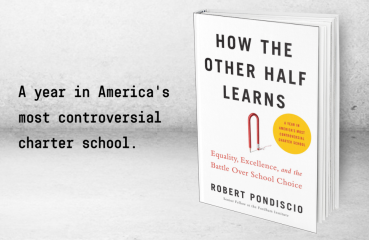
Chad Aldeman: A review of Robert Pondiscio’s “How the Other Half Learns”

Chad Aldeman

Robert Pondiscio won’t like my review of his new book, How the Other Half Learns.

Commentary
10.9.2019
Accountability & Testing, Curriculum & Instruction, Advanced Education, Teachers & School Leaders

AP: Great for gifted high schoolers

Chester E. Finn, Jr., Andrew Scanlan

When considering the available options for gifted high-school kids, the Advanced Placement (AP) program may not be the first thing that comes to mind. That’s too bad because AP might be America’s most effective large-scale “gifted and talented” program at the high school level.

Commentary
10.9.2019
Curriculum & Instruction

Does access to advanced high school math and science courses boost college STEM outcomes?

Tran Le

A new report published in Educational Evaluation and Policy Analysis investigates how access to advanced high school math and science courses affects postsecondary science, technology, engineering, and mathematics (STEM) enrollment and degree attainment, and how this relationship between the two differs by race and gender.

Podcast
10.9.2019
Accountability & Testing, Curriculum & Instruction, Teachers & School Leaders

The Education Gadfly Show: Research Deep Dive: Everything we know about effective teachers

On this week’s podcast, Dan Goldhaber, the director of CALDER, joins Mike Petrilli, David Griffith, and Amber Northern to discuss what rigorous research says about identifying, developing, and retaining effective teachers.

Event
10.9.2019
Evidence-Based Learning, Curriculum & Instruction, Governance

A Moonshot for Kids

What would happen if we invested $1 billion or more in bold education R & D initiatives designed to generate fresh, evidence-backed solutions to some of education’s toughest challenges? On November 5, at 4:00 p.m. ET, online and in Washington, D.C., the Center for American Progress and the Thomas B. Fordham Institute held a a “Shark-Tank” style competition. Ten early-round finalists presented their “billion-dollar Moonshot ideas” to a panel of tough judges, all for a chance to win $10,000 and have their idea propelled to widespread attention and potential major investment.

Commentary
10.8.2019
Curriculum & Instruction, Personalized Learning, Standards

Access, equity, and quality in dual enrollment

Lexi Barrett, Ryan Reyna

Programs that allow high school students the opportunity to earn college credit while still in high school are growing fast. In addition to familiar options like Advanced Placement and International Baccalaureate, dual enrollment, concurrent enrollment, and early college high school—otherwise known as college in high school programs–are increasingly popular models in states.

Commentary
10.2.2019
Curriculum & Instruction, Advanced Education, Personalized Learning

Advanced coursework gets a needed boost

Chester E. Finn, Jr.

Last week in Austin, at the annual “summit” sponsored by the PIE (“Policy Innovators in Education”) Network, prizes were conferred on a handful of state-based education-reform groups that had accomplished remarkable feats in the previous year, this despite the reform-averse mood that chills much of the nation.

Commentary
10.2.2019
Curriculum & Instruction, Governance, Teachers & School Leaders

The metric that matters most: Ask kids, “Are you in?”

Robert Pondiscio

Editor’s note: At last week’s PIE Network Summit in Austin, Texas, Fordham senior fellow Robert Pondiscio was asked to participate in a panel discussion on “What is the purpose of education?” His answer to the question consisted of the following remarks.

Commentary
9.25.2019
Curriculum & Instruction, Teachers & School Leaders

How to improve literacy after elementary school

Robert Pondiscio

It’s a bit of an education cliché to say “every teacher is a literacy teacher.” Since background knowledge is a fundamental building block of language proficiency, it’s technically true: A teacher in any subject can’t help but be a literacy teacher, even if the effects are diffuse.

Commentary
9.25.2019
Evidence-Based Learning, Curriculum & Instruction, Teachers & School Leaders

Do flipped classrooms boost student outcomes?

Adam Tyner, Ph.D.

Flipped classroom in K–12 and higher education have been popular for years.

Commentary
9.24.2019
Accountability & Testing, ESSA, Curriculum & Instruction, Governance, Personalized Learning, Teachers & School Leaders

In math, grade-level tests are holding back low-achieving students

Joel Rose

Imagine that you’re a sixth-grade math teacher. It’s the first day of school, and the vast majority of your students arrived multiple years behind where they should be. Your job is to teach them concepts such as understanding percentages and dividing fractions.

Commentary
9.18.2019
Evidence-Based Learning, Curriculum & Instruction, Advanced Education, Personalized Learning, Teachers & School Leaders

Low public support for ability grouping is an opportunity for personalized pacing

Brandon L. Wright

The latest Education Next poll asked respondents whether they support ability grouping, whereby students take classes with peers at similar academic achievement levels, and for middle school the majority’s answer was no.

Commentary
9.18.2019
Evidence-Based Learning, Charter Schools, Curriculum & Instruction, Advanced Education, Personalized Learning, Teachers & School Leaders

How two personalized learning models accelerate the progress of their high-achieving students

Michael J. Petrilli

Editor’s note: This is the third in a series of posts looking at how two school networks—Rocketship Public Schools and Wildflower Schools—enable their students to meet standards at their own pace.

Getty Images/dcdebs
Podcast
9.18.2019
Curriculum & Instruction, Advanced Education

The Education Gadfly Show: All about AP

  On this week’s podcast, Mike Petrilli talks with Checker Finn and Andrew Scanlan about their new book on the past, present, and future of Advanced Placement.

Getty Images/dcdebs
Commentary
9.18.2019
Charter Schools, Curriculum & Instruction, Governance, Teachers & School Leaders

How charter school attendance affects students’ special-needs status

Amber M. Northern, Ph.D.

Charters schools are often criticized for not enrolling enough or not adequately serving special student populations, particularly students with special needs. A new study by Tufts University’s Elizabeth Setren evaluates this claim with a unique dataset in Boston.

Pagination

  • First page « First
  • Previous page ‹ Previous
  • Page 36
  • Page 37
  • Page 38
  • Page 39
  • Current page 40
  • Page 41
  • Page 42
  • Page 43
  • Page 44
  • Next page Next ›
  • Last page Last »

Type

  • Book (3)
  • Commentary (1464)
  • Event (11)
  • Podcast (68)
  • Report (34)

Topics

  • Accountability & Testing (504)
  • Advanced Education (267)
  • Career & Technical Education (84)
  • Charter Schools (1117)
  • (-) Curriculum & Instruction (1594)
  • ESSA (129)
  • Evidence-Based Learning (837)
  • Facilities (25)
  • Governance (1416)
  • Personalized Learning (51)
  • Private School Choice (140)
  • School Finance (169)
  • Standards (190)
  • Teachers & School Leaders (1456)

Date

  • 2026 (121)
  • 2025 (158)
  • 2024 (142)
  • 2023 (148)
  • 2022 (197)
  • 2021 (203)
  • 2020 (170)
  • 2019 (94)
  • 2018 (13)
  • 2017 (5)
  • 2016 (46)
  • 2015 (76)
  • 2014 (50)
  • 2013 (38)
  • 2012 (15)
  • 2011 (83)
  • 2010 (6)
  • 2009 (8)
  • 2008 (6)
  • 2007 (2)
  • 2005 (2)
  • 2004 (3)
  • 2003 (4)
  • 2002 (1)
  • 2000 (2)
  • 1998 (1)
Fordham Logo

© 2026 The Thomas B. Fordham Institute
Privacy Policy
Usage Agreement

National

P.O. Box 110
Burke, VA 22009

202.223.5452

[email protected]

Ohio

P.O. Box 82291
Columbus, OH 43202

614.223.1580

[email protected]

Sponsorship

130 West Second Street, Suite 410
Dayton, Ohio 45402

937.227.3368

[email protected]