Unraveling the case for credentials in high school
Students can earn more than 1.8 million credentials in the United States today. We know education pays—particularly for those with a bachelor’s degree.

After decades of reading wars, policy stalemates, and children quietly falling behind, teachers across the country are embracing the science of reading. That finding comes from a new Fordham report, which also tells a harder story about what’s left to do.
Last week, I participated in a meeting with other policy wonks, debating (among other topics) whether all states should follow the lead of the Southern Surge rs and embrace a top-down approach to curriculum reform.
Once you learn to drive a car, you’re better equipped to drive a truck. Knowing how to drive a car might also help you to develop better decision-making skills. That’s because of a phenomenon called “learning transfer”: the application of skills and concepts learned in one context to another.
A few years ago, the “science of reading” was still treated in some quarters as a niche movement—something for literacy specialists, cranky traditionalists, and a handful of obsessives who spent too much time fighting the reading wars on the internet. No longer.
Our schools have a curriculum problem. As states move toward education systems driven by parent choice, our lack of curricular coherence and transparency is increasingly impossible to ignore. For parents to choose, they must know what schools are teaching, yet most schools make this frustratingly difficult for families to discern.
In recent years, states and districts have made a concerted effort to align early elementary school instruction with “the science of reading.” But how much progress has actually been made? To find out, Fordham researchers David Griffith and Brian Fitzpatrick analyzed results from a nationally representative survey of K–3 teachers that examined their knowledge of reading science and its relationship to the policies that shape instruction. One disturbing finding: Teachers in high-poverty schools appear less committed to the science of reading than their peers.
With school phone bans of various sorts now underway in 41 states and counting, debates on classroom screen time have shifted focus to the devices ostensibly being used for educational purposes: Chromebooks, iPads, and the like. In response to all the tech backlash, state policymakers are taking swift action, some of which is warranted, but much of which bears signs of legislative haste.
Approximately 7.5 million U.S. students receive special education services in public schools—more than one in seven pupils nationwide.
As novels disappear from language arts classrooms, their many distinctive benefits are disappearing, too. So argues Daughtery, a former teacher and lifelong lover of the artform. This is a civilization loss that schools should work to reverse.
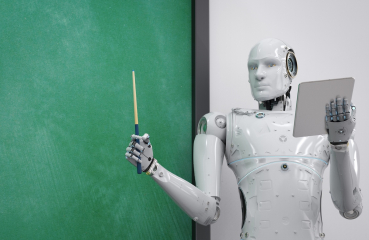
At a White House summit last month, first lady Melania Trump turned heads by entering alongside a humanoid robot, promising a future where machines might tutor children in art, philosophy, and other intellectual pursuits.
“If teachers can’t manage student behavior today, they must be worse than they used to be.” It’s a claim I’ve heard often, particularly from people who have never worked in a school. As a former teacher, this claim makes me furious. The belief is simplistic and wrong. Teachers are not worse than they used to be.
It’s not often that a conservative education secretary and a progressive teachers union boss see eye to eye.
2026 is a watershed moment for Chicago Public Schools (CPS).
For the better part of a decade, Natalie Wexler has helped reshape the conversation about American education.
I still remember my elementary music teacher roaming the halls, pushing a cart overflowing with tambourines, recorders, and sheet music. This vibrant world was threatened, however, when I was in fourth grade as the district began discussing cuts to our music program.
High school graduation is often treated as the pivotal moment when one becomes an adult. But for many young people today, adulthood unfolds unevenly over time, through a mix of work, further education, financial pressure, stalled plans, and gradual independence.
Every year, schools invest immense sums of money in sports programs to cultivate the performance of students who show extraordinary athletic promise.
As teachers embrace and incorporate AI tools, the technology poses a number of risks. But there is also hope that forward-thinking teachers may uncover replicable, scalable strategies for deploying it to make the job more manageable and free up time to build the relationships with students that matter so much for learning.
For teachers, artificial intelligence can be a boon as well as a challenge.
Only a quarter of Texas eighth graders go on to earn a degree or certificate six years after high school. As a former eighth grade teacher, I can’t help but think of my former students seeing these data.
The rise of AI has caused anxiety about the future of writing instruction. If the technology can write—or help people write—quickly and coherently on nearly any topic, and will likely get better and better at this, do we still need to teach students how to write?
Next month, my 11-year-old will join her classmates to take the state assessment.
“We spend too much time on testing,” is a lament we hear often among Idaho educators. Surely it is a national sentiment as well.
The simplest, most effective policy for improving U.S. schools and student outcomes might not be an “education policy” at all—but stronger government protections for young people from addictive products and services that now routinely reach adolescents.
Like many other teachers, I took the traditional route into the profession, pursuing an undergraduate degree in education.
I’ve worked at some rough schools. At one, as summer approached, my colleague and I reviewed the staff picture from September and counted that a third of the teachers who began in the fall had quit before the year’s end. We didn’t hold it against them.
March brings my favorite family pastime. Soon, the fanatics and ambivalent among us will fill out NCAA basketball brackets and tape them to the kitchen wall. My teen son will carefully analyze rankings for each team and stats for key players.
With updated reading policies on the books in over 40 states, ed policy advocates and legislators are now turning to math. Fourth grade NAEP math results are just as bad (if not worse), so why not take it on, as well? Bellwether has a nice round up of the current state of affairs.
Teen cinema has always laughed at the try-hard.