Not since former Governor Scott Walker bludgeoned the unions in my home state of Wisconsin has there been such national outrage over state-level education policies. Historically, state-scale education has been a secondary affair, rarely topping the list of people’s substantive or political priorities, and most decisions have been left to local decision-making. There, too, school board meetings had as much political intrigue as a local knitting group. Not so in recent years.
California recently adopted a contentious new mathematics framework that emphasizes a glorified choose-your-own-adventure approach to instruction. It has earned bipartisan opprobrium, including parental petitions and open letters with hundreds of scholarly signatories.
Far more controversially, Florida governor (and presidential contender) Ron DeSantis almost weekly kicks an education hornet’s nest—most recently with a revision of his state’s history curriculum that includes a line about the “personal benefit” some slaves drew from the “peculiar institution.” And while I’m sympathetic to previous DeSantis policies that banned the instruction of divisive concepts, they’re misdirected, too. Bans will accomplish little unless a robust curriculum takes its place.
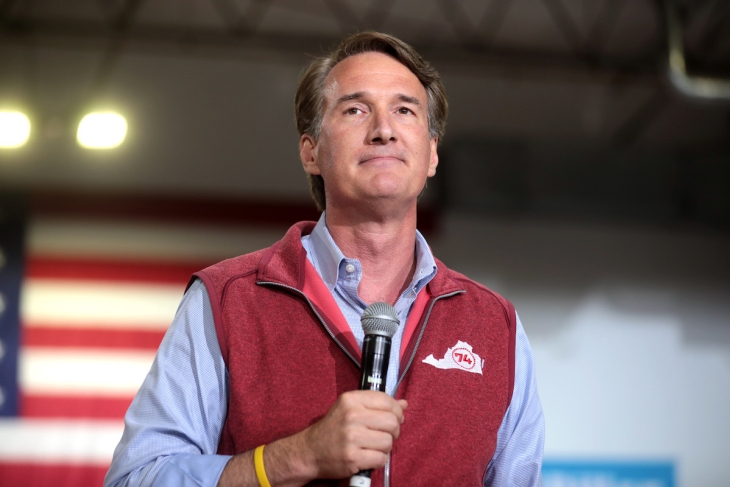
Consider, instead, Virginia Governor Glenn Youngkin, who has achieved some productive, bipartisan education wins that could provide guidance for other conservative governors, as well as real victories for American students.
Most notably, his state board of education voted in spring to approve new K–12 history standards. While the rest of the country is clutched in a mutual chokehold argument over how to frame American history, Youngkin’s administration updated the standards of the Old Dominion in a way that balances competing pressures. Advancing neither a blinkered idealism about the nation’s past, nor unrelenting criticism of it, the standards open with a commitment that “students will know our nation’s exceptional strengths, including individual innovation, moral character, ingenuity and adventure, while learning from terrible periods and actions in direct conflict with these ideals.”
After that, the new standards detail both the specific content and skills that students ought to know, clearly listing historical figures, from Frederick Douglass to Teddy Roosevelt, and specific events, such as the war of 1812 and the Louisiana purchase. Over sixty-one pages, it details clear goals for every student—everything from identifying the key components of the Declaration of Independence to the most important events and leaders of the Cold War, including the Bay of Pigs, President John F. Kennedy, Nikita Khrushchev, and much more. Any student graduating from Virginia's system with this knowledge would leave with a robust understanding of American history.
A comparison to flawed standards helps to explicate the strengths of this one. In place of concrete knowledge, Wisconsin lists wishy-washy skills and aptitudes. In place of events and figures, it names meaningless goals in inscrutable language: “[S]tudents will analyze, recognize, and evaluate patterns of continuity and change over time and contextualization of historical events.” That provides as much guidance to a teacher as map-less driving directions spoken in gibberish. Where it tries to identify concrete knowledge, it spends one page suggesting ambiguous concepts like “the modern era” or “the meeting of peoples and cultures” without any specifics or timing.
Such a “skills-based” approach to curriculum has obvious appeal. “Analyze primary source documents” is inoffensive if unhelpful. Conversely, concrete knowledge leads to controversy. There’s limited time in any school year. The inclusion of one historical event or figure necessitates the exclusion of another. Skills-based curricula are politically expedient, yet they leave students without the robust historical knowledge required to think critically. How could a student analyze a primary source document from World War II if they don’t know the countries at war, key leaders, weaponry involved, Pearl Harbor, or the horrors of the Holocaust? Simply put, you can’t think critically if you’ve got nothing to think about.
Alas, an argument over a knowledge-rich curriculum is one that we have to have. As renowned education researcher Mike Schmoker details at length in his excellent book Results Now 2.0, curricular reform is one of the most consequential, efficacious, and cost-effective school policies. He argues that curriculum is “the single largest factor that promotes equity and higher achievement.” Youngkin shows that bipartisan consensus can in fact construct a coherent, well-sequenced, knowledge-rich curriculum, even in the most fraught of subjects.
As for discussions of race—particularly salient as many activists accuse conservative governors of white-washing history—Wisconsin avoids controversy through yet more equivocations, exhorting students to “examine the effects of discrimination on identity” or “assess the impact of individuals, groups, and movements on the development of civil rights for different groups.” What would fit that description? Identify-your-privilege bingo?
The Virginia curriculum is clear and explicit on the race-related topics that students should learn. These include the Tulsa Massacre, Sojourner Truth, and plenty more concrete examples from history that will teach students far more about a critical consideration of race in America than a few kitschy activities. Even Florida’s much-maligned standards include 191 specific factoids and events in this realm for instruction, including the Middle Passage, the brutal conditions of plantation life, and countless abolitionists. Wisconsin avoids the controversy, but Florida actually has better standards.
In 2021, the Fordham Institute graded every state on its history and civics standards. Even before its revisions and improvements, Virginia earned a B+ in both subjects, with thirty-five states scoring lower. With its revisions, the state could receive yet higher marks. Understood so, the large majority of governors in America, both Democratic and Republican, could achieve a real bipartisan win that would benefit student learning and save teachers the difficulty of crafting curricula from scratch. It seems like there are few bright spots in American education at the moment. Three cheers to Youngkin’s administration for being one.