Commentary

New York State is replacing its Regents high school exit exams with a yet-to-be-defined “portrait of a graduate” framework. It’s a terrible decision, as it exchanges clear academic standards for mush.

More than a dozen states now require that third graders who can’t read at grade level repeat the grade rather than advance to fourth, where every subject assumes literacy. The theory is sound. But in state after state, exemptions meant for a narrow set of students are being granted so widely that the policies aren’t benefiting the students they were designed for.

Most educators agree that there should be some guardrails regarding how students use AI in their independent work. Here, I argue for this guiding principle: Students should only use AI for things that they already know how to do well.

“If you build it, they will come” makes a great tagline for a mythical baseball movie but a poor strategy for educational improvement. Markets are not magic and are shaped by external factors that encourage or discourage participation.

Programming note: The Education Gadfly Show is taking a short end-of-summer

Echoing Alexandria Ocasio-Cortez’s sentiments distancing herself from wokeness, a common sentiment among reformers seems to be that the bipartisan education reform era was “craazzy.” Standardized testing pep rallies, the glorified grant writing beauty pageant called Race to the Top, No Child Left Behind, guarantees of
There’s an old adage that it’s better to build a sturdy fence at the top of a cliff than station an ambulance at the bottom.

Approximately half of American adults read at a sixth-grade level or below, according to the Barbara Bush Foundation. The consequences of poor literacy skills are profound: higher unemployment rates, lower-paying work, and struggles with routine tasks such as reading prescriptions or bills.

New York City Schools piloted an external qualitative review (QR) in a subset of its schools for the first time in 2005, intended to expand the definition of school quality via a school inspection-type model and to broaden the scope of educational accountability.

Third-grade proficiency is one of the most consequential milestones in a child’s academic career. Around this time, students transition from learning foundational skills to using those skills to engage with more complex content.

The past century has seen enormous developments in virtually all areas of life, from medicine to transportation to living standards and even to social and cultural attitudes. Yet our education system has not followed suit. One of the greatest illustrations of this is in the continued emphasis on age as the primary determinant of educational placement.

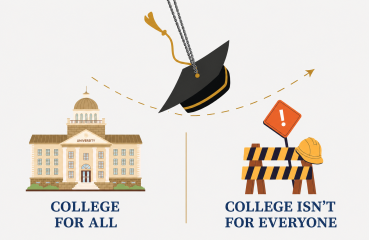
Mike Petrilli is solo on the podcast once again to revisit the college-for-all debate and consider whether the backlash has become an overcorrection.
For those of us who have long pushed for charter schools to receive fair funding, progress has been slow, uneven, and hard-won. That’s why we at the Thomas B.

Defense Secretary Pete Hegseth has called the CLT the nation’s new “gold standard.” USA Today’s blockbuster investigation, published today, suggests a more accurate label would be “boondoggle.” In Florida, the state that has done more than any other to

College is on my mind because of two recent tidbits.
Andrew Camp and Collin Hitt join Mike Petrilli and David Gr
In 2022, the state of Missouri made a concerted effort to eliminate its charter school funding gap. But how much progress has it actually made? And what have charters done with the additional funds?

In the education policy world, much is being made of declining U.S. birthrates, and for good reason.

Editor’s note: This was first published by The 74.

The past two weeks have seen a growing ruckus over big changes in the Head Start regs that are reportedly nearing completion by the Department of Health and Human Services (HHS) and the Office of Management and Budget (OMB).

During my years at TIME magazine, the newsroom had a rule of thumb: If something happens once, it’s news. Twice is a coincidence. Three times? That’s a trend.

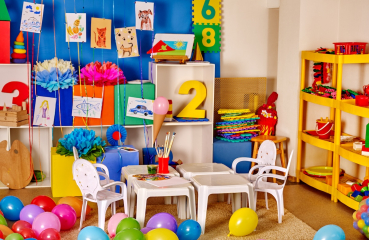
We’ve all visited those classrooms. They look like 30-gallon bags full of confetti, crepe paper, and Elmer’s glue exploded in the center. The bulletin boards are a mess of student work and neon posters, arts and crafts projects dangle from the ceiling, and groups of desks are buried in tassels and decorations. Must a classroom be a confusing and unrelenting assault on the senses?
Editor’s note: This was first published by the American Enterprise Institute. Introduction