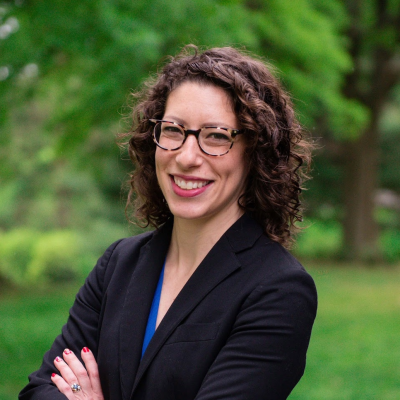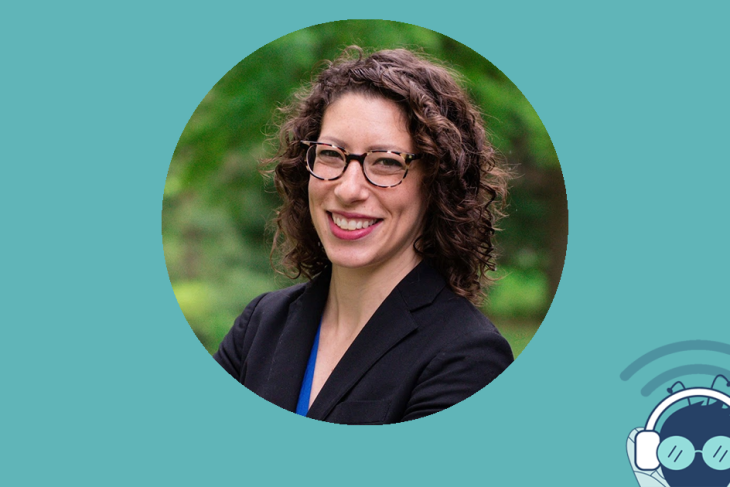
Education journalist Liana Loewus joins Mike Petrilli and David Griffith to discuss her new Fordham report, Studying the Southern Surge: How Alabama Beat the Odds in Reading. For years, Alabama’s schools were dismissed as a lost cause, but the state has recently made some of the largest literacy gains in the nation. They discuss how Alabama’s reading reforms, including state-funded literacy coaches, evidence-based reading curricula, and a hands-on approach to supporting teachers, have helped turn things around. Can Alabama keep up the momentum, and what can other states learn from its success?
Then, on the Research Minute, Amber Northern shares a new study finding that access to AI tutoring in college courses may actually hurt students’ academic performance and engagement.
Recommended content:
- Studying the Southern Surge: How Alabama Beat the Odds in Reading — Liana Loewus, Thomas B. Fordham Institute
- From the Teacher’s Desk: A Science of Reading Progress Report —David Griffith and Brian R. Fitzpatrick, Thomas B. Fordham Institute
- New rules for state mandates —Michael J. Petrilli, SCHOOLED
- Is state leadership at odds with teacher buy-in? —Michael J. Petrilli, SCHOOLED
- The Effects of Course-Integrated AI Tutoring on Student Performance and Engagement: A Randomized University Trial —Jing Liu, Tracy Sweet, Marty Haoyuan Chen, Jonathan Engelberg, Megan Masters, Martyn Clark, Axel Persaud, Alia Lancaster, Jeffrey Hollingsworth, and Jennifer King Rice, Annenberg Institute at Brown University (2026)
Feedback Welcome: Have ideas for improving our show? We would love to hear them. Send them to [email protected]
Transcript
This transcript was generated with the assistance of AI and lightly edited for clarity and readability.
Introduction
Mike Petrilli [00:00]
Welcome to The Education Gadfly Show.
I'm your host, Mike Petrilli of the Thomas B. Fordham Institute.
This week, we're joined by education journalist Liana Loewus, author of Fordham's new report, Studying the Southern Surge: How Alabama Beat the Odds in Reading.
Alabama has made some of the largest literacy gains in the country in recent years. So what's working, and what lessons can other states learn from its success?
Then on the Research Minute, Amber Northern shares a new study finding that access to AI tutoring in college courses may actually hurt students' academic performance and engagement.
All that and more this week on The Education Gadfly Show.
Ed Reform Update: How Alabama beat the odds in reading
Mike Petrilli [00:52]
Hello, this is your host, Mike Petrilli of the Thomas B. Fordham Institute, here at The Education Gadfly Show and online at FordhamInstitute.org.
Now, please welcome today's special guest, veteran education journalist Liana Loewus.
Yes, I got it right, didn't I?
Liana Loewus
You got it.
You got it.
Mike Petrilli
Liana, welcome to the show.
Liana Loewus
Thanks for having me, Mike.
Mike Petrilli
That took a couple of times.
I'm sorry.
Is it Liana? Is it Liana? Is it Loewus? Is it Lewis?
I mean, you don't actually have that complicated of a name, but in my head, this is the kind of thing that just trips me up.
Anyway, so glad to have you on the show.
Liana Loewus
I'm glad to be here.
And, you know, my maiden name was way more complicated, so.
Mike Petrilli
Oh, there you go.
Yes, yes.
But you got it. You got it.
Also joining us, a man with a very simple-to-pronounce name, David Griffith.
David Griffith
Hey, thanks for having me.
It is simple.
That's almost by design.
I was Dickie Griffith for a while, which was a nightmare on forms.
But it's good to be here, Mike.
Mike Petrilli
Yeah.
Welcome. Welcome.
Well, Liana, we're super excited to have you here.
This is a bit of a shameless self-promotion show today because we are going to talk about a new Fordham report written by none other than you, Liana.
It is called Studying the Southern Surge: How Alabama Beat the Odds in Reading.
So let's do that on Ed Reform Update.
All right.
Well, before we get to that, Liana, just let's tell folks a little bit about you.
I knew you, I think, first as an Education Week reporter, and then you and I got to work a little bit together on an Education Next piece about reading.
Great piece about whether some schools were overdoing phonics, maybe underdoing other things like building content knowledge.
Tell us a little bit more about your career, if you can, so people know who you are.
Liana Loewus
Sure.
Yeah, I have a long and winding career.
So I actually started my career as a teacher.
I was a reading teacher for a private reading clinic, and then I taught special ed in public schools.
And then I went into education journalism.
That's when I met you, Mike. You were a great source when I was at Education Week.
I covered curriculum instruction. I covered teaching policies. I had every job in the newsroom up to assistant managing editor.
And then I was at U.S. News & World Report for a little while as a managing editor for education there.
I was at WETA, and I'm out on my own now.
So I got to do some work for Fordham, which was great.
Mike Petrilli
All right.
Well, that's fantastic.
Well, listen, we asked you to dig into Alabama.
You know, we've all been hearing about the Southern Surge.
And frankly, we've all read and heard quite a bit about Mississippi.
But we thought that some of the other states were not getting as much attention.
We were curious what they might teach us as well.
You know, for a long time, Alabama, like many of these other Southern states, ranked near the bottom of the country in reading achievement.
But we've seen some of the largest literacy gains there in the nation as it's jumping up the rankings.
Now, look, we always have to say the disclaimer.
This is, of course, at a time when the country as a whole has been struggling even before COVID and certainly with COVID.
So, you know, it's not like anybody is crushing it on the reading front, but Alabama is making a lot more progress than most other states.
So when we sent you down there, you did a bunch of interviews, you talked to everybody you could, and you've got this great case study.
So tell us, you know, big picture, what did you learn?
What's Alabama doing right?
Liana Loewus [04:22]
Alabama is fascinating.
I'm so excited to talk about it because I think they have a really strong narrative to tell.
They have a story that's pretty clear.
And a lot of people across the state who've been there for a long time agree on the narrative, which never happens in education.
There's just so much agreement about what is working in Alabama.
It's also a long story.
You kind of have to go back about 30 years to understand how this all started and then to look at the ups and downs and, interestingly, the policies that preceded the ups and downs.
And that's why people are able to draw a straight line in Alabama.
But, you know, I guess the top-line findings are that the state has a really structured coaching system.
So teachers are coached by teachers.
You know, literacy coaches. Every single elementary school has a coach.
It's not just that they have coaches. They have a coach who is paid for by the state, their salary is paid for by the state, and trained by the state.
And that's huge.
And the other thing that's really unusual is that these coaches, their time is protected.
So often you're in schools and, like, a reading coach will be pulled for recess duty.
They need a sub over here. They need someone to do one-on-one testing over here.
And the state has written into law, you cannot do that.
And further, the state superintendent will not give you money for your coach until you sign an MOU saying, I will not use my coach for anything else.
That is really unusual.
The state's also had some really strong and long-tenured leadership that's all headed in the same direction.
And the state is using a pretty top-down approach.
They have some very knowledgeable people at the State Department who really understand instruction, and they're being pretty prescriptive about what's going on in classrooms.
Mike Petrilli
Yeah, look, you know, last week on the show, I did a solo episode and I talked about state mandates and when is it appropriate for the states to have a muscular approach?
And look, you know, I've come to believe that around curriculum, I am comfortable with that.
But I will admit that it's complicated because it's not a simple thing to mandate.
I mean, there's some things that are simple, right?
You know, you must have all your kids sit for the state test or, you know, we're seeing these recess mandates.
Okay, you've got to have 30 minutes of recess every day.
I mean, that's pretty clear-cut.
But, you know, how to actually mandate and then implement and enforce.
And yet here we have these Southern states, very red states, being the ones that seem most comfortable with just completely blowing past local control and saying, we're going to make you do it.
And look, this is a case study. It's not an empirical piece of research.
But I still thought that there was a number that, to me, was the big story here.
And the number was two, right?
There right now are two approved programs in English language arts in Alabama.
Core Knowledge Language Arts, I think, and Wit & Wisdom.
Liana Loewus
Open Court.
Mike Petrilli
And Open Court, not Wit & Wisdom.
Core Knowledge Language Arts and Open Court.
Okay, that's interesting.
Core Knowledge Language Arts came out of the Common Core days, right?
This was out of EngageNY originally.
And Open Court, I remember from my days with Reading First back in the No Child Left Behind days, was kind of the darling way back then.
All right.
So two approved programs.
That's it.
I mean, we do a lot of work on that in Ohio, where it's something like 25 approved programs.
Okay.
That is a big difference.
I mean, so this is almost like having a basically mandatory statewide curriculum.
Liana Loewus
Yeah, it is.
It is a huge difference from what's happening in most states.
Like, states that do approve curriculum, you'll see dozens and dozens of programs on there.
And in Alabama, it's just two, as you said, which is very unusual and very prescriptive.
I will say there are some outs, and about 10 percent of districts can choose their own.
That also has to be approved.
They have to get, you know, the powers that be to say that's okay to use that curriculum.
But for the most part, everywhere I went, they were using either Open Court or CKLA.
Turning over to those curricula has been a tall task in a lot of districts.
It's really hard.
Teachers get really comfortable with the curriculum they're using.
And then when they are quickly asked to switch, and this happened all over the state because they narrowed it to two pretty quickly, it's very difficult.
And you still do see, every so often, you'll see remnants of the old curricula in classrooms.
But for the most part, core instruction is happening with those two programs.
Mike Petrilli
If you have just two programs, I mean, that means that just changes the game, right?
You can have a common approach to professional learning.
You can have these coaches all get trained on much of the same stuff.
You can go to your ed schools and say, hey, this is what your future teachers are going to be teaching.
So you should teach it to them.
David, you wrote the foreword for this report, and you've been following Liana's work throughout it.
My understanding is some of the things that you found most interesting was about the fact that, at one point, Alabama had given up on some of these reading reforms.
David Griffith [09:53]
Yeah, I mean, I think that is a really interesting angle, right?
Because anytime things are going well, you know, as anyone who's listened to this show knows, there are a bunch of things happening at the same time that things are going well or getting better.
And it can be very hard to say which of those things is making a difference.
And I think, you know, frankly, I mean, even in Alabama's case, right, it's not like we can nail it to the wall.
Right?
Having said that, you know, I think Liana makes a pretty compelling case that the state was doing fairly well.
I'm going to butcher the dates, but, you know, kind of in the wake of, you know, 10 to 15 years ago, right?
It was doing a fairly good job with coaching.
And then it kind of took its eye off the ball.
And things fell apart a little bit.
And then eventually people realized that.
And so they went back to this coaching and they refocused, and the test scores came back, basically.
Is that a fair account?
Liana Loewus
Yeah, that's pretty much what happened.
So, I mean, between 2003 and 2011, Alabama made huge jumps in their NAEP scores, fourth-grade NAEP scores.
And they were, I think, 2005 to 2007, they grew more.
And then in about, it was in 2012, the state took a different tack and decided, the superintendent said, you know, this coaching is great.
Let's expand coaching to K-12.
It was focused on K-3, much like Reading First was focused on K-3.
They expanded not just to K-12, but I heard from people they were using coaches for math, too.
They expanded it to all content areas, all grade levels, and suddenly you have coaches who are basically pulled from anywhere.
They're not necessarily getting that centralized PD.
They have different backgrounds.
They may not know as much, and they're pulled to be a coach.
They may be pulled to be a coach in a content area they're not as comfortable with.
And as a lot of people in the state will tell you, it just completely watered the whole thing down.
David Griffith
Can I ask a follow-up question just about the coaches?
Because, I mean, I have a vague sense of what a reading coach does, but I can think of it being several things, right?
I can think of it being sort of gently re-educating teachers who maybe don't, or not so gently, I don't know, who maybe don't have a strong grasp of the Science of Reading.
I can imagine it being, you know, about translating the Science of Reading.
You know, maybe the teacher understands it, right?
But the challenge is delivering it to a classroom full of five-year-olds, right?
Like I have, at this point, kind of taught my two kids to read, but I do it with one kid.
And I imagine it's a lot harder with 15 kids, right, to actually just make the thing work the way you want it to.
You know, I can imagine being sort of deeply grounded in the specifics of the curriculum.
So, like, what do you do?
Do you have a sense of what they're doing all day?
Liana Loewus [12:54]
Yeah, I saw it when I was down there.
Actually, I got to sit in on coaching sessions.
So, yes, I can be pretty specific about what coaches are doing.
And it's a lot of things.
And so Bonnie Short, who's the director of the Alabama Reading Initiative, which is ARI.
So what a coach does is they coach a teacher, right?
They're coaching a school full of teachers because every elementary school has one coach.
Some end up with more. I'll explain that in a second.
And that coach's job is to make sure the teachers know what they're doing.
So often, and I saw this in Birmingham, coaches will do what's called a coaching cycle with one teacher in particular.
They're probably doing a few of these at a time.
It'll be six to eight weeks of picking a goal with that teacher, something the teacher is struggling with.
And sometimes the teacher comes to the coach and asks for help.
Sometimes the principal says, hey, I need you to work with these three teachers, or I need you to work with all my new teachers, or whatever it is.
But the literacy coach will sit down with the teacher.
They'll do lesson planning together.
They'll go over whatever the teacher is struggling with.
The coach watches the teacher, observes their lessons.
Often, you know, after they'll debrief and they'll look at data together.
Often a coach will even co-teach a lesson or just take over a classroom and model a lesson.
But as you can see, like, the coach and the teacher are just working so closely.
They're right next to each other.
They sit down next to each other.
They look at data.
They look at individual students.
They look at what exact skills students need.
And they spend a number of weeks together working through that.
So imagine, I mean, this is like, this is a person who is paid for and trained.
So, in a way, you've got a state person in every elementary school who's bringing the message from the state right there and sitting down with individual teachers.
And it's just kind of an amazing way where you can see policy affect a child in a way that's, like, not normal in education, to see how it affects an individual student.
Mike Petrilli
Well, right.
I mean, that's right.
It's direct.
I mean, again, like I talked about on the show last week, like a lot of us have been focused on, well, we're going to hold schools accountable, but then give them autonomy.
And we hope with enough accountability, they're going to find the right approaches.
It's very indirect, right?
It's a bank shot.
And frankly, it hasn't worked that well in most cases for a variety of reasons.
We can talk about why is that.
Here, the state's like, no, we're going to just do it.
We're going to, like, you can just do things.
That's the mantra.
We're going to just teach these coaches how to coach excellent reading instruction, and they're going to coach the teachers, and then boom, you know, and we're going to make sure it's happening.
Liana Loewus
And it goes even further than that because those are the local reading specialists.
That's the school building coach.
So there are 750 of those in the state, which is a lot of state department employees who are just devoted to literacy.
Mike Petrilli
In a small state, yeah.
Liana Loewus
In a small state.
And then you have another 100 coaches who are called regional literacy specialists.
And they coach those coaches, right?
So you have another layer.
You even have a layer on top of that.
There's another ten coaches who are state department.
But the regional literacy specialists are interesting because, yes, they coach the coaches in the schools, but the way the law is written is that the bottom 5 percent of schools, they get one regional literacy specialist devoted to their school.
So those schools have their school-building-level coach, and then they have a regional coach who's there until they come out of the bottom 5 percent.
And that person is coaching the coach and also often working with teachers and students.
And so it's just layers of support.
Mike Petrilli
I love it.
And look, of course, you know, Alabama, we're talking about a very poor state, and especially in much of the state.
This is going to where the needs are greatest, making sure kids learn to read.
I love it.
Well, listen, that is all the time we've got for this segment, Liana.
But I love it.
Thank you for the great work.
Everybody, please do check it out.
It's Liana Loewus's report, Studying the Southern Surge: How Alabama Beat the Odds in Reading.
I hope you all really take it in and enjoy it.
And Liana, I look forward to having you back on the show and working with you again sometime soon.
Liana Loewus
It was great talking to you both.
Thanks.
Mike Petrilli
All right.
Now it's time for everyone's favorite, Amber's Research Minute.
Research Minute: Can AI tutoring hurt student learning?
Mike Petrilli [17:41]
Amber, welcome back to the show.
Amber Northern
Thanks, Mike.
Mike Petrilli
We had a great conversation with Liana, all about Alabama.
I don't know.
I think David and I are excited about states playing this muscular role around curriculum.
But I have the impression you may not be quite there yet, Amber.
Amber Northern
Yeah, I mean, I think it obviously depends on the state.
I know in Virginia, like, our divisions have been pretty happy that the state's taking on this bigger role and helping them make sense of some decisions they've had to sort of wallow through on their own.
But I imagine, yes, it's very state-specific and policy-specific.
Mike Petrilli
Well, and policy-specific.
Yeah, we were talking about that afterwards.
Yeah, I mean, look, reading, early reading, we feel like there's a lot of confidence about, you know, at least in big picture, what works, what doesn't work.
But there's not that many other areas where we have that kind of confidence.
So, I mean, the temptation is like, oh, this is going great.
This coaching is, people are changing and improving teaching and learning.
So let's do it in math.
I mean, they went through this in Alabama, it sounds like.
They decided, so we'll do coaching in math, and we'll do coaching K-12, and we'll be...
But come on.
It's like, I don't know what to tell people in, you know, 11th-grade social studies necessarily.
Amber Northern
Right, right.
State mandates on SEL and AI and everything else.
Mike Petrilli
I know, I know.
Checker and I are part of a group called the Science of Civics.
Amber Northern
Oh, gosh.
David Griffith
Oh, man.
Mike Petrilli
Yeah, yeah, yeah, yeah.
We're trying to, you know, be open-minded.
It's one thing to promote good ideas.
It's another thing to require them and, you know, basically empower DOEs to enforce them.
David Griffith
I see an April Fool's Day issue is going to need to have something about the science of phys ed, maybe.
Mike Petrilli
Yes, right.
Amber Northern
The science of lunch.
Mike Petrilli
No, yeah.
Science of eating.
What else?
David Griffith
Yeah.
The science of recess.
Mike Petrilli
Yes.
Here we go.
Yeah.
All right.
Well, speaking of evidence, what you got for us on the research front today?
Amber Northern [19:52]
Yeah, we've got Jing Liu and some colleagues at University of Maryland.
I really like this study because, you know, we don't have enough yet on AI tutoring and what it does or doesn't do and all that good stuff.
And so this one was, you know, happened last year, brand-new results.
So it's hot off the press.
Basically, they are looking at an AI tutor.
They have a large-scale RCT evaluating a generative AI tutor in higher ed.
So they've got about 2,400 undergrad students.
They've got 30 instructors that agreed to participate across STEM, humanities, social sciences at UMD in fall of 2025, so exactly a year ago.
They used a tool called the Virtual Study Assistant, or VSA.
And it was, again, a chatbot that was embedded in each course's learning management system.
So it was specific to that course, appeared in the student's LMS when they logged on.
It draws largely from the instructor-selected course materials.
So all the stuff, right, in that course, the PDFs, the text, the slides, the videos, the transcripts, anything that, you know, the course instructor has put in there, the student has access through that chatbot.
It's not an open-internet chatbot, but they also couldn't really say whether kids had also used an open-internet chatbot.
All right.
So it had two modes.
It has a direct instruction mode and it has a tutor mode.
And the instruction mode, I think, pretty much gave students the answers, while the tutor mode was supposed to guide them to the answers.
The vast majority of instructors kept it on default, which was direct instruction.
I don't know if the instructors knew that they could take it off the default, but they really didn't.
And the tool appears as a sidebar in the sort of, like, as we see when we use Gemini or whatever.
It's in the sidebar of whatever they're looking at.
The instructor could see the kids' queries anonymously, and they could also aggregate the types of queries that students were giving the tool.
RCT is conducted at the instructor level and has randomization within blocks of the same or similar courses.
So they've got this exact-match sample, which is mostly what I'm going to report on, where, you know, you had two instructors teaching the same course.
But they also had a larger sample that was, you know, maybe two instructors teaching both 300-level science courses.
So they randomized those similar courses as well.
Let's see, there were 2,400 students.
And besides grades and homework scores, they also look at this LMS data.
So they've got page views, how often the kids are active, how they participated, and so on through the LMS.
So number one: Access to the AI tutor hurt grades.
That was kind of the big one to me.
In the exact-match sample, the final course grades in the treatment condition were 0.37 standard deviations lower.
And course grades were slightly lower, 0.13 standard deviation.
Homework scores unaffected.
What was interesting to me was there was only 15 percent of treated kids who were using it at all.
And of the 15 percent, they used it, I think, an average of four sessions.
And a session could go on for however long, but it ended when the chatbot hadn't had any activity, I think, for two hours.
And then they basically said that this grading penalty even showed up in non-users in the treated classroom.
So even if you didn't use the chatbot, they still had an impact.
And they sort of were suggesting or hypothesizing that maybe having an AI tutor sort of changed the broader AI environment or ethos and sort of made kids think that maybe using generative AI was acceptable in that course.
Who knows?
But they hypothesized that there's this wider effect by having a generative AI tutor that might make kids say, oh, this is all fair game.
All right.
Number two: There was a big drop in LMS engagement.
So in this exact-match sample, the AI tutor access reduced course page views by 0.37 standard deviation, active days by 0.51 standard deviations, and recorded participation, which is kind of the biggest one because that's covering, like, you know, are you accessing your assignments?
Are you submitting your assignments?
Are you participating in discussions and all that sort of thing?
Sort of the participation measure.
That was 0.90 standard deviations lower, which kind of makes sense that the grades took a hit if the kids aren't, you know, interacting as much with whatever they're supposed to be interacting with.
Declines were similar in the full sample.
So that was the exact-match sample.
And then they looked at survey results.
They had a survey at the end, I think.
And the kids that had the AI tutor were more likely to say that they asked their instructor fewer questions and that they sent fewer emails and so on and so forth.
So they basically said, you know, they didn't contact their instructor as much, which I think was kind of the point of having an AI tutor.
But anyway.
Analysis of the results also showed that 73 percent, when they looked at the LMS data, were requests for direct answers or explanations compared to only 0.7 percent who were seeking feedback on their own work.
So in short, they were using it like a search engine, I think, not a study partner, as some hope.
And last quick thing, number three: The harms were not evenly distributed.
They found that the first-generation students saw those final grade losses more.
So they were twice as large as those non-first-gen students.
I think it was 0.5 standard deviations lower versus 0.22.
And then they also saw that the Hispanic kids were also more likely to use the tool than the white students were, about 10 percentage points.
And they discuss a little bit of the irony that this AI is, you know, supposed to, you know, we're worried about equitable access to AI.
And yet we've got some of the most vulnerable students using it and using it to their detriment.
So that's what I've got this week.
Mike Petrilli
Interesting.
One thing that you mentioned at the end there is I feel like this category is kind of broad where they ask, you know, either for the answer or an explanation.
I mean, those are two very different things, it seems like, right?
I mean, asking for an answer is cheating, right?
Arguably.
I mean, I guess maybe you worked it out and then you're checking to see if you got it right.
Maybe, I guess.
But, you know, I mean, I don't have a problem with asking for an explanation.
That does seem to be part of learning.
I don't know.
It's all very strange.
What do you think, David?
David Griffith [27:17]
Yeah, I sort of agree.
I mean, it's different.
I mean, they're very different in terms of, like, what the thing is, right?
But I think where my head goes with the study is that it may be difficult to draw a sharp line between the two when it comes to, like, what the AI is allowed to do.
Right?
I mean, so it is, right, like, it is a very different human thing to try to get the right answer, then consult the back of the textbook or, in our current era, an all-powerful AI that can tell you exactly what you did wrong.
That's very different from making no attempt, asking the AI to explain the answer, asking it again because its explanation wasn't thorough enough, and then basically copying whatever, you know, like basically just letting it walk you all the way to the answer without really engaging and not, frankly, being able to do the thing.
Right?
And, yeah, I mean, I'm trying not to jump to conclusions here, right?
But I think that given the number of different types of problems that people can be asked, I think the devil is going to be in the details, right?
If you unleash an all-powerful AI and tell it to help people, and people do what people do, which is be lazy, they're going to find ways to coax, you know, something pretty close to the answer out of the machine unless you sort of have pretty strict rules about what it's allowed to tell them.
And I just think that's going to be hard, right, given sort of the complexity of the cognitive behavior, whatever processes that are involved with geometry and algebra and yada.
It's not like there's just one type of problem that teachers are assigning and we can agree this is where the line is.
There are going to be 10,000, a million different lines depending on the different types of problems that kids are working on.
And it's going to be very hard to draw 10,000 different, sort of set 10,000 different reasonable standards that distinguish between tutoring and cheating.
Mike Petrilli
Yeah.
And then this idea that they're not asking the human, you know, help as much, which clearly seems, I mean, from the student's perspective, that's bad, right?
You are foregoing part of what you're paying for, which is, right, help from real-life humans.
You know, from the perspective of the professor or the TA, I mean, this is great.
It's like a self-checkout lane, right?
I forget what people are calling this now, but when the org, you know, when the company has shifted the labor, right?
Or they've just automated some of it.
So the TA is like, oh, this is great.
I don't have to answer as many emails as before, or I don't have as many people showing up for my office hours.
And that means I can do stuff, right?
But that doesn't seem to be a good thing for student learning and for the student experience.
Amber Northern
That's right.
Yeah.
And these disparate impacts here in terms of, you know, based on first generation or not or Hispanic or not, that's problematic.
Right?
I mean, you know, part of going to college is, like, you want the message to be maybe there's somebody who doesn't have somebody in their family who went to college to say, hey, look at all these resources here.
You're paying for them, right?
This is why we have these bloated universities and it's expensive and we have all these staff.
But use them.
You know, you should take advantage of them.
David Griffith
Yeah, it's gotten a little absurd, right?
Like, I mean, we have these enormous bureaucracies, but then, I mean, in the case of this study, right, like the actual instruction was almost entirely outsourced to a machine that was just giving people the answers.
I mean, that is an absurd parody of education, right?
Mike Petrilli
Right, right.
Amber Northern
Yeah.
Well, and I think too, just like you were saying earlier, the relationship with the professors.
You know, I think back under my undergraduate, master's, and even doctorate, you literally do, or at least I did, develop some good relationships with professors who were able to steer you career-wise, who were able to write recommendations for you, who, you know, are still on my LinkedIn today.
And so that networking, which is so important, I think, especially for first-generation college kids, is something else that, you know, by not having that relationship, they could be missing out on that sort of social capital.
Mike Petrilli
Yeah, no, totally.
I mean, look, the AI enthusiasts and the companies are like, oh, this is going to be great.
You can have your agent, you know, deal with the electric company so that you don't have to.
Well, sure.
Okay, but your professor is not the electric company.
Right?
I mean, hey.
David Griffith
They are this, right?
And motivations that are personal, Mike, right?
Like what you're really paying for is that feeling of embarrassment, right?
When your professor, who you deeply respect and want to impress, asks you a question and it's obvious that you haven't done the reading.
Right?
Like that's what motivates people to actually go deep and go the extra mile and show up looking prepared.
Right?
And you don't feel embarrassment, right, when you let AI down.
Right?
Like in the privacy of your own dorm, you don't feel some deep sense of shame, right, that ChatGPT is disappointed with you.
Mike Petrilli
Right, right, right.
I don't know what else to say about this that I haven't already said.
I don't know.
I feel sometimes like I am disappointing my AI.
That's just me.
Amber Northern
Yeah, and your research directors too, Mike.
Mike Petrilli
Touché.
Touché.
All right, gang.
Good stuff, Amber.
Thank you.
This is clearly, look, and I know it's higher ed, but still, look, it's early days.
I know we're going to need every scrap of evidence we can to say, like, how is this working?
This is real time.
It's happening.
All right.
Well, speaking of time, that is all the time we've got for this week.
So until next week.
David Griffith
I'm David Griffith.
Mike Petrilli
And I'm Mike Petrilli of the Thomas B. Fordham Institute, signing off.