Mobile Navigation

  • National
    • Policy
      • High Expectations
      • Quality Choices
      • Personalized Pathways
    • Research
    • Commentary
      • Gadfly Newsletter
      • Flypaper Blog
    • Events
    • Scholars Program
  • Ohio
    • Policy
      • Priorities
      • Media & Testimony
    • Research
    • Commentary
      • Ohio Education Gadfly Biweekly
      • Ohio Gadfly Daily
  • Charter Authorizing
    • Application
    • Sponsored Schools
    • Resources
  • About
    • Mission
    • Board
    • Staff
    • Career
Home
Home
Advancing Educational Excellence

Main Navigation

  • National
  • Ohio
  • Charter Authorizing
  • About

National Menu

  • Topics
    • Accountability & Testing
    • Advanced Education
    • Career & Technical Education
    • Charter Schools
    • Curriculum & Instruction
    • ESSA
    • Evidence-Based Learning
    • Facilities
    • Governance
    • Personalized Learning
    • Private School Choice
    • School Finance
    • Standards
    • Teachers & School Leaders
    • Think Again
  • Research
  • Commentary
    • Gadfly Newsletter
    • Flypaper Blog
    • Gadfly Podcast
  • Events
  • Scholars Program

The Education Gadfly Weekly

Sign Up to Receive Fordham Updates

We'll send you quality research, commentary, analysis, and news on the education issues you care about.
Thank you for signing up!
Please check your email to confirm the subscription.

The Education Gadfly Weekly: What education reformers believe

Volume 19, Number 11
3.13.2019
3.13.2019

The Education Gadfly Weekly: What education reformers believe

Volume 19, Number 11
view

What education reformers believe

At conferences and online, there have been conversations of late about what it even means any more to be an “education reformer.” Here, Fordham’s president proposes an answer. Namely, we reformers believe that good schools deliver strong results for students—and all schools should be held to account for their results; our schools as a whole could be delivering much stronger results for all their students, but especially for disadvantaged children; and one size does not fit all, so we should embrace a pluralistic school system.

Michael J. Petrilli 3.13.2019
NationalFlypaper

What education reformers believe

Michael J. Petrilli
3.13.2019
Flypaper

Cultivating patriotism is the first job of civics education

Robert Pondiscio
3.13.2019
Flypaper

To facilitate high-quality CTE, we must transform our education system

3.13.2019
Flypaper

The truth about transportation troubles

Jeff Murray
3.13.2019
Flypaper

How private school choice affects student character

Jessie McBirney
3.13.2019
Flypaper

The Education Gadfly Show: Richard Whitmire is all about the B.A.

3.13.2019
Podcast
view

Cultivating patriotism is the first job of civics education

Robert Pondiscio 3.13.2019
Flypaper
view

To facilitate high-quality CTE, we must transform our education system

Scott Laband 3.13.2019
Flypaper
view

The truth about transportation troubles

Jeff Murray 3.13.2019
Flypaper
view

How private school choice affects student character

Jessie McBirney 3.13.2019
Flypaper
view

The Education Gadfly Show: Richard Whitmire is all about the B.A.

Michael J. Petrilli, David Griffith, Ph.D., Amber M. Northern, Ph.D., Richard Whitmire 3.13.2019
Podcast
view

What education reformers believe

Michael J. Petrilli
3.13.2019
Flypaper

At conferences and online, there have been conversations of late about what it means any more to be an “education reformer.” Let me take a stab at it, circa early 2019, and encourage other advocates to respond.

What all Americans believe

Let me start by noting that, despite the acrimony surrounding education and everything else right now, there are some universal aspirations that everyone shares—citizens and politicians across the ideological spectrum; education groups that promote “reform” and those that oppose it; parents, teachers, and everyone with a stake in our future. Namely:

  • Every child deserves a good school, and it’s unfair that not everyone gets to attend one.
  • A strong education system is key if the American dream, and a healthy democracy, is going to be enjoyed by future generations.
  • Educators deserve our appreciation and greater status than many enjoy now.
  • Not everyone needs to go to college, though some sort of postsecondary training—on top of a first-rate K–12 education—is almost always necessary to support a family in today’s (and tomorrow’s) economy.

What “reformers” believe

Where we part ways with some of the status quo organizations is around the following principles:

  • Good schools deliver strong results for students—and all schools should be held to account for their results. Once upon a time, a “good school” was defined by the state of its facility, the credentials of its teachers, the resources in its library, or the condition of its playing fields. More recently, there’s been a push to define school quality with indicators that go far beyond academics, to look at school climate, the teaching of social and emotional skills, and more. And yes, as a rich country, we should ensure that nobody attends a school with a shabby building or unqualified teachers or libraries without books. It’s also essential that schools have a well-rounded curriculum and develop the “whole child.” But while all that is necessary, it’s insufficient. America today has too many schools that are safe and inviting places with caring adults and plenty of resources, but where students don’t learn very much over the course of the year. Those cannot be considered good schools, and their failure to meet their foremost educational mission must be made clear to parents and the community and addressed by public authorities.
  • Our schools as a whole could be delivering much stronger results for all their students, but especially for disadvantaged children. Ultimately, we want our schools to help young people prepare for success in some form of postsecondary education or training, for active participation in our democracy, and for a family-sustaining career. We reformers look at America’s student outcomes and see both the need and the possibility for dramatically better performance. We find it unacceptable that only about one-third of students reach proficient levels in reading and math, graduate high school ready for college, or attain a four-year degree; only about half of young people will attain any sort of postsecondary credential. And it’s shameful that for African American and Hispanic students these numbers are dramatically lower. We need to be careful to avoid utopianism—we will never reach universal proficiency or postsecondary completion—but we see from leading states and other developed nations that, even given the challenges many kids face at home, we could and should be getting much better results than these.
  • One size does not fit all, so we should embrace a pluralistic school system. While good schools have many things in common, we should allow them to vary from one another, too, and empower parents and educators to gravitate to the institutions that align with their preferences and values. That’s especially important for older students, who need various avenues to college and career success, including traditional college prep and high-quality career and technical education. Just as architecture has many traditions and styles, so too does schooling, and we should embrace all of them, as long as they are educationally sound.

The how

In brief, we envision a pluralistic system of schools in America that produces much better outcomes for students. Based on research evidence, and hard-earned experience, we see the following state policy levers as essential for achieving this vision:

Standards, assessments, and accountability

  • Academic standards that aim for readiness in college, career, and citizenship. These standards—in English language arts and math, but also science, history, civics, and other academic subjects—set the foundation for appropriately challenging curriculum and instruction. They also identify the key knowledge and skills that students need to be on track for success after high school—and make it possible to determine if and when students are falling behind.
  • Regular, high-quality, aligned assessments. Such assessments generate essential information for parents and the public about student and school performance and progress. The best assessments encourage the kind of teaching we would want for all students— inspiring, engaging, and cognitively challenging—i.e., they are tests worth preparing students to do well on.
  • School ratings focused primarily—but not exclusively—on academic progress and outcomes. Such ratings provide transparency, for the public and parents alike, and helpful pressure on our schools to keep their focus on improvement. The clearer the labels the better. Broadening these systems to include valid and reliable measures beyond test scores is certainly appropriate, but at their heart these systems should answer the question of whether schools are helping their students make progress toward success in the real world.
  • Strategies for intervening in, and/or replacing, chronically low-performing schools. This is the “accountability” part of the “accountability movement,” and it’s by far the toughest. While the national results from efforts like the School Improvement Grants program have disappointed, a few states and local communities can point to turnaround efforts that have worked. Some reformers would prefer to double-down on such strategies, while others are comfortable moving more immediately, and aggressively, to replacing low performing institutions with new schools, including new charter schools. But we all agree that direct state or local action is necessary when schools fail to improve year after year.

Educator quality

  • High standards for entry into the teaching profession, combined with flexible pathways by which to enter. We need teachers and principals who themselves are well-educated, who understand the research evidence on effective practice, and can demonstrate an ability to help students make progress over the course of the school year. We are skeptical about traditional certification requirements, which are only loosely related to real quality and effectiveness, but we also reject the view that anybody can be a great teacher, regardless of their training.
  • Feedback mechanisms to help teachers improve. While there’s debate among education reformers about the wisdom or usefulness of teacher evaluation systems linked to student test scores, everyone wants teachers to receive regular feedback on their practice so that they might improve their craft. States continue to have a role to play in disseminating evaluation and feedback tools that are the foundation of such a system. And we believe that if teachers are to receive tenure, states should demand evidence of their effectiveness beforehand.
  • Compensation systems that recruit and retain strong teachers. In many states, teacher salaries and benefits are local issues, but where states play a role, the design of salary schedules, retirement offerings, and other benefits should be geared toward recruiting and retaining the most talented, most effective teachers possible. That generally means “front loading” teacher compensation much more than we do today—investing more resources in higher salaries in the early years of teachers’ careers, rather than delaying most of the payoff until teachers have spent decades in the classroom.

High-quality charter schools

  • State charter laws that enable high-quality, autonomous charter schools to flourish. In line with the National Alliance for Public Charter Schools’s model law, such policies allow for strong, independent authorizers to start and oversee schools; require the most onerous regulations governing public schools to be waived; and set up a system of oversight that provides incentives for authorizers to take action when performance is weak.
  • Equitable funding. Strong oversight via effective authorizing is half of the equation leading to charter quality; the other half is fair funding. Yet in too many states, charter schools continue to operate with a significant deficit—getting about eighty cents on the dollar as similar district schools, on average, with some gaps even larger. States have taken a variety of approaches to level the playing field, from overhauling state funding formulas to tackling the challenge of charter facilities financing. But allowing this inequality to continue, especially for charter schools serving poor children and children of color, is untenable.

High school reform

  • A high school diploma that means something. Standards aren’t just important for schools; they are important for students, too. And we should expect students to demonstrate at least basic levels of academic readiness before allowing them to graduate from high school.
  • Post-secondary education that starts in high school. States should embrace efforts to encourage and enable students to earn college credit before graduation, via Advanced Placement, International Baccalaureate, and high-quality early-college and dual-enrollment programs.
  • Career and technical education is about post-secondary education, too. Every state needs high-quality CTE programs that put students on a path toward high-quality credentials, including one-year and two-year technical degrees.

***

On top of these policies, reformers see much promise in efforts to improve educational practice. That includes initiatives to identify high-quality and standards-aligned instructional materials, and to support teachers with their implementation in the classroom; changes to encourage schools to “personalize” learning, at the least so that students can move through curricula at their own pace; and improvements to grading practices to provide more honesty and transparency around student performance.

And yes, there are plenty of areas where we reformers disagree. The most prominent have to do with what, beyond academics, schools should teach. Some of us (mostly on the right) are more comfortable talking about character, morality, and patriotism; others (mostly on the left) gravitate toward social and emotional learning, social justice, and creative expression. This plays out most visibly in the difficult debate over school discipline, which pits strongly held conservative and progressive values against one another. It also comes into play in the arena of parental choice: Should private and religious schools be part of the publicly-funded mix or not? We also disagree about funding: Are current levels adequate? And should we allow affluent communities to out-spend their peers, even if that makes our funding system less equitable?

Yet as the long list of policy reforms above indicates, reformers across the political and ideological spectrum still have a lot of common cause. In states where this policy set is robust, we must continue to defend it. In states where the policy foundation is shakier, we must work to make it stronger. Because, as everyone agrees, all kids deserve good schools. It’s not fair that so many don’t have access to one, and America will be a better country when they do.

view

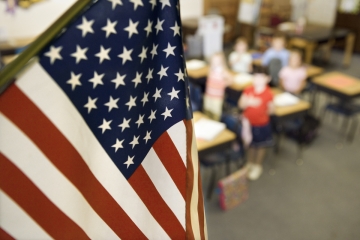
Cultivating patriotism is the first job of civics education

Robert Pondiscio
3.13.2019
Flypaper

Editor’s note: On March 13, 2019, Thomas B. Fordham Institute senior fellow Robert Pondiscio was a panelist at an event hosted by the Albert Shanker Institute in Washington, D.C., titled “Civic Education: Is There Common Ground.” The following is adapted from his remarks.

It’s common and uncontroversial for teachers to express their goal to instill a “lifelong love of books or reading.” Why not a lifelong love of math? A lifelong love of science? Or art, or music, or history? Our job as educators is to ensure kids have the knowledge and skills they need to be happy, productive, and independent citizens. Why are we concerned at all with what they love or do not love?

There is, however, one “love” that is appropriately within our roles as teachers to embrace and promote: A lifelong love of liberty. Of freedom and the rule of law. A lifelong love of America.

Does that make you uncomfortable? Too overtly patriotic? Even jingoistic?

As teachers, almost all of us are public employees. We work for states, districts, and individual public schools. We draw a salary from public dollars paid by our fellow citizens to work in the public’s interest. Infusing children with a love of reading is laudable, but a love of country is indispensible. It’s our literal common ground.

In a talk several years ago, Yuval Levin remarked that “conservatives tend to begin from gratitude for what is good and what works in our society and then strive to build on it, while liberals tend to begin from outrage at what is bad and broken and seek to uproot it.” His observation takes us to the heart of a problem faced by those of us who seek to restore civics and preparation for citizenship to its historical role at the center of American public education. If some people suspect that civics is more about indoctrination than education, perhaps it’s because there is so little gratitude in it. Much current work and thinking in civics education, for good and important reasons, is informed and driven almost exclusively by what is “bad and broken” and seeks to uproot it, empowering students to amend, address, and fix it.

Thank goodness for those (mostly on the left) who have been outraged at segregation, child labor, and so on. That outrage keeps our nation improving. But how did it become some kind of secular sin to believe that our young people should revere the beliefs, the practices, the institutions, and the virtues that made America the envy of the world?

A few years ago, some colleagues and I at the Fordham Institute examined every one of the “mission statements” of the one hundred largest school districts in the U.S. to see how each explained how they go about the public’s business. It was an interesting exercise and, frankly, a bit sobering. The personal and private ends of education—preparation for college and career, for example—are much more on the minds of district officials who write and adopt these statements and goals than is the public virtue of citizenship.

Well over half—fifty-nine of the one hundred largest U.S. school districts—make no mention of civics or citizenship whatsoever in their mission or vision statements. Curiously, the word “global” appears in the mission statements of twenty-eight U.S. school districts—usually in phrases like “global society,” “global economy,” or “global citizens.” The words “patriotic” and “patriotism” do not appear at all. Neither does “America” or “American.” Not even once.

The question to consider is where we might make room in civics education for a sense of gratitude, for the blessings of liberty, our Constitutional freedoms, what it’s taken to secure those things for us, and for thoughtful pride and patriotism. If we want our students to be actively engaged citizens, invested in solving America’s problems, surely they must first feel some moral attachment our nation. Why would we expect them to make the effort otherwise?

As teachers, we are trained to avoid deficit-thinking, to build on students’ and communities’ assets, not to dwell on disadvantages or shortcomings. Yet when we turn to civics education, we—many of us—embrace a deficit model. Civics education, with its focus on the problems of democracy, and its enthusiasm for cultivating activism and “action civics,” may be somewhat guilty of self-marginalization, potentially alienating at least half of the country, people whose view of their country “begins from gratitude” and who are inherently suspicious of approaches that focus mostly or entirely on “what is bad and broken.”

In her book, No Citizen Left Behind, Harvard’s Meira Levinson makes a strong argument for action civics, which valorizes not learning about civics but doing civics by engaging in cycles of “research, action, and reflection about problems they care about personally,” particularly through political action. Levinson contrasts action civics with “service learning,” which is largely uncontroversial. Service learning, as Levinson explains, promotes “a vision of citizenship devoid of politics.” A vision that “can reinforce students opposition to governmental involvement and their sense of powerlessness to make a difference via political action.”

Levinson also takes exception to the kinds of tasks that low-income and immigrant youth of color do for free in service learning settings. Tasks like raking leaves, scrubbing graffiti, and serving food in soup kitchens, she writes, “are ones that they or their parents would normally get paid to do in low-skill service jobs.”

These are important and substantial critiques. But their overtly political nature cannot be avoided. Levinson, to her credit, is quite clear about it and unapologetic. The “apparently nonpartisan” ethic of service learning is “inherently conservative,” she writes. It is “merely participatory and ameliorative rather than activist and change-oriented.”

It is not my intention to condemn action civics. It is perfectly appropriate for students to learn where the levers of power in our democracy and how to pull them. The question is whether, through our discomfort with gratitude and patriotism, our deficit-thinking approach to civics and history, and an approach to civics education that is more likely to focus student attention not on our nation’s accomplishments but its shortcomings, whether we are at risk of creating in the minds of our students a vision of their country as exclusively antagonistic to their interests and well-being.

Let me be equally clear—and emphatic—that I am not arguing for a civics and history curriculum that views America through rose-colored glasses. A good course of study could be made from a close reading and discussion on the first day of class of the Preamble to Constitution, with careful attention to the enigmatic phrase, “in order to form a more perfect union.” Every day thereafter might be given to an examination of the ways in which have met that goal, exceeded it, and fallen short. Preparation for a life of civic engagement should include all three. Pride in our successes. Respect for the sacrifices made by previous generations. And a commitment to take up our shared and unfinished work grounded in gratitude.


view

To facilitate high-quality CTE, we must transform our education system

3.13.2019
Flypaper

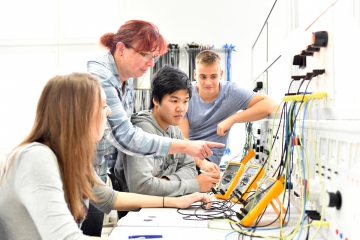
In the last two weeks, I explained how other states can learn from Colorado’s success in creating career and technical education programs that works well for students, employers, and school systems—and that, together, will help make agile learners America's future. I summarized our experience and lessons in Colorado into five key points: understand supply and demand; create multiple pathways into postsecondary and career; ensure that school districts and businesses come to the table as collaborators; reimagine how success is defined and measured; and empower students to realize their potential.

But much work remains if Colorado and the rest of the country are going to achieve these goals. We must, above all, transform how our education system operates. Instead of forcing learners to conform to system constraints, we need to respond to the diverse and changing needs of students and the world around them. To facilitate this, we ought to promote policies that further this four-part agenda:

1. Strengthen pathways to postsecondary institutions and careers through sound transfer-of-credit policies: Colorado has a framework that requires certain core academic courses to transfer to institutions of higher education. But it’s equally important to allow technical certificates and industry certifications to count towards postsecondary credit. Ideally, all work-based-learning experiences should culminate into a transferrable credential.

2. Align funding with competency-based-education strategies: Per-pupil funding formulas often include elements related to student attendance and time in school. But these can prevent local school systems from implementing large scale innovations, such as apprenticeships, competency-based learning, capstone projects, and other practices designed to support students in building and demonstrating transferable critical thinking and problem solving skills. Such funding systems can also conflict with graduation policies that emphasize competency rather than seat time. These policies should be revised in a manner that permits districts to develop a range of competency-based programming options without fear of losing funding.  

3. Embrace concurrent enrollment: These programs traditionally allow high school students to enroll in postsecondary coursework and earn college credit at little or no cost to the student. But too many high schoolers don’t have access to them, especially in rural areas. Colorado and other states should encourage more K–12 systems and community colleges to expand concurrent enrollment courses that are eligible for transfer of credit and serve the needs of communities.

Another way to expand these offerings is through policies that encourage more educators to earn advanced degrees in relevant content areas, whether those are CTE or other academic content areas. This would create more teachers who are qualified to lead concurrent enrollment courses in a wider variety of sectors. Student benefit by having more of these courses offered at low costs within high schools.

States could also consider creating streamlined processes for allowing non-traditional educators to teach concurrent enrollment courses. This might include using prior work history and professional credentials to meet the requirements, or allowing professionals to teach under the direction of an endorsed CTE instructor.

4. Align data systems: Students, employers, policymakers, and the public at large would all benefit from understanding how postsecondary credentials translate into the workforce. In Colorado, for example, multiple systems track participation in and completion of concurrent enrollment courses and work-based-learning opportunities, like apprenticeships, industry certificates and certifications, postsecondary attainment, and CTE course of studies. An aligned system that pairs with employment and postsecondary outcomes would allows us to better understand their value to students, businesses, and the economy more generally.

States should strengthen such systems, either on their own or by partnering with outside vendors. Organizations like Credential Engine, for example, are creating a one-stop-shop registry of all credentials, allowing job-seekers, students, workers, and employers to easily search for and compare credentials. Employers, too, are uniquely positioned to help populate these databases by identifying the certifications that are most valued in their industries, and by gently pressuring institutions of higher education and other learning providers to include these certifications in their programs.

***

As I argued in the inaugural post of this series, our society is moving deeper into the Age of Agility. Learners must now develop knowledge, skills, and competencies to succeed in an uncertain future and adapt to a dynamically changing world. While the pace of change is accelerating at an exponential rate, the needs of learners are also becoming more complex, and their interests increasingly more diverse.

This means that all of us—and especially policymakers, advocates, educators, and philanthropists—must ensure that all learners have access to experiences that maximize their potential. High-quality CTE programs are essential to meeting this objective. And progress made in Colorado and other parts of the country proves that these programs are effective and scalable. Yes, there’s much to learn and more work to be done, but CTE is headed in a positive direction, and its future is bright.

view

The truth about transportation troubles

Jeff Murray
3.13.2019
Flypaper

If you think that student transportation is tricky for school districts—and there are  numerous sources broadcasting that message—try being a kid or a parent. Access to that yellow bus can make or break the success of school choice in a given city or region. New research from the Baltimore Education Research Consortium (BERC) adds more evidence to the growing pile that shows that old ways of managing school transportation are inadequate for education, and especially to support choice, in the twenty-first century.

Authors Julia Budick-Will, Mark L. Stein, and Jeffrey Grigg look into the travails of students in Baltimore with a study ominously titled “Danger on the Way to School,” published in the journal Sociological Science last month. It provides a stark though sometimes exaggerated picture of what high school students in Baltimore City Public Schools endure just to arrive on time, and the potentially high costs to them to do so. All Baltimore district high schools are schools of choice, and the district provides free public transit passes (city buses and two separate rail systems) rather than traditional yellow bus service for high schoolers living more than 1.5 miles from their school. The universal-choice structure in Baltimore is characterized as a complicating factor in the BERC analysis, but it is ultimately helpful for putting the local results into a wider context.

Baltimore experienced an uptick in its crime rates across the city in 2014 and 2015, and based on previous findings, the BERC research team hypothesized that the levels of violence experienced in different parts of the city could affect school attendance; the more violent crime reported in the areas through which students travel, the more likely they would be to miss school.

The data, which included 4,200 first-time freshmen during the 2014–15 school year, bore this out. The average student in the study attended school in a neighborhood where eighty-seven violent crimes were reported during the academic year but lived in a neighborhood where ninety-five violent crimes were reported during the same period. Students passed streets in transit vehicles where there were forty-one violent crimes during the school year, on average, and passed streets on foot where there were twenty-seven violent crimes.

The researchers hypothesized that higher rates of absenteeism would correlate with high-crime areas at or near the places where students were commuting outside of vehicles—walking from home to a bus stop, changing modes of transit outdoors, etc. The average student traveled thirty-six minutes from home to school with an average of 1.8 stops per trip, meaning that most students had at least two points at which they were commuting on foot every day.

While exposure to dangerous streets while riding in a public transit vehicle did not correlate with absenteeism, nor did exposure to high-property-crime streets—as opposed to those with high rates of violent crime—exposure to high-crime areas while commuting on foot did correlate with the absenteeism data. On average, a 1 percent increase in walking violence exposure predicted a 0.10 percent increase in absenteeism, or 1.9 additional missed days, on average. These results remained after adjusting for student demographics, prior attendance, violent crime around homes and schools, and unobserved differences related to school preference and neighborhood selection.

On the upside, all 4,200 students in the study persevered and remained in their chosen high school for the full year despite their dangerous commutes. On the downside, an additional 2,160 students were excluded from the final analysis because they did not persevere. Their reasons for switching schools were not included, which is unfortunate because their experiences would surely be telling. The limited data provided on those students ultimately excluded raise questions about the interplay between transportation and a successful school choice infrastructure far above the safety factor germane to the study. Additional issues to consider along with the results: the hypothetical nature of the routes to school used in the study; the assumed level of “danger” perceived by students traveling in daylight through areas where violent crime only happens at night; the researchers’ assumption of stress and trauma in kids due to reported crime; and the lack of inclusion of students utilizing choice via charters and private schools.

Ultimately, the effects of student commuters’ exposure to street-level violence is just one more piece of evidence that existing public transit systems—designed to bring adults from home to work centers, still via twentieth-century travel patterns—are inadequate for school transportation. These systems are forbidden by federal law from changing to adapt to student needs and should not be seen as anything more than a Band-Aid fix for the ills of district-based busing. In an age of high demand for school choice in cities—and increasingly in exurban and suburban areas, as well—the evidence in favor of scratch-built and separately-funded student- and family-centric transportation from door to door, regardless of school governance type, could not be clearer.

SOURCE: Julia Budick-Will, Mark L. Stein, and Jeffrey Grigg, “Danger on the Way to School: Exposure to Violent Crime, Public Transportation, and Absenteeism,” Sociological Science (February 2019).

view

How private school choice affects student character

Jessie McBirney
3.13.2019
Flypaper

In theory, private schools are better positioned to provide moral education than are their public counterparts because they can tailor character lessons to those who choose to attend. A new study from Corey A. DeAngelis and Patrick J. Wolf seeks to test that theory, examining the adult behavior and criminal activity of individuals who once participated in Milwaukee’s school voucher program. They find that, indeed, former voucher students now have lighter criminal records, and are caught up in fewer paternity disputes, than their public school counterparts.

The Milwaukee Parental Choice Program (MPCP) is the nation’s oldest citywide voucher program, started in 1990 and expanded repeatedly since then. Unlike in other systems, MPCP students first enroll in a private school of their choice and then apply for a voucher from the city. By the 2014–2015 school year, 25 percent of Milwaukee’s students were participating in MPCP. The eligible income levels have also changed periodically; in the 2006 cohort, which this study covers, participating families could not have earnings that exceeded 175 percent of the poverty line.

To study the non-cognitive effects of MPCP, DeAngelis and Wolf compared eighth and ninth grade voucher students to similar public school students, matching characteristics such as gender, ethnicity, initial test score, and neighborhood of residence. They then examined Wisconsin Court System records for each matched student, counting ten types of offenses including felonies, misdemeanors, drug offenses, and property damage. It should be noted that one crime might fall into more than one of these categories; for example, a property damage charge may also be a misdemeanor, in which case the authors counted the crime twice. They also tallied involvement in paternity lawsuits, which can be seen as a proxy for irresponsible behavior.

Overall, DeAngelis and Wolf find that participation in MPCP is correlated with a reduction in nearly all of these criminal and antisocial behavioral measures. In their preferred model of analysis, the largest drop was in property damage convictions, which were 86 percent lower among MPCP students, or 8 percent of a standard deviation. Drug convictions fell by 53 percent, and paternity suits fell by 38 percent.

As they expected, the researchers identified a stronger effect on crime rates for males than for females. However, female involvement in paternity suits dropped substantially—34 percent—as well. Students with varying baseline test scores also experienced different outcomes. For example, those students with high initial reading scores experienced a $200 reduction in total criminal fines, while those with low reading scores actually saw a slight increase in fines. Students with high math scores experienced a significant drop in theft and traffic offenses, while low math scorers experienced a significantly larger reduction in paternity suits, but not in other criminal charges as the authors predicted.

Despite varying results across all eleven categories, DeAngelis and Wolf conclude that, overall, MPCP students demonstrated “equal or better” character skills over time, up to twelve years after their participation. The dramatic reductions in property and drug offenses and in paternity lawsuits are certainly the most encouraging results.

Like most investigations into the effects of school choice, this study cannot entirely control for the unobservable differences between students that might lead to different outcomes, although they suggest that by matching students living in the same neighborhood, they partially account for characteristics like motivation and values. Moreover, the authors examine only one cohort of students from 2006; it would be helpful to understand whether these results are consistent between classes and over time.

And ultimately, while more research on school choice and its effects on crime is necessary, the low bar of “not committing crimes” or “not being a deadbeat dad” should not be our only expectation from moral education. It is an important start, but further inquiry into socially beneficial behaviors like charitable donations and community service will also be valuable in completing our view of moral education in private and charter schools.

SOURCE: Corey A. DeAngelis and Patrick J. Wolf, “Private School choice and Character: More Evidence from Milwaukee,” Department of Education Reform, Working Paper Series, University of Arkansas (February 2019).

view

The Education Gadfly Show: Richard Whitmire is all about the B.A.

3.13.2019
Podcast
 

On this week’s podcast, veteran education writer Richard Whitmire joins Mike Petrilli and David Griffith to discuss his forthcoming book, The B.A. Breakthrough. On the Research Minute, Amber Northern examines whether private school choice improves student character.

Amber’s Research Minute

Corey A. DeAngelis and Patrick J. Wolf, “Private School Choice and Character: More Evidence from Milwaukee,” The University of Arkansas, Department of Education Reform (February 2019).

Fordham Logo

© 2026 The Thomas B. Fordham Institute
Privacy Policy
Usage Agreement

National

P.O. Box 110
Burke, VA 22009

202.223.5452

[email protected]

Ohio

P.O. Box 82291
Columbus, OH 43202

614.223.1580

[email protected]

Sponsorship

130 West Second Street, Suite 410
Dayton, Ohio 45402

937.227.3368

[email protected]