Mobile Navigation

  • National
    • Policy
      • High Expectations
      • Quality Choices
      • Personalized Pathways
    • Research
    • Commentary
      • Gadfly Newsletter
      • Flypaper Blog
    • Events
    • Scholars Program
  • Ohio
    • Policy
      • Priorities
      • Media & Testimony
    • Research
    • Commentary
      • Ohio Education Gadfly Biweekly
      • Ohio Gadfly Daily
  • Charter Authorizing
    • Application
    • Sponsored Schools
    • Resources
  • About
    • Mission
    • Board
    • Staff
    • Career
Home
Home
Advancing Educational Excellence

Main Navigation

  • National
  • Ohio
  • Charter Authorizing
  • About

National Menu

  • Topics
    • Accountability & Testing
    • Advanced Education
    • Career & Technical Education
    • Charter Schools
    • Curriculum & Instruction
    • ESSA
    • Evidence-Based Learning
    • Facilities
    • Governance
    • Personalized Learning
    • Private School Choice
    • School Finance
    • Standards
    • Teachers & School Leaders
    • Think Again
  • Research
  • Commentary
    • Gadfly Newsletter
    • Flypaper Blog
    • Gadfly Podcast
  • Events
  • Scholars Program

The Education Gadfly Weekly

Sign Up to Receive Fordham Updates

We'll send you quality research, commentary, analysis, and news on the education issues you care about.
Thank you for signing up!
Please check your email to confirm the subscription.

The Education Gadfly Weekly: Groundhog Day for school discipline

Volume 21, Number 31
8.5.2021
8.5.2021

The Education Gadfly Weekly: Groundhog Day for school discipline

Volume 21, Number 31
view
Quality Choices

“Public education sucks” is a weak argument for school choice

I’ve long believed the best argument for school choice is to turn up the lights on what is possible when there’s room for a wide variety of schools, curricula, and cultures. Call it the When Harry Met Sally model.

Robert Pondiscio 8.5.2021
NationalFlypaper

“Public education sucks” is a weak argument for school choice

Robert Pondiscio
8.5.2021
Flypaper

Groundhog Day for school discipline

David Griffith, Ph.D.
8.5.2021
Flypaper

The case for partisan school board elections

Aaron Churchill
8.5.2021
Ohio Gadfly Daily

Busting the belief gap via regular student assessment

Jeff Murray
8.5.2021
Flypaper

Five ideas for recruiting and retaining more Black and Hispanic teachers

William Rost
8.5.2021
Flypaper

The Education Gadfly Show #781: The House Democrats’ attack on charter schools

8.5.2021
Podcast

Cheers and Jeers: August 5, 2021

8.5.2021
Flypaper

What we're reading this week: August 5, 2021

8.5.2021
Flypaper
view

Groundhog Day for school discipline

David Griffith, Ph.D. 8.5.2021
Flypaper
view

The case for partisan school board elections

Aaron Churchill 8.5.2021
Ohio Gadfly Daily
view

Busting the belief gap via regular student assessment

Jeff Murray 8.5.2021
Flypaper
view

Five ideas for recruiting and retaining more Black and Hispanic teachers

William Rost 8.5.2021
Flypaper
view

The Education Gadfly Show #781: The House Democrats’ attack on charter schools

Michael J. Petrilli, David Griffith, Ph.D., Amber M. Northern, Ph.D., Ron Rice 8.5.2021
Podcast
view

Cheers and Jeers: August 5, 2021

8.5.2021
Flypaper
view

What we're reading this week: August 5, 2021

8.5.2021
Flypaper
view

“Public education sucks” is a weak argument for school choice

Robert Pondiscio
8.5.2021
Flypaper

I’ve long believed the best argument for school choice is to turn up the lights on what is possible when there’s room for a wide variety of schools, curricula, and cultures. Call it the When Harry Met Sally model. Create schools that are so compelling and attractive, and with such great results for kids, that parents look at it and say, like the character in the movie’s famous diner scene, “I’ll have what she’s having.” 

Perhaps it’s a function of our angry and divisive times, but lately the proponents seem determined to argue not the positive attributes of choice and the full range of options it makes feasible, but the role of choice to allow families to avoid exposing kids to ideas and curricular content parents don’t like. This version of choice feels lifted not from a heart-warming rom-com, but from a mob movie: “You've got a nice family. It'd be a shame if anything were to happen to ‘em.” Or worse, a prison-break movie like Escape from Alcatraz or Cool Hand Luke.

What we’ve got here is a failure to communicate the positive benefits of choice.

I’m an enthusiastic school choice proponent, but I will confess to disappointment with advocates whose arguments about the advantages of choice rest entirely on conflict avoidance, and whose pitch is not the positive virtue of what it allows families to enjoy, but the negative virtue of what it allows them to avoid, most particularly critical race theory and pedagogies and practices informed by it in traditional public schools.

For many years, the Cato Institute has done essential work collecting and cataloguing hundreds of examples of school and district curriculum and culture fights, compiling them into a “public schooling battle map,” sortable by categories: race and religion, curriculum, moral values, gender equity, sexuality, etc. “Rather than build bridges,” Cato notes, “public schooling often forces people into wrenching, zero‐sum conflict.” That may be true, but when your primary argument for choice is simply to avoid fights, you’re just retreating to your side of the river and hoping the other guy stays on his. That’s not building bridges either.

To be sure, public schooling’s ability to nurture fellow feeling is overrated. But school choice as a peace-for-our-time solution elides a few basic truths. Changing schools is not like switching grocery stores. In most cases, it’s deeply disruptive to the lives and routines of an entire family. It’s not a decision made lightly or because you don’t like an assigned text or homework assignment. Positioning choice as an off-ramp to escape conflict undersells these challenges. Moreover, while Americans have long taken a dim view of public education at large, they historically give their own kids’ schools high marks (although even stalwart public school parents have begun questioning their loyalties as Covid-related disruptions threaten a third school year). Parents are reflexively defensive of their kids’ schools and punish those who sow discontent, much as they fight those who would alter or close their schools. Recall the well-earned beating Arne Duncan took when he attributed opposition to Common Core to “white suburban moms” who were miffed to learn that “their school isn’t quite as good as they thought they were.”

Most pertinently, school-choice-as-conflict-avoidance makes a virtue of disengagement from uncomfortable but critical debates in which choice advocates have a major stake. Your ability to exercise choice and personal liberty depends in no small measure on your fellow citizens’ shared enthusiasm for it. It behooves you to insist on respect for personal liberty and to ensure that tolerance of divergent views continues to flourish and grow—even in the schools you do not send your child to. This point seems entirely lost upon choice advocates who view schools teaching “the same civic and cultural values” as a problem. Safeguarding your right to raise your children in accordance with your views is one of those civic and cultural values. It needs some care and cultivation. It cannot be taken for granted.

Without question, we’re in a moment right now that lends itself to taking advantage of disruption and discontent with schools, whether over Covid-related interruptions to in-person instruction, mask mandates, or fights over critical race theory in schools. It’s no coincidence that legislation expanding school choice is on the march, with measures to offer or expand choice options gaining traction in dozens of states. It would be foolish for advocates not to feed the growing appetite for school choice

But eventually the pandemic will end. Even the most devoted “culture war” combatants will exhaust themselves and move on to other issues. The ability to free children from violence and bullying or to leave a hopelessly failing school is essential and deserves to be fiercely defended. But it’s morally unsatisfying to depend entirely or mostly on parental discontent to create an appetite for choice. It suggests an impoverished vision of education and a lack of appreciation for the dynamism and variety choice could bring to families. Worse, it’s self-defeating. “Your kid’s school sucks, demand choice” is a less compelling and more divisive pitch than, “your kid’s school is fine, but would you prefer a classical curriculum? Maybe a tech-focused school or project-based learning? How about a school that reflects your child’s interests and affirms your family’s values?”

There’s a perverse irony in promoting choice mostly as a way to avoid conflict. It creates a kind of crocodile tears advocacy: It depends on the thing you insist you want to avoid to create the conditions needed to drive demand. When that conflict isn’t in evidence or evaporates, so does your argument for choice.

view

Groundhog Day for school discipline

David Griffith, Ph.D.
8.5.2021
Flypaper

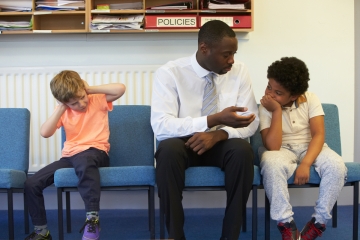
On June 4, the U.S. Department of Education’s Office for Civil Rights asked for information that would help it “support schools in addressing disparities and eliminating discrimination in school discipline and fostering positive and inclusive school climates,” suggesting that something resembling the Obama-era discipline guidance may be reinstated in the near future.

This article, which is based on my response to the Request For Information (RFI), addresses the four questions that are at the heart of the discipline debate, as I understand it: What factors explain racial discipline disparities? What are the likely consequences of exclusionary discipline? What are the likely consequences of another unfunded discipline mandate? And how can we reduce racial disparities in discipline without imperiling disadvantaged students’ right to an education?

What factors explain racial discipline disparities?

As the department’s RFI notes, “in 2017–18, Black students represented only 15 percent of the total student enrollment but accounted for 29 percent of all students referred to law enforcement—almost twice their share of overall student enrollment.” This disproportionality, it is assumed, is due mostly to racial bias. But what the RFI does not note is that 15 percent of Black students in grades 9–12 report having been involved in a physical fight on school property—almost twice the 8 percent rate reported by all students.

Similarly, the RFI mentions that Black students represent 36 percent of expulsions and 38 percent of students who received one or more out-of-school suspensions (OSS)—roughly two-and-a half times their share of overall student enrollment. However, it does not mention that principals of schools where minority enrollment exceeded 75 percent were four times as likely to report that “verbal abuse of teachers” was a weekly occurrence as those in schools where minority enrollment was less than 25 percent.

Teachers’ accounts corroborate those of principals and students. To wit, a recent Fordham study found that teachers in high-poverty schools were two and a half times more likely to report that verbal disrespect was a daily occurrence, six times more likely to report that physical fighting was a daily or weekly occurrence, and three times more likely to report having been personally assaulted by a student. (Importantly, Black and White teachers in these schools reported similar rates of student misbehavior.)

Balanced against this overwhelming evidence are one study that found that exposure to Black teachers reduces Black students’ odds of suspension, and several studies that find that Black students receive more severe punishments than White students who commit similar infractions. Yet the magnitude of these effects is small relative to disciplinary disparities. Thus, the primary explanation for those disparities—according to principals, teachers, and students themselves—seems to be differences in student behavior, which isn’t surprising given the risk factors that are correlated with student race.

What are the likely consequences of exclusionary discipline?

While numerous studies have linked exclusionary discipline to negative outcomes for students, most have relied on inherently problematic comparisons between students whose behavioral infractions were deemed suspension-worthy and “otherwise similar” students who weren’t suspended. Exceptions to this rule find smaller effects—at least for academic outcomes. Meanwhile, a substantial body of research suggests that disruptive students impose large costs on their peers, suggesting that suspensions have significant benefits for non-suspended peers’ academic achievement. For example, one recent study found that non-suspended students gained the equivalent of several days of math learning when a student in their class was suspended for a serious incident.

That finding is consistent with teachers’ views. For example, overwhelming majorities of teachers in Fordham’s discipline survey agreed that out-of-school suspension was useful for “removing disruptive students so that others can learn,” as well as “sending messages to parents about the seriousness of infractions” and encouraging both suspended students and their peers to follow the rules. Overall, only a quarter of teachers agreed that “the negative impacts of OSS outweighed any possible benefits.”

On strictly academic grounds, it’s likely that suspensions pencil out. But the elephant in the room is criminal justice involvement—an outcome where teachers may be no wiser than the rest of us. Here, again, causal evidence is hard to come by, but a recent study that uses changes in attendance zones to examine the effects of “strict” schools should give discipline hawks pause.

According to the researchers:

Students assigned a school with a 1 standard deviation higher suspension effect are 2.6 percentage points more likely to have ever been arrested and 2.1 percentage points more likely to have ever been incarcerated, increases of 14 percent and 17 percent, respectively.

Like all the other numbers in the discipline debate, those numbers aren’t written in stone. But for the sake of argument, suppose that you could boost ninety-eight Black students’ achievement by the equivalent of one week—no wait, let’s make it a month—of learning, at the cost of sending two more Black boys to jail.

Would you make that trade?

If you’re not sure, my strong advice is to keep an open mind and not get too attached to the notion that suspensions are obviously good or bad.

What are the likely consequences of another unfunded discipline mandate?

The simplest way to eliminate racial disparities in school discipline is to equalize suspension rates or other forms of exclusionary discipline by fiat. Yet one study of the academic impact of banning suspensions for “willful defiance” in California found that the impact on math performance in grades four through seven was equivalent to moving from the 50th percentile to the 39th percentile. Similarly, a study of Philadelphia’s ban on OSS for disorderly behavior found that non-suspended peers’ math achievement and attendance declined in schools that didn’t—or perhaps couldn’t—fully implement the policy.

In theory, implementing “alternatives to suspension” such as restorative justice and Positive Behavior Interventions and Supports (PBIS) could reduce the costs disruptive students impose on non-suspended peers. Yet in reality, the only experimental evaluation of “restorative justice” found a negative effect on math achievement in majority-Black schools. And, in practice, the costs of mandating that students who misbehave remain in the classroom or school are probably larger than the costs of retaining them voluntarily (e.g., if a teacher’s authority is visibly undermined by his or her inability to impose meaningful consequences).

To be fair, there is some evidence that PBIS can improve school culture at the elementary level. Still, there’s no evidence that this is possible in higher grade levels, and the aforementioned results don’t necessarily generalize to elementary schools that are forced to reduce their suspension rates.

Notably, three quarters of teachers in Fordham’s discipline survey reported that “higher tolerance for misbehavior” was at least partly responsible for the decline in OSS at their school. Moreover, nearly one in five believed that underreporting was “mostly” or “completely” responsible for that decline—consistent with reports of widespread underreporting in Broward, Detroit, Louisville, Memphis, Philadelphia, and the District of Columbia. In another Fordham analysis, revisions to the Philadelphia school district’s code of conduct that limited suspensions for minor offenses were associated with an increase in racial disproportionality, in part because of a suspicious increase in more serious offenses.

How can we reduce racial disparities in discipline without imperiling disadvantaged students’ right to an education?

Corporal punishment should be banned. Suspensions for improper “grooming” or poor attendance have rightly been criticized. And there is a clear case for limiting the use of OSS for low-level infractions in the early grades, where research and common sense suggest the unintended consequences are manageable.

Still, as the grade level increases, the assumption that schools can handle whatever behavior students exhibit without imposing significant costs on other students becomes less tenable. Consequently, the safest approach to addressing concerns about criminal justice involvement in higher grades is to ensure that alternative environments within the school are a viable option for the chronically disruptive or violent students who need them.

Nationally, perhaps four-fifths of schools use in-school suspension (ISS), two in five use a “de-escalation room” where students can cool off before returning to class, and one-third have a more permanent alternative learning center (ALC) for persistently disruptive students. Yet the quality and capacity of these environments varies. For example, many Philadelphia teachers reported that lack of staffing and space were key barriers to the implementation of its reforms, with the result that many teachers continued to rely on OSS.

Given the attendance challenges low-income students have faced during Covid-19, ensuring that schools with high-suspension rates have the resources to keep more students in the school building voluntarily would be a logical use of the $189 billion in additional funding that schools received in Elementary and Secondary Schools Emergency Relief (ESSER). But even in normal circumstances, implying that educators are racially biased is a poor substitute for giving them the resources they need to serve students effectively.

That, of course, is a much heavier lift, which is what makes the whole debate so frustrating, circular—and a bit repetitive.

view

The case for partisan school board elections

Aaron Churchill
8.5.2021
Ohio Gadfly Daily

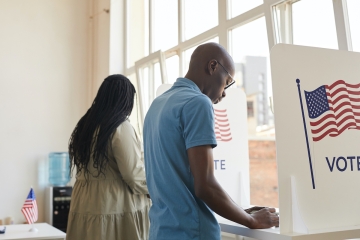
This November, Americans will cast their votes in thousands of local school board races. The stakes couldn’t be higher. These governing bodies will decide how public schools handle hot-button issues like masking requirements and critical race theory. They’ll also be overseeing efforts to ensure that kids get back on track academically, not to mention carrying out usual board responsibilities such as crafting budgets and adopting curricula.

Given the important role of school boards, voters should have the information needed to select candidates that reflect their ideals. In most elections, citizens can rely on the party labels that appear on ballots to help guide their choices—even if they don’t know much about particular candidates. Though imperfect, these partisan ballots facilitate more informed voting than asking citizens to do background research on every candidate seeking office.

Yet school board elections, along with some other municipal races, do not follow this norm. Under Ohio law, for example, school boards are technically “nonpartisan” in the sense that party affiliations are omitted from the ballot. Only candidate names appear. For many voters, a nonpartisan ballot is of no help in the selection process. The last time I voted in a school board race, I didn’t recognize any of the names, nor did I have a good sense of where they stood on education issues. Others have probably felt the same unease, as if voting in school board races is no more than guesswork.

Beyond my own frustrations, a small body of research suggests concerning consequences of nonpartisan elections. Without the help of party labels, one study finds that voters were more likely to skip the nonpartisan races on a ballot, even though they cast votes in the elections with party labels—what scholars call voter “roll off.” Other studies indicate that voters, without a partisan cue, rely instead on the likely ethnicity or gender of the candidate. Another analysis finds that nonpartisan elections depress voter turnout, which in the case of Ohio’s school board elections are already pitifully low due to their “off cycle” schedule that doesn’t align with national votes. Recognizing drawbacks such as these, groups on both sides of the political spectrum have advocated for partisan ballots in local elections.

Moreover, school board elections are also an important form of local accountability and oversight. When citizens are unhappy with the district, they can always voice their dissatisfaction at the ballot box. Yet nonpartisan elections likely weaken accountability because voters don’t know which party is in power and who deserves the boot for acting contrary to their interests. As political scientist Charles Adrian theorized many years ago, nonpartisan elections “tend to frustrate protest voting” as people cannot easily identify which candidates belong to the “in” or “out” group. In other words, it’s hard to shake up the status quo when you can’t figure out who’s part of it.

Including party labels in school board elections seems like a commonsense reform that would give voters more information, while also potentially increasing participation and enhancing local accountability. But such a change would be an uphill battle. For one, there’s inertia. Since the early 1900s, the vast majority (though not all) of school board races in the U.S. have been nonpartisan. Moving to a partisan ballot would certainly challenge longstanding tradition. Partisan elections could also spark criticisms that they create unnecessary political rancor, perhaps the kind we see at a national level. One might argue, for example, that there’s no Democratic or Republican way to run a school.

But that sentiment ignores real differences in opinion about how best to govern schools and tackle educational challenges. For instance, according to EdNext polling from 2020, Democrats express more positive views toward increased school spending and the role of teachers unions, while Republicans voice more support for school choice and merit pay policies. More recently, polling reveals significant partisan splits over issues of school reopenings and critical race theory. Anecdotally, the Cato Institute’s “public schooling battle map” documents hundreds of cases where people’s values and beliefs have come into conflict. In sum, school boards regularly make decisions where political attitudes come into play—things like whether to seek tax increases, how to negotiate union contracts, and what type of relations the district has with schools of choice. Those aren’t merely technocratic issues.

All this raises some important questions. Are nonpartisan elections really insulating public schools from divisive politics? Or is it naïve to think that school boards are apolitical governing bodies? If indeed there are ideological differences about how to run schools and educate children, shouldn’t the electorate get a hint about where candidates are likely to stand? Why keep it a secret?

In democracies, citizens work to resolve their differences through elections and the political process. Rather than suppressing differences under the illusion of “nonpartisanship,” moving to more transparent school board elections might just make for a healthier democracy and more responsive public schools.

view

Busting the belief gap via regular student assessment

Jeff Murray
8.5.2021
Flypaper

At its simplest, the belief gap is the gulf between what students can accomplish and what others—particularly teachers—believe they can achieve. It is especially pernicious when beliefs around academic competency are fueled by extraneous information such as socioeconomic status, race, or gender. All too often, the assumption of low academic ability on the part of adults becomes actual underachievement in young people. A new study looks at one simple possibility to mitigate extraneous information and remove the assumptions: using demonstrated academic ability.

The data on which the belief gap analysis is based was collected during a separate study on the efficacy of an online student evaluation platform called Assessment-to-Instruction (A2i) in several elementary grades. A2i uses regular, ongoing student assessment to not only track a student’s progress through a literacy curriculum, but also to help guide teachers as to what and how much additional work students need to reach competency. The belief gap study, conducted by researchers from the University of California, Irvine and Texas A&M University, looked at the effects of both the assessment data and the professional development (PD) around it on teachers’ perceptions of student ability.

The A2i study took place in an unnamed district in northern Florida in the 2008–09 school year, in five elementary schools ranging from urban to rural in setting. The belief gap researchers focused on a subset of the participants—twenty-eight teachers and 446 of their first-grade students. Students were representative of the district community: 84 percent were White, 6 percent were multiracial, 5 percent were Black, 3 percent were Hispanic, 2 percent were Asian, and 0.7 percent were Native American. Approximately 46 percent of the students were boys, and 27 percent of the students qualified for the National School Lunch Program (NSLP). All teachers were female, with an average of seventeen years of teaching experience. One teacher identified as Black; the rest identified as White. Fifteen teachers and their 255 students were randomly assigned into the A2i treatment group, while thirteen teachers and their 214 students were assigned to the “control” group.

It’s important to note that, due to the construct of the main A2i study, a pure control group was not possible for the belief gap analysis. Both groups of teachers received the same amount of PD regarding research-based teaching, but the focus varied between groups. The treatment group was focused on why and how to use A2i assessment data to tailor their instruction; the control group received more generalized PD on the potential value of any assessment-guided instruction. Teachers in the control group delivered business-as-usual instruction during their literacy block and implemented a research-based intervention called Math PALS for their mathematics class periods. They received infrequent assessment data for their students but were not asked to tailor their instruction based on that data. The treatment group teachers used Math PALS, too, but utilized the frequent, dynamic assessment feedback from A2i to guide and shape their literacy instruction.

At the midpoint of the school year, teachers completed the Social Skills Rating System (SSRS) for all of the first graders in the study. SSRS is a norm-referenced, multirater assessment tool comprised of fifty-seven items in three measurement areas, academic competence, problem behaviors, and social skills. The researchers hypothesized that teachers using the frequent assessment feedback from A2i for the first half of the year (and exposed to the A2i-specific PD) would produce more accurate predictions of student competence than their control group peers, and that potential biases in predictions based on student characteristics would be minimized.

Generally, this hypothesis proved correct. Teachers in the treatment group provided a more accurate rating of their students’ academic competence than their control group peers by choosing ratings that agreed with student test scores. Control group teachers—those without access to the A2i assessment data—generally rated the overall academic competence of their students lower, and rated students who qualified for the NSLP as less academically-competent than more affluent students. The strength of this effect varied based on the percentage of NLSP students attending a given school. The fewer the number of NSLP students in the school, the lower control group teachers’ ratings of those students were. Interestingly, teachers’ perception of students’ social skills and behavior problems appeared impervious to the treatment. Teachers in both groups who rated students’ behavior or social skills as poor also predicted lower academic competence for those students.

Students in the A2i classrooms achieved greater gains in test scores between fall and spring than students in the control classrooms, which likely speaks more to the primary study of A2i’s effectiveness. However, teacher ratings of academic competence were positively and significantly correlated to higher test scores in both literacy and math. For example, for every one-point increase in a teacher’s rating of academic competence, their student’s score on reading comprehension increased by 0.24 points. Thus, while it would be something of a leap to assert that a high competency rating directly results in higher test scores, there is clearly an interaction.

To the extent that teacher ratings are influenced by student and classroom characteristics unrelated to their actual performance—often negatively—any successful effort to mitigate that influence should yield positive outcomes for students. Teachers participating in PD on data-driven personalized instruction were significantly more accurate in their competency judgments regardless of socioeconomic status and other non-academic characteristics. Filtering out the noise is a great first step to eliminating the belief gap.

SOURCE: Brandy Gatlin-Nash, et. al., “Using Assessment to Improve the Accuracy of Teachers’ Perceptions of Students’ Academic Competence,” The Elementary School Journal (June 2021).

view

Five ideas for recruiting and retaining more Black and Hispanic teachers

William Rost
8.5.2021
Flypaper

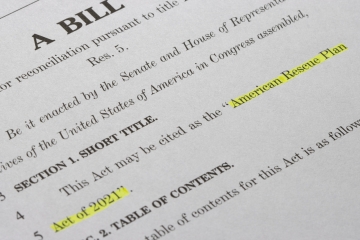
Because of how Covid-19 has devastated the U.S. education system, many see this time as a unique opportunity to galvanize state and local education systems to enact large-scale changes. Bellwether Education Partners believes that one such transformation should be how state and local education agencies recruit and retain Black and Hispanic teachers. To accomplish this, authors of one of its recent reports urge states and districts to invest newfound American Rescue Plan (ARP) dollars into five initiatives.

The report begins by highlighting the abundance of research supporting the benefits of diversity within the teaching workforce, especially for underserved students of color. Bellwether shares research findings such as non-White teachers having higher expectations for students of color, students of color performing better in schools where there is at least one teacher of the same race as them, and Black teacher retention being higher in schools with diverse workforces. Unfortunately, the teacher-student race gap is significant across America. Eighty percent of U.S. public school teachers are White compared to less than half of public school students. The report acknowledges that this statistic is simplistic and provides a state-by-state breakdown of the race-gap to show how it varies by region.

To narrow the gap, the report proposes five ARP eligible initiatives that the authors believe would diversify two stages of the teacher pipeline: increasing the number of Black and Hispanic teachers entering the pipeline, and retaining them in the schools where they are needed most:

  1. Early career exposure. This would include education-focused high school courses that could allow for dual enrollment so students can earn college credits towards an education degree while in high school.

  2. Establish Grow our Own (GYO) teacher programs, where members of the communities which schools are situated in are recruited into the pipeline. Because GYO teachers are from the same communities as their students, they tend to reflect similar demographics and improve diversity.

  3. Facilitate partnerships between education agencies and higher education institutions, especially those that serve minority populations, to better prepare teacher candidates in areas like the taking of teaching licensure exams.

  4. Create new pathways into teaching through means such as the creation of tutoring corps to help address students’ Covid-19 learning losses.

  5. Provide clear information on student debt and debt supports for prospective teacher candidates.

For retaining Black and Hispanic teachers, Bellwether suggests using ARP funds for professional development, the building of networks and communities of practice, and leadership training for principals. The first two of these initiatives aim to establish networks of Black and Hispanic teachers and mentorship programs that serve them, which could reduce the isolation they often feel in schools where teacher diversity is low. The leadership training initiative aims to improve principals’ ability to create inclusive workplace cultures within their schools.

Though all of these initiatives may help diversify the teacher workforce, it’s important to remember that these ARP dollars are one-time sources of funding. Investing ARP dollars in initiatives like establishing communities of practice or voluntary mentorship programs are excellent because they have low-maintenance cost once established. But one of the biggest challenges for initiatives like GYO programs is securing long-term funding. The strategies suggested by Bellwether are excellent solutions to the teacher-student race gap, but policymakers must also ensure that future financial supports are in place once the ARP funds run dry.

SOURCE: Andrew J. Rotherham and Thomas Gold “Window of Opportunity: How States and Localities Can Use Federal Rescue Plan Dollars to Diversify Their Teacher Workforce,” Bellwether Education Partners (2021).

view

The Education Gadfly Show #781: The House Democrats’ attack on charter schools

8.5.2021
Podcast
 

On this week’s podcast, Ron Rice, senior director of government relations at the National Alliance for Public Charter Schools, joins Mike Petrilli and David Griffith to discuss the House’s recently passed spending bill that would cut charter school start-up grants, and could put all charter schools’ federal funding at risk. On the Research Minute, Amber Northern examines the substantial academic and professional benefits of participating in high school and college sports.

Amber's Research Minute

James J. Heckman and Colleen P. Loughlin, "Athletes Greatly Benefit from Participation in Sports at the College and Secondary Level," NBER Working Paper #29077 (July 2021).

If you listen on Apple Podcasts, please leave us a rating and review - we'd love to hear what you think! The Education Gadfly Show is available on all major podcast platforms.

view

Cheers and Jeers: August 5, 2021

8.5.2021
Flypaper

Cheers

  • An accelerated math program in Pasadena, California has maintained strong participation through the pandemic and is giving low-income students a leg up in college. —Jay Mathews
  • There are ways parents can manage their kids’ relationships with smart devices to protect their mental health. —Jonathan Haidt and Jean M. Twenge

Jeers

  • Randi Weingarten rejects a vaccine mandate for teachers, while saying that her union will “try” to open schools this fall. —Jonathan Chait
  • Catherine Lhamon, Biden’s pick to lead the Department of Education’s Office for Civil Rights, refused to condemn specific forms of racial discrimination, such as having separate grading policies based on race. —Max Eden
  • Due in part to San Francisco’s teachers union, “political infighting over the creation of city-sponsored learning hubs for vulnerable students last year resulted in a less effective system.” —San Francisco Chronicle
view

What we're reading this week: August 5, 2021

8.5.2021
Flypaper
  • There’s a broad “coalition of the pissed-off” rising in many cities that’s recalling school board members for pursuing political agendas instead of student needs. It’s likely to shape this election cycle. —Andy Rotherham
  • “Fighting the Delta variant: School reopening just got a lot more complicated.” —Education Week
  • The pandemic spiked Philadelphia’s previously-declining homicide rates by depriving at-risk students of an education and social interactions, and by dissolving the trust police officers were building with the community. —ProPublica
  • D.C.’s lower-income families in Anacostia were hit especially hard economically by shutdowns, and many kids disconnected from remote schooling. Now, childcare centers and early grades schools are working hard to get kids back in classrooms. —The 74
  • Moderate and suburban Democrats are unhappy with the party’s approach to equity in schools. —Politico
  • The creative class that dominates tech, business, and the media has stirred up division and resentment. Let's create more pathways to upward mobility for people without degrees to diversify the leadership classes and bring positive change. —David Brooks
Fordham Logo

© 2026 The Thomas B. Fordham Institute
Privacy Policy
Usage Agreement

National

P.O. Box 110
Burke, VA 22009

202.223.5452

[email protected]

Ohio

P.O. Box 82291
Columbus, OH 43202

614.223.1580

[email protected]

Sponsorship

130 West Second Street, Suite 410
Dayton, Ohio 45402

937.227.3368

[email protected]