Mobile Navigation

  • National
    • Policy
      • High Expectations
      • Quality Choices
      • Personalized Pathways
    • Research
    • Commentary
      • Gadfly Newsletter
      • Flypaper Blog
    • Events
    • Scholars Program
  • Ohio
    • Policy
      • Priorities
      • Media & Testimony
    • Research
    • Commentary
      • Ohio Education Gadfly Biweekly
      • Ohio Gadfly Daily
  • Charter Authorizing
    • Application
    • Sponsored Schools
    • Resources
  • About
    • Mission
    • Board
    • Staff
    • Career
Home
Home
Advancing Educational Excellence

Main Navigation

  • National
  • Ohio
  • Charter Authorizing
  • About

National Menu

  • Topics
    • Accountability & Testing
    • Advanced Education
    • Career & Technical Education
    • Charter Schools
    • Curriculum & Instruction
    • ESSA
    • Evidence-Based Learning
    • Facilities
    • Governance
    • Personalized Learning
    • Private School Choice
    • School Finance
    • Standards
    • Teachers & School Leaders
    • Think Again
  • Research
  • Commentary
    • Gadfly Newsletter
    • Flypaper Blog
    • Gadfly Podcast
  • Events
  • Scholars Program

The Education Gadfly Weekly

Sign Up to Receive Fordham Updates

We'll send you quality research, commentary, analysis, and news on the education issues you care about.
Thank you for signing up!
Please check your email to confirm the subscription.

The Education Gadfly Weekly: Four reasons Republicans should support aid for state and local governments

Volume 20, Number 21
5.26.2020
5.26.2020

The Education Gadfly Weekly: Four reasons Republicans should support aid for state and local governments

Volume 20, Number 21
view
High Expectations

Four reasons Republicans should support aid for state and local governments

Conservatives are right to be leery of bailing out profligate state and local governments, especially for needs that bear little relationship to—and pre-date—the virus crisis and its economic consequences. A well-crafted bill would base the amount of funding for state and local governments upon an estimate of the actual costs and losses incurred as result of the pandemic. It cannot be a blank check to fund every item on a state’s wish list. But telling states to “make hard decisions” is not going to cut it.

Michael J. Petrilli, Chad L. Aldis 5.26.2020
NationalFlypaper

Four reasons Republicans should support aid for state and local governments

Michael J. Petrilli | Chad L. Aldis
5.26.2020
Flypaper

Half-Time High School may be just what students need

Michael J. Petrilli
5.27.2020
Flypaper

Could “school choice moms” tip this fall’s presidential race?

Dale Chu
5.27.2020
Flypaper

Growth trends in social and emotional learning

Amber M. Northern, Ph.D.
5.27.2020
Flypaper

The Education Gadfly Show: The link between location and income

5.27.2020
Podcast
view

Half-Time High School may be just what students need

Michael J. Petrilli 5.27.2020
Flypaper
view

Could “school choice moms” tip this fall’s presidential race?

Dale Chu 5.27.2020
Flypaper
view

Growth trends in social and emotional learning

Amber M. Northern, Ph.D. 5.27.2020
Flypaper
view

The Education Gadfly Show: The link between location and income

Michael J. Petrilli, David Griffith, Ph.D., Amber M. Northern, Ph.D. 5.27.2020
Podcast
view

Four reasons Republicans should support aid for state and local governments

Michael J. Petrilli | Chad L. Aldis
5.26.2020
Flypaper

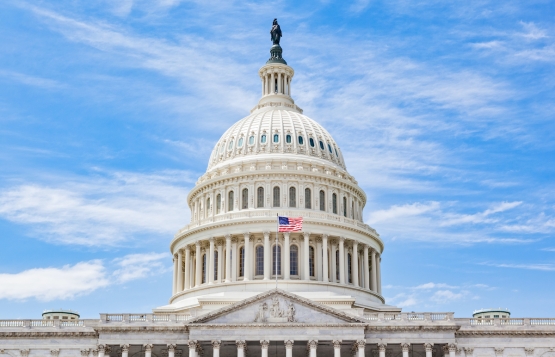
Back in March, the coronavirus pandemic led to a rare outbreak of a different sort, as bipartisanship returned to Capitol Hill. Unfortunately, unlike COVID-19, that phenomenon has proved fleeting, as Democrats and Republicans are back to bickering again as they debate the next phase of the federal response.

Earlier this month, House Democrats put their chips on the table with a $3 trillion stimulus proposal, dubbed the HEROES Act. The bill passed on May 15, despite Senate Republicans saying that another round of help is premature. The need to provide liability protection for businesses that bring staff back to work prevailed over partisan politics. For his part, Fed chairman Powell is uncharacteristically warning that, without massive federal aid and investment, the present recession will turn into something long-lasting and much worse.

This won’t be the last fight over federal aid and posturing has become par for the course in Washington in recent years. Sometimes it’s the prelude to negotiation, sometimes to stalemate. But we would be remiss not to plead with our fellow conservatives: don’t shoot yourselves—and your constituents—in the foot by refusing to assist state and local governments.

Sadly, GOP opposition to “fiscal stabilization” seems to be hardening. Even Senator Lamar Alexander, a former governor himself and one of the smartest and steadiest Republicans in Congress, has indicated that states might be on their own. “The country certainly can’t afford for Washington to keep passing trillion-dollar spending bills,” he recently told AEI’s Frederick M. Hess. “We are all going to have to make tough decisions.”

Yes, conservatives are right to be leery of bailing out profligate state and local governments, especially for needs that bear little relationship to—and pre-date—the virus crisis and its economic consequences. It didn’t help when Illinois Democrats pleaded for a rescue package for the state’s miserably mismanaged pension system. It’s simply unfair to ask taxpayers in red states to pay the bill for expensive government services in blue ones. If progressives could count on the federal government to come to the rescue during every recession, it would create a moral hazard, giving them even more reason to create expensive programs that their own taxpayers can’t afford.

So the details matter greatly when deciding how federal aid is allocated. Proposals are floating around Washington that address the concerns of Republicans and their constituents, while keeping the focus squarely on the matter at hand: backstopping the sizable COVID-related expenditures of hard-hit state and local governments, and replacing the billions of dollars of revenue lost when the economy shut down. In other words, a well-crafted bill would base the amount of funding for state and local governments upon an estimate of the actual costs and losses incurred as result of the pandemic. It cannot be a blank check to fund every item on a state’s wish list.

But telling states to “make hard decisions” is not going to cut it, for four reasons.

First, this is not a typical crisis for which state and local governments could prepare. The economic shock is orders of magnitude greater than during a typical, cyclical downturn; no public official—not even in solidly red states like Ohio—could have set aside nearly enough “rainy day funds” to weather this storm. The federal government has the ability to borrow the money to deal with a calamity of this size; state and local governments don’t. And, unlike Congress, they must balance their budgets.

Second, without federal aid, states and localities will be forced to make enormous cuts to staff—and that will in turn slow down the economic recovery. To get business moving again, once it’s safe to resume activity, we’ll need more consumers with money in their pockets and the confidence to spend it. Laying off hundreds of thousands of state and local workers—including front-line teachers, police, nurses, and firefighters—won’t help.

Third, cuts in staff means a cut in services and the burden of those cuts will fall hardest on our communities and families most in need. Crime-ridden streets will be less safe, fragile families will be more stressed, and low-income students will lose ground academically—a double whammy considering the time they’ve already lost to school closures. It will also make it harder to reopen the economy if basic services like building and health inspectors are in short supply.

Finally, Republicans could pay a big price in November if they block such help, given its wide public support. Are they really willing to gamble away important swing states like Michigan or Senate seats like Arizona’s when the headwinds are already so fierce?

By all means, GOP leaders should push back against the parts of stimulus packages they find objectionable, and make sure that any state or local aid doesn’t go to bail out pensions or keep afloat other long-insolvent big-government programs. But as defenders of our federalist system and of local control, it makes no sense to allow our state and local institutions to crumble. Federal aid should always be a measure of last resort, reserved for times of true national crisis. Alas, fellow conservatives, that time is now.

Editor’s note: This post was first published by The Bulwark.

view

Half-Time High School may be just what students need

Michael J. Petrilli
5.27.2020
Flypaper

The shutdown of America’s high schools has deprived millions of students of rites we previously took for granted. Coursework can be transferred online to some degree, but no virtual environment can replace football games, choir concerts, musicals, and so much more that’s part of the American high school experience. We may continue to yearn for such things well into the autumn, especially in communities that face additional closures, and where public officials want students and educators to stay “socially distant” even when at school. Say goodbye to Friday Night Lights.

Yet while there’s much to rue about what the pandemic has taken away, it’s possible to glimpse a future in which technology liberates high school students—or at least some of them—from the six or seven-hour school day that has been crushing teenage souls for generations. That’s worth celebrating because so much of the school day amounts to wasted time.

Students only learn when they are focused, engaged and putting in effort. Yet surveys have long shown that teenagers spend most of their day bored, zoned out, and only pretending to listen. For many students—especially the most motivated ones—they’d be better off, not to mention happier, if they spent much more of their time reading, writing and completing projects than going through the motions in our industrial-style schools.

—

For decades, the organization of the school day has followed a stultifying routine. High school seniors force themselves to get up at the crack of dawn and sleepwalk their way to first-period by 7:30 or 8:00 a.m. They then slog through six or seven forty-five minute classes, and finally leave school at 2:30 or 3:00, ready at last to do something self-directed: play sports, head to band or theater, or go to jobs. In theory, everyone tackles at least some homework before falling asleep and then repeating the daily grind.

But then something wonderful happens in the lives of teenagers: They go to college and the chains drop away. Their in-person class time drops to fifteen hours a week, even with a full course load. Just three hours a day! But in return, they’re expected to do loads of independent work, participate in group projects, and show up for office hours if they need additional help. In recent years, college students have also been watching some lectures online so class time can be spent on small-group discussions and doing hands-on laboratory work.

All this raises an obvious question: Why can’t our high schools look more like college? Does every high school course really need to meet in person, every day, given the technology available to us? What if kids could choose an every-other-day schedule, where they attend class in person on even days and stay home (or work from the school library or computer lab or do an apprenticeship) on odd days? Or they select a morning or afternoon schedule rather than attending all day long?

At least for the upcoming fall semester, moving to Half-Time High will be a necessity. The only way for schools to maintain social distance in crowded buildings is to operate well below capacity. This may mean running two shifts a day, morning and afternoon, or asking kids to show up in person every other day. If we don’t want kids to learn half as much, that means continuing with online learning—and lots more independent study—while at home.

If done right, these disruptions could introduce some long-overdue reforms in the way high school is structured. It’s a safe bet that many teenagers would welcome the chance to take their classes from, say, 11:30 to 2:30, then do their sports or other extra-curriculars, then do homework into the wee hours, and sleep in the next morning. That last part is particularly important, given the growing pile of research studies showing the danger of sleep deprivation to the adolescent brain. That’s why the American Academy of Pediatrics recommends later start times—both to improve academic achievement, but also to cut down on car accidents and more. And indeed, when Wake County Public Schools in North Carolina moved the school schedule back, test scores rose significantly.

This pre-college model would undoubtedly work best for the most motivated students and those who enjoy working independently. At first, schools might offer teenagers the opportunity to apply for an alternative schedule, and select those whose teachers think they can handle it. If schools let the class size for these hybrid courses be a bit larger than average, it could allow more personal attention for lower-achieving students who continue with the traditional schedule, or for students with disabilities or English language learners. All without adding any cost to the school. This could be an important new form of educational choice.

To be sure, we would need to put guardrails in place to ensure that kids who are only at school half of the time aren’t getting half of the learning. The best solution is to make students demonstrate that they have mastered the material. Advanced Placement courses—with their high bar for rigor, and their well-respected end-of-year assessments—would be ideal candidates. Other forms of “competency-based education” could work as well, such as asking students to tackle real-world projects or write a senior thesis.

As with so many things in K–12 education, the major barrier to this innovation is outdated policy and deeply ingrained habit. Every state requires students to attend school in person for a certain number of hours or days a year, and most fund their schools based at least in part on how many kids show up each day. Those systems would need to be reworked long term, just as they have been during the current crisis.

But where there’s a will there’s a way, and in this case, the coronavirus is providing not just the will but also the “shall.” Half-Time High is coming. We should try to keep it going once the pandemic recedes.

Editor’s note: This article was first published by Bloomberg.

view

Could “school choice moms” tip this fall’s presidential race?

Dale Chu
5.27.2020
Flypaper

According to an opinion piece published in The Wall Street Journal, the election of Florida’s Republican governor Ron DeSantis in 2018 can be credited to African American women who voted to protect tax-credit scholarships and charter schools. If these “school choice moms” swung a razor-thin gubernatorial contest, could black and Hispanic women help determine who wins the White House in November? Assuming that school choice made the difference in the Sunshine State, it would follow then that making it an issue in Michigan, Pennsylvania, and Wisconsin could create some productive mischief. After all, Trump won these three states by 0.2, 0.7, and 0.8 percentage points, respectively, and by 10,704, 46,765, and 22,177 votes. If Hillary Clinton had gotten these 80,000 votes, she would have won the election.

Consider the numbers in Florida. Of the 650,000 black women who voted, 18 percent chose the winner. Granted, 18 percent of the black female vote in Florida translates to less than 2 percent of the total electorate, but in an election decided by fewer than 40,000 votes, these 100,000 black women proved pivotal. Florida’s tax-credit scholarship program serves more than 100,000 low-income students, most of whom are minorities and whose mothers are registered Democrats. Even more students are enrolled in the state’s 650 charter schools.

In an open letter penned last week by Dr. Howard Fuller to presumptive Democratic nominee Joe Biden, Fuller underscored the importance of school choice to parents of color in a not-so-subtle warning to the former vice president:

You cannot ignore [black and brown families who have chosen public charter schools] and expect us to march blindly to the ballot box to support you. Your party made that mistake in 2016. Think long and hard before repeating that mistake in 2020.

To be sure, every vote counts in a close election, but how worried should Biden be about school choice moms?

It’s already become clear that African American women will feature prominently in this fall’s contest. Indeed, Biden is being pressured by some to select one as his running mate, perhaps even more so now in light of last week’s “you ain’t black” gaffe. He’s already confirmed that “multiple black women [are] being considered,” namely Senator Kamala Harris, former Georgia gubernatorial candidate Stacey Abrams, and Florida Representative Val Demings.

While black women were instrumental in putting Biden over the top in the primaries, his victory came in spite of Hispanic women. Critics say that the campaign’s efforts thus far to reach out have been lackluster, which means Biden has ground to make up. Notably, school choice helped solidify support for Florida’s governor among Hispanic women at an impressive 41 percent. Along with black women, they probably shouldn’t be taken for granted.

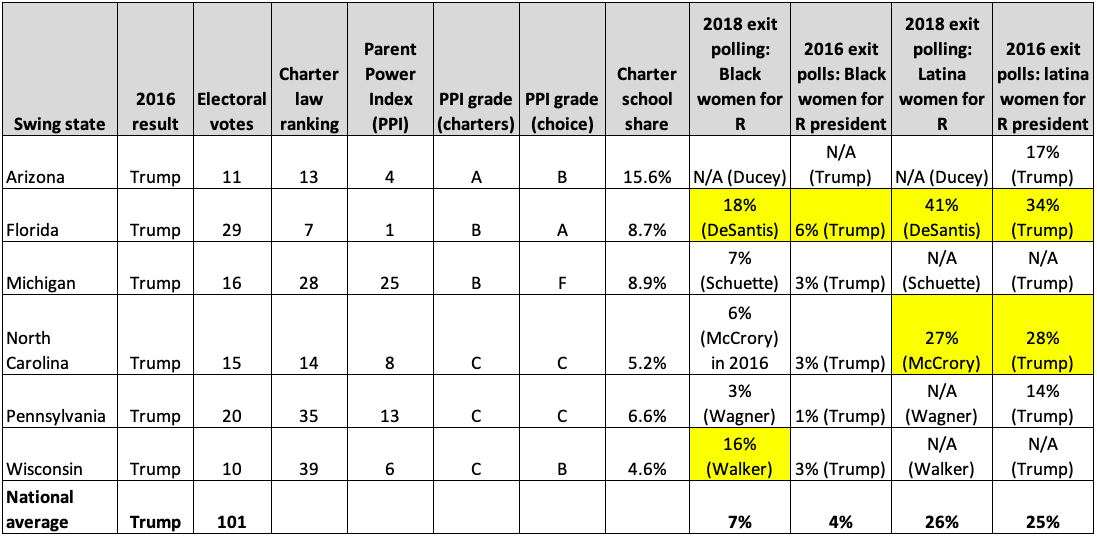
Although Biden currently leads Donald Trump in national polling, the numbers are generally closer in battleground states. As such, the school choice policies in six of the big ones—Arizona, Florida, Michigan, North Carolina, Pennsylvania, and Wisconsin—will be important to consider if they hold the keys to 1600 Pennsylvania Avenue. For my rudimentary analysis, I used the same CNN polling data in The Wall Street Journal op-ed to compare how black and Hispanic women voted in each of these states and whether they outperformed the GOP national average, highlighted in yellow in the chart below. To add some texture, I also included school choice data from the National Alliance for Public Charter Schools, the Center for Education Reform, and EdChoice.
dc table

Here’s a look at school choice in the six swing states that will have an outsize impact on the November election:

Pennsylvania

The Keystone State surprised many when it went for Trump in 2016, the first time it fell into the red column since Bush Sr. in 1988. But with Biden being a native son, it’s hard to imagine that happening again in November. If lightning is to strike twice in Pennsylvania, it will be white voters without a college degree—not school choice moms—turning up in big numbers to put Trump over the top.

Arizona

FiveThirtyEight has Biden up in this traditionally red state. But as is possibly the case in a number of places, Trump is being weighted down by the pandemic and the economic shutdown. Except for Bill Clinton’s win in 1996, Arizona has been dependably Republican since 1952. While African Americans make up a relatively small share of the state’s student population (5 percent), nearly half are Hispanic. However, because Hispanic students are underrepresented in Arizona’s charter schools, activating Hispanic moms on choice might not be worth the effort.

Michigan

Trump unexpectedly turned Michigan red for the first time in nearly thirty years. Doing so again will be a considerable challenge. If it were to happen, Metro Detroit would be the place to target, with nearly 60 percent of the state’s charter school population. How hard would it be to rile up school choice moms in the Wolverine State in the wake of the governor’s failed attempt to cut charter school funding?

North Carolina

Since 1968, North Carolina has been almost exclusively Republican when it comes to presidential contests. Indeed, Trump is performing better here than in any of the other five battleground states, and he slightly outperformed the average with Hispanic women in 2016. But the Tar Heel State has fallen short when it comes to low-income and minority students, and there’s research to suggest that their charter sector is more of a boon to white, middle-class families. On the positive side, charters in North Carolina do a better job at hiring teachers of color.

Wisconsin

The state that Dr. Fuller calls home has been a pioneer on school choice in no small part due to his leadership and vigilance. But given its predominately white electorate, Wisconsin is viewed by many as the weakest link in the Democratic “Blue Wall.” In fact, former Republican Governor Scott Walker almost matched the strong showing with African American women had by Governor DeSantis. On education, the current governor’s crusade against choice could rally charter school parents in keeping the state red.

Florida

Although the Sunshine State is now the president’s official residence, the perennial swing state—someone once quipped on Twitter that a choice between a kick in the head and ice cream would result in a recount—is unsurprisingly within the margin of error. Both Trump and the governor have done better than expected with African American women. If there’s a state where school choice moms can force a photo finish again, it’s Florida.

—

All told, there are two parts to this equation. The first are the polling numbers, where there isn’t a ton of evidence—outside of Florida—to suggest that school choice moms can help the current president punch above his weight. However, the second is the moral calculus: At what point does the Democratic party’s antipathy to a school choice agenda that’s popular with black and brown voters cost it the votes of a segment of the base they’re counting on?

Earlier this year, the Powerful Parent Network successfully brokered meetings with a number of Democratic frontrunners, including the ultimate winner. Biden told one of the group’s leaders, Sarah Carpenter, that he was “not a charter school fan.” Carpenter left disappointed, saying afterwards, “Nobody’s addressing the system that got our kids into this mess.” By throwing choice and charters under the bus, Biden is engaging in a game of chicken with school choice moms and asking, in effect, “What are you going to do? Vote for Trump?” Perhaps not. But if Fuller is right, the Democrats’ disregard for black and Hispanic voter preferences on choice could keep enough of them at home in a few key states, which would be a disaster for those who view the current occupant of the White House as an existential threat to the Republic.

view

Growth trends in social and emotional learning

Amber M. Northern, Ph.D.
5.27.2020
Flypaper

In early 2019, the Aspen Institute released the findings of the National Commission on Social, Emotional, and Academic Development. The report concluded that non-academic factors—such as managing emotions, goal setting, empathy, interpersonal relationships, self-regulation, and more—were vital ingredients to boosting academic achievement for all students. It was the crest of a wave that had been building for decades, but ensconcing social and emotional learning (SEL) in all of the nation’s classrooms was not a slam-dunk before or since. A backlash against so-called “soft skills” arose in some states and communities, particularly around the idea that SEL might supplant parental rights and responsibilities. Or even the Three Rs. Some of this angst likely materialized because we know so little about how social and emotional development is nurtured and reliably measured.

Enter a new study from the journal Educational Evaluation and Policy Analysis that examines how students’ social and emotional development evolves over time. Lead researcher Martin West and his six-member team leverage student survey data from a network of six large urban districts in California called CORE that serve nearly one million kids. The survey is comprised of twenty-five questions that assess four SEL constructs: self-control, which is the ability to regulate one’s thoughts and emotions; growth mindset, which is the belief that one’s abilities can grow with effort; self-efficacy, which is the belief in one’s ability to succeed in achieving an outcome or reaching a goal; and social awareness, which is the ability to take the perspective of and empathize with others.

The survey data are for students in grades four through twelve who completed surveys in both 2014–15 and 2015–16. The final sample for each construct includes about 283,000 students who completed at least half the items for the respective construct in both years. It is important to note that the researchers did not have full individual survey data for grades four through twelve—only the development of SEL for a given student over the course of a single school year. Thus, they produce “simulated cohort trends,” whereby they aggregate information on these changes across multiple grade levels to simulate long-term trends for students who remain enrolled in participating districts. Specifically, they calculate mean score gains for those who completed the survey in both years and use these gains to extrapolate from grade eight, which is the midpoint of the sample, to both prior and subsequent grades. This improves the cross-sectional comparisons by accounting for idiosyncratic differences between grade cohorts and for students’ entry and exit from the study sample, which could be problematic for their models.

Their key finding is that social and emotional constructs do not consistently increase as students advance through school, although growth mindset is a partial exception, with students who remain enrolled from grades four to twelve registering fairly consistent increases of around 0.06 standard deviations annually between grades four and ten, before leveling off through the remainder of high school. Conversely, students’ simulated scores on self-efficacy and social awareness decline by 0.38 and 0.56 standard deviations, respectively, between grades four and twelve with the most rapid declines occurring in middle school. As for self-control, students’ scores increase minimally—roughly 0.2 standard deviations between grades four and six—and remain roughly stable thereafter.

As for subgroups, white students report higher levels of social and emotional attainment  consistently over time, although Asian students’ self-control closely mirrors that of white students. The size and trends of these patterns vary based on the construct under consideration. For the most part, African American students tend to report lower levels of self-control and social awareness relative to other racial groups. Latino students report lower levels of both growth mindset and self-efficacy compared with other groups. But these gaps tend to narrow by the end of high school. Female students report higher levels of self-control and social awareness than males but lower self-efficacy relative to males in middle and high school. Finally, economically disadvantaged and students of color report lower levels of each construct.

West and his team are hard-pressed to draw too many conclusions from these data, especially regarding the role of schools in relation to the observed trends. The results could be impacted in part by what’s occurring outside of the school or stem from typical development patterns of adolescents. They might also reflect students’ differing standards or reference points: Asking a ten-year-old how much self-control he thinks he possesses is fundamentally a different question than asking the same thing of a sixteen-year-old.

That said, prior research conducted by Kirabo Jackson and his team found that attending a high school that improves socio and emotional development positively influences longer-term outcomes, including high-school completion, college-going, and college persistence. That’s encouraging. So is the fact that many reputable scholars are committed to rigorously studying SEL and helping to get its implementation right in American schools. Godspeed!

SOURCE: Martin R. West, Libby Pier, Hans Fricke, Heather Hough, Susanna Loeb, Robert H. Meyer, and Andrew B. Rice, “Trends in Student Social-Emotional Learning: Evidence From the First Large-Scale Panel Student Survey,” Educational Evaluation and Policy Analysis (March 23, 2020).

view

The Education Gadfly Show: The link between location and income

5.27.2020
Podcast

This week’s podcast guest is John V. Winters, Ph.D., associate professor of economics at Iowa State University and author of Fordham’s new report, What You Make Depends on Where You Live. He joins Mike Petrilli and David Griffith to discuss the report’s findings and implications. On the Research Minute, Amber Northern examines educators’ strong record in detecting and reporting child mistreatment, and how training and support could help them be even more effective.

Amber's Research Minute

Maria D. Fitzpatrick, Cassandra Benson, and Samuel R. Bondurant, “Beyond Reading, Writing, and Arithmetic: The Role of Teachers and Schools in Reporting Child Maltreatment,” NBER Working Paper #27033 (April 2020).

The Education Gadfly Show is available on Google Podcasts, Libsyn, Spotify, iHeartRadio, Apple Podcasts, TuneIn, The Podcast App, PodBean, Podbay, Chartable, Castbox, and myTuner Radio.

Fordham Logo

© 2026 The Thomas B. Fordham Institute
Privacy Policy
Usage Agreement

National

P.O. Box 110
Burke, VA 22009

202.223.5452

[email protected]

Ohio

P.O. Box 82291
Columbus, OH 43202

614.223.1580

[email protected]

Sponsorship

130 West Second Street, Suite 410
Dayton, Ohio 45402

937.227.3368

[email protected]