Mobile Navigation

  • National
    • Policy
      • High Expectations
      • Quality Choices
      • Personalized Pathways
    • Research
    • Commentary
      • Gadfly Newsletter
      • Flypaper Blog
    • Events
    • Scholars Program
  • Ohio
    • Policy
      • Priorities
      • Media & Testimony
    • Research
    • Commentary
      • Ohio Education Gadfly Biweekly
      • Ohio Gadfly Daily
  • Charter Authorizing
    • Application
    • Sponsored Schools
    • Resources
  • About
    • Mission
    • Board
    • Staff
    • Career
Home
Home
Advancing Educational Excellence

Main Navigation

  • National
  • Ohio
  • Charter Authorizing
  • About

National Menu

  • Topics
    • Accountability & Testing
    • Advanced Education
    • Career & Technical Education
    • Charter Schools
    • Curriculum & Instruction
    • ESSA
    • Evidence-Based Learning
    • Facilities
    • Governance
    • Personalized Learning
    • Private School Choice
    • School Finance
    • Standards
    • Teachers & School Leaders
    • Think Again
  • Research
  • Commentary
    • Gadfly Newsletter
    • Flypaper Blog
    • Gadfly Podcast
  • Events
  • Scholars Program

The Education Gadfly Weekly

Sign Up to Receive Fordham Updates

We'll send you quality research, commentary, analysis, and news on the education issues you care about.
Thank you for signing up!
Please check your email to confirm the subscription.

The Education Gadfly Weekly: During coronavirus closures, Success Academy teachers are calling each student twice a day

Volume 20, Number 11
3.18.2020
3.18.2020

The Education Gadfly Weekly: During coronavirus closures, Success Academy teachers are calling each student twice a day

Volume 20, Number 11
view
worst case policy
Quality Choices

COVID-19 and worst-case policy

Why are some schools and districts crashing to provide their pupils with online learning and/or “lesson packets” during this period of social isolation, while others have essentially just shut their doors and turned off the electricity, leaving kids and families to fend for themselves—and inviting the coronavirus version of “summer learning loss?”

Chester E. Finn, Jr. 3.18.2020
NationalFlypaper

COVID-19 and worst-case policy

Chester E. Finn, Jr.
3.18.2020
Flypaper

Remote learning advice from Eva Moskowitz: “Keep it simple”

Robert Pondiscio
3.18.2020
Flypaper

The chronic condition of American education

Dale Chu
3.18.2020
Flypaper

Supporting low birth weight babies helps long after infancy

Amber M. Northern, Ph.D.
3.18.2020
Flypaper

Page to screen: a comparison of reading habits and comprehension in digital vs. print

3.18.2020
Flypaper

An open letter to Checker Finn and Mike Petrilli

Ross Wiener
3.18.2020
Flypaper
view
Robert SA blog image

Remote learning advice from Eva Moskowitz: “Keep it simple”

Robert Pondiscio 3.18.2020
Flypaper
view
chronic condition of american education

The chronic condition of American education

Dale Chu 3.18.2020
Flypaper
view
low birth weight babies

Supporting low birth weight babies helps long after infancy

Amber M. Northern, Ph.D. 3.18.2020
Flypaper
view
Digital vs print image

Page to screen: a comparison of reading habits and comprehension in digital vs. print

3.18.2020
Flypaper
view
Wiener letter to the editor

An open letter to Checker Finn and Mike Petrilli

Ross Wiener 3.18.2020
Flypaper
view
worst case policy

COVID-19 and worst-case policy

Chester E. Finn, Jr.
3.18.2020
Flypaper

Why are some schools and districts crashing to provide their pupils with online learning and/or “lesson packets” during this period of social isolation, while others have essentially just shut their doors and turned off the electricity, leaving kids and families to fend for themselves—and inviting the coronavirus version of “summer learning loss?”


The can-do institutions are seeking to sustain teaching and learning during this tough time, to maintain some continuity in curriculum, to ease the burden on parents and other at-home kid-supervisors, and to constructively occupy the minds and time of young people who might otherwise…well, you know. The shutdown institutions are doing none of that.


Why? The simplest explanation, of course, is lack of imagination, dearth of planning, inept bureaucracy, perhaps a union or two that would welcome the equivalent of a vacation for its members—and the misery of making major decisions very quickly in a genuinely complicated situation.


But two other explanations, which turn out to be connected, are also possible—and, I think, likely. The first is a well-intended but ultimately misguided notion of equity and social justice. The other is a compliance mindset that allows “guidance,” “fact sheets,” and “regulations,” which are themselves invariably driven by equity considerations, to control one’s actions without regard either to common sense or to conditions on the ground.


Of course we know that not all students and families have workable Internet access and devices that enable online learning. Does that mean no such learning opportunities should be provided to anybody (except those clever and wealthy enough to find them for their own kids)?


Of course we know that an online lesson or class—or hard-copy study packet—that works satisfactorily for most students won’t work as well (or perhaps not at all) for youngsters with certain disabilities or limited English proficiency. Does that mean nobody should have access to it?


Of course we know that some kids live near schools or have parents with cars and therefore have a relatively easy time picking up packets—or lunches—and taking them home, while others ordinarily depend on school buses (which aren’t running) or public transportation (which shouldn’t be taken). Does that mean the school shouldn’t open its front door to hand out books, packets, workbooks, videos, or food boxes to those who are able to stop by?


America has gradually drifted—this goes far beyond education—toward a troubling mindset that I have termed “worst-case social policy”: the belief that if a given program or policy doesn’t meet the needs of the least fortunate, worst-off case you can imagine, then it shouldn’t be undertaken at all. We have absorbed the view that it’s simply unjust and should be illegal not to meet everyone’s needs all the time, whatever we’re doing. If there aren’t enough lifeboats for everyone on the sinking ship, then nobody should get into any of those that are available.


The view that anything that fails to deal with the worst case and meet everyone’s needs should be illegal has given rise to laws and regulations that say it is illegal, which then give rise to costly, embarrassing litigation when someone is aggrieved because their needs aren’t being met. Individualized special education, overdue and well intended as it was, is the premier example of this in the K–12 space—and many attorneys earn nice livings enforcing its provisions.


The sane way—the practical way—to address differing needs and circumstances is, of course, to deploy different strategies and programs. We have a fine example of that way of thinking in Naomi Schaefer Riley’s excellent chapter in Mike’s and my new book How to Educate an American and in an adaptation published in The 74. Naomi makes the straightforward but important point that, though school choice policies and programs can do much good for millions of needy kids, they’re not optimal for girls and boys from truly dysfunctional family situations. For them, she contends, other—more “paternalistic”—strategies are necessary.


In the present crisis, worse-case policy thinking about interim educational offerings is itself worsened by the predictable-yet-damaging “fact sheet” guidance issued on Monday by the federal Office for Civil Rights: “As school leaders respond to evolving conditions related to coronavirus, they should be mindful of the requirements of Section 504, Title II, and Title VI, to ensure that all students are able to study and learn in an environment that is safe and free from discrimination.”


It’s not acceptable, in a society allergic to discrimination and in favor of social justice, to argue against the principle set forth in that sentence. “All students” means exactly that. (Remember no child left behind?) We really mean it. And if you—we’re talking to you, educators—don’t do it right, we may come after you (we may label it a mere “fact sheet,” but you can be sure we’ll be watching).


The guidance isn’t totally rigid: “The Department understands that there may be exceptional circumstances that could affect how a particular service is provided.” Yet if I were a wary school superintendent, here’s the sentence I would focus hardest on: “If a school district closes its schools and does not provide any educational services to the general student population, then a school would not be required to provide services to students with disabilities during that same period of time.”


In other words, shut them all down and don’t do anything for anybody and you won’t get sued. You won’t get in trouble with Uncle Sam or one day find yourself in court. Nobody will have grounds to object because nobody will have been served. Remember Catch 22?


Except, of course, all those whose children could have learned quite a bit on the days the schools were closed if only the educators in charge had found a way to assist them and if only the government toward which we now look for relief from coronavirus wasn’t getting in their way by insisting on worst-case policy at a time when educators and parents are trying to offer some semblance of normalcy to children whose lives and routines have been upended.


For a school or district, is there a way to thread this seemingly impossible needle? Perhaps, but it would require the feds to cooperate in more imaginative ways than they’ve yet demonstrated. They’d need to clarify their guidance to acknowledge the extraordinary crisis facing schools, admit that they see some districts choosing not to provide any instruction rather than risk being found out of compliance with civil-rights laws, and then state clearly and strongly that federal law does not require such decisions. Rather, districts should move as swiftly as possible to provide distance learning opportunities for all students; for those with special needs, districts should reach out to families immediately to schedule meetings to revise their IEPs, understanding that it may take time to get those meetings on the books and held (probably remotely). Special-needs students will likely also need some remedial help as soon as schools are able to furnish it. Yet none of that should hold up a district from starting its distance learning program ASAP.


Social-justice warriors and timid or incompetent bureaucrats (and cautious attorneys) might still keep that from happening at the local level. But at that point, they’d have only themselves to blame for the ensuing learning losses.

view
Robert SA blog image

Remote learning advice from Eva Moskowitz: “Keep it simple”

Robert Pondiscio
3.18.2020
Flypaper

“This is unprecedented,” said Eva Moskowitz “We’re not used to planning for a pandemic.”

The CEO of Success Academy had just opened a Tuesday-afternoon webinar on her network’s transition from forty-five brick-and-mortar charter schools to the anticipated launch, less than forty-eight hours away, of “remote learning” for its eighteen thousand students. More than two-thousand people signed up for the webinar, comprising teachers, school administrators, and interested others from across the country, plus a number of anxious Success Academy parents, many likely overwhelmed and anxious at the prospect of weeks, perhaps months, without school and all eager to hear what Success Academy has cooked up to steer its staff and scholars through the uncertain weeks ahead.

Moskowitz may not have anticipated the coronavirus outbreak, but if there’s any school district or charter management organization whose thinking is worth taking seriously when business as usual is no longer possible, it’s Success Academy. Regular readers may know that I published a book about the controversial network last year. People admire or dislike Moskowitz and her schools for any number of reasons. But I know of no other charter management organization or school district—and few organizations of any kind—that are as well-run, focused, and disciplined as the one Moskowitz created and commands. It is a small urban school district and an unusually high-functioning one. To judge by tests scores, there is literally no such thing as a bad Success Academy school.

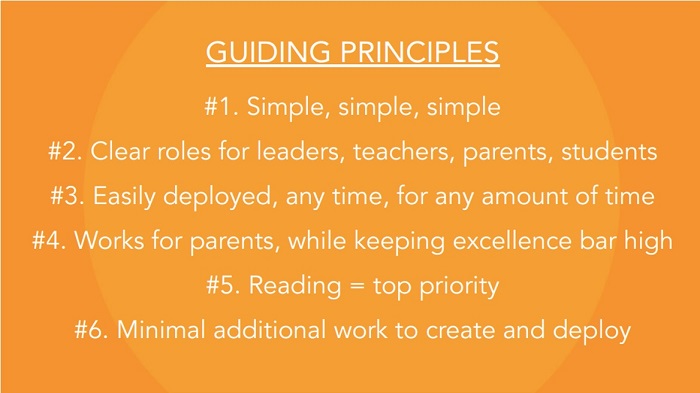
There was no talk of test scores in the webinar. Moskowitz urged her listeners to keep it simple. “We’re not medical experts, we’re not city planners,” she explained. “This is a time for simplicity and being careful not to throw in too many bells and whistles,” she advised, noting that her schools and staff would place a premium on “inspiring and engaging” students. Enhancements, if necessary, will come later “as we get more experienced in this radical change…and the unusual modality that we are operating in.”

For as long as it must operate without building and classrooms, Success Academy plans to follow six “guiding principles”:

Robert SA blog graphic

At the elementary school level, teachers are expected to call each student twice a day for five to seven minutes each to talk about daily math work and the books children are reading. The expectation for the youngest Success students is about two and a half hours of learning time per day, including frequent breaks. “If we can make this work for little kids for two and a half hours a day, that will be an accomplishment,” Moskowitz explained. “We’re trying to make sure that we have some clear victories before we get more ambitious.”

Those brief calls will consume most of teachers’ days. “Five to seven minutes isn’t a long time,” noted Jessica Sie, who heads literacy and history at Success. But with thirty students in their classes, it adds up quickly. “It’s about seven hours once they connect with students twice a day,” she calculates. “That’s going to become their teaching day.”

At the middle and high school levels, Success Academy has the advantage of students already equipped with school-issued Chromebooks and the ability to work a little longer and more independently. Here, the plan is something closer to a “full remote learning environment,” but not one without logistical hurdles. A middle school math teacher might teach sixty to eighty students in a given grade under normal conditions, for example. Going forward, one will teach the lesson, with others checking attendance, studying student work, and offering feedback as they work in Google Docs or other digital platforms, thus providing all students with individualized feedback.

Middle and high school teachers will also be holding “office hours” to conference with students, where they will give feedback on assignments. “Our kids are new to working remotely, and we want to provide the best support for them possible to do that,” Sie explained “We’re also going to start the day with a call with all of the homeroom students together…We want to make sure that they continue to feel a part of a learning community.”

If luck is the residue of design, Success Academy has the advantage of a school model and routines that made significant demands of parents long before the coronavirus pandemic. The overwhelming majority of its parents may be low income, but they are accustomed to school routines that require them to read with their children nightly, check homework, maintain reading logs, and stay intimately involved and responsive with their children’s academic lives. That should pay dividends under these circumstances.

One of the central figures of my book, How the Other Half Learns, is fourth-grade teacher at SA Bronx 1 Kerri Lynch, who is now in her second year as a principal at SA Bensonhurst, a network elementary school in Brooklyn. I called her to see how the launch rollout was going. She said the network team “has done a really nice job” putting together at-home learning materials consisting of reading, writing, math, and science, as well as a schedule that families are being encouraged to follow with their kids. “The main priority for staff is all hands on deck and to make initial contact with all our families,” establishing times for the promised twice-daily calls to each student. “So if I’m calling Johnny at 11:00 a.m. and 2:30, I’m calling Johnny at those times every single day. That way it should be not easy but easier for families to be to be available, know what’s coming, and take that phone call.”

Success is not counting on every elementary school family having a computer and WiFi at home. Materials are designed to be simple enough to be accessible with a smartphone. “All the schools gave the kids pencils and paper on Friday, knowing that we were going to be closed. So if there are cases where it’s just mom’s smartphone and you might only be able to use it for ten minutes [to copy the assignment], you can still do the work.” Kids were also sent home with “tons of books,” Lynch said, reinforcing another piece of advice offered by Moskowitz and Sie several times during the webinar: Reading is the top priority.

Success Academy has won national attention for more than a decade for its extraordinary scores on standardized tests. But the subject didn’t come up either in Moskowitz’s webinar or in my conversations with Lynch or other Success staffers this week. When asked about state tests in the audience Q&A portion of the webinar Tuesday, Moskowitz merely said she was “waiting like everyone else” for information on whether state tests would be rescheduled. However, she noted that it’s “unlikely that they are going to be given at the appointed time, given that New York City schools are closed through April 20th.”

The message, unspoken but clear, was that the goal right now is simply to ensure kids remain attached and engaged and to keep them from losing ground until the world starts spinning again.

view
chronic condition of american education

The chronic condition of American education

Dale Chu
3.18.2020
Flypaper

I proudly serve on the board of the Colorado League of Charter Schools. Last week, we made the difficult decision to cancel our annual conference in response to the cascading public-health crisis. The League joins a growing list of now-nixed education-related confabs—as well as sporting events, cultural activities, and much more—as more people come to realize the danger posed by the coronavirus and its rapid acceleration.


Over one hundred countries have already shut down schools nationwide, to say nothing of the millions of students whose lives have been impacted. It is now inescapable to the public that with Covid-19, it is not business as usual. We are in a place right now where things will get worse before they begin getting better. Federal, state, and local authorities are mobilizing with deliberate speed. That’s the thing about a crisis: it creates a sense of urgency.


Habitually, many in education have long employed the same language—mistakenly, in my view—to describe our sector’s predicament. From the lackluster performance of low-income minority students to the stubbornly persistent inequities plaguing our nation’s large urban communities, the list of grievances is long and varied. But consider for a moment what a crisis is supposed to entail. According to Merriam-Webster, a crisis is a decisive moment, an unstable or crucial time, or a situation that has reached a critical phase. In other words, a crisis is temporary in nature in that it has a defined beginning and end.


Take your pick from the myriad alphabet soup of student groups (for example, FRL, ELL, SPED, SLD, MSI, and GT). Which one has seen a sudden and dramatic spike in achievement? The performance of America’s schools can be described in many ways (I’m partial to “flat as a pancake”), but “temporary” would not be one of them. Especially when compared to our international peers, America’s middle-of-the-pack standing goes back as far as the eye can see. Yes, we have serious achievement, opportunity, and honesty gaps, but they’ve been with us before the coronavirus and they’ll still be here long after Covid-19 fades from memory.


As opposed to the real and immediate public-health risk posed by the new pathogen, the threat presented to our children by our mediocre education system is of a far more durable variety. It is not a crisis in any literal sense of the word. Rather, education’s dilemma is a chronic one. Think of the term as used in describing someone with chronic back pain or chronic indigestion. Back to Merriam-Webster, chronic is “continuing or occurring again and again for a long time.” After fifty years of subpar performance, today’s academic shortcomings metastasized long ago and are symptomatic of our education system.


The distinction between crisis and chronicity is important because a response to the former is necessarily different than treating the latter. In the case of Covid-19, the discussion has been around containment and mitigation. The containment ship has long since sailed; hence, the present focus is on mitigation tactics, such as social distancing to “flatten the curve” so as not to overwhelm the nation’s healthcare system. Taking a crisis lens to education would be akin to sprinting through an ultramarathon, which is to say that our education system is not to be contained or mitigated (“we must act now!”); rather, it is better understood as a condition approaching permanence that must be reshaped and reformed with both care and vigilance.


Granted, it could be argued that school-choice proponents and those working to create a new system outside the system are trying to contain the problem by going around it. But the process is a glacial one from the perspective of scope and scale, and the crisis model still doesn’t fit. For the vast majority of the fifty-odd-million public school students in our country, improving their educational prospects and reversing course on the system’s chronic issues will require new thinking and a broader perspective.


Yuval Levin is right that a good place to start would be by toning down the cataclysmic rhetoric historically employed by reformers. Word choice may seem trivial, but it has too often framed our problems as “immediate and apocalyptic dangers” rather than serious challenges to be addressed using deliberate and gradual processes. Indeed, hyperbole and hubris can motivate people to get off their complacent duffs but only in the short term. It doesn’t do much to help win public support and rally more allies to the long-term cause of improving America’s schools.


This doesn’t mean apologizing for the hard-fought progress that has been realized, but it should require distinguishing a deep-set systemic problem from an urgent “crisis” type of problem. Reformers must figure out how to dial back the scare rhetoric without leaving people even more complacent and resigned than they already are. Even when there was a semblance of bipartisanship, the last twenty years of reform have shown us that there are limits to pushing for change when the underlying strategy rests upon lighting fires and sounding alarms. We would do well to appreciate better the chronicity involved, because continuing to operate as if there is an education “crisis” is a fool’s errand, even if it’s a well-intentioned one.

view
low birth weight babies

Supporting low birth weight babies helps long after infancy

Amber M. Northern, Ph.D.
3.18.2020
Flypaper

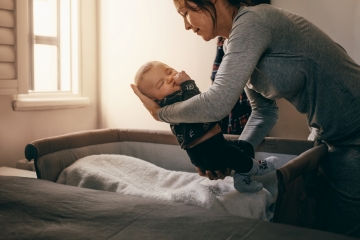
A recent working paper from NBER takes the notion of “early intervention” for educational support for children to nearly its ultimate conclusion—or, perhaps, its ultimate beginning: birth.


Eric Chyn, Samantha Gold, and Justine Hastings, economists from Brown and Dartmouth, examine the impact of additional medical care for babies born at very low birth weights on various educational and other later-life outcomes, including participation in and expenditures on social services. They use three decades of birth records in Rhode Island (1984–2016) covering nearly 410,000 births as the basis for a regression discontinuity design where they examine the lives of babies born just under and just over the birth weight of 1,500 grams, or 3.3 pounds. Children born below this weight are identified as “very low birth weight” (VLBW), and hence, the American Academy of Pediatrics recommends automatically admitting them to the neonatal intensive care unit (NICU), where they receive a range of intensive-care supports from various health professionals.


The final study sample includes more than 2,700 children who weighed between 1,300 and 1,700 grams at birth (2.8 to 3.7 pounds). Chyn and his colleagues look at a dizzying number of outcomes for these children, including their standardized test score performance in grades three through eight, as well as whether they did the following: enrolled in supplemental security income (SSI) for disabled children, enrolled in special education services, repeated a grade, or received a disciplinary offense in high school. They also examined if they were prepared for college, including whether they took Advanced Placement classes and whether they enrolled in a two- or four-year institution. Social service outcomes included whether they received payments from Medicaid, nutrition assistance through the SNAP program, and temporary assistance for needy families (TANF). Researchers also calculated the school-level value added of the schools the children attended to see if they were more likely to attend higher-quality schools.


Analysts find significant large positive impacts for crossing the VLBW threshold for educational outcomes at all levels. Children under the threshold—and thus receiving intensive care—perform 0.34 standard deviations better on test scores relative to those born just above it. For each grade throughout childhood, they find impacts of similar magnitude. They also find significant effects on postsecondary educational enrollment: Crossing the threshold is linked to a 17.1-percentage-point increase (that’s 32 percent) in the likelihood of enrolling in any college by age twenty-two. It is also associated with a thirteen-percentage-point reduction in the likelihood of having a disciplinary offense in high school, which is a 72 percent decrease.


There are also positive effects on the amount of social program expenditures that a child receives. By age fourteen, children born under the VLBW threshold receive about $67,000 less in social program expenditures across the board, relative to the roughly $146,000 spent on children above it.


There are insignificant impacts on measures of school quality, suggesting that the positive academic outcomes are not driven by parents selecting much better schools. There are also no impacts on enrollment in SSI, in special education services, or on the college-readiness indicator.


Unfortunately, we know very little about the nature of the treatment received by VLBW babies in the NICU or following release. What exactly generates the significant differences in outcomes between those babies admitted to the NICU and those who were not? We also don’t know much about the circumstances that precipitated such low birth weights for these babies in the first place. Answering those types of queries would obviously be helpful.


In the end, this study shows tangible long-term benefits to early-life health treatment for medically at-risk children. Like so many other studies, it reiterates the importance of effective early-childhood interventions. Let’s not underestimate the importance of serving our most vulnerable infants so that they’ll one day be invincible Kindergartners.


SOURCE: Eric Chyn, Samantha Gold, and Justine S. Hastings, “The Returns to Early-life Interventions for Very Low Birth Weight Children” (Cambridge, MA: National Bureau of Economic Research, August 2019).

view
Digital vs print image

Page to screen: a comparison of reading habits and comprehension in digital vs. print

3.18.2020
Flypaper

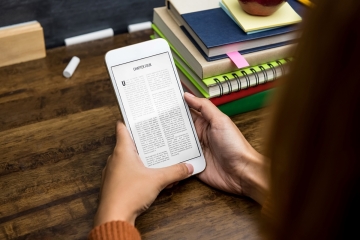
As society becomes more immersed in the digital age—including during the current coronavirus crisis—students are increasingly utilizing technology for schoolwork. But is it really a good idea to make students take tests on devices, especially when they need to read long sections of text? A new study published by the American Educational Research Association (AERA) examines the differences between digital and paper reading processes and their relationships with reading behaviors and comprehension.


Researchers administered a passage on women’s suffrage to 371 students in fifth through eighth grade to examine the differences in their reading comprehension depending on the mode. The students were able to highlight and annotate their passage in both digital and paper formats, access a dictionary in both modes, and look back at the text when answering questions, no matter which they were using. These behaviors were then examined by researchers to determine the differences in reading comprehension between digital versus paper texts.


The passage was split into two parts, approximately equal in length and complexity, though the first half was shorter with longer sentences and the second half was longer but consisted of shorter sentences. All the participants read both parts, with one part read digitally and the other on paper. The study employed a within- and between-subjects design to randomly assign students which portion of the passage they read digitally and which one they read on paper. Students completed an oral pretest on which mode they preferred to read and a fourteen-question posttest to determine their reading comprehension.


The analysis revealed significant differences in the way students read digitally and on paper. They highlighted and annotated text more when reading on paper, for example, and there was some indication that paper facilitated better reading of longer texts. The impact of highlighting was also different between the two modes. On paper, reading comprehension went down as highlighting frequency went up. Yet the reverse was true digitally: As highlighting increased, so did comprehension. The research suggests that digital highlighting may be more efficient, as paper highlights often occurred outside of the important parts of the passage.


The study design was limited to one passage; thus, the findings cannot be applied widely toward differences in reading comprehension for digital and paper texts. The study was also not able to determine if it is specifically the different modes of reading that cause people to comprehend text differently and not a hidden reason or if people simply read differently on various media. In addition, researchers were limited by only being able to note behaviors that they could see. For example, they could not record behaviors such as the student hovering over the text with their mouse to keep track of where they were reading but not actually highlighting it.


Society continues to be transformed by the advance of digital technology, but teachers need to understand that they are not just moving content to a screen. Technology is changing the way students learn—with both positive and negative effects. In the case of reading, students interact with text differently when it’s on a screen. The researchers suggest that each reading process is unique, and schools need to support students when designing lessons for learning and assessments. Students are challenged in different ways based on method of presentation and length of the text, which leads to differing levels of reading comprehension. Therefore, teachers, researchers, policymakers, and even parents should keep all of this in mind when making decisions on how to deliver content and measure learning.


Source: Amanda P. Goodwin, et al., Digital Versus Paper Reading Processes and Links to Comprehension for Middle School Students (Washington, D.C.: American Educational Research Association, December 2019).

view
Wiener letter to the editor

An open letter to Checker Finn and Mike Petrilli

Ross Wiener
3.18.2020
Flypaper

In a recent article in The Bulwark, promoting your new book, you call for values-infused, character-building education that prepares Americans for citizenship and a life of dignity. In framing the need for education reform’s renewal, however, you belittle the focus on “social justice, racial disparities, the school-to-prison pipeline” as “shibboleths of the contemporary Left.”


I applaud your new, emphatic embrace of richer definitions of student and school success. It is especially important for political conservatives to articulate the noble and not merely utilitarian role of public education in a democratic republic and to point out that choice is necessary but inadequate to meet the mission. Many of the ideas you are currently advocating deserve broad, bipartisan support—and certainly appeal to me. Compartmentalizing racial equity and social justice as someone else’s political agenda, however, undermines the moral standing of your argument.


Why? Because race matters. As Stanford economist Rick Hanushek put it, “the modest improvements in achievement gaps since 1965 can only be called a national embarrassment.” Students of color get less of every resource we know matters in education, including money, effective teachers, advanced coursework, and the benefit of ambitious expectations. Black students are only half as likely as white students to be identified for gifted programs when they have the same test scores. Schools in three of the five largest districts in the country have more police officers than counselors. All of this is related to massively disparate outcomes later in life: black boys who grow up in rich families are more likely to end up poor than to remain rich, the opposite of what happens to white youngsters from similar circumstances.


You call for schools to prepare Americans for “informed citizenship,” but this requires substantive learning about our shared history, including governmental policies and cultural traditions that generate the starkly racialized opportunities and outcomes in virtually every facet of American life. Does every American need to know about redlining? Should they all read Letter from a Birmingham Jail? And if the answer is yes, what should they take from it? Insisting on the discipline of paying attention to racialized opportunities and outcomes—the legacy of slavery, Jim Crow, and mass incarceration—should be a shared priority in educating Americans.


It’s especially odd to deny the primacy of these concerns while at the same time decrying “the harm done by political leaders who lack character…and by a citizenry that too often doesn’t seem to care all that much or perhaps can’t tell the difference.” The shallow, incomplete treatment of race and racism in American education means our citizens don’t know as much as they should about their own history, which enables political leaders of poor character to prey on racial divisions; current political discourse is rife with prominent, painful examples.


In making the case for putting character and civic preparation at the heart of education, you argue for education that “confers dignity…upon every youngster”; later, you argue education should focus on “bestowing dignity.” It’s jarring language because most people, and surely most conservatives, believe the dignity of a human being isn’t “conferred” or “bestowed” by school or any other institution; human dignity emanates from something more profound, the divine. At the same time, I hope you acknowledge that education surely can take away one’s dignity, as it has done and continues to do to so many young people of color whose brilliance and potential for greatness isn’t seen or cultivated in the schools we, the people, have provided for them.


I implore you and other conservatives to engage constructively on racial disparities in educational and life outcomes for young people, and I welcome the opportunity for dialogue on these issues. As white Americans, we have a solemn, shared responsibility to address the racial dimensions of educational opportunity and outcomes—past and present. I am not suggesting shying away from legitimate issues or contentious debates, of which there are many, but casting these issues as partisan shibboleths is incompatible with the focus on dignity and respect that is central to your argument.


I, like you, love America and believe all students should learn to deeply appreciate its role as a beacon of liberty and justice for all. I also acknowledge that the “for all” part needs a lot of work—by all of us. There was a time, not very long ago, when addressing racial disparities was a unifying feature of education reform, and it should be again because it’s essential to our shared goal of centering American education on character, virtues, and morality. I would look forward to discussing these issues with you at any time.


Ross Wiener

The Aspen Institute

Fordham Logo

© 2026 The Thomas B. Fordham Institute
Privacy Policy
Usage Agreement

National

P.O. Box 110
Burke, VA 22009

202.223.5452

[email protected]

Ohio

P.O. Box 82291
Columbus, OH 43202

614.223.1580

[email protected]

Sponsorship

130 West Second Street, Suite 410
Dayton, Ohio 45402

937.227.3368

[email protected]