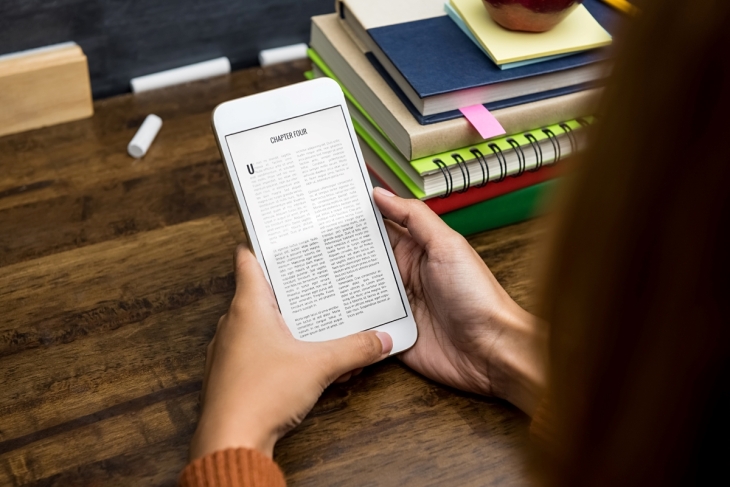
As society becomes more immersed in the digital age—including during the current coronavirus crisis—students are increasingly utilizing technology for schoolwork. But is it really a good idea to make students take tests on devices, especially when they need to read long sections of text? A new study published by the American Educational Research Association (AERA) examines the differences between digital and paper reading processes and their relationships with reading behaviors and comprehension.
Researchers administered a passage on women’s suffrage to 371 students in fifth through eighth grade to examine the differences in their reading comprehension depending on the mode. The students were able to highlight and annotate their passage in both digital and paper formats, access a dictionary in both modes, and look back at the text when answering questions, no matter which they were using. These behaviors were then examined by researchers to determine the differences in reading comprehension between digital versus paper texts.
The passage was split into two parts, approximately equal in length and complexity, though the first half was shorter with longer sentences and the second half was longer but consisted of shorter sentences. All the participants read both parts, with one part read digitally and the other on paper. The study employed a within- and between-subjects design to randomly assign students which portion of the passage they read digitally and which one they read on paper. Students completed an oral pretest on which mode they preferred to read and a fourteen-question posttest to determine their reading comprehension.
The analysis revealed significant differences in the way students read digitally and on paper. They highlighted and annotated text more when reading on paper, for example, and there was some indication that paper facilitated better reading of longer texts. The impact of highlighting was also different between the two modes. On paper, reading comprehension went down as highlighting frequency went up. Yet the reverse was true digitally: As highlighting increased, so did comprehension. The research suggests that digital highlighting may be more efficient, as paper highlights often occurred outside of the important parts of the passage.
The study design was limited to one passage; thus, the findings cannot be applied widely toward differences in reading comprehension for digital and paper texts. The study was also not able to determine if it is specifically the different modes of reading that cause people to comprehend text differently and not a hidden reason or if people simply read differently on various media. In addition, researchers were limited by only being able to note behaviors that they could see. For example, they could not record behaviors such as the student hovering over the text with their mouse to keep track of where they were reading but not actually highlighting it.
Society continues to be transformed by the advance of digital technology, but teachers need to understand that they are not just moving content to a screen. Technology is changing the way students learn—with both positive and negative effects. In the case of reading, students interact with text differently when it’s on a screen. The researchers suggest that each reading process is unique, and schools need to support students when designing lessons for learning and assessments. Students are challenged in different ways based on method of presentation and length of the text, which leads to differing levels of reading comprehension. Therefore, teachers, researchers, policymakers, and even parents should keep all of this in mind when making decisions on how to deliver content and measure learning.
Source: Amanda P. Goodwin, et al., Digital Versus Paper Reading Processes and Links to Comprehension for Middle School Students (Washington, D.C.: American Educational Research Association, December 2019).