Mobile Navigation

  • National
    • Policy
      • High Expectations
      • Quality Choices
      • Personalized Pathways
    • Research
    • Commentary
      • Gadfly Newsletter
      • Flypaper Blog
    • Events
    • Scholars Program
  • Ohio
    • Policy
      • Priorities
      • Media & Testimony
    • Research
    • Commentary
      • Ohio Education Gadfly Biweekly
      • Ohio Gadfly Daily
  • Charter Authorizing
    • Application
    • Sponsored Schools
    • Resources
  • About
    • Mission
    • Board
    • Staff
    • Career
Home
Home
Advancing Educational Excellence

Main Navigation

  • National
  • Ohio
  • Charter Authorizing
  • About

National Menu

  • Topics
    • Accountability & Testing
    • Advanced Education
    • Career & Technical Education
    • Charter Schools
    • Curriculum & Instruction
    • ESSA
    • Evidence-Based Learning
    • Facilities
    • Governance
    • Personalized Learning
    • Private School Choice
    • School Finance
    • Standards
    • Teachers & School Leaders
    • Think Again
  • Research
  • Commentary
    • Gadfly Newsletter
    • Flypaper Blog
    • Gadfly Podcast
  • Events
  • Scholars Program

The Education Gadfly Weekly

Sign Up to Receive Fordham Updates

We'll send you quality research, commentary, analysis, and news on the education issues you care about.
Thank you for signing up!
Please check your email to confirm the subscription.

The Education Gadfly Weekly: The diminishing power of teacher unions

Volume 26, Number 21
5.28.2026
5.28.2026

The Education Gadfly Weekly: The diminishing power of teacher unions

Volume 26, Number 21
view
Low battery
High Expectations

The diminishing power of teacher unions

Our latest study gauges teacher union strength in every state. Those with the strongest are Vermont, California, Massachusetts, New Jersey, and Hawaii. The states with the weakest are Arkansas, Oklahoma, Tennessee, North Carolina, and Mississippi. There’s a clear red state/blue state divide, but that’s not the whole story.

Amber M. Northern, Ph.D., Michael J. Petrilli 5.28.2026
NationalFlypaper

The diminishing power of teacher unions

Amber M. Northern, Ph.D. | Michael J. Petrilli
5.28.2026
Flypaper

Flawed curricular materials aren’t the only reason students aren’t reading enough whole books

Meredith Coffey, Ph.D.
5.28.2026
Flypaper

“The wise use of powerful tools”

Kathleen Porter-Magee
5.21.2026
Flypaper

Are high school graduates too optimistic about future college success?

Jeff Murray
5.26.2026
Ohio Gadfly Daily

The state of teacher union power | Episode 1019 of The Education Gadfly Show

5.27.2026
Podcast
view
Box of books

Flawed curricular materials aren’t the only reason students aren’t reading enough whole books

Meredith Coffey, Ph.D. 5.28.2026
Flypaper
view
Pope Leo XIV

“The wise use of powerful tools”

Kathleen Porter-Magee 5.21.2026
Flypaper
view
Optimism and financial aid SR image

Are high school graduates too optimistic about future college success?

Jeff Murray 5.26.2026
Ohio Gadfly Daily
view

The state of teacher union power | Episode 1019 of The Education Gadfly Show

Melissa Arnold Lyon, Michael J. Petrilli, David Griffith, Ph.D., Amber M. Northern, Ph.D. 5.27.2026
Podcast
view
Low battery

The diminishing power of teacher unions

Amber M. Northern, Ph.D. | Michael J. Petrilli
5.28.2026
Flypaper

In 2012, we released a landmark study, How Strong Are U.S. Teacher Unions? A State-By-State Comparison, that was the first to measure teacher union strength comprehensively across multiple dimensions and all 50 states. Since then, numerous scholars have used our measure in their research on unions’ effects.

Yet, even as our understanding of unions improved, the landscape of education politics has evolved in directions that complicate old assumptions about union power. For example, in 2015 the Every Student Succeeds Act (ESSA) reduced the federal role in accountability, thus returning substantial authority over education to the state level, where teacher unions have often exercised greater influence than in Washington. Yet, by the end of the decade, the U.S. Supreme Court’s ruling in Janus v. AFSCME—building on earlier state-level fights such as Wisconsin Act 10—had delivered a blow to unions’ revenues and membership by ending their ability to collect mandatory fees from teachers who were not union members.

Shortly thereafter, the Covid-era pivot to remote learning thrust teacher unions into the national spotlight again, mostly in ways that seemed to undermine their standing, as evidence of learning loss mounted and criticism of lengthy closures intensified. Meanwhile, the school choice movement continued to gain momentum and erode the market share of traditional public schools—unions’ traditional strongholds—while the backlash against “CRT” and other perceived excesses of culturally progressive educators fueled the rise of conservative parent groups, such as Moms for Liberty, that were rarely aligned with their local unions.

Throughout this entire period, the education reform advocacy ecosystem also grew larger and more robust. As one indicator, the number of national, state, and local organizations that joined the Policy Innovators in Education Network grew from approximately 30 groups in 2012 to more than 180 groups today. State-level reform groups are now active in almost every state. Thus, when state lawmakers debate education policy legislation, unions are no longer necessarily the most informed or powerful organizations to show up, testify, and lobby for their desired outcomes.

Impressionistically, these events have produced an education politics landscape that is more crowded, more contested, and less predictable than it was a decade ago. But as always, we were eager to get beyond impressions. Turns out, so were labor union researchers Melissa Arnold Lyon (University of Albany), Sandy Frost Waldron (independent researcher), and Rebecca Jacobsen (Michigan State University) who agreed to update our 2012 report.

The result is A Crowded Table: Teacher Union Strength in 2026. Building on our original study, the authors set out to gauge teacher union strength in each of the 50 states and the District of Columbia (D.C.). Collectively, the 59 measures—which include 29 new measures that were not in the original report—seek to quantify union strength in five key areas: Resources and Membership; Involvement in Politics; Labor and Bargaining Policies; Policy Wins and Losses; and Perceived Influence, which draws from an original survey examining how stakeholders in each of the 50 states and D.C. perceive teacher union strength today.

The states with the strongest teacher unions are Vermont, California, Massachusetts, New Jersey, and Hawaii. The states with the weakest teacher unions are Arkansas, Oklahoma, Tennessee, North Carolina, and Mississippi. (See our interactive table on the report website for the overall rankings alongside the rankings for each of the five areas.)

The full report explains how these rankings were calculated. Additional details about each area and indicator are also provided, along with more factoids and state-specific observations than we have time for here.

Below, however, are our three topline takeaways.

1. Teacher unions appear to be weakening.

Though it may sound fanciful to education reformers in Chicago, where the teacher union is as militant and powerful as ever, the data overall suggest that teacher unions are weaker than they were a decade ago. For example, the percentage of K–12 teachers who were union members fell in 45 states plus D.C., with especially large drops in North Carolina and Wisconsin, where they have been the target of much-debated legislation. Similarly, teacher unions’ share of contributions to state political parties declined in 34 states, in part because of reduced union investment and in part because of increased spending by other actors.

With less membership and revenue, of course, come weakened political influence and diminished perceptions of credibility. And in fact, our survey of education stakeholders suggests that most no longer view their state’s teacher union as an uncontested force in K–12 education.

2. Blue states still have the strongest unions.

Of the ten states with the strongest teacher unions, eight had Democratic trifectas in 2024—Democratic leadership in the governor’s office and both legislative chambers. Moreover, 13 of the 15 states with the strongest unions went blue in the 2024 presidential election (Alaska and Pennsylvania were the exceptions). At the other end of the spectrum, not a single blue state landed among the bottom 20 states for union strength (not counting Washington, D.C., which was number 35). So, while much has happened since we published our original study on this topic, the longstanding relationship between unions and the Democratic party has endured (Figure 1).

Figure 1. Teacher unions are strongest in “blue” states.

1

3. Some states have experienced notable changes in rank since 2012.

Between 2012 and 2025, ten states—Alabama, Indiana, Maryland, Massachusetts, Montana, New Mexico, Pennsylvania, Vermont, Virginia, and Wisconsin—experienced at least a ten-rank increase or decrease in overall rank. (Maryland, Massachusetts, New Mexico, Virginia, and Vermont went up, indicating their unions became relatively stronger, and Alabama, Indiana, Montana, Pennsylvania, and Wisconsin went down, indicating waning power.) Another 17 states experienced at least a five-rank change. (Because of the number of methodological updates since our last report, these changes should be interpreted cautiously.) Still, seven states stayed in the top ten, and another seven stayed in the bottom ten. So, not everything has changed.

* * *

The ecosystem of state education politics grows ever more crowded, with some new actors aligned with traditional union priorities but a seemingly larger number often working against them. Of course, teacher unions are still a major force in state-level education politics, especially in blue states. But as our report demonstrates, they have a more complex landscape to navigate. And for those of us in education reform, the same may be true: Though union interests must still be reckoned with, there are many others with a seat at the table. To ensure the spread of policies and practices that are grounded in evidence and best for kids, we’ll need to rethink our assumptions about who or what stands in the way.


view
Box of books

Flawed curricular materials aren’t the only reason students aren’t reading enough whole books

Meredith Coffey, Ph.D.
5.28.2026
Flypaper

For many of us born in the twentieth century, “English class” evokes memories of tattered copies of The Great Gatsby or Macbeth, chapter-a-night reading assignments, and that all-too-familiar sinking feeling when the next day’s pop quiz appeared. But popular anecdotes—and my own experience as a high school English language arts (ELA) teacher—suggest that shorter texts and excerpts have increasingly displaced the full-length novels, plays, and memoirs once at the center of ELA classrooms. Earlier this month, RAND released a new study that puts numbers to these claims.

Weighted to be nationally representative, the 2025 survey of 1,596 middle and high school ELA teachers offers findings that are neither devastating nor encouraging. In short, 91 percent of teachers are assigning at least one whole book a year, but many aren’t assigning much more than that.

Of course, there’s no objective way to determine how many full-length books students “should” read. But having taught all high school grade levels across varied socioeconomic contexts, I’ll go out on a limb and propose three books as the absolute minimum per year. Honestly, I’d prefer more, but three seems reasonable: one for each of three quarters, with another quarter allotted for poetry or short stories.

So, with that bar in mind: Among all middle and high school ELA teachers, 41 percent do not plan to teach at least three books. Nine percent don’t plan to assign any at all. And the numbers are even more discouraging for disadvantaged subgroups. In schools with a majority of students of color, 48 percent are assigned fewer than three, compared with 34 percent for majority-white schools. Similarly, in schools in high-poverty neighborhoods, 50 percent are assigned fewer than three, compared with 32 percent in low-poverty neighborhoods.

We know it’s valuable for students to read full-length books, so why is it that two-fifths of all middle and high schoolers—and about half of those who are disadvantaged—aren’t assigned enough?

As Karen Vaites has noted, the RAND study suggests that curricula may play a role. Teachers who use publisher-developed curricula for the majority of their instructional time assign fewer than three books on average, whereas their peers assign an average 3.6–3.9 annually. This tracks. It’s more expensive to include whole books in a curriculum, and as Robert Pondiscio has observed, curriculum publishers are responding rationally to the need to prepare students for reading assessments centered on short passages.

Still, curricula aren’t the whole story. While an alarming 66 percent of the teachers who spend the most time using publisher-developed curricula assign fewer than three books, 35 percent of teachers who spend no time using publisher-developed curricula still assign fewer than three books.

So what other forces might be at play?

A big one is homework. From my parents’ Vietnam-era high school days to the mid-2010s classroom where I taught ninth graders, the English class formula essentially didn’t change: Read a chapter a night, discuss it the next day. To be sure, at no point in history did all students complete the reading. CliffsNotes have existed in paperback form since the 1950s and online since the early aughts. Nonetheless, it was valuable to set the expectation that students should be reading actual books, and students were aware that their grades were at risk if they weren’t familiar with the assigned content.

But just a decade later, many students don’t have the same incentives to read the chapter or even a ChatGPT summary. Many of the guardrails that gave urgency to reading assignments—quizzes, graded discussions, firm deadlines—have fallen out of favor with changes to grading practices. If you’re going to earn 50 percent credit on a reading quiz no matter what, whether you leave it blank or you tried but didn’t understand half the reading… then really, why try?

Today’s students also aren’t getting assigned the same at-home reading workload. Compared with just two years ago, they’re receiving less homework generally. To be sure, there are valid equity concerns when it comes to homework. Students may have caregiving responsibilities, for example, or an afterschool job to make ends meet. Teachers in multiple states have also told me that they don’t assign much out-of-school reading because they don’t feel that their students are capable, between poor literacy levels and what many perceive as diminished attention spans.

Throwing in the towel is not a productive approach, and there are ways to support homework and extended reading while navigating these concerns. The current reality, however, is that many kids aren’t expected to do a large portion of reading outside of class, which means that many won’t do much reading at all. Short texts and excerpts can be more quickly consumed during class.

More broadly, I suspect the ongoing culture wars play a role. In September 2021, a parent visited my classroom after school to ask what we’d be reading in her son’s class. Fair question. I explained that we were following the district curriculum and listed off the major texts. She repeated the only title authored by a person of color: “Narrative of the Life of Frederick Douglass?” Yes, I confirmed. After an extended silence, she proceeded, “Well, we read that even when I was in school, so…I guess that’s OK.”

In retrospect, it doesn’t sound like a major event. Douglass’s Narrative had been selected by the district, so I knew administration would have my back. I wasn’t a brand-new teacher, so I’d had challenging exchanges with parents before. And I was confident that the text had both literary and historical value for young people. But in a politically contentious state with family-school tensions uncomfortably in the spotlight, the encounter had my heart racing.

If you’re assigning a whole book, that is a commitment. Your class must spend a certain number of weeks reading, discussing, and writing about that text. If you have a shorter text, however, you can easily pivot in response to parent or community concerns. Even the New York Times has noted that assigning excerpts allows teachers to skip over contentious passages within longer works. No, culture wars aren’t a primary driver of the gradual excerpt creep, but the tensions likely furthered the sidelining of full-length novels, plays, and memoirs.

If education leaders really want to see teachers assigning entire books again, they’ll have to do more than swap out a curriculum. They’ll need to reckon with the major shifts of the past several years, from grading policy changes to heightened concerns about sensitive topics. And I hope they do. It’d make a difference for all students, especially those already facing disadvantage.

view
Pope Leo XIV

“The wise use of powerful tools”

Kathleen Porter-Magee
5.21.2026
Flypaper

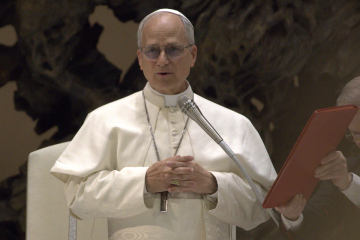
Shortly after being elected Pope in 2025, Leo XIV explained that he chose his name as an homage to Pope Leo XIII, who is remembered for his historic 1891 Encyclical Rerum Novarum, which provided an enduring framework for tackling the enormous social and ergonomic disruptions unleashed by the industrial revolution. “In our own day,” Leo XIV explained, “the Church offers to everyone the treasury of her social teaching in response to another industrial revolution and to developments in the field of artificial intelligence that pose new challenges for the defense of human dignity, justice, and labor.”

Next week, on the first anniversary of that speech, Pope Leo will release his first encyclical, “Magnifica Humanitas,” which will focus on safeguarding the human person amidst the disruptions that are emerging from the artificial intelligence revolution. It is sure to be a defining moment in his papacy and could have far reaching consequences for both how Catholics and those influenced by Catholic thought rise to the challenge of this new era. The release is timely because these disruptions are coming at us fast, as AI progresses rapidly. The tools available today are much more powerful than those released just a few months ago, and the capacity of these tools to do work once only humans could do has expanded exponentially.

What’s more, people are currently responding to the acceleration of AI with considerable fear and dread. Last weekend, Google CEO Eric Schmidt was met with boos from the crowd during a commencement speech when he mentioned AI. Other speakers at graduations around the country have encountered similar hostility. This week, the Wall Street Journal published a piece cataloguing the growing pushback against AI: “consumers resent energy-price jumps exacerbated by the spread of data centers. Workers fear widespread job losses. Parents worry about AI undermining education and harming children’s mental health.”

Pope Leo XIV has already spoken at length about artificial intelligence, and so has hinted at what we might expect. We can anticipate that his upcoming words will aim to help us move beyond a fear-based reaction to something much more proactive and hopeful. In January, he previewed his views in a message for the 60th World Day of Social Communications, “Preserving Human Voices and Faces.” “The question,” Leo explained in his remarks, “is not what machines can or will be able to do, but what we can and will be able to achieve by growing in humanity and knowledge through the wise use of the powerful tools at our service.”

Against the backdrop of the widespread fear we now are seeing, Pope Leo’s words of optimism are, in many ways, a salve because they suggest that there is a way to keep human flourishing at the center of the AI revolution—to view AI not for its power to destroy, but rather for its potential to enable and support. But the question of how we do that is as urgent as ever, particularly in our schools. For if the past two decades have taught us anything, it’s that the quick adoption of new technology in education can do a lot more harm than good.

The challenges that technology has brought into the classroom are equal parts practical and existential. But the biggest worries have come from the steady stream of evidence we’ve seen about the impact that screens have on student learning and wellbeing. As early as 2015, an OECD study based on more than half a million fifteen-year-olds across 65 countries found that countries that had invested heavily in classroom technology saw “no appreciable improvements in student achievement in reading, mathematics, or science,” and that students who used computers very frequently at school “do a lot worse in most learning outcomes, even after accounting for social background and student demographics.”

A 2018 study showed that reading on screens “was consistently associated with lower reading comprehension scores” and that “as time went on (from 2000 to 2017) the advantages of print increased and devices that require scrolling are worse than those that do not.” Those findings were echoed by a 2024 meta-analysis by Oxford Learning, showing that “students who read on paper consistently scored higher on comprehension tests than those who read the same material on screens.”

Add this to the overwhelming evidence that increased screen time is making it more difficult for students to sustain attention during academic tasks and that it is worsening mental health challenges, and you begin to understand why AI is being met with such skepticism.

Of course, we cannot simply sit back and pretend that the AI revolution is not happening. But we can take a far more proactive, human-centered approach to how we incorporate any technology—particularly AI—into our work, our lives, and our schools. That’s undoubtedly why Pope Leo has argued that “it is increasingly urgent to introduce media, information, and AI literacy into educational systems at all levels.”

Before we rush to adopt AI literacy in our classrooms, however, it’s critical to take a moment to pause and consider what Canadian educator Andrew Cantarutti recently described as the difference between AI literacy and AI proficiency. He explained it this way: “Proficiency is knowing how to use something. Literacy, on the other hand, is understanding what something is—how it works, whose interests it serves, what it costs, and what it does to the person using it”—an exercise that takes far more time.  

Pope Leo himself makes this critical distinction, explaining that AI literacy must be paired with humanistic and cultural education in order “to understand how algorithms shape our perception of reality, how AI biases work, what mechanisms determine the presence of certain content in our feeds, what the economic principles and models of the AI economy are, and how they might change.”

Unfortunately, our anxiety about AI stems in part from the fact that the average person can’t keep up with the technology’s rapid progression. We are struggling with basic AI proficiency at a moment when prudence tells us that what we really need is literacy. And, as is often the case, technology companies are quick to offer products designed to solve the problems their other products create—all with the promise of accelerating student learning. This February, Google announced a partnership with ISTE and ASCD that included a commitment to make its suite of AI products and “AI literacy training” available to all 6 million teachers and higher-education faculty in the United States.

When viewed through Cantarutti’s lens, however, a close read of Google’s offerings makes it clear that they are offering training in AI proficiency, not AI literacy. That is, they are offering to train 6 million educators in how to use Google’s AI-powered tools. Among the topics:

  • How educators can create personalized lessons for each student in their classroom based on their same-day assessment results.

  • How faculty can use Gemini to give each student in a crowded lecture hall their own individualized study coach.

  • How K–12 teachers can adapt existing curricular materials to meet students’ diverse needs, such as reading levels, primary languages, and visual learning needs.

  • How faculty can use NotebookLM to enable students to create customized study guides, infographics, or interactive podcasts so they can learn in a way that's most effective for them.

Conspicuously absent is any education that would help teachers discern whether these tools are good for their own learning, their students’ development, or their school’s culture. Said differently, Google’s AI literacy trainings offer proficiency under a veneer of literacy. They boost educators’ fluency with a particular set of products, built on a particular company’s data and assumptions, and shaped by a particular set of commercial interests. But teaching students to query Gemini effectively is no more “AI literacy” than teaching them to scroll Instagram is “media literacy.”

Genuine literacy requires the harder, slower work that Pope Leo described, work that would allow us to understand the technology as a prerequisite to making decisions about whether and how to use it.

Catholic tradition holds that education is formation, not simply transaction, and that students must be formed in wisdom and virtue, not optimized for output. That tradition gives us every reason to resist the rush to the “next big thing,” to insist on evidence before adoption, and—in the present case—to build AI curricula that strengthen rather than substitute for human reasoning.

The “wise use of powerful tools” Pope Leo calls for is the fruit of formation, carefully and patiently cultivated by educators who know their students well. Tools can only serve formed persons, they cannot form them. The alternative—allowing Big Tech to define AI literacy on its own terms at its own pace—risks producing a generation fluent in AI tools but illiterate in the very capacities that make us human.

view
Optimism and financial aid SR image

Are high school graduates too optimistic about future college success?

Jeff Murray
5.26.2026
Ohio Gadfly Daily

Earning a bachelor’s degree has long stood as a marker of success—in one’s education journey, in life generally, and as the starting point for one’s career. Though the financial cost can be high (especially for those who struggled academically), the potential success is often deemed to be worth it. So millions of optimistic young people every year take out student loans to embark on the quest for a degree. But is misplaced optimism clouding some students’ judgment, and ultimately loading them down with long-term financial obligations that could have been avoided? A new research paper digs into some data to find out.

A trio of economists from the United States and Canada draw their data from two nationally-representative panel surveys of young people in the U.S.—the 1997 National Longitudinal Survey of Youth (NLSY97) and the High School Longitudinal Study of 2009 (HSLS:09)—both of which tracked their initial subjects through age 30. Both surveys asked high-school-age respondents to rate their probability of earning a four-year bachelor’s degree by age 30; measured students’ academic achievement prior to college based on their performance on the Armed Services Vocational Aptitude Battery (ASVAB); and tracked college enrollment (or not), student loan usage (or not), and degree completion (or not)—also through age 30.

Survey data revealed widespread optimism among respondents about their likelihood of earning a college degree. On average, high schoolers in the sample reported a 54 percent probability they would enroll in college and, among that group, a 78 percent likelihood they would earn a bachelor’s degree (so 42 percent of the total sample). The average ASVAB score among respondents was 50 out of 99, in the middle of the typical range of scores. Students with lower test scores were less likely to predict college enrollment and degree attainment, controlling for other observable characteristics, while their peers with higher scores were more likely to predict both outcomes for themselves. So far so good.

However, longitudinal data showed that only 35 percent of all sample members actually ended up earning a degree by age 30, including a large number who predicted a degree while in high school but ended up never enrolling in college. Even those who did enroll showed a 23 percentage-point gap between their average prediction of degree completion (88 percent) and their actual completion by age 30 (65 percent). The researchers call this an “optimism gap” and break it out among various groups of students based on test scores, income, and other demographics. College enrollees who scored lowest on the ASVAB showed the largest optimism gap (about 37 percentage points), compared with those who scored highest (15 percentage points). That is: High school students generally overestimated their ability to earn a bachelor’s degree—compared to what the future actually held for them—with those at the lowest academic skill level overestimating by the largest extent.

Next the researchers examined whether inflated optimism drove students to take out federal loans to pursue a college path they were unlikely to complete. Among all college enrollees in the sample, 24 percent failed to earn a degree by age 30. Those who did not complete were just as likely to have student debt relative to those who persisted to a degree, though they owed a little less, presumably in large part because they attended for less time. The average non-completer owed about $11,000 at age 30, compared to $17,200 for completers.

Using these real-world outcomes, the researchers also model the hypothetical impacts of specific variables. Notably, they found that moderately increasing the student loan borrowing limit (from approximately 37 percent of average tuition and fees up to 56 percent) introduced long-term “welfare” losses (an economics concept that includes measures of income and consumption over a lifetime) among individuals who borrowed.

These losses would disproportionately impact the lowest ASVAB performers and those who were low-income—specifically, the young people with the highest “optimism gaps”—by nudging more of them from non-enrollees to college enrollees. In other words, if students were able to borrow greater amounts, more college students would do so and enroll in college, based on their optimism for degree completion. But because completion rates would be unlikely to change for the lowest-performing and lowest-income students, that group would simply accrue more debt.

By reducing the loan limit in their model, the researchers found that more low-performing and low-income students would choose not to enroll in college, regardless of their optimism for degree completion. Not only did this, predictably, limit their debt, it also modestly boosted their welfare in the long run.

The researchers conclude that “access to student loans can be harmful to some young adults in the presence of optimistic beliefs” and express hope that their findings “will be useful for researchers seeking to evaluate and improve the design of college financial aid.” But those are largely conclusions based on the modeling part of the research.

Unanswered here is the question of where students’ misguided optimism is coming from in the real world. Why are so many high schoolers who achieve an average (or lower) score on the ASVAB so sure they will succeed in college? Could it be the messages they received as a result of lowered classroom expectations and/or inflated grades? Or, more fundamentally, are they internalizing a “college at all costs” mantra coming at them from all directions when other postsecondary options could improve their long-term outcomes quicker, cheaper, and more directly? The report considers the choices made due to over-optimism to be “subjective,” which is true up to a point, but those choices are not made in a vacuum.

SOURCE: Emily G. Moschini, Gajendran Raveendranathan, and Ming Xu, “Optimism about Graduation and College Financial Aid,” American Economic Journal: Macroeconomics (April 2026).

view

The state of teacher union power | Episode 1019 of The Education Gadfly Show

5.27.2026
Podcast
 

Melissa Arnold Lyon joins The Education Gadfly Show to discuss Fordham’s new report, A Crowded Table: Teacher Union Strength in 2026, and what has changed in state education politics since Fordham’s 2012 analysis of teacher union power. How influential are teacher unions today, where are they strongest, and what does a more crowded political landscape mean for education policy?

Then, on the Research Minute, Amber Northern examines new research on the Common Core State Standards and their effects on achievement beyond math and English language arts.

Recommended content:

  • A Crowded Table: Teacher Union Strength in 2026 —Melissa Arnold Lyon, Sandy Frost Waldron, and Rebecca Jacobsen, Thomas B. Fordham Institute
  • How Strong Are U.S. Teacher Unions? A State-By-State Comparison —Amber M. Northern, Ph.D., Janie Scull, and Dara Zeehandelaar Shaw, Ph.D., Thomas B. Fordham Institute
  • Teachers’ Unions and Collective Bargaining —Bradley D. Marianno, Live Handbook: Education Policy Research, an initiative of AEFP
  • The unintended effects of the Common Core State Standards on non-targeted subjects —Benjamin W. Arold, and M. Danish Shakeel, ScienceDirect (2026)

Feedback Welcome: Have ideas for improving our show? We would love to hear them. Send them to [email protected]

Fordham Logo

© 2026 The Thomas B. Fordham Institute
Privacy Policy
Usage Agreement

National

P.O. Box 110
Burke, VA 22009

202.223.5452

[email protected]

Ohio

P.O. Box 82291
Columbus, OH 43202

614.223.1580

[email protected]

Sponsorship

130 West Second Street, Suite 410
Dayton, Ohio 45402

937.227.3368

[email protected]