Mobile Navigation

  • National
    • Policy
      • High Expectations
      • Quality Choices
      • Personalized Pathways
    • Research
    • Commentary
      • Gadfly Newsletter
      • Flypaper Blog
    • Events
    • Scholars Program
  • Ohio
    • Policy
      • Priorities
      • Media & Testimony
    • Research
    • Commentary
      • Ohio Education Gadfly Biweekly
      • Ohio Gadfly Daily
  • Charter Authorizing
    • Application
    • Sponsored Schools
    • Resources
  • About
    • Mission
    • Board
    • Staff
    • Career
Home
Home
Advancing Educational Excellence

Main Navigation

  • National
  • Ohio
  • Charter Authorizing
  • About

National Menu

  • Topics
    • Accountability & Testing
    • Advanced Education
    • Career & Technical Education
    • Charter Schools
    • Curriculum & Instruction
    • ESSA
    • Evidence-Based Learning
    • Facilities
    • Governance
    • Personalized Learning
    • Private School Choice
    • School Finance
    • Standards
    • Teachers & School Leaders
    • Think Again
  • Research
  • Commentary
    • Gadfly Newsletter
    • Flypaper Blog
    • Gadfly Podcast
  • Events
  • Scholars Program

The Education Gadfly Weekly

Sign Up to Receive Fordham Updates

We'll send you quality research, commentary, analysis, and news on the education issues you care about.
Thank you for signing up!
Please check your email to confirm the subscription.

The Education Gadfly Weekly: Congress should return federal education aid to its roots

Volume 20, Number 29
7.29.2020
7.29.2020

The Education Gadfly Weekly: Congress should return federal education aid to its roots

Volume 20, Number 29
view
High Expectations

With its next stimulus bill, Congress should return federal education aid to its roots

Senate Republicans released their relief bill this week, the HEALS act, which proposes to steer the bulk of education aid to schools that open for in-person instruction. This is triggering angry reactions from most of the education establishment. Here's a less controversial and more constructive suggestion: Return federal education policy to its roots and require schools to provide “targeted assistance” to their disadvantaged, low-achieving students.

Michael J. Petrilli 7.29.2020
NationalFlypaper

With its next stimulus bill, Congress should return federal education aid to its roots

Michael J. Petrilli
7.29.2020
Flypaper

School districts could try harder to reopen

Dale Chu
7.29.2020
Flypaper

The cancellers come for charter schools

Robert Pondiscio
7.29.2020
Flypaper

The growth and diversification of charter school facilities funding

Jeff Murray
7.29.2020
Flypaper

How gerrymandering can hurt education

Trinady Maddock
7.29.2020
Flypaper

The Education Gadfly Show: Should districts outsource virtual learning?

7.29.2020
Podcast
view

School districts could try harder to reopen

Dale Chu 7.29.2020
Flypaper
view

The cancellers come for charter schools

Robert Pondiscio 7.29.2020
Flypaper
view

The growth and diversification of charter school facilities funding

Jeff Murray 7.29.2020
Flypaper
view

How gerrymandering can hurt education

Trinady Maddock 7.29.2020
Flypaper
view

The Education Gadfly Show: Should districts outsource virtual learning?

Michael J. Petrilli, David Griffith, Ph.D., Amber M. Northern, Ph.D., Rob Kremer 7.29.2020
Podcast
view

With its next stimulus bill, Congress should return federal education aid to its roots

Michael J. Petrilli
7.29.2020
Flypaper

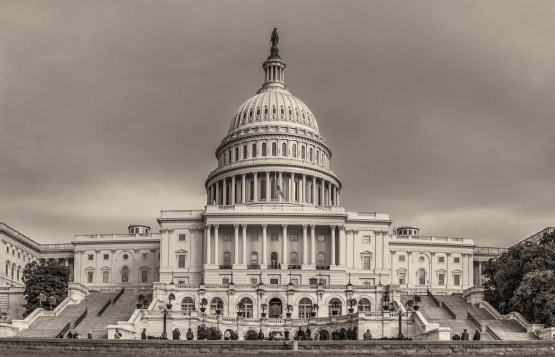
After months of anticipation, Senate Republicans finally released their bid for the next big Covid-19 relief bill this week, dubbed the HEALS act. The headline news for K–12 education is the proposal to steer the bulk of education aid to schools that open for in-person instruction, which is triggering angry reactions from most of the education establishment.

It’s hard to imagine that idea surviving negotiations with House Democrats. But if members of Congress are looking for less controversial and more constructive strings to attach to Uncle Sam’s help, here’s a suggestion: Return federal education policy to its roots and require schools to provide “targeted assistance” to their disadvantaged, low-achieving students. Rather than just letting schools dump their federal funds into a general pot that can be used for almost anything, make them steer Washington’s dollars into customized help for the kids who need it most. In other words, roll back the clock to 1965, when Congress birthed Title I with the goal of providing extra help for disadvantaged students, not schools.

—

Let’s recall a bit of history.

The question of whether federal aid would actually help kids learn more has been top of mind for policymakers ever since Senator Robert F. Kennedy famously asked if there was a way to make sure that money wouldn’t “just be completely wasted.” He was right to be concerned: The first wave of Title I funds was spent on all manner of nonsense, football uniforms included. 

But the policy response to that problem created new headaches, as Congress demanded a clear audit trail showing Title I dollars being spent on the children who were the intended beneficiaries. Districts followed orders and soon were setting up separate and unequal Title I “programs” that often pulled kids away from qualified teachers to get low-quality remedial help instead. Guess what? That didn’t work, either.

So a quarter-century ago policymakers hit upon a new formula: Don’t micromanage how schools spend the money—and in fact, allow high-poverty schools to spend the money on everyone, via core “schoolwide” programs—but hold them accountable for results. This was simpatico with the standards-and-accountability movement that was then getting off the ground.

Judging by outcomes, that strategy worked reasonably well, at least for a time, both in terms of academic progress for the lowest-performing kids, and in higher graduation rates. But the backlash was fierce, and the politics could not hold, especially as parents and educators railed against “too much testing,” which came with few tangible benefits for individual kids. So the Every Student Succeeds Act all but obliterated the consequences part of “consequential accountability,” instead allowing states to do almost nothing when faced with chronically low-performing schools, and not even requiring them to issue school ratings anymore. To their credit, most states kept school ratings anyway, and about a dozen even had praiseworthy A–F systems. And then the pandemic struck.

Enter Covid-19

Now we’re facing the start of a school year unlike any other in history, one that will feature “remote learning” for virtually all public school students. The only question is whether it will be three days a week or five. And given the high number of cases, and the lengthy delays in coronavirus test results, in-person instruction looks to be the exception rather than the rule, especially in metropolitan America. Meanwhile, state accountability systems are sure to be suspended, even if testing returns in spring 2021. So we won’t really have “schools” as we typically picture them, and we won’t have results-based accountability, either.

So here’s the big idea: At least for as long as the pandemic lasts, let’s return to the notion that districts should be held accountable for helping individual kids who are falling behind. Let’s get back to targeted programs for struggling students.

I know what some of you middle-aged policy wonks are thinking: Mike’s about to propose bringing back Supplemental Educational Services! This was perhaps the least successful aspect of NCLB, a Frankenstein destined to fall on its face from the moment it was born. The idea was that low-income students in low-performing Title I schools would enjoy the ability to access extra services of their own choosing—after school or on the weekends—to help them catch up. And these services could be offered by a panoply of non-profit and for-profit providers, along with the school systems themselves. In fact, originally the school systems were not allowed to provide the services if they themselves were considered to be “in need of improvement.”

It was a mess. States were supposed to set up systems to vet potential providers; most did a terrible job. Districts were supposed to give providers classroom space and let parents know that these services were available—but they had every incentive to play games and hide the ball because the payments came straight from their Title I allotments. A few vendors were sincere about offering good tutoring and such, but plenty just chased the money. Eventually it was allowed to quietly disappear.

So that didn’t work. But there was something to the underlying notion: get extra help to the kids who need it most, especially in the form of tutoring.

In the current context, there are couple of ways that Congress could immediately shift federal funding back to a focus on individual students. First, lawmakers could disallow “schoolwide” Title I programs for the current year. To tap Title I, and maybe new stimulus funds, schools would identify eligible Title I students (i.e., those disadvantaged students who are “identified by the school as failing, or most at risk of failing, to meet the challenging State academic standards,” according to ESSA) and then spend these dollars on services designed to address their needs.

Second, Congress could funnel money into ESSA’s “direct student services” provision, which is a bit like the old Supplemental Services program, but run by districts instead of outsourced. This would likely go down easier with districts, given that it wouldn’t upend their spending plans and accounting systems in the same way that eliminating “schoolwide” Title I programs would. Either approach could mean more individualized attention, especially in the form of much-needed online tutoring, for the kids most at risk of falling even further behind. That would be an important contribution.

As a side benefit, it might also help to restore a constituency for assessments, as parents would see a clear benefit resulting from diagnostic testing. Shifting the accountability conversation from “identifying and intervening in struggling schools” to “identifying and providing extra help to struggling students” would be a win for ed reform advocates, now and in the future.

—

Let’s not fool ourselves: No school in the country is going to engage in serious “improvement” efforts this year. Nor will there be any “schoolwide” initiatives to help students reach high standards, given that there won’t really be “schools.” Rather than keep up the pretense of normalcy, federal policy should embrace the chance to focus on individual students instead.

view

School districts could try harder to reopen

Dale Chu
7.29.2020
Flypaper

As coronavirus cases continue to rise, Colorado’s two largest school districts, Denver and Jeffco, recently announced their intention to start the school year remotely. The sudden shift represents the third back to school plan for both districts in as many months: Back in May, both came out of the gate with a hybrid model, but switched to in-person learning in response to parent demands. With classes set to resume in a matter of weeks, the tortuous affair has students and families strapped into an emotional rollercoaster, careening from reopening plan to reopening plan, and wondering when the ride is supposed to stop.

What’s transpiring here in Colorado is a microcosm of what’s happening nationally. From coast to coast, school districts have been tasked with the unenviable job of restarting schools during a raging pandemic, when even a few months ago they could safely assume that the healthcare crisis would be more under control. With districts running into reopening roadblocks, a growing number of them—including ten of the nation’s fifteen largest—have not only elected to continue with fully remote learning, they’ve decided to do so at least through the first semester, which is really astonishing if you consider schools have been in virtual learning mode since mid-March. I recently spoke with a superintendent who told me his district was going to stay all virtual through January 2021, the rationale being this would get them past flu season too. To be sure, flu season usually lasts through April, but these are trying times.

Last April, my colleague Robert Pondiscio wrote, “It is a fantasy to believe that we can stem the effects of months without real school by ginning up instructional capacity on the fly in unfamiliar forms in the midst of a public health crisis.” The evidence is pretty clear that remote instruction is a poor substitute for in-person learning; it’s “education theater,” akin to the type of “security theater” we became accustomed to post 9/11—reassuring, yet falsely so. To wit, a recent study by McKinsey & Company estimated that if students remain entirely virtual through January 2021, students could lose up to eleven months of learning versus twelve to fourteen months with no instruction at all. If this is the case, why go through the histrionics? If districts have decided they just can’t open, shouldn’t they stay closed? Lay everyone off, bank the money (or give some of it to parents), and wait for a vaccine?

Of course, no one would seriously advocate for blanket layoffs during a three-headed crisis, so these questions are deliberately tendentious. It’s difficult to overstate the complexities involved in the safe reopening of schools, but landing on fully remote instruction as an answer for the coming semester reflects a widespread failure of imagination and creativity. To be fair, thirty-three states currently have infection positivity rates above what’s recommended for reopening, but what about the seventeen states that are below the threshold? Why aren’t schools there trying harder to make in-person learning work? If they can’t, why not provide direct educational assistance to parents?

Without getting into all of the back-and-forth on the merits and inequities of “pandemic pods,” why can’t schools formally create their own version of them? With the system’s support, pod creation wouldn’t be limited to those with the means and wherewithal to self-organize on social media. What’s more, schools and districts are uniquely positioned to connect interested parents with one another, especially those who might be struggling, but they’ve been sitting on their hands when it comes to helping out with pods or creating something analogous that would allow more students to return to school.

Another way to safely reopen schools would be to move as much learning as possible outdoors, something that most districts seem hesitant to do. Even though schools beat earlier plagues with outdoor classes, that lesson appears to have been lost upon today’s state and district officials. Some of the overheated media coverage on the risks posed by the virus has likely had a chilling effect. Yes, there will be inclement weather and students and teachers will have to bundle up when it gets cold, but this is still infinitely better than learning through the keyhole of Zoom. If anything, virtual learning should be the rainy-day backup to outdoor learning.

In online forums, many parents say they fear virtual learning will be a disaster. Despite this, we continue to tell ourselves that educationally effective virtual learning—an oxymoronic phrase—is the least bad option in light of the virus’s resurgence. It’s an understandable sentiment, and one that most teachers now ostensibly support. But no matter how many entreaties we make about the necessity for schools to step up and to get better at virtual learning quickly, our shared desperation and misplaced optimism won’t make it so.

To be clear, there’s a difference between the involuntary version of virtual learning many schools will be returning to and full-time online learning as delivered by those with expertise. By virtue of time, training, and infrastructure, the latter are far better positioned to offer robust and meaningful learning experiences than the school systems that were suddenly and haphazardly thrust into uncharted territory. Indeed, there’s a glaring shortage of out-of-the box thinking when it comes to the conundrum of school reopening, but it’s not too late for us to reframe the way schools are looking at returning and redefine what it will take to educate every student during this extraordinary moment.

view

The cancellers come for charter schools

Robert Pondiscio
7.29.2020
Flypaper

Almost exactly twenty years ago, in August 2000, CBS News’s 60 Minutes aired a segment about a pair of charter schools—one in the South Bronx; another in Houston, Texas—founded by a duo of twenty-something White male teachers. To see it now is to catch a time capsule glimpse of a more earnest and hopeful time. Mike Wallace described the Knowledge is Power Program, or KIPP, as “a public school unlike just about any you have seen before.” He took tens of millions of Americans inside schools proving that with “hard work” poor minority children can perform “every bit as well as the most privileged middle schools students across America.”

KIPP co-founder David Levin described going door-to-door to persuade parents to take a chance on their unproven model. “We sat in their living rooms. We explained what we were trying to do and what we thought they'd get out of it. And they believed,” he told Wallace. “They believed.”

Today, Levin believes something quite different: That the institution he built, which has grown to 242 schools in twenty states serving more than 100,000 students, was built on white supremacism and anti-Blackness. KIPP recently announced it was retiring its slogan, “Work Hard. Be Nice” because its trademark phrase “supports the illusion of meritocracy…ignores the significant effort required to dismantle systemic racism” and places a value on “being compliant and submissive.”

If there’s any institution in America that could rightly claim to have made a significant effort to dismantle systemic racism, it’s KIPP. Far from “compliant and submissive,” the network has served as an emphatic rebuke to a complacent public education establishment that impotently accepts as inevitable that low-income Black and Brown children cannot perform as well as well-off white kids. Thousands of its alumni have been admitted to more than 200 colleges and universities, results that are hard to square with a view of meritocracy as “an illusion.”

The abandoned slogan and tortured rationale are a jarring reversal for both KIPP and the charter school movement, which was once defined by its refusal to accept poverty as an excuse for poor academic outcomes, but now seems bent on enshrining race as determinative. At the very least, they have been unusually reluctant to defend themselves or their record of student achievement, which stands in sharp contrast to the mediocre results of traditional public schools. A recent letter from Levin to KIPP alumni reads like the product of a struggle session. “As a white man, I did not do enough as we built KIPP to fully understand how systemic and interpersonal racism, and specifically anti-Blackness, impacts you and your families—both inside of KIPP and beyond,” he wrote. “It is clear that I, and others, came up short in fully acknowledging the ways in which the school and organizational culture we built and how some of our practices perpetuated white supremacy and anti-Blackness.”

KIPP is not alone. In recent weeks, mobs have aimed to tear down schools as well as statues. Instagram sites with names like “Survivors of Success Academy,” “Black at Uncommon” and “Black and Brown at DP” (Democracy Prep) have popped up, aimed at nearly every major charter school network in New York City. Disaffected staff and alumni posting anonymously have taken aim at every aspect of these schools’ curricula and cultures. One Black charter school advocate describes the social media site aimed at the network where he is a board member as “the workplace equivalent of revenge porn.”

The voices truly “silenced” and “marginalized” in New York’s high-performing charter schools are Black and Brown parents who continue to swell charter school admissions lotteries and waiting lists. A May 2020 survey of 15,000 parents at New York’s Success Academy, for example, showed 93 percent agreed they would recommend their child’s school to friends and neighbors; a mere 1 percent “strongly disagreed.” A similar survey at Uncommon Schools showed nearly identical results, with 91 percent parent satisfaction. A veteran Black charter school administrator takes seriously that some people of color—staff and parents alike—may feel “traumatized” by these schools, but also notes that the most vocal dissenters tend to be privileged young teachers who don't have children of their own and lack the perspective of their students’ parents. “The notion that my kids are safer in failing public schools than schools like Success Academy is beyond absurd,” he said.

Even more absurd: the notion that the parents whose living rooms Levin sat in, who believed him enough to entrust KIPP with their children, were embracing a system of “white supremacism” and endorsing “anti-Blackness.” They had hoped to find a refuge for their kids from unsafe schools and the soft bigotry of low expectations. Those hopes are no less valid today than they were twenty years ago.

Editor’s note: A shorter version of this article was first published by the New York Daily News.

view

The growth and diversification of charter school facilities funding

Jeff Murray
7.29.2020
Flypaper

One of the starkest differences between charter and traditional district schools is in the area of facilities funding. While districts nationwide raise tens of billions of dollars annually via state and local taxpayers for building and renovating schools, classroom, gyms, and labs—funding that is entirely separate from further billions spent on maintaining, outfitting, and staffing those facilities—charter schools began with no dedicated facilities funding or taxing authority and remain far behind their district peers today. But things are taking a turn for the better, as a new report from the Charter School Facility Center spells out.

The report takes a deeper look at charter facilities funding in the eighteen states that provide it, building off a previous snapshot of funding laws published by the National Alliance for Public Charter Schools back in September. What we can see from this analysis is incremental progress amidst a complex array of funding plans.

The authors start by noting the three basic types of funding structures: eleven states and the District of Columbia fund charter facilities via payments supplemental to basic per-pupil aid; five states embed facilities funding in the per-pupil aid formula; and one state—New York—has a hybrid model that requires districts to provide space for charters as co-locations within district buildings or via rent payments in another building. (This unique and complex model is not analyzed further within the report.)

The funding amounts and formulas used to calculate them vary across states but are generally tied to student population and are varying fractions of the amounts provided to districts in those states—some more generous than others. In Idaho, that proportional relationship is clearly spelled out in state statute and has been followed over the years. In California, Indiana, Minnesota, and Pennsylvania, the authors write, funding amounts “do not seem to be tied to anything and the rationale for choosing the amount is not specified” in law. The difference between statutory amounts and actuals in supplemental-funding states is shown via an eye-opening chart. Spoiler alert: Schools don’t always get what the law indicates that they should. There is less variation, it appears, in embedded-funding states, and the amounts provided in all states range from approximately $200 per charter student in Pennsylvania and Texas to over $2,100 per charter student for high schools in Arizona.

The next complicating factor is school eligibility for aid. These are generally statutorily-mandated and range from grade levels served, to school quality, to building ownership status, to student demographics. For example, Minnesota provides different amounts for elementary and high schools, five states will only provide funding to high academic performers, and several states provide different funds (or no funds at all) to renters versus schools who own their buildings outright. Florida and Arizona rely the most on eligibility factors; seven and five different hoops to jump through, respectively.

Finally, the report looks at use restrictions for facilities funding. Four states limit facilities funding to lease reimbursement only, four other states include mortgage payments and maintenance expenditures, and two states allow charters to spend it on transportation expenses…with restrictions. One state and the District of Columbia do not specify any use restrictions in their statutes.

Despite all of these complexities, the general trend for charter facilities funding amounts is upward. Every one of the supplemental aid states has increased its total appropriation in the years since adopting a per-pupil aid program with California, Florida, Minnesota, and the District of Columbia experiencing the largest increases. Overall increases have occurred in Arkansas, Colorado, Idaho, Indiana, New Mexico, and Ohio, as well, but the trend has not always been a straight line. Ditto for per-pupil funding amounts, with a different roster of states experiencing some downturns, several flat years, and some upticks. Overall, however, per-pupil amounts for all states are heading upward. That has accelerated in recent years, the authors note, although analysis stops well before the onset of the coronavirus pandemic.

The report concludes with peripheral discussion of what these trends might mean, largely informed by other research reports far beyond the scope of this one. The overriding impression left is one of intense locality. That is, the structure of facilities funding in a state coupled with eligibility requirements matter strongly in how much any given charter school will receive—with uncertainty and swings from year to year baked in. Student populations also matter. But there are other unknowns which are unique and hyperlocal, such as a school whose building is paid for and in good shape. Eligibility for mortgage and maintenance funding would matter little for that school, but a lab or a new gym might be top of mind yet inaccessible. No district school would need to make these sorts of calculations due to the breadth and depth of their facilities funding, and charters have a long way to go before they are in that enviable position.

SOURCE: Jim Griffin and Brooke Quisenberry, “State Policy Analysis: Per-pupil facility funding,” Charter School Facility Center (July 2020).

view

How gerrymandering can hurt education

Trinady Maddock
7.29.2020
Flypaper

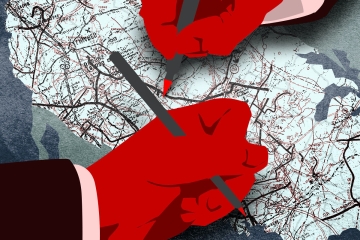
2020 brings the decennial national census, and with that comes a whole host of challenges and changes brought on by the redistricting that follows—or as it’s sometimes known in its more questionable forms, gerrymandering. A new report from the Center for American Progress, authored by Alex Tausanovitch, Steven Jessen-Howard, Jessica Yin, and Justin Schweitzer, explores the ways partisan gerrymandering in four states affects children, their families, and their education.

On its face, redistricting is simply meant to ensure that state electoral districts comply with federal apportionment laws and are made up of equal populations. But it’s often used as a much more unsavory political strategy, in which case it’s referred to as gerrymandering. This involves drawing district lines to favor one political party—something both Republicans and Democrats have done—usually by “packing” (consolidating opposing voters into one district) or “cracking” (spreading opposing voters across many districts, thereby diluting their vote). This leads to strangely shaped districts that don’t necessarily represent the political views or affiliations of the people in a given community.

And according to CAP, it can also mean even less funding for schools. The authors use four states—Michigan, North Carolina, Pennsylvania, and Wisconsin—to make its case that gerrymandering affects school funding. In each, Democrats won the governorship and the popular vote in legislative elections, but Republicans still ended up with more seats. Governors then proposed certain budget increases for childcare and K–12 education, but these were cut or blocked by lawmakers. For example, Governor Gretchen Whitmer of Michigan proposed a $84 million increase for Michigan’s preschool program, but only $5 million was approved (however, it’s worth noting that Whitmer herself cut funding for public charter schools that same year). In Pennsylvania, inequitable local funding for school districts prompted Governor Tom Wolf to propose increasing state funding for low-income districts, which was shut down by the legislature. And in North Carolina, right and left polling firms found significant support among residents for increased funding for both early childhood and K–12 education, but funding increases proposed by the Democratic Governor Roy Cooper were cut in half by legislators.

There was indeed voter support for increased preK-12 funding in North Carolina, but in other states it may have simply been a debate over allocation of funds, and it’s not clear that the proposals in Michigan or Pennsylvania had support from a majority of voters. It seems the real clash of wills was between Democrats and Republicans, and not necessarily that Republicans wanted to slash school budgets against their constituents’ will. It’s also reductive to think that increased or decreased school funding is the sole proprietor of quality education.

A more poignant and persuasive problem, and one that the CAP report only addresses in part, is about whom is typically most affected by gerrymandering—minorities and low-income families. Racially dividing neighborhoods and voting districts politically disempowers disadvantaged families and contributes to low-income students being confined to underperforming, underfunded schools (the report only discusses this last effect). The issue is embroiled in so many others—racial disparities, income disparities, and poor allocation of funding. And while both parties are guilty of redrawing district lines to their favor, it’s true that right now Republicans are the most advantaged by it. And sadly, weakening the Democratic voting base means that these already underrepresented communities are even more underrepresented, as these communities typically vote Democrat.

The disparity between popular vote and number of seats won is certainly an issue to consider, but the solution to this problem is not so simple. CAP recommends voter-determined districts, which tie popular vote to the number of seats a party receives. Some states have opted for independent commissions to redraw lines, and others have placed varying levels of restrictions on who can serve on redistricting commissions.

The authors are right when they point out how gerrymandering “turns [our election system] on its head, allowing the politicians to choose their voters.... It’s not just an outrage to core principles of fairness; gerrymandering has real-world consequences across all the issues that voters care about.” One of these consequences could be an inadequate education for all students, especially low-income students. Yet another is evident right now as districts try to decide how to safely reopen for the 2020 school year—and what supplies they’ll need to purchase to do so—while many states consider cutting funding for education.

If gerrymandering really has filled state legislatures with representatives who aren’t acting in the interest of their constituents, then all students and teachers—especially those who may not have the option to attend virtually—are going to be put at risk. So as states across the country prepare to redistrict, it may be a good time for you to see what shape your district is and why it may have been drawn like that.

SOURCE: Alex Tausanovitch, Steven Jessen-Howard, Jessica Yin, and Justin Schweitzer, “How Partisan Gerrymandering Hurts Kids,” Center for American Progress (May 2020).

view

The Education Gadfly Show: Should districts outsource virtual learning?

7.29.2020
Podcast

On this week’s podcast, Rob Kremer, director of government relations at Pearson, owner of Connections Academy, joins Mike Petrilli and David Griffith to discuss whether school districts should be trying to build online schools on their own or should outsource the role to companies like his. On the Research Minute, Amber Northern examines how charter school growth has affected local teacher quality and student composition.

Amber's Research Minute

Lucy C. Sorenson and Stephen B. Holt, “Charter School Growth and the Evolution of Local Teacher Labor Markets,” retrieved from Annenberg Institute at Brown University (July 2020).

The Education Gadfly Show is available on Google Podcasts, Libsyn, Spotify, iHeartRadio, Apple Podcasts, TuneIn, The Podcast App, PodBean, Podbay, Chartable, Castbox, and myTuner Radio.

Fordham Logo

© 2026 The Thomas B. Fordham Institute
Privacy Policy
Usage Agreement

National

P.O. Box 110
Burke, VA 22009

202.223.5452

[email protected]

Ohio

P.O. Box 82291
Columbus, OH 43202

614.223.1580

[email protected]

Sponsorship

130 West Second Street, Suite 410
Dayton, Ohio 45402

937.227.3368

[email protected]