Mobile Navigation

  • National
    • Policy
      • High Expectations
      • Quality Choices
      • Personalized Pathways
    • Research
    • Commentary
      • Gadfly Newsletter
      • Flypaper Blog
    • Events
    • Scholars Program
  • Ohio
    • Policy
      • Priorities
      • Media & Testimony
    • Research
    • Commentary
      • Ohio Education Gadfly Biweekly
      • Ohio Gadfly Daily
  • Charter Authorizing
    • Application
    • Sponsored Schools
    • Resources
  • About
    • Mission
    • Board
    • Staff
    • Career
Home
Home
Advancing Educational Excellence

Main Navigation

  • National
  • Ohio
  • Charter Authorizing
  • About

National Menu

  • Topics
    • Accountability & Testing
    • Advanced Education
    • Career & Technical Education
    • Charter Schools
    • Curriculum & Instruction
    • ESSA
    • Evidence-Based Learning
    • Facilities
    • Governance
    • Personalized Learning
    • Private School Choice
    • School Finance
    • Standards
    • Teachers & School Leaders
    • Think Again
  • Research
  • Commentary
    • Gadfly Newsletter
    • Flypaper Blog
    • Gadfly Podcast
  • Events
  • Scholars Program

The Education Gadfly Weekly

Sign Up to Receive Fordham Updates

We'll send you quality research, commentary, analysis, and news on the education issues you care about.
Thank you for signing up!
Please check your email to confirm the subscription.

The Education Gadfly Weekly: Balancing learning loss against social and emotional harm

Volume 20, Number 30
8.5.2020
8.5.2020

The Education Gadfly Weekly: Balancing learning loss against social and emotional harm

Volume 20, Number 30
view
High Expectations

Balancing learning loss against social and emotional harm

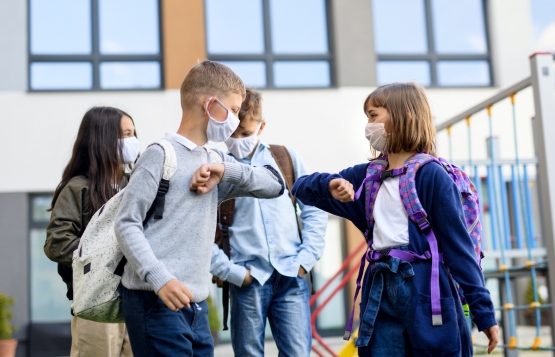
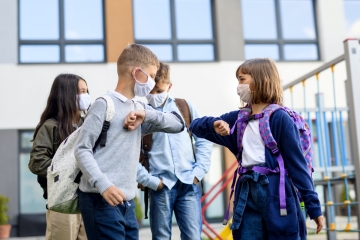
Few parents are thrilled at the prospect of more distance learning in the fall, but a majority of adults worry that school reopening will worsen the pandemic. Parents and educators are also rightly concerned about children falling behind academically, as well as the social and emotional consequences of prolonged isolation from peers and other adults. For advice on how to balance all this, we turned to two school-system leaders, Juan Cabrera and Eva Moskowitz.

Victoria McDougald 8.5.2020
NationalFlypaper

Balancing learning loss against social and emotional harm

Victoria McDougald
8.5.2020
Flypaper

What do school boards think about the 1619 Project curriculum?

Robert Pondiscio
8.5.2020
Flypaper

Building a stronger, more equitable education system

LaVerne Evans Srinivasan
8.3.2020
Flypaper

Mother of invention: Early evidence can inform new remote learning efforts

Amber M. Northern, Ph.D.
8.5.2020
Flypaper

Evidence that high school students can overcome disadvantage

Adam Tyner, Ph.D.
8.5.2020
Flypaper
view

What do school boards think about the 1619 Project curriculum?

Robert Pondiscio 8.5.2020
Flypaper
view

Building a stronger, more equitable education system

LaVerne Evans Srinivasan 8.3.2020
Flypaper
view

Mother of invention: Early evidence can inform new remote learning efforts

Amber M. Northern, Ph.D. 8.5.2020
Flypaper
view

Evidence that high school students can overcome disadvantage

Adam Tyner, Ph.D. 8.5.2020
Flypaper
view

Balancing learning loss against social and emotional harm

Victoria McDougald
8.5.2020
Flypaper

In light of the troubling surge in coronavirus cases across the nation in recent weeks, many educators and school leaders are revisiting or canceling plans to reopen schools this fall. Education Week recently reported that, “As of July 28, ten of the fifteen largest school districts are choosing remote learning only as their back-to-school instructional model, affecting over 2 million students.”

While few parents are thrilled by the prospect of more distance learning, recent polls show that a majority of adults are concerned that reopening daycares, K–12 schools, and colleges this fall will contribute to a further surge in coronavirus infections.

Parents and educators are also understandably concerned about children falling behind academically, as well as the social and emotional consequences of protracted isolation from peers and other adults. For low-income students of color, children with disabilities, and those in unstable or vulnerable home environments, the effects of continued school closures will be all the more damaging.

Regardless of whether schools plan to operate in-person, online, or some combination of the two, after so many months of closures (and in light of recent social unrest and continued racial inequality), teachers and school leaders need to carefully consider how to address students’ social and emotional needs, in addition to the significant learning losses that many have incurred. For advice on how to balance the two, I turned to Juan Cabrera, Superintendent of the El Paso Independent School District (EPISD), and Eva Moskowitz, Founder and CEO of Success Academy Charter Schools—two leaders featured on a webinar co-hosted by Fordham earlier this summer. As Cabrera emphasized, “Covid-19 has contributed to a significantly larger learning gap than we are accustomed to mitigating with the traditional summer slide. We are also keenly aware that students will need extensive social-emotional support upon the resumption of the school year.”

While El Paso will kick off its school year online, it plans to reopen schools as soon as health officials approve. Students should eventually be able to choose among online, in-person, or hybrid schooling models, but balancing academic instruction with social and emotional learning (SEL) will be at the forefront of the district’s priorities, Cabrera stressed, noting:

We cannot expect to simply return to business as usual once school resumes. There is a valid sense of concern and urgency to address the learning gaps that have been exacerbated by the months-long absence of teaching and learning. The temptation will be to spend most of our time and energy focusing on the academic gaps at the expense of attending to our students social-emotional needs. Social-emotional learning doesn’t get measured in the sense that we measure academics and creates the sense that it is an expendable option. However, we have a responsibility to provide social-emotional supports to students and staff. Learning at the highest levels cannot take place when the mind preoccupied with managing the effects of persistent stress and unreconciled traumas.

Similarly, Moskowitz plans to offer partial in-person instruction at Success Academy as soon as she’s able. Due to city guidelines, her schools will open remotely in August, but she intends to transition to a hybrid plan whereby students alternate between online and on-campus instruction.

And like Cabrera, Moskowitz views social and emotional wellbeing as “very important, now more than ever.” As she sees it:

Educators are naturally frantic about lost learning. Everything about schooling—from safety to academics to emotional health—is challenging during a pandemic. We have to keep it simple and prioritize. Reading is critical. But we also have to make time for recreation to help reduce stress and connect students, even if we have to do so in a virtual environment.

What might this look like in practice? EPISD is developing training for administrators and teachers focused on integrating academic and SEL. It will also provide dedicated time at the start of each school day for relationship and community-building, and plans to set aside time every Wednesday for students to engage in explicit SEL instruction via evidence-based programs differentiated by school level.

Success Academy will have a psychologist or social emotional specialist based in every school, and is looking at additional online sources of therapy for children. They also aren’t waiting until fall to reconnect with students. To make it possible for older students to connect and socialize, Success Academy offered an online program called SA Summer Together, where students were able to take online classes together, ranging from cooking to kickboxing to anime classes, and even observing surgery. Once they can reopen schools, Moskowitz says, “We will prioritize electives, or what we call ‘Scholar Talent.’ It’s very important for kids to be able to do things they truly enjoy—sports, art, chess, dance. We have limited time on campus, but we’ve made sure to build in time for these electives, which we feel strongly support the whole child and social-emotional wellbeing.” In the meantime, online exercise classes and virtual board games can help students de-stress and connect, she noted.

Safely reopening schools is one of the great challenges currently facing the nation. And in this unprecedented moment of distance learning and hybrid schooling, it’s critical to get SEL right. But as Cabrera underscored, “Integrating social and emotional learning and academics presents a path forward; one that is worthy of the time, thought and energy that the effort requires. It is the right thing to do. The result will be a proactive and equitable approach to schooling that will facilitate a sense of empowerment and a return to normalcy sooner rather than later.”

(To learn more about how school leaders plan to provide social and emotional supports for students throughout the Covid-19 crisis, check out our latest webinar here.)

view

What do school boards think about the 1619 Project curriculum?

Robert Pondiscio
8.5.2020
Flypaper

A new survey of parents and school board members finds significant resistance, particularly among the latter group, to many of the controversial claims and ideas advanced by The New York Times’s 1619 Project.

The poll conducted for The Heritage Foundation by Braun Research is based on a representative national sample of 1,001 parents plus 566 school board members. It suggests that school boards may be more conservative than parents when it comes to teaching history and civics—and that reframing teaching U.S. history with slavery as an animating force might face more resistance than some have assumed.

One head-scratcher is that two-thirds of parents surveyed say their child’s public school “offers enough coverage of civics.” Yet all other available evidence suggests that civic education remains not just the forgotten purpose of public education, but also a sorely neglected subject. It’s the chronic laggard among all tested subjects. Scores on the NAEP Civics, Geography, and U.S. History exam make reading and math achievement look comparatively robust. Parents may simply be unaware of the sorry state of civic education, or perhaps they’re more focused on the private dimensions of schooling, such as advancing their children toward college and career, than on preparation for citizenship.

School board members, by contrast, are less likely to express satisfaction with the state of civic education in their districts. But there’s some cognitive dissonance here, too: A survey conducted by Fordham a few years ago showed very low levels of interest in civics and citizenship visible in school district mission and vision statements. If board members are concerned about civic outcomes in their districts, they’ve been awfully timid about it.

The new poll’s most notable findings—and sharpest points of contrast—pertain to teaching history, and specifically issues raised by publication of the 1619 Project. As readers surely know, the controversial Pulitzer Prize-winning series represents a conscious bid to “reframe the country’s history” by establishing the date of America’s founding as 1619, the year the first African slaves were brought to Jamestown, rather than 1776, the year of the Declaration of Independence and the American Revolution, which the 1619 Project inaccurately claims was a war “to protect the institution of slavery.”

Asked whether schools curricula “should promote the view that our founding ideals of liberty and equality were false when they were written by the Founders,” a claim made by the 1619 Project, a strong majority of board members—over 70 percent—said “no.” Parents were more evenly divided, answering in the affirmative 47 to 46 percent, with the rest undecided or preferring not to say. 

Poll numbers rise or fall in large measure on how questions are asked and who is asking, but only one-third of parents in the Heritage survey think that schools should “reframe American history so that children will learn that the United States has been tainted by slavery and racism (and), that its institutions now need change.” Even fewer school board members, 28 percent, whose opinions ostensibly influence classroom practice, embrace that idea.

The Heritage poll did not include teachers, but a new RAND study does. Truth Decay: Teachers’ Civic Instructional Materials largely reconfirms the degree to which teachers rely heavily on classroom materials they find on their own or modify—rather than curricula (if any) adopted by their districts. According to the study, a plurality of secondary teachers, 42 percent, say that “found” resources make up the majority of their social studies teaching materials; 40 percent cite “materials I modified.”

Taken together, the Heritage poll and the RAND paper cast the controversy over the 1619 Project in a somewhat surprising light. On the one hand, the Pulitzer Center on Crisis Reporting claimed that, as of January 2020, over 4500 classrooms—not districts—had adopted the curriculum that it produced based on the 1619 Project, which consists of “reading guides, activities, and other resources.” However, the number of school districts that have adopted it district wide appears to be quite small. Various news reports commonly cite five districts that have formally adopted the curriculum, including the District of Columbia, Chicago, and Buffalo. If the Heritage poll is any indication, however, most school boards may not be eager to swallow the 1619 narrative whole And the RAND study suggests that teachers—who may or may not be more sympathetic to its aims and conclusions—are more likely to modify the materials than teach it straight, as they do other materials.

In sum, it seems likely that the vast majority of those 4,500 classrooms where the controversial curriculum is ostensibly being used fall into the murky category of “found” resources, with teachers deciding to use or adapt it for purposes ranging from mere student engagement to spur a lively discussion to a doctrinaire belief in its values and historical accuracy. But this doesn’t blunt the potential for controversy. As we’ve noted previously, in most places, school boards wield nearly complete power to set curriculum. Numerous court decisions have affirmed that teachers are considered “hired speech” and enjoy far less latitude to teach controversial material than is commonly believed.

There is likely “some play in the joints in most school districts particularly when it comes to supplemental material,” explains Joshua Dunn, a political science professor at the University of Colorado-Colorado Springs. “Of course supplementing with the 1619 Project could cause problems for teachers compared to, say, adding speeches by Martin Luther King Jr.,” he notes.

All of this suggests an intriguing opportunity for clarity—or perhaps mischief—for both fans and critics of the 1619 Project. The rock-bottom, basic function of a school board is to represent and safeguard the views of the local community in overseeing its most important civic institution. So it’s worth asking board members to articulate explicitly those views: To what year do we date this country’s founding? Is it the position of this school district in its curriculum and instruction that America’s ideals were false when written into our founding documents? What vision should we portray to our community’s youth?

The answers we might receive from members of America’s nearly 14,000 school boards would be clarifying to teachers—particularly the vast majority who “find” and “modify” the material they put in front of children with little or no official guidance at all.

view

Building a stronger, more equitable education system

LaVerne Evans Srinivasan
8.3.2020
Flypaper

A massive amount of lost learning

If ever there were a reminder that today’s young people are growing up with unprecedented challenges, it is the events of the past six months. With unfathomable speed, practically every aspect of our lives has been turned upside down.

We went from a strong economy to the precipice of an economic depression. Long-unanswered injustices prompted a critical and overdue national discussion about racial discrimination. And in the midst of all this, every educational institution in the country suddenly stopped doing what it had been doing and scrambled to find ways to do it differently, resulting in vast inconsistency, confusion, and inequality.

In many districts, challenges to teaching and learning were compounded by the absence of an effective infrastructure to meet the rapidly evolving needs of different populations and contexts. Without a foundation of trusting relationships and habits of collaboration, it was difficult to share and scale strategies that work.

The outcome for students has been a massive amount of lost learning. And for those already facing stacked odds, the crisis has exacted a far greater toll with the risk of devastating long-term consequences.

The sudden shift to remote learning required a radical rethinking in how teachers, families, and communities keep students connected to school. We saw many educators moving urgently to meet the needs of the moment. In some schools and communities, learning continued. But not everywhere.

Instruction moved online, but even as districts raced to disseminate digital devices and mobile hot spots, around 20 percent of students were entirely disconnected from school. Families became educators overnight—leaving them overwhelmed and often distressingly isolated from needed guidance. Students at critical transition points to college or career found themselves facing an uncertain future.

What is most concerning in all of this is the impact on the most underserved and historically marginalized in our society: low-income children and students of color. Even before the current crisis, the future prospects of a young person today looked very different depending on the color of her skin and the zip code in which she grew up, but the pandemic exposed and exacerbated long-standing racial and economic inequities. And the same families who are faring worst in terms of disrupted schooling are bearing the brunt of the economic downturn and disproportionately getting sick, being hospitalized, and dying.

Early presumptions that this would be an inconvenient hiatus are giving way to the realization that we may be dealing with Covid-19 for a year or longer. There will be no sudden all-clear signal followed by a sigh of relief. Whatever the new reality looks like, progress will be a gradual and extended process, likely with multiple setbacks.

And yet, even at this dark hour, there is reason to think that we have the capacity to improve the life prospects of our most vulnerable young people and in doing so strengthen our society and democracy. Major crises tend to galvanize the public toward action on long-simmering issues. Suddenly, problems that our education program has been working on for the past two decades are front and center in the national conversation.

Weaknesses in our education system have become painfully apparent to far more people. As they struggle to facilitate their children’s remote learning, parents are seeing the great inconsistency in the quality of students’ learning experiences. Educators and families are realizing how little they understand about each other’s goals and realities and how that lack of understanding impedes their efforts.

Solutions to some of our biggest challenges already exist

The great fragmentation that typifies the education sector was also laid bare during this crisis, but the urgency of the moment forced people to let go of practices and beliefs that they held dear—creating the opportunity to meaningfully change how our education system works and who has a seat at the table when critical decisions are made.

Another cause for cautious optimism is that solutions to some of the biggest challenges of this crisis already exist. Innovators have spent a decade building a knowledge base about personalized learning, making it possible to provide greater flexibility in how, when, and where student learning takes place. Our foundation has also invested in efforts to develop high-quality curricula and instructional materials, along with professional learning to help teachers use them effectively. This ready supply of resources allowed some schools to more nimbly transition to remote learning. Expanding that access will enable educators to better meet student needs in the current crisis and to foster rich, more student-centered learning going forward.

To be clear, we do not envision that a purely online approach to instruction will persist in perpetuity. This crisis has underscored the value of face-to-face interaction to people’s well-being, and cognitive science has demonstrated the importance of social interaction to student learning. But if past upheavals are any indication, when this one stabilizes, the challenges we endured will shape the world that follows. As we return to classrooms, they are likely to look different as a result.

We hope that our nation will approach education with a new sense of purpose and a shared commitment to ensuring that our schools truly work for every child. Whether or not that happens will depend on our resolve and our actions in the coming months. We have the proof points and know-how to transform learning, bolster instruction, and meet the needs of our most disadvantaged students. What has changed is the urgency for doing so at scale.

Our starting place must be a vision of equal opportunity, and from there we must create the conditions that can actually ensure it—irrespective of how different they may look from the ones we now have. We need to reimagine the systems that shape student learning and put the communities whose circumstances we most need to elevate at the center of that process. We need to recognize that we will not improve student outcomes without building the capacity of the adults who work with them, supporting them with high-quality resources and meaningful opportunities for collaboration and professional growth. We need to promote stronger connections between K–12, higher education, and the world of work so that all students are prepared for lifelong success.

None of these ideas are hypothetical. Our grantees have put them into practice in actual schools and postsecondary institutions. Over the coming months, we will share what we and our partners are learning as we work to build a stronger, more equitable education system than the one that was forcibly shuttered this spring.

This crisis has deepened inequities that threaten students’ prospects. But if we seize this moment and learn from it, if we marshal the necessary resources, we have the potential to transform our education system from one characterized by uneven and unjust results to one that puts all students on a path to bright futures.

Editor’s note: This was first published by the Carnegie Corporation of New York.

view

Mother of invention: Early evidence can inform new remote learning efforts

Amber M. Northern, Ph.D.
8.5.2020
Flypaper

Five years ago, Milwaukee Public Schools (MPS) launched an initiative called “Connected Education” in an effort to boost the number of students able to partake of Advanced Placement (AP) courses. More students meant more courses could be offered, but fiscal and personnel constraints prohibited them being offered in the traditional manner. Through a donation, the district received “telepresence systems” and began an experiment in remote learning, the results of which resonate beyond MPS boundaries.

While “telepresence” sounds like a tagline from Popular Mechanics in the 1980s, the system is actually quite advanced. An instructor teaches one group of students in person, as well as a second (and possibly a third) set of students who are connected via video. Enhanced site-to-site cameras and sound equipment, along with interactive widescreen monitors, allow the remote students to interact in real time with the instructor and their fellow pupils, seeking to mimic the environment in which all would be physically together. Analysts Jennifer Darling-Aduana and Carolyn Heinrich of Vanderbilt University examined students enrolled in a telepresence course inside the host school—where the student received instruction in the same location as the teacher most days—versus students who participated remotely and typically received instruction in a different school from the instructor.

The study is quasi-experimental, using data from student and instructor surveys, as well as models that compare students with themselves in alternative years. They have data on nearly 600 students who participated in telepresence courses—of whom about 200 were remote. Compared to the general student population, participants were less like to qualify for free or reduced-priced lunch, to receive special education services, or to be English language learners. They were also more likely to be white and female. The analysis covers three years of data starting in 2015–2016. Seventeen different courses were ultimately offered via Connected Education, several of which were not AP courses.

The program took “connected” seriously. Not only was the technology interactive, but instructors used multiple icebreaker activities and held several in-person Saturday sessions to help build relationships between students. Additionally, the instructors would travel to the remote locations and teach in person several times per semester to have face-to-face interaction with the usually-remote students. Ironically, although we typically envision remote classes as huge lecture-style affairs, class sizes ranged from eight to thirty students, which is in line with district norms for AP courses and the recommendations of the College Board.

The key finding is that overall participation in telepresence courses in a given year translated into enrollment of 1.3 more AP courses per student compared to years in which students did not participate in telepresence. Remote participation in a telepresence course translated to 1.5 more AP courses. Since all MPS students had to take the ACT under Wisconsin law, they also use those scores as an outcome. After controlling for eighth-grade student and school covariates, they find that students enrolled in telepresence courses scored about two to three points higher on the ACT compared to students who never enrolled in them. Finally, the percentage of days absent from school was lower by approximately 2 percent among students who participated remotely. Survey data show that students enjoyed interacting with students from other schools and appreciated the out-of-school outings. Teacher surveys show that the technology didn’t always work, especially at the beginning, but improved over time.

The fiscal and personnel constraints that catalyzed this intervention in 2015 take on greater significance in the midst of today’s pandemic. Teachers, parents, and pundits decry the impersonal and disconnected nature of online learning. But MPS’s telepresence effort shows that we can do better. Synchronous teaching with small classes, strong interactive components, and traditional relationship-building features are all possible in remote learning. That’s not the in-person variety that teachers justifiably miss. But it will surely have to suffice for many American students and teachers in the meantime, so let’s make the best of it.

SOURCE: Jennifer Darling-Aduana and Carolyn Heinrich, “The Potential of Telepresence for Increasing Advanced Course Access in High Schools,” Educational Researcher (June 2020).

view

Evidence that high school students can overcome disadvantage

Adam Tyner, Ph.D.
8.5.2020
Flypaper

In the first chapter of their 2018 book, The Coddling of the American Mind, Greg Lukianoff and Jonathan Haidt argue that a distinctive feature of many modern, wealthy cultures is a broadened impulse to protect young people from difficulties. From advising parents to keep peanuts away from young children to the “trigger warnings” placed on university course syllabuses, the authors trace this impulse from overly-protective childrearing practices all the way to college campuses.

They contend, however, that the underlying premise of this “safteyism” is the “fundamental untruth” that young people are fragile. Instead, they agree with the iconoclastic financial guru Nassim Nicholas Taleb that young people manifest “antifragility,” which means that they can benefit from life’s stresses. The antifragile aren’t just durable or resilient, like a glass that doesn’t chip when you drop it; they actually get stronger from being tested. It follows, say Lukianoff and Haidt, that shielding young people from difficulties and discomforts—whether peanut butter or Charles Murray—can make them weaker in the end.

The implication of the fragility thesis is that students who face disappointments or disadvantages will be worse off in the long run. Of course, the magnitude and number of stressors and setbacks matters greatly, and Taleb distinguishes between “acute” and “chronic stressors,” the latter of which can “make you feel trapped in life.” Education commentators often deem students too fragile to cope with rigorous standardized tests or the negative feedback that comes from honest grading or even feedback given in red pen. (For what it’s worth, Taleb himself lists “exam pressures” on students as a chronic stressor.) Yet a new study of high school students in Denmark suggests the opposite. It finds that, even in the face of an arbitrary and unfair disadvantage, students can rise to the occasion, redouble their efforts, and come out stronger in the end.

In this study, the researchers cleverly exploit an idiosyncrasy in a 2007 reform of Danish course grading whereby some students lost points when a new grading scale was introduced and previous grades had to be converted to the new scale. Denmark’s grading systems are points-based (rather than the A-to-F scale that most American schools use), but the point values changed in some odd ways as the system shifted from a 13-point scale to a 7-point scale. The following example is instructive:

[A] student with grades 5, 5, 6, 11, and 13 on the old scale would have his or her GPA transformed from 8.0 to 5.2, while a student with grades 3, 5, 10, 11, and 11 would have his or her GPA transformed from 8.0 to 6.8.

In other words, two students with the exact same GPA on the old scale could have substantially different GPAs on the new scale. Using some additional controls, the researchers can then isolate the impact of getting re-assigned an arbitrarily lower GPA on students’ later behavior and outcomes. Since Denmark uses high school GPA to determine college admissions, the reform had real impact on students’ educational prospects.

The analysts found that students whose grades were arbitrarily lowered worked harder, earned better grades, and learned more. A one standard deviation downgrade in GPA was associated with an 8 percent of a standard deviation GPA increase in later years. Interestingly, this seems not to have been just students gaming the system by taking easy classes or “grade grubbing” their teachers to improve their GPAs, because the same students improved on other academic measures, as well. Those students whose grades were lowered had higher scores on national standardized exams, were more likely to enroll in college, and were more likely to graduate from college within six years of finishing high school. Recall that since GPA is large factor in college admissions, students whose GPAs arbitrarily fell were put at an artificial disadvantage for college admissions, and yet these students are even more likely to get a degree than students who didn’t face that disadvantage.  

None of the student subgroups the researchers examined experienced statistically significant negative effects from having their GPAs artificially lowered, but the positive effects were not consistent for all types of students. Most importantly, the overall results are driven by girls, who experienced larger positive effects than boys. The effects were also stronger for students who had higher middle school GPAs, presumably because they were, on average, more motivated to attend a university.

This isolation of the positive impact of harsher grading builds on other work that has shown that students learn more when assigned to teachers who are tough graders, but in those studies, the mechanism was less clear. An article by David Figlio from 2004 showed that elementary students learned more when assigned to teachers less likely to award good grades, and a recent Fordham report by Seth Gershenson found similar results for high school students in North Carolina. Among college students, a 2010 study by Philip Babcock found that students spend more time studying in courses where they expect lower grades. In the Denmark study, the effect of harsher grading is completely separated from the quality of the teachers or the difficulty of the courses, yet when faced with this setback, students responded by working harder.

The implication for educators is that they must instill in students the understanding that a setback—even an unfair negative change to their grades—is not something that will break them. In other words, educators must teach students that they aren’t fragile, but antifragile.

SOURCE: Hvidman, Ulrik, and Hans Henrik Sievertsen. “High-Stakes Grades and Student Behavior.” Journal of Human Resources (2019).

Fordham Logo

© 2026 The Thomas B. Fordham Institute
Privacy Policy
Usage Agreement

National

P.O. Box 110
Burke, VA 22009

202.223.5452

[email protected]

Ohio

P.O. Box 82291
Columbus, OH 43202

614.223.1580

[email protected]

Sponsorship

130 West Second Street, Suite 410
Dayton, Ohio 45402

937.227.3368

[email protected]