Mobile Navigation

  • National
    • Policy
      • High Expectations
      • Quality Choices
      • Personalized Pathways
    • Research
    • Commentary
      • Gadfly Newsletter
      • Flypaper Blog
    • Events
    • Scholars Program
  • Ohio
    • Policy
      • Priorities
      • Media & Testimony
    • Research
    • Commentary
      • Ohio Education Gadfly Biweekly
      • Ohio Gadfly Daily
  • Charter Authorizing
    • Application
    • Sponsored Schools
    • Resources
  • About
    • Mission
    • Board
    • Staff
    • Career
Home
Home
Advancing Educational Excellence

Main Navigation

  • National
  • Ohio
  • Charter Authorizing
  • About

National Menu

  • Topics
    • Accountability & Testing
    • Advanced Education
    • Career & Technical Education
    • Charter Schools
    • Curriculum & Instruction
    • ESSA
    • Evidence-Based Learning
    • Facilities
    • Governance
    • Personalized Learning
    • Private School Choice
    • School Finance
    • Standards
    • Teachers & School Leaders
    • Think Again
  • Research
  • Commentary
    • Gadfly Newsletter
    • Flypaper Blog
    • Gadfly Podcast
  • Events
  • Scholars Program

Evidence-Based Learning

Displaying 61-90 of 849 results
Student doing math
Commentary
5.7.2026
Evidence-Based Learning, Curriculum & Instruction

Can literacy instruction make students better at math?

Jill Hoppe

Once you learn to drive a car, you’re better equipped to drive a truck. Knowing how to drive a car might also help you to develop better decision-making skills. That’s because of a phenomenon called “learning transfer”: the application of skills and concepts learned in one context to another.

Student doing math
students reading
Commentary
5.1.2026
Evidence-Based Learning, Curriculum & Instruction, Teachers & School Leaders

The science of reading has won the argument. Has it won the classroom?

Robert Pondiscio

A few years ago, the “science of reading” was still treated in some quarters as a niche movement—something for literacy specialists, cranky traditionalists, and a handful of obsessives who spent too much time fighting the reading wars on the internet. No longer.

students reading
A teacher's desk
Commentary
4.30.2026
Evidence-Based Learning, Curriculum & Instruction, Teachers & School Leaders

The “science of reading gap”

Amber M. Northern, Ph.D., Michael J. Petrilli

In recent years, states and districts have made a concerted effort to align early elementary school instruction with “the science of reading.” But how much progress has actually been made? To find out, Fordham researchers David Griffith and Brian Fitzpatrick analyzed results from a nationally representative survey of K–3 teachers that examined their knowledge of reading science and its relationship to the policies that shape instruction. One disturbing finding: Teachers in high-poverty schools appear less committed to the science of reading than their peers.

A teacher's desk
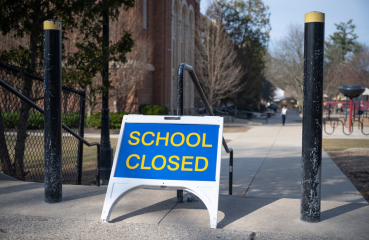
School closed sign
Commentary
4.23.2026
Evidence-Based Learning

Longer-term impacts of remote learning during the height of Covid

Jeff Murray

It’s been six years since the Covid-19 pandemic began disrupting education, and a varying number of years

School closed sign
Arrow
Commentary
4.23.2026
Evidence-Based Learning, Curriculum & Instruction

Special education doesn’t just work—it reverses academic decline

Julia Hayes

Approximately 7.5 million U.S. students receive special education services in public schools—more than one in seven pupils nationwide.

Arrow
School meeting
Commentary
4.16.2026
Evidence-Based Learning

Does Communities in Schools boost student outcomes?

Jill Hoppe

Communities In Schools (CIS) is a program that addresses not only academic needs but also the personal, familial, and community barriers that hinder student success.

School meeting
Chalkboard arrow
Commentary
4.9.2026
Evidence-Based Learning

Another deep dive into estimates of economic returns to education

Jeff Murray

Hot on the heels of a recent report that postulated a lower-than-commonly-believed economic benefit of formal schooling comes a brand new analysis that offers more proof of high marginal returns to education. Who is winning the battle of the impact estimates?

Chalkboard arrow
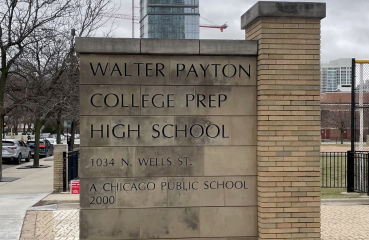
Walter Payton College Prep High School
Commentary
4.7.2026
Evidence-Based Learning, Curriculum & Instruction, Governance, Advanced Education

Selective high schools are a lifeline for advanced students in Chicago

Renu Mukherjee

2026 is a watershed moment for Chicago Public Schools (CPS).

Walter Payton College Prep High School
Parent and child walking to school
Commentary
4.2.2026
Evidence-Based Learning, Governance

The case for open enrollment

Jude Schwalbach

The current system of residential assignment carries a lot of baggage. It also forces families into boxes where their largest investments (i.e., homes) are intrinsically tied to a single public school. This structure lacks the flexibility that should be afforded to students and their parents, especially as K–12 education is a deeply personal experience.

Parent and child walking to school
School band
Commentary
4.2.2026
Evidence-Based Learning, Curriculum & Instruction, Governance, Teachers & School Leaders

Close the music education gap

Jill Hoppe

I still remember my elementary music teacher roaming the halls, pushing a cart overflowing with tambourines, recorders, and sheet music. This vibrant world was threatened, however, when I was in fourth grade as the district began discussing cuts to our music program.

School band
Graduation
Commentary
4.2.2026
Evidence-Based Learning, Curriculum & Instruction, Governance, Teachers & School Leaders

Gen Z talks about life after high school

Bruno V. Manno

High school graduation is often treated as the pivotal moment when one becomes an adult. But for many young people today, adulthood unfolds unevenly over time, through a mix of work, further education, financial pressure, stalled plans, and gradual independence.

Graduation
Parents and daughter looking at a report card
Commentary
3.26.2026
Evidence-Based Learning, Governance, Teachers & School Leaders

Evidence that parents trust report cards more than tests

Jeff Murray

School leaders, teachers, and state policymakers all work to provide information to parents about the quality of education in their schools and about their own children’s academic performance. How do parents receive and—if needed—act on the information provided?

Parents and daughter looking at a report card
Dollar sign on a chalkboard
Commentary
3.19.2026
Evidence-Based Learning, Governance, Teachers & School Leaders

When teachers move for money, their effectiveness may lag

Meredith Coffey, Ph.D.

In recent years, states and especially districts have turned to financial incentives to encourage high-performing

Dollar sign on a chalkboard
Teacher teaching in a classroom
Commentary
3.12.2026
Evidence-Based Learning, Curriculum & Instruction, Teachers & School Leaders

High-quality instruction starts in educator preparation programs

Julia Hayes

Like many other teachers, I took the traditional route into the profession, pursuing an undergraduate degree in education.

Teacher teaching in a classroom
Empty classrooms
Commentary
3.12.2026
Evidence-Based Learning, Curriculum & Instruction, Governance, Teachers & School Leaders

Why do teachers quit?

Daniel Buck

I’ve worked at some rough schools. At one, as summer approached, my colleague and I reviewed the staff picture from September and counted that a third of the teachers who began in the fall had quit before the year’s end. We didn’t hold it against them.

Empty classrooms
Watching football on phone
Commentary
3.12.2026
Evidence-Based Learning, Curriculum & Instruction, Governance, Teachers & School Leaders

What do boys think about gambling?

Alicia Anderson

March brings my favorite family pastime. Soon, the fanatics and ambivalent among us will fill out NCAA basketball brackets and tape them to the kitchen wall. My teen son will carefully analyze rankings for each team and stats for key players.

Watching football on phone
Student doing math on a chalkboard
Commentary
3.10.2026
Evidence-Based Learning, Curriculum & Instruction, Governance, Teachers & School Leaders

Math and the Mississippi Miracle

Todd Collins

With updated reading policies on the books in over 40 states, ed policy advocates and legislators are now turning to math. Fourth grade NAEP math results are just as bad (if not worse), so why not take it on, as well? Bellwether has a nice round up of the current state of affairs.

Student doing math on a chalkboard
College student outside
Commentary
3.5.2026
Evidence-Based Learning, Teachers & School Leaders

College advising boosts enrollment but not persistence

Jill Hoppe

The end of race-based affirmative action and persistent gaps in enrollment and degree attainment among students from low-income backgrounds have intensified

College student outside
U.S. Department of Education building
Commentary
3.2.2026
Accountability & Testing, Evidence-Based Learning, Governance, Teachers & School Leaders

A future for IES?

Chester E. Finn, Jr.

Thank you, Amber! My colleague Amber Northern, Fordham’s longtime senior vice president for research, has done American education a great service by recommending a future for the Institute for Education Sciences that goes far beyond undoing the damage done by DOGE a year ago.

U.S. Department of Education building
Moving people at a school
Commentary
2.26.2026
Accountability & Testing, Evidence-Based Learning, Governance, Teachers & School Leaders

Good schools don’t beat staff turnover. They’re built for it.

Robert Pondiscio

Education has never lacked miracle schools and stories. The real challenge isn’t identifying successful schools but learning how to recognize whether their success is institutional or temporary. So if we wanted to predict whether a school’s success will last, what should we look for?

Moving people at a school
Graduate
Commentary
2.26.2026
Accountability & Testing, Evidence-Based Learning

The predictive power of NAEP

Alicia Anderson

Across the United States, a representative sample of thousands of fourth, eighth, and twelfth grade students has begun sitting for the National Assessment of Educational Progress. NAEP is administered independently of state-level standards but presents state- and national-level results.

Graduate
Teacher in a classroom
Commentary
2.19.2026
Evidence-Based Learning, Charter Schools, Curriculum & Instruction, Teachers & School Leaders

Studying successful schools matters. Studying enduring success matters more.

Robert Pondiscio

In this first entry in a three-part series, Pondiscio tackles American education’s failure to learn from its success stories. The problem is not that we’re incurious about successful schools—it’s which models we seek to learn from and the lessons we take from them.

Teacher in a classroom
Commentary
2.19.2026
Evidence-Based Learning, Curriculum & Instruction, Teachers & School Leaders

Yes, teachers keep improving with time

Meredith Coffey, Ph.D.

Like many people, when I entered the world of education policy, I encountered a trove of education research that was new to me but that largely tracked with my prior experiences as a teacher.

Teacher in a classroom
Piggy bank and chalkboard with question marks
Commentary
2.19.2026
Evidence-Based Learning, Standards

Did the Common Core boost students’ labor market outcomes?

Brian R. Fitzpatrick, Ph.D.

The rollout of the Common Core State Standards (CCSS) in 2010 began as a widely applauded, bipartisan policy aimed at providing an accessible curriculum focused on conceptual understanding that could form the foundation for K–12 education content for the next generation.

Piggy bank and chalkboard with question marks
Students on computers
Commentary
2.12.2026
Evidence-Based Learning, Curriculum & Instruction

AI-assisted learning stumbles on the evidence

Daniel Buck, Anna Low

Five months after the launch of ChatGPT, Sal Kahn, the founder of the online learning giant Kahn Academy, predicted that, “We’re at the cusp of using AI for probably the biggest positive transformation that education has ever seen.” As of now, this appears to have been an aspirational proclamation made with

Students on computers
Teacher in a classroom
Commentary
2.12.2026
Evidence-Based Learning, Teachers & School Leaders

Why doesn’t the education system study the successful?

Holly Korbey

It was a big January for my Hoosier family. I grew up in Bobby Knight’s Indiana, so IU’s incredible football National Championship win is a big deal in my home state.

Teacher in a classroom
Balloons in a classroom
Commentary
2.12.2026
Evidence-Based Learning, Teachers & School Leaders

First, do no harm: The academic impacts of grade inflation on long-term outcomes

Jeff Murray

There’s plenty of evidence that average grades,

Balloons in a classroom
Students in a classroom
Commentary
2.12.2026
Evidence-Based Learning, Curriculum & Instruction, Teachers & School Leaders

What happens when students with disabilities switch to charter schools?

Julia Hayes

Students with disabilities make up almost 15 percent of K–12 students in the U.S. These students have long been underrepresented in charter schools, which may offer different (or fewer) special education services than traditional public schools.

Students in a classroom
Football goalposts
Commentary
2.5.2026
Accountability & Testing, Evidence-Based Learning, Curriculum & Instruction, Governance, Private School Choice

School choice supporters keep moving the goal posts

Michael J. Petrilli

Over the past decade or so, as the education reform movement has increasingly splintered along partisan lines, the number of people who support both charter schools and private school choice has shrunk to almost nothing. One cause of the growing divide is that some private school choice advocates are making demands that are increasingly outlandish.

Football goalposts
Texas Capitol
Commentary
2.5.2026
Evidence-Based Learning, Curriculum & Instruction, Governance, Teachers & School Leaders

Why Texas is right to name the books students should read

Robert Pondiscio

Texas is once again at the center of a familiar but unresolved debate about literacy, culture, and the proper role of schools.

Texas Capitol

Pagination

  • First page « First
  • Previous page ‹ Previous
  • Page 1
  • Page 2
  • Current page 3
  • Page 4
  • Page 5
  • Page 6
  • Page 7
  • Page 8
  • Page 9
  • Next page Next ›
  • Last page Last »

Type

  • Book (1)
  • Commentary (826)
  • Event (1)
  • Podcast (9)
  • Report (4)

Topics

  • Accountability & Testing (509)
  • Advanced Education (268)
  • Career & Technical Education (84)
  • Charter Schools (1121)
  • Curriculum & Instruction (1612)
  • ESSA (129)
  • (-) Evidence-Based Learning (849)
  • Facilities (25)
  • Governance (1437)
  • Personalized Learning (51)
  • Private School Choice (144)
  • School Finance (169)
  • Standards (190)
  • Teachers & School Leaders (1477)

Date

  • 2026 (101)
  • 2025 (124)
  • 2024 (161)
  • 2023 (129)
  • 2022 (138)
  • 2021 (111)
  • 2020 (37)
  • 2019 (47)
  • 2007 (1)
Fordham Logo

© 2026 The Thomas B. Fordham Institute
Privacy Policy
Usage Agreement

National

P.O. Box 110
Burke, VA 22009

202.223.5452

[email protected]

Ohio

P.O. Box 82291
Columbus, OH 43202

614.223.1580

[email protected]

Sponsorship

130 West Second Street, Suite 410
Dayton, Ohio 45402

937.227.3368

[email protected]