What we’re reading this week: June 19, 2025
Democrats for Education Reform’s shift toward supporting education savings accounts and other private school choice policies has triggered backlash, resignations, and deep divisions among Democrats.
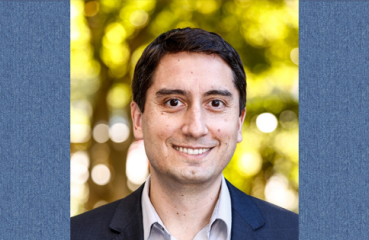
On this week’s Education Gadfly Show podcast, Jon Valant —director of the Brown Center on Education Poli
Graduation at Columbia Secondary, Harlem’s top selective sixth through twelfth grade school, is scheduled for Friday, June 20. Its seniors are taking advantage of their last few weeks on campus to beg District’s 5 Superintendent Dr. Sean Davenport to step in and keep the school they love from being systematically dismantled.
American education policy is littered with hypotheticals. If we allocated even more money, we could improve outcomes. If we found the latest ed-tech gadget, we could unlock individualized learning within a one-size-fits-all system.
On the latest episode of Nat Malkus’s The Report Card podcast, Andy Rotherham and Rick Hess offered a helpful way to think about the present state of federal education policy.
This terrific “working paper” by distinguished AEI demographer Nicholas Eberstadt concludes with a fascinating (and worrying) appraisal of educational performance in China—perhaps no surprise, since he and his team wrote it with support from the Pentagon’s Office of Net Assessment.
Overall college attendance has declined in recent years, with persistent and widening gaps in access and retention along racial and
A look inside South Korea’s “cram school” culture, where preparation for hyper-competitive college entrance exams now begins in kindergarten.
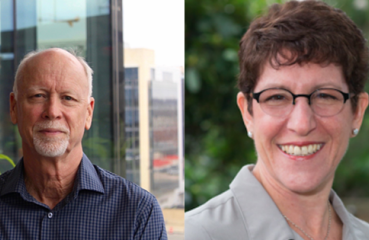
On this week’s Education Gadfly Show podcast, Linda Darling-Hammond and Anne Podolsky of t
For many years, the conventional wisdom in education reform circles was that teachers stopped improving after a few years on the job. This brief challenges that notion.
Editor’s note: This story was produced by The 74, a non-profit, independent news organization focused on education in America.
Dr. Amber Northern, Fordham’s longtime research chief, has been tapped to redesign the Institute of Education Sciences at the U.S. Department of Education. As she begins this important work, Checker Finn outlines the history of IES, highlighting progress, shortcomings, and the challenges she faces in this new role
Introduced in 2002 as part of the Institute of Education Sciences (IES), the What Works Clearinghouse (WWC) was one of the best ideas in federal education policy—and one of its worst executions in recent memory.
The conservative education watchdog group Defending Education has done important and often brave work exposing ideological overreach in K–12 schools.
The nationwide push to create or expand private school access over the last few years—through vouchers, tax credits, or education savings accounts (ESAs)—has ignited parental curiosity in such choices. But has the supply side of the equation kept pace with that heightened demand (and opportunity)?
In a new study, researchers from Washington University in St. Louis use nine years of student-level data from public high schools in St. Louis and the surrounding suburbs to estimate the effects of in-school suspension (ISS) and out-of-school suspension (OSS) on a student’s probability of transferring to another school.
Missouri adds “grade level” reporting to state test results, addressing parent and stakeholder confusion about proficiency scores.
On this week’s Education Gadfly Show podcast, Brandon Brown, CE
Ask most people where student achievement is strongest, and they’ll point to the Northeast: Massachusetts, New Jersey, Connecticut—the usual suspects. And that’s been mostly true. These states have stronger tax bases and serve (on average) wealthier populations. They have long invested more in public education and built systems to protect it.
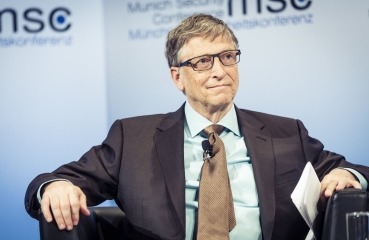
The Gates Foundation’s support for education reform has done much good. As the Foundation expends vast sums during its final twenty years, Finn urges Bill Gates to use his resources—financial, yes, but also influence—to press for fundamental changes in K–12 policies and practices.
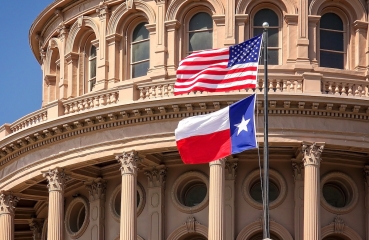
Texas Governor Greg Abbott recently signed into law a universal education savings account program, breaking through years of legislative resistance.
The granting of tenure typically occurs after K–12 teachers have worked three years in the classroom. In many places, that’s it, just time-in-harness.
Since the pandemic, classroom disruptions have surged, prompting Texas lawmakers to push for stricter discipline policies.
On this week’s Education Gadfly Show podcast, Tom Toch, director of FutureEd
A new wave of middle school math policies is poised to reshape who gets access to advanced math options, and when.
Earlier this month, Dana Goldstein of the New York Times argued that both political parties have abandoned the ed-reform agenda. Michael Petrilli responds, offering a robust agenda that would actually bring marked improvements to public schools.
Earlier this month, I was flattered to be invited to a conference at Marquette University Law School, sparked by an article I’d written making the case that education reform has misfired by prioritizing testing, measurement, accountability, and other structural reforms instead of trying to improve classroom practice. It’s an argument I’ve made elsewhere and the theme of my Substack.