Dear Bill,
(I think I’m now old enough to use your first name, though we’ve only met once, quite a while ago.)
I don’t write “open letters” to important philanthropists very often (and they get answered even less often!). In fact, I’ve only done it twice before: once to you, back in 1998, then to Mark Zuckerberg and Priscilla Chan in 2016. Each was prompted by the launch of a major new venture in philanthropy by people with enough money to make a difference.
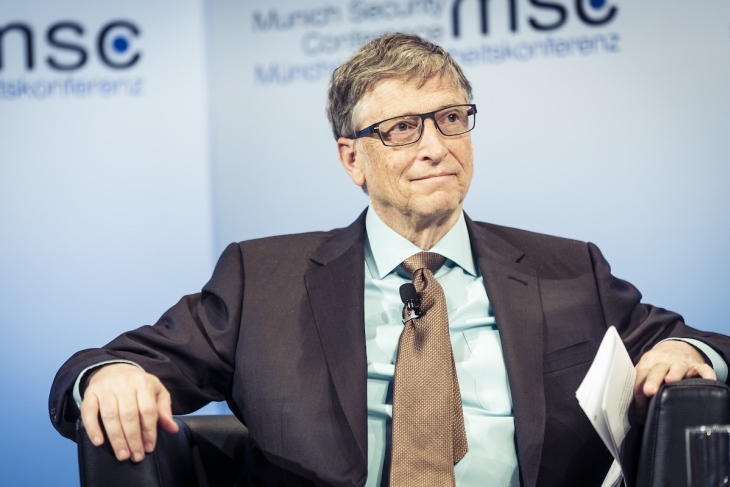
You’re doing that again, pledging what is surely the largest philanthropic offering in history—some two hundred billion—over the next twenty years, then shutting down the foundation that bears your name. So, first and foremost, thank you, primarily for your generosity, which is especially noticeable at a time when greed seems to be on the ascendancy in America, but also for your wisdom in planning to bring it to a landing yourself rather than (like Ford, MacArthur, and others) trusting that future pilots know which direction to fly.
People write you open letters all the time, I realize. A quick search revealed examples ranging from Mikhail Gorbachev to the policy director of the Idaho Cattle Association. (No doubt that’s why you rarely reply.) I hope this one will get your attention.
I write because your recently announced plans for the Gates Foundation alluded to education only in passing. They were mostly about global health, clearly now your top priority.
Yes, you mentioned “helping U.S. students have pathways to opportunity” as an ongoing interest of the Foundation—and thank you for that. Any number of worthy education-related missions, projects and organizations—the Thomas B. Fordham Institute among them—have come to depend (perhaps more than we should) on your generosity in this realm and, as you well know, the nation’s education shortcomings have hardly been resolved.
But I can also understand why education isn’t a top priority for you: it’s frustrating to deal with, it’s resistant to change, and what actually improves it is often hard to nail. Health has clear benchmarks—survival rates, longevity, infant mortality, and much more—as well as strategies that indisputably make it better both in the here and now and over time. Vaccinations prevent a host of illnesses (despite what certain U.S. government officials jabber to the contrary). Smallpox is essentially gone from the planet, and polio is under control almost everywhere. Your quest to eradicate malaria is plausible, both using today’s tools (mosquito nets, insecticides, etc.) to curb its incidence and finding a vaccine to prevent it.
It would, by comparison, be almost laughable to suggest that investments by the Gates Foundation—or anyone, really—would lead to the eradication of ignorance.
Yet education is not a realm to despair about. We know that some things actually work. Consider science-of-reading literacy instruction in the early grades. Consider high-quality urban charter schools. Consider large-scale policy moves like results-based school (and student) accountability. They’re not foolproof, not like a vaccine, and they do depend (like most things) on competent and sustained implementation. But when done right, they work.
Your foundation has done much good in this realm. I’m thinking of the proliferation of small schools, the development of measures to inform teacher evaluations, support for Common Core standards, some important help for charter schools, and today’s focus on math education. These and more deserve plaudits. So does the Foundation’s record of transparency about ventures that didn’t turn out so well.
What we haven’t seen from your education team is probing analysis of which investments really made a difference on the ground—and why. The Measures of Effective Teaching initiative, for example, was smart and bold, but its findings and lessons aren’t getting traction. Why? I think because it didn’t incorporate a political strategy to overcome union resistance, which was (and remains) fierce. By contrast, Common Core standards—for which you invested many millions in advocacy and strategy—have had staying power, albeit under different names in most states.
What should the future hold? How should the Gates Foundation navigate the next two decades in K–12 education? You could play it safe by continuing with the Foundation’s current goal: “To support schools in improving K–12 teaching and learning, with a focus on math as the cornerstone skill for academic success and greater opportunities in the workforce.”
Who could possibly object? And if you do this—and continue what seems to be the current practice of not upsetting established K–12 interests like teacher unions and local districts—you’ll be thanked, you’ll avoid controversy, and you may see incremental gains here and there. But that’s akin to distributing more mosquito nets instead of pressing for a malaria vaccine and fundamental changes in lifestyle.
Alternatively, you could steel yourself to press for fundamental changes in K–12 policies and practices, no matter who protests. Team up with change agents, bold experimenters, and state/district/school leaders who have the vision and gumption (and leverage) to do things really differently.
Of course, that means supporting high-quality school choices—public, private, and unconventional (micro-schools, technology-based, etc.). It also means pushing to overhaul the lock-step structures, age-based grades, 180-day years, six-hour days, and Carnegie units that shape how schools are organized and staffed, and how kids move through them. It means challenging—not just challenging old ideas and ingrained practices but investing in effective modern alternatives. It means investing in gifted-and-talented education so that smart kids can learn more and move faster—and that smart kids from poor and minority circumstances don’t get left by the wayside.
There’s more, much more, and even a foundation as wealthy as yours must select. But please don’t select the easy, popular route full of established ventures and institutions that will gratefully accept your money but not do anything different than they’ve always done.
Real change on the ground—the kind that actually alters what schools do, who teaches, who goes to which schools, who gets paid how much, whose school years expand, whose graduation standards get more rigorous—means duking it out with the forces of resistance, which also means allying with those who are ready to fight on your side. So be brave and think big. Consider, for example, giant grants to districts willing to blow up the single salary scale and collective bargaining agreements. Yes, that may mean focusing for now on red states—and also engaging politically, using your own money for things the IRS won’t let the Foundation do.
Sure, keep the focus on needy kids and urban schools, but there are plenty of both in places where the governor and legislature—maybe even the mayor—will join with you. Shun the many places that will take the cash but not change their ways.
There are promising education strategies worth nurturing, cultivating—and discovering. Not all of them will succeed, which is why they must be properly researched, implemented with integrity, and evaluated with honesty.
So please include those honest evaluations, truth-tellers, and mechanisms—there are so many nowadays—to communicate what does and doesn’t work, and don’t shy away from denouncing folly and self-interest. Support brave experiments, including those opposed by the establishment. Don’t hesitate to support advocates and critics or to call out blunders by government officials (even those who may seek revenge). And please don’t neglect the policy angle.
It’s okay to work with practitioners, with actual districts, schools, and teachers, as that’s unquestionably where the education rubber meets the road. Yet they’re not the road builders, much less the surveyors who determine the routes or the engineers who ensure that roads are straight and solid, incorporating sturdy bridges where needed.
State and local officials are mostly the ones who do those things in K–12 education, along with—in a few key realms such as statistics and assessment—their federal counterparts.
They need support, too, not money so much as ideas, evaluations, advocates, encouragement—and critics. A key issue in American education today is inattention, partisanship, and a bit of cowardice among elected officials and those they appoint. You and the Gates Foundation can make a difference here, too.
Sure, you’ll be criticized. Changing education means upsetting apple carts, taking on vested interests, getting yelled at.
Think about it this way as you set priorities for the decades ahead: it’s fine to help scale things that you know will be effective and that will get you thanked. But also consider the fact that what education needs most—and is least likely to get from government—is the courage and vision to try things that might not work and to endure the flak that comes with trying. These are best done by the private sectors in which you’re a leader.
Thanks for considering—and plaudits for accelerating your efforts.
Sincerely, Chester E. Finn, Jr.