Mobile Navigation

  • National
    • Policy
      • High Expectations
      • Quality Choices
      • Personalized Pathways
    • Research
    • Commentary
      • Gadfly Newsletter
      • Flypaper Blog
    • Events
    • Scholars Program
  • Ohio
    • Policy
      • Priorities
      • Media & Testimony
    • Research
    • Commentary
      • Ohio Education Gadfly Biweekly
      • Ohio Gadfly Daily
  • Charter Authorizing
    • Application
    • Sponsored Schools
    • Resources
  • About
    • Mission
    • Board
    • Staff
    • Career
Home
Home
Advancing Educational Excellence

Main Navigation

  • National
  • Ohio
  • Charter Authorizing
  • About

National Menu

  • Topics
    • Accountability & Testing
    • Advanced Education
    • Career & Technical Education
    • Charter Schools
    • Curriculum & Instruction
    • ESSA
    • Evidence-Based Learning
    • Facilities
    • Governance
    • Personalized Learning
    • Private School Choice
    • School Finance
    • Standards
    • Teachers & School Leaders
    • Think Again
  • Research
  • Commentary
    • Gadfly Newsletter
    • Flypaper Blog
    • Gadfly Podcast
  • Events
  • Scholars Program

The Education Gadfly Weekly

Sign Up to Receive Fordham Updates

We'll send you quality research, commentary, analysis, and news on the education issues you care about.
Thank you for signing up!
Please check your email to confirm the subscription.

The Education Gadfly Weekly: Restoring purpose and patriotism to American education

Volume 20, Number 10
3.11.2020
3.11.2020

The Education Gadfly Weekly: Restoring purpose and patriotism to American education

Volume 20, Number 10
view

Restoring purpose and patriotism to American education

This essay is based on the author's chapter in Mike Petrilli and Checker Finn’s new edited book, "How to Educate an American." It's a wholehearted plea for thoughtful whole-child education that offers both challenges and opportunities for policymakers and educators alike, and especially for today's many advocates of social and emotional learning.

William Damon 3.11.2020
NationalFlypaper

Restoring purpose and patriotism to American education

William Damon
3.11.2020
Flypaper

America’s schools and the formation of human beings

Chester E. Finn, Jr.
3.11.2020
Flypaper

Social justice and K–12 education reform

Andy Smarick | Bruno V. Manno
3.11.2020
Flypaper

Do suspensions improve the academic achievement of non-suspended students?

Amber M. Northern, Ph.D.
3.11.2020
Flypaper

When more students are mentored by organizations in their communities, what happens?

Jessica Poiner
3.11.2020
Flypaper

The Education Gadfly Show: On technocrats and culture wars

3.11.2020
Podcast
view

America’s schools and the formation of human beings

Chester E. Finn, Jr. 3.11.2020
Flypaper
view

Social justice and K–12 education reform

Andy Smarick, Bruno V. Manno 3.11.2020
Flypaper
view

Do suspensions improve the academic achievement of non-suspended students?

Amber M. Northern, Ph.D. 3.11.2020
Flypaper
view

When more students are mentored by organizations in their communities, what happens?

Jessica Poiner 3.11.2020
Flypaper
view

The Education Gadfly Show: On technocrats and culture wars

Michael J. Petrilli, David Griffith, Ph.D., Amber M. Northern, Ph.D., Chester E. Finn, Jr. 3.11.2020
Podcast
view

Restoring purpose and patriotism to American education

William Damon
3.11.2020
Flypaper

This essay by Stanford education professor and Hoover senior fellow William Damon is based on his fine chapter, “Restoring Purpose and Patriotism to American Education,” in Mike Petrilli’s and my new (edited) book, How to Educate an American: The Conservative Vision for Tomorrow’s Schools. Damon is a distinguished and much honored scholar who directs Stanford’s Center on Adolescence and whose research and writings focus on the development of purpose and integrity in people’s lives and work. This whole-hearted plea for thoughtful whole-child education offers both challenges and opportunities for policymakers and educators alike, and especially for today’s many advocates of social and emotional learning.

—Chester E. Finn, Jr.

As any teacher will tell you, motivation is key to learning. Highly motivated students will find ways to acquire knowledge and skills even in suboptimal circumstances. Students who have little interest in learning will be hard to teach no matter how well furbished the school.

The gold standard of motivation is purpose, because purpose is enduring and resilient. A purpose is a long-term goal that a person sees as both personally valuable and important to the world beyond the self.1 A purpose motivates one to accomplish short-term goals that serve that purpose. If a student is dedicated to a long-term purpose such as becoming a doctor, the student is likely to pursue short-term goals such as studying biology, passing tests, going to college, and gaining admission to medical school. Along the way, that student will learn a lot.

The human species is built in a way that requires purpose for optimal functioning. This was the groundbreaking insight of Austrian psychiatrist Victor Frankl in his mid-twentieth-century masterpiece Man’s Search for Meaning. Frankl rejected the reductionist views of fellow Austrian Sigmund Freud, contending that people are not primarily shaped by base emotional desires, early experiences, past traumas, or nagging conflicts, but rather are driven by what they believe in—actually, we drive ourselves to accomplish purposes that inspire us and give our lives meaning.

In the half-century since Frankl’s theory created a forward-looking line of thinking in psychology, research has confirmed the essence of his insights. Legions of studies have shown that, beginning in early adolescence, people committed to purposes show high levels of achievement, energy, resilience, health, emotional stability, and subjective well-being.2

Purpose is not a sole elixir for the good life; many other character strengths and skills are needed. Purpose alone does not ensure either good sense or ethics. But purpose ranks high on the list of character strengths that young people should acquire for productive and fulfilling lives.

Yet American schools today (with notable exceptions) are failing to encourage the all-important development of purpose among their students. My message in this essay is that the reforms most needed in American education are the kind that would improve the capacity of schools to help students find purpose in their studies and beyond.

In advocating for the cultivation of student purpose, I am emphasizing the importance of motivation, interest, agency, and individual choice. I believe schools are responsible for offering a broadly conceived education that imparts the moral, civic, and character strengths that enable young people to become productive citizens who dedicate themselves to the achievements they aspire to and the causes in which they believe. In K–12 education, this approach lies squarely in the camp that’s been known as “educating the whole child.” The assumptions behind it include a conviction that the cognitive skills and knowledge that are central to the educational mission can only be developed when students are motivated to learn, and that students will only be motivated to learn if they find personal meaning in the subjects they are offered. The whole-child approach also assumes that educators are responsible for more than cognitive learning in their students. Moral issues such as honesty and fairness arise in every classroom daily, and educating students to deal with such issues in an honorable manner is an essential part of a school’s responsibility. So too are issues related to personal well-being and good citizenship.

I write as a developmental psychologist, not a political scientist or policymaker. My research focuses on purpose across the life span. When I argue that schools should promote, and not deter, students’ acquisition of purpose, I consider this to be a position warranted by findings of developmental science rather than by an ideological stance or policy-wonk preferences.

But I cannot ignore one policy-linked irony of consequence: federal policy in the United States over the past quarter century has pushed K–12 schooling further and further away from whole-child education and toward a narrow curriculum and obsessive focus on test scores.

This counterproductive push took shape with legislation enacted in 1994—the Goals 2000 law and the Improving America’s Schools Act, which enshrined standards and tests in just two subjects (reading and math) as the basis for judging school quality and effectiveness. The push strengthened with 2002’s No Child Left Behind Act, was rein- forced in several ways in 2009’s Race to the Top program and was only slightly eased in 2015’s Every Child Succeeds Act.

If one were intentionally to try to design a policy aimed at discouraging student purpose, it would be hard to find a more effective approach. The policy shaped choices that educators made, or felt compelled to make, in school districts throughout most of the country. It’s distressing to think of the vast number of students who, during their formative years for acquiring purpose, were subjected to the mis-educative instructional choices promoted by this centralized, top-down, coercive, narrowly conceived, federal policy approach.

—

From our studies and those of other researchers, we know a lot about the conditions that foster purpose.3 Here are the essential ones:

  • Opportunities to participate in activities that one finds worthwhile, gratifying, and interesting.
  • Opportunities to discover and further develop one’s talents.
  • Discovery of aspects of the world that need to be remedied or improved.
  • Opportunities to do so by making efforts to contribute something of value to the world.
  • Observations of mentors who are making such efforts in a purposeful way.
  • Instruction that fosters moral and character strengths such as honesty, diligence, and future-mindedness.

What did twenty-five years of federal policy signal as the top priority for US schools?4 None of the above. The policy’s most striking limitation was a narrowing of the curriculum that resulted from the emphasis that those who designed the initiative placed on the particular academic skills that they considered necessary for future employment. These skills centered on basic literacy and numeracy. These skills are obviously important, and schools should teach them in a rigorous way. I am in favor of teaching and testing for these skills in order to keep improving them. But the federal incentive system, however well-intentioned, relied so strongly on testing for these, and only these, limited skills that many school-based educators felt forced to focus on those skills exclusively. “Peripheral” subjects such as art, music, theater, civics, geography, history, and creative writing were deemphasized and even eliminated in many places. I have heard of schools that dropped their music teachers, or stopped funding their theater programs, in order to gain an advantage in the narrow types of student test scores that counted in the federal incentive regime. I was told of schools that no longer devoted resources to activities that foster students’ interests in entrepreneurship, such as projects designed to acquaint them with business skills and practices, and of schools that were not able to continue funding instructive extracurricular activities such as the school newspaper.

It is in such “peripheral” subjects that many students find personal meaning and interest. The narrowing of the curriculum drastically reduced the chances that such students would find purpose in their academic work.

Perhaps it might be argued that it doesn’t matter whether students find subjects such as art and music meaningful, since these subjects—unlike, say, algebra—won’t land the student a job. It may be that this was the mind-set of the policymakers in the Clinton, Bush 43, and Obama administrations who shaped and continued to reshape this policy. But think about it for a moment. In terms of national GDP, one of the largest industries in the United States is the entertainment media, which draw on skills such as those fostered by various arts. Who is to say that students who avidly throw themselves into learning the arts have fewer employment opportunities than those who feel constrained in school to study subjects—the STEM constellation, for example—that government policymakers speculate will make them employable? Equally misdirected, removing entrepreneurship education from the classroom eliminates an entire direction for employment possibilities—a direction that, as the Network for Teaching Youth Entrepreneurship has shown, can appeal to many young people who otherwise find little of interest in traditional academic work.

Students who feel forced to learn become poor learners, and poor learners don’t make for successful workers. Nor do such students end up feeling purposeful or fulfilled. A high school student we interviewed in one of our studies put it this way when speaking of her experience in a school that did not offer her anything matching her interests and personal aspirations: “I feel like a bird in a cage.”

So we come to whole-child issues of well-being, motivation, emotional stability, and mental health. Federal policy during this prolonged period took no interest in such issues, and none was measured during the policy’s reign. But we have evidence of how the cohort of students subject to such cramped schooling have fared in these essential personal qualities. A 2017 assessment by the American College Health Association reported that the current crop of college students expressed frighteningly adverse conditions related to their subjective well-being, mental health, and overall adaptation to college life.5 Over 80 percent felt “overwhelmed by all [they] had to do” in college and “exhausted” by their academic workloads. Three in five felt “overwhelming anxiety” in college, and two in five “felt so depressed that it was difficult to function.” Over half reported feeling “hopeless.” It is hard to argue, in this time of lavish college facilities and grade inflation, that this contrast can be accounted for by harsher higher education environments. There may have been other causes that contributed to the personal difficulties of college students in 2017, but one thing is certain: The cumulative effect of federal K–12 education policy since the end of the twentieth century has done nothing to arm students with character strengths that could allay such difficulties.

Even regarding the limited set of abilities that Uncle Sam emphasized, learning conditions promoted by the policy were counterproductive. The policy operated by creating incentives for schools to improve scores on “high-stakes” tests that held little interest or meaning for most students. Teachers, naturally, were induced to teach to the test, especially in schools and districts most vulnerable to the incentive/disincentive structure of the program. This led to deadly instructional practices such as drill and rote regurgitation, and objectives such as short-term learning rather than understanding and commitment. In keeping with the overall cynicism that the incentive scheme fostered, it also led to corruption in the behavior of some teachers and administrators. There were widely covered cases of fudging student scores, misreporting data, and other instances of actual cheating on the part of school staffers trying to give their own schools an advantage. So much for moral education by example.

Despite the highfalutin titles on these various federal laws—“No Child Left Behind,” “Race to the Top,” “Every Student Succeeds,” and so on—the policy moniker was fundamentally misleading. Toward what “top” was this program racing? The policy’s provisions paid no attention to excellence, giftedness, outstanding performance, or originality. Nothing in the policy was directed to learning that leads to innovation and creative achievement—capacities that are important for both individual success and the national interest. For anyone paying attention to this policy’s misleading title, the doubts surrounding the venture could only have increased. As if symbolically underscoring the void in federal education policy, the Obama administration closed down the Department of Education’s character education desk as soon as it took office.

Which brings up the essential though fraught matter of moral and character education. Although most parents would like to see schools impart virtues such as honesty and responsibility to their children, character education in public education has been hindered by progressive resistance to any instruction that makes claims about right and wrong in the face of cultural variation—even when such claims focus on values such as truth and obligation that virtually all cultures respect.

In recent years there has been an upsurge in social and emotional-learning (SEL) instruction in K–12 education. As an example of the whole-child approach to education that I favor, I welcome this addition to the K–12 curriculum. But SEL does not substitute for character education. Indeed, social and emotional learning without a backbone of strong moral values could provide students with the unacceptable message that it proper to use social skills for anti-social aims such as manipulation or exploitation.

In its most common uses, social and emotional instruction at the K–12 level has focused on communication strategies, self-control, “grit,” emotional awareness, goal-setting, and relaxation techniques such as meditation. Although potentially of personal value to student well-being, exactly what part of a child’s moral development might be stimulated by emotional awareness or relaxation training is an open question. My guess is that such feeling states have little to do with the acquisition of childhood morality. In the context of social and emotional learning, children need to learn the difference between morally right and wrong ways to use the skills that they are being taught.

Fortunately, there are recent signs of a reawakening of attention to moral education some of our schools, but we have a long way to go before American schools return to their once unquestioned mission of fostering character and virtue.

—

Perhaps the most glaring failure of public schools has been their inability to accomplish another classic mission of American schooling—namely, citizenship education. This mission is as crucial now as ever; yet most schools today are failing at it, if they are even trying. Civics is one of the “peripheral” subjects deemphasized by the single-minded focus on basic skills during the recent heyday of the narrow curriculum.

During this period, the National Assessment of Educational Progress found that only one in four high school seniors scored at least “proficient” in knowledge of civics. For fourth and eighth graders across all academic subjects tested, civics and the closely linked subject of history came in last: “A smaller proportion demonstrated proficiency in civics than in any other subject the federal government has tested.”6 After some high-profile public figures such as Sandra Day O’Connor called this situation a “crisis,” the neglect of civics among public schools has abated somewhat: In recent years, Florida, Texas, California, and other states have added beneficial civics materials to their public school curricula. Still, many key concepts have not been addressed, and doing so will require taking on a number of misplaced biases that are widespread in education circles today.7

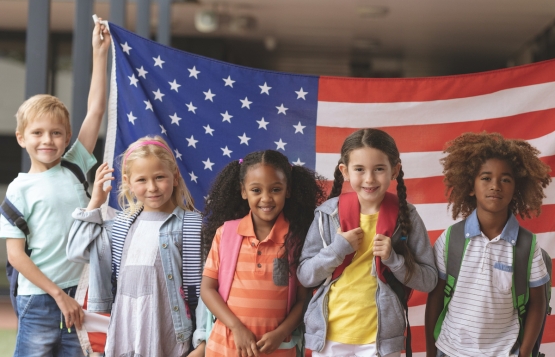
In civics, as in all subject areas, students learn well only when they find the ideas personally meaningful. Genuine citizenship education requires building a sense of civic purpose among students.8 The signs of civic purpose are knowledge of how one’s government works, an understanding of the principles underlying the present social order, a historical perspective on the social order, and commitment to the preservation and improvement of one’s civic society. In the United States, such a commitment means participation as a citizen in a democratic republic and a dedication to traditional American ideals such as liberty and equality.

Accordingly, there are motivational as well as cognitive dimensions essential for civic purpose. The key motivational component is a positive attachment to one’s society—that is, a sense that one cares about the society enough to contribute to it and, if necessary, to sacrifice for it. Since the time of the ancient Greeks, this aspect of civic purpose has been called patriotism.

Unfortunately, patriotism is not a popular word in education circles. In fact, patriotism is one of the most politically incorrect words in education today. If you think it’s hard to talk about morality and values in schools, try talking about patriotism. Educators often confuse the patriotic love of country with aberrant nationalism or with the militaristic chauvinism that twentieth-century dictators used to start wars and manipulate the masses. There is little awareness among educators and intellectuals that it was the patriotic resistance to dictatorships by citizens of democracies that saved the world from tyranny in the past century and is the best hope of doing so in the future. Some examples of antipatriotic sentiments among educators today include the following statements that I have quoted in previous writings:9 “This is not a form of allegiance that people need”; patriotism “motivates more death than justice” and “propagates the myth that America stands for the rule of law and stands for democracy”; it “can hardly be innocent: it is reproducing institutions which possess vast armaments”; “an education that takes national boundaries as morally salient reinforces . . . irrationality, by lending to what is an accident of history a false air of moral weight and glory”; “This nationalistic view is abhorrent.”

Educators at every level of schooling see patriotism as antithetical to a global perspective on humanity and thus an enemy of the humane goals of peace and justice. Many educators urge schools to teach children to become “citizens of the world” rather than of a single nation, and to adopt a “cosmopolitan” perspective rather than identifying themselves as Americans. Indeed, there is a turning away from American identity as a desirable mark of citizenship education. Consider this statement by a university professor: “Long-standing notions of democratic citizenship are becoming obsolete, even as we cling to them. American identity is unsustainable in the face of globalization. Loyalties are moving to transnational communities defined many different ways: by race, ethnicity, gender, religion, age, and sexual orientation.”10

As global citizens, it is argued, students’ identification should be with the humanity of the world. While the lofty ideals of cosmopolitanism and world citizenship are understandable, they do not in themselves provide a realistic route to civic education. For one thing, the serious tasks of citizenship that students need to learn are all played out on a local or national level rather than a global one. We do not pay taxes to the world, we do not vote for a world president or senator, we do not serve in a world army or peace corps, and we are not called to jury duty in any world courtroom. When we write emails to our congressional representatives or vote and campaign for candidates running for elective office, these activities are part of our national civic life, not part of any global event. As the philosopher Michael Walzer wrote, “I am not a citizen of the world I am not even aware that there is a world such that one could be a citizen of.”11 Eleanor Roosevelt, hardly considered a provincial chauvinist in her time, emphasized the standing of the nation-state as every citizen’s primary identification when she proposed the Universal Declaration of Human Rights to the United Nations in 1948.12 Again, what was once seen as progressive advancement of liberty is now castigated as reactionary. One result of this ideological turnaround has been the resistance of American education to promoting in our students a civic purpose and a felt attachment to our broader society.

In much of education today, American history and social studies are taught from a critical perspective. Yes, it is important that young people learn about mistakes their society has made and how the society can do better in the future. But it is always important to attend to context and development sequence—that is, placing the criticism in context of the country’s achievements and principles, and presenting the criticism after the student has fully understood what is being criticized. Many students today learn about what is wrong with our country without gaining knowledge of its successes. Why would a student exert any effort to master the rules of a society that the student has gained no respect for and thus no interest in being part of?

To acquire civic purpose, students need to care about their country. As a foundation for citizenship education, schools should begin with the positive and emphasize reasons for caring enough about our society to participate in it and try to improve it. In this way, American students and those who teach them can share civic purposes energized by a motivating spirit of patriotism.

______________

Notes:

  1. For more details on this definition, now widely used in developmental science, see William Damon and Matthew J. Bundick, “Purpose,” in The Sage Encyclopedia of Lifespan Human Development, ed. Marc Bornstein (Thousand Oaks, CA: Sage Publications, 2018).
  2. Stanford University Center on Adolescence, “Journal Articles,” accessed August 15, 2019, https://coa.stanford.edu/publications/journal-articles.
  3. See Stanford University Center on Adolescence, “Publications,” accessed August 15, 2019, for comprehensive findings: https://coa.stanford.edu/publications/publications.
  4. As a vast and sprawling program that relied on incentives and disincentives rather than specific instructional mandates, there was considerable variation in the ways these federal policies were implemented, from state to state and district to district. But there was a common set of aims that guided the incentives and disincentives, and these produced a set of practices that generally conformed to the initiative’s narrow vision. The numerous critics of the initiative identified the same limitations that, in effect, operated as antidotes to students’ acquisition of purpose.
  5. American College Health Association, American College Health Association- National College Health Assessment II: Reference Group Executive Summary Fall 2017 (Hanover, MD: American College Health Association, 2018), https://www.acha.org/documents/ncha/NCHA-II_FALL_2017_REFERENCE_GROUP_EXECUTIVE_SUMMARY.pdf.
  6. Institute for Education Sciences, National Center for Education Statistics, “NAEP: National Assessment of Educational Progress,” accessed June 11, 2014, https://nces.ed.gov/nationsreportcard/.
  7. For recommendations regarding needed civic education improvements, see the consensus report from eight experts on youth citizenship development. Heather Malin et al., Youth Civic Development and Education: A Conference Consensus Report (Stanford, CA, and Seattle, WA: Stanford Center on Adolescence and Center for Multicultural Education, University of Washington, 2014), https://coa.stanford.edu/sites/g/files/sbiybj1076/f/civic_education_report.pdf.
  8. Heather Malin, Parissa J. Ballard, and William Damon, “Civic Purpose: An Integrated Construct for Understanding Civic Development in Adolescence,” Human Development 58, no. 2 (2015): 103–30.
  9. William Damon, Failing Liberty 101: How We Are Leaving Young Americans Unprepared for Citizenship in a Free Society (Stanford, CA: Hoover Institution Press, 2011).
  10. Ibid.
  11. Michael Walzer “Spheres of Affection,” in Martha C. Nussbaum, For Love of Country? (Boston, MA: Beacon Press, 2002), 125.
  12. Mary Ann Glendon, A World Made New: Eleanor Roosevelt and the Universal Declaration of Human Rights (New York: Random House, 2001).

view

America’s schools and the formation of human beings

Chester E. Finn, Jr.
3.11.2020
Flypaper

In addition to Bill Damon’s profound essay on “purpose,” Mike’s and my new book, How to Educate an American: The Conservative Vision for Tomorrow’s Schools, contains multiple contributions with powerful messages for social and emotional learning (SEL)—properly conceived—and for its many advocates, partisans, and practitioners.

Yet the SEL terminology is scarcely ever used in our pages. Rather, these right-thinking devotees of whole-child education—properly conceived—employ words and phrases with greater familiarity and resonance for most Americans. They write about qualities like character, citizenship, discipline, neededness, and “the formation of students as human beings.”

Yes, the phrasing is older and more familiar. It doesn’t come across as a new fad or change of course. It may even strike some readers as slightly old-fashioned. But it evokes elements of education that I believe most people in this country tend to assume schools already take seriously. The authors’ point, however, is that that isn’t happening, not with the emphasis and universality that children need and that society requires. The K–12 system has fallen down on the job and needs to refocus. That doesn’t mean tackling an unfamiliar challenge or adding a spanking new mandate. It’s really a version of “back to basics,” reminding us that these are things that schools should have been doing all along and, for the most part, used to do as a matter of course, not because some fancy expert or blue-ribbon commission told them to.

Thus Pete Wehner’s essay on “the education of character” recalls Jefferson’s message, in his 1818 “Report of the Commissioners for the University of Virginia,” that a major purpose of education is “generally to form [in youth] habits of reflection, and correct action, rendering them examples of virtue to others and of happiness within themselves.”

Thus Heather Mac Donald’s essay on “race, discipline, and education” evokes “self-help and personal responsibility,” noting that “Schools are usually the last chance to civilize children if their family has failed to do so.”

Thus Rod Paige writes, in “focusing on student effort,” that “we must reform school reform by rethinking school culture—beginning with asking ourselves what kind of culture our schools currently embody, what this says about what we value most, and what kinds of behaviors and habits it reinforces.”

Thus Arthur Brooks and Nathan Thompson explain (in “from help to need”) that, “It is the indignity of feeling disposable that plagues so many Americans today. And a world in which so many people do not feel needed is one in which the rapid onset of hopelessness, opioid addiction, and the collapse of community feel not merely possible, but probable. In response to such a world, what America needs today is…a new education movement grounded in a philosophy of neededness.” (Okay, I concede, they do talk about it as something “new.”)

Thus Naomi Schaefer Riley writes admiringly (in “school choice and the toughest-case kids”) of special schools for youngsters from extremely harsh circumstances, schools where “rooms are equipped with special ‘scoop rocker’ chairs for children who need to rock in order to self-soothe” and “kindergartners receive teddy bears at the beginning of the year that they can care for and dress.”

Thus Yuval Levin writes (in “back to basics for conservative education reform”) that “Any idea of education that is not connected to an idea of formation—of habituation in virtue, indoctrination in tradition, veneration of the high and noble—is unavoidably impoverished.”

And, in our concluding chapter, Mike and I draw three big conclusions from the eighteen essays that precede ours: “Let us refocus on preparing young people for informed citizenship…. Let us restore character, virtue, and morality to the head of the education table…. [and] Let us build an education system that confers dignity, respect, and opportunity upon every youngster.” We know full well that kids derive “character lessons” every day that they’re in school, based on the role modeling that they observe in adults, the behavioral norms that surround them, and the values and priorities that the school embodies. The question is whether the lessons they’re internalizing are positive or negative. 

There’s more, much more in the book. My point is that conservatives also value whole-child education and want schools that aren’t doing it right to mend their ways and up their games. Conservatives don’t very often refer to this as SEL. But they’d gladly team up with SEL boosters who accept their understanding of what it must contain.

view

Social justice and K–12 education reform

Andy Smarick | Bruno V. Manno
3.11.2020
Flypaper

Two views of social justice underly many debates in K–12 reform, and the differences between them lead to tensions and conflicts in discussions about policy and practice. One is invoked by progressives and geared toward activism and uniformity. The other is invoked by conservatives and—while also encouraging activism—is different in what it aims to accomplish.

The progressive variety supposes that much of society is flawed or even purposely unjust. Relationships are premised on unfair distributions of power, and our economic order systematically privileges the advantaged and exploits the vulnerable. From those assumptions, progressive reformers often jump to uncompromising proposals to remedy society’s ills and express those proposals in dramatic, militant rhetoric.

Yuval Levin calls this the “rhetoric of cataclysm [that includes a] tendency to catastrophize” and frame social and political problems as “immediate and utterly apocalyptic dangers” rather than challenges addressed through institutions using a deliberative, gradual political processes. (Levin also makes the point that, although the right starts from very different premises on various issues—including the issue of social justice—it too sometimes deploys its own form of cataclysmic rhetoric.)

This approach aims to motivate by posing problems in stark and urgent terms. But it can divide by undermining trust in institutions, traditions, and norms. It can separate individuals into factions—e.g., the haves and the have nots, the privileged and the unprivileged—that are at odds rather than partners in a social enterprise. It can make civility seem like the problem and zealotry as the only fix to a broken system. What follows are aggressive, one-size-fits-all policy “solutions” aiming to resolve problems in total, as quickly as possible, aligning with a uniform and “correct” vision of justice.

Framing problems as a “social justice” issue typically becomes a moral club forcing progressive interventions, usually by faraway government. This is evident in K–12 education over the last couple of decades, as federal and state governments have mandated large-scale, one-size-fits-all “fixes” to a host of problems.

The alternative view of social justice sees it not as a utopian goal nor as something to be imposed by the state, but as a virtue or habit of individual actors, something one does, or works toward, on one’s own, or within one’s “little platoons,” because one believes it is the right thing to do. This one may call the “conservative” version.

In Social Justice Isn’t What You Think It Is, Paul Adams and the late Michael Novak explained the term’s roots in philosophy and Catholic social teaching and how its modern meaning arose in the late nineteenth and early twentieth centuries in response to industrialization and the centralization of dictatorial, government power.

They describe how the inclusion of “social” in the definition of social justice introduces two foundational ideas: the common good and the social practices necessary to achieve the common good. Central to these ideas are forming associations, civic participation, and cooperation.

This approach is helpful when thinking about economic and social affairs, including how we consider schools, in at least two ways. First, it encourages and empowers individuals to join actively with others to form voluntary associations and mediating institutions so that committed citizens can together solve common challenges.

Second, it is directed toward the common good, not only at a national or international level, but also—first and foremost—at the level of neighborhood and community. It directs collective efforts toward shared goals, not private interests, respecting individuals and allowing societies and the institutions on which they rely to thrive.

This view of social justice implies there is no single common good that can be defined by a central power. Although certain principles are sacrosanct—e.g., natural rights, the dignity of individuals, equality—this view respects the individual and group prerogatives acting together. It appreciates that different beliefs, priorities, and approaches will naturally emerge. It presupposes that experimentation by different groups, informed by practical considerations and shaped by deliberation and cooperation, will help us understand and pursue the common good. Social justice is not a single, big, fixed thing, but an amalgam of micro-movements.

In K–12 education, this view seeks to catalyze and elevate parents, groups of families, teams of practitioners, and voluntary, local associations. This would mean, for example, a focus on small, democratically controlled, local districts; independent, self-governing charter schools; networks of charter management organizations; micro schools; and private schools that reflect different approaches to education and differing conceptions of the good life. And it would advocate for policy mechanisms necessary to make these flourish: charter school laws, vouchers, tax credits, education savings accounts, innovative approaches to district schools, etc.

It would also mean skepticism about state or federal attempts to homogenize school options, approaches to instruction, or assessments of what constitutes effective schooling and student success.

It would mean appreciating that complicated, sensitive social issues might not have unitary answers enforced by central authority, and that communities—using local traditions and public deliberation—can reach different but sound, valid conclusions.

It would mean using large financial investments—whether governmental or philanthropic—not merely to scale strategies preferred by “experts,” but to encourage new and different strategies crafted by parents, practitioners, and community leaders.

Two associated notions bolster this approach. One is subsidiarity, a principle that describes a way of preserving the dignity and authority of individuals and groups while ensuring that they take their responsibilities seriously. It protects the rights and powers of smaller groups—families, towns, community groups—from encroachment by larger entities while requiring that groups collaborate and support one another. It decentralizes authority and organizes multiple communities to assist one another in pursuing common goods.

Another principle is solidarity, the expectation that, despite differences, we seek the common good as bearers of a shared humanity. Though power can be decentralized and differences in traditions and priorities are legitimate, solidarity keeps us from splintering into hostile factions by asking that we care for another, especially the most vulnerable. Social justice thus requires that we practice “social charity,” a firmness of purpose based on respect, cooperation, and tolerance.

Because both progressive and conservative approaches to social justice aim at fairness and the protection of individual dignity, especially for the most vulnerable, there is some overlap between them. But the understanding that we’re proposing aligns with the conservative view. It explicitly encourages working with existing groups and creating new ones that aspire to protect the common good. It also recognizes the danger of investing too much authority in distant, powerful bodies. It likewise respects the prudent right of social groups to take different forms and pursue different activities while holding groups responsible for achieving their obligations. Finally, it expects from all civic participation, temperance, and collaboration.

We have been involved in school reform efforts for many years in countless ways. We see many reform issues—e.g., the necessity of helping low-income families find good alternatives to the ineffective schools to which their children are too often assigned—in moral terms. While we appreciate the fervor behind today’s social-justice-minded progressives, we believe the alternative understanding of social justice presented here provides a more fruitful approach than the progressive understanding and helps everyone engage more productively in the day-to-day work of school reform.

This modest approach to social justice might appear a poor fit for our tumultuous times. But it might be precisely what’s needed. When people are frustrated and polarized and political language becomes radioactive, we could use more modesty, trust, and accommodation. Such an approach is not only a framework for school reform, but perhaps a strategy for counteracting the alienation and polarization that pervades our overheated politics.

view

Do suspensions improve the academic achievement of non-suspended students?

Amber M. Northern, Ph.D.
3.11.2020
Flypaper

Discussion of student discipline has, for the last several years, focused strongly on potentially discriminatory misuse of suspensions and the social implications one way or the other. A new study in the journal Education Finance and Policy steps away from these contretemps to focus specifically on the academic effects of student suspensions on non-suspended peers—a less-studied angle.

Conducted by NaYoung Hwang and Thurston Domina of Notre Dame and the University of North Carolina at Chapel Hill, respectively, the study measures suspensions at both the school and classroom level. What’s unique is that the study takes advantage of the fact that the students in this district take quarterly achievement tests in both math and English language arts (ELA), which allow the analysts to better estimate how changes in suspensions associate with changes in student achievement. They compile a panel of twelve quarterly benchmark exams that students took over three years and employ a two-way fixed effects model including both student and classroom fixed effects. They are, in effect, tracking quarter-by-quarter changes in student achievement and linking those changes to shifts in the use of suspensions in students’ classrooms. This model still doesn’t allow them to fully separate the effects of peer suspension from the effects of peer misbehavior on learning, but it’s stronger than many previous study designs.

The study includes data from one unnamed public school district in California, comprising about 16,000 students in grades seven through eleven in seventeen school buildings studied over three academic years (2009 through 2012). Hwang and Domina have demographic information on all students and discipline records, including in-school suspension (ISS) and out-of-school suspension (OSS) data. Additionally, they are able to look at OSS and ISS separately and categorized by severity of the infraction which led to them. Major infractions include fighting, weapons, and drug-related infractions; disruptive infractions include classroom disruptions and defiance; and minor infractions include tardiness, dishonesty, and not showing up for detention, among other violations. Three percent of students received at least one ISS each year, and 5 percent received at least one OSS each year. On average, eight in-school and twelve out-of-school suspensions occurred in a given quarter in a given school.

They find that Hispanic students, low-income students, and English language learners were more likely to be exposed to suspended classmates. Neither schoolmate ISS nor schoolmate OSS were linked to the achievement of non-suspended students. However, at the classroom level, classmate suspensions are associated on average with improved math achievement. For example, an increase in OSS in a classroom is associated with a 0.024 standard deviation increase in the math achievement of non-suspended students. Neither classmate nor schoolmate suspensions are linked to ELA achievement. Analysts posit that orderly learning environments may be more important in math since many kids find math challenging. They also find suggestive evidence that the associations between classmate suspensions and increased math achievement are driven by suspensions attributed to major and disruptive infractions—not minor infractions, which appear to be more trivial.

Hwang and Domina ask the logical question of whether the benefits of suspension outweigh the costs, and ultimately conclude that it is possible. Given estimates in prior studies of suspensions’ impacts on suspended kids, the aggregate positive effects of peer suspension on non-suspended peers could well be greater than the aggregate negative effects on suspended students. However, the relatively small number of suspensions among their own study group make it hard to generalize these findings. But if their findings can be replicated on a larger scale, it could go a long way toward informing discipline policies that better navigate the balance between the academic and social effects of suspensions on both suspended and non-suspended students. If removal of disruptive peers benefits remaining students with calmer and more productive classrooms, these positive effects—especially for vulnerable populations, which appear more likely to be exposed to suspended kids—cannot be ignored.

SOURCE: NaYoung Hwang and Thurston Domina, “Peer Disruption and Learning: Links between Suspensions and the Educational Achievement of Non-Suspended Students,” Education Finance and Policy (February 2020).

view

When more students are mentored by organizations in their communities, what happens?

Jessica Poiner
3.11.2020
Flypaper

Mentoring programs connect young people with caring adults who can offer support, guidance, and even tutoring. Research indicates that such programs can be valuable for students, particularly those from disadvantaged backgrounds.

Given these benefits, it makes sense that state leaders would be interested in supporting mentorship programs. In a recent report that’s part of a broader series of case studies on civil society from R Street, Amy Cummings takes a closer look at Ohio’s Community Connectors, a program that awarded grants to community partnerships to provide mentoring to students.

Community Connectors was jointly established in 2014 by former Governor John Kasich and the Ohio Department of Education. The program was not directly aimed at improving test scores or graduation rates. Instead, it was viewed as an opportunity to encourage community organizations to establish mentoring programs that could improve the overall education, health, and workforce readiness of students. To be eligible for funding, partnerships had to consist of at least three different entities: a business, a faith-based organization, and a school district. Most partnerships included several additional groups, such as parent networks and community-based organizations.

Grants were awarded to partnerships that served students in grades five through twelve who were enrolled in low-performing, high-poverty schools. Between July 2015 and July 2018, Community Connectors awarded more than $36 million to 172 unique partnerships. Approximately 14,000 students were served by 5,300 mentors in forty-five of Ohio’s eighty-eight counties. In total, participants received 67,000 hours of one-on-one mentoring and 91,000 hours of mentoring via group activities. The program ended in 2019, after four rounds of grants.

Although hard evidence on academic impacts is lacking, there is anecdotal evidence that the grants spurred community partnerships. Cummings, for instance, profiles a mentoring program housed by Big Brothers Big Sisters of West Central Ohio, the result of a partnership between the Hardin County Common Pleas Court’s Juvenile Division, the Hardin County Sheriff, Our Savior’s Lutheran Church, US Bank, and three school districts—Hardin Community Schools, Lima City Schools, and Perry Local Schools. The state awarded the partnership $86,000 to mentor at-risk middle and high school students. The program targeted students with a history of truancy, chronic inappropriate behavior, substance abuse, and academic failure. Over 97 percent of these students lived in poverty, and more than half of them reported a family history of alcohol abuse and/or drug abuse. Based on a survey given to teachers of participating students, the program succeeded in impacting school-related factors: 63 percent reported seeing an improvement in class participation, and 51 percent reported improvements in academic performance.

The report concludes with several lessons learned. Given that it’s part of a series on civil society, many are related to the role of government in encouraging engagement from community-based organizations. But some of them are also worth applying to education policy. For example, when supporting innovative programs, it’s important to consider whether they are sustainable if government funding ceases. It is also critical that success is measured based on the underlying goals of a program. In the case of Community Connectors, civil engagement and community partnerships were the goal. The program certainly succeeded in that regard. And although it lasted only a short while, its impacts could be long lasting. 

SOURCE: Amy Cummings, “Ohio's Community Connectors Program,” R Street (November 2019).

view

The Education Gadfly Show: On technocrats and culture wars

3.11.2020
Podcast

On this week’s podcast, Mike Petrilli, Checker Finn, and David Griffith discuss Mike and Checker’s new edited volume, How to Educate an American: The Conservative Vision for Tomorrow’s Schools. On the Research Minute, Amber Northern examines whether the nationwide rise in high school graduation rates is real, and whether high-stakes school accountability played a role.

Amber's Research Minute

Douglas N. Harris, Lihan Liu, Nathan Barrett, and Ruoxi Li, “Is the Rise of High School Graduation Rates Real? High-Stakes School Accountability and Strategic Behavior,” retrieved from Annenberg Institute at Brown University (March 2020).

The Education Gadfly Show is available on Google Play Music, Libsyn, Spotify, iHeartRadio, Apple Podcasts, TuneIn, The Podcast App, PodBean, Podbay, Chartable, Castbox, and myTuner Radio.

Fordham Logo

© 2026 The Thomas B. Fordham Institute
Privacy Policy
Usage Agreement

National

P.O. Box 110
Burke, VA 22009

202.223.5452

[email protected]

Ohio

P.O. Box 82291
Columbus, OH 43202

614.223.1580

[email protected]

Sponsorship

130 West Second Street, Suite 410
Dayton, Ohio 45402

937.227.3368

[email protected]