Mobile Navigation

  • National
    • Policy
      • High Expectations
      • Quality Choices
      • Personalized Pathways
    • Research
    • Commentary
      • Gadfly Newsletter
      • Flypaper Blog
    • Events
    • Scholars Program
  • Ohio
    • Policy
      • Priorities
      • Media & Testimony
    • Research
    • Commentary
      • Ohio Education Gadfly Biweekly
      • Ohio Gadfly Daily
  • Charter Authorizing
    • Application
    • Sponsored Schools
    • Resources
  • About
    • Mission
    • Board
    • Staff
    • Career
Home
Home
Advancing Educational Excellence

Main Navigation

  • National
  • Ohio
  • Charter Authorizing
  • About

National Menu

  • Topics
    • Accountability & Testing
    • Advanced Education
    • Career & Technical Education
    • Charter Schools
    • Curriculum & Instruction
    • ESSA
    • Evidence-Based Learning
    • Facilities
    • Governance
    • Personalized Learning
    • Private School Choice
    • School Finance
    • Standards
    • Teachers & School Leaders
    • Think Again
  • Research
  • Commentary
    • Gadfly Newsletter
    • Flypaper Blog
    • Gadfly Podcast
  • Events
  • Scholars Program

The Education Gadfly Weekly

Sign Up to Receive Fordham Updates

We'll send you quality research, commentary, analysis, and news on the education issues you care about.
Thank you for signing up!
Please check your email to confirm the subscription.

The Education Gadfly Weekly: Now it’s the GOP’s turn to mess up the critical race theory issue

Volume 21, Number 45
11.11.2021
11.11.2021

The Education Gadfly Weekly: Now it’s the GOP’s turn to mess up the critical race theory issue

Volume 21, Number 45
view

Now it’s the GOP’s turn to mess up the critical race theory issue

Last week’s elections were a turning point in the fraught debate over how race and racism are taught in America’s schools. Democrats failed a major test in contending that CRT is absent from our public schools, rather than listening to parents’ concerns. Yet they may take hope from Republicans already messing up this issue in the form of blatant overreach.

Michael J. Petrilli 11.11.2021
NationalFlypaper

Now it’s the GOP’s turn to mess up the critical race theory issue

Michael J. Petrilli
11.11.2021
Flypaper

A parents’ education bill of rights is a fine thing—within limits

Chester E. Finn, Jr.
11.11.2021
Flypaper

How media coverage of critical race theory misses the point

Robert Pondiscio
11.11.2021
Flypaper

A descriptive look at the structure of gifted programs in Washington State

Amber M. Northern, Ph.D.
11.11.2021
Flypaper

Would eliminating college admissions tests really make education more equitable?

Adam Tyner, Ph.D.
11.11.2021
Flypaper

Education Gadfly Show #795: Why we should test in K–2

11.10.2021
Podcast

Cheers and Jeers: November 11, 2021

The Education Gadfly
11.11.2021
Flypaper

What we're reading this week: November 11, 2021

The Education Gadfly
11.11.2021
Flypaper
view

A parents’ education bill of rights is a fine thing—within limits

Chester E. Finn, Jr. 11.11.2021
Flypaper
view

How media coverage of critical race theory misses the point

Robert Pondiscio 11.11.2021
Flypaper
view

A descriptive look at the structure of gifted programs in Washington State

Amber M. Northern, Ph.D. 11.11.2021
Flypaper
view

Would eliminating college admissions tests really make education more equitable?

Adam Tyner, Ph.D. 11.11.2021
Flypaper
view

Education Gadfly Show #795: Why we should test in K–2

Michael J. Petrilli, Dale Chu, David Griffith, Ph.D., Amber M. Northern, Ph.D. 11.10.2021
Podcast
view

Cheers and Jeers: November 11, 2021

The Education Gadfly 11.11.2021
Flypaper
view

What we're reading this week: November 11, 2021

The Education Gadfly 11.11.2021
Flypaper
view

Now it’s the GOP’s turn to mess up the critical race theory issue

Michael J. Petrilli
11.11.2021
Flypaper

Last week’s elections were a turning point in the fraught debate over how race and racism are taught in America’s schools. No, the backlash against critical race theory wasn’t the only issue that mattered in Virginia’s gubernatorial election. The Republican candidate’s surprisingly strong showing in New Jersey’s governor’s race (where CRT wasn’t even on the menu) suggests that the general political environment posed ample challenges for Democrats. That’s not unusual, considering that opposition parties often do well in off-cycle elections. Nor was the curriculum controversy the only education issue stoking parents’ anger. Just as powerful was frustration with lengthy school closures, which were worse in Virginia and New Jersey than almost anywhere else.

Still, the political commentariat seems to agree that the way Virginia Democrat Terry McAuliffe handled the CRT controversy was a case study in exactly what not to do. Not only did he make a terrible gaffe in saying in a September debate that parents shouldn’t be telling schools what to teach, he doubled down by repeatedly asserting that the whole issue was nothing but a racist dog whistle.

It doesn’t take a political genius to understand that this wasn’t a winning message for parents with concerns over what they saw being taught in their children’s schools. As Yascha Mounk wrote in the Atlantic, “you can’t win elections by telling voters their concerns are imaginary.”

And as both Ross Douthat and David Brooks have pointed out, while Virginia second graders are nowhere close to being force-fed CRT, recent years have brought an aggressive shift in how progressives talk about race and racism, and that has inevitably been filtering into the schools. Indeed, Rick Hess has documented many examples just from the Commonwealth of Virginia. In Loudoun County, for instance:

…“anti-racist” trainings taught teachers to reject “color blindness,” address their “Whiteness (e.g., white privilege),” and recognize that “independence and individual achievement” are racist hallmarks of “white individualism” (as is a commitment to “self-expression, individual thinking, personal choice”).

Nobody knows for sure how prevalent this sort of woke training and curriculum is. But even if a school system hasn’t adopted the (CRT-inspired) 1619 Project, or put Ibram X. Kendi or Robin DiAngelo on their summer reading lists, it’s not hard to imagine well-meaning teachers making questionable statements in the classroom. As Andy Rotherham told The 74, “right now there is enormous demand but little quality control in the [diversity, equity and inclusion] industry, and teachers are freelancing. That’s a bad mix. This is complicated, and you don’t want teachers using whatever they found on Pinterest last night or just learned at a one-hour workshop.”

Just last week my own eighth grade son came home (from a Maryland public school) with a history assignment that listed “white supremacy??” among a number of “American values.” In my opinion, this is an inflammatory and wrongheaded way to address America’s history of slavery and racial discrimination. My point isn’t to debate that particular assignment but to illustrate how pervasive this sort of thing may be. As John McWhorter wrote in the New York Times this week, “if it’s not critical race theory, it’s critical race theory-lite.”

So Democrats failed a major test in contending that CRT is absent from our public schools, rather than listening to parents’ concerns.

Yet they may take hope from the likelihood that Republicans will also mess up this issue. In fact, that’s already starting to happen in the form of blatant overreach.

As is often the case, Texas is leading the way, with a highly questionable investigation of books in school libraries—one that’s a little too reminiscent of the McCarthy era—on top of a highly problematic anti-CRT bill that became law last spring.

Few parents may want woke curriculum, but how many want book banning instead? Or for their kids to see “both sides” of the Holocaust? The goal should be to provide our children with a well-rounded liberal education that encourages them to understand the facts, weigh multiple perspectives, search for truth, and think for themselves. The goal isn’t to replace one form of indoctrination with another.

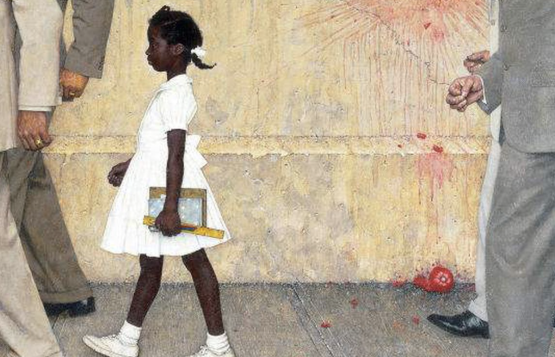
Indeed, conservative writer David French makes a compelling argument that right-wing illiberalism is emerging as a significant problem, especially in red states like his own Tennessee. “An increasing number of politicians, lawyers, and activists,” he writes, “are responding to fears of left-wing intolerance with their own efforts to censor, suppress, and cancel.” Some are afraid that depictions of Ruby Bridges standing up to white supremacists (including one by Norman Rockwell!) will make kids today feel bad; others want Toni Morrison’s Beloved out of high schools because of its unsparing portrait of slavery and sexual violence. (That’s the point, of course.)

What Republican politicians should understand is that most of their own voters want schools to forge a reasonable middle path. Kristen Soltis Anderson led a fascinating survey for the PIE Network recently, which she and others have been writing about. Overwhelmingly, both Democrats and Republicans want history to be taught warts and all. More than three-quarters of Republicans and almost all Democrats agreed that “we should acknowledge the terrible things that have happened in our nation’s history regarding race so students can learn from them and make the future better.” Three-quarters of all voters also support “adding more books in English classes by authors who are Black, Indigenous, or people of color.”

If Republicans keep going after Ruby Bridges and Toni Morrison and Norman Rockwell, those independent voters are going to swing back in the other direction. And more than a few GOP voters are bound to have second thoughts. As well they should.

Is there a way through all this, a way that’s right for American kids and acceptable to the great majority of their parents?

I surely don’t have all the answers. But somehow we need to find a way to delineate between the various flavors of overly woke curricula that are offending so many parents and more thoughtful approaches that seek to teach history honestly and comprehensively, add diverse voices to the English literature canon, and help all students see themselves in America’s story. The laudable Educating for American Democracy roadmap goes a far distance in that direction; so too do the exemplary U.S. history and civics standards in the five (red and blue) states that earned A’s in our recent reviews. Not to say that it’s easy. It’s surely harder than fighting another culture war. But it’s the work we are called to do.

view

A parents’ education bill of rights is a fine thing—within limits

Chester E. Finn, Jr.
11.11.2021
Flypaper

Terry McAuliffe surely blundered when he declared—out of context though it was taken—that “I don’t think parents should be telling schools what they should teach,” thereby handing Glenn Youngkin a perfectly-timed campaign issue. Millions of parents in Virginia and across the land were already aggrieved by their schools’ mishandling of education during the Covid-19 pandemic, conscious that many school systems paid greater heed to the demands of their adult employees than the needs of their pupils. This caused huge learning losses for most kids and enormous challenges for parents. Lots of parents were also alarmed by reports that their schools were going to extremes in teaching about race, gender, sexuality, and other touchy or politically charged issues. At a time when the larger polity was already polarized, siloed, and jittery, it was a no brainer for Youngkin and his advisors to make this a winning issue.

Signals from other elections plus polling data also suggest that education has re-emerged as a top concern for much of the electorate. In response to which, House minority leader Kevin McCarthy has promised that the GOP will soon develop a “parents’ bill of rights” intended for Republican use in the midterm elections and beyond, as well as future action on Capitol Hill.

It’s too soon to know what will be in it, though undoubtedly it will make a big deal of parents’ right to select their children’s schools. One may hope it also includes a push for curricular transparency so that parents can readily see what their kids are being taught, not just in the three R’s, but also in civics, history, literature, and the less academic realms of social and emotional well-being, health, and values. Parents should know who is teaching and counseling their daughters and sons—their names, their training, their work experience, and (where relevant) their certification. Moms and dads also have every right to know what’s going on in their children’s schools by way of disciplinary policy and practices, building security, and the handling of awkward “social” issues (who uses which restrooms and locker rooms and plays on which teams), as well as such basics as what’s on offer in the lunchroom.

That’s all legitimate information for parents—and much of it is very difficult for most parents to find out today. Bravo for a “bill of rights” that takes up and runs with transparency as well as choice.

But how much farther should it go and is there a risk of going too far?

Indeed there is, which calls for bill-of-rights architects to strike a careful balance, something nearly unheard of at an unbalanced time. For education is not exclusively the province of parents any more than it’s the monopoly of the state—precisely the balance the Supreme Court struggled with a century ago in its landmark Pierce decision.

It’s a combination, a sort of hybrid, beginning with the truth that education is both a private good and a public good—as any economist will tell you. The child is not the creature of the state, yet society has an obligation to ensure that its next generation is adequately educated. That’s why every state has embedded that obligation in its constitution. That’s also why, for instance, states have compulsory attendance laws even as parents have the right to educate their kids at home. If they send them to school, as most do, they should have choices among schools, yet the state decides what is a school. Parents should of course select the school or schools that best suit their children but, having done that, should entrust things like curriculum to the schools and their educators. If parents are then unhappy with how it’s going in the school they chose, they should—and should be able to—change schools. But that’s not the same as meddling in the curriculum and pedagogy of their chosen schools or harassing the professionals who staff them.

Schools should be free to differ in dozens of ways, yet it’s reasonable for the state to verify that they all provide adequate learning outcomes in core subjects. That doesn’t mean all schools must use the same curriculum or pedagogy or follow the same philosophy to produce those outcomes. Again, it’s a balance, one easily thrown out of whack if, for example, the state doesn’t permit or overly constrains school choices, or if parents, having chosen, still interfere overmuch with how their schools go about it.

Parents have other options, too. They can—and many more should—run for the school’s board or the local school board. They can run for the state board of education, the town council, or the legislature. They can start their own charter or private schools, at least they can where this is permitted by law and where the state’s dollars follow children to the schools they actually attend. A nontrivial issue in Virginia is the Old Dominion’s extreme paucity of public charter schools—just seven at last count—due to a highly restrictive charter law, meaning that the overwhelming majority of Virginia families have no choices beyond their local school district. This means the political system builds up education steam without adequate escape valves. That leads to rancor, protests, and overheated campaigning rather than the creation of viable alternatives.

So let’s applaud the generous provision of quality school choices everywhere in the land. And let’s push for maximum school transparency. In pursuit of those ends, a parents’ bill of rights is a fine thing. But let’s also make sure that it can coexist with society’s responsibility to ensure that its next generation gets satisfactorily educated and the state’s obligation to ensure that that happens. Let’s try—let’s hope—to get this balance right despite the imbalances that surround us.

view

How media coverage of critical race theory misses the point

Robert Pondiscio
11.11.2021
Flypaper

It is not a controversial statement to say that the debate over critical race theory in schools has shed more heat than light. This is not surprising. When a relatively obscure and arcane academic field suddenly becomes a high-profile political football, hotly debated on cable news shoutfests, it is almost certainly because it has been reduced to bumper-sticker simplicity. That said, it is not too much to expect prestige media to bring to bear a bit more sobriety and subtlety. Explaining complicated issues to interested non-experts is their job.

Thus it’s disappointing to share the findings of a new report from my AEI colleague Rick Hess, who took a look at exactly how the media has been covering CRT. Armchair media critics tend to natter on about media bias, but Rick’s report surfaces a more troubling issue about media completeness. He found that coverage about critical race theory has tended to focus on what is not controversial (notably whether or not schools should teach about racism and slavery), while eliding almost entirely its most inflammatory facets—specifically, CRT’s rejection of ideas and principles that are foundational to Western thought and values. This matters because it creates conditions wherein even fair-minded and diligent news consumers can be led astray.

Rick examined all the CRT articles published by four major newspapers (the New York Times, Washington Post, Wall Street Journal, and USA Today) and three influential education press outlets (Education Week, the 74, and Chalkbeat) from September 2020 to August 2021.

He found that media accounts in those outlets almost never mention CRT’s immensely controversial intellectual foundations. As Education Week’s Stephen Sawchuk observed, “Critical race theory emerged out of postmodernist thought, which tends to be skeptical of the idea of universal values, objective knowledge, individual merit, Enlightenment rationalism, and liberalism.” Richard Delgado and Jean Stefancic, two founders of the CRT movement, write in their book Critical Race Theory: An Introduction, “Critical race theory questions the very foundations of the liberal order, including equality theory, legal reasoning, Enlightenment rationalism, and neutral principles of constitutional law.”

To put the matter as mildly as possible, it would be strange to think that a system of thought that questions the “very foundations of the liberal order” would be regarded as anything other than an existential threat to an education system built on that very order. It should be obvious that these foundational concepts are key to understanding why reasonable people might have reservations about introducing CRT to the classroom. But CRT’s skepticism of rational thought, liberalism, universal values, and objective knowledge was mentioned in less than 5 percent of CRT news articles. Eliding this is particularly egregious, since the failure to note any intellectual objection leaves readers free to assume that objections to CRT are rooted in racism, not rationality or a defense of Enlightenment views and values. One doesn’t need a study—eyes and ears will suffice—to acknowledge that this is precisely how the debate has played out. CRT is not “just teaching honest history,” it’s a revolutionary doctrine.

News accounts weren’t much more informative about troubling CRT-aligned practices. And there are a host of troubling practices to be found. Ibram X. Kendi, one of the nation’s most prominent “anti-racist” activists, has proclaimed that schools must be willing to treat students of different races differently: “The only remedy to past discrimination is present discrimination.” Robin DiAngelo, another prominent “anti-racist” ideologue, teaches against colorblindness, asserting that seeing individuals rather than skin color is the mark of a “dangerous white person.” A number of schools, following this argument to its logical end, have introduced affinity groups, which segregate students or staff by race to discuss charged topics.

How these ideas are translated into classroom practice also seems like it should feature prominently in any story about CRT. Yet the push for “anti-racist” discrimination, as espoused by activists such as Kendi, was mentioned in barely 10 percent of articles. The practice of teaching against colorblindness was similarly mentioned in only 10 percent of articles. Schools implementing affinity groups was mentioned in only 5 percent of articles.

If CRT news accounts didn’t spend much time discussing its intellectual foundations or classroom practices it encourages, one wonders what they did cover. Unsurprisingly, they spend a lot of time talking about the evils of racism. Every single article examined in the AEI report discussed racism in some form or fashion. Eighty percent mentioned the history of race or the way history is taught in schools; a strong majority referenced slavery.

As Rick points out, this is the one area of the CRT debate about which there’s not much debate at all. Americans of all stripes agree that schools should be teaching about racism and the horrors of slavery. For instance, a recent national AEI poll found that 74 percent of White Americans and 75 percent of Black Americans “favor teaching students that the dispute over slavery was the principal cause of the Civil War.” Nor is there much disagreement among high profile Republicans. Former U.S. Secretary of Education Betsy DeVos recently said, “Of course we need to teach history. We need to teach about slavery,” and that schools need a curriculum that “embraces all of the parts of our history.” Texas Senator Ted Cruz likewise tweeted, “OF COURSE we should teach about slavery & racism.”

“One could be forgiven for imagining that the media had set out to cover the CRT debate in a manner that would aggravate a polarized nation, fuel conservative distrust, and turn a principled debate into a food fight,” Rick concludes.

Having spent two decades in the news business, I’ll be more generous. I am deeply sympathetic to the challenge journalists face in trying to commit daily acts of responsible oversimplification. It is unreasonable to expect every article to recapitulate all aspects of a complicated and contentious issue. But Rick’s eye-opening analysis suggests a remarkable and arguably irresponsible pattern: Coverage of the CRT “debate” has demonstrably focused on what is not controversial—race—and elided almost entirely what is: revolution.  

view

A descriptive look at the structure of gifted programs in Washington State

Amber M. Northern, Ph.D.
11.11.2021
Flypaper

Gifted education has been a much-debated issue this year, but often in the most general sense only. In fact, specifics of what constitutes gifted educational programming and how students served by it fare over time are difficult to come by. A recent working paper from CALDER provides some much-needed detail on what gifted students actually experience in their schools.

Analysts use administrative data from nearly 300 districts across Washington State, annual district reporting on gifted programs, and a survey of gifted program coordinators to assess how participation in gifted education changes the classroom resources available to those learners. The category “resources” here includes access to advanced or accelerated courses, ability grouping, and other features of the classroom environment, such as teacher quality and class size. The analysts use data for K–12 students from the 2016–17 to 2018–19 school years. They use regression adjusted and student fixed effects models to compare access to this broad array of resources for gifted kids relative to their high-achieving peers in the same district, grade, and school year who, for whatever reason, were not themselves identified as gifted.

The analysts find that participation in a gifted program changes various aspects of students’ educational environment: their classroom peers score about 0.21 to 0.25 standard deviations higher on standardized tests and are 25 to 28 percentage points more likely to be gifted students themselves; they are more likely to take honors, dual credit, and other advanced courses; and their teachers tend to have better qualifications, such as experience and licensure scores. On the other hand, the relationship between gifted status and class size or teacher value added is weaker, and varies across grade levels. For instance, gifted kids are exposed to more effective teachers as measured by value added in elementary school but not middle school. Yet these mean effects of gifted programs on learning environments for the typical student mask considerable differences across districts and programs.

Those differences across districts explain why researchers to date have found considerable heterogeneity in the effects of gifted programs on student learning outcomes. The CALDER study finds that, while gifted participation changes the educational environment for the average student in the state, the median school district program effect is near zero. This outcome is driven by a pattern of large school districts, high-income districts, and urban and suburban districts having programs with significantly larger effects on learning environments—many of which run large, self-contained programs. In smaller, rural school districts, gifted students tend to have educational environments similar to those of high-achieving, non-gifted students.

The analysts don’t find consistent disparities in access by student race and ethnicity, although they do find that Black and Hispanic students exit gifted programs at higher rates than similarly-high-achieving gifted White students. And although they find larger gifted program effects for some subgroups, it is again due to differences in districts, not differential effects on subgroups within districts.

They also examine differences in student learning environments across gifted program types, classifying gifted students into one of four categories based on where services are delivered—the regular classroom, full-time self-contained programs, supplemental programs outside the classroom, and acceleration-based programs. The paper includes a plethora of interesting descriptive data around these categories. Ninety percent of students, for example, are in districts that say they use “universal screening” for giftedness, but a footnote in the report reveals that there were multiple interpretations of that term and that 45 percent of districts say they use an unspecified “different assessment” or “weighting process” for low-income and under-represented students being tested. Moreover, one-third of identified students are in regular classrooms where independent study, supplemental instruction, and flexible grouping are the most commonly reported practices. Both acceleration and self-contained programs report less use of ability grouping than in mainstreamed classrooms, presumably because there are fewer ability differences in those settings. And self-contained gifted programs are most likely to employ “curricular compacting,” a practice where teachers replace material students already know with new content or enrichment options (which every teacher should likely be doing anyway), and that self-contained programs tend to have an even greater impact on access to high-achieving peers, teacher qualifications, and smaller class sizes.

While of limited use in terms of how best to serve gifted students, the CALDER report does provide a valuable look into the “black box” of programming for these students. The structure of programming likely matters a great deal in producing the desired outcomes of meeting kids where they are and providing them with accelerated work to maximize their academic growth. Starting with what exists and whittling down to what actually works seems like a reasonable path.

SOURCE: Benjamin Backes, James Cowan, and Dan Goldhaber, “What Makes for a ‘Gifted’ Education? Exploring How Participation in Gifted Programs Affects Students’ Learning Environments,” CALDER Working Papers (August 2021).

view

Would eliminating college admissions tests really make education more equitable?

Adam Tyner, Ph.D.
11.11.2021
Flypaper

When the University of California began phasing-out college admissions test scores as part of a recent legal settlement, the rationale was “equity.” Lawyers for the students who brought the lawsuit said that “SAT and ACT scores are largely a proxy for a student’s socioeconomic background and race,” rather than measures of academic merit. The years-long backlash to standardized tests has often been couched in this way. To many, the test scores gaps among different groups of students is evidence that they are part of an institutionally classist or racist system.

But if the pro-equity solution is to eliminate the tests, what are we left with when we decide who gets admission to selective colleges? And would the remaining factors really enable admissions officers to evaluate student aptitude from a perspective that is less associated with race and class?

A new study from researchers at Stanford University and Mount Holyoke College speaks to this issue and suggests that eliminating tests would not foster greater equity. Specifically, the study finds that the content of college admissions essays are even more correlated with a student’s socioeconomic class than SAT and ACT scores are.

In this groundbreaking study, the researchers analyzed about a quarter million college admissions essays from the 2016 admissions cycle of the University of California system. Content analysis software identified different topics that the students wrote about (e.g., “winning competitions,” “medical experiences,” or something about the student’s specific major), as well as identifying information about the form and vocabulary used in the essays. The results of the content analysis were then compared with students’ SAT scores and the reported incomes of the students’ families.

In line with many other studies, the researchers find that family income and SAT scores are indeed correlated.

What should give anti-testing advocates pause, though, is that the researchers found an even stronger statistical link between family income and the form and content of the students’ essays. In other words, if an admissions officer evaluated candidates based only on their essays, and remained blind to their SAT scores, they might pick students in a way that disadvantages low-income students more than they are already disadvantaged. (The researchers did not investigate differences by race. But because race and class are themselves correlated, it is likely that some of these findings would hold for racial gaps, too.)

This is the first study to examine essay content in this quantitative way, and some questions remain regarding the extent to which the algorithms evaluate the essays in ways similar to human admissions officers. Still, the findings should shake up the emerging conventional wisdom that standardized testing is a barrier to equity.

For some, this news may come as a surprise. But in reference to this paper, policy blogger Matthew Yglesias spoke for the testing hawks when he noted (in a tweet that has since self-destructed) that the “Only possible way to predict that downweighting tests would further privilege the privileged would have been to think about it for 10 minutes.”

SOURCE: AJ Alvero et al., “Essay Content is Strongly Related to Household Income and SAT Scores: Evidence from 60,000 Undergraduate Applications,” Science Advances (October 2021).

view

Education Gadfly Show #795: Why we should test in K–2

11.10.2021
Podcast
 

On this week’s Education Gadfly Show podcast, Dale Chu, senior visiting fellow at Fordham and independent education consultant, joins Mike Petrilli and David Griffith to make the case for K–2 standardized testing. He wrote about this same topic earlier this month, noting that widespread distaste for such assessments would make implementing this change challenging. But he argued that the alternative is to continue burying our heads in the sand about our children’s most formative years, which would be unfair to students and teachers. Then on the Research Minute, Amber Northern discusses a CALDER study examining the effects of remedial English language arts courses in middle school on postsecondary outcomes.

Amber's Research Minute:

Umut Özek, “The Effects of Middle School Remediation on Postsecondary Success: Regression Discontinuity Evidence from Florida,” CALDER Working Papers (September 2021).

Recommended content:

  • Follow Dale on Twitter at @Dale_Chu.
  • Dale’s points summarized his Flypaper post, “The case for K–2 testing.”
  • For why we need better data on kindergarteners, see Mike’s Fordham article on literacy gaps, “The college gender gap begins in kindergarten,” and also a previous podcast episode, “The Education Gadfly Show: Early warning: Kindergarten readiness skills are trending downward.”
  • The study that Amber reviewed on the Research Minute: Umut Özek, “The Effects of Middle School Remediation on Postsecondary Success: Regression Discontinuity Evidence from Florida,” CALDER Working Papers (September 2021). 

Feedback welcome!

Have ideas or feedback on our podcast? Send them to our podcast producer Pedro Enamorado at [email protected].

view

Cheers and Jeers: November 11, 2021

The Education Gadfly
11.11.2021
Flypaper

Cheers

  • California State Superintendent Tony Thurmond apologized for withholding relief funds from private and parochial schools. —EdSource
  • It’s not enough to defend gifted education. We need to advance an agenda for excellence. —Rick Hess

Jeers

  • “New curriculum review gives failing marks to two popular reading programs.” —Education Week
  • In California, “faced with soaring Ds and Fs, schools are ditching the old way of grading.” —LA Times
view

What we're reading this week: November 11, 2021

The Education Gadfly
11.11.2021
Flypaper
  • “Education finance guru Marguerite Roza on how schools can best spend Covid aid.” —Education Week
  • With recent elections elevating the voice of suburban parents and the conversation on critical race theory, what will the future of education politics look like? —Chalkbeat
  • David Banks, founder of Eagle Academy schools, is likely to become Mayor-Elect Eric Adams’ pick for school chancellor. —Chalkbeat New York
  • Let’s get past the bad ideas from both sides of the aisle, such as abolishing all kinds of testing or opposing ethnic studies and focus on improving education basics like literacy. —Matt Yglesias (in a two-part essay)
  • “Colorado’s school board races reflected state’s shifting political ground.” —Chalkbeat Colorado
Fordham Logo

© 2026 The Thomas B. Fordham Institute
Privacy Policy
Usage Agreement

National

P.O. Box 110
Burke, VA 22009

202.223.5452

[email protected]

Ohio

P.O. Box 82291
Columbus, OH 43202

614.223.1580

[email protected]

Sponsorship

130 West Second Street, Suite 410
Dayton, Ohio 45402

937.227.3368

[email protected]