Mobile Navigation

  • National
    • Policy
      • High Expectations
      • Quality Choices
      • Personalized Pathways
    • Research
    • Commentary
      • Gadfly Newsletter
      • Flypaper Blog
    • Events
    • Scholars Program
  • Ohio
    • Policy
      • Priorities
      • Media & Testimony
    • Research
    • Commentary
      • Ohio Education Gadfly Biweekly
      • Ohio Gadfly Daily
  • Charter Authorizing
    • Application
    • Sponsored Schools
    • Resources
  • About
    • Mission
    • Board
    • Staff
    • Career
Home
Home
Advancing Educational Excellence

Main Navigation

  • National
  • Ohio
  • Charter Authorizing
  • About

National Menu

  • Topics
    • Accountability & Testing
    • Advanced Education
    • Career & Technical Education
    • Charter Schools
    • Curriculum & Instruction
    • ESSA
    • Evidence-Based Learning
    • Facilities
    • Governance
    • Personalized Learning
    • Private School Choice
    • School Finance
    • Standards
    • Teachers & School Leaders
    • Think Again
  • Research
  • Commentary
    • Gadfly Newsletter
    • Flypaper Blog
    • Gadfly Podcast
  • Events
  • Scholars Program

The Education Gadfly Weekly

Sign Up to Receive Fordham Updates

We'll send you quality research, commentary, analysis, and news on the education issues you care about.
Thank you for signing up!
Please check your email to confirm the subscription.

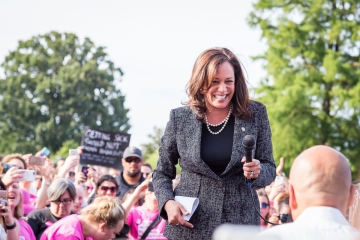
The Education Gadfly Weekly: Kamala Harris picks unions over students and parents

Volume 19, Number 13
3.27.2019
3.27.2019

The Education Gadfly Weekly: Kamala Harris picks unions over students and parents

Volume 19, Number 13
view

The misplaced focus on New York City's selective high schools

The time and energy that Mayor Bill de Blasio and Chancellor Richard Carranza are devoting to revamping admissions for New York's eight selective exam-based high schools are misplaced. Those institutions provide a unique and valuable service that drives excellence and upward mobility. Leaders should instead focus on how the city’s black and Hispanic students are failed by Gotham’s other 1,700 schools, and how the exam schools' diversity problem is exacerbated by the lack of policies that would bolster those kids' achievement.

Brandon L. Wright 3.27.2019
NationalThe High Flyer

The misplaced focus on New York City's selective high schools

Brandon L. Wright
3.27.2019
The High Flyer

Five lessons from my time on the Maryland State Board of Education

Chester E. Finn, Jr.
3.27.2019
Flypaper

Kamala Harris comes out swinging on education and picks the unions over students and parents

Erika Sanzi
3.25.2019
Flypaper

A guidebook for high schoolers who want to be teachers

Robert Pondiscio
3.27.2019
Flypaper

Strengthening and diversifying the teacher workforce

Jessica Poiner
3.27.2019
Flypaper
view

Five lessons from my time on the Maryland State Board of Education

Chester E. Finn, Jr. 3.27.2019
Flypaper
view

Kamala Harris comes out swinging on education and picks the unions over students and parents

Erika Sanzi 3.25.2019
Flypaper
view

A guidebook for high schoolers who want to be teachers

Robert Pondiscio 3.27.2019
Flypaper
view

Strengthening and diversifying the teacher workforce

Jessica Poiner 3.27.2019
Flypaper
view

The misplaced focus on New York City's selective high schools

Brandon L. Wright
3.27.2019
The High Flyer

The vast amount of time and political energy that New York City Mayor Bill de Blasio and his schools chancellor, Richard Carranza, are devoting to revamping the admissions process for the city’s eight selective exam-based high schools is misplaced—as is the outpouring of angst, ink, and argumentation on the part of so many other folks.

Highly-selective high schools provide a unique and valuable service that drives excellence and upward mobility, and they should be celebrated and protected. There’s room and a place for them in New York. Leaders who care about the fate of the city’s high-ability black and Hispanic students should instead focus on how so many of them are systematically failed by Gotham’s other 1,700 schools, and how the exam schools’ diversity problem has long been exacerbated by the refusal to implement policies that would greatly improve the achievement of these children before they get to high school.

Last week, we saw an interesting higher-ed parallel when The 74 examined the success of colleges participating in the March Madness men’s basketball tournament in facilitating the upward mobility of their low-income students. They found that selective universities like Villanova, Michigan, Duke, Yale, and UCLA paved the way for more of their graduates into higher socioeconomic brackets than almost all other schools in the tournament, nearly all of which were less selective.

There a lot of moving parts here, but such laudable outcomes are due, in important part, to superior educational elements like course offerings, peer influence, professors, and alumni networks. Abler students demand and take more advanced classes, for instance, that can cover content more quickly and deeply—especially in challenging, complex fields like mathematics, physics, and computer science. This attracts exceptional faculty who are prepared to lead such courses, and it produces graduates who are better equipped to excel and more likely to professionally assist fellow alumni—in part because they know what a degree from that institution means.

Likewise, though more than half of students attending New York’s eight uber-selective high schools live in poverty, many of these schools’ graduates garner acceptance letters from top universities, and include multiple Nobel Laureates. Transforming the schools in the way that de Blasio and Carranza want would fundamentally and adversely affect the academic environments they provide and do little to improve the outcomes of the city’s black and Hispanic children.

Within three years, the Mayor would scrap the entrance exam and instead grant seats to the top 7 percent of students from every middle school in the city, based on some not-yet-defined combination of test scores and grades. The New York City Independent Budget Office analyzed what this would mean for the schools’ academics, and its findings are worrisome. For example, the percentage of incoming students who score at the top level on New York’s statewide standardized math test would drop from 91 to 65 percent. And among the 500 lowest-scoring admitted students—who would comprise more than 10 percent of entrants—fewer than a quarter would be proficient in English language arts, and none in math.

This, of course, says nothing about the natural ability of disadvantaged students. They’re just as smart and just as capable of high achievement as their advantaged peers. What’s held them back is being systematically shortchanged by their city’s public school system. That’s where the blame lies, and that is where Mayor de Blasio and Chancellor Carranza should focus their energy.

New York has long done a poor job of maximizing the potential of high-ability students in low-income neighborhoods that are predominantly black and Hispanic. The city and some of their schools have gifted programs, yes, but many families lack access and awareness. Admission to those programs occurs between kindergarten and third grade and, like the selective high schools, is based on a single test that parents must sign up for, and for which city-wide cutoff scores determine admission. This stunts diversity because these low-income minority students are less likely to take it, or even know about it, and are less likely to pass.

The city should adopt a system that better develops the natural ability of all high achievers. Such a program would “frontload,” meaning it’d raise schools’ academic rigor in early grades so that these disadvantaged students are ready for more advanced offerings later. And it would universally test all students beginning in third grade, when the excellence gap has hopefully narrowed because of the frontloading in K–2. The top 5 percent or so of test takers in each school or district, not the top 5 percent in the entire city, should receive gifted-ed services in their own schools rather than centralized, faraway locales. Joining them should be another 5 percent of pupils nominated by teachers on the basis of uncommon potential. And enrichment would extend through eighth grade, when students in New York apply to high schools.

This would diversify the population qualifying for these services and not just favor kids who are white, Asian, or upper-middle-class, as the system does today. And in giving New York’s high-ability black and Hispanic students almost a decade of increased academic rigor and enrichment, it would better prepare them to gain acceptance to and excel at the city’s exam-based high schools, as well as their less selective “screened” counterparts that base admission on more than test scores. In other words, it achieves the ends that Mayor de Blasio and Chancellor Carranza seek, but does so by building up the achievement of New York’s most disadvantaged children instead of tearing down the unique and valuable services provided by Stuyvesant, Bronx Science, and their brethren.

Yes, it would be difficult. Turning around the debilitating effects of generational poverty, systemic racism, and years of under-challenge won’t happen overnight. But it’s a far better plan than the one leaders keep pushing—and it does far more to help the black and Hispanic students whose outcomes are said to be driving the mayor and chancellor’s efforts.

view

Five lessons from my time on the Maryland State Board of Education

Chester E. Finn, Jr.
3.27.2019
Flypaper

This essay, originally published by Education Next, will run in two parts. The second, which includes three of the five lessons the author learned during his time serving on the Maryland State Board of Education, will appear in next week’s Education Gadfly Weekly.

A surprising array of events are arranged in four-year cycles: leap years, the Olympics, presidential elections, and many “terms of office,” including those on the Maryland State Board of Education, where I just concluded my tour of duty.

There’s much that I won’t miss, including the obese briefing books we were sent every month, the depressing old Baltimore building in which we met, the decrepit garage next door where we parked, and the congested interstates that strained to get me there and home. I won’t miss tussling with lobbyists, politicians, and bureaucrats who don’t want anything to change (except, please, send more money!). I surely won’t say that my four-year sentence flew by. I will, however, miss board colleagues who, with almost no exceptions, struggle to do right by the state’s children, especially the neediest among them and who, for zero compensation, have committed—and, in my absence will continue to commit—many, many hours to earnest, albeit exceptionally difficult, efforts to give those kids the education they deserve.

Most states have such a board, and in many—as in Maryland—its members are appointed by the governor, often—as in Maryland—with confirmation by some branch of the legislature.

Though we tend to take this governance structure for granted, it’s important to remind ourselves how anomalous it actually is. Few other major components of a state’s government and certainly no other massive portion of its budget are overseen by a dozen individuals serving staggered four-year terms, rather than directly managed by a “commissioner” of some sort who answers exclusively to the governor and serves at the latter’s pleasure.

The grand historical rationale for such buffering was to insulate schooling from patronage and corruption, which were widespread in state and local governments. The progressive expectation was that those “independent” boards, state and local alike, would consist of selfless, public-spirited citizens, themselves often drawn from well-schooled elites, who were above conventional politics and cared exclusively about the well-being of their children and communities.

Gracious, what a long way we’ve come, and how far we’ve fallen! Public education turned out to be far too big a deal—too much money, too many jobs, too many peoples’ kids, too contentious—to resist politics. In Maryland, as in most places, the state board is politically engaged, politically influenced (though not very influential), and constantly in the bull’s-eye of all manner of politics, politicians, and those whose mission it is to influence what goes on in schools and among those who work there.

That’s not news, and on balance, it’s not surprising, but we might fairly ask: if the nineteenth-century rationale for our inherited school-governance structure no longer applies, might the country’s education needs be better met by a very different structure? In my view, the whole K–12 apparatus needs a radical overhaul, but I’ll save that for another day. My purpose here is to distill five lessons from my four-year term that will stick with me and that might possibly behoove others to consider.

First, as a state-board member, you’re now part of a high-stakes political process, so understand that, if you and your colleagues set out to change anything of consequence, you’ll have enemies and you’ll need allies. Don’t suppose that you’re actually in charge, no matter what constitutions, statute books, and regulations may say.

Boards in some states have greater authority, with New York’s “regents” serving as the premier example. Even under the best of circumstances, however, you won’t successfully rock any sizable education ships unless you can call in waves of support from well beyond your fellow board members. With luck, you’ll have the state superintendent on your team, but even so, you’ll still need the governor and/or key legislators and/or major “stakeholder” groups, too. Be wary, though, if they all agree, as that probably means they’re agreeing to more of the same with a higher price tag attached. If reform is your mission, you’d be wise to consent to be appointed only by a governor who has a clear reform agenda and is willing to expend political capital to see it through.

We didn’t do a great job of building political oomph in Maryland these past four years, but the deck was stacked against us. By the middle of my term, all twelve board members were appointees of Republican governor Larry Hogan, who has faced a veto-proof Democratic majority in both legislative houses from day one, and who, sad to say, has never shown more than perfunctory interest in education reform. Yes, he made worthy school-choice proposals, most of which were ignored or swiftly shot down by legislators. In marked contrast to legendary “education governors” such as Lamar Alexander, Jim Hunt, and the two Bush brothers, however, I observed in Hogan neither a real strategy for getting much done in the education space nor any evident appetite for joint strategizing with his board members. In four years, I never even met the man! I understand, however, that legendary “education governors” like Alexander, Hunt, and the Bushes worked within very different legislative contexts, so it’s possible that Maryland’s reform-averse environment factored into Hogan’s strategic calculus.

When our board took significant initiatives of its own, we ran into problems. Our new school-accountability plan under the Every Student Succeeds Act, which began with the merest hint during board conversations that perhaps the state should actually intervene in chronically failing schools, led to legislation designed to thwart any such move, claiming that our very words were a dire threat to local control. All major stakeholder groups—not just the powerful teachers unions, but also the school boards and superintendents’ groups—joined forces to block any assertive version of building-level accountability. This legislative blockade had happened before in Maryland, including back when long-serving state superintendent (Saint) Nancy Grasmick proposed outsourcing a few dire inner-city schools.

In another realm, we had some support from legislators and local controllers but actually found ourselves battling the governor who named us. In that instance, business interests in Ocean City persuaded Hogan, whose enthusiasm for crowd-pleasing gestures has long been manifest, to vouchsafe the integrity of summer vacation by blocking any moves to lengthen the school year. Never mind that a huge number of less-than-proficient youngsters, many of them poor and minority, would benefit from more instructional time. Instead, he issued an executive order that essentially barred districts from opening school before Labor Day or remaining open after June 15. The initial order allowed waivers, however, and our board signaled that it would generously grant them. Hogan hastily revised his order to close that loophole. Here again, as with school accountability, we were doing our best to look after the interests of children but, here again, grownup priorities prevailed. (As I write—two years after that dust-up—legislators and Hogan are battling over whether to loosen the calendar restrictions.)

Second, be wary of the bureaucracy that nominally works for you. State education departments are as set in their ways and as attuned to traditional stakeholders and their interests as are schools and districts. The first response to any reform suggestion is sure to be some combination of “here’s why that would be really hard to do” and “let’s consult the stakeholders and get their reactions and ideas.” The state superintendent is somewhere in between, formally (in Maryland and many states) accountable to the board that hired him/her but also enmeshed in the state’s longstanding assumptions, obligations, bureaucratic procedures (and capacities), and intertwined educator-career paths.

As a board member, however, you are dependent on that very same bureaucracy—and superintendent—to supply you with information, prepare your briefing materials, develop the policy options, draft the regulations, meet with stakeholders, and much more. How, exactly, do you serve as an independent check on—much less a future-oriented change agent for—a sclerotic agency that supplies you with the very stuff you need to play that role?

Some board members have access to outside networks, advisors, and information sources, as well as whatever expertise and experience they carry with them. Beyond that, however, you either push for an independent staff chosen by and answerable exclusively to the board or hope to make an ally of your superintendent.

A few states have been blessed with hard-charging, reform-minded individuals in that role—think of John White in Louisiana today, Dave Driscoll in Massachusetts recently, even Maryland’s legendary Nancy Grasmick not so long ago—but they are not the norm. And as a board member, know that if your reform idea is not on the chief’s agenda, or he or she thinks it may undermine something that is, he or she has a thousand ways to subvert, slow-walk, or otherwise sideline it. So does the board’s attorney who is typically a career state employee and battle-weary veteran of many boards that came before yours and who expects to counsel many that will come after. That individual can (and is apt to) cite a hundred precedents, regulatory fine points, court rulings, and legislative histories that allegedly show why what you and your colleagues want to change simply cannot be done.

Remember the axiom about the two types of lawyers: One kind helps you find ways to get things done, and the other kind explains why your plans aren’t possible in any form resembling what you had in mind. I’m authoritatively advised that some states benefit from the former species but, in my experience, the latter variety is prevalent in the public sector—and your board may want to attempt a change in that department, too! A truly independent counsel would be at least as valuable as an entire policy staff. But that’s not how many states are organized—or staffed and funded—and you can bet your efforts to alter that reality will face resistance.


view

Kamala Harris comes out swinging on education and picks the unions over students and parents

Erika Sanzi
3.25.2019
Flypaper

Democratic presidential hopeful Kamala Harris must have been one of the people AFT president Randi Weingarten was referring to when she said on C-Span, in the context of the 2020 hopefuls being “eager for the teachers’ backing," that her “phone had rung a lot” because Harris has quickly morphed into a union mouthpiece. The language is so familiar it reads like the same old script. Students are nowhere to be found in her comments, parents are absent from her tweets, and learning outcomes don’t even get a single mention.

Harris had decided to focus on the need to pay teachers more, respect teachers more, and support one delivery system of education—the public one. She makes no mention of teacher quality, student learning, or parent choice. One does wonder if she has even looked at the numbers of children all over this nation who do not read at grade level—36 percent of fourth-graders, 36 percent of eighth-graders, and 37 percent of twelfth-graders read at or above grade level.

If we disaggregate by race, here are the percentages of students in America who read at or above grade level:

White students 45%
Black students 18%
Hispanic students 23%
American Indian/Alaskan native students 22%
Asian students 57%

82 percent of black students, 77 percent of Hispanic students, and 78 percent of Native Americans in eighth grade do not read at grade level yet Kamala Harris doesn’t even believe it worthy of a mention. More than half of white students can’t read at grade level either—but she has made the calculated choice not to make her education agenda student centered or parent centered.

Now let’s look at eighth-grade math disaggregated by race:

White students 44%
Black students 13%
Hispanic students 20%
American Indian/Alaskan native students 18%
Asian students 64%

87 percent of black students, 80 percent of Hispanic students, and 82 percent of Native American students cannot do math at grade level. Neither can more than half of white students.

But she has come out of the gate attacking privatization—which is kind of strange since she doesn’t define it but seems to be fine with public dollars funding private universities and faith based pre-schools. While it is refreshing to see at least one candidate come out decisively on education, Harris has made the calculated decision to put her stake in the ground on the side of those whose mission is to fight against the overwhelming demand from parents—especially parents of color—for more educational freedom for their children.

And on substance, this whole teacher salary thing is ridiculous in the context of fifty states and over thirteen thousand school districts. The average teacher salary in Boston, for example, is $99,368. Are we supposed to put on red t-shirts and clamor for federal raises there? Meanwhile, a teacher in Tulsa, Oklahoma, has to teach for thirteen years just to earn $38,400. But Harris has decided that union support and money are more important than student learning and student outcomes and, ahem, students themselves. She avoids even talking about them.

Now, quick, say something about students.

*they don’t have a union or lobby. https://t.co/tKxrOs2M79

— Citizen Stewart (@citizenstewart) March 23, 2019

Randi is ecstatic.

THIS is incredible!! @KamalaHarris is putting attracting & retaining teachers front and center. This would make a huge difference in the lives of educators, our students and our communities. #AFTVotes #FundOurFuture https://t.co/gwg8PysGNm

— Randi Weingarten (@rweingarten) March 23, 2019

Thank you @KamalaHarris for putting teachers front and center. #AFTVotes https://t.co/ko1rcDSBwt

— AFT (@AFTunion) March 23, 2019

Moments ago, I pledged that at the end of my first term as president we'll close the teacher pay gap with the largest federal investment in teacher pay in American history.

No teacher should have to work 2-3 jobs to survive. That’s wrong. I’m ready to do something about it. pic.twitter.com/opgTKHiSLm

— Kamala Harris (@KamalaHarris) March 23, 2019

Our country needs an Administration that supports public education, not privatization.

We need a Secretary of Education who actually has experience in education.

We need a president who stands with teachers, has their backs and respects their work.

— Kamala Harris (@KamalaHarris) March 23, 2019

Lily at least mentions student success but then throws in her usual lazy plug for “neighborhood schools.” She must really hate magnet schools and exam schools.

#RedforEd is about student success & respect for educators & public education. This should be central to the 2020 conversation. We applaud @KamalaHarris for focusing on attracting & keeping great educators in neighborhood schools! #StrongPublicSchools https://t.co/uqdzDSdJEQ

— Lily Eskelsen García (@Lily_NEA) March 23, 2019

I know the impact teachers can have. My first grade teacher, Mrs. Wilson, supported me from my time at Thousand Oaks Elementary School to when I walked across the stage to get my law degree. Supporting our teachers is critical for our students, our economy, and our country. pic.twitter.com/Xe3Lh6t3ml

— Kamala Harris (@KamalaHarris) March 24, 2019

Kamala Harris graduated from school reading at grade level and went on to become highly successful and accomplished. I find it hard to believe that she doesn’t believe all students in this nation—a nation she aspires to lead—don’t deserve the same. Too bad that principled belief isn’t strong enough to stand up to the powerful interests whose job it is to put adult interests before what children need and deserve.

Editor’s note: This article originally appeared in a slightly different form in Good School Hunting.

The views expressed herein represent the opinions of the author and not necessarily the Thomas B. Fordham Institute.

view

A guidebook for high schoolers who want to be teachers

Robert Pondiscio
3.27.2019
Flypaper

Working for the National Council on Teacher Quality can’t be fun or easy. Since 2003, the organization has set itself to the task of evaluating the nation’s teacher prep programs, which can only be compared to a department-store photographer telling mothers their babies are ugly. No one is glad to hear it, even if it’s observably true. Under President Kate Walsh, NCTQ routinely faces criticism, often fierce and withering, that its ratings are flawed and its methodology suspect. The controversial nature of their work has even led some skittish funders to keep them at arm’s length, making their job harder still. OK, fine. But your baby’s still ugly.

Undeterred, bless them, NCTQ has found a new way to prod colleges to raise their game. Their latest offering, “Start Here to Become a Teacher,” is a college guidebook, aimed at high school students setting their sights on a career in the classroom, steering them toward the schools and programs that will leave them best prepared to succeed upon entering the teaching workforce. It’s an interesting and creative repackaging of the organization’s rich trove of data on over 2,400 teacher prep programs, and one that conceivably could drive demand for admissions. Well played, NCTQ. Like its annual “Teacher Prep Review,” the book grades undergraduate programs on various indicators of quality, including the rigor of their admissions process, content preparation, how well they teach candidates to manage their classrooms, and whether programs provide high quality practice opportunities including attentive feedback from program supervisors.

Reading “Start Here” through the eyes of aspiring teachers is refreshing. Those of us who grew depressed in high school thumbing past page after page of top-shelf “highly-competitive” and “most-competitive” colleges to which we would not be applying can only be cheered and invigorated by a college guide whose standout schools are the decidedly non-intimidating (mostly) state schools whose graduates comprise the lion’s share of our 3.8 million teacher corps. Just try to find another college guidebook where the top-shelf schools include Appalachian State, Colorado Christian, Louisiana Tech, Montana State, Northwest Nazarene, and Dallas Baptist University. “Some of the universities with the highest general reputations (and often the highest price tags) do not have high-quality teacher education programs,” the authors explain. “Meanwhile other institutions without the well-known brands of big-name schools have quietly focused on developing superior teacher prep programs.” Hear, hear! And bravo.

The book is admirably clear-eyed about the profession, offering a chapter on “myth-busting and job advice.” It also makes clear that there are plenty of routes into the classroom besides a traditional four-year undergraduate program, including online prep programs and alternative certification paths. A multi-page spread that lists state-by-state requirements for certification tests and whether teacher candidates must maintain a minimum GPA is eye-opening, and not in a good way. The prose style is a little chirpy, as you might expect for a book aimed at high school students, and typical of the college guidebook genre, there’s plenty of pure filler. The “candidate observations” at the end of most of the school profiles are, without exception, merely endorsements from satisfied graduates of each program and run the gamut from laudatory to effusive; they seem to have been provided by the programs themselves. There’s also evidence of a rush to print or (more likely given NCTQ’s adversarial history with the programs it evaluates) non-cooperation. The write-up for a few schools like East Carolina University and New York City’s Hunter College are mere squibs, for example, featuring only those program’s “scorecards” and data on program size and cost, where graduates end up working, etc.

Over the last year, there has been a notable amount of attention, and no small amount of badly needed alarm, over how poorly schools of education prepare their candidates to teach children to read. So it’s particularly gratifying to see grades assigned for how well schools train future elementary school teachers for this most critical and urgent role. That said, it’s befuddling that any of the one hundred-plus programs featured in the book can earn a recommendation while receiving failing marks on teaching reading. The University of Texas at Austin and the University of South Carolina, for example, both get F’s for “learning how to teach reading”; several others get D’s. A failing grade on any of the book’s “Indicators of Quality” should probably be a deal-breaker preventing any college from earning a commendation, but particularly that one.

“If you want to be a good teacher right from the start of your career, your best move is to attend a high-quality teacher preparation program like those profiled in the book,” the authors write. I second the motion. Given that at least one-third of college undergrads change majors at least once, it’s uncertain how many sixteen- and seventeen-year-olds who think about teaching will actually stick with that plan. But to the degree they do, “Start Here to Become a Teacher” is a good place to start.

SOURCE: Dan Brown, Rob Rickenbrode, and Kate Walsh, “Start Here to Become a Teacher,” NCTQ (March 2019).

view

Strengthening and diversifying the teacher workforce

Jessica Poiner
3.27.2019
Flypaper

Each year, teacher candidates across the nation take licensing exams designed to check their mastery of pedagogy and of content knowledge. Though each state selects its own licensing tests, the Praxis Elementary Education: Multiple Subjects assessment, created by the Education Testing Service (ETS), is the most widely used elementary content exam. It’s required in eighteen states and optional in five others.

In a new report, the National Council on Teacher Quality (NCTQ) examines never-before published data from ETS to identify initial and final passing rates for this exam. Teaching candidates are required to separately pass each of the four content area subtests: reading/language arts, math, science, and social studies. Only 46 percent of candidates passed all four subjects on their first attempt, which the report authors flag as being very low. In comparison, initial passing rate for licensure exams in other professions with a reputation for difficult entry exams is much higher: 69 percent for lawyers, 85 percent for nurses, and 90 percent for doctors of internal medicine. The final pass rate for the Praxis exam is higher—72 percent—but that doesn’t take into account the time and cost of retakes.

A demographic breakdown of final pass rates also reveals significant gaps between candidates of color and their white peers. While 75 percent of white candidates go on to pass all four subjects, only 57 percent of Hispanic candidates and 38 percent of Black candidates do the same. There are similar gaps in passage rates for each of the subtests. Based on these results, and assuming similarly disparate pass rates for the other tests used by all states, NCTQ estimates that approximately 8,600 candidates of color each year likely do not qualify to teach based on low test performance. Given research that shows students benefit from having teachers of the same race, it should worry policymakers and advocates that so many candidates of color are failing licensure exams.

But why are so many candidates—more than half overall—struggling so mightily to pass their licensing tests on their first try? There are a variety of issues at play, but a lack of alignment between how candidates are prepared and what they need to know to pass licensing tests could be a significant factor. NCTQ claims that elementary teachers need to master at least eleven core topics in four content areas to be prepared to meet teaching requirements. But based on data collected from undergraduate elementary teacher preparation programs at 817 institutions that account for 71 percent of such programs in the nation, they find that each on average covers just three of those eleven topics.

Another part of the problem is that too few undergraduate teacher preparation programs identify candidates’ knowledge gaps early enough. Most require candidates to be formally admitted, typically before a candidate’s junior year of college. Screening candidates prior to admittance would allow universities to address gaps in candidate knowledge by requiring additional coursework. Unfortunately, only 4 percent of the 817 programs screen candidate knowledge in at least one area.

Most institutions also do very little to ensure that the general education courses taken by candidates are relevant to both the licensing test and the daily demands of being an elementary teacher. While the parameters of some programs are too narrow (i.e., a history course that only focuses on one decade in American history), others are too broad (such as a course that covers multiple scientific disciplines in one semester), and still others focus on pedagogy rather than content.

To make matters worse, data reporting practices are also suspect. NCTQ notes that many teacher preparation programs only publicly report passing rates for completers—candidates who have finished their coursework and passed the appropriate licensing exams. This gives the public a skewed view of how many test-takers pass on their first attempt, and explains why the rates reported by programs are so much higher than the data provided in this report.

The authors are careful to note that they can’t prove the correlation between coursework and pass rates. They also point out that strengthening college course requirements isn’t a silver bullet, and that the fault for candidates’ gaps in content knowledge lies with the “inequitable or uneven” K–12 education sector and not teacher preparation programs. Nevertheless, they are “confident that requiring meaningful exposure to relevant content” during teacher training will be a key element of diversifying and strengthening the teacher workforce moving forward.

The report closes by offering a series of recommendations to both teacher preparation programs and state policymakers. These include using admissions processes to identify candidates’ weaknesses in content knowledge, aligning content course requirements with what elementary teachers need to know, and holding preparation programs accountable for low pass rates rather than abandoning licensing tests all together.

SOURCE: Hannah Putman, Kate Walsh, “A Fair Chance: Simple steps to strengthen and diversify the teacher workforce,” National Council on Teacher Quality (February 2019).

Fordham Logo

© 2026 The Thomas B. Fordham Institute
Privacy Policy
Usage Agreement

National

P.O. Box 110
Burke, VA 22009

202.223.5452

[email protected]

Ohio

P.O. Box 82291
Columbus, OH 43202

614.223.1580

[email protected]

Sponsorship

130 West Second Street, Suite 410
Dayton, Ohio 45402

937.227.3368

[email protected]