Mobile Navigation

  • National
    • Policy
      • High Expectations
      • Quality Choices
      • Personalized Pathways
    • Research
    • Commentary
      • Gadfly Newsletter
      • Flypaper Blog
    • Events
    • Scholars Program
  • Ohio
    • Policy
      • Priorities
      • Media & Testimony
    • Research
    • Commentary
      • Ohio Education Gadfly Biweekly
      • Ohio Gadfly Daily
  • Charter Authorizing
    • Application
    • Sponsored Schools
    • Resources
  • About
    • Mission
    • Board
    • Staff
    • Career
Home
Home
Advancing Educational Excellence

Main Navigation

  • National
  • Ohio
  • Charter Authorizing
  • About

National Menu

  • Topics
    • Accountability & Testing
    • Advanced Education
    • Career & Technical Education
    • Charter Schools
    • Curriculum & Instruction
    • ESSA
    • Evidence-Based Learning
    • Facilities
    • Governance
    • Personalized Learning
    • Private School Choice
    • School Finance
    • Standards
    • Teachers & School Leaders
    • Think Again
  • Research
  • Commentary
    • Gadfly Newsletter
    • Flypaper Blog
    • Gadfly Podcast
  • Events
  • Scholars Program

The Education Gadfly Weekly

Sign Up to Receive Fordham Updates

We'll send you quality research, commentary, analysis, and news on the education issues you care about.
Thank you for signing up!
Please check your email to confirm the subscription.

The Education Gadfly Weekly: How elementary schools can address unfinished learning through personalization

Volume 21, Number 10
3.11.2021
3.11.2021

The Education Gadfly Weekly: How elementary schools can address unfinished learning through personalization

Volume 21, Number 10
view
Getty Images/Wavebreakmedia
Personalized Pathways

How elementary schools can address unfinished learning through personalization

Editor’s note: This is the fifth and final installment in a series of posts about envelope-pushing strategies that schools might embrace to address students’ learning loss in the wake of the pandemic.

Michael J. Petrilli 3.11.2021
NationalFlypaper

How elementary schools can address unfinished learning through personalization

Michael J. Petrilli
3.11.2021
Flypaper

Addressing learning loss in one easy lesson

Robert Pondiscio
3.11.2021
Flypaper

Working with communities is hard and complex—and vital

Karega Rausch
3.11.2021
Flypaper

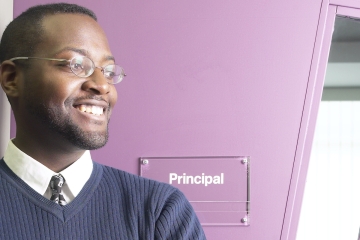
The principal effect: How school leaders affect students and schools

Victoria McDougald
3.11.2021
Flypaper

Widening the pipeline for computer science education

Jeff Murray
3.1.2021
Ohio Gadfly Daily

The Education Gadfly Show: Biden’s relief bill will cut child poverty in half. What’s not to like?

3.11.2021
Podcast

What we're reading this week: March 11, 2021

The Education Gadfly
3.11.2021
Flypaper
view

Addressing learning loss in one easy lesson

Robert Pondiscio 3.11.2021
Flypaper
view

Working with communities is hard and complex—and vital

Karega Rausch 3.11.2021
Flypaper
view

The principal effect: How school leaders affect students and schools

Victoria McDougald 3.11.2021
Flypaper
view
College Board STEM pipeline SR image

Widening the pipeline for computer science education

Jeff Murray 3.1.2021
Ohio Gadfly Daily
view

The Education Gadfly Show: Biden’s relief bill will cut child poverty in half. What’s not to like?

Michael J. Petrilli, David Griffith, Ph.D., Amber M. Northern, Ph.D., Scott Winship 3.11.2021
Podcast
view

What we're reading this week: March 11, 2021

The Education Gadfly 3.11.2021
Flypaper
view
Getty Images/Wavebreakmedia

How elementary schools can address unfinished learning through personalization

Michael J. Petrilli
3.11.2021
Flypaper

Editor’s note: This is the fifth and final installment in a series of posts about envelope-pushing strategies that schools might embrace to address students’ learning loss in the wake of the pandemic. Find the first four posts here, here, here, and here.

Last week I explored how we might truly personalize instruction and blow up the whole notion of grade levels so that elementary students could learn at their own pace and get what they need as they recover from the pandemic. I argued that it’s harder than it looks, especially at the elementary level, for several reasons. First, much of what the youngest learners are supposed to master in school is how to behave and get along with other kids and adults. Especially after everything children have been through over the last year, we need to put relationships front and center. Thinking of young students as knowledge-building machines is not going to cut it.

And second, I discussed concerns about grouping students homogeneously with other kids with similar readiness levels, as in the redbirds and the bluebirds. That’s because of research showing that students in the lowest groups rarely catch up. Yet teaching students in small groups is not only a time-honored practice, but one of the most obvious ways to individualize instruction.

At the elementary level, then, any approach to personalize learning has to balance attempts to individualize instruction with plenty of opportunities to build relationships and social skills with other kids and adults, while also making sure that the lowest-achieving students are not permanently consigned to low-level instruction and grouped all day and exclusively with other low-performing peers.

To my knowledge, very few elementary schools can claim to exemplify such an approach, but the nonprofit network of Rocketship charter schools can at least make a strong case. As I wrote a few years ago, Rocketship schools use an elegant model that combines whole-class instruction, small groups, individual work, and an extended day, one that provides ample time for core academics, including STEM and humanities, plus social and emotional learning and enrichment activities. Rocketeers get more individualized instruction than most elementary students do—and it shows in their impressive results. But the bulk of their day is spent with the rest of their classmates, or in heterogeneous groupings, which impart important social skills and avoid the downfalls of grouping the lowest performers together all the time.

That said, Rocketeers still progress through the grade levels on a traditional schedule. To bust up the age-old link between a child’s age and their grade level, we have to look to another model I’ve discussed in the past, Montessori. In those elementary schools, grade levels are collapsed so that students spend their days in multi-age classrooms—almost always ages 3–6, 6–9, and 9–12. Students can move to the next level when educators deem them ready. And it works because there’s very little whole-class instruction—though there is a lot of work in pairs and small groups. Mostly, students rotate through stations, at their own pace, to a large degree guided by their own interests. If a five-year-old is ready for second grade content, no problem. It’s the closest thing we have to personalized learning for little kids—and it’s over 100 years old! Furthermore, by keeping kids in the same classroom for three years, children get to build deep relationships with one another and their teachers.

The rub with Montessori is that students have so much choice that it can lead to more depth than breadth. Skilled teachers can encourage students to build skills in the areas to which they aren’t as naturally drawn so that children learn important material that they will need to know one day. But in public Montessori schools especially, where schools are held accountable for helping students reach standards in the Three Rs, there’s an unavoidable tension between letting students follow their interests and ensuring they spend enough time on every content area. To loosen that tension, Montessori teachers are trained to use detailed observation protocols and particular intervention strategies to recognize when students are struggling and to support them without controlling them. But given the number of standards and students in each class, even the most gifted teacher can struggle to see and respond to everything that’s going on.

Wildflower Schools, a non-profit charter network that embraces the Montessori model, is developing creative ways to expand teachers’ capacity to observe to make sure that its pupils get the necessary exposure to a breadth of important topics. They are piloting a fascinating hybrid of high-tech and low-tech that uses sensors to track where students are spending their time—though the learning activities in their classrooms are traditional enough to be recognizable by Maria Montessori herself. Data from the sensors can give teachers and administrators insights into whether certain kids need to be nudged toward reading, writing, math, and other key domains to progress academically.

—

What all of this means for elementary schools in the wake of the Covid-19 pandemic, then, is if they want to allow for personalized pacing, they should:

  • Balance the use of small, homogeneous groups, typically for reading or math instruction, with plenty of whole-class lessons so students are learning with kids who are below and above their current readiness level.
  • Use high-quality digital programs to individualize instruction, especially given how effective they can be at pinpointing the knowledge and skills students are ready to tackle.
  • Offer students the opportunity to rotate through learning stations, Montessori-style, to explore their interests and work on core skills, including plenty of practice in reading, writing, and math.
  • Consider multi-age classrooms, which may allow for more targeted instruction without the stigma of “holding back” the lowest-achieving students, while also allowing children to build deep relationships with their classmates and teachers.

None of that sounds easy. Some of it may require waivers from state regulations. But for schools committed to meeting each child exactly where they are, the effort might be worth their while.

view

Addressing learning loss in one easy lesson

Robert Pondiscio
3.11.2021
Flypaper

One of the best-selling education books of the Covid era is one you’ve probably never read and maybe never even heard of. Teach Your Child to Read in 100 Easy Lessons was written nearly forty years ago by Siegfried Engelmann, who passed away in 2019. The cover of the most recent edition claims “more than half a million copies sold,” but one of the surviving coauthors, Phyllis Haddox, was recently told by her publisher that a surge over the past year has now pushed sales over one million.

If you’ve never heard of it, that’s not entirely surprising. It’s a modification for home use of “DISTAR,” the Direct Instruction System for Teaching, Achievement, and Remediation, pioneered by Engelmann and colleagues. I’ve previously described Direct Instruction as the “Rodney Dangerfield of curriculum,” unloved by schools despite a half-century’s worth of evidence in support of its effectiveness. The book was written “specifically to circumvent schools,” says Haddox, who explains that “DI” had been “systematically suppressed, denied, and ignored by school systems, administrators, and colleges of education.” Frustration with the lack of traction, evidence be damned, prompted Engelmann, Haddox, and a third author, Elaine Bruner, to publish 100 Easy Lessons in 1983. It has sold steadily ever since, and periodically returns to the limelight as new readers, almost always outside of the education profession, discover it. For example, John McWhorter described teaching his daughter to read with the book in a 2019 piece in The Atlantic. “My wife and I are not unusually diligent teachers,” he wrote. “The book worked by, quite simply, showing our daughter, bit by bit, how to sound out the words. That’s it. And yet in the education world, Engelmann’s technique is considered controversial.” Simple, effective, and controversial? Go figure.

The current surge of interest is clearly a product of panicky parents who probably assumed their children would be in school five days a week this year and fear they’re falling behind. The recent traction for the “science of reading” may also be aiding the renaissance. Marcy Stein, a DI expert and retired professor of education at University of Washington Tacoma, assumes parents aren’t closet connoisseurs of curriculum. “For the general public, it’s about phonics,” she says. “If you go to Amazon and say ‘phonics programs,’ my guess is it’ll come up.” She’s exactly right. When you type those words on Amazon, 100 Lessons is one of the top-line selections. But with over 10,000 reader reviews (far more than other books in the search result), a “#1 Best Seller” icon, and the non-intimidating title—a bit of marketing genius—it stands out as an obvious and intuitive choice. Type in “how to teach my child to read” and it pops right to the top.

The intriguing question as we gear up to reopen schools and make up for unfinished learning is whether the book could work as well in schools as it has for motivated parents. Here, even Direct Instruction enthusiasts are chary. The book is an adaptation of the DISTAR “Fast Cycle” program, essentially a compressed version of the first two years of the Reading Mastery curriculum; thus it might not lend itself to general classroom use. “For the kids who can handle it, it’s acceleration,” Stein cautions. “But the pace is quite challenging for some.” Haddox suggests any large-scale implementation in a school setting should include training and monitoring.

One possibility is using or adapting 100 Easy Lessons for one-on-one or small group tutoring, which will almost certainly be a cornerstone of post-Covid recovery interventions. Elsewhere in these pages, Mike Petrilli wraps up his five-part series on “envelope-pushing strategies” to help little kids who’ve lost a year or more of schooling, including “truly personalized” instruction, “blowing up the whole notion of grade levels,” and most controversially (in my opinion), adding an extra year, “a second 2nd grade,” to high-poverty elementary schools. At the risk of picking a fight with the man who signs my paychecks, I’m generally not a fan of Big Ideas and moonshots. Miseducation tends to be less a matter of too little ambition than poor execution. More of what hasn’t worked makes no sense. It makes even less sense to add layers of complexity to teachers’ jobs in schools where there’s been little evidence of success with less challenging instructional strategies.

With the bluntness that seems second nature to Direct Instruction advocates, Stein admits she’s unimpressed with most school-based tutoring programs. “Typically, volunteers come to a school once a week, sit down, and read with a child. They’re more like mentoring programs than tutoring in reading,” she says. “You’d have to be not that to improve reading performance.” Another long-time DI advocate, Dr. Susan Syverud, a former professor at the University of North Florida, describes using 100 Lessons with great success among teacher candidates she worked with in a Title I school in Jacksonville, Florida. “They were required to use it, but I was able to train them, provide support, and monitor progress,” she recalls. “We primarily tutored the lowest-quartile first graders and had phenomenal results.” Echoing Stein’s caution, Syverud sounds guardedly optimistic about tutoring at scale. “I have found that some people pick up 100 Easy Lessons and implement it well, and some do not. I would want any implementations of this to have some supervision, coaching, and progress monitoring,” she tells me. “But one coordinator with lots of volunteers? That’s not a big investment.”

Indeed, at $14.99 per book, you could buy ten copies for every one of the 20,000 Title I elementary schools for less than $3 million—not even a rounding error on the $120 billion schools are slated to get in the newest Covid-19 relief package from Uncle Sam. Heck, you could buy a copy for every Title I school parent.

A proven track record half a century long. And a million parents can’t all be wrong. Where resources are being made available for early elementary tutoring, thirty-five years after publication, perhaps the time has come for 100 Easy Lessons to be used in schools not in spite of them.

view

Working with communities is hard and complex—and vital

Karega Rausch
3.11.2021
Flypaper

Centering the work of charter schooling and authorizing in communities means listening to the aspirations and needs they have for students—especially communities that have been overlooked and not prioritized, like communities of color, those from lower-income tax brackets, and those with disabilities—and delivering with, not to, them.

Working with communities is not just the right thing to do. It works to produce better, more sustainable results for students and communities. I have experienced it first-hand as a charter school authorizer in Indianapolis.

One of the most successful schools that my team authorized was The Excel Center, which opened in Indianapolis in 2010 in partnership with Goodwill Industries to meet the need of overage, under-credited students who often were trying to get their high school degree for a second or third time. The genesis for the idea came from conversations the Indianapolis charter authorizing team had held with members of the community, listening to their concerns that current educational options relied too heavily on the GED as the only means for adult students to finish high school. That conversation ultimately led to today’s growing network that now comprises fifteen Excel Center locations throughout Indiana, and more in Arkansas, Missouri, Tennessee, Texas, and D.C.

A second example of successfully authorizing a school that came from the community is the Tindley Accelerated School. Since its founding in 2004 and expansion over the years, the school has been among the highest-performing networks of schools in Indianapolis, focusing on getting students into and through four-year colleges and universities. Tindley wasn’t conceived out of the blue. It was the first step of a community-initiated effort to revitalize a neighborhood, which included residents, local educators, civic organizations, city officials, and philanthropists. That work, aided largely by the quality of Tindley’s middle and high schools, has attracted reinvestment in the community.

In a recent Fordham Institute essay, Chester E. Finn, Jr. described the complicated realities of working with communities and offered a welcome push on several organizations, including the National Association of Charter School Authorizers, where I am president and CEO. I’m thankful for people like Finn, who are willing to highlight the potential unintended consequences of engaging communities in school improvement, and especially the risks of doing it poorly. It’s a mistake to miss important learnings from past efforts or tune out people who ask tough questions.

I walked away from his piece, not with second thoughts about centering communities, but with an enhanced commitment to doing it wisely, with a deep level of humility, and with the knowledge that figuring it out together will be complicated.

Make no mistake, working with communities does mean upending traditional power arrangements and shifting power to those who live there. But it doesn’t mean shifting power to structures, entities, and people who have failed communities and students—especially Black students who look like me—for generations. The loudest voices in the room do not always speak on behalf of kids and communities. Families, students, and neighborhoods must be able to voice what their kids aspire to, and have the power to make it so.

Competing interests in communities are real; no community is monolithic. Who decides whose voice is heard is a big challenge. Creating new power structures that also fail kids and communities is a real threat. Anyone who tells you that they have easy answers to these complicated, value-laden questions isn’t being candid. Those of us in positions to help deliver on community aspirations and needs must start from a place of humility. We might have critical policy expertise, but we also don’t know the exact right path and need to start by listening more. That also means perpetually asking questions of a lot of people in communities, prioritizing the voices of often unheard people there, and muddling our way to workable, albeit imperfect, solutions together that ultimately lead to better life outcomes for students.

In too many political and policy debates, the tendency is to go black or white, leaning on pendulum swings. We either are in school every day or doing fully remote learning during Covid-19. We either focus on reading and writing or pursue racial justice. We either listen and act on community aspirations or we have excellence. But pursuing either-or thinking is damaging and unhelpful. While we can never compromise our values—and excellent schools are among our values—finding the both-and is usually the best, if hard-to-implement and hard-to-sustain, solution. That’s where the intricacies of implementation exist, and frankly, where policy wonks, like Finn, myself, and others, can listen to communities, roll up our sleeves, create new kinds of coalitions, and figure out the right policy levers that speak to common values and get the results we all want for kids.

Among the most challenging areas, where competing interests and power dynamics are the most visible in charter schooling and authorizing, is the idea of closing a school. Closing a failing school is extremely important to ensure students, current and future, do not get stuck in low-performing schools that do not educate them. But it’s not an easy nor simple process, especially when working with communities who may value and support schools that others would deem a failure.

I remember one instance as an authorizer where I had to lead the closing of a school. Many families were well served by that school, and those families wanted it to stay open with some modifications. But there were far more families who weren’t well served, many of whom had already left for other options, whom we also listened to. Add in that the owner of the school’s facility was a relatively small, local community organization that needed the revenue from the facility, but also wanted residents to be well served academically. Competing interests indeed.

We did the right thing by announcing the closure of the school nearly a year and a half before its contracted end date, so that families could find a better alternative far in advance of the school closing. But if I could go back, we could have done more with the community. For instance, we should have focused more intently on a replacement strategy earlier—that is, finding a new and better operator in the area that could build a better school based on the community’s aspirations for their children. We could have listened better to parents and students to find ways of maintaining the good things from the closing school to continue forward with a new operator; or ensure the facility could be used for community advancement, if not a school; or advocate more forcefully for policy changes so that students from closing schools would have admissions preference to other schools of their choice. (Fortunately, this exists today, but didn’t at the time.)

When charter school authorizers—and anyone in education—see themselves, not as distant authorities who don’t want to get involved with communities (which NACSA sometimes sees among authorizers who claim getting involved “isn’t their job”), but as people who can work with communities to make their aspirations a reality, we have an opportunity to create outstanding options for kids and to ensure that we are delivering with, not to, communities. Will this be complicated, as Finn cautions? Yes. Must we learn from successes and mistakes in our past? Yes. But that cannot replace the moral imperative of working to deliver on the smart ideas and with the talented people in communities across the country. Sign me up for the challenge and complexity if it means we can have community- and life-changing options like Tindley and the Excel Centers.


view

The principal effect: How school leaders affect students and schools

Victoria McDougald
3.11.2021
Flypaper

Research and common sense suggest that teachers are the biggest school-based factor influencing student learning. A landmark study conducted in 2004 shows that principals matter hugely, too, concluding that “leadership is second only to classroom instruction among all school-related factors that contribute to what students learn at school.” But how has the principal workforce and role evolved since this seminal study was conducted nearly twenty years ago? And to what extent do principals affect student achievement and the schools they oversee today?

An extensive new report explores these questions and more, drawing on two decades of data. Specifically, it asks: How has principalship evolved over the past twenty years, in terms of the policy landscape and workforce composition? How much do principals contribute to student achievement and other school outcomes, such as absenteeism and teacher turnover? And finally, what are the principal characteristics, skills, and behaviors that best promote student learning?

In terms of the shifting policy context, researchers explain that changes in federal policies in recent decades, such as No Child Left Behind and the Every Student Succeeds Act, placed greater emphasis on school accountability, student achievement, and testing. This facilitated the collection of more and better student data. But as the researchers explain, it also “changed how they focused time and other resources on tested subjects and grade levels. Principals also experienced higher levels of job stress and a higher turnover rate.” The study also finds that at state and local levels in recent decades, principals have spent more time in classrooms and away from other managerial responsibilities. In particular, “the widespread implementation of educator evaluation systems based on multiple measures of performance has represented perhaps the largest shift in school principals’ roles.”

Next, researchers explore principal composition and find that, based on nationally representative data collected by the U.S. Department of Education, principals today are more likely to be female and racially diverse, but are less experienced than their predecessors, especially those working in high-need schools. They also have not kept pace with changes in student demographics in recent decades, leading to “growing racial and ethnic gaps between principals and the students they serve,” with Hispanic and Black students being the least likely to attend a school led by a principal of their same race or ethnicity.

As to the burning question of how principals impact students, researchers analyzed six studies with data for over 22,000 principals across four states (North Carolina, Pennsylvania, Tennessee, and Texas) and two districts (Chicago and Miami-Dade), and estimate that the impact of replacing a principal at the 25th percentile of effectiveness with a principal at the 75th percentile would “increase annual student learning in math and reading by almost three months.” As the researchers stress, this is almost as large as the effect of having a similarly effective teacher. They also contend that principals’ effects “are larger in scope because they are averaged over all students in a school, rather than a classroom.”

Based on their analysis of prior studies, researchers also find that principal effects extend beyond student achievement, positively impacting student attendance, suspension rates, and teacher satisfaction and retention. While not nationally representative, this analysis confirms what many of us working in the education world have long suspected: Principal quality matters, and it matters a good deal.

Finally, in terms of what drives principals’ contributions, they conclude that the most effective principals don’t just engage instructionally with teachers, they also foster a productive school climate, facilitate productive collaboration and professional learning communities, and manage personnel and resources strategically. Given the big focus on instructional leadership in recent years, this finding has big implications for leadership development and professional development programs.

As Will Miller, president of the Wallace Foundation that funded this report, underscores in the study’s foreword, “Principals do not create value directly. They deliver results indirectly, by enabling others to achieve more.... This [study] suggests that, rather than thinking in terms of either/or, we need a balance of investments in developing great principals and great teachers.”

Indeed, for parents, advocates, and policymakers seeking to accelerate student achievement, strengthening principal leadership, diversifying the principal workforce, and figuring out how to retain top principals is a great place to start. And as our nation continues to face myriad educational challenges posed by the ongoing Covid-19 pandemic, there’s never been a more pressing time to do so.

SOURCE: Jason A. Grissom, Anna J. Egalite, and Constance A. Lindsay, “How Principals Affect Students and Schools: A Systematic Synthesis of Two Decades of Research,” Wallace Foundation (February 2021).

view
College Board STEM pipeline SR image

Widening the pipeline for computer science education

Jeff Murray
3.1.2021
Ohio Gadfly Daily

With four years of student-level data available, a recent report from the College Board evaluates its own effort to boost the participation of traditionally-underrepresented students in computer science and other STEM fields.

In 2016, the College Board, with support from the National Science Foundation, launched a new Advanced Placement course called Computer Science Principles (AP CSP). While designed as a standalone—earning successful students college credit as with other AP offerings—the new course could also serve as a gateway to the longstanding Advanced Placement Computer Science A (AP CSA) class, and could provide a rigorous but less technical springboard into it for students long missing from such pathways.

AP CSP is described as “hands-on, project-based, collaborative learning” with students “exploring the big ideas of computer science and internet concepts.” Most importantly, teachers are given the flexibility to choose the programming language for their course, unlike AP CSA, which is limited to the college- and industry-standard Java language. There is no listing of which languages are utilized, but the popularity of simpler options such as Python, HTML, or Ruby make them likely candidates. And the end-of-course assessment process, in addition to a more traditional exam, comprises a unique performance task that students complete over the length of the course in which they create a program to solve a problem, enable innovation, explore personal interests, or express creativity. Students can collaborate with one or more partners during some parts of the task, such as the development of program code.

When it launched in 2016, the new class attracted more students than any other debut course in AP’s history. Approximately 65,000 U.S. students in the graduating class of 2019 completed the course and took the AP CSP exam. The College Board researchers studied 36,848 students, half of whom completed AP CSP by 2019 and half of whom were from the class of 2016 and did not have the opportunity to take AP CSP. Students were matched on academic performance and background characteristics. They looked at students’ course-taking behavior and college major choices, the latter data coming from the National Student Clearinghouse.

The analysts found that students taking AP CSP were more diverse than those taking the higher-level AP CSA and included a greater proportion of female, Hispanic, Black, and first-generation students. The new class was the first STEM-focused AP course for more than half of the Black students (68 percent), Hispanic students (59 percent), and first-generation students (60 percent). AP CSP students were more likely to go on to AP CSA and other AP STEM courses than similar students who did not have the opportunity to complete the new class. Black AP CSP students were three times more likely to enroll later in AP CSA than were their non-CSP peers. And AP CSP students were three times more likely than their non-CSP peers to declare computer science and other STEM majors in college, even if they only took the new course. That effect was boosted to 16.5 percent if AP CSP students went on to take AP CSA in sequence before college.

Opportunities in high-paying STEM jobs are expanding, and the number of jobs for computer science and research scientists is expected to grow 15 percent between 2019 and 2029, compared to 11 percent for all computer occupations and just 4 percent for all occupations. Thoughtful efforts to ease the entry into these education and career paths should be supported, especially ones that clearly work.

SOURCE: Jeff Wyatt, Jing Feng, and Maureen Ewing, “AP Computer Science Principles and the STEM and Computer Science Pipelines,” College Board (December 2020).

view

The Education Gadfly Show: Biden’s relief bill will cut child poverty in half. What’s not to like?

3.11.2021
Podcast
 

On this week’s podcast, Scott Winship, resident scholar and director of poverty studies at the American Enterprise Institute, joins Mike Petrilli and David Griffith to discuss the expanded and fully refundable child tax credit that’s included in President Biden's Covid-19 relief bill—and why it should give conservatives pause. On the Research Minute, Amber Northern examines how special education affects the odds that students with disabilities face school discipline.

Amber's Research Minute

Sarah Hurwitz, Emma D. Cohen, & Brea L. Perry, “Special Education Is Associated With Reduced Odds of School Discipline Among Students With Disabilities,” Educational Researcher 50 (March 2021).

view

What we're reading this week: March 11, 2021

The Education Gadfly
3.11.2021
Flypaper
  • “Thomas Jefferson High School students and parents are fighting changes to admissions standards. Here’s why.” —Washington Post
  • “Biden prepares blitz of action to prod schools to reopen.” —Politico
  • Harvard assessment expert Andrew Ho advocates for using state tests this year as a kind of educational census. —EdWeek
  • An inside look at the Biden administration’s struggle to find a coherent position on school reopenings. —Washington Post
  • Jennifer Butterfoss and Patrick Wolff, parents in the San Francisco district, want a school board that’s responsive to community needs—not union interests. So they are pushing for mayoral control. —San Francisco Chronicle
  • Every year, the SAT identifies thousands of low-income and minority students who can handle the rigors of selective colleges but otherwise would have been overlooked. Keep it in the admissions process. —Andrew Sullivan
  • Aggressive antiracism isn’t just affecting high school students. Now grade school children are being taught to check their privilege—and their peers’. —Wall Street Journal
  • The pandemic has created a crisis for teenagers’ physical and emotional health. —ProPublica
  • Elite private schools are now indoctrinating students to reject capitalism and embrace critical theory. —Bari Weiss
  • The superintendent in Providence, Rhode Island, is targeting teacher seniority in a bid for more diversity. —Boston Globe
Fordham Logo

© 2026 The Thomas B. Fordham Institute
Privacy Policy
Usage Agreement

National

P.O. Box 110
Burke, VA 22009

202.223.5452

[email protected]

Ohio

P.O. Box 82291
Columbus, OH 43202

614.223.1580

[email protected]

Sponsorship

130 West Second Street, Suite 410
Dayton, Ohio 45402

937.227.3368

[email protected]