Mobile Navigation

  • National
    • Policy
      • High Expectations
      • Quality Choices
      • Personalized Pathways
    • Research
    • Commentary
      • Gadfly Newsletter
      • Flypaper Blog
    • Events
    • Scholars Program
  • Ohio
    • Policy
      • Priorities
      • Media & Testimony
    • Research
    • Commentary
      • Ohio Education Gadfly Biweekly
      • Ohio Gadfly Daily
  • Charter Authorizing
    • Application
    • Sponsored Schools
    • Resources
  • About
    • Mission
    • Board
    • Staff
    • Career
Home
Home
Advancing Educational Excellence

Main Navigation

  • National
  • Ohio
  • Charter Authorizing
  • About

National Menu

  • Topics
    • Accountability & Testing
    • Advanced Education
    • Career & Technical Education
    • Charter Schools
    • Curriculum & Instruction
    • ESSA
    • Evidence-Based Learning
    • Facilities
    • Governance
    • Personalized Learning
    • Private School Choice
    • School Finance
    • Standards
    • Teachers & School Leaders
    • Think Again
  • Research
  • Commentary
    • Gadfly Newsletter
    • Flypaper Blog
    • Gadfly Podcast
  • Events
  • Scholars Program

The Education Gadfly Weekly

Sign Up to Receive Fordham Updates

We'll send you quality research, commentary, analysis, and news on the education issues you care about.
Thank you for signing up!
Please check your email to confirm the subscription.

The Education Gadfly Weekly: Grade inflation: Why it matters and how to stop it

Volume 24, Number 42
10.17.2024
10.17.2024

The Education Gadfly Weekly: Grade inflation: Why it matters and how to stop it

Volume 24, Number 42
view
School report card
High Expectations

Grade inflation: Why it matters and how to stop it

Grade inflation influences the environment in which teachers teach and students study, shaping their behavior and relationships. But utilizing external assessments, increasing transparency, and supporting reforms that preserve the rigor of grading standards can help fix the problem.

Adam Tyner, Ph.D. 10.17.2024
NationalFlypaper

Grade inflation: Why it matters and how to stop it

Adam Tyner, Ph.D.
10.17.2024
Flypaper

What would a Harris presidency mean for education? Nobody knows, but we can hope for a return to ed reform.

Michael J. Petrilli
10.17.2024
Flypaper

The American dream is still in reach for young people

Ian Rowe
10.17.2024
Flypaper

Cheers and Jeers: October 17, 2024

The Education Gadfly
10.17.2024
Flypaper

What we're reading this week: October 17, 2024

The Education Gadfly
10.17.2024
Flypaper

#942: The case for supply-side policies in career and technical education, with David Deming

10.16.2024
Podcast
view
Kamala Harris

What would a Harris presidency mean for education? Nobody knows, but we can hope for a return to ed reform.

Michael J. Petrilli 10.17.2024
Flypaper
view
College graduate

The American dream is still in reach for young people

Ian Rowe 10.17.2024
Flypaper
view
Fordham Gadfly image

Cheers and Jeers: October 17, 2024

The Education Gadfly 10.17.2024
Flypaper
view
Fordham Gadfly image

What we're reading this week: October 17, 2024

The Education Gadfly 10.17.2024
Flypaper
view

#942: The case for supply-side policies in career and technical education, with David Deming

David Deming, Michael J. Petrilli, Amber M. Northern, Ph.D., David Griffith, Ph.D. 10.16.2024
Podcast
view
School report card

Grade inflation: Why it matters and how to stop it

Adam Tyner, Ph.D.
10.17.2024
Flypaper

Grade inflation is the increase in average grades awarded to students over time, absent higher academic achievement. When students get higher grades without having learned more, their grades are being inflated. The changing meaning of grades distorts the central measure of student academic performance, as various stakeholders, from parents to college admissions officers, lose valuable information that can be used to allocate resources, identify students’ strengths and weaknesses, or hold students accountable for their schoolwork.

Worries about whether course grades are communicating distorted information are nothing new. Educational psychologist Guy Montrose Whipple wrote in 1913 that the “marking system” was “an absolutely uncalibrated instrument.” In our day, study after study shows that grades are soaring. Data from the ACT show that, in 2021, the composite score was the worst of any year reported going back a decade, but that same year, ACT test-takers logged the highest average grade point average (GPA) ever recorded. Since the beginning of the pandemic, even students at the 25th percentile of ACT performance (i.e., students performing far below average) have boasted GPAs above 3.0. That means these low-performing students received more A grades than Cs, Ds, and Fs combined. A pre-pandemic Fordham report that used data from North Carolina showed that more than one-third of students receiving B grades in Algebra I failed to achieve proficiency on the end-of-course exam, and post-pandemic studies from North Carolina and Washington State have shown further upticks in grade inflation in the wake of the pandemic.

Since grades have no intrinsic meaning, it can be tempting to believe that grade inflation doesn’t really matter. For example, a 2013 article in Educational Researcher argued that the “sky was not falling” when it came to grade inflation because cumulative GPA continued to be a good statistical predictor of college success. Princeton economist Zachary Bleemer has advanced the controversial argument that grade inflation is often good because students feel better about receiving good grades and that makes them more likely to persist with their education. Yet grade inflation apologists ignore the longer-term consequences of demeaning the value of grades. In the moment, a higher grade feels good, even if unearned, but as everyone’s expectations around grades are updated, ever higher grades are needed to achieve the same good feelings. Ultimately, the fact that there is no grade higher than an A means that rising GPAs lead to “grade compression,” where the overwhelming majority of GPAs fall within a narrower and narrower range. That’s mostly likely why a 2024 report found that test scores are now better predictors of academic success than grades, at least for the elite colleges included in the study.

But college admissions officers aren’t the only stakeholders in the grading system. Especially in earlier grades, parents are even more important. They can offer their children resources, such as tutoring, or help hold them accountable for their academics. To judge how their children are doing in school, parents tend to focus on grades given by teachers rather than other measures. Learning Heroes, for example, has surveyed parents and found that grades on report cards are the most important factor for parents when determining whether their children are succeeding at school. As grades have risen, the connection between parental views of their children’s achievement and actual academic achievement has come unhinged. For example, several post-Pandemic surveys by Learning Heroes have shown that, even in this era of devastating learning loss, about four in five parents say their child is taking home mostly A’s and B’s. As a recent report issued jointly from TNTP and Learning Heroes put it, “grades are sending signals that students are doing well at a time when there is serious reason for concern.”

It is common sense that students will study less and learn less when they have less motivation and pressure from their parents, and academic studies bear out this intuition. A 2020 Fordham Institute report used data from North Carolina to show that students assigned to Algebra I teachers who awarded relatively high grades learned less in the course. In fact, students with more lenient Algebra I teachers performed worse on assessments for subsequent math courses, such as Geometry. (An earlier study of elementary classrooms by economists David Figlio and Maurice Lucas showed a similar pattern.) A 2010 study of college students by economist Phillip Babcock shows how student effort is a crucial link between grading standards and student outcomes: When students perceive a course as being graded more strictly, they report spending more time studying for the course. In other words, students themselves respond to grading pressures, modifying their studying behavior.

In practice, grade inflation can actually exacerbate educational inequalities. After all, if students in less affluent schools receive higher grades that do not reflect their actual performance, as research indicates is happening, they may not receive the support and interventions they need to improve. A 2023 working paper used North Carolina data to show that, when a more lenient grading scale was introduced, short-term achievement was mostly unaffected but absenteeism ticked up among initially lower-performing students, indicating decreased engagement.

Keeping grade inflation in check

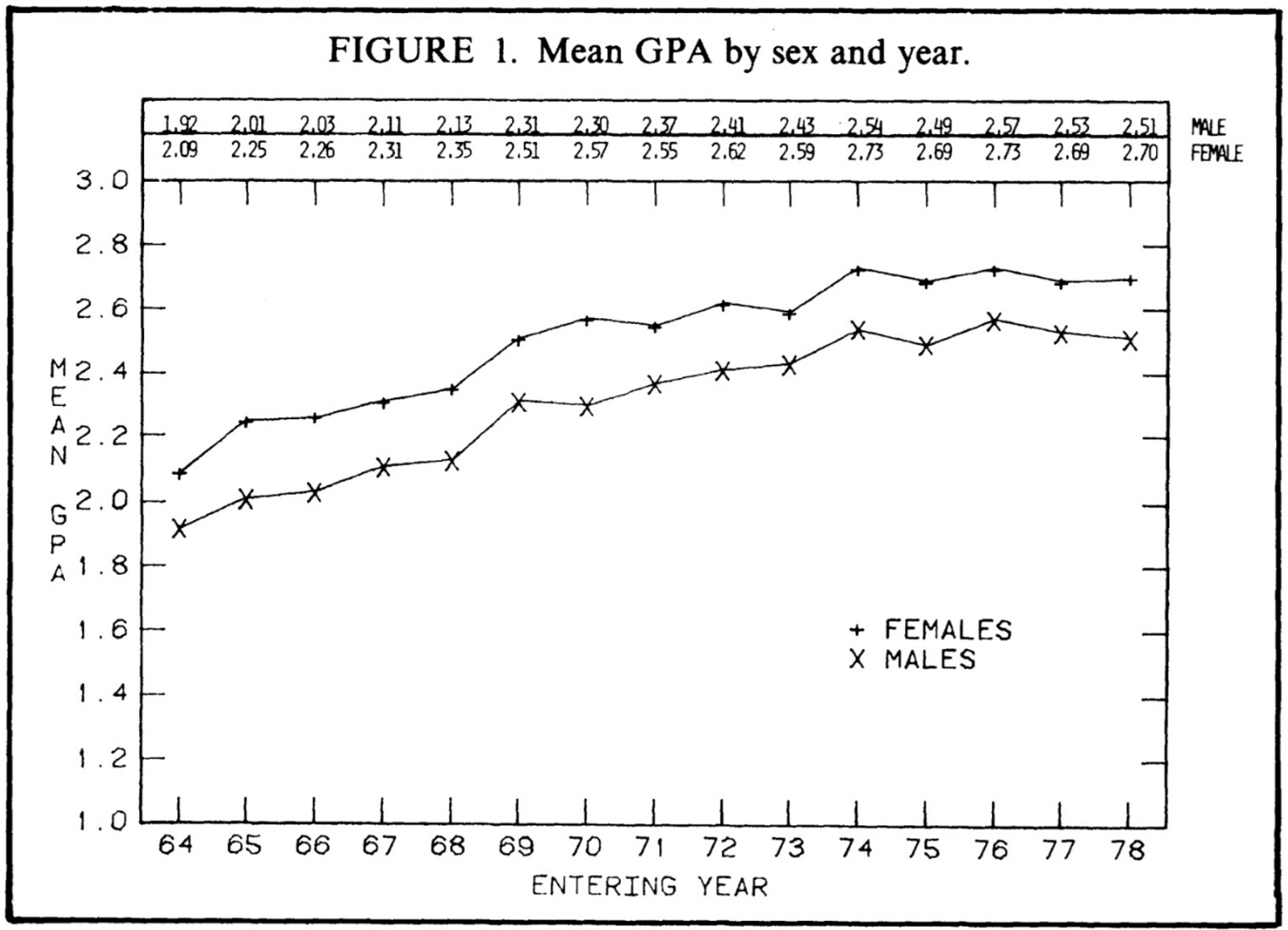
We aren’t going back to an age when the average high school GPA was 2.0 (see Figure 1), just as we aren’t going back to an economy where a vending machine Coke costs a dime. As long as we preserve the current A-to-F grading scale, probably the best we can hope for is to reinstitute the norms that were in place in recent memory, such as immediately prior to the pandemic, and hold the line thereafter.

Figure 1. Mean GPA of students taking the SAT in the 1960s and 1970s, by sex and year.

1

Source: Bejar, Isaac I., and Edwin O. Blew. “Grade inflation and the validity of the Scholastic Aptitude Test.” American Educational Research Journal 18, no. 2 (1981): 143–156.

To keep grade inflation within bounds, policymakers and educators should rely on three principles:

1. Develop external checks on grades.

Grade inflation is often invisible, as it is only possible to observe when grades diverge from other measures of learning. Analysts can use a range of metrics—and can even conduct in-depth academic audits—but end-of-course exams are especially valuable as external checks. When students take external exams over the same content as a course, the results provide a more objective measure of their mastery of the material, enabling analyses that can help detect grade inflation that would otherwise go unnoticed.

2. Promote transparency in grading standards.

Once grading standards are identified, the information has to be put to use. Placing grades within their context, especially by comparing them with other measures of learning, generates new data that should be provided to parents, circulated among teachers, and in some cases, included on student transcripts.

3. Avoid inflationary grading reforms.

Reforming grading has been a hot topic in recent years. Employing rubrics for grading, implementing anonymous grading, and eliminating fluffy extra credit points are all promising reforms, and importantly, they neither raise nor lower students’ grades. (Eliminating some extra credit probably raises academic standards.) These particular grading reforms stand in contrast to more controversial ones, such as eliminating penalties for late work, arbitrarily assigning grades of 50 in place of zeros, and removing all deadlines. The latter practices all weaken student accountability and further fuel grade inflation.

—

Grade inflation may seem like an abstract challenge, one that is far-removed from the question of how to best operate effective schools. In fact, grading policies influence the signals grades communicate and thus the environment in which teachers teach and students study, shaping their behavior and relationships. By utilizing external assessments, increasing transparency, and supporting reforms that preserve the rigor of grading standards, we can stabilize the value of letter grades and ensure that their meaning is clear to all stakeholders.

view
Kamala Harris

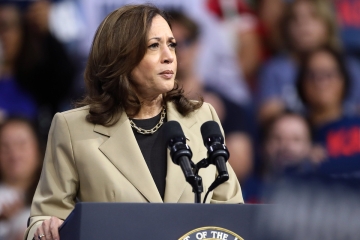
What would a Harris presidency mean for education? Nobody knows, but we can hope for a return to ed reform.

Michael J. Petrilli
10.17.2024
Flypaper

Predicting the future is often compared to reading tea leaves. In the case of forecasting what education policies Vice President Kamala Harris might pursue as president, though, a more apt analogy might be reading her mind. Frankly it’s anyone’s guess what her education policies would be, given how few clues we have.

It wasn’t always this way. Most recent presidential candidates laid out detailed plans for schools, dating back at least to Kennedy and Johnson. George H. W. Bush wanted to be the education president. Bill Clinton wanted to use stronger schools to build a bridge to the twenty-first century. George W. Bush wanted to leave no child behind and move the Republican party in a more compassionate direction. Barack Obama wanted Democrats to break with teachers unions by embracing merit pay. Each of them amplified these slogans with various plans and proposals.

But in more recent cycles, education has dropped from the list of voters’ top-tier issues, and candidates have become increasingly cagey about their plans.

Donald Trump’s administration was known for its advocacy of school choice, but that wasn’t something he talked much about on the campaign trail in 2015 or 2016. It only came into focus with his selection of Betsy DeVos as secretary of education.

And Joe Biden’s unwillingness to challenge progressive orthodoxy on education would have been hard to predict, given his moderate persona in 2019 and 2020. What turned out to be the best guide to his education policies was his self-identity as the “most union-friendly president in history”—plus the membership of his wife, community college professor Jill Biden, in the National Education Association.

So here we are with another election in which education issues are barely registering, trying to predict what Harris might do if elected. She has said even less than Trump or Biden, partly because of the truncated nature of her campaign, and partly because of her strategy of leaning into positive vibes and declining to offer policy specifics in the hope that doing so will better her chances of prevailing in November. Official statements—a Harris campaign policy document and the Democratic Party Platform—are thin on details.

Making things even harder is Harris’s well-known willingness to run away from previous positions. She did that in 2019 when the Black Lives Matter movement made it awkward for her to embrace her record in law enforcement—including her tough stance on prosecuting parents of truant children.

That’s why looking at Harris’s statements from the campaign trail five years ago or her record as a U.S. senator only goes so far.

What we do know is this: She’s the sitting vice president. She has positioned herself in the middle of the Democratic Party, not wanting to break with progressives on the left or business-friendly centrists in the middle.

And while her image is not blue-collar like Biden’s, she’s been careful not to put any sunlight between herself and the unions, including teachers unions. One of her first speeches as the presumptive Democratic nominee was to the American Federation of Teachers, the very first union to endorse her.

For these reasons, it is likely that a Harris administration would bring significant continuity with Biden’s policies, including on schools.

Picture her appointing a former teacher as secretary of education, proposing healthy increases in school spending, and speaking out against privatization, book bans, and the like. Call it the Hippocratic Oath approach to Democratic policymaking on education: First, do no harm.

Can those of us involved in K–12 education hope for bolder strokes from a President Harris—including some that might move the needle on reform? Of course one can hope.

Her selection of Minnesota Governor Tim Walz as her running mate thrust the issue of universal free school meals onto the national radar, given Minnesota’s leadership on that policy. Perhaps she will throw her support behind a congressional effort to provide federal funding for such an initiative.

The most significant play we might anticipate, though, could be on teacher pay. Boosting teacher salaries by $13,500 per year (to close the gap with other professionals) was the centerpiece of her education agenda when she ran for president in 2019.

It’s a popular idea, especially since so many Americans underestimate what teachers are paid today.

She has a ready vehicle to pursue it, thanks to the looming expiration of Trump’s 2017 tax cuts, which makes new legislation around tax reform a must-pass item for Congress next year. The most straightforward way for the federal government to put more money into teachers’ pockets isn’t through a complicated grant program to states and districts, but via tax credits that would flow directly to educators.

The tax code already allows teachers to deduct up to $300 for classroom expenses. There are also several student loan forgiveness programs for teachers.

A major teacher tax credit could quickly get expensive, however, given the size of America’s teaching force (3 to 4 million depending on how you count it). At, say, $10,000 per teacher, that’s $30 to $40 billion a year—in the neighborhood of what we spend on Title I and IDEA combined.

A smarter, more affordable approach would be to target teachers serving in high-need schools — as the student loan forgiveness programs already do. Studies from Dallas and elsewhere acknowledge that great teachers will move to high-poverty schools—but only if offered significantly higher pay—in the neighborhood of $10,000 more per year.

We also know that when we pay teachers the same regardless of where they teach—the policy of almost every school district in the country—the neediest schools end up with the least-experienced teachers.

A tax credit for teachers in Title I schools—which get government funding for having high numbers or high percentages of students from low-income families—could transform the profession overnight, significantly narrowing the teacher quality gap, school funding gap, and perhaps, the achievement gap, too.

Given Democrats’ interest in boosting the “care economy,” perhaps such a tax credit could flow to instructors in high-poverty childcare and pre-K centers, as well. This would fit well with Harris’s promise to move America toward an “opportunity economy,” including by boosting the pay of childcare and preschool teachers.

Here’s the best news: Senator Cory Booker has already written a well-designed bill to create precisely this sort of teacher tax credit, with most of the benefits flowing to teachers in the highest-poverty district and charter schools. When the tax reform sausage is being made next year, this bill should be thrown into the mix.

Still, a big effort on “differential pay” for teachers might be just one wonk’s wish-casting. We’ve had two presidential administrations in a row with little action on K–12 education. It’s quite likely that a Harris administration would be a third.

But here’s hoping for a pleasant surprise after November.

Editor’s note: This was first published by The Hechinger Report.

view
College graduate

The American dream is still in reach for young people

Ian Rowe
10.17.2024
Flypaper

The American dream is still alive and can be achieved in just one generation, even among the most economically disadvantaged young people. That finding is among the most promising takeaways from new research produced by Harvard University’s Raj Chetty and his collaborators. These analysts studied economic outcomes for 57 million children born between 1978 and 1992, whose income was then measured in adulthood at age twenty-seven, from 2005 to 2019, and found gains across racial lines.

“Earnings increased for Black children at all parental income levels, reducing white-Black earnings gaps for children from low-income families by 30%,” say the paper’s authors. It is encouraging that the Black-white gap in upward mobility shrank so significantly in just the past fifteen years, even though overall racial gaps remain.

While a person’s race matters increasingly less, there are community level characteristics whose absence or presence more directly drive individual prospects of upward or downward mobility. Indeed, this study finds a neighborhood–level factor that principally drives access to the American dream.

Lead researcher Benjamin Goldman explained at a Brookings Institution presentation: “In economics, there is something called a one-factor model where…a single variable seems to fully explain why outcomes have changed differently for different race and class groups over the last fifteen years.”

That single variable? The rate of working parents in a given community.

Communities that experienced increases in parental employment had the largest increases in household income for children when they reached age twenty-seven, regardless of the employment status of a parent in an individual child’s household.

This is a substantial finding, but not entirely new. Sociologist William Julius Wilson showed in two of his seminal books, “The Declining Significance of Race” and “When Work Disappears: The World of the New Urban Poor,” that unemployment levels within a given community far outweigh race as a determining factor for mobility. In his view, fewer adults in the labor force is a catalyst for many of the social ills that further deteriorate economic opportunity for children.

In 1996, Wilson wrote in “When Work Disappears,” “Many of today’s problems…crime, family dissolution, welfare, low levels of social organization, and so on…are fundamentally a consequence of the disappearance of work.” While Wilson emphasized the devastating impact of joblessness in a community, Chetty’s 2024 study highlights the positive corollary: the constructive effect that low unemployment rates in a particular community have for young people growing up there.

Robert Doar, president of the American Enterprise Institute, highlighted one of the study’s implications on crafting social welfare policy: “There is a real significance to (adult) employment in the community, for kids, for their future upward mobility.... That importance would make you skeptical of cash benefits that don’t have a work connection.”

In other words, policymakers should deemphasize cash transfer programs that provide public dollars directly to individuals, unconditionally. These “no-strings-attached” programs often have the behavioral effect of discouraging work. Instead, pursue programs that require labor force participation in order to receive benefits.

While the study reaffirms that high levels of parental employment in the community is a huge factor in determining future economic mobility for children, there are other forces at play, too. Positive changes in a community’s marriage rate are additionally correlated to greater earnings power for children who grew up in the community, regardless of the marital status of an individual child’s household.

This is also a substantial finding, and also not entirely new. Chetty’s 2024 insights on the correlation between neighborhood marriage rates and prospects for economic advancement echo those found in his 2014 study entitled “Where is the Land of Opportunity?”

The study described the United States as a “collection of societies, some of which are ‘lands of opportunity’ with high rates of mobility across generations, and others that experience persistent inequality, places in which few children escape poverty.” Among the findings was that “the strongest predictors of upward mobility are measures of family structure such as the fraction of single parents in the area.”

Knowing that high rates of work and marriage among adults likely drives upward mobility for children, what should we do? Mandating work requirements in order to receive government benefits is an effective lever that can be deployed today to incentivize greater adult employment, especially in communities where parents’ employment rates are low. But increasing marriage rates is far trickier and out of reach for most public policy, especially for adults who are already struggling.

But what of the rising generation? Young people today are turning away from marriage and subsequent family formation as a formal life course. According to a 2023 Pew Research Survey, among all adults ages eighteen to thirty-four, only 20 percent say being married is extremely or very important for people to live a fulfilling life, and only 22 percent say having children is extremely or very important. These attitudes have played out in practice: America and other nations continue to experience plummeting birth rates and marriage rates.

Moreover, a growing mass of able-bodied young men, and some young women, are simply opting out of the labor force, as my American Enterprise Institute colleague Nicholas Eberstadt has discovered.

Unless these trends are reversed, a generation from now, we will have recreated the same types of low-work, low-marriage-rate conditions in communities that “experience persistent inequality, places in which few children escape poverty.”

It does not have to be this way.

Young people between the ages of fourteen and twenty-four, during what I call the “Deciding Decade,” are making critical decisions about relationships, work, family formation, education, faith and more. The choices made during this timeframe, while not completely determinative, will have huge influence over a child’s life trajectory of happiness, economic outcomes, and ultimate fulfillment—where one chooses to go to school and how hard they work, what job they seek, what friendships they pursue, who they fall in love with, what religious faith they choose to practice or not, and so forth.

The more these choices are made with conscious volition, the greater the likelihood young people will lead self-determined lives of meaning and purpose. Three policy areas could facilitate these outcomes.

First, we should be advocating for more educational freedom, which encompasses school choice like public charter schools and the types of vouchers, tuition tax credits, and educational savings accounts that can be used by parents to access private or parochial schools and craft customized educational experiences for their children.

Second, students—particularly in high school—should be disabused of the notion that college is the only immediate option after high school. The model of secondary school education should be expanded to include work/study apprenticeship-type models that allow students in their junior and senior years to earn industry credentials in skilled trades like carpentry, welding, or electrical, or pursue high-growth careers that don’t necessarily require a college degree, like entry-level opportunities in health care or computer science.

Finally, to shift attitudes and enhance the attractiveness of marriage, schools should integrate curricula that encourages students to develop healthy relationships and make key life decisions based on the data associated with research often referred to as the “Success Sequence”—that 97 percent of millennials who have completed their education, secured full-time work, gotten married, and then had children (in that order) avoid poverty and positively enter the middle class or beyond.

To reiterate: Reports of the death of the American dream have been greatly exaggerated. But keeping it alive requires policymakers and elected officials to be more hard-nosed about demanding work today in return for public benefits, while also using the bully pulpit to shift the rising generation’s attitudes toward marriage and family formation tomorrow.

Rebuilding opportunity is a national challenge, but change happens locally. It requires buy-in from institutions, including families, schools, houses of worship, civil society organizations, and businesses to support local solutions, particularly around strengthening work and marriage.

The good news, according to this study, is that breaking the intergenerational cycle of poverty is achievable within the span of just fifteen years, less than one generation. Rather than being told systems are rigged for failure, young people—especially those that are struggling—should know that their lives can be their own.

Editor's note: This was first published by Deseret News. 

view
Fordham Gadfly image

Cheers and Jeers: October 17, 2024

The Education Gadfly
10.17.2024
Flypaper

Cheers

  • New reports show that charter schools reduce academic inequality and raise the overall quality of public schools—and that opening more of them will continue this virtuous improvement cycle. —Bruno V. Manno, Forbes
  • A Progressive Policy Institute study reveals that “cities with high charter school enrollment have consistently improved achievement for low-income students” in both charters and traditional public schools. —Reason

Jeers

  • A local Democratic Party leader in New Jersey secured two public school jobs while serving time for federal tax fraud, underscoring persistent concerns about corruption in the state. —New York Times
  • Nevada’s new AI system for identifying at-risk students has dramatically decreased the number of students identified, leading to funding cuts and ethical questions over who deserves additional support. —The New York Times
  • Arizona offers school vouchers for all—but barriers such as the additional costs of transportation, tuition, and meals are discouraging many low-income families from using them. —Eli Hager and Lucas Waldron, ProPublica
view
Fordham Gadfly image

What we're reading this week: October 17, 2024

The Education Gadfly
10.17.2024
Flypaper
  • The rapid growth of higher education in developing nations has led to a mismatch between the number of graduates and available jobs, contributing to high rates of unemployment and illegal migration within the college-educated population.  —Jon Emont, Wall Street Journal
  • A new study suggests that charter school expansion and abuse scandals have led to the decline of Catholic schools in recent decades. Could ESAs put a stop to this trend? —The 74
  • The control variables typically included in observational studies are not enough to account for the complex factors that motivate human choice, suggesting that causal claims made in such studies may be unreliable. —Emily Oster, Parent Data
  • Trump’s vision for education, which includes both closing the Department of Education and expanding the federal role to review curricula for “wokeness,” is contradictory and difficult to implement. Harris’s is too vague, with few specifics and a focus instead on attacking Trump’s plan. —Laura Meckler, The Washington Post
view

#942: The case for supply-side policies in career and technical education, with David Deming

10.16.2024
Podcast
 

On this week’s Education Gadfly Show podcast, David Deming, a professor of Political Economy at the Harvard Kennedy School, joins Mike and David to discuss his article in The Atlantic arguing that it’s not enough for governments and the private sector to eliminate college-degree requirement for good-paying jobs. Then, on the Research Minute, Amber shares a study investigating the “fade-out effect” in early childhood education programs.

Recommended content:

  • “We need supply-side education policy” —David Deming
  • “The vibes for career-tech programs are great. But they’re too rare.” —Michael J. Petrilli
  • “What Kamala Harris should do on education and training” —Bruno V. Manno
  • John A. List and Haruka Uchida, Here Today, Gone Tomorrow? Toward an Understanding of Fade-out in Early Childhood Education Programs, NBER (2024)

Feedback Welcome: Have ideas for improving our podcast? Send them to Stephanie Distler at [email protected].

Fordham Logo

© 2026 The Thomas B. Fordham Institute
Privacy Policy
Usage Agreement

National

P.O. Box 110
Burke, VA 22009

202.223.5452

[email protected]

Ohio

P.O. Box 82291
Columbus, OH 43202

614.223.1580

[email protected]

Sponsorship

130 West Second Street, Suite 410
Dayton, Ohio 45402

937.227.3368

[email protected]