Mobile Navigation

  • National
    • Policy
      • High Expectations
      • Quality Choices
      • Personalized Pathways
    • Research
    • Commentary
      • Gadfly Newsletter
      • Flypaper Blog
    • Events
    • Scholars Program
  • Ohio
    • Policy
      • Priorities
      • Media & Testimony
    • Research
    • Commentary
      • Ohio Education Gadfly Biweekly
      • Ohio Gadfly Daily
  • Charter Authorizing
    • Application
    • Sponsored Schools
    • Resources
  • About
    • Mission
    • Board
    • Staff
    • Career
Home
Home
Advancing Educational Excellence

Main Navigation

  • National
  • Ohio
  • Charter Authorizing
  • About

National Menu

  • Topics
    • Accountability & Testing
    • Advanced Education
    • Career & Technical Education
    • Charter Schools
    • Curriculum & Instruction
    • ESSA
    • Evidence-Based Learning
    • Facilities
    • Governance
    • Personalized Learning
    • Private School Choice
    • School Finance
    • Standards
    • Teachers & School Leaders
    • Think Again
  • Research
  • Commentary
    • Gadfly Newsletter
    • Flypaper Blog
    • Gadfly Podcast
  • Events
  • Scholars Program

The Education Gadfly Weekly

Sign Up to Receive Fordham Updates

We'll send you quality research, commentary, analysis, and news on the education issues you care about.
Thank you for signing up!
Please check your email to confirm the subscription.

The Education Gadfly Weekly: Ed reformers should rally around the Romney family aid plan

Volume 22, Number 30
7.21.2022
7.21.2022

The Education Gadfly Weekly: Ed reformers should rally around the Romney family aid plan

Volume 22, Number 30
view
High Expectations

Ed reformers should rally around the Romney family aid plan

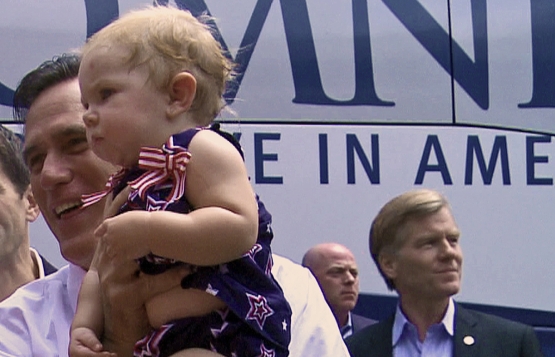
A major, though largely unnoticed, development in America’s support for families with children is the recent release of the “Family Security Act 2.0” by Senator Mitt Romney, along with fellow Republicans Richard Burr and Steve Daines. It could and should serve as the starting point for bipartisan negotiations for a new federal investment in families that might stand the test of time.

Michael J. Petrilli 7.21.2022
NationalFlypaper

Ed reformers should rally around the Romney family aid plan

Michael J. Petrilli
7.21.2022
Flypaper

The American family is still coming apart

Kay Hymowitz
7.21.2022
Flypaper

In a time of crisis, Catholic schools offered a choice, not an echo

Kathleen Porter-Magee
7.21.2022
Flypaper

The bravest man in education reform

Robert Pondiscio
7.21.2022
Flypaper

Chatbot nudges boost student outcomes

Amber M. Northern, Ph.D.
7.21.2022
Flypaper

The Education Gadfly Show #829: Is there a future for standards-based reform?

7.19.2022
Podcast

Cheers and Jeers: July 21, 2022

The Education Gadfly
7.21.2022
Flypaper

What we're reading this week: July 21, 2022

The Education Gadfly
7.21.2022
Flypaper
view

The American family is still coming apart

Kay Hymowitz 7.21.2022
Flypaper
view

In a time of crisis, Catholic schools offered a choice, not an echo

Kathleen Porter-Magee 7.21.2022
Flypaper
view

The bravest man in education reform

Robert Pondiscio 7.21.2022
Flypaper
view

Chatbot nudges boost student outcomes

Amber M. Northern, Ph.D. 7.21.2022
Flypaper
view

The Education Gadfly Show #829: Is there a future for standards-based reform?

Michael J. Petrilli, Michael Cohen, Laura Slover, Amber M. Northern, Ph.D. 7.19.2022
Podcast
view

Cheers and Jeers: July 21, 2022

The Education Gadfly 7.21.2022
Flypaper
view

What we're reading this week: July 21, 2022

The Education Gadfly 7.21.2022
Flypaper
view

Ed reformers should rally around the Romney family aid plan

Michael J. Petrilli
7.21.2022
Flypaper

It’s not news that we’re living through highly polarized times, though last month’s rulings from the Supreme Court certainly put some exclamation points on the fact. All the more reason to look for common ground where it can be found.

In that spirit, then, let us celebrate a major development in America’s support for families with children, one that has gone largely unnoticed in the world of education but should be seen as a potentially huge deal. Namely, the recent release of the “Family Security Act 2.0” by Senator Mitt Romney, along with fellow Republicans Richard Burr and Steve Daines—and the very kind reaction it’s receiving from large parts of the GOP coalition.

This bill is the clearest path back to something resembling the expanded child tax credit that was a cornerstone of President Joe Biden’s American Rescue Plan, and which pulled millions of children out of poverty for the year it was in existence. Romney’s plan could and should serve as the starting point for bipartisan negotiations for a new federal investment in families that might stand the test of time.

This edition of the Family Security Act would provide all but the wealthiest families with $350 per month per child under age six and $250 per month per school-age child, plus up to $2,800 per child during pregnancy. That adds up to real money; a family with two small children would be looking at an $8,400 annual supplement to their income.

Most conservatives like this plan more than Romney’s original one—or Biden’s expanded child tax credit—for a number of reasons. Most critically, families must earn at least $10,000 per year to qualify for its full benefits. That would somewhat lessen its impact on child poverty, because thousands of children live in homes where no parent earns any income at all. But to get enough Republicans on board to break a filibuster—not to mention Democrat Joe Manchin!—any family plan cannot resemble the cash welfare system that policymakers dismantled in the 1990s. That means a work requirement is a must.

The new Romney plan also eliminates the marriage penalties baked into existing tax credit programs—a big deal for social conservatives, who also like that aid begins before children are even born.

While progressives are balking at some of these details, they should cheer the bigger picture: the potential for historic, permanent support for families.

Why is this something that education reformers of all stripes should rally around? Simply put, a major investment in families has the potential to help millions of kids—especially poor and working-class children—come to school ready to learn. That, in turn, should result in higher achievement, and lower achievement gaps, for years to come.

Indeed, studies show the achievement gap is already very large when students enter elementary school because of vast differences in kids’ experiences between conception and kindergarten. Partly, that’s about money: Affluent parents (who are much more likely to be White and Asian) can afford the best prenatal and pediatric health care, excellent child care (including the ability for one parent to stay at home for the first years of a child’s life), and other services and amenities that can make a challenging time of life happier and less stressful.

Poor parents, on the other hand (who are much more likely to be Black and Hispanic, and to be raising their children alone), must struggle harder to meet their kids’ basic needs, and for many, the deck is stacked against them. Health care access has improved but is still tenuous; paid maternity leave is almost unheard of for low-wage workers; affordable child care is next to impossible; stress is ever-present. Extra help, in the form of monthly payments, can go a long way toward helping parents meet their kids’ needs and create a more stable environment.

No, money isn’t everything. Too many children in this country suffer because of neglect or abuse or because their parents struggle with addiction or other mental health challenges. To the extent that these issues are present more often in poor and working-class communities, extra money for families is not a panacea.

But as pediatric surgeon Dana Suskind argues in her new book, Parent Nation, a growing body of research indicates that, just as poverty can inhibit healthy brain development in infants and toddlers, financial assistance can help to overcome the challenges. Studies, for example, use cutting-edge technology to measure brain waves and the structure of the cerebral cortex can detect differences between one-year-olds based on their parents’ socioeconomic status. Other research has found that material deprivation can impact children’s language development, executive function, and memory. And as Chalkbeat’s Matt Barnum has argued convincingly, a raft of research shows positive impacts on educational outcomes from anti-poverty efforts, especially cash transfers to poor families.

The benefits of investing in children, especially in the early years, is hardly news, especially for committed progressives. It’s why the left has supported paid parental leave, generous child care subsidies, and universal pre-K—all elements in Biden’s ill-fated Build Back Better plan. The resistance has typically come from the right and center.

But education reformers from across the political spectrum should cheer Romney’s particular approach, given that its family allotment is in effect an uber-voucher. In the early years, before kids are in school, it can be used to make unpaid parental leave more feasible, quality child care more affordable, and preschool more doable. But rather than create complicated new federal, state, or local programs, it merely asks the government to write checks and trusts parents to figure out the rest. To school choice supporters, this ought to sound familiar.

For older children, on whose behalf the public already makes a huge investment in the form of K–12 education, the additional dollars can be used for a variety of extras that are adjacent to schooling—sports, arts, or music; tutoring and other academic supports; summer camp; even just books or internet access. It’s akin to the enrichment savings accounts some of us have envisioned, or the innovations in the out-of-school space that exploded during the pandemic.

That doesn’t mean neglecting the critical role that schools must play in boosting student achievement and other important outcomes. Especially in the wake of a horrific pandemic, the K–12 system must get its act together to address the massive learning loss apparent in communities nationwide and narrow achievement gaps that existed long before Covid-19.

But fixing our schools is a generational struggle, while asking Uncle Sam to provide critical help to families is straightforward and eminently attainable, even with today’s crazy politics. All who care about kids and education should set down their swords for a moment and join together to get the Romney Family Plan, or something like it, into law. Our children, and their children, will thank us.

Editor’s note: This article was first published by The 74.

view

The American family is still coming apart

Kay Hymowitz
7.21.2022
Flypaper

In 2004, the late Sara McLanahan published a landmark article called “Diverging Destinies: How Children Are Faring Under the Second Demographic Transition.” The paper was the first scholarly attempt to propose that the decline of the two-parent family in the United States since the 1960’s was intensifying the already unequal life chances for poor and more advantaged children. The insight encompasses an irony that continues to perplex social policy debates: Post 1960’s changes in the family which promised people—especially women—greater personal freedom and liberation from traditional constraints were making inequality worse.

Armed with another twenty years of data, Melissa Kearney, an economist at the University of Maryland, has now revisited the subject in “The ‘College Gap’ in Marriage and Children’s Family Structure,” a working paper recently published in NBER. Her primary findings won’t surprise anyone keeping track of the scholarship on families and children, but she is able to expand and refine our understanding of the trends that McLanahan saw were creating a dangerous disparity in national well-being—disparities that since then have grown and hardened into a seemingly intractable socioeconomic reality. 

McLanahan’s article, based on surveys from 1960 to 1990, showed that while most college-educated women continued to raise their children in two-parent homes, that was no longer the case for the least-educated women. A sharp rise in single motherhood among that latter group during those decades was limiting the future of children who were already at a social-economic disadvantage. A third group of what, for simplicity’s sake, we’ll call lower-middle-class women (those with a high school degree and perhaps a year or two of college) had a modest shift towards single motherhood but for the most part continued to marry and establish traditional two-parent families. Since that time, as Kearney demonstrates in her new paper, the lower-middle-class family has all but collapsed. While the children of the least- and highest-educated mothers continue to live in the same general family arrangements as they did in 1990, the percentage of their working-class peers growing up in two-parent families fell from 83 percent to 60 percent. They now resemble their poorer and least-advantaged sisters more than they do their college-educated peers. In this respect, Kearney’s paper adds to the considerable literature on the “hollowing of the middle class”; the middle class is dwindling while the ranks of the lower skilled and affluent grow further apart.

Taking advantage of a growing body of disaggregated data since “Diverging Destinies” was published—as well as a mounting interest in racial gaps—Kearney also delves into family differences between identity groups. At one end of the spectrum, a strong majority (77 percent) of White children and an even larger share of Asian children (88 percent) live with their married parents. In the middle are the 62 percent of Hispanic children living with their married parents, and at the low end are 38 percent of Black children (all 2019 numbers). The “college gap,” as the author calls it, holds for all four of the largest racial and ethnic groups, though there are notable differences between them. Black children are by far the least likely of the four groups to live with married parents, but they have a substantially better chance of doing so if their mother has a college degree: 60 percent of Black children with college-educated mothers have both parents in the house compared to a mere 30 percent for both the other Black education groups. Like the population as a whole, children of the lower-middle class in all identity groups saw the biggest decline in two-parent households between 1980 and 2019. This pattern holds for Asians, as well, but mothers of all education levels are far more likely to be married than mothers of other racial groups: 83 percent of the children of the least-educated Asian mothers, for instance, are living with their married parents, compared to 60 percent of White and Hispanic children and 30 percent of Black children. It’s a good guess this reflects the higher percentage of immigrants among the least-educated Asians, since immigrant parents are generally more likely to be married than American-born parents.  

It’s reasonable to infer from several findings in Kearney’s paper that poor and lower-middle-class children now experience less familial care and social support that extends well beyond nonresidential fathers. Unlike in 1980, when close to two-thirds (64 percent) of single mothers had been divorced, in 2019, a majority (52 percent) of unpartnered mothers, or what Europeans call “lone mothers,” have never married in the first place. That’s especially true for Black mothers; more than two-thirds (70 percent) of Black unpartnered mothers have always been single.

The distinction between divorced and never-married parents turns out to be highly consequential for children, since men who were never married to their child’s mother are less likely to pay child support and, perhaps even more importantly, to be actively engaged in their children’s lives. The only place where divorce remains the primary driver of single parenthood is among the college educated, a group already better resourced in other respects. In general, the share of both married and all partnered adults has declined. Many observers of American family life had assumed that, even if marriage was becoming less popular among adults of childbearing age, parents would live and raise their children together just as unmarried parents do in much of Western Europe. But Americans haven’t adopted the continental model. While cohabitation remains fairly common, more children live in single-mother households than with cohabiting parents here. Nor are extended kin likely to take the place of missing fathers: 67 percent of children living with an unpartnered mother have no other adult in the house. Also worth noting is that the shift from single motherhood predominantly due to divorce in the early decades of family decline to never-married single motherhood today likely signals an overall decline in male connection to family life.

So how do we explain the collapse of the lower-middle-class family since 1980? Kearney makes a strong case for the theory first proposed by William Julius Wilson in his seminal study of the 1980’s Black inner city, The Truly Disadvantaged. Wilson speculated that as industrial jobs moved from cities into truck-accessible industrial parks, they left behind a population of jobless, low-skilled men, many of them Black. With no earnings and no prospects for employment, these men were far from desirable mates; they were not, as Wilson put it, “marriageable.” Many poor women decided they were just as well off trying to manage on their own, with the help of government benefits and, with luck, better off family members. 

By 1980, a similar dynamic was changing the domestic calculations of working-class women. Lower-middle-class women were themselves taking jobs to compensate for the stagnating wages of their husbands. In the 1970’s, they earned only a small share of the family budget, but over the next decades their median paychecks grew, at least compared to their one-time breadwinning spouses. This was in contrast to college-educated women who continued to earn only about two-thirds of what their husbands did. As working-class men’s fortunes declined, women’s earnings were becoming as great as or even higher than their potential spouses. The household income of lower-middle-class, two-parent families has risen only 8 percent since 1980; among high school dropouts, married-couple incomes have actually declined. Kearney cites continuing evidence that even in the soulmate era, marriage remains an economic partnership, one that now fails to impress the lower-middle class. Women are reluctant to marry men who earn less than they do. No wonder that, in 2020, only 54 percent of men with a high school degree and 53 percent of men without one were married, or that marriage rates are lower in areas where women tend to earn more than men, widening both neighborhood and aggregate inequality.

Still, Kearney shows that, though the marriageable men theory offers a reasonable origin story for children’s disparate destinies, it’s missing a crucial part of the plot. In a 2018 paper, Kearney and co-author Riley Wilson looked at marriage and fertility trends in the 2000’s as the fracking boom flooded a number of de-industrialized areas with relatively high-paying jobs. The logic of the marriageable men thesis would predict that more men and women in those places would marry, and fewer babies would be born to single mothers. That’s not what happened. Yes, non-college-educated men had higher earnings, both in an absolute sense and relative to women. And yes, more babies were born where fracking improved the economic situation of childbearing adults. But marriage rates didn’t budge, while more children were born to single mothers. This is in sharp contrast to a coal boom in the 1970’s and 80’s. In that earlier case, when working-class men earned higher incomes, they got married and only then had children. It appears that in the 1970’s and early 80’s, marriage before children remained pretty much the expected norm among working-class couples, at least when men were well employed; by the 2000’s, that norm no longer held. Marriage has become irrelevant to lower-middle-class women’s decisions about childbearing. 

The most disturbing part of this is that, even in the lower-middle class, children growing up with married parents are more likely to go to college and earn a high income at age twenty-five—that is, to be upwardly mobile. For that to happen—and to see inequality and immobility decline across all classes—children will need something more than higher household spending. “Reversing the decline in married-parent families for children,” as Kearney concludes, “will likely require both economic and social changes.”

Editor’s note: This article was first published by the Institute for Family Studies.

view

In a time of crisis, Catholic schools offered a choice, not an echo

Kathleen Porter-Magee
7.21.2022
Flypaper

“New data suggest that the damage from shutting down schools has been worse than almost anyone expected,” the Economist tweeted recently to promote a new article in its pages that details the academic and social-emotional fallout caused by school shutdowns worldwide. While any spotlight on this cataclysm is welcome, the truth is that many people did expect these shutdowns to be terrible for students and their families. That’s why lots of parents and educators marshaled extraordinary leadership in a time of fear and uncertainty to reopen their schools after the initial Spring 2020 shutdown. And chief among these leaders were the principals and teachers in America’s Catholic schools.

What was it like to stand apart from the crowd in summer 2020 and insist that schools must re-open? For starters, it was scary. Now that the dust has settled, it’s easy to forget how much uncertainty there was two years ago, how little we knew, and how much reopening required a willingness to make hard decisions, guided as best we could at the time by science. It was by far the most challenging months I have experienced in more than twenty years working in schools.

It’s also easy to forget the harshness of the opposition that school leaders faced. Indeed, the preparation any school, district, network, or diocesan leader undertook as they worked to reopen in the fall of 2020 was done against the backdrop of a near constant drumbeat of attacks from teachers unions and their allies suggesting that reopening schools would be tantamount to murder.

In August 2020, for instance, the Washington Post’s Valerie Strauss published a piece highlighting a union-organized “national day of resistance” where “protesters carried fake coffins and gravestones as well as signs demanding schools stay closed until it is safe to reopen.” The Milwaukee Teachers Association tweeted to celebrate a “caravan” that pulled up to the statehouse to place “grave headstones for Health Secretary Andrea Palm to shut in-person schooling down until data says it’s safe.”

The sad truth is that these alarming protests worked, especially in blue America. Public schools in most big cities were effectively deterred from reopening on time for the 2020–21 school year. Union lobbying also helped district and charter schools secure more than one hundred billion dollars to pay for Covid-related health and safety upgrades, without any expectation that the schools would accelerate their reopening plans or even use the money to support anything related to reopening that year.

All the while, data continued to mount showing that children faced the lowest Covid-related health risks—and parents warned of the devastating impact that long-term and widespread closures were having on their children.

With that as a backdrop, it was nonpublic schools—Catholic schools chief among them—that led the way forward in reopening amidst uncertainty. Indeed, while just 43 percent of district schools and 34 percent of charter schools offered in-person learning in September 2020, fully 92 percent of Catholic schools offered in-person learning. To be sure, for charter schools housed in public school buildings, the decision to reopen may not have been theirs to make, yet the impact on families was the same. And the result was that many of the district schools and charter schools that were not open on the first day of the 2020–21 school year remained online for the bulk of the year, some not fully reopening until fall 2021.

While the impact of these Covid-related policy decisions on enrollment trends is still shaking out, emerging patterns suggest that more parents than ever are seeking alternatives. There has been a record-breaking increase in the number of families opting to homeschool their children during Covid. Educational innovations such as “microschools” and “learning pods” emerged as nontraditional options for families looking for alternatives to remote learning. And well-established enrollment patterns in public and Catholic schools appear to have shifted dramatically: After a decades-long decline, national Catholic school enrollment rebounded in 2021. By contrast, after a steady century-long increase, national public-school rosters took a nosedive, dropping by an estimated 3 percent between 2020 and 2021. While it remains to be seen whether enrollment trends will return to their old patterns, these shifts are noteworthy.[1]

In this environment, it’s unsurprising that parent demand for school choice—particularly private school choice—has soared. According to the results of a survey administered by RealClear Opinion Research, 72 percent of registered voters support school choice. This represents an increase of 8 percentage points since April 2020. Even more critically, support for school choice increased across the political spectrum. Among Republicans and Independents, such support rose by 7 percentage points to 82 percent and 67 percent, respectively. More remarkably, it increased by 9 percentage points among self-identified Democrats, from 59 to 68 percent.

In May 2021, Jeb Bush declared 2021 “the year of school choice” after “seven new school choice programs were created and twenty-one existing programs were expanded across eighteen states.” Then the push to expand parental choice continued into 2022, demonstrated most recently when Arizona Governor Ducey signed into law a bill that allows any student in the state to receive “$6,500 per year per child for private school, homeschooling, microschools, tutoring, or any other kinds of educational service that helps meet the needs of their students outside the traditional public school system.”

All of that likely contributed to the game-changing enrollment increase that Catholic schools enjoyed in 2021–22. As we detail in a recent Manhattan Institute issue brief, Catholic school enrollment in 2021 increased by 3.8 percent—the largest year-over-year increase that the sector has seen in two decades.

The news couldn’t have come at a more important time for a weary sector. Catholic school enrollment had been declining precipitously for decades and reached a nadir in the fall of 2020, when the sector saw the largest year-over-year decline in five decades.

Over the past two years, however, Catholic schools—which have been overshadowed in the education-reform debates for much of the past two decades—showed real strength of leadership by standing apart from the conventional wisdom at a time when children and communities had few options. This leadership in a moment of crisis has also underscored the importance of a diverse school ecosystem to our nation, particularly in challenging times when it’s more important than ever to put the needs of students and their families first.


[1] “Nation’s Public School Enrollment Dropped 3 Percent in 2020-21,” National Center for Education Statistics, June 28, 2021.

view

The bravest man in education reform

Robert Pondiscio
7.21.2022
Flypaper

A few years ago, when I was writing my book about Success Academy and school choice, I had a moment of self-doubt bordering on despair. There’s a several-page passage in the book about Ian Rowe, who at the time was running New York’s Public Prep charter school network and bravely advancing an argument that was making him unpopular in education reform circles: Students’ personal choices matter. And so do the choices made by the education reform movement, which was steadfastly unwilling to address or even acknowledge the role that family structure and stability plays in students’ life outcomes. If a child in poverty graduates from high school, finds full-time employment, gets married, and has children, in that order, Rowe tirelessly pointed out—citing a pattern well-established in social science that’s often referred to as the “Success Sequence”—the chance they will remain in poverty as an adult drops to a mere 2 percent. “There is no public policy that comes even close to those kinds of results,” he told me at the time.

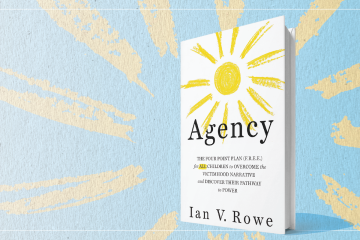
My despair was simply the depressing thought that I was writing the wrong book. I should have been writing about Ian Rowe. His inspiring personal story and the data he marshalled in support of nurturing students’ sense of agency deserved a full and fair hearing. So, too, his unsparing critique of those who make assumptions about group identity and ability while ignoring differences in attitudes and behaviors. That burden has been lifted because Rowe has put between the covers of his own new book, Agency, the vision he has been offering for years at education conferences, in op-eds, and interviews. He writes that agency is “not free will alone.” Rather it is “the force of free will when it is governed by morally discerned choice that dictate its eventual impact.” This message has taken on even greater urgency because education thought and practice have largely embraced exactly the opposite notion, which Rowe characterizes as “a bleak vision of individual powerlessness against insurmountable historic and systemic forces.”

In the book, Rowe tells the story that captivated me years ago. Touring the South Bronx with Public Prep staff, they happened upon a mobile DNA testing center with the words “Who’s Your Daddy?” written on the side. The truck and the demand for its services underscored for Rowe “the dysfunctional cycle of single young women who get pregnant, become parents too early and unprepared, typically are abandoned or under-supported by their equally unready male counterparts, and then witness their young children repeat the same behavior.” The blithe acceptance of this dysfunction as illustrated by the truck’s presence “challenged me to be brutally honest about what was required to empower kids to become masters of their own fate,” Rowe writes.

Digging further into data on family structure and its effects on education and life outcomes put Rowe “on a path of no return.” His conclusion in brief is that the famous Great Society–era Coleman Report basically had it right: Schools “bring little influence to bear on a child’s achievement that is independent of his background and general social context.” Rowe became a tireless promoter of the Success Sequence, based on groundbreaking research by economists Isabel Sawhill and Ron Haskins.

Rowe reasoned that the data on the Success Sequence were simply too compelling to ignore and not to share with students. Schools counsel students about drinking and drug use, birth control and safe sex; surely sharing data on the consequences of unintended, early, or out-of-wedlock births could only have a positive impact on student decision-making. And just as surely, data-driven education reformers, particularly those who adhered to the Success Sequence in their personal lives (and who would be gravely disappointed if their own children failed to follow suit), would eagerly see the wisdom of shouting such life-changing information from the rooftops, and...

Suffice to say that Rowe swiftly discovered the limits of ed reform’s appetite for courageous conversation and data-driven decision-making. A Harvard Business School colleague condescendingly told him that, as the child of immigrants, he couldn’t understand and didn’t live with “the consequences of slavery,” as if the world asked his immigration status before deciding whether to discriminate against him. Education Post’s Chris Stewart, whose racially charged writings and podcast largely promote the victimhood narrative that Rowe eschews, has made him a target of continued abuse and scorn. “Conservatives find the Blacks who say exactly what they want them to say,” he tweeted. Heterodox Black thinkers like Rowe “exist solely to scold Black people of behalf of white people.”

Ian is my colleague at the American Enterprise Institute, a Fordham Institute board member, and a friend, so my views are not dispassionate. But I have long considered him to be the bravest man in education reform precisely for his ability to remain genially unflappable and steadfastly committed to his advocacy in the face of these kinds of these kinds of intemperate condemnations from critics who are ideologically committed to the view that structural barriers are far more decisive for kids in determining their educational and life outcomes than their personal habits and choices.

But those who would unthinkingly dismiss Rowe as promoting mere “pick yourself up by your bootstraps” Babbitry, or who believe that merely to acknowledge what research tells us about family structure is to shame single-parents, will have to recalibrate their rejoinders after seeing the minimal patience Rowe displays with such reductive thinking. “One can simultaneously call for personal responsibility and grit while also acknowledging the shortfall of blame-the-victim thinking,” which fails to account for the failure of institutions that leave young people poorly equipped with the “knowledge, skills, and moral code necessary to embark on a self-sufficient life,” he writes. Rowe’s principal theme is the need to restore the mediating institutions that build and reward agency: family, religion, education, and entrepreneurship, or “FREE.” Rowe is clear and emphatic that young people cannot go it alone. “They need our help and guidance. FREE institutions must embrace them.”

Rowe says he wrote Agency “to help a rising generation realize that they have the power to shape their own destiny, even in the face of life’s inevitable obstacles.” But the book deserves and will likely find an even more eager audience among those of us in education who know in our bones that the victimhood narrative Rowe deftly dismantles is nihilistic, separatist, and simply untrue. Too often, he writes, “young people’s efforts to develop agency are thwarted, sometimes tragically, by the very people and institutions with the power and moral responsibility to propel their lives forward.” This is an emphatic rebuke to failure-fetishists in education, particularly those whose gospel preaches “a bleak vision of individual powerlessness against insurmountable and systemic forces.”

He’s right, and you know he’s right. Rowe urges us to be “unintimidated and unsilenced. We know what’s best for all kids,” he says, “and we know what works.” In seeking to inspire young people, Agency instead inspires those of us set out to nurture and guide them, but who have fallen, morally exhausted, into the foolish and easy comforts of blame and low expectations. Ian Rowe is calling on us to rediscover our own sense of agency, and in doing so, to help young people discover theirs.

view

Chatbot nudges boost student outcomes

Amber M. Northern, Ph.D.
7.21.2022
Flypaper

“Nudges” to induce specific actions take many forms in education. For example: advertising about state aid to boost college enrollment, personalizing data to urge students to choose higher-quality colleges, targeting feedback on test performance to increase future scores, and offering small financial rewards to complete a series of tasks related to college applications. Impacts tend to be slightly positive, but the cost and administration of the interventions can outweigh their utility. Text-message-based nudges in particular hold much promise, especially if they can be automated and personalized to a degree. A recent working paper looks at a randomized control trial of “chatbots” to improve course performance in college, and it finds mostly encouraging results.

The study took place at Georgia State University (GSU) in an Introduction to American Government course, a high-enrollment course required for graduation. A full-time faculty member teaches each section of the course, and approximately 60 percent of GSU students attend sections that are online and asynchronous. In fall 2021, the researchers randomized over 500 students enrolled in the online version of the course to treatment or control groups. All received standard communications from the course instructor about upcoming due dates and suggestions to meet with the professor when they failed to turn in an assignment or exam. But students in the treatment group also received messages from the course-specific chatbot known as “POLS Pounce,” sibling to the GSU system-wide main bot (“Pounce,” named after the school mascot) that reminds all students of administrative matters.

POLS Pounce sent two to three customized messages each week via text, nudging treatment students to complete late assignments and inviting them to engage with the bot with questions. It also provided students with estimates on the time that each assignment would take so they could plan ahead, and encouraged them to do very specific tasks towards completion of the larger assignment each week. Messages included the student’s name and customized the communication based on what they did or didn’t turn in. Importantly, the teaching assistant for the course answered any questions the same day for anything that the AI technology was not programmed to address.

Analysts found that the academic chatbot significantly shifted students’ final grades, increasing the likelihood of receiving a course grade of B or higher by 8 percentage points relative to the control group. They also found large and significant treatment effects for first-generation students, as the intervention increased their final course grades by about 11 points on a 100-point scale (and a 16-percentage-point increase in earning grades of B or higher), as well as their completion of and performance on individual course deliverables, such as activities and exams. For instance, first-generation students were 13–15 percentage points more likely to submit their online exams on time and spent, on average, more than ninety additional minutes reading their digital textbook throughout the semester than did their control group peers. Analysts also saw a 10-percentage-point increase in earning a B among Black students. Finally, 77 percent of students reported that POLS Pounce was at least somewhat useful to their studies, and 92 percent recommended using it in the course again. Researchers also found that the students did not perform any worse in other classes due to increased time spent in the focal government course.

Analysts hypothesize that the chatbot was of particular help because it broke down course deliverables into definable tasks and urged students to address those tasks each week—as well as estimating how much time they would need to complete them. Research has shown that time management skills are crucial for academic success in college and could have been especially helpful to first-generation students who might not have gotten advice from their families about college study habits. Also a plus: the assurance of human help if the chatbot couldn’t address the students’ questions or concerns. We’re told that POLS Pounce is a low-cost nudge, but estimated expenses are not provided.

Clearly text reminders make sense in college, but since phones have become ubiquitous among thirteen- to seventeen-year-olds, as well, we should ponder nudging kids in middle and high schools, too. After all, they’ll be looking at their phones anyway!

SOURCE: Katharine Meyer et al., “Let’s Chat: Chatbot Nudging for Improved Course Performance,” working paper from Annenberg Institute at Brown University (April 2022).

view

The Education Gadfly Show #829: Is there a future for standards-based reform?

7.19.2022
Podcast

On this week’s Education Gadfly Show podcast, Mike Cohen, former president of Achieve, and Laura Slover, CEO of CenterPoint Education Solutions, join Mike Petrilli to discuss their paper on the future of standards-based school reform, as well as Chester Finn’s and Dale Chu’s responses to it. Then, on the Research Minute, Amber Northern reviews a study on how different concentrations in high school career-technical programs affect participants’ college majors.

Recommended Content:

  • Michael Cohen and Laura Slover’s FutureEd paper, “Unfinished Agenda: The Future of Standards-Based School Reform,” released June 2022.
  • Chester E. Finn, Jr.’s critique of Cohen and Slover’s article: “Can we revise standards-based reform?”
  • Dale Chu’s review: “Relinquishment or instructional coherence: What’s the right goal for districts?”
  • Zeyu Xu and Ben Backes, “Linkage Between Fields of Concentration in High School Career-Technical Education and College Majors,” CALDER (July 2022).

Feedback Welcome!

Have ideas on our podcast? Send them to our podcast producers Pedro Enamorado and Lilly Sibel at [email protected] and [email protected].

view

Cheers and Jeers: July 21, 2022

The Education Gadfly
7.21.2022
Flypaper

Cheers

  • Tennessee can finally launch its private school voucher program two years after it was blocked by a court order. —Chalkbeat Tennessee
  • “To expand NYC’s ‘gifted’ programs, one nonprofit turns to after-school.” —Chalkbeat New York
  • Charter schools won their campaign to prevent the U.S. Department of Education from making burdensome changes to the federal Charter School Program. —Wall Street Journal
     

Jeers

  • “The Kremlin is promising teachers big money to ‘prepare schools’ in Ukrainian regions its forces now occupy.” —Washington Post
view

What we're reading this week: July 21, 2022

The Education Gadfly
7.21.2022
Flypaper
  • Post-pandemic confidence in public schools has plummeted, especially among Republicans. —Gallup
  • Asian Americans’ academic success is not a problem. Are White parents pushing against standardized tests just anxious about their children getting out-competed? —Jay Caspian Kang
  • “Parent activist groups, many led by women of color, emerge as a significant new force nationwide.” —Education Next
  • A discrimination lawsuit will cost New York City $1.8 billion after a court ruled that its teacher licensing test was biased against Black and Hispanic teachers without being an indicator of performance. —Wall Street Journal
  • “Voters want Republicans and Democrats to talk about learning recovery, not culture wars.” —Education Week
Fordham Logo

© 2026 The Thomas B. Fordham Institute
Privacy Policy
Usage Agreement

National

P.O. Box 110
Burke, VA 22009

202.223.5452

[email protected]

Ohio

P.O. Box 82291
Columbus, OH 43202

614.223.1580

[email protected]

Sponsorship

130 West Second Street, Suite 410
Dayton, Ohio 45402

937.227.3368

[email protected]