With Iowa and New Hampshire in the rearview mirror, the original field of nearly thirty Democratic presidential candidates has now been winnowed down to eight. Six of them will face off on the debate stage this evening in Las Vegas. On the de minimis issue of K–12 education, there appears to be more similarities than differences among those left standing. From the banal (eliminating testing and charters) to the nonsensical (“fire” Betsy DeVos!), the remaining contestants continue to puff out their chest feathers as part of a performative dance to woo the coveted endorsement of the teachers unions. It’s a shameless spectacle that promises to persist as we race toward Super Tuesday.
In light of Joe Biden’s dismal, possibly fatal, showing in the first two states, one can’t help but think what might have been had the former vice president sat out this campaign, leaving some oxygen in the room for other mainstream candidates like Cory Booker or Michael Bennet who deserved a closer look in no small part because of their strong education records. In an exasperated, expletive-laden rant about the party’s prospects, veteran Democratic strategist James Carville described both as “serious and professional” people who could have delivered a winning message if Biden hadn’t blocked their ascent.
Along with Andrew Yang, Booker and Bennet were in my mind the most interesting education candidates. I didn’t agree with many of Yang’s policy prescriptions, but his analysis of the challenges facing our country today felt spot on. His statement that he was “pro-good school” was a breath of fresh air in its pragmatism, as were his idea for a civics-focused exchange program—through which high school seniors would have been exposed to different parts of the country—and his attention to the needs of students with disabilities, driven in part by his eldest son, who is on the autism spectrum. Immediately after Yang dropped out, conservative pundit David French tweeted, “A voice of kindness and tolerance in American politics. A true happy warrior. I’m sorry he’s leaving the race.”
Booker’s foray into the election had the potential of electrifying many within the education reform community. The successful reforms he pushed for in Newark should have been a tentpole for his effort. Instead, Booker largely campaigned as if they never happened, no doubt because the levers he pulled to engender improvement—closing bad schools, expanding high-performing charters, and renegotiating teacher contracts to include merit pay—were anathema to the unions. He thus became a contortionist—memorably so with his statement in Iowa about “offensive” charter laws—who grew harder and harder to watch. Near the end, with his campaign flailing, Booker tried to tack back toward the center, but by then it was too little too late.
Here in Colorado, I was rooting for Bennet despite his longer than long shot prospects. After hearing him speak in Denver, it didn’t take long to recognize the senator and former superintendent’s gift as a thought leader and his knack for tough, detail-oriented policy analysis. It would have been interesting to see how the centerpiece of his education platform—500 “Regional Opportunity Compacts”—took shape. Swimming upstream, Bennet chose to lean into his reform roots and the power of good policymaking, unlike his erstwhile rivals, who would lead us to believe that the solution to our nation’s stubborn and stark educational inequities lies in blindly trusting the altruism and benevolence of America’s teachers.
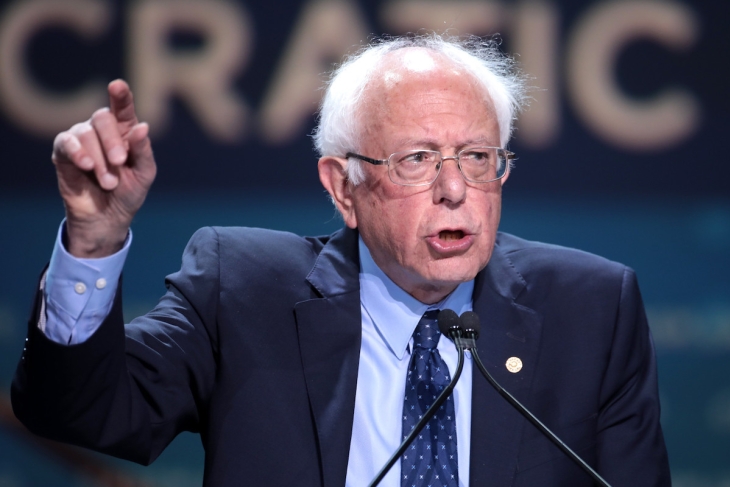
Among the new putative frontrunners (i.e., Sanders and Buttigieg, as measured by current delegate count), there’s little to get excited about vis-à-vis education policy. Sanders’s giveaway to college borrowers is intellectually unserious, to say nothing of his views on standardized testing and school choice (he’s against both). As for Mayor Pete, we can only hope that Diane Ravitch is correct that he’s a “stealth corporate reformer,” but it would be reassuring if he were less clandestine about it. As for Klobuchar and Warren, it’s hard to see either having the money or the backing to go the distance.
If neither Bernie nor Buttigieg wins the Democratic nomination, it’s increasingly not unimaginable that another B (i.e., Bloomberg) will. While the previous three-term mayor did some great things for students in the Big Apple, his record on education is far from unblemished (Cathie Black, anyone?), and it remains unclear how his approach would translate to the national stage. At least he can afford not to be a union sock puppet. Depending on how the former hizzoner fares, I might dig deeper into Bloomberg in a future post. Regardless, the education accomplishments under a hypothetical President Bernie Sanders, Pete Buttigieg, or Mike Bloomberg will be largely identical. Which is to say that, absent an unlikely congressional sweep, gridlock and inertia will overpower any ambitious policy proposal.
Of course, none of this might matter at all come November. A recent Gallup poll shows that 61 percent of Americans say they are better off than they were three years ago when the current president took office. No other incumbent in the past thirty years has enjoyed such a high percentage. Although nothing is for certain at this juncture, one thing does seem clear: The next education president is nowhere in our midst.