Commentary
Governance, Teachers & School Leaders
20 questions for school board candidates
Election Day is almost here, and the presidential contest is not the only one that matters.
Election Day is almost here, and the presidential contest is not the only one that matters.
I student-taught during the Republican primary of 2016. One afternoon, I watched my mentor teacher, an avowed socialist, berate a student during class for daring to express support for Donald Trump. After the election, many of my colleagues breathed nihilistic tirades to their charges about the hopelessness of our country.

The academic impacts of pre-kindergarten programming for children are a matter of unsettled science, with some research finding a positive impact, some a negative, and much showing the fade out of all impacts by third grade or soon thereafter.

To combat pandemic-induced learning loss, the federal government must take sweeping and decisive action.

The Greek poet Archilochus wrote that “the fox knows many things, but the hedgehog knows one big thing.” Finn’s experience has made him more like the fox: as keen as ever to overhaul and revitalize American education, but having come to “knows many things” about that enterprise, is more a wary realist regarding its difficulty.
There is a large literature linking the quality of education to economic growth, and numerous economists and development agencies, including the

I confess I approach the question of virtual education with more than a little skepticism. Kids spend enough time staring at screens, and I’ve developed a reflexive distrust bordering on cynicism for all things ed tech, which has a reliable history of overpromising and underdelivering. And, of course, student outcomes from virtual schools have been awful.

The four-day school week is increasingly popular, particularly in rural districts, with roughly 900 school districts having adopted such a truncated schedule as of 202

How can school systems make the best use of money? An analysis of ESSER funds points to five key areas of focus: effective leadership, equitable spending, targeted procurement, improved general education, and more responsible budgeting practices.

“Charter school laws have been arguably the most influential school reform efforts of the past several decades,” write economists
At Partnership Schools, we are excited that so many Ohioans are excited about the “science of reading.” In 2023 legislation that took effect this school year, Governor DeWine and the General Assembly have mandated that all reading curricula follow this approach—one we know well, since Partnership Schools have implemented it for over a
Grade inflation influences the environment in which teachers teach and students study, shaping their behavior and relationships. But utilizing external assessments, increasing transparency, and supporting reforms that preserve the rigor of grading standards can help fix the problem.

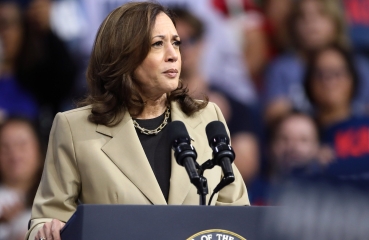
Predicting the future is often compared to reading tea leaves. In the case of forecasting what education policies Vice President Kamala Harris might pursue as president, though, a more apt analogy might be reading her mind. Frankly it’s anyone’s guess what her education policies would be, given how few clues we have.
The American dream is still alive and can be achieved in just one generation, even among the most economically disadvantaged young people. That finding is among the most promising takeaways from new research produced by Harvard University’s Raj Chetty and his collaborators.


The rapid growth of higher education in developing nations has led to a mismatch between the number of graduates and available jobs, contributing to high rates of unemployment and illegal migration within the college-educated population. —Jon Emont, Wall Street Journal

Editor’s note: This was first published by The 74. Say your boss gives you an unexpected bonus at work. Would you save the money, make those home upgrades you’ve been putting off or splurge on a nice vacation?

The macro trend that will have the greatest impact on the American education system over the next decade or two is our declining birth rate and the resulting enrollment crisis facing many public schools. We have too many schools for too few kids and, as a result, thousands of schools are going to need to close. But what we don’t have are enough excellent schools, and therefore the charter sector should keep growing anyway.
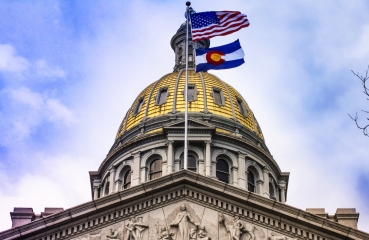
As the clock winds down towards Election Day, Colorado voters—myself included—face an important decision beyond the presidential contest: whether to amend the state constitution to enshrine a “right to school choice.” To be clear, the Centennial State has a long and proud record on the issue.
Chicago’s troubled school district has made national headlines recently—from the mass resignation of its appointed school board, which opposed the mayor’s efforts to borrow nearly $300 million at ruinous rates to give the teachers union a sweetheart contract, to the

The growing popularity of career and technical education (CTE) at the high school level creates an ongoing need for more teachers with industry experience to provide hands-on instruction in a diverse variety of fields.


In which a leading center-right columnist rethinks the proposition that education can ameliorate America’s inequalities in the information age.

Rose Horowitch’s article in The Atlantic is getting lots of buzz.

Rates of student misbehavior remain elevated compared to pre-Covid levels. Pandemic-era disruptions, broader societal disorder and crime rates, and social media are also plausible explanations. But so is “discipline reform,” a set of policies and practices that many schools embraced over the past decade. Its tenets: talk to those kids, pursue “restorative justice,” or ignore their poor behavior. But never impose a consequence.

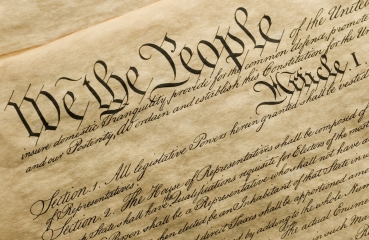
A few years ago, I taught a high school seminar class in civics and democracy at a New York charter school. My goal for the course was for students to see that the U.S. Constitution isn’t an ancient, dusty document, but an enduring set of principles, deeply woven into their lives and the headlines they read every day.
A 6,000 student Midwestern district recently adopted a budget that would result—if all goes according to plan—in a $13.2 million deficit, or more than $2,000 per student. This follows $10 million shortfalls in each of the previous two years. Cash is dwindling.

We tend to think of schools as simply the place where kids go to learn, but they aren’t only about education. They provide many essential services to students and families, including nutrition, healthcare—and even if simply as a byproduct of mandatory attendance for educational purposes, giving parents a place to send their children while they’re at work.