Mobile Navigation

  • National
    • Policy
      • High Expectations
      • Quality Choices
      • Personalized Pathways
    • Research
    • Commentary
      • Gadfly Newsletter
      • Flypaper Blog
    • Events
    • Scholars Program
  • Ohio
    • Policy
      • Priorities
      • Media & Testimony
    • Research
    • Commentary
      • Ohio Education Gadfly Biweekly
      • Ohio Gadfly Daily
  • Charter Authorizing
    • Application
    • Sponsored Schools
    • Resources
  • About
    • Mission
    • Board
    • Staff
    • Career
Home
Home
Advancing Educational Excellence

Main Navigation

  • National
  • Ohio
  • Charter Authorizing
  • About

National Menu

  • Topics
    • Accountability & Testing
    • Advanced Education
    • Career & Technical Education
    • Charter Schools
    • Curriculum & Instruction
    • ESSA
    • Evidence-Based Learning
    • Facilities
    • Governance
    • Personalized Learning
    • Private School Choice
    • School Finance
    • Standards
    • Teachers & School Leaders
    • Think Again
  • Research
  • Commentary
    • Gadfly Newsletter
    • Flypaper Blog
    • Gadfly Podcast
  • Events
  • Scholars Program

Governance

Displaying 391-420 of 1405 results
Parent-teacher conference
Commentary
9.5.2024
Accountability & Testing, Evidence-Based Learning, Curriculum & Instruction, Governance, Teachers & School Leaders

It’s time for tough love to address chronic absenteeism

David Griffith, Ph.D., Daniel Buck

Despite an unprecedented infusion of resources, the latest data show that American students are struggling to recover


Parent-teacher conference
Career-technical education
Commentary
9.5.2024
Evidence-Based Learning, Career & Technical Education, Curriculum & Instruction, Governance

The vibes for career-tech programs are great. But they’re too rare.

Michael J. Petrilli

Education loomed small at both political conventions this summer—a shame considering what dire condition it’s in.

Career-technical education
Empty classroom
Commentary
8.30.2024
Governance

Republicans’ missing policy issue: Education

Lexi Boccuzzi

Editor’s note: This was first published by the Manhattan Institute.

Empty classroom
Indiana Statehouse
Commentary
8.30.2024
Evidence-Based Learning, Curriculum & Instruction, Governance

Why Indiana high school diploma changes may do more harm than good

Sophia Craiutu

Indiana’s new proposed legislation on altered diploma requirements redesigns the purpose of a high school education, which I believe will have negative consequences for students across the state, with regard to the diminishing skills of global-mindedness and perspectives.

Indiana Statehouse
Teacher talking to a student
Commentary
8.29.2024
Curriculum & Instruction, Governance, Teachers & School Leaders

Tough love should be the theme of 2024–25

Michael J. Petrilli

Society as a whole has largely bounced back from the dark days of the pandemic, but life inside our schools is arguably worse than ever. Attendance is dismal. Cheating is pervasive. Cell phones are everywhere. Disorder abounds. And for all these reasons and more, kids are learning less than they were back before the plague struck. The right way to respond is to embrace tough love. That means, first and foremost, again holding students accountable for their behavior.

Teacher talking to a student
Students walking to school
Commentary
8.29.2024
Evidence-Based Learning, Charter Schools, Governance

Does competition from charter schools help or hurt traditional public schools?

David Griffith, Ph.D., Heena Kuwayama

It’s widely acknowledged that a bit of healthy competition is a good thing in most contexts. Among other things, it pushes businesses to create better products and athletes and musicians to train longer and harder. But what about in education?

Students walking to school
School exterior
Commentary
8.22.2024
Accountability & Testing, Curriculum & Instruction, Governance, Teachers & School Leaders

The complicated interplay between race, poverty, and schooling

Michael J. Petrilli

Fordham’s new study by Paul L. Morgan and Eric Hengyu Hu, "Explaining Achievement Gaps: The Role of Socioeconomic Factors," raises as many questions as it answers. Among them: How can we explain the different patterns for the Black-White achievement gap for reading, on the one hand, and math and science, on the other? Why does SES explain so much more of the Hispanic-White gap than the Black-White gap? And what’s the role of family structure in explaining the Black-White and Hispanic-White gaps?

School exterior
Kamala Harris and Donald Trump
Commentary
8.22.2024
Governance

Will next month’s Harris-Trump debate even mention education?

Dale Chu

During the fateful presidential debate between Joe Biden and Donald Trump, there was nary a mention of education. No questions on the topic from the moderators.

Kamala Harris and Donald Trump
Frustrated school teacher
Commentary
8.22.2024
Evidence-Based Learning, Curriculum & Instruction, Governance, Teachers & School Leaders

How have teacher working conditions changed since the pandemic?

Heena Kuwayama

As a teacher both during and immediately after the pandemic, I was constantly on the receiving end of some version of: “You must be so relieved that the pandemic is over.” My response was always: “Actually, it has only gotten worse.” And it’s not just me.

Frustrated school teacher
Report
8.21.2024
Governance, Teachers & School Leaders

Explaining Achievement Gaps: The Role of Socioeconomic Factors

Eric Hengyu Hu, Ph.D., Paul L. Morgan, Ph.D.

Racial achievement gaps in schools are well documented and remain a significant cause of concern in education. Troubling too is that the role of socioeconomic disparities in mediating these gaps remains unresolved.

School library
Commentary
8.15.2024
Curriculum & Instruction, Governance, Teachers & School Leaders

They’re still not book bans

Daniel Buck

Just when I thought that book ban debates were so last year—gone the way of critical race theory or the Common Core, subsumed by the latest controversy over Title IX or Project 2025—it seems those grouchy conservatives are at it again.

School library
School robotics class
Commentary
8.15.2024
Evidence-Based Learning, Career & Technical Education, Curriculum & Instruction, Governance, Advanced Education, Teachers & School Leaders

Threading the needle on selective enrollment public schools

Michael J. Petrilli

A recent article in the Boston Globe dug into a controversy that is dogging Massachusetts’s highly-regarded system of regional career and technical education (CTE) high schools.

School robotics class
Mississippi map
Commentary
8.8.2024
Evidence-Based Learning, School Finance, Governance

Modeling the impacts over time of education funding changes in Mississippi

Jeff Murray

The specific connection between increased school funding and student outcomes remains unclear—regardless of whether the added dollars are blanket or targeted—and the

Mississippi map
Teacher in a classroom
Commentary
8.2.2024
Evidence-Based Learning, Curriculum & Instruction, Governance, Teachers & School Leaders

A reform agenda for Montgomery County Public Schools, part one

Michael J. Petrilli

As regular readers know, I’m a parent of two children enrolled in Maryland’s Montgomery County Public Schools (MCPS).

Teacher in a classroom
Closed school
Commentary
8.1.2024
Evidence-Based Learning, Facilities, Governance

Stop playing the race card on school closures

Vladimir Kogan

Everyone who cares about racial justice should be focused on doing what’s best for students and their learning—not on school buildings or the employment impact of closing some of them.

Closed school
Standardized test in school
Commentary
8.1.2024
Accountability & Testing, Evidence-Based Learning, Curriculum & Instruction, Governance, Teachers & School Leaders

The case for standardized testing

Victoria McDougald

By now, we’re well familiar with critiques of standardized testing opponents: tests rob schools of critical instructional time, encourage teaching to the test, place undue pressure on students and educators to perform, are educationally irrelevant, only provide a snapshot of student achievement at a specific moment in time, and are largely driven by family income levels, parents’ education, and

Standardized test in school
Wonkathon
Commentary
7.30.2024
Evidence-Based Learning, Charter Schools, Governance, Teachers & School Leaders

“Everything, everywhere, all at once” solutions to chronic absenteeism

Kelly James, Brad Bernatek

Read the winning entry in Fordham’s 2024 Wonkathon, which asked contributors to answer this question: “How can policymakers and practitioners radically reduce chronic absenteeism—at least below pre-pandemic levels and preferably much further?”

Wonkathon
Wonkathon
Commentary
7.29.2024
Curriculum & Instruction, Governance

Let’s stop blaming kids for absenteeism and unleash entrepreneurship

Darien Contu

Editor’s note: This essay is an entry in Fordham’s 2024 Wonkathon, which asked contributors to answer this question: “How can policymakers and practitioners radically reduce chronic absenteeism—at least below pre-pandemic levels and preferably much further?”

Wonkathon
Wonkathon
Commentary
7.29.2024
Evidence-Based Learning, Curriculum & Instruction, Governance, Teachers & School Leaders

Sustainable, promising interventions to reduce chronic absenteeism

Charles Ogundimu

Editor’s note: This essay is an entry in Fordham’s 2024 Wonkathon, which asked contributors to answer this question: “How can policymakers and practitioners radically reduce chronic absenteeism—at least below pre-pandemic levels and preferably much further?”

Wonkathon
Wonkathon
Commentary
7.29.2024
Governance, Teachers & School Leaders

Improving school attendance in Rhode Island

Jeremy Chiappetta, Krystafer Redden, Tom Giordano

Editor’s note: This essay won third place in Fordham’s 2024 Wonkathon, which asked contributors to answer this question: “How can policymakers and practitioners radically reduce chronic absenteeism—at least below pre-pandemic levels and preferably much further?

Wonkathon
Wonkathon
Commentary
7.26.2024
Evidence-Based Learning, Curriculum & Instruction, Governance

To fix chronic absenteeism, we must ask why kids don’t want to go to school

Leslie Colwell

Editor’s note: This essay won second place in Fordham’s 2024 Wonkathon, which asked contributors to answer this question: “How can policymakers and practitioners radically reduce chronic absenteeism—at least below pre-pandemic levels and preferably much further

Wonkathon
Students raising their hands in a school classroom
Commentary
7.26.2024
Curriculum & Instruction, Governance, Standards, Teachers & School Leaders

Civics for today

David Davenport

This essay focuses on A Republic, If We Can Teach It: Fixing America’s Civic Education Crisis, a new book by Jeffrey Sikkenga and Hoover research fellow (emeritus) David Davenport.

Students raising their hands in a school classroom
Wonkathon
Commentary
7.25.2024
Evidence-Based Learning, Curriculum & Instruction, Governance, Teachers & School Leaders

Schools cannot radically reduce chronic absenteeism alone

Jeremy Singer, Sarah Winchell Lenhoff

Editor’s note: This essay is an entry in Fordham’s 2024 Wonkathon, which asked contributors to answer this question: “How can policymakers and practitioners radically reduce chronic absenteeism—at least below pre-pandemic levels and preferably much further?”

Wonkathon
Upset child reading in a classroom
Commentary
7.25.2024
Evidence-Based Learning, Curriculum & Instruction, Governance, Teachers & School Leaders

California schools are failing to teach kids how to read

Daniel Buck

Everyone benefits from exemplars. We all need models to mimic and follow. In the policy realm that means states, legislatures and governors who pass policies and reforms that materially improve the lives of their residents.

Upset child reading in a classroom
Students in a school computer lab
Commentary
7.25.2024
Accountability & Testing, Evidence-Based Learning, Curriculum & Instruction, Governance

Is “credit recovery” as bad as they say?

Adam Tyner, Ph.D.

For several years now, critics have been blaring klaxons about the questionable quality and increasing

Students in a school computer lab
Wonkathon
Commentary
7.24.2024
Evidence-Based Learning, Curriculum & Instruction, Governance, Teachers & School Leaders

To boost attendance and outcomes, pay students, not systems

Garion Frankel, Cooper Conway

Editor’s note: This essay is an entry in Fordham’s 2024 Wonkathon, which asked contributors to answer this question: “How can policymakers and practitioners radically reduce chronic absenteeism—at least below pre-pandemic levels and preferably much further?”

Wonkathon
Kamala Harris
Commentary
7.24.2024
Evidence-Based Learning, Charter Schools, Curriculum & Instruction, Governance, Teachers & School Leaders

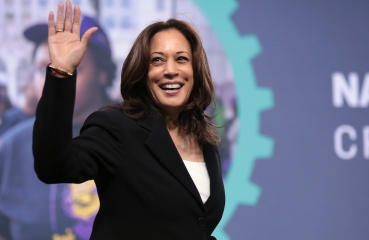
How Kamala Harris can move to the center on education

Michael J. Petrilli

It may be true that Kamala Harris is, at heart, your typical progressive Democrat from California. But she has an unusual opportunity to shed some of that political baggage. Indicating that she will be open to education reform is one of the best ways to do so.

Kamala Harris
School student taking a standardized test with a scantron form
Commentary
7.22.2024
Accountability & Testing, Evidence-Based Learning, Curriculum & Instruction, Governance, Teachers & School Leaders

Do testing and accountability improve student learning?

Chester E. Finn, Jr.

In a word, yes! It’s never enough, and there’s no resting on laurels, but we have solid evidence over thirty years in America and beyond that students learn more when they—and their schools—are held to account for what and how well they’re learning.

School student taking a standardized test with a scantron form
Dad and son doing homework
Commentary
7.19.2024
Evidence-Based Learning, Curriculum & Instruction, Governance, Advanced Education, Teachers & School Leaders

Advanced education programs are important to parents, poll finds

Alli Aldis

Academic advancement programs (especially those branded as “gifted and talented”) are often at the center of controversy about equity in education.

Dad and son doing homework
Closed school
Commentary
7.18.2024
Evidence-Based Learning, Facilities, Governance

The case for closing underenrolled, low-performing schools

Michael J. Petrilli

The conventional wisdom is that school closures are bad—not the temporary pandemic-era variety, but the permanent shuttering of underenrolled school facilities.

Closed school

Pagination

  • First page « First
  • Previous page ‹ Previous
  • Page 10
  • Page 11
  • Page 12
  • Page 13
  • Current page 14
  • Page 15
  • Page 16
  • Page 17
  • Page 18
  • Next page Next ›
  • Last page Last »

Type

  • Book (3)
  • Commentary (1229)
  • Event (2)
  • Podcast (80)
  • Report (78)

Topics

  • Accountability & Testing (501)
  • Advanced Education (265)
  • Career & Technical Education (84)
  • Charter Schools (1115)
  • Curriculum & Instruction (1588)
  • ESSA (129)
  • Evidence-Based Learning (832)
  • Facilities (25)
  • (-) Governance (1405)
  • Personalized Learning (51)
  • Private School Choice (138)
  • School Finance (166)
  • Standards (190)
  • Teachers & School Leaders (1446)

Date

  • 2026 (138)
  • 2025 (192)
  • 2024 (189)
  • 2023 (177)
  • 2022 (184)
  • 2021 (220)
  • 2020 (156)
  • 2019 (56)
  • 2018 (11)
  • 2017 (13)
  • 2016 (4)
  • 2015 (4)
  • 2014 (5)
  • 2013 (8)
  • 2012 (11)
  • 2011 (7)
  • 2010 (1)
  • 2009 (2)
  • 2008 (5)
  • 2007 (4)
  • 2006 (1)
  • 2005 (1)
  • 2004 (1)
  • 2003 (1)
  • 2002 (1)
  • 2001 (6)
  • 2000 (3)
  • 1999 (2)
  • 1998 (2)
Fordham Logo

© 2026 The Thomas B. Fordham Institute
Privacy Policy
Usage Agreement

National

P.O. Box 110
Burke, VA 22009

202.223.5452

[email protected]

Ohio

P.O. Box 82291
Columbus, OH 43202

614.223.1580

[email protected]

Sponsorship

130 West Second Street, Suite 410
Dayton, Ohio 45402

937.227.3368

[email protected]