Education’s ambulance-at-the-bottom problem
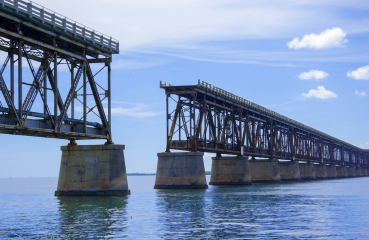
There’s an old adage that it’s better to build a sturdy fence at the top of a cliff than station an ambulance at the bottom.


Approximately half of American adults read at a sixth-grade level or below, according to the Barbara Bush Foundation. The consequences of poor literacy skills are profound: higher unemployment rates, lower-paying work, and struggles with routine tasks such as reading prescriptions or bills.
The past century has seen enormous developments in virtually all areas of life, from medicine to transportation to living standards and even to social and cultural attitudes. Yet our education system has not followed suit. One of the greatest illustrations of this is in the continued emphasis on age as the primary determinant of educational placement.
For those of us who have long pushed for charter schools to receive fair funding, progress has been slow, uneven, and hard-won. That’s why we at the Thomas B.
Defense Secretary Pete Hegseth has called the CLT the nation’s new “gold standard.” USA Today’s blockbuster investigation, published today, suggests a more accurate label would be “boondoggle.” In Florida, the state that has done more than any other to
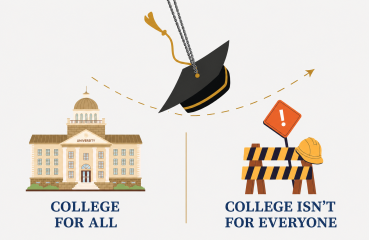
College is on my mind because of two recent tidbits.
Editor’s note: This was first published by The 74.
The past two weeks have seen a growing ruckus over big changes in the Head Start regs that are reportedly nearing completion by the Department of Health and Human Services (HHS) and the Office of Management and Budget (OMB).
During my years at TIME magazine, the newsroom had a rule of thumb: If something happens once, it’s news. Twice is a coincidence. Three times? That’s a trend.
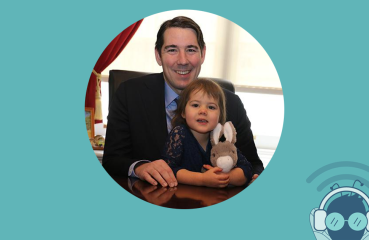
Congressman Josh Harder joins Mike Petrilli and David Griffith to discuss his push to
In the years since Fordham’s landmark 2012 study on teachers union strength, the education and policymaking landscapes have changed dramatically.
A Crowded Table: Teacher Union Strength in 2026 shows what we have all seen transpire over the last several years, as the Janus decision, the post-Covid rise of right-wing parent advocacy grou
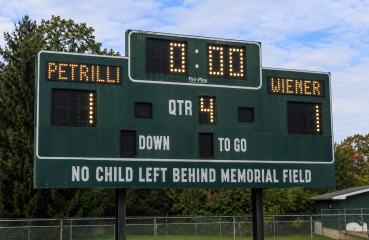
For a law that has been off the books for more than a decade, No Child Left Behind is receiving an unusual amount of<
In Philadelphia, a young person leaving Launchpad Philly’s post-high school graduate training track is on pace to earn nearly $30,000 within nine months and $50,000 within one year. That far outpaces the roughly $12,500 a young Philadelphian with only a high school diploma typically earns.
A few weeks ago, my colleague Robert Pondiscio argued convincingly that the accountability policies of the No Child Left Behind era did not work as effectively as they could have because schools did not know how to respond to the pressure they felt to improve instructional practice and deliver str
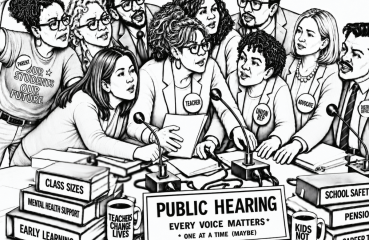
Public school districts are microcosms of American civic life—operated by and for members of the community, with their agendas susceptible to the cultural and political winds that blow through those communities. Even in states where school choice is common, the school district and its elected board still remain part of the infrastructure of cities, towns, and counties.
In December, the board of the Cleveland Metropolitan School District (CMSD) unanimously approved a building consolidation plan.
Career and technical education deserves its growing support but cannot compensate for a diploma that no longer signals readiness. States seeking stronger workforce and college pathways should start by restoring the credibility of the credential that every graduate receives.
The question of whether, when, and how public funding may flow to religious schools has been contested for more than 150 years, animated by the tension between the First Amendment’s Establishment Clause, which bars the state from sponsoring religion, and its Free Exercise Clause, which restricts the burdens that can be placed on religion.
Texas’s new social studies standards, required literature list, and curriculum have all drawn familiar charges of culture-war excess, with their inclusion of Bible stories, canonical books, and “patriotic” content. But taken together, these initiatives suggest something more consequential than conservative provocation. Read more.
In a recent Flypaper post, Dale Chu argues that the promise of a single assessment system doing multiple things well is “too good to be true.” He says that through-year assessments (TYA)—tests administered periodically throughout the school year that culminate in a summative score—are tryi
New York City’s Small Schools of Choice (SSC) program was one of a panoply of education reforms enacted in the early 2000s under then-mayor Michael Bloomberg and schools chief Joel Klein.
Throughout the first quarter of the 21st century, schools built up capacity to accommodate growing student populations, adding classroom space, teacher positions, and the many resources that go into educating a child. The Covid-19 pandemic accelerated the build-up through the injection of giant sums of federal money to supplement state and local budgets.
In the latest National Assessment of Educational Progress Long Term Trends analysis, 23 percent of the 13-year-olds surveyed report that they are enrolled in Algebra I. For those seventh and eighth graders, that’s great news.
A new white paper from NWEA, and its accompanying op-ed in The Hill, claim that districts are more likely to permanently shutter schools with a high proportion of poor and/or Black stud
As the nation approaches its 250th anniversary, civics education and American citizenship are receiving much attention. Yet recent surveys reveal widening generational and partisan divides over patriotism, the nation’s founding, and what schools should teach about American history. The findings are troubling even as the growing effort to strengthen civic knowledge and commitment offers some grounds for hope.
As Americans are discovering during this summer’s World Cup, soccer often produces an outcome that is unsatisfying to our domestic sports sensibilities: a tie. One team controls possession while the other creates better scoring chances. Both leave the pitch claiming vindication, but neither gets to declare victory.
When the Supreme Court bases a decision on policy considerations, the downstream consequences can be significant. A compelling example is 1982’s Plyler v.
For several decades, K–12 ed-reformers and policy leaders have pushed to expand public school options and pathways.